
Metabolism Metabolism l Metabolism Processes by which living
Metabolism
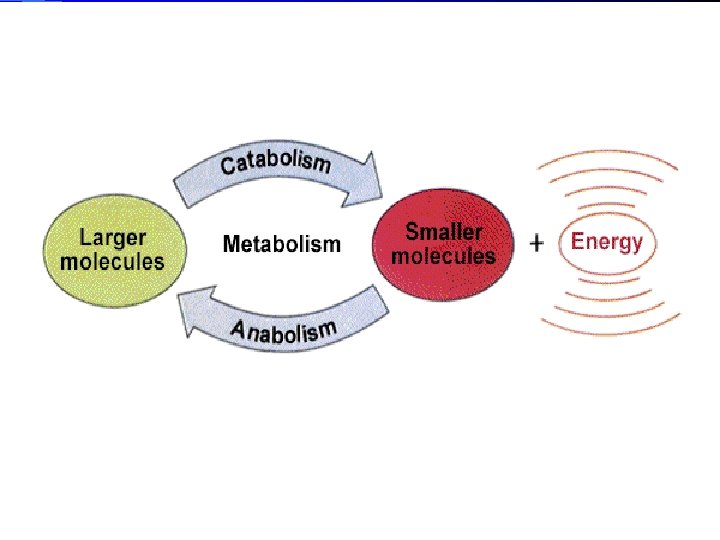
Metabolism l Metabolism: Processes by which living organisms obtain and utilize energy l Aerobic metabolism: Use oxygen to l break down sugar for energy. Anaerobic metabolism: breaking down sugar for energy without oxygen.
Two parts of metabolism 1. Catabolism: Degradation, pathways by which nutrients and cellular components are broken down for generating energy or reuse. 2. Anabolism: Biosynthesis, building up of biomolecules from simpler components
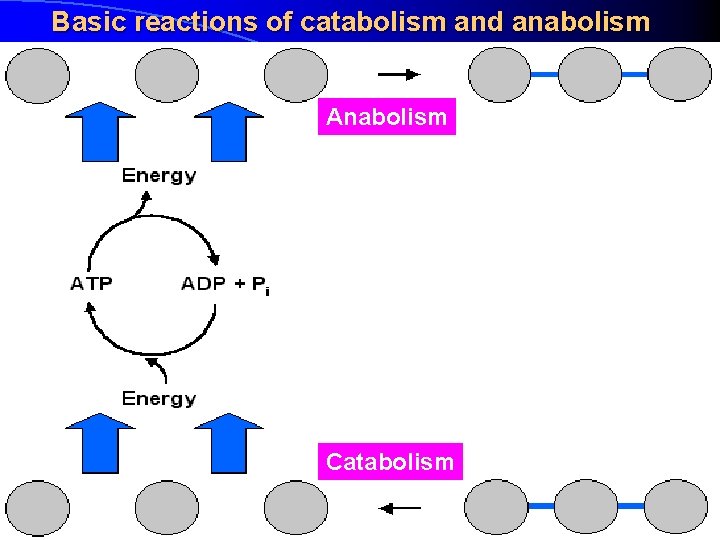
Basic reactions of catabolism and anabolism Anabolism Catabolism
Purposes of metabolism To oxidise food to provide energy in the form of ATP l To convert food molecules into new cellular material and essential components l To process waste products to facilitate their excretion l
ATP (Adenosine Tri. Phosphate) l Life Processes require a constant supply of ENERGY. l This Energy is available to Cells in the form of Compounds that contain a Large amount of Energy in their Structure. l The Most common Energy Compound used by Cells is ADENOSINE TRIPHOSPHATE OR ATP.
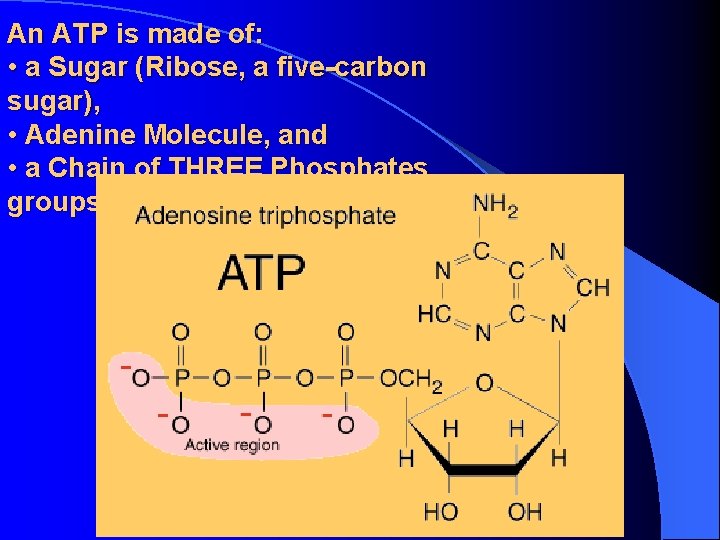
An ATP is made of: • a Sugar (Ribose, a five-carbon sugar), • Adenine Molecule, and • a Chain of THREE Phosphates groups
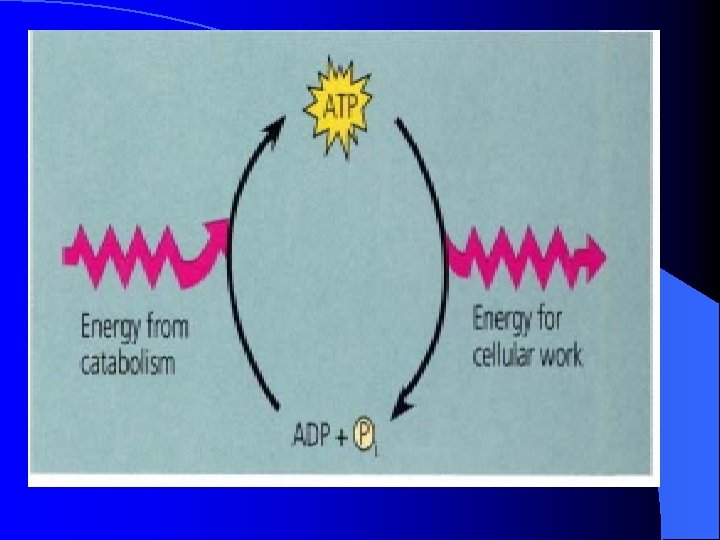
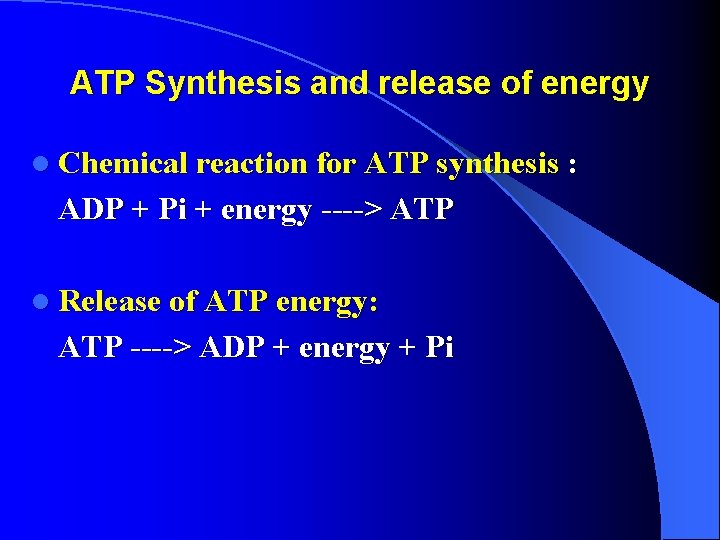
ATP Synthesis and release of energy l Chemical reaction for ATP synthesis : ADP + Pi + energy ----> ATP l Release of ATP energy: ATP ----> ADP + energy + Pi
All biochemical reactions (metabolism) occur inside the cell
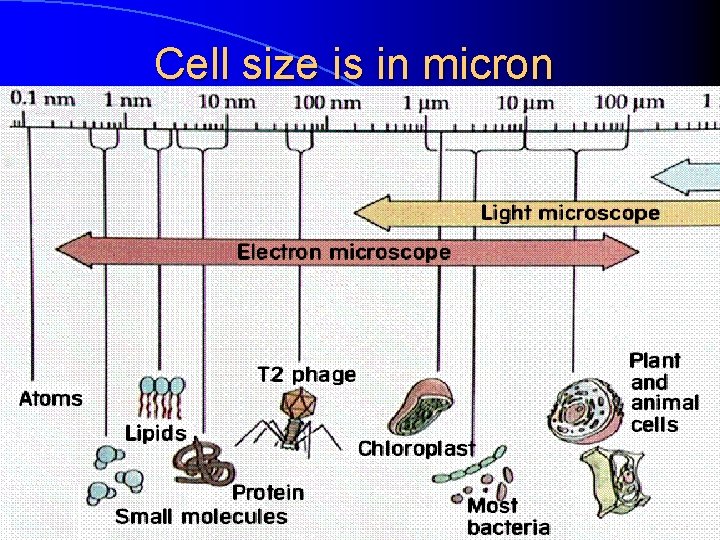
Cell size is in micron
The metabolism reactions are catalyzed by enzymes
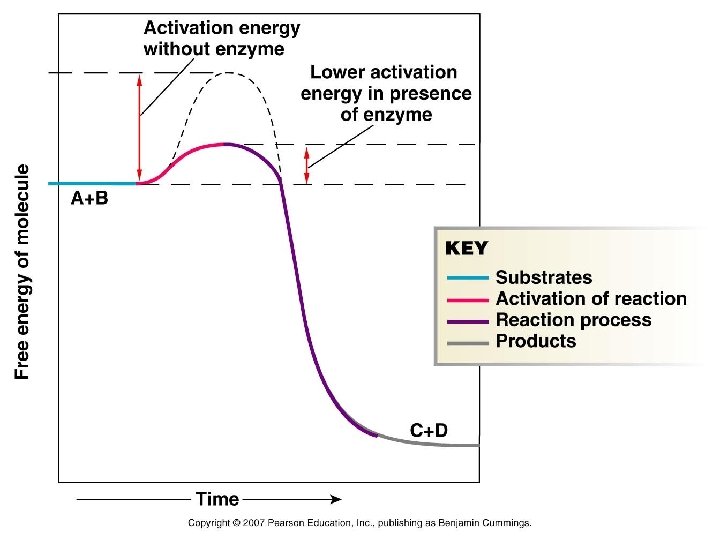
What is enzymes? l Enzymes are biological catalysts that speed up chemical reactions l Increase rate of metabolic reactions by lowering the activation energy required to start the reaction
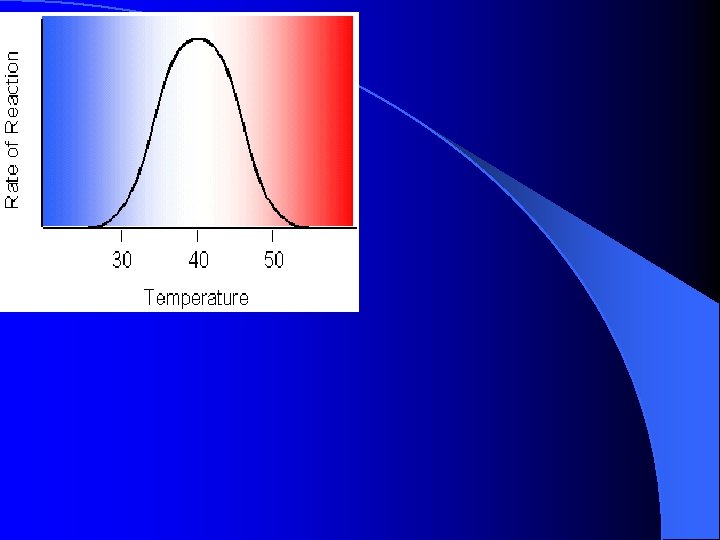
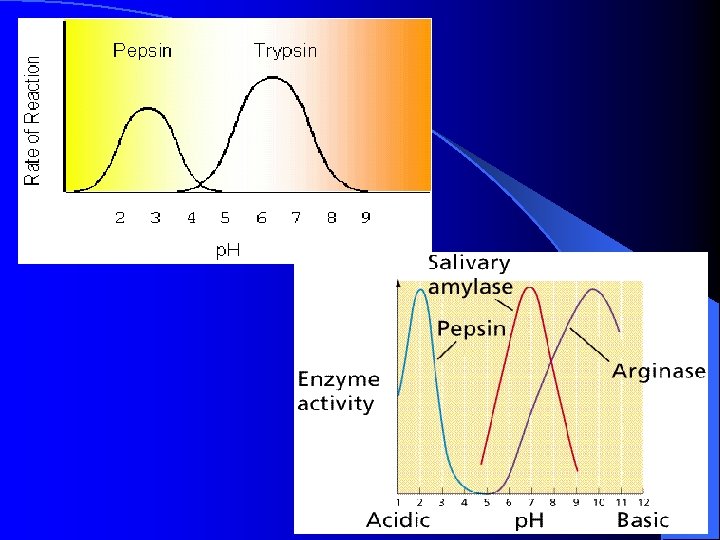
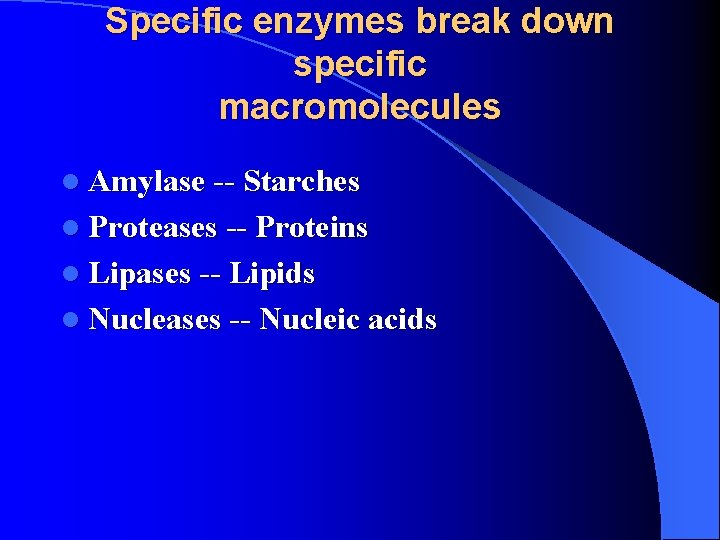
Factors affecting enzymatic reactions: l Temperature l p. H l Substrate concentration l Enzyme concentration l Inhibitors l The presence of cofactor (The non-protein component of an enzyme which present for enzyme activity)
Specific enzymes break down specific macromolecules l Amylase -- Starches l Proteases -- Proteins l Lipases -- Lipids l Nucleases -- Nucleic acids
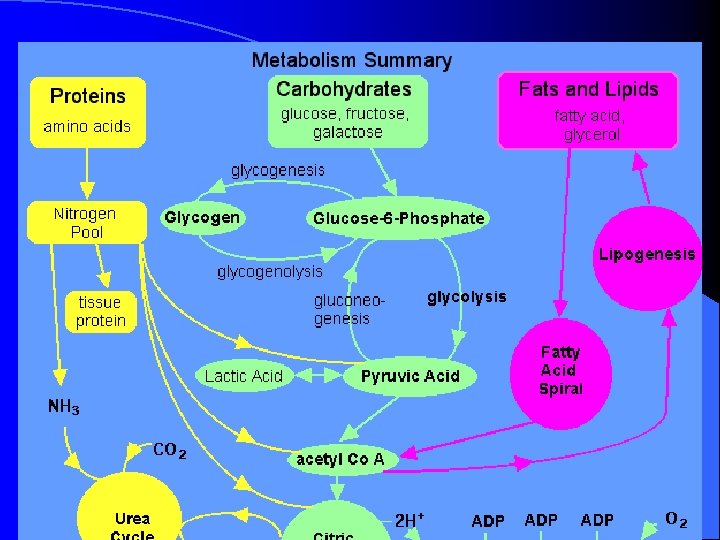
Nutrients Metabolism l Four macromolecules A. B. C. D. Carbohydrates (sugars) Polypeptides (proteins) Lipids (fats) Nucleic acids (DNA, RNA)
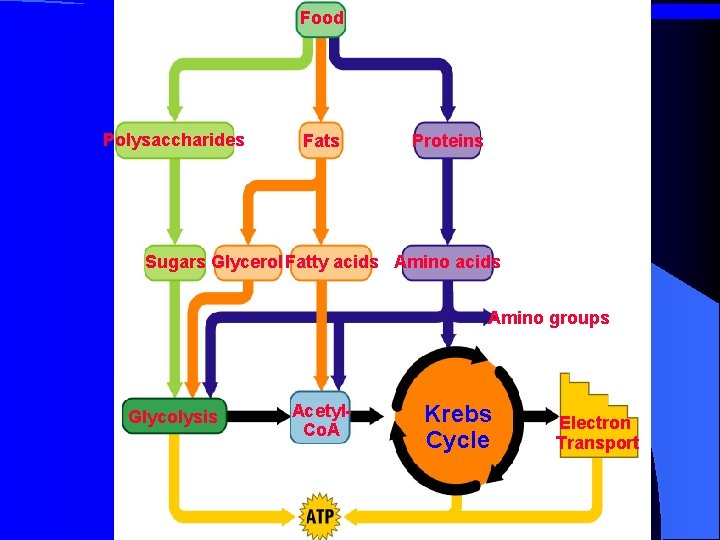
Food Polysaccharides Fats Proteins Sugars Glycerol Fatty acids Amino groups Glycolysis Acetyl. Co. A Krebs Cycle Electron Transport
A. Carbohydrate metabolism Carbohydrate from digestive tracts is absorbed in the form of monosacharide, eg. Glucose l Glycogenesis : synthesis of glycogen l Glycolysis: breakdown of glucose into piruvic acid in the process of cellular respiration l
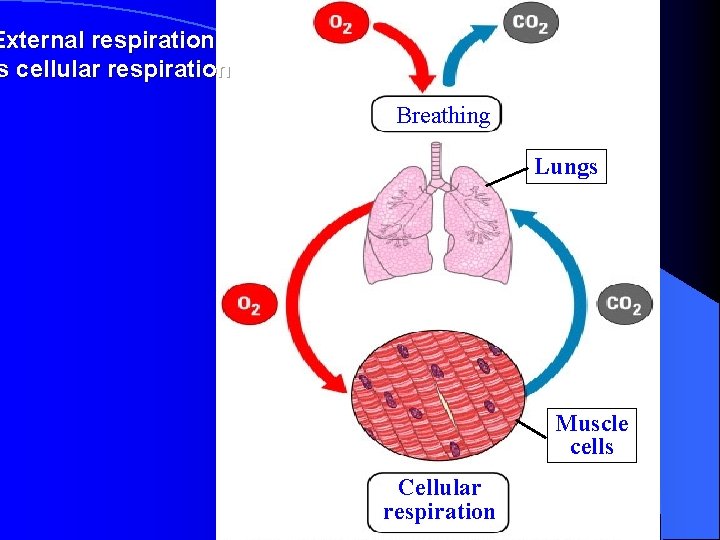
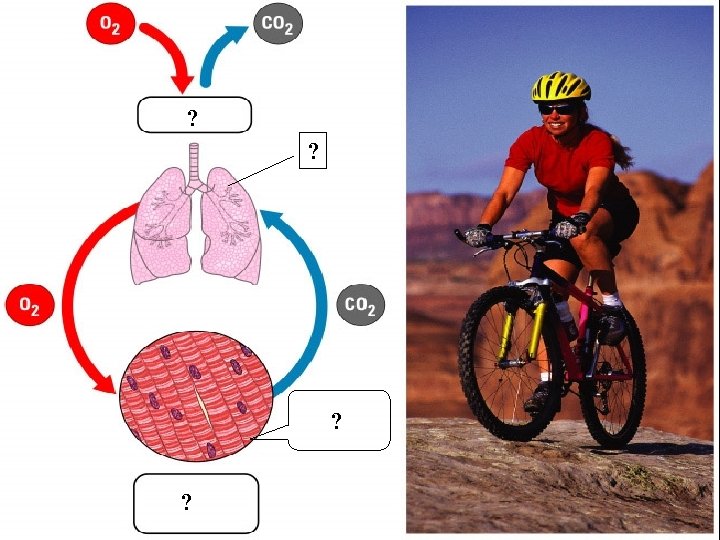
External respiration s cellular respiration Breathing Lungs Muscle cells Cellular respiration
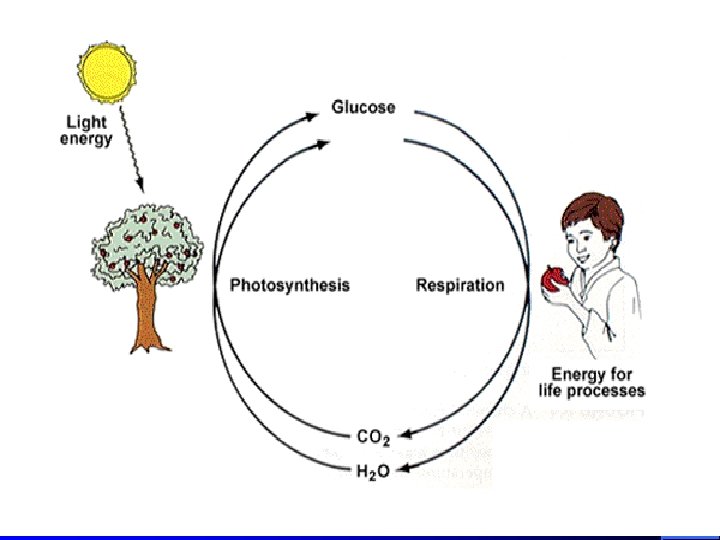
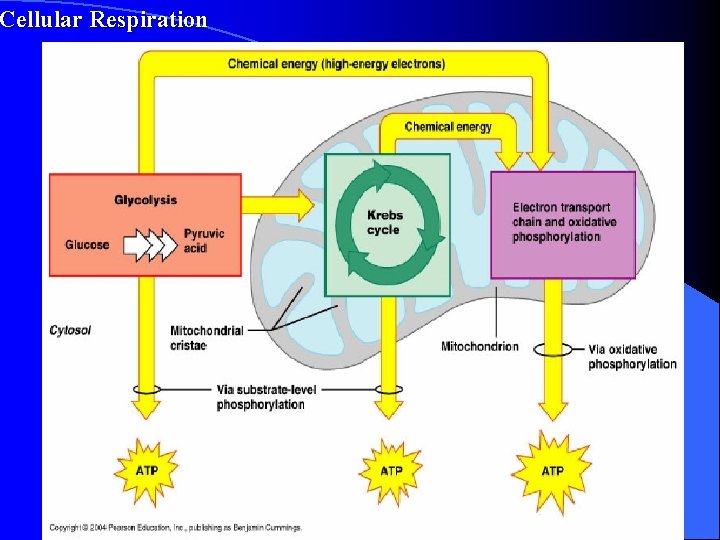
Cellular Respiration l Is a chemical process to converts chemical energy stored in food to ATP l It requires oxygen (Aerobic process) l Happens in mitochondria l Waste products: CO 2 and H 2 O, are used in photosynthesis to make sugar.
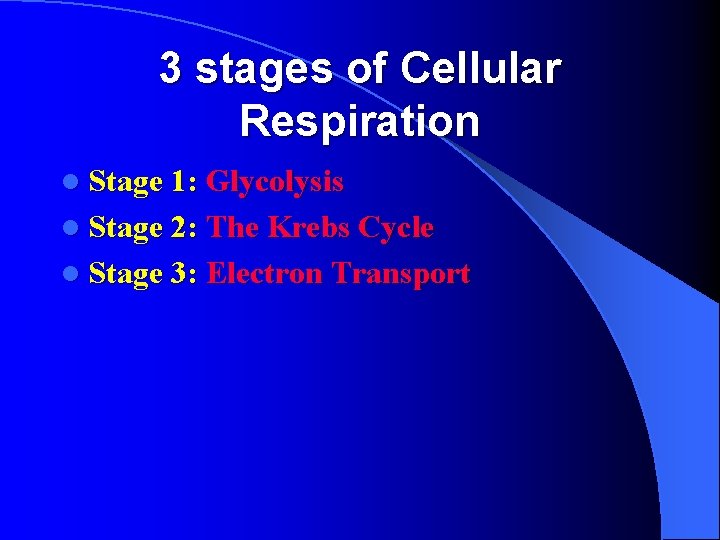
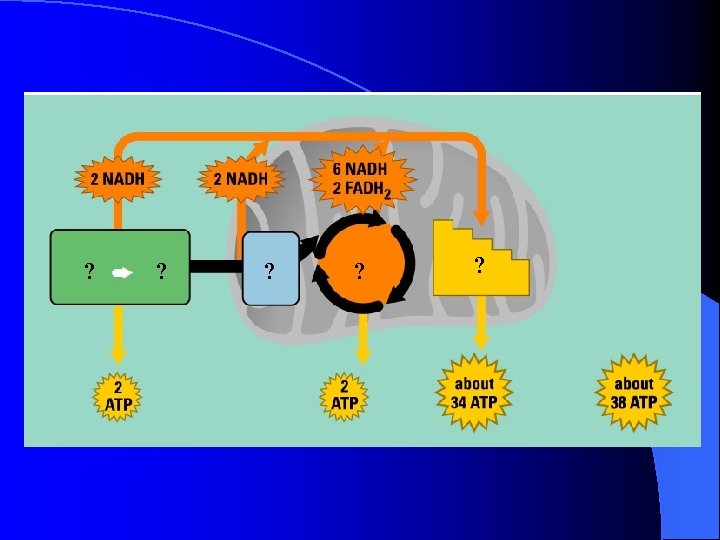
3 stages of Cellular Respiration l Stage 1: Glycolysis l Stage 2: The Krebs Cycle l Stage 3: Electron Transport
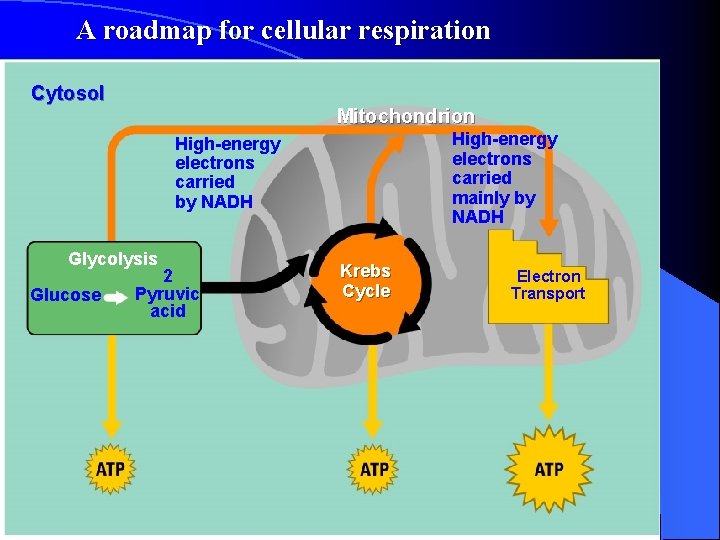
A roadmap for cellular respiration Cellular Mitochondrion respiration Cytosol High-energy electrons carried mainly by NADH High-energy electrons carried by NADH Glycolysis Glucose 2 Pyruvic acid Krebs Cycle Electron Transport
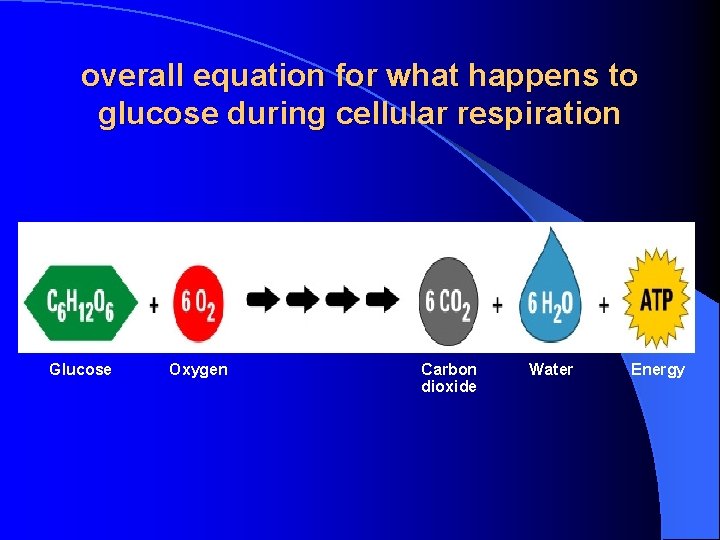
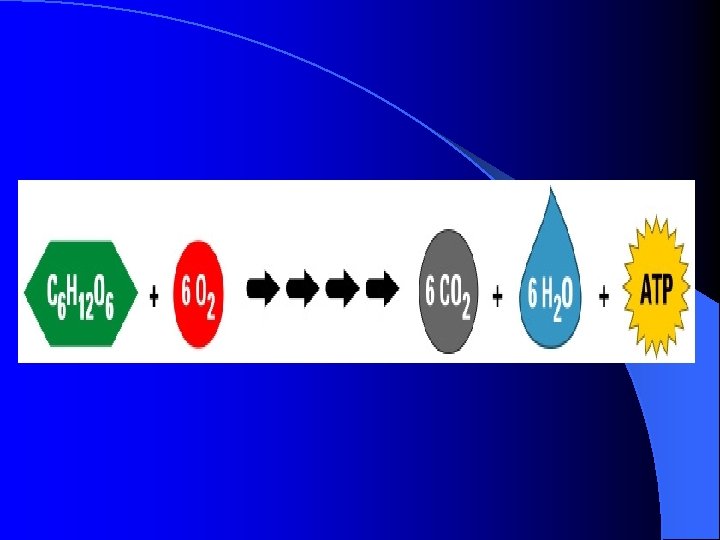
overall equation for what happens to glucose during cellular respiration Glucose Oxygen Carbon dioxide Water Energy
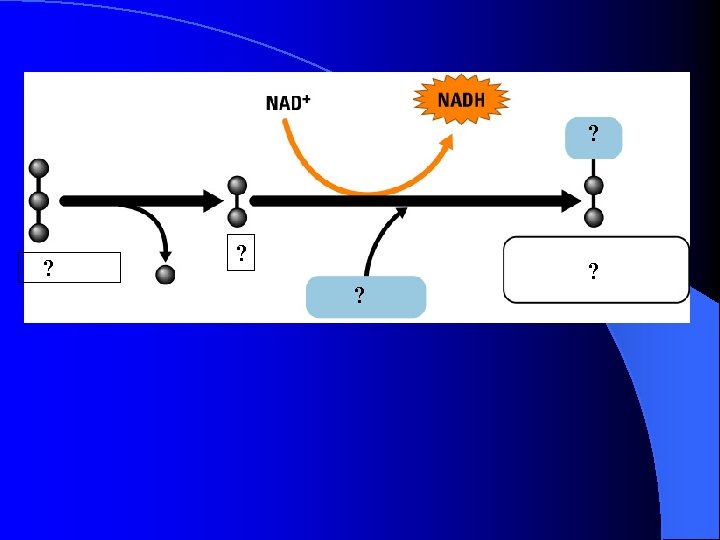
Stage 1: Glycolysis l. A molecule of glucose is split into two molecules of Pyruvic acid
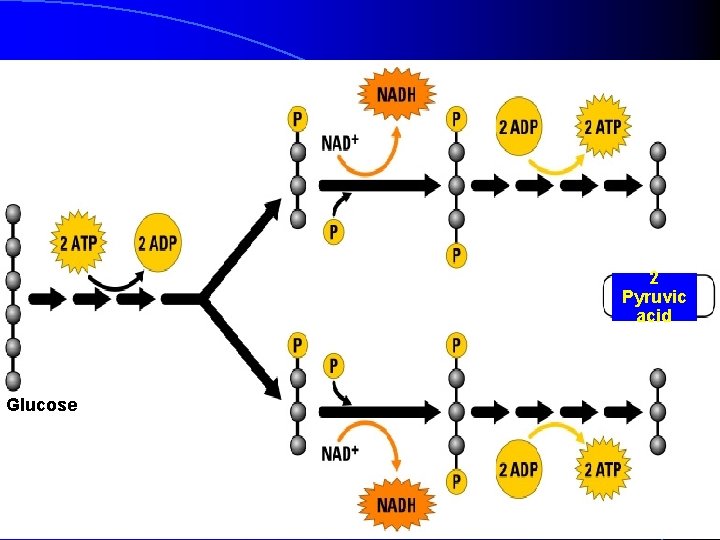
2 Pyruvic acid Glucose Figure 6. 8
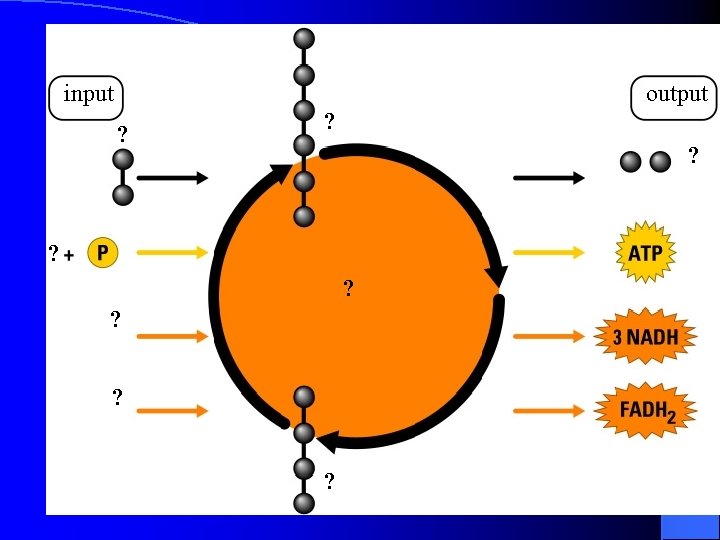
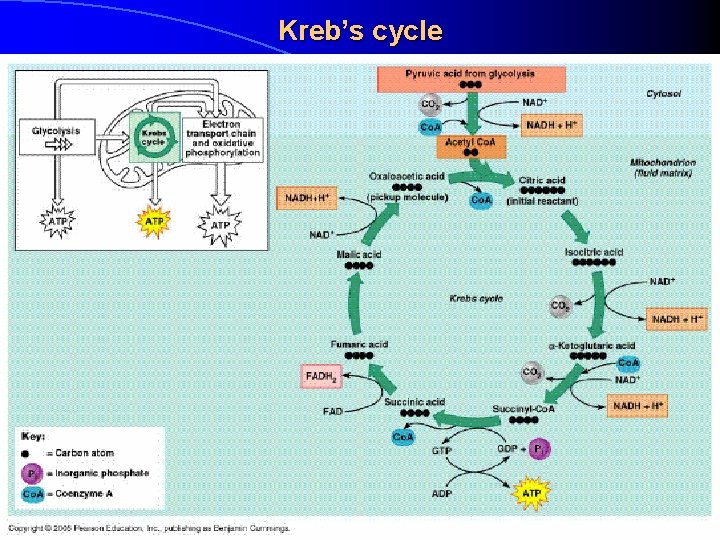
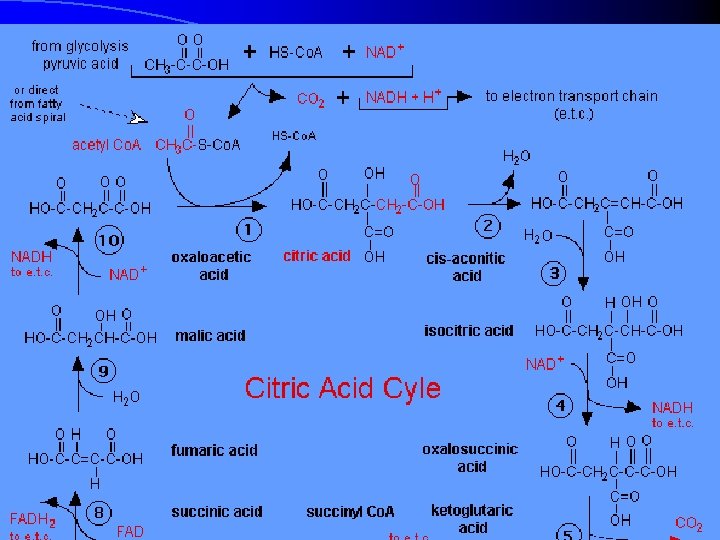
Stage 2: The Krebs Cycle l The Krebs cycle completes the breakdown of sugar
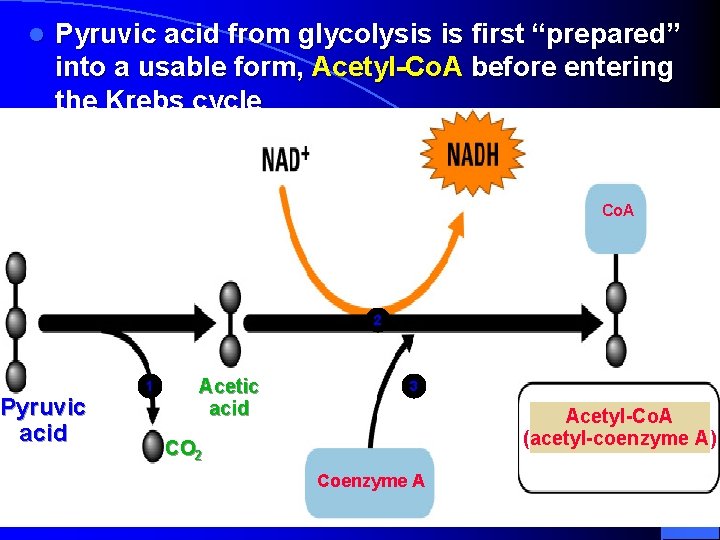
l Pyruvic acid from glycolysis is first “prepared” into a usable form, Acetyl-Co. A before entering the Krebs cycle Co. A 2 Pyruvic acid 1 Acetic acid 3 Acetyl-Co. A (acetyl-coenzyme A) CO 2 Coenzyme A
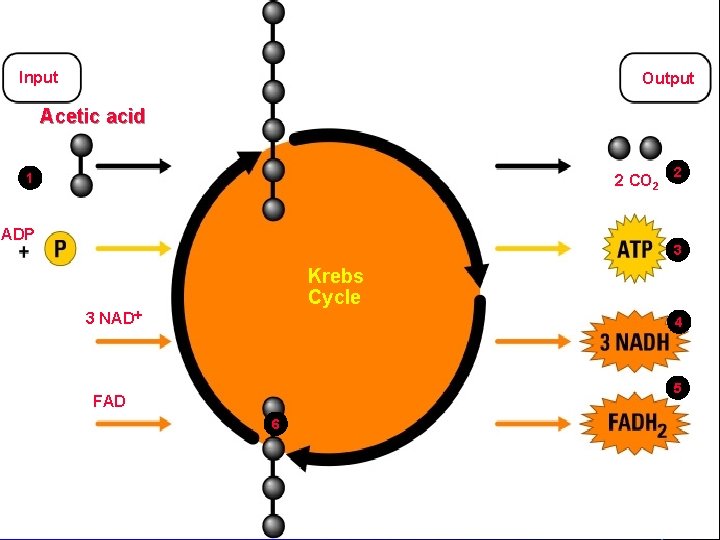
Input Output Acetic acid 1 2 CO 2 ADP 2 3 Krebs Cycle 3 NAD 4 5 FAD 6
Stage 3: Electron Transport Electron transport releases the energy that cells need to make the most of their ATP l Uses products of Krebs Cycle (NADPH and FADH 2) to produce lots of ATP through a series of reactions. l When the hydrogen ions flow back through the membrane, they release energy – The ions flow through ATP synthase – ATP synthase takes the energy from this flow and makes ATP l
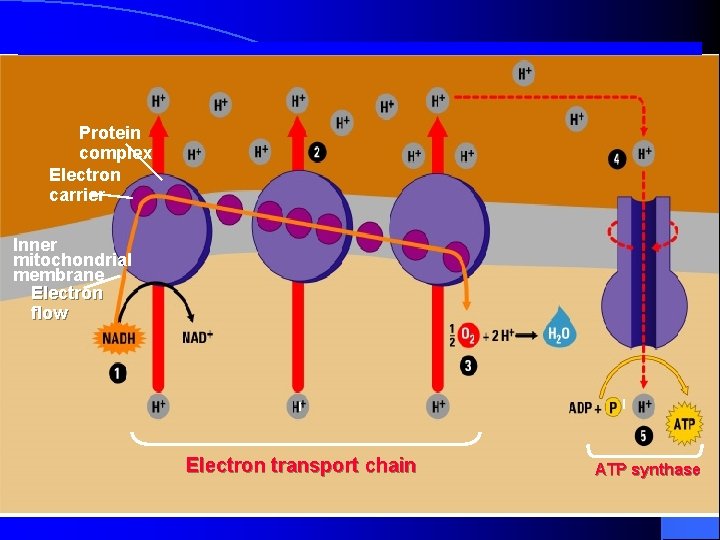
Protein complex Electron carrier Inner mitochondrial membrane Electron flow Electron transport chain ATP synthase
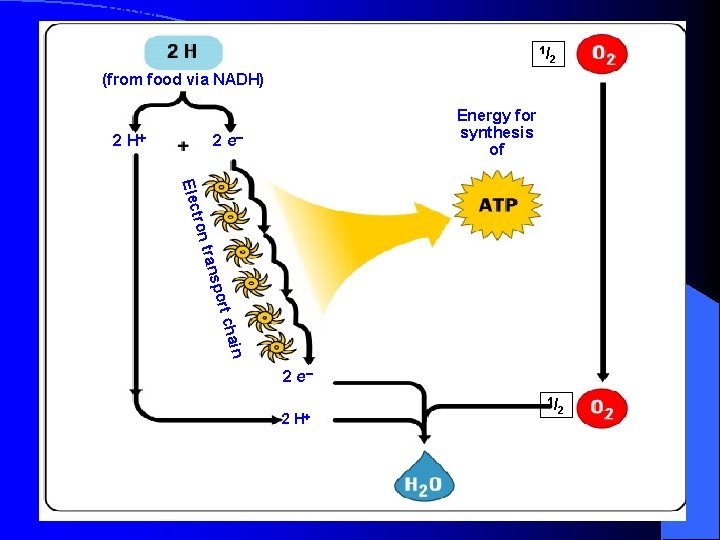
(from food via NADH) 1/ 2 (from food via NADH) 2 H Energy for synthesis of 2 e cha port rans t tron Elec in 2 e 2 H 1/ 2
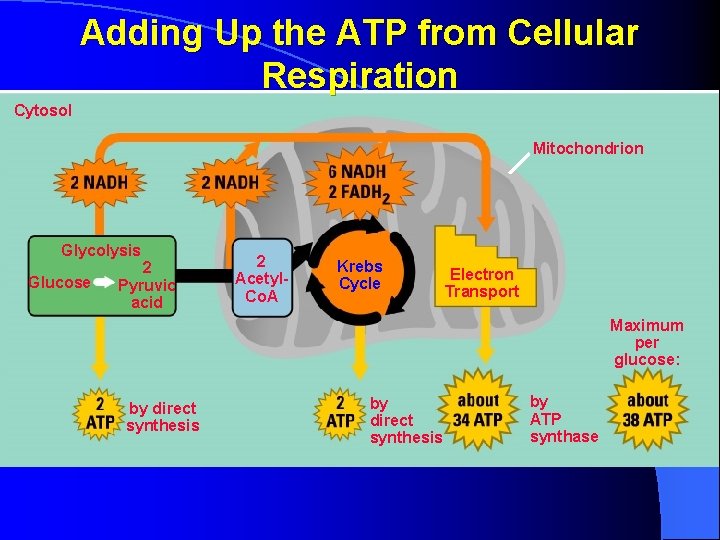
Adding Up the ATP from Cellular Respiration Cytosol Mitochondrion Glycolysis Glucose 2 Pyruvic acid 2 Acetyl. Co. A Krebs Cycle Electron Transport Maximum per glucose: by direct synthesis by ATP synthase
Lactic acid Fermentation in Human Muscle Cells l Human muscle cells can make ATP with and without oxygen l muscle cells can produce ATP under anaerobic conditions
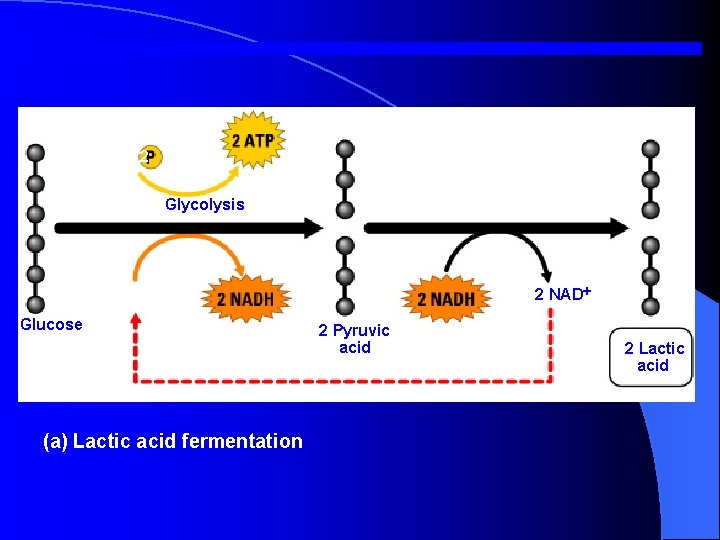
2 ADP+ 2 Glycolysis 2 NAD Glucose (a) Lactic acid fermentation 2 Pyruvic acid + 2 H 2 Lactic acid
Alcoholic Fermentation in Microorganisms l Various types of microorganisms perform fermentation – Yeast cells carry out a slightly different type of fermentation pathway – This pathway produces CO 2 and ethyl alcohol
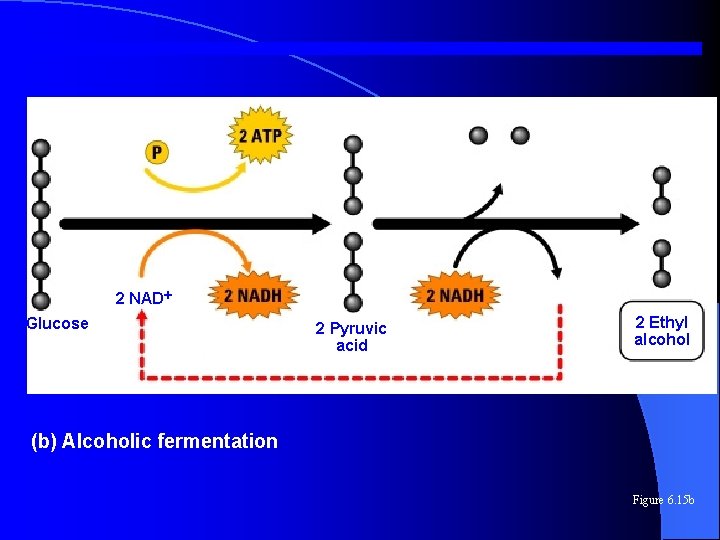
2 ADP+ 2 2 ATP 2 CO 2 released Glycolysis 2 NAD Glucose 2 Pyruvic acid + 2 H 2 Ethyl alcohol (b) Alcoholic fermentation Figure 6. 15 b
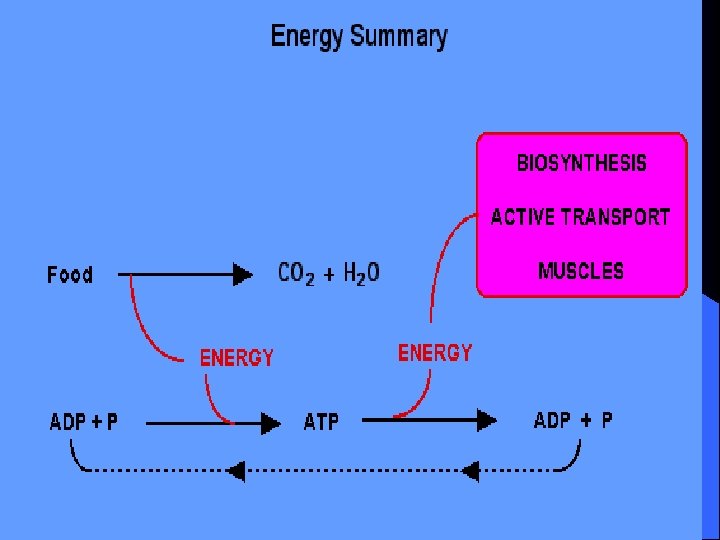
l Pathways l Central : specific reaction sequences Pathways : essentially the same in all organisms account for mass transfer of energy and energy generation
Overview of Catabolism
Photosynthesis The process which occurs in the chloroplasts of green plants in which simple sugars are formed from carbon dioxide and water in the presence of light and chlorophyll l Two major parts of photosynthesis – 1. Light reactions: conversion of light energy into ATP and NADPH – 2. Dark reactions: use of energy (ATP & NADPH) to form carbohydrates l
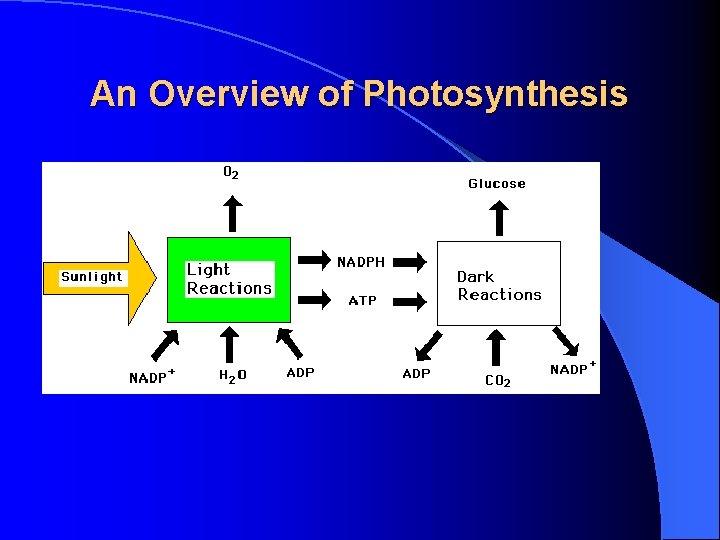
An Overview of Photosynthesis
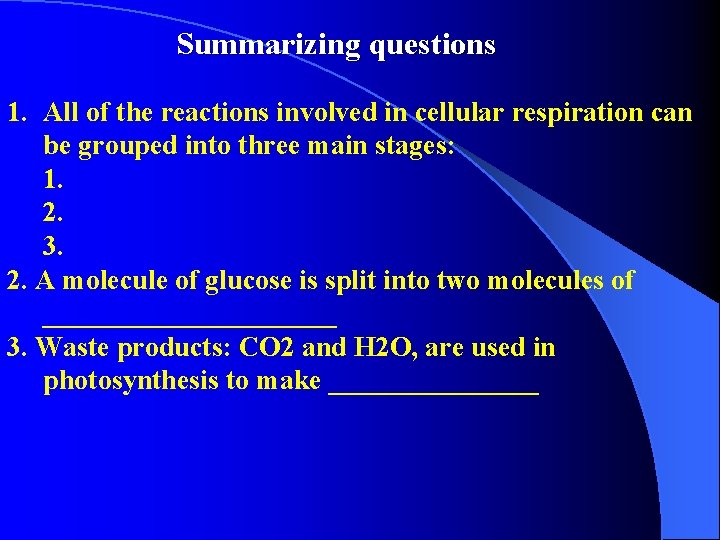
Summarizing questions 1. All of the reactions involved in cellular respiration can be grouped into three main stages: 1. 2. 3. 2. A molecule of glucose is split into two molecules of ___________ 3. Waste products: CO 2 and H 2 O, are used in photosynthesis to make ________
input output ? ? ? ?
Cellular Respiration
Kreb’s cycle
- Slides: 55