
Metabolism Lesson 12 Absorption Action Spectra and Limiting
Metabolism: Lesson 12 Absorption, Action Spectra, and Limiting Factors
Understandings and Applications 2. 9. U 2 Visible light has a range of wavelengths with violet the shortest wavelength and red the longest. 2. 9. U 3 Chlorophyll absorbs red and blue light most effectively and reflects green light more than other colours. [Students should know that visible light has wavelengths between 400 and 700 nanometres, but they are not expected to recall the wavelengths of specific colours of light. ] 2. 9. S 1 Drawing an absorption spectrum for chlorophyll and an action spectrum for photosynthesis. 2

QUIZ 3
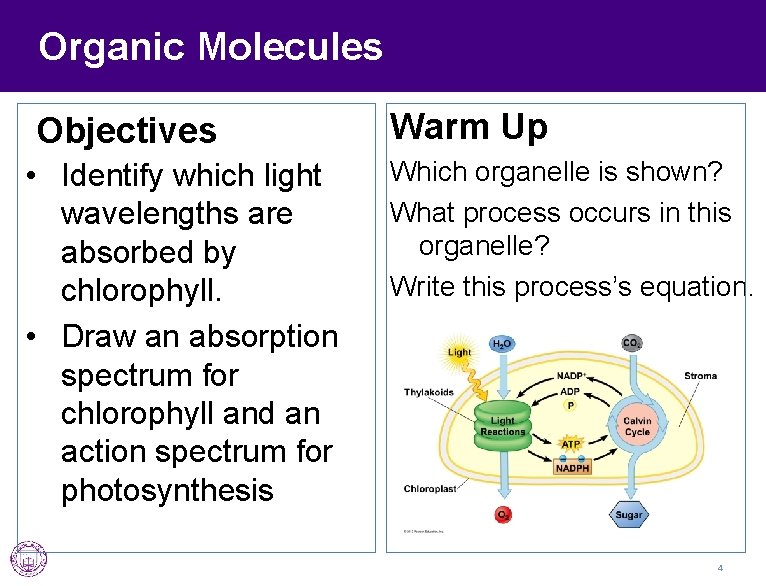
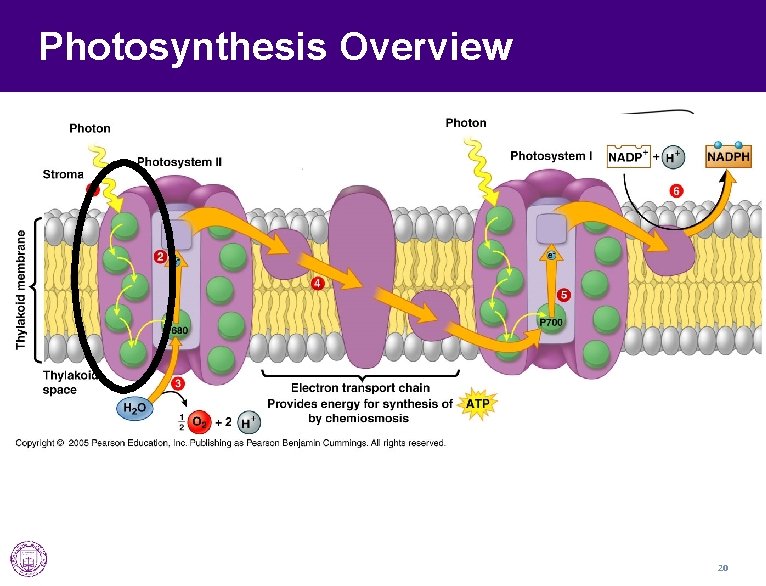
Organic Molecules Objectives • Identify which light wavelengths are absorbed by chlorophyll. • Draw an absorption spectrum for chlorophyll and an action spectrum for photosynthesis Warm Up Which organelle is shown? What process occurs in this organelle? Write this process’s equation. 4
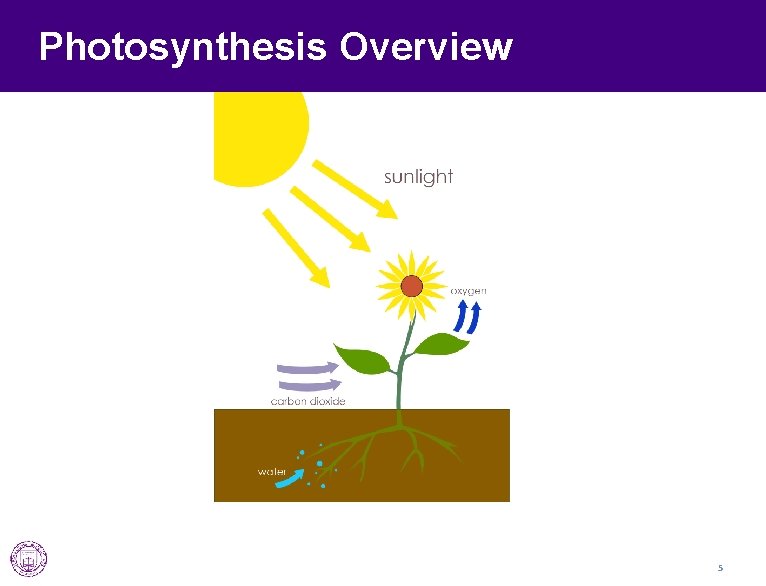
Photosynthesis Overview 5
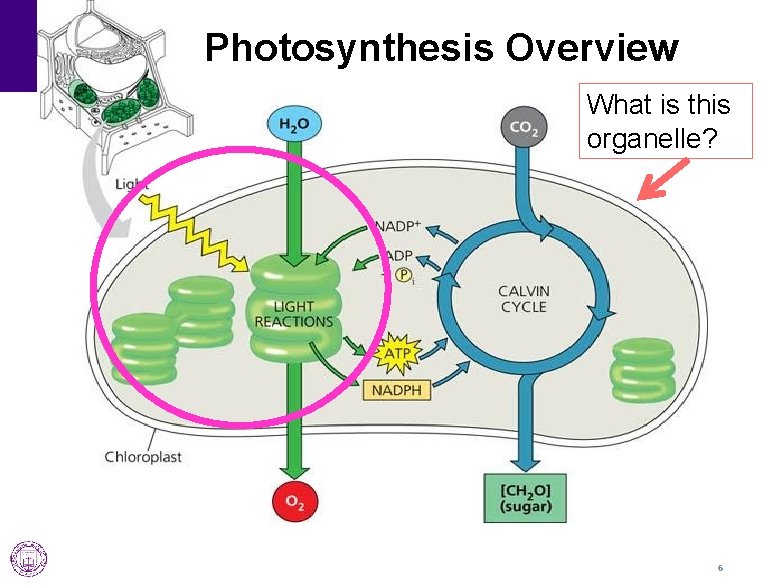
Photosynthesis Overview What is this organelle? 6
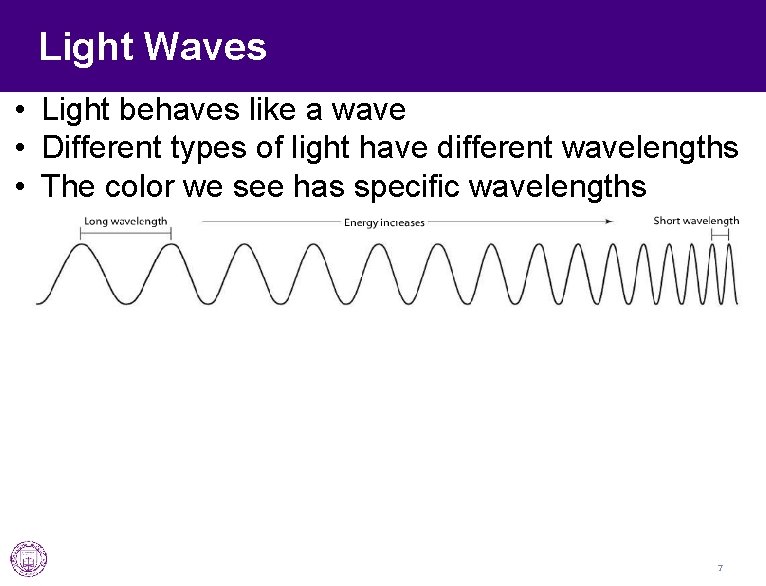
Light Waves • Light behaves like a wave • Different types of light have different wavelengths • The color we see has specific wavelengths 7
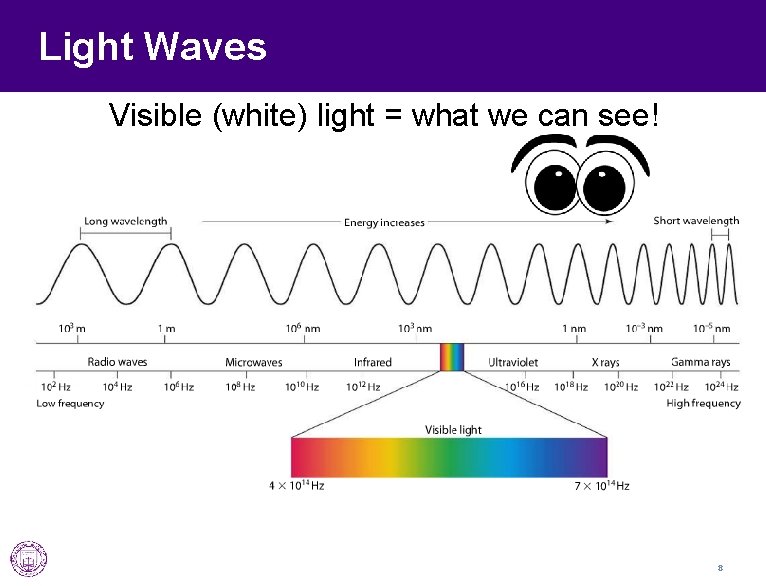
Light Waves Visible (white) light = what we can see! 8
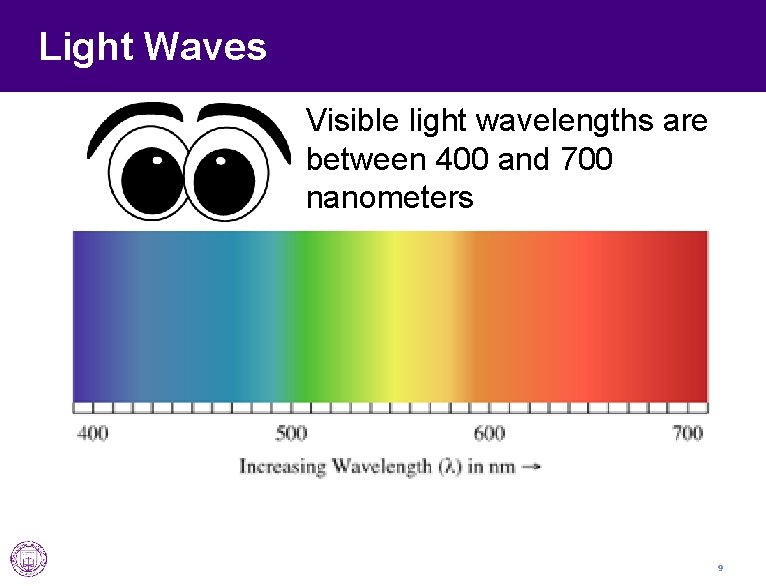
Light Waves Visible light wavelengths are between 400 and 700 nanometers 9

How do we see color? 10
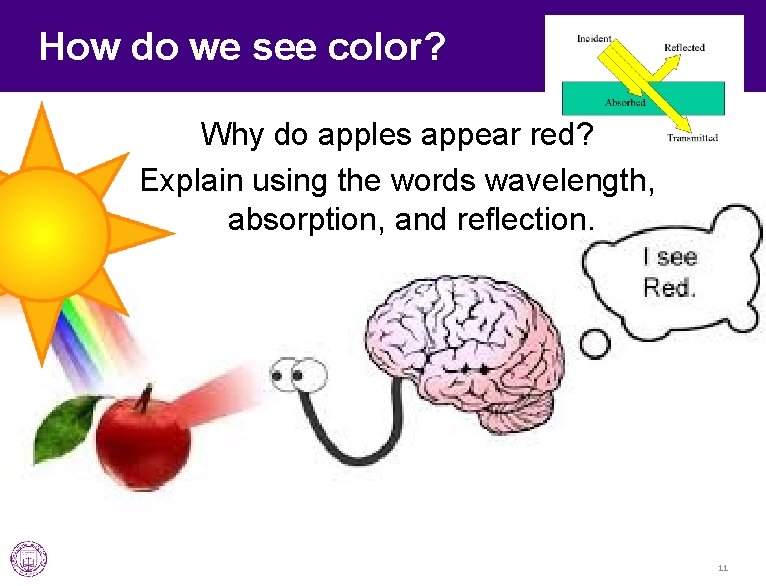
How do we see color? Why do apples appear red? Explain using the words wavelength, absorption, and reflection. 11
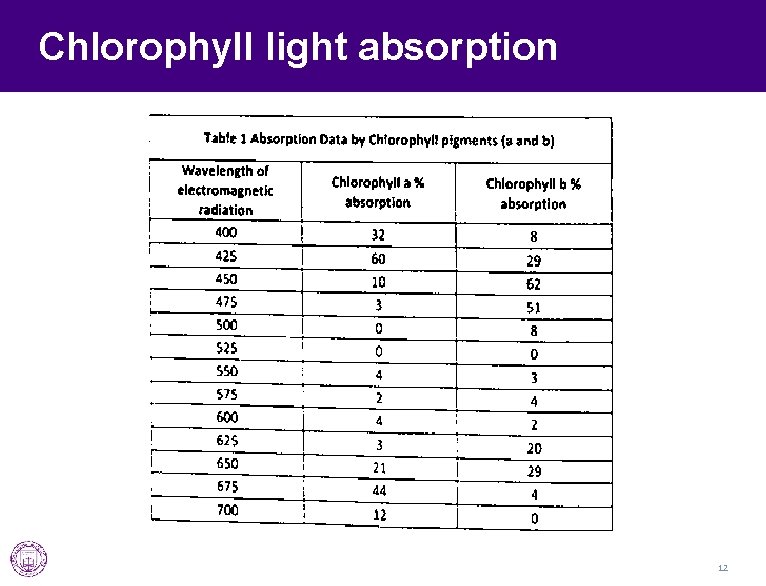
Chlorophyll light absorption 12
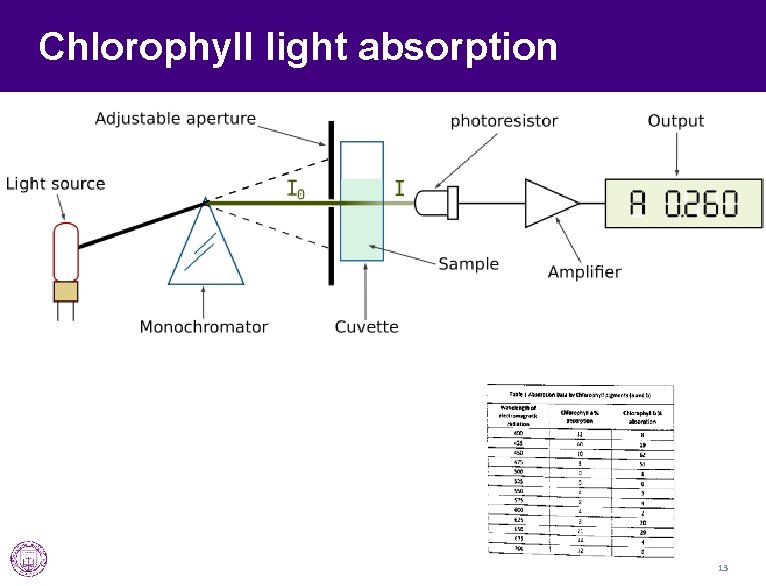
Chlorophyll light absorption 13

Chlorophyll light absorption Absorbtion and Acton Spectra of a Green Plant 70 Color code your x-axis with the markers provided 60 Absorbance (%) 50 40 Chlorophyll a 30 Chlorophyll b 20 10 0 400 450 500 550 Wavelength of light (nm) 600 650 700 14
Chlorophyll light absorption Analysis Questions 1. Based on the data and your graphs, what can you conclude about the two chlorophylls and their absorption spectra? In what ways are the two similar? Different? 2. If some wavelengths (colors) of light are absorbed by chlorophylls what happens to the other wavelengths that are not absorbed? 3. Based on the above data and your graph, which colors of light is most important to plants for photosynthesis? Explain. 15
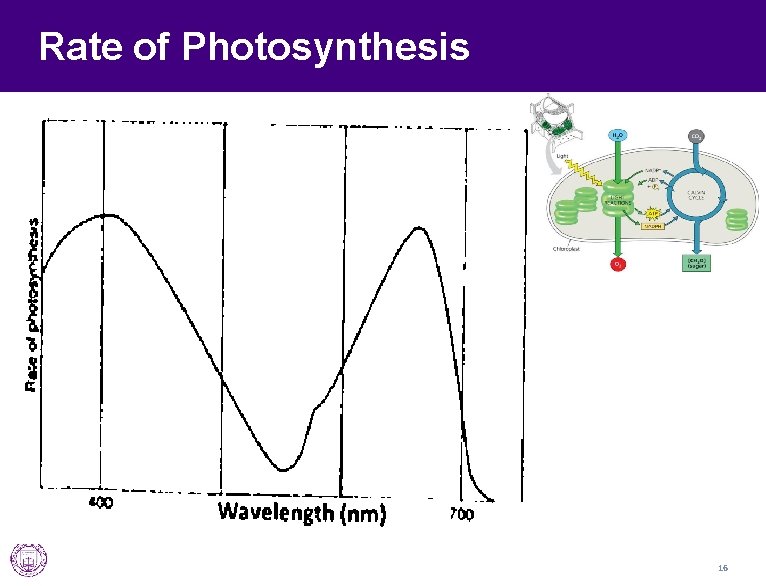
Rate of Photosynthesis 16
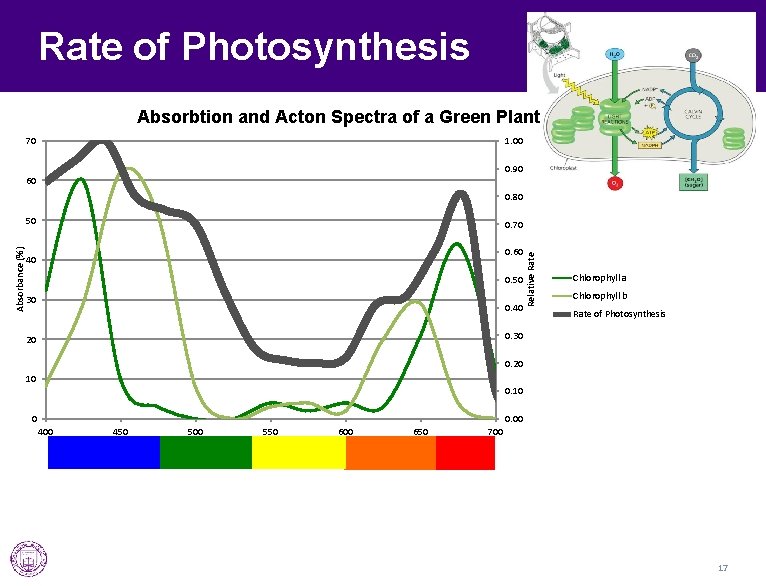
Rate of Photosynthesis Absorbtion and Acton Spectra of a Green Plant 70 1. 00 0. 90 60 0. 80 0. 70 0. 60 40 0. 50 30 0. 40 Relative Rate Absorbance (%) 50 Chlorophyll a Chlorophyll b Rate of Photosynthesis 0. 30 20 0. 20 10 0 0. 00 450 500 550 Wavelength of light (nm) 600 650 700 17
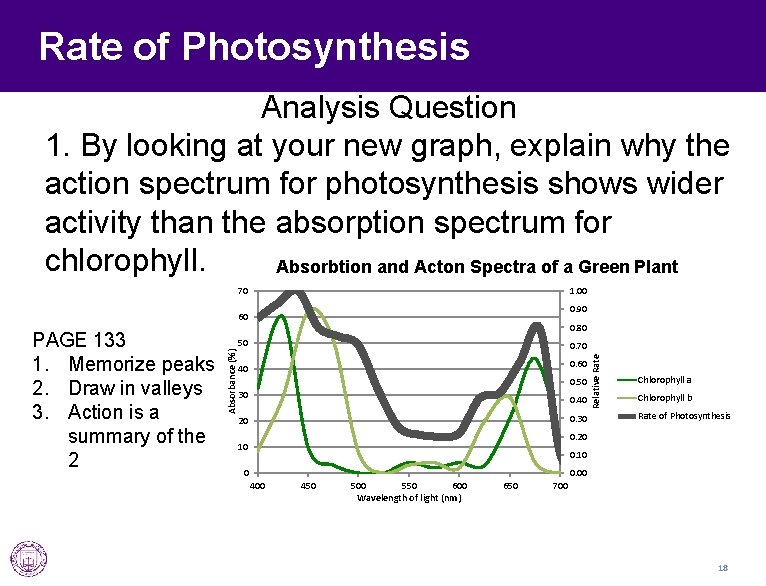
Rate of Photosynthesis Analysis Question 1. By looking at your new graph, explain why the action spectrum for photosynthesis shows wider activity than the absorption spectrum for chlorophyll. Absorbtion and Acton Spectra of a Green Plant 70 1. 00 0. 90 60 50 0. 70 0. 60 40 0. 50 30 0. 40 0. 30 20 Relative Rate Absorbance (%) PAGE 133 1. Memorize peaks 2. Draw in valleys 3. Action is a summary of the 2 0. 80 Chlorophyll a Chlorophyll b Rate of Photosynthesis 0. 20 10 0 0. 00 450 500 550 600 Wavelength of light (nm) 650 700 18
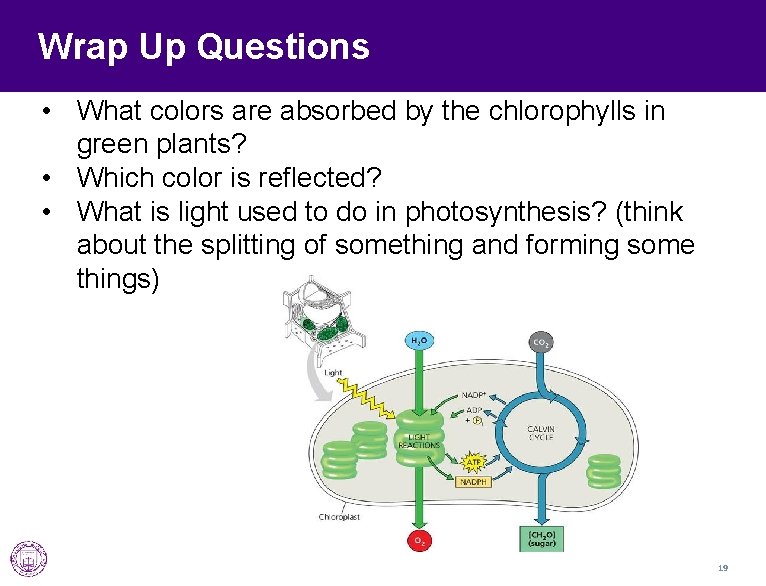
Wrap Up Questions • What colors are absorbed by the chlorophylls in green plants? • Which color is reflected? • What is light used to do in photosynthesis? (think about the splitting of something and forming some things) 19
Photosynthesis Overview 20
- Slides: 20