
Metabolism Energy and Enzymes Just 10 000 years
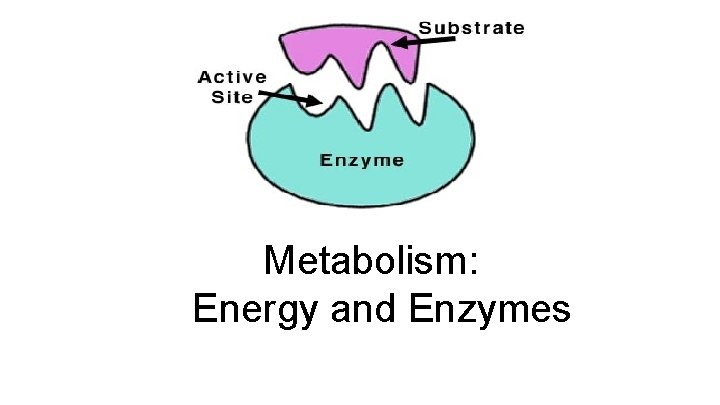
Metabolism: Energy and Enzymes
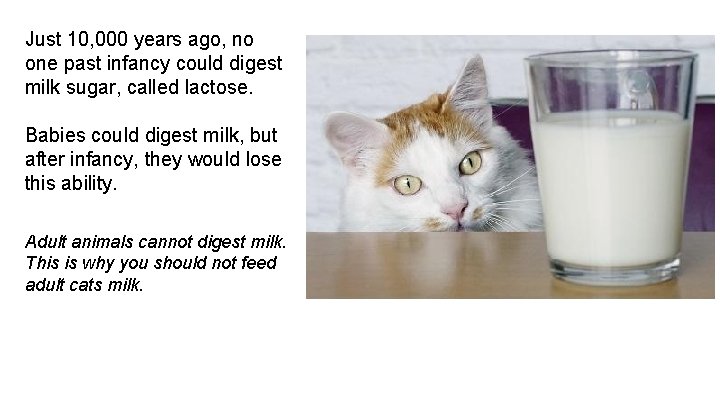
Just 10, 000 years ago, no one past infancy could digest milk sugar, called lactose. Babies could digest milk, but after infancy, they would lose this ability. Adult animals cannot digest milk. This is why you should not feed adult cats milk.
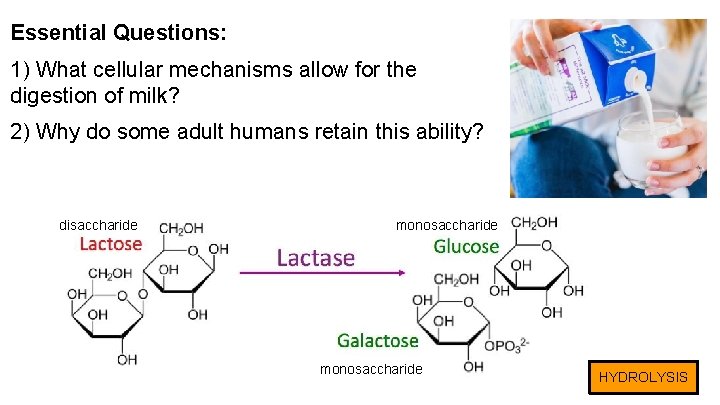
Essential Questions: 1) What cellular mechanisms allow for the digestion of milk? 2) Why do some adult humans retain this ability? disaccharide monosaccharide HYDROLYSIS
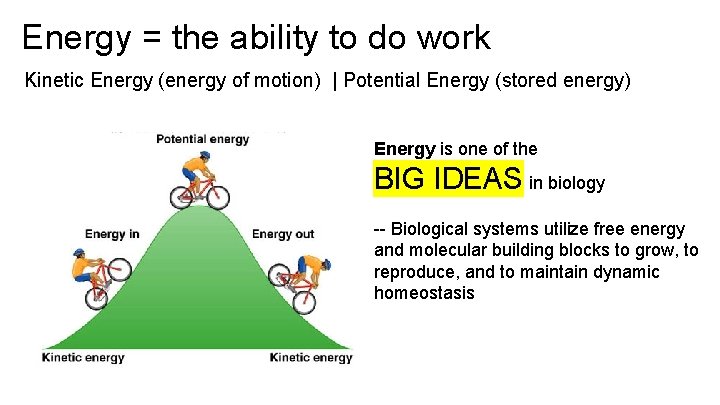
Energy = the ability to do work Kinetic Energy (energy of motion) | Potential Energy (stored energy) Energy is one of the BIG IDEAS in biology -- Biological systems utilize free energy and molecular building blocks to grow, to reproduce, and to maintain dynamic homeostasis
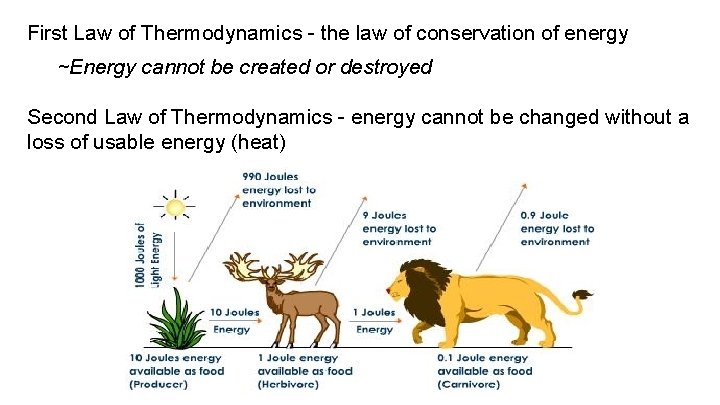
First Law of Thermodynamics - the law of conservation of energy ~Energy cannot be created or destroyed Second Law of Thermodynamics - energy cannot be changed without a loss of usable energy (heat)
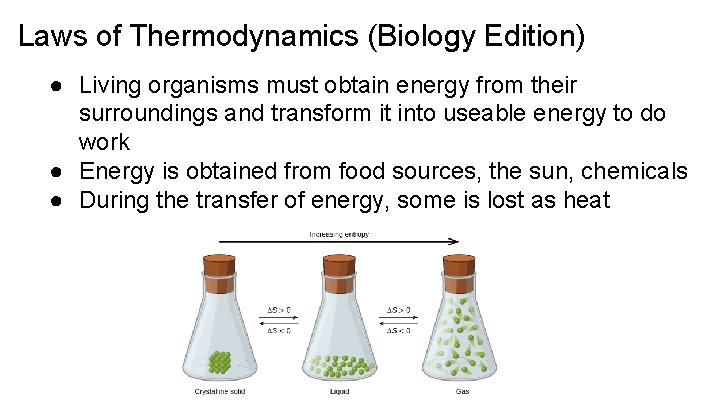
Laws of Thermodynamics (Biology Edition) ● Living organisms must obtain energy from their surroundings and transform it into useable energy to do work ● Energy is obtained from food sources, the sun, chemicals ● During the transfer of energy, some is lost as heat
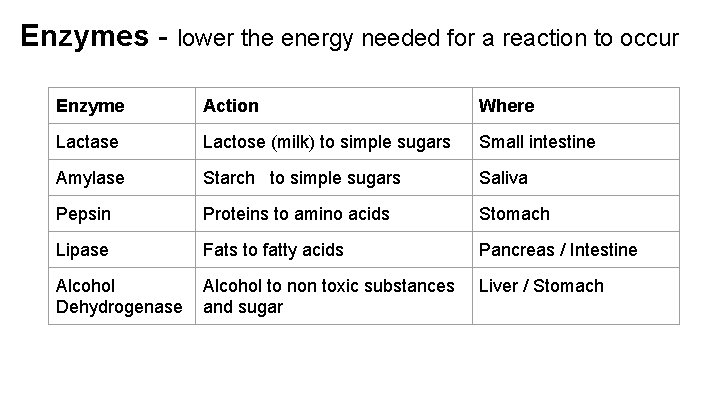
Enzymes - lower the energy needed for a reaction to occur Enzyme Action Where Lactase Lactose (milk) to simple sugars Small intestine Amylase Starch to simple sugars Saliva Pepsin Proteins to amino acids Stomach Lipase Fats to fatty acids Pancreas / Intestine Alcohol Dehydrogenase Alcohol to non toxic substances and sugar Liver / Stomach
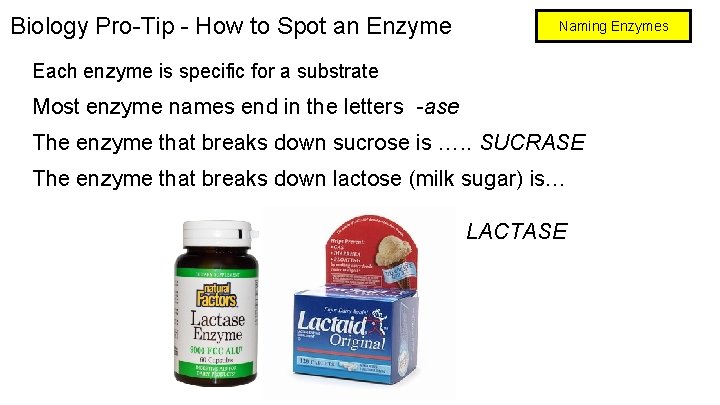
Biology Pro-Tip - How to Spot an Enzyme Naming Enzymes Each enzyme is specific for a substrate Most enzyme names end in the letters -ase The enzyme that breaks down sucrose is …. . SUCRASE The enzyme that breaks down lactose (milk sugar) is… LACTASE
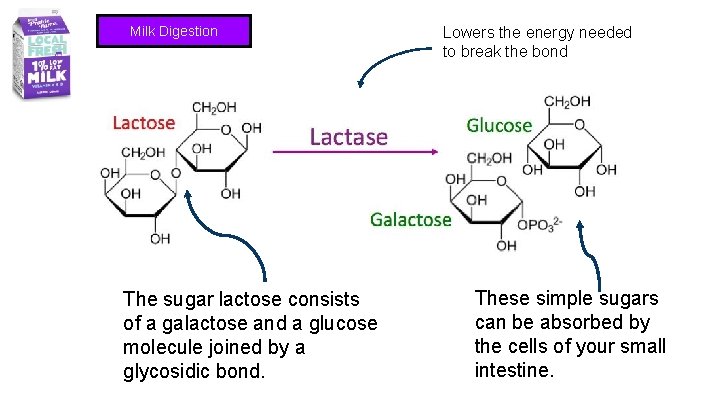
Milk Digestion The sugar lactose consists of a galactose and a glucose molecule joined by a glycosidic bond. Lowers the energy needed to break the bond These simple sugars can be absorbed by the cells of your small intestine.
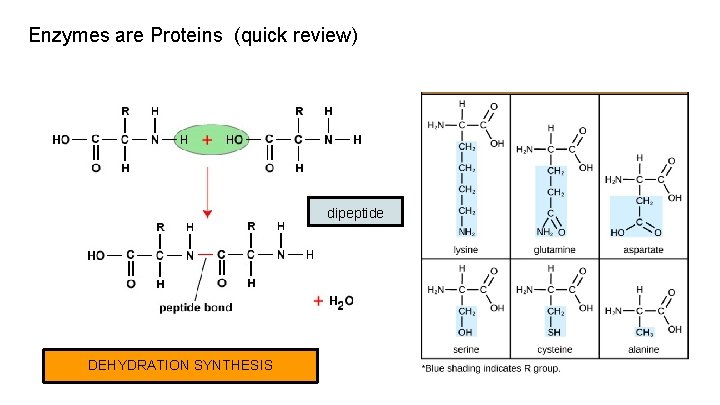
Enzymes are Proteins (quick review) dipeptide DEHYDRATION SYNTHESIS
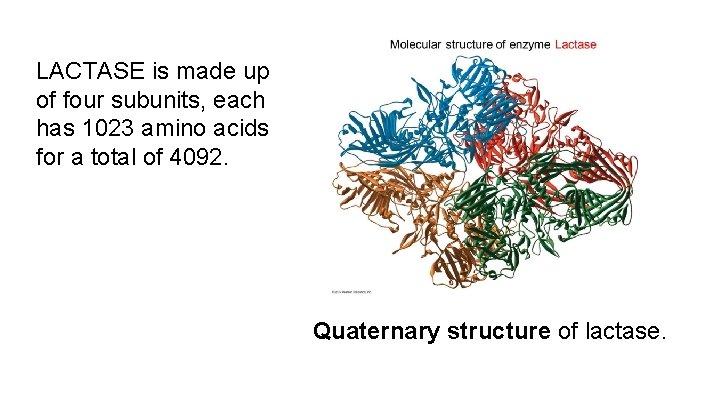
LACTASE is made up of four subunits, each has 1023 amino acids for a total of 4092. Quaternary structure of lactase.

How Enzymes Work Enzyme - protein molecule that functions as an organic catalyst to speed reactions Substrate - reactants in the enzymatic reaction, this is what an enzyme attaches to Energy of Activation = the energy required to cause the reaction
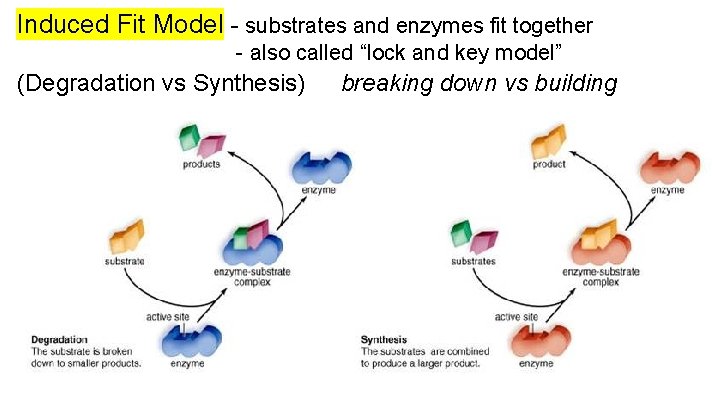
Induced Fit Model - substrates and enzymes fit together - also called “lock and key model” (Degradation vs Synthesis) breaking down vs building
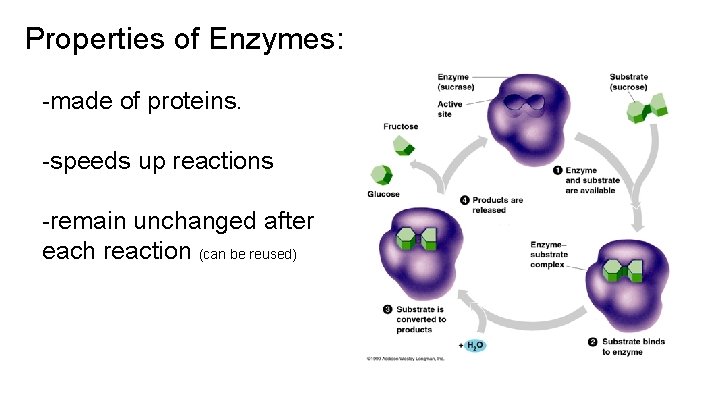
Properties of Enzymes: -made of proteins. -speeds up reactions -remain unchanged after each reaction (can be reused)
Can Yeast Digest Lactose? Yeasts are microscopic, single-celled organisms belonging to the fungi kingdom. Yeasts are HETEROTROPHS. How could you design an experiment that would determine if yeasts can synthesize the enzyme lactase? Yeasts consume sugar and produce carbon dioxide. This is why it is used to make bread rise.
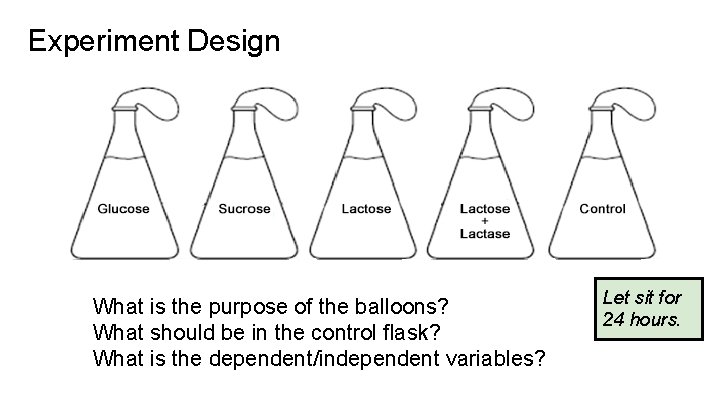
Experiment Design What is the purpose of the balloons? What should be in the control flask? What is the dependent/independent variables? Let sit for 24 hours.
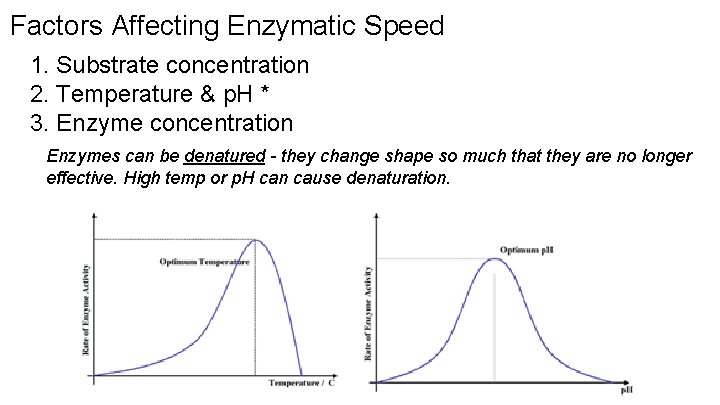
Factors Affecting Enzymatic Speed 1. Substrate concentration 2. Temperature & p. H * 3. Enzyme concentration Enzymes can be denatured - they change shape so much that they are no longer effective. High temp or p. H can cause denaturation.
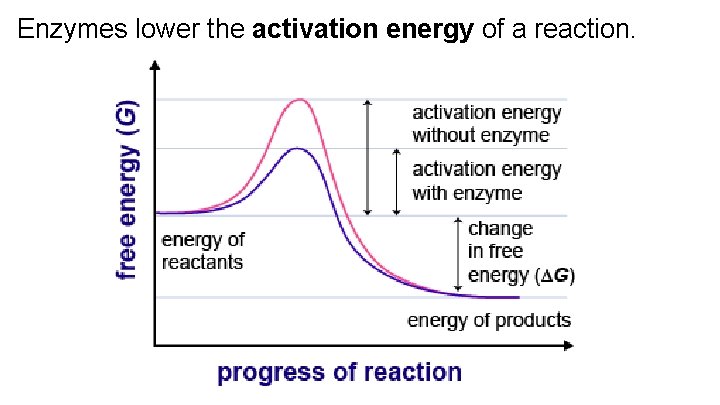
Enzymes lower the activation energy of a reaction.
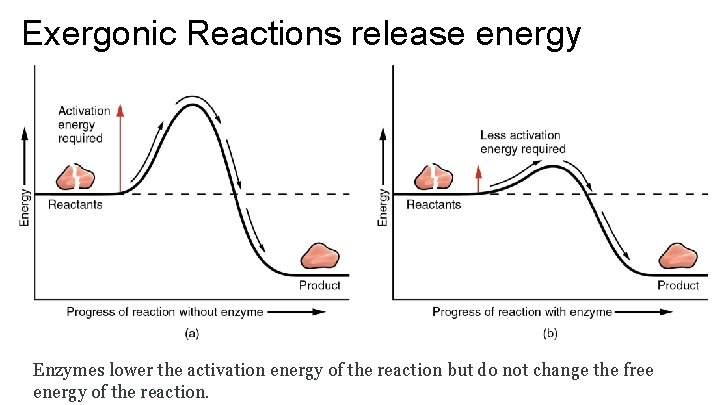
Exergonic Reactions release energy Enzymes lower the activation energy of the reaction but do not change the free energy of the reaction.

ENDERGONIC EXERGONIC
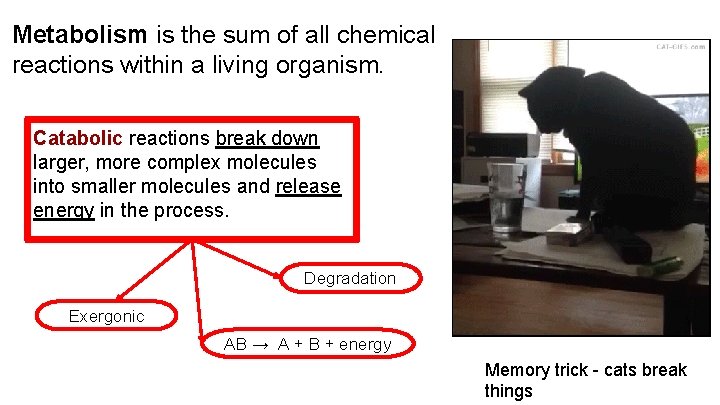
Metabolism is the sum of all chemical reactions within a living organism. Catabolic reactions break down larger, more complex molecules into smaller molecules and release energy in the process. Degradation Exergonic AB → A + B + energy Memory trick - cats break things
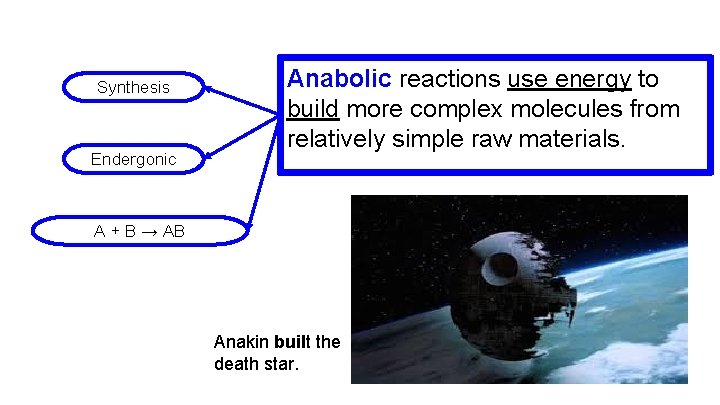
Synthesis Endergonic Anabolic reactions use energy to build more complex molecules from relatively simple raw materials. A + B → AB Anakin built the death star.
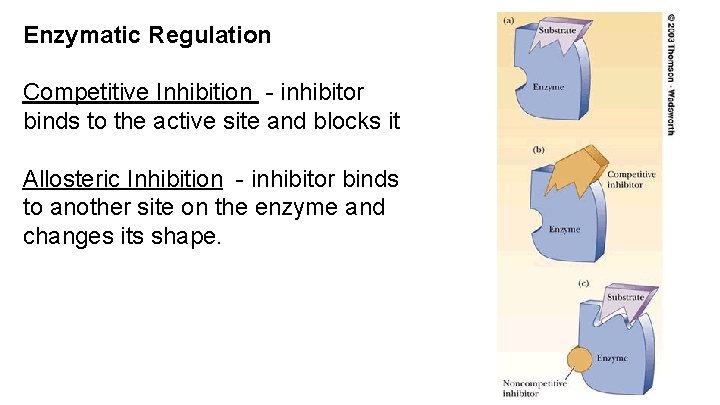
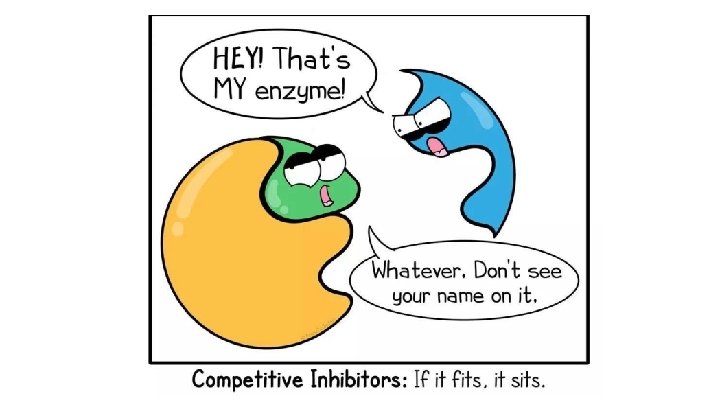
Enzymatic Regulation Competitive Inhibition - inhibitor binds to the active site and blocks it Allosteric Inhibition - inhibitor binds to another site on the enzyme and changes its shape.
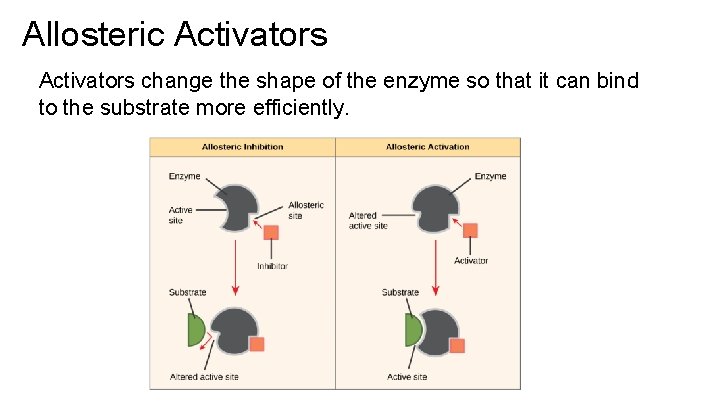
Allosteric Activators change the shape of the enzyme so that it can bind to the substrate more efficiently.
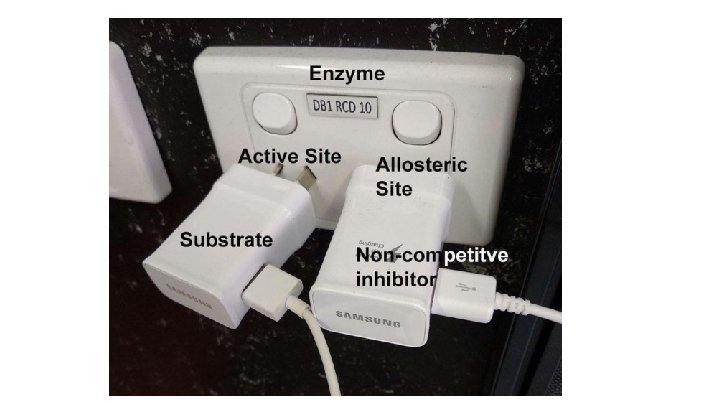
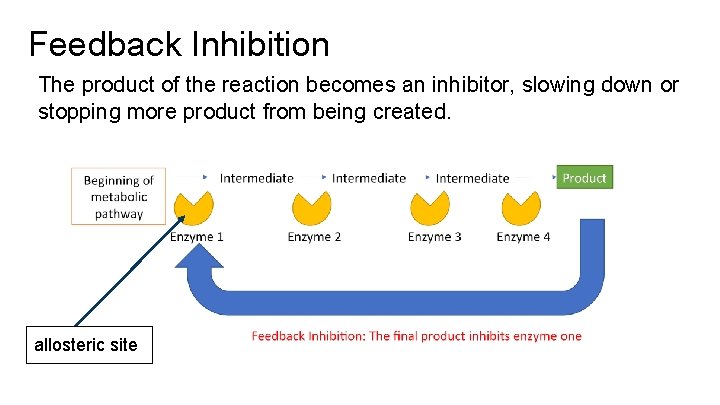
Feedback Inhibition The product of the reaction becomes an inhibitor, slowing down or stopping more product from being created. allosteric site
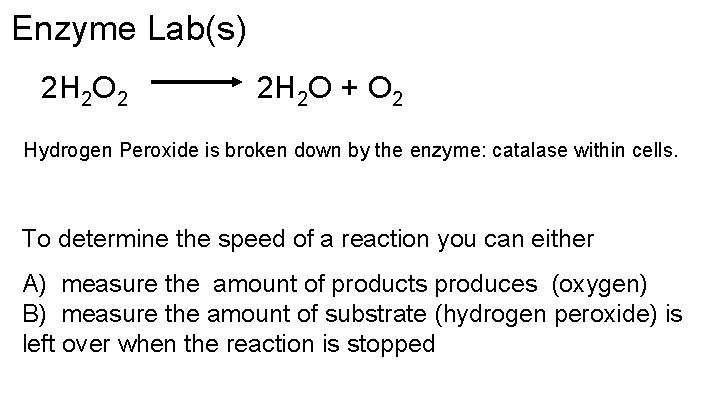
Enzyme Lab(s) 2 H 2 O 2 2 H 2 O + O 2 Hydrogen Peroxide is broken down by the enzyme: catalase within cells. To determine the speed of a reaction you can either A) measure the amount of products produces (oxygen) B) measure the amount of substrate (hydrogen peroxide) is left over when the reaction is stopped
- Slides: 28