
Metabolism Cytochrome C in Humans Compared to Other
Metabolism: Cytochrome C in Humans Compared to Other Species Using Bioinformatics
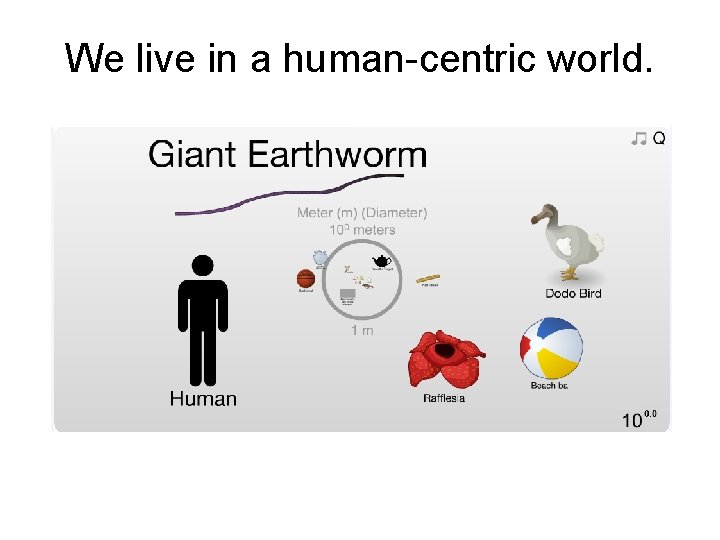
We live in a human-centric world.
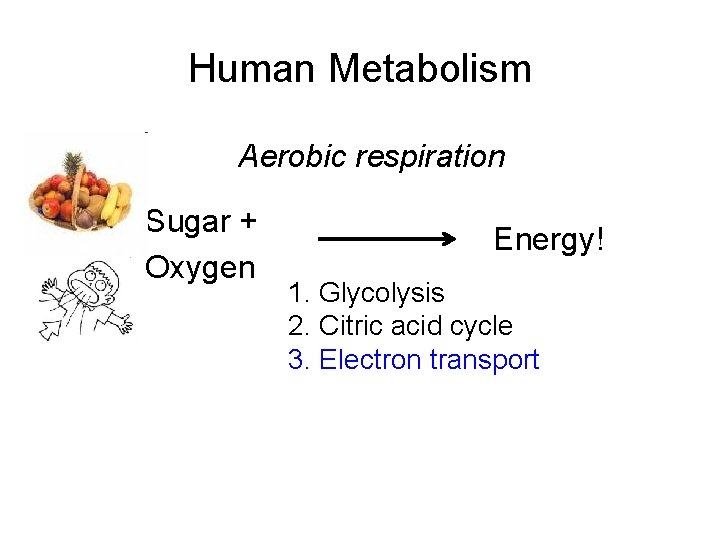
Human Metabolism Aerobic respiration Sugar + Oxygen Energy! 1. Glycolysis 2. Citric acid cycle 3. Electron transport
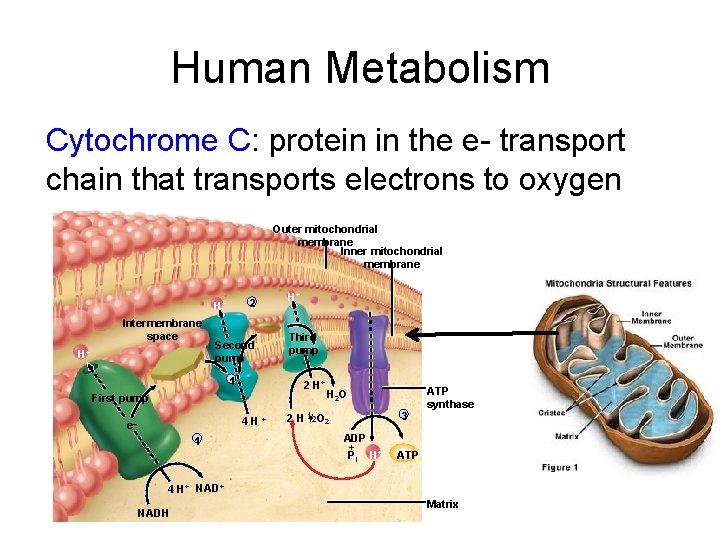
Human Metabolism Cytochrome C: protein in the e- transport chain that transports electrons to oxygen Outer mitochondrial membrane Inner mitochondrial membrane 2 H+ Intermembrane space H+ Second pump 1 4 H+ 1 Third pump 2 H+ First pump e– H+ H 2 O 3 2 H 1+/2 O 2 ADP + Pi H+ ATP synthase ATP 4 H+ NADH Matrix
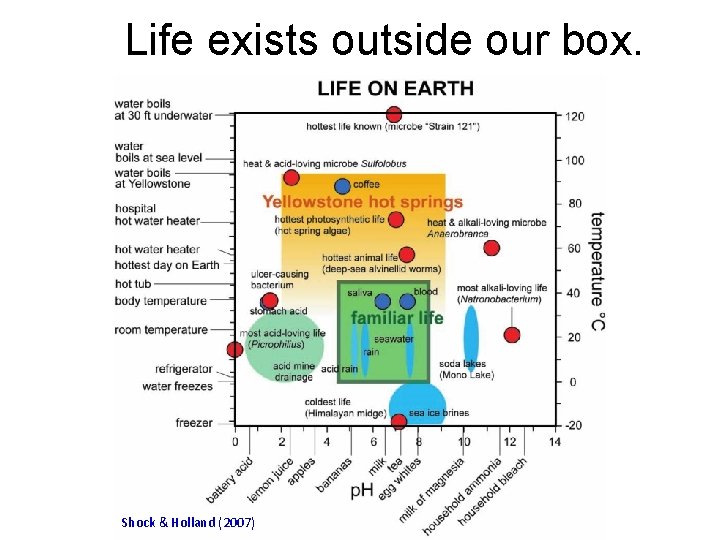
Life exists outside our box. Subtitle Text Shock & Holland (2007)
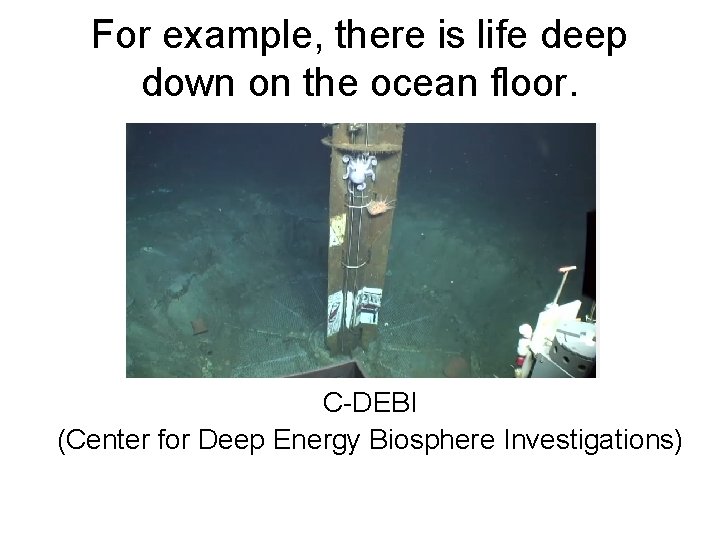
For example, there is life deep down on the ocean floor. C-DEBI (Center for Deep Energy Biosphere Investigations)
Do these different organisms all metabolize in the same way? No! • Some are aerobic or anaerobic • Some use oxygen or sulfur, iron, nitrogen • Some are faster or slower BUT ….
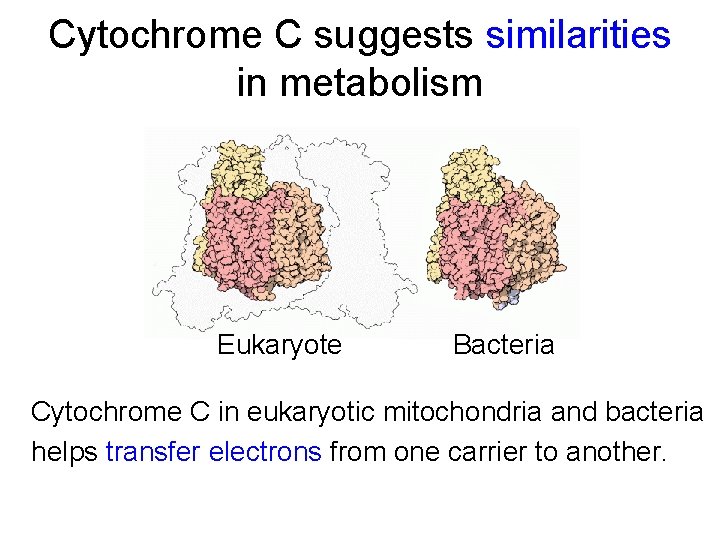
Cytochrome C suggests similarities in metabolism Eukaryote Bacteria Cytochrome C in eukaryotic mitochondria and bacteria helps transfer electrons from one carrier to another.
Purpose of today is to 1. Understand use bioinformatics. 2. Compare and contrast sequences. 3. Relate sequences from various species to genome evolution and protein function.
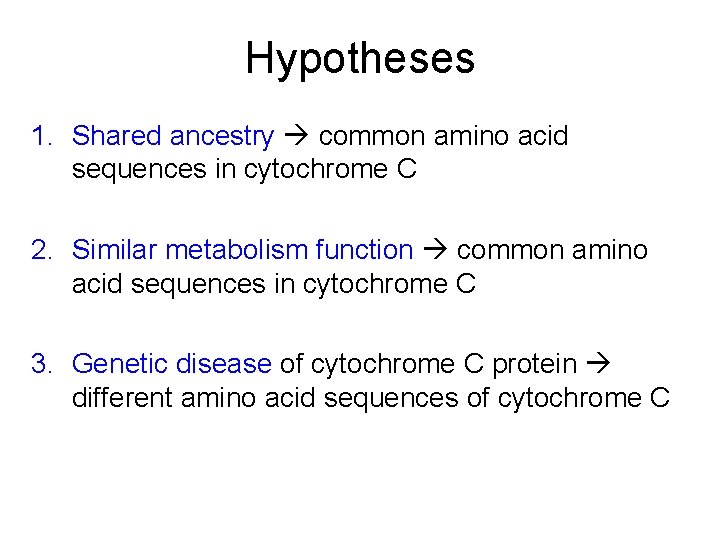
Hypotheses 1. Shared ancestry common amino acid sequences in cytochrome C 2. Similar metabolism function common amino acid sequences in cytochrome C 3. Genetic disease of cytochrome C protein different amino acid sequences of cytochrome C
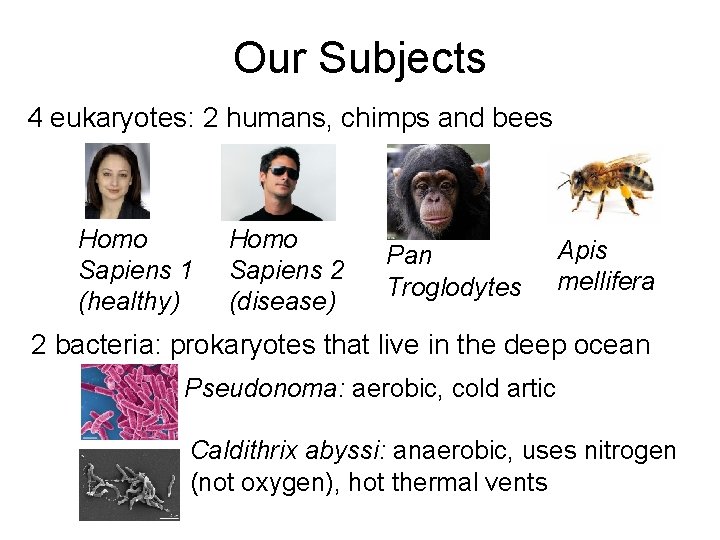
Our Subjects 4 eukaryotes: 2 humans, chimps and bees Homo Sapiens 1 (healthy) Homo Sapiens 2 (disease) Pan Troglodytes Apis mellifera 2 bacteria: prokaryotes that live in the deep ocean Pseudonoma: aerobic, cold artic Caldithrix abyssi: anaerobic, uses nitrogen (not oxygen), hot thermal vents
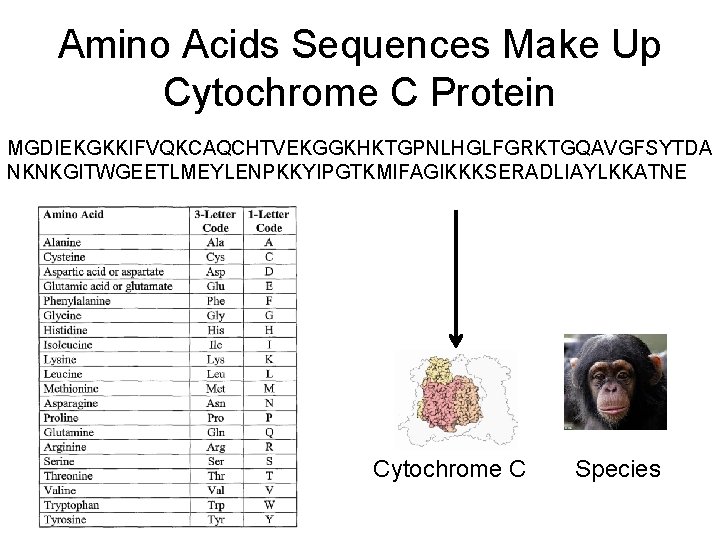
Amino Acids Sequences Make Up Cytochrome C Protein MGDIEKGKKIFVQKCAQCHTVEKGGKHKTGPNLHGLFGRKTGQAVGFSYTDA NKNKGITWGEETLMEYLENPKKYIPGTKMIFAGIKKKSERADLIAYLKKATNE Cytochrome C Species
Start Comparing Sequences! Three exercises (watch posted youtube videos) 1. BLAST: identify accuracy of given amino acid sequences (figure out unknown) 2. BLAST: compare amino acid sequences for cytochrome C between species 3. Sea View: visually align cytochrome C amino acid sequences for all 6 species
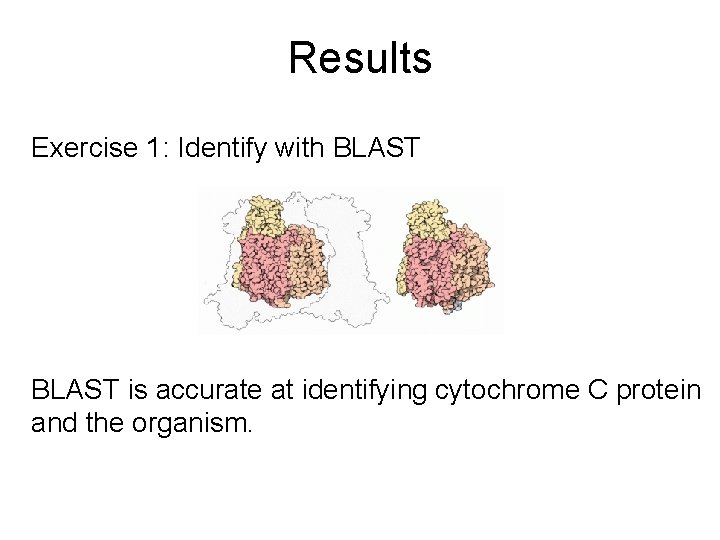
Results Exercise 1: Identify with BLAST is accurate at identifying cytochrome C protein and the organism.
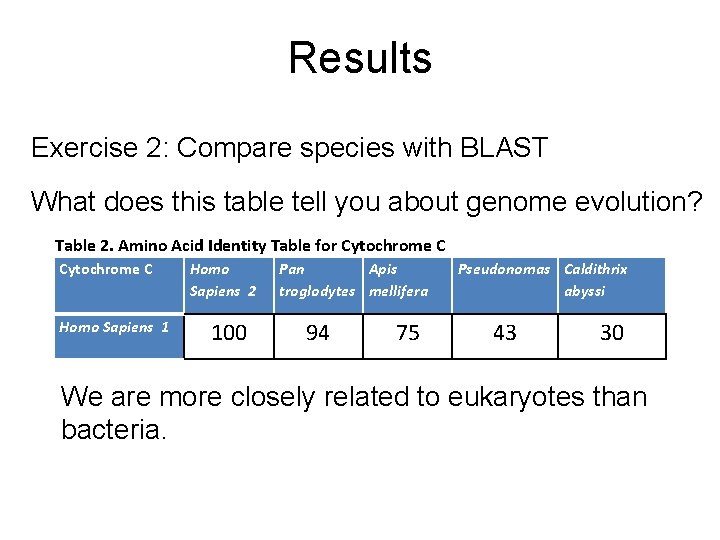
Results Exercise 2: Compare species with BLAST What does this table tell you about genome evolution? Table 2. Amino Acid Identity Table for Cytochrome C Homo Sapiens 1 Homo Sapiens 2 100 Pan Apis troglodytes mellifera 94 75 Pseudonomas Caldithrix abyssi 43 30 We are more closely related to eukaryotes than bacteria.
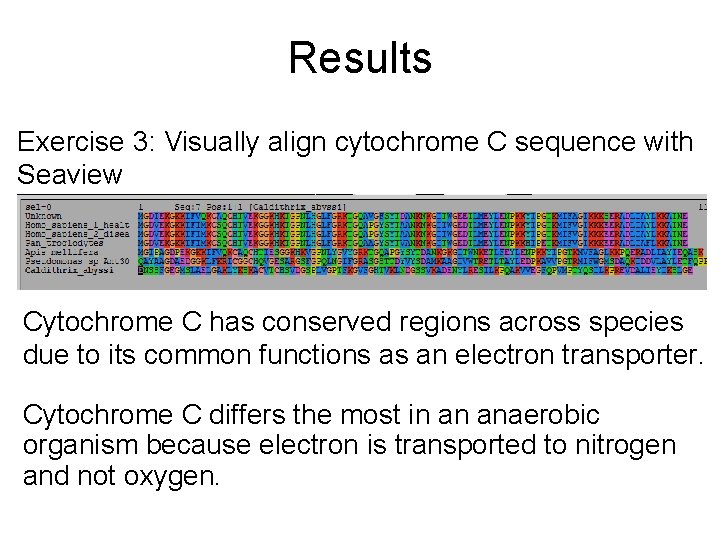
Results Exercise 3: Visually align cytochrome C sequence with Seaview Cytochrome C has conserved regions across species due to its common functions as an electron transporter. Cytochrome C differs the most in an anaerobic organism because electron is transported to nitrogen and not oxygen.
Discussion • Do you support your hypotheses?
Summary • Humans and other organisms share some common amino acid sequences for cytochrome C with both eukaryotes and bacteria suggesting a common ancestry. • If amino acid sequences for cytochrome C are more similar, then there is more similarity in metabolism function.
- Slides: 19