
Metabolism and elimination of drugs Liver is the
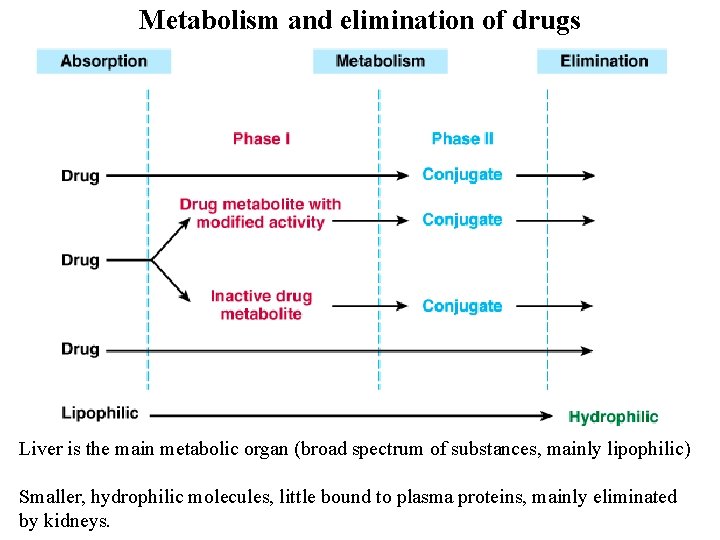
Metabolism and elimination of drugs Liver is the main metabolic organ (broad spectrum of substances, mainly lipophilic) Smaller, hydrophilic molecules, little bound to plasma proteins, mainly eliminated by kidneys.

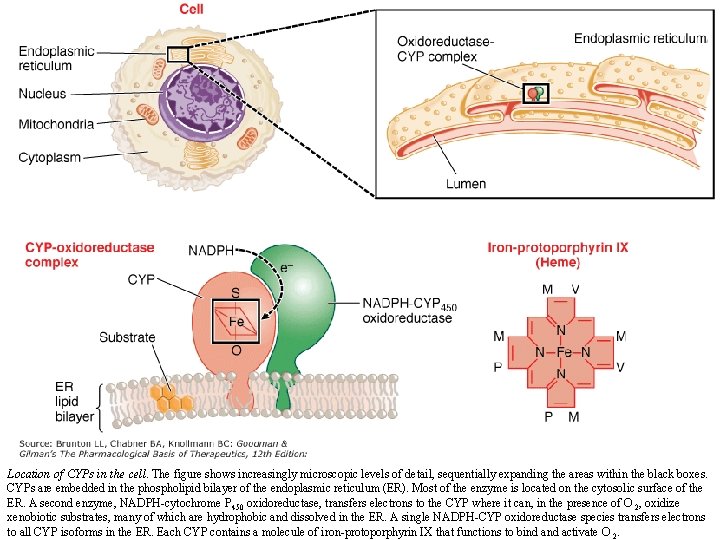
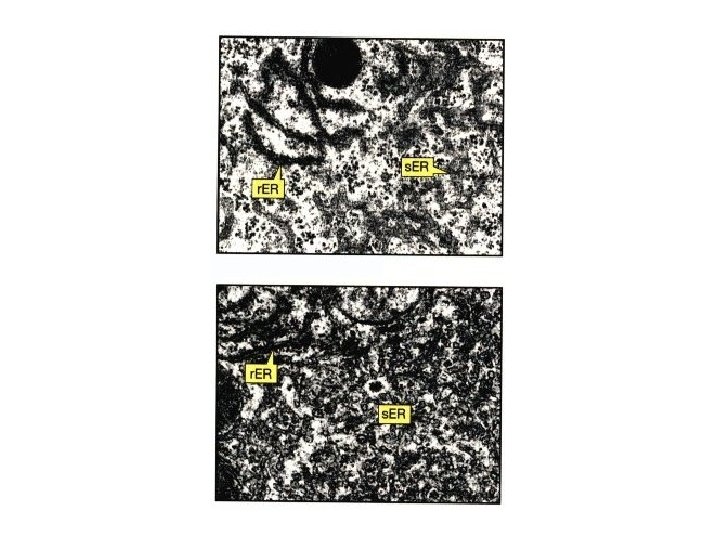
Location of CYPs in the cell. The figure shows increasingly microscopic levels of detail, sequentially expanding the areas within the black boxes. CYPs are embedded in the phospholipid bilayer of the endoplasmic reticulum (ER). Most of the enzyme is located on the cytosolic surface of the ER. A second enzyme, NADPH-cytochrome P 450 oxidoreductase, transfers electrons to the CYP where it can, in the presence of O 2, oxidize xenobiotic substrates, many of which are hydrophobic and dissolved in the ER. A single NADPH-CYP oxidoreductase species transfers electrons to all CYP isoforms in the ER. Each CYP contains a molecule of iron-protoporphyrin IX that functions to bind activate O 2.
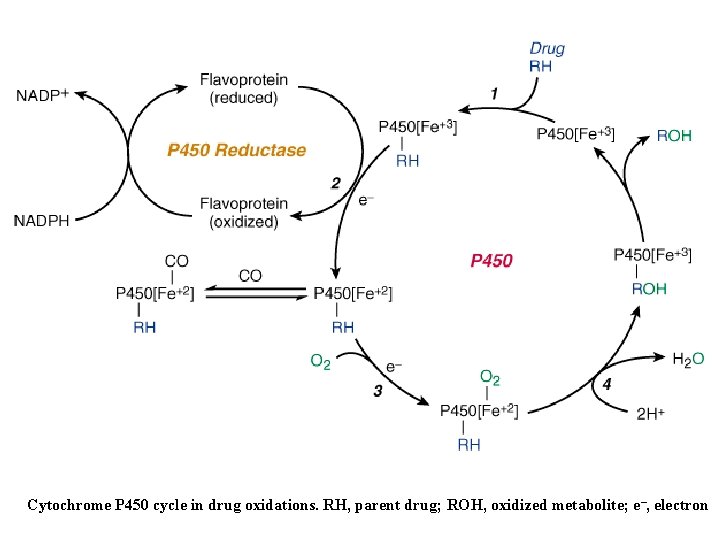
Cytochrome P 450 cycle in drug oxidations. RH, parent drug; ROH, oxidized metabolite; e–, electron
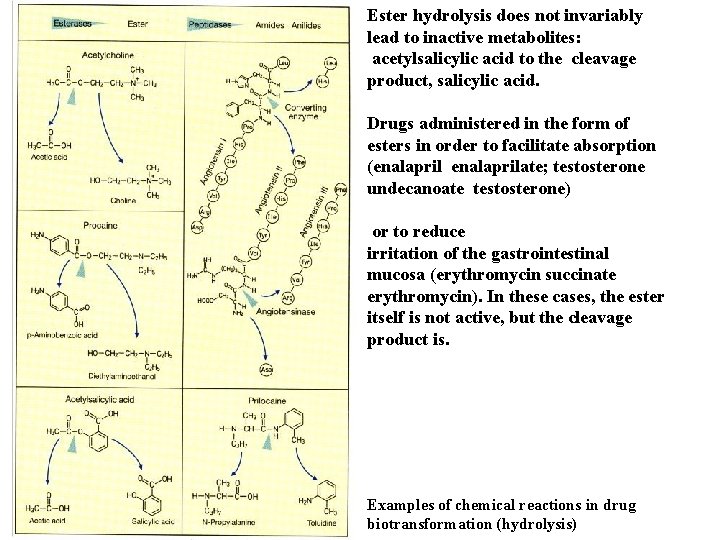
Ester hydrolysis does not invariably lead to inactive metabolites: acetylsalicylic acid to the cleavage product, salicylic acid. Drugs administered in the form of esters in order to facilitate absorption (enalaprilate; testosterone undecanoate testosterone) or to reduce irritation of the gastrointestinal mucosa (erythromycin succinate erythromycin). In these cases, the ester itself is not active, but the cleavage product is. Examples of chemical reactions in drug biotransformation (hydrolysis)
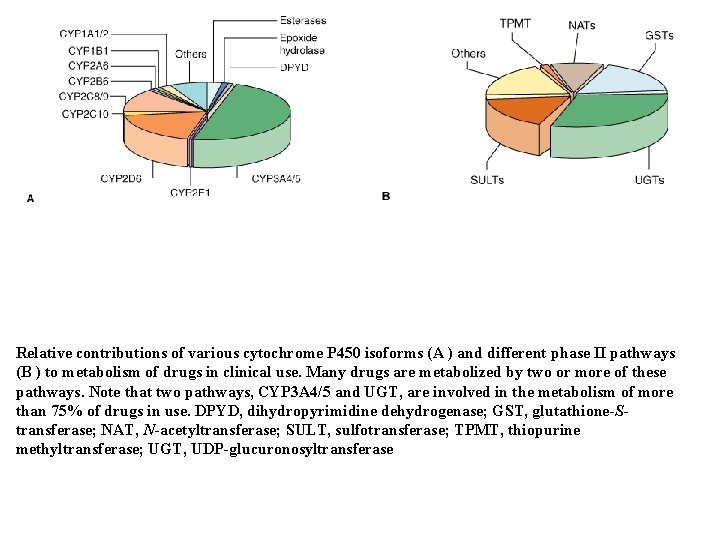
Relative contributions of various cytochrome P 450 isoforms (A ) and different phase II pathways (B ) to metabolism of drugs in clinical use. Many drugs are metabolized by two or more of these pathways. Note that two pathways, CYP 3 A 4/5 and UGT, are involved in the metabolism of more than 75% of drugs in use. DPYD, dihydropyrimidine dehydrogenase; GST, glutathione-Stransferase; NAT, N-acetyltransferase; SULT, sulfotransferase; TPMT, thiopurine methyltransferase; UGT, UDP-glucuronosyltransferase
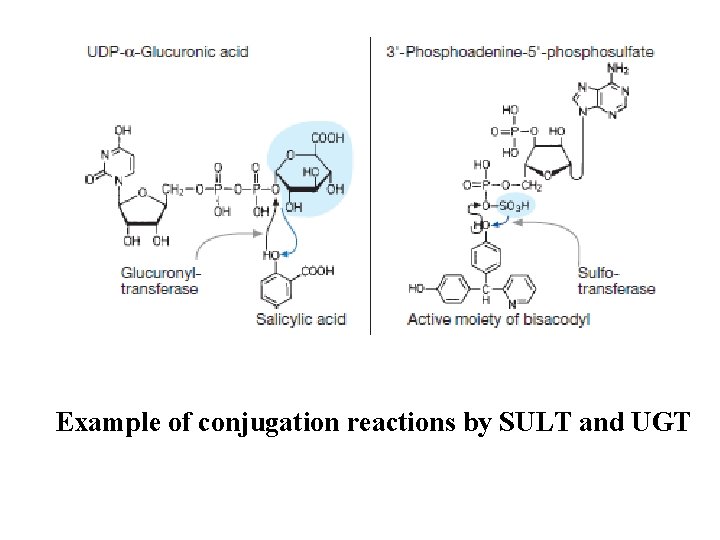
Example of conjugation reactions by SULT and UGT
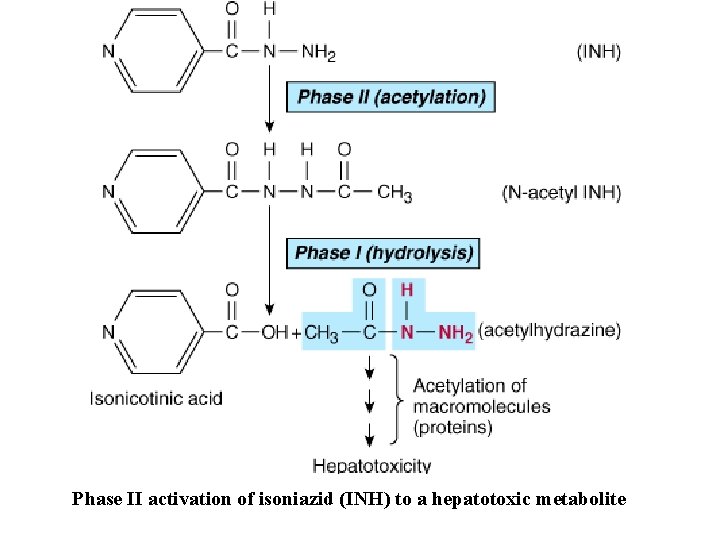
Phase II activation of isoniazid (INH) to a hepatotoxic metabolite
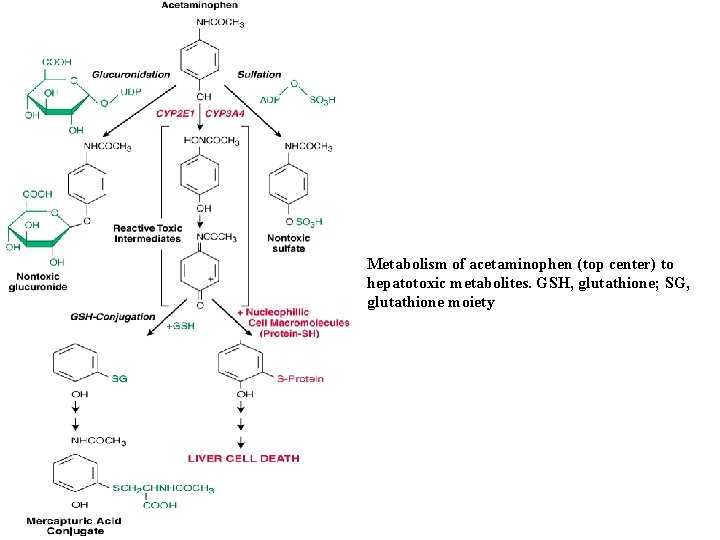
Metabolism of acetaminophen (top center) to hepatotoxic metabolites. GSH, glutathione; SG, glutathione moiety
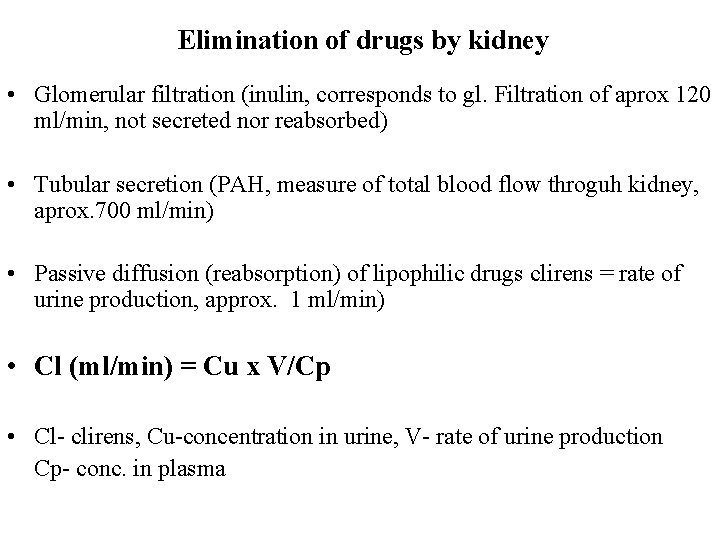
Elimination of drugs by kidney • Glomerular filtration (inulin, corresponds to gl. Filtration of aprox 120 ml/min, not secreted nor reabsorbed) • Tubular secretion (PAH, measure of total blood flow throguh kidney, aprox. 700 ml/min) • Passive diffusion (reabsorption) of lipophilic drugs clirens = rate of urine production, approx. 1 ml/min) • Cl (ml/min) = Cu x V/Cp • Cl- clirens, Cu-concentration in urine, V- rate of urine production Cp- conc. in plasma
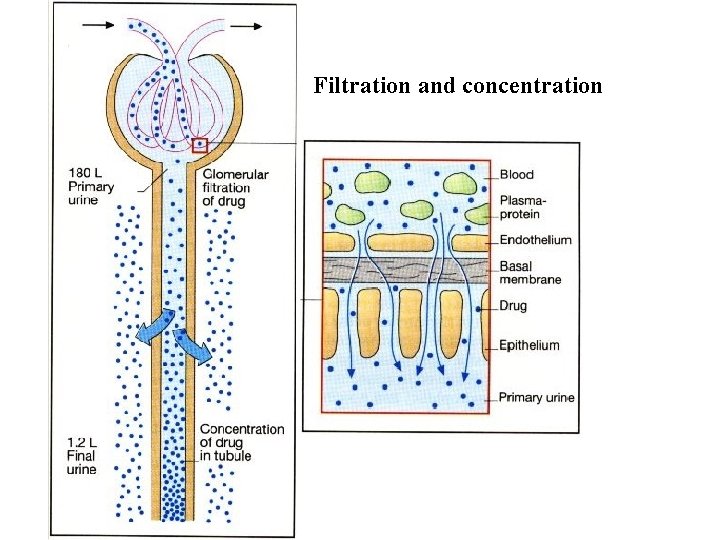
Filtration and concentration
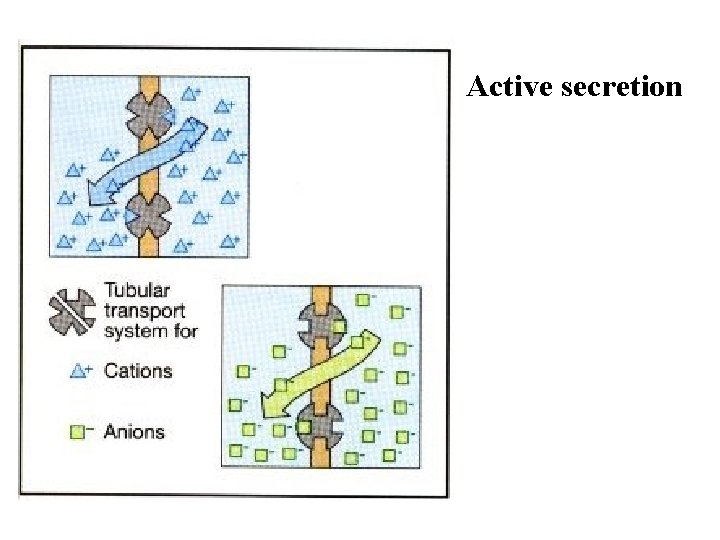
Active secretion
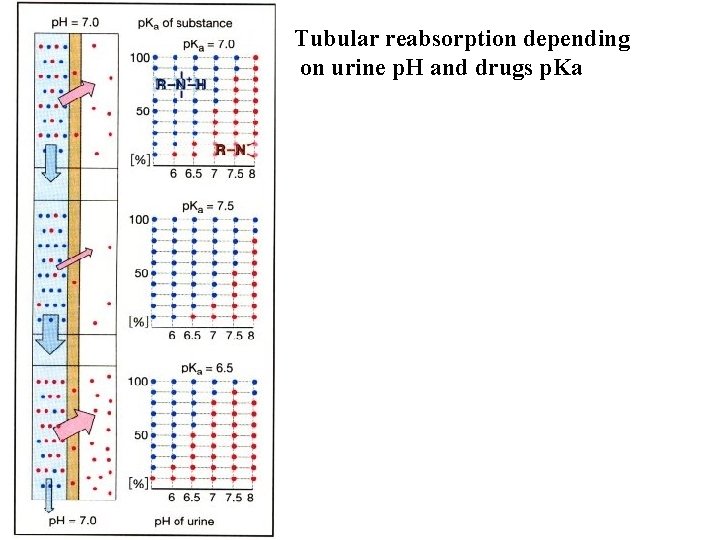
Tubular reabsorption depending on urine p. H and drugs p. Ka
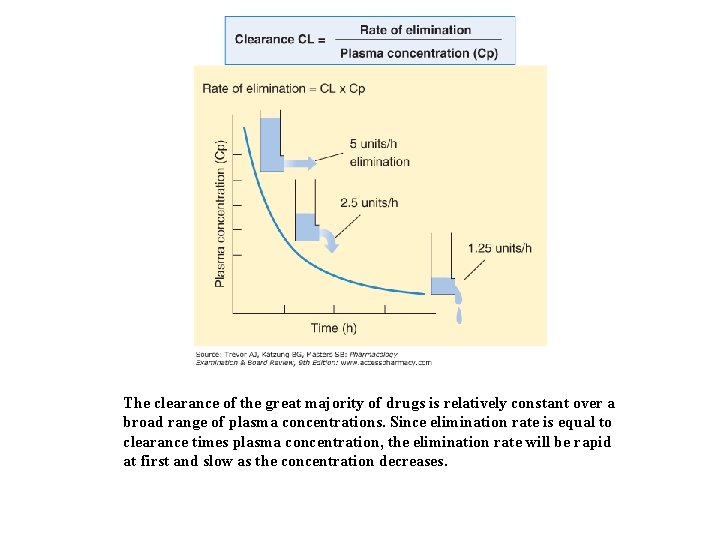
The clearance of the great majority of drugs is relatively constant over a broad range of plasma concentrations. Since elimination rate is equal to clearance times plasma concentration, the elimination rate will be rapid at first and slow as the concentration decreases.
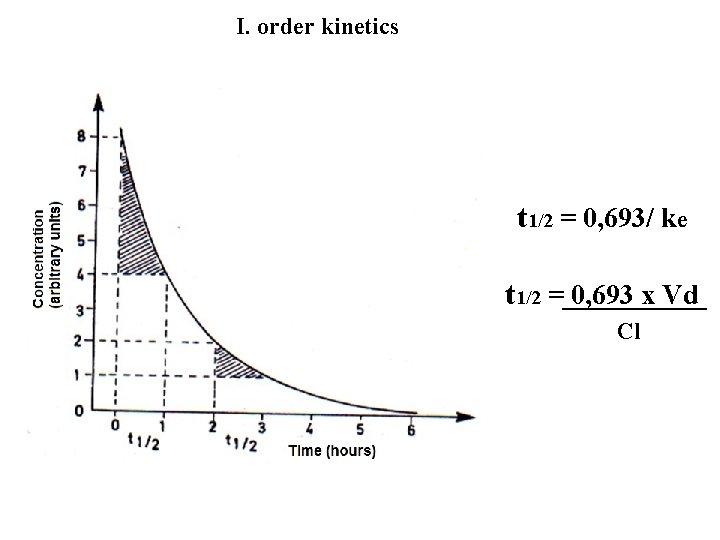
I. order kinetics t 1/2 = 0, 693/ ke t 1/2 =____ 0, 693 x Vd Cl
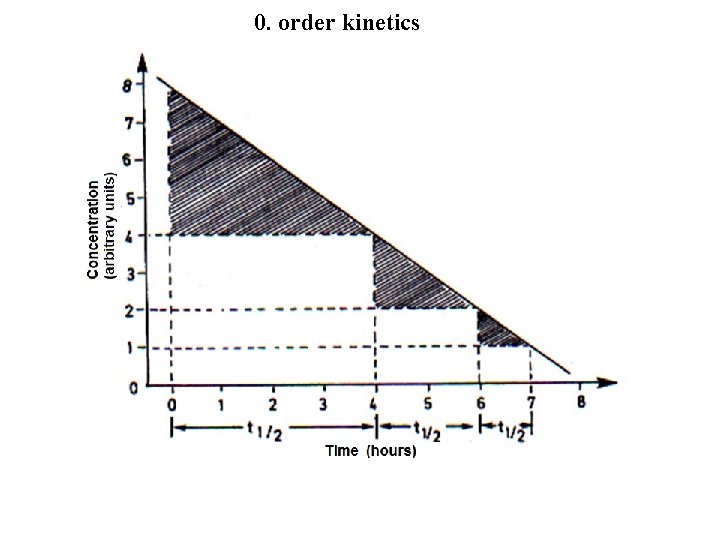
0. order kinetics
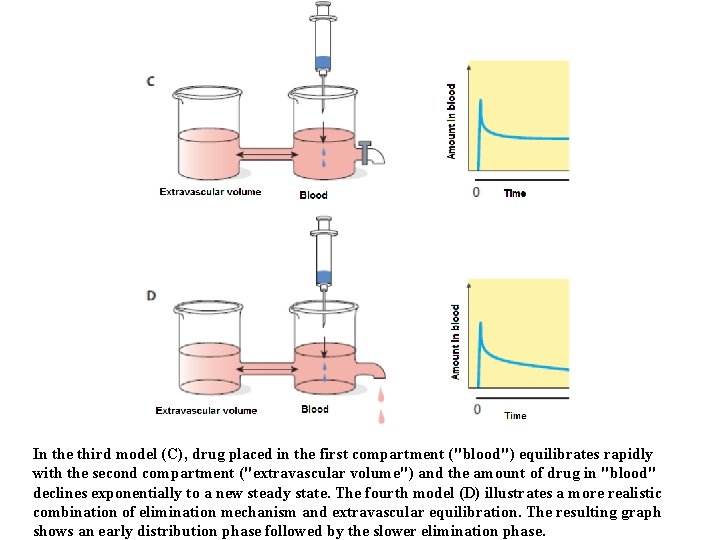
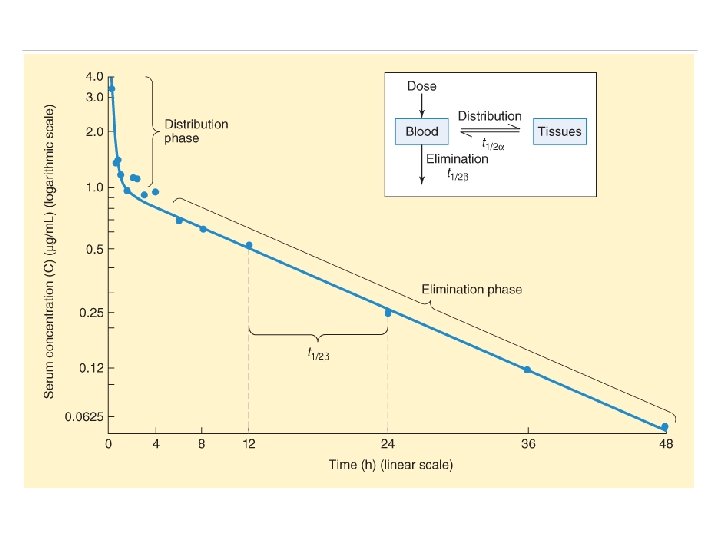
In the third model (C), drug placed in the first compartment ("blood") equilibrates rapidly with the second compartment ("extravascular volume") and the amount of drug in "blood" declines exponentially to a new steady state. The fourth model (D) illustrates a more realistic combination of elimination mechanism and extravascular equilibration. The resulting graph shows an early distribution phase followed by the slower elimination phase.
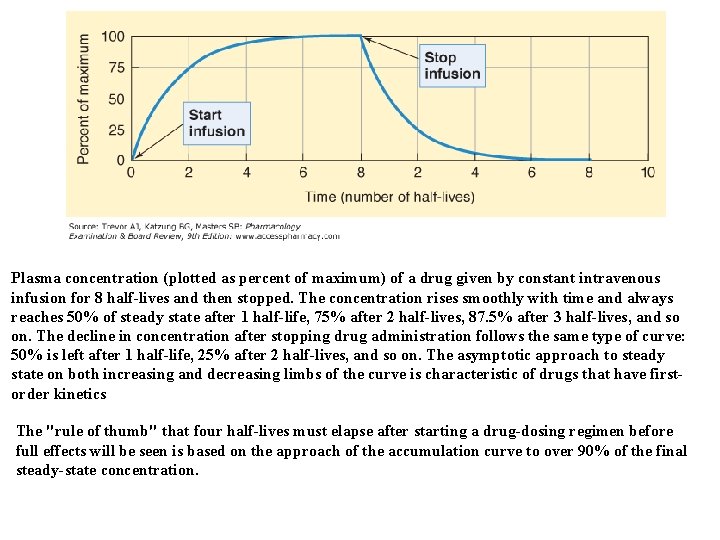
Plasma concentration (plotted as percent of maximum) of a drug given by constant intravenous infusion for 8 half-lives and then stopped. The concentration rises smoothly with time and always reaches 50% of steady state after 1 half-life, 75% after 2 half-lives, 87. 5% after 3 half-lives, and so on. The decline in concentration after stopping drug administration follows the same type of curve: 50% is left after 1 half-life, 25% after 2 half-lives, and so on. The asymptotic approach to steady state on both increasing and decreasing limbs of the curve is characteristic of drugs that have firstorder kinetics The "rule of thumb" that four half-lives must elapse after starting a drug-dosing regimen before full effects will be seen is based on the approach of the accumulation curve to over 90% of the final steady-state concentration.
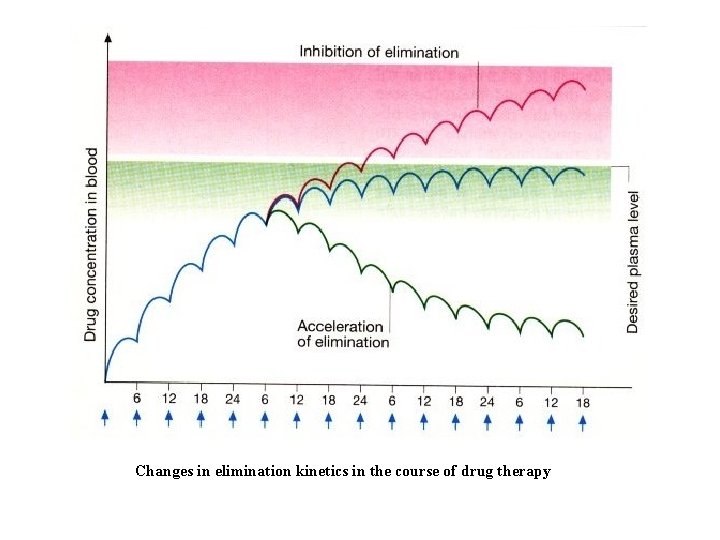
Changes in elimination kinetics in the course of drug therapy
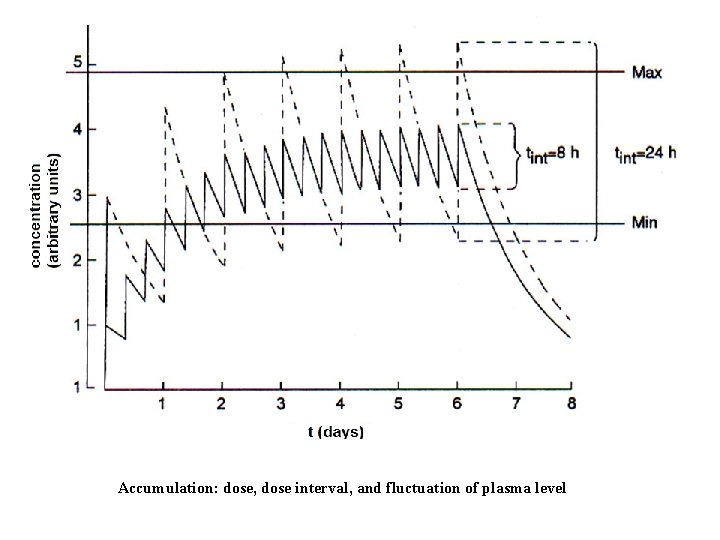
Accumulation: dose, dose interval, and fluctuation of plasma level
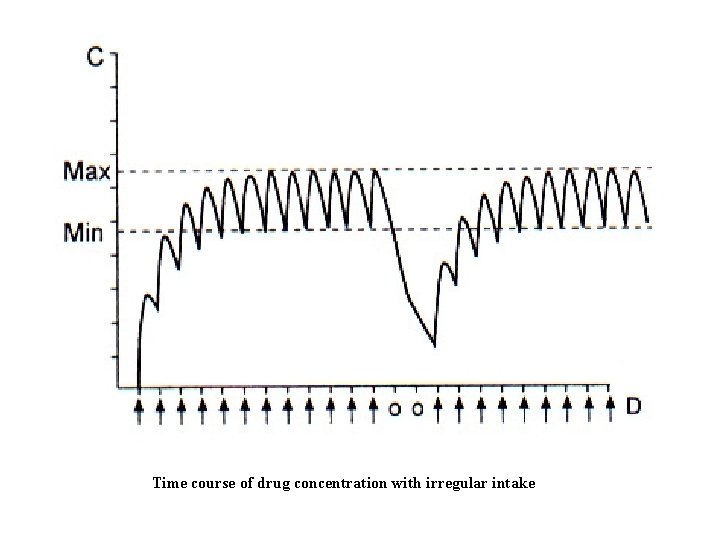
Time course of drug concentration with irregular intake
- Slides: 29