
Metabolic Response to Injury Objectives Factors mediating the
Metabolic Response to Injury
Objectives • • • Factors mediating the metabolic response Consequences of the metabolic response The differences between metabolic responses to starvation and trauma The effect of trauma on metabolic rate and substrate utilization Modifying the metabolic response
Mediating the Response • The Acute Inflammatory Response • Cellular activation • Inflammatory mediators (TNF, IL 1, etc) • Paracrine Vs endocrine effects
Mediating the Response • The Endothelium • Selectins, Integrins, and ICAMs • Nitric Oxide • Tissue Factor
Mediating the Response • Afferent Nerve Stimulation • Sympathetic Nervous System • Adrenal Gland Medulla
Mediating the Response • The Endocrine System • Pituitary Gland (GH, ACTH, ADP) • Adrenal Gland (Cortisol, Aldosterone) • Pancreatic (Glucagon, Insulin) • Others (Renin, Angiotensin, Sex hormones, T 4)
Consequences of the Response • Limiting injury • Initiation of repair processes • Mobilization of substrates • Prevention of infection • Distant organ damage
Starvation & Injury
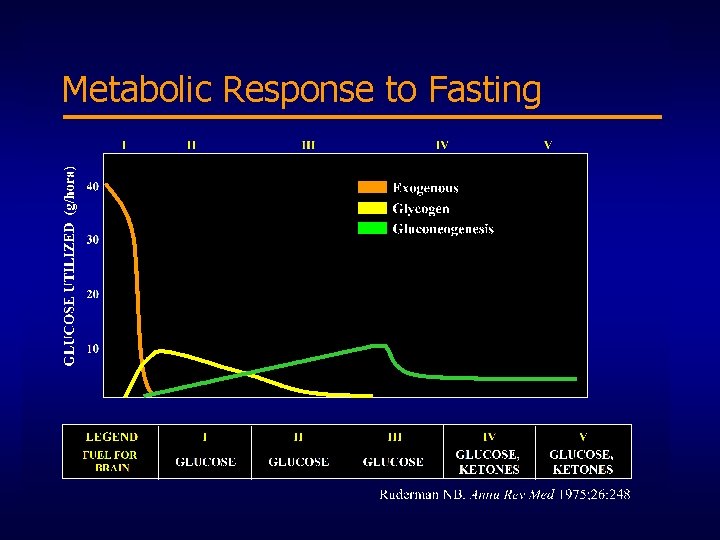
Metabolic Response to Fasting
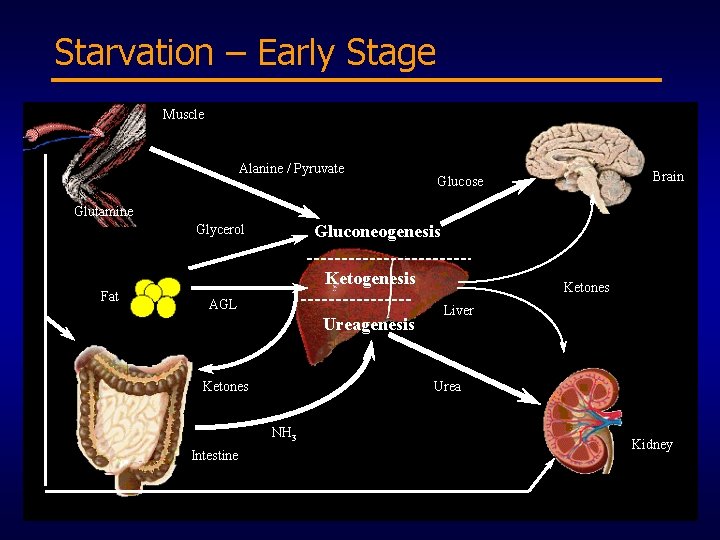
Starvation – Early Stage Muscle Alanine / Pyruvate Brain Glucose Glutamine Glycerol Gluconeogenesis Ketogenesis Fat AGL Ureagenesis Ketones Liver Urea NH 3 Intestine Ketones Kidney
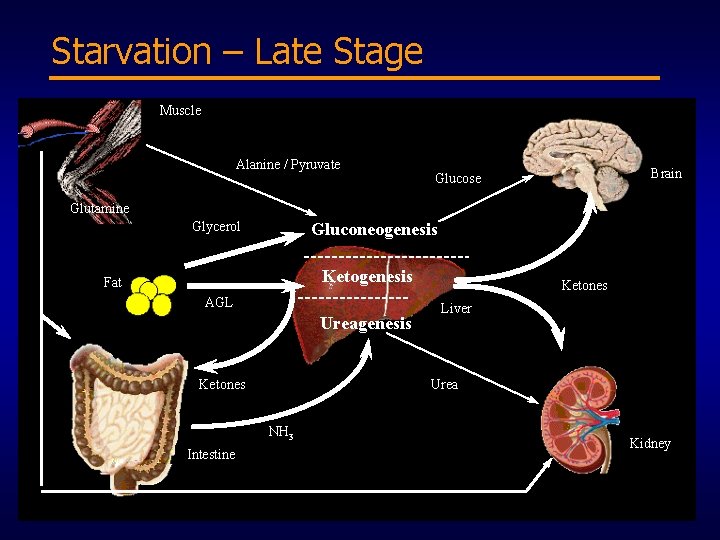
Starvation – Late Stage Muscle Alanine / Pyruvate Brain Glucose Glutamine Glycerol Gluconeogenesis Ketogenesis Fat AGL Ureagenesis Ketones Liver Urea NH 3 Intestine Ketones Kidney
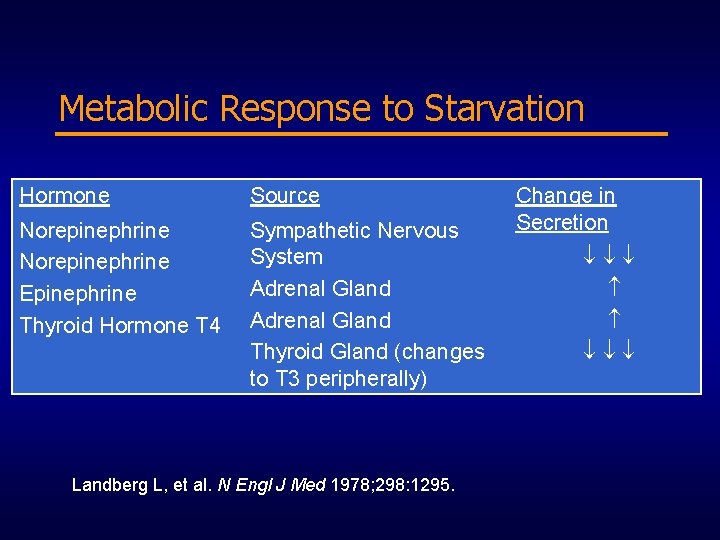
Metabolic Response to Starvation Hormone Source Norepinephrine Epinephrine Thyroid Hormone T 4 Sympathetic Nervous System Adrenal Gland Thyroid Gland (changes to T 3 peripherally) Landberg L, et al. N Engl J Med 1978; 298: 1295. Change in Secretion
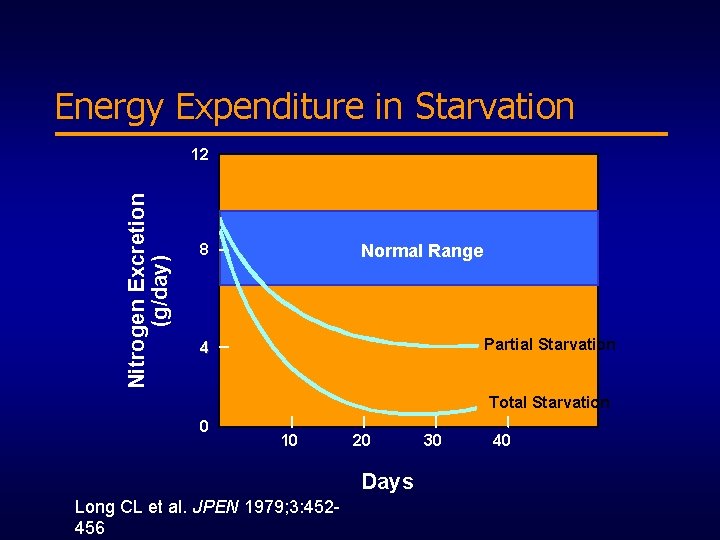
Energy Expenditure in Starvation Nitrogen Excretion (g/day) 12 Normal Range 8 Partial Starvation 4 Total Starvation 0 10 20 Days Long CL et al. JPEN 1979; 3: 452456 30 40
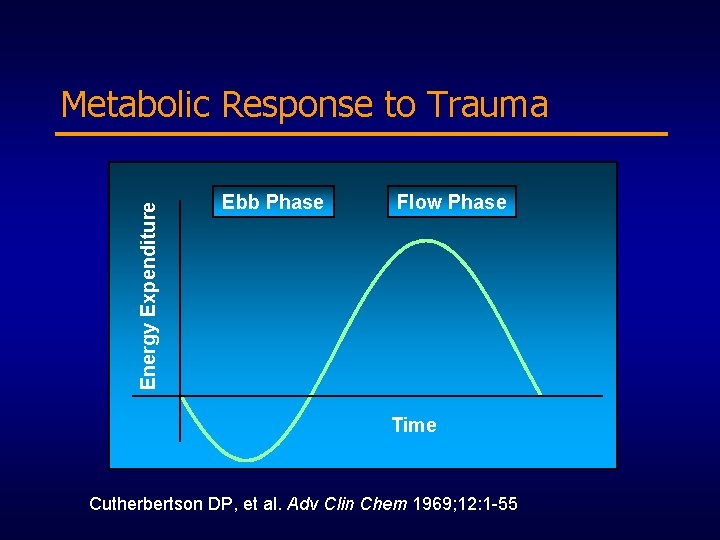
Energy Expenditure Metabolic Response to Trauma Ebb Phase Flow Phase Time Cutherbertson DP, et al. Adv Clin Chem 1969; 12: 1 -55
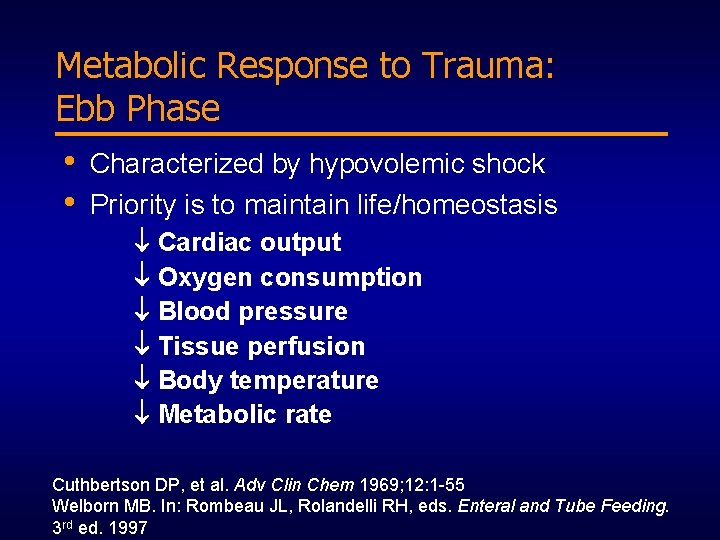
Metabolic Response to Trauma: Ebb Phase • Characterized by hypovolemic shock • Priority is to maintain life/homeostasis Cardiac output Oxygen consumption Blood pressure Tissue perfusion Body temperature Metabolic rate Cuthbertson DP, et al. Adv Clin Chem 1969; 12: 1 -55 Welborn MB. In: Rombeau JL, Rolandelli RH, eds. Enteral and Tube Feeding. 3 rd ed. 1997
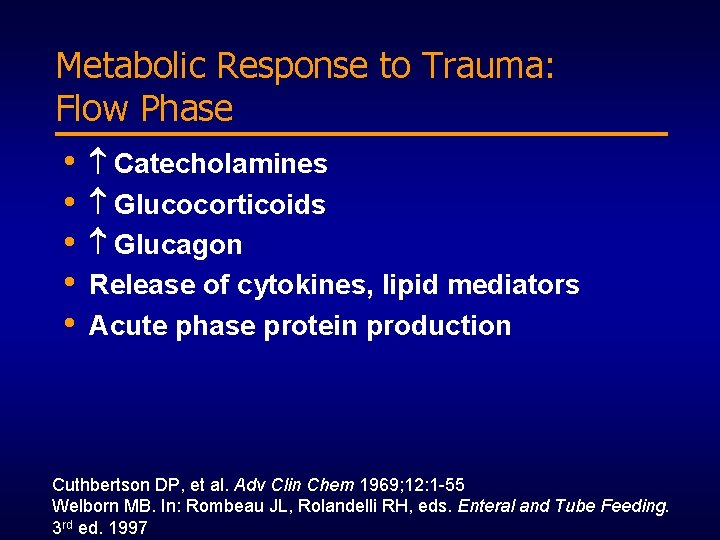
Metabolic Response to Trauma: Flow Phase • Catecholamines • Glucocorticoids • Glucagon • Release of cytokines, lipid mediators • Acute phase protein production Cuthbertson DP, et al. Adv Clin Chem 1969; 12: 1 -55 Welborn MB. In: Rombeau JL, Rolandelli RH, eds. Enteral and Tube Feeding. 3 rd ed. 1997
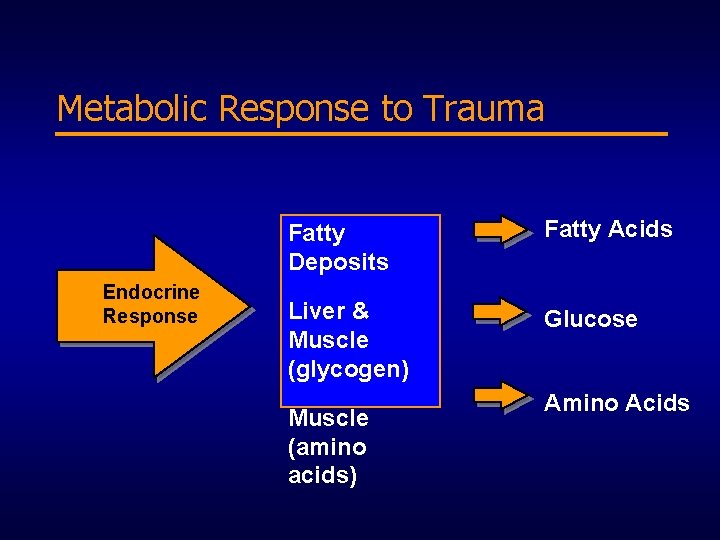
Metabolic Response to Trauma Endocrine Response Fatty Deposits Fatty Acids Liver & Muscle (glycogen) Glucose Muscle (amino acids) Amino Acids
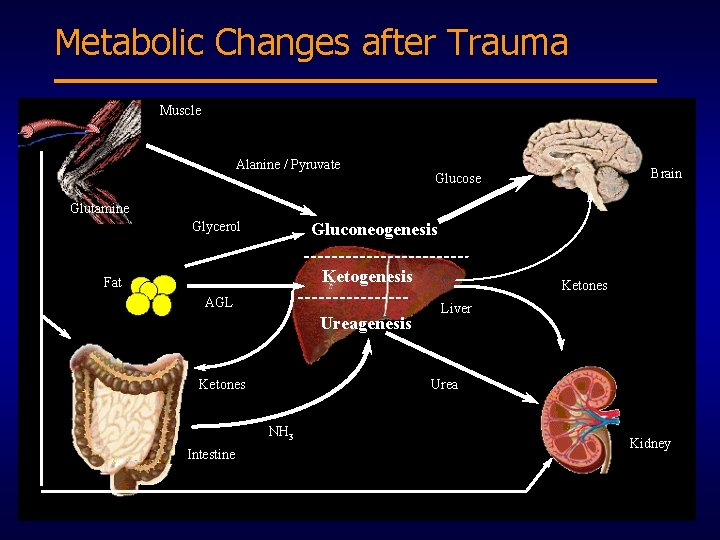
Metabolic Changes after Trauma Muscle Alanine / Pyruvate Brain Glucose Glutamine Glycerol Gluconeogenesis Ketogenesis Fat AGL Ureagenesis Ketones Liver Urea NH 3 Intestine Ketones Kidney
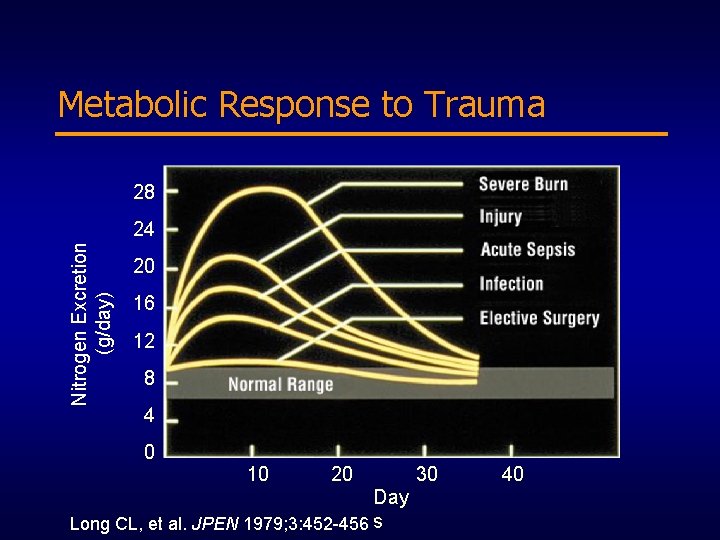
Metabolic Response to Trauma 28 Nitrogen Excretion (g/day) 24 20 16 12 8 4 0 10 20 Day Long CL, et al. JPEN 1979; 3: 452 -456 s 30 40
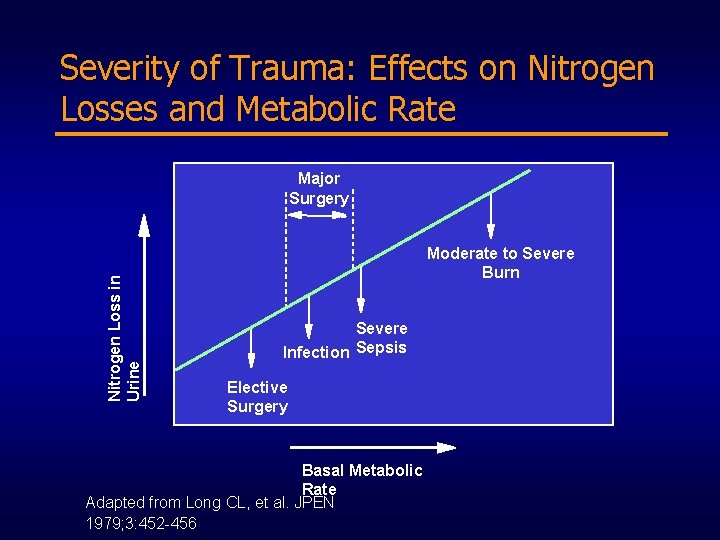
Severity of Trauma: Effects on Nitrogen Losses and Metabolic Rate Nitrogen Loss in Urine Major Cirugía mayor Surgery Quemadura Moderate to Severe moderada a grave Burn Severe Sepsis grave Infection Infecci ón Sepsis Cirugía Elective electiva Surgery Basal Metabolic Rate Adapted from Long CL, et al. JPEN 1979; 3: 452 -456
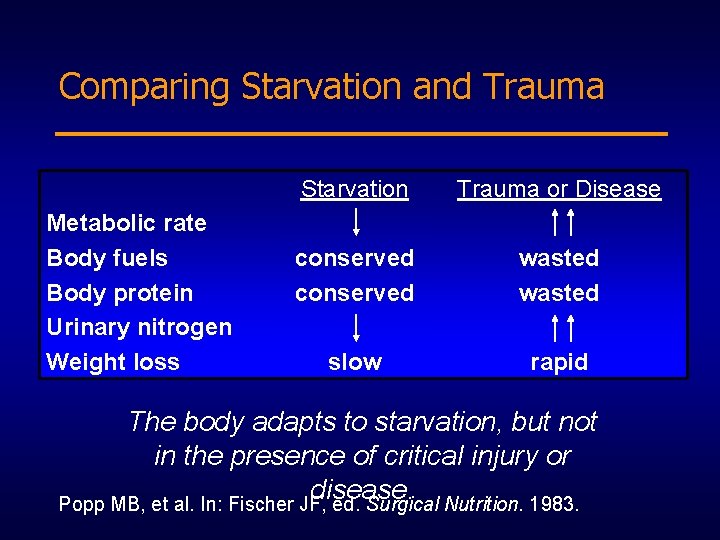
Comparing Starvation and Trauma Metabolic rate Body fuels Body protein Urinary nitrogen Weight loss Starvation Trauma or Disease conserved wasted slow rapid The body adapts to starvation, but not in the presence of critical injury or disease. Popp MB, et al. In: Fischer JF, ed. Surgical Nutrition. 1983.
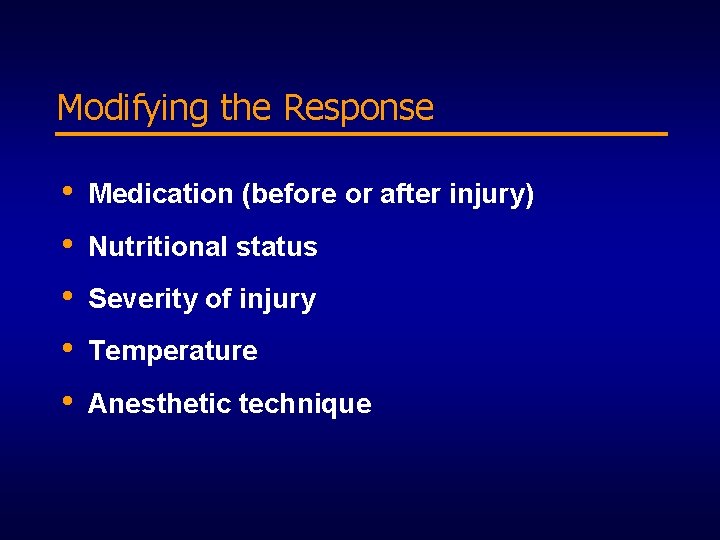
Modifying the Response • • • Medication (before or after injury) Nutritional status Severity of injury Temperature Anesthetic technique
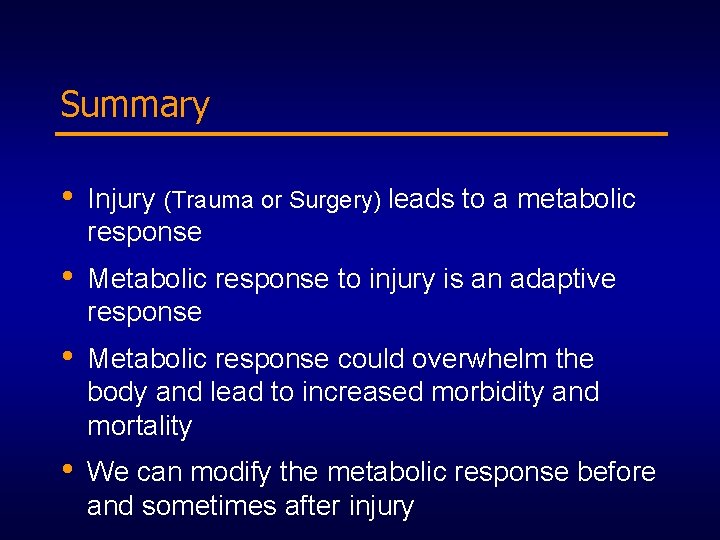
Summary • Injury (Trauma or Surgery) leads to a metabolic response • Metabolic response to injury is an adaptive response • Metabolic response could overwhelm the body and lead to increased morbidity and mortality • We can modify the metabolic response before and sometimes after injury
Metabolic Response to Injury Questions
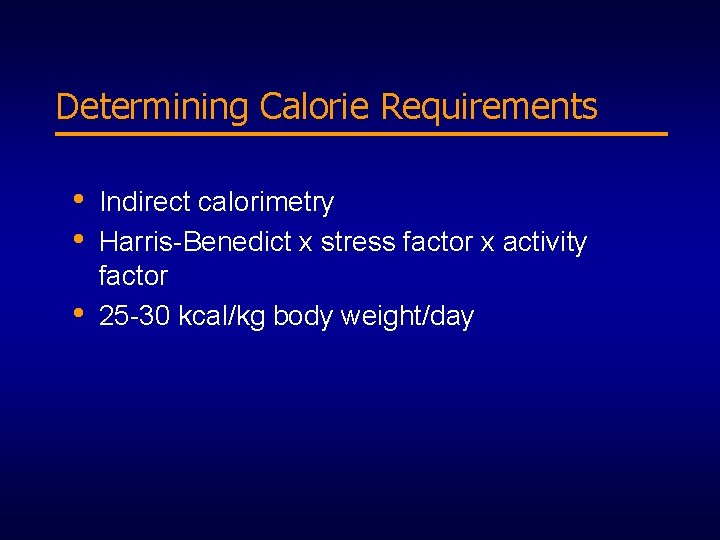
Determining Calorie Requirements • • • Indirect calorimetry Harris-Benedict x stress factor x activity factor 25 -30 kcal/kg body weight/day
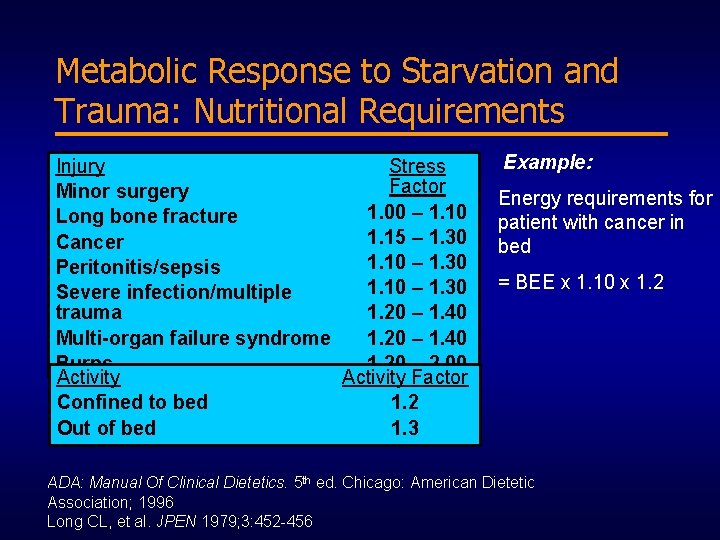
Metabolic Response to Starvation and Trauma: Nutritional Requirements Injury Stress Factor Minor surgery 1. 00 – 1. 10 Long bone fracture 1. 15 – 1. 30 Cancer 1. 10 – 1. 30 Peritonitis/sepsis 1. 10 – 1. 30 Severe infection/multiple trauma 1. 20 – 1. 40 Multi-organ failure syndrome 1. 20 – 1. 40 Burns 1. 20 – 2. 00 Activity Factor Confined to bed 1. 2 Out of bed 1. 3 Example: Energy requirements for patient with cancer in bed = BEE x 1. 10 x 1. 2 ADA: Manual Of Clinical Dietetics. 5 th ed. Chicago: American Dietetic Association; 1996 Long CL, et al. JPEN 1979; 3: 452 -456
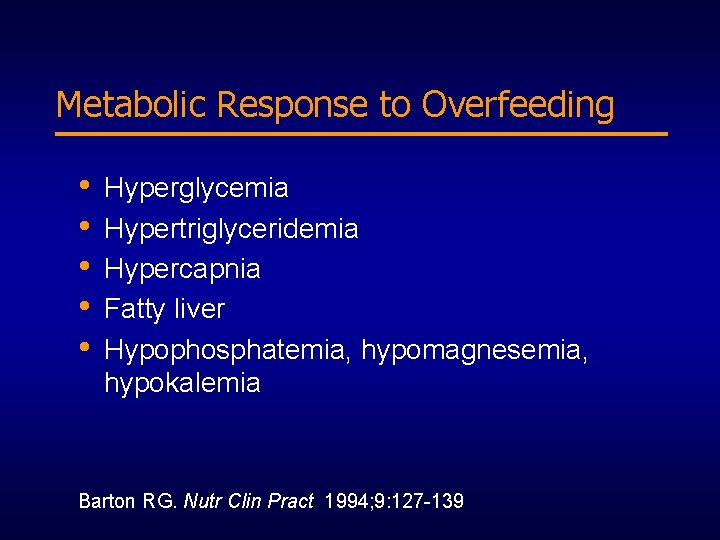
Metabolic Response to Overfeeding • • • Hyperglycemia Hypertriglyceridemia Hypercapnia Fatty liver Hypophosphatemia, hypomagnesemia, hypokalemia Barton RG. Nutr Clin Pract 1994; 9: 127 -139
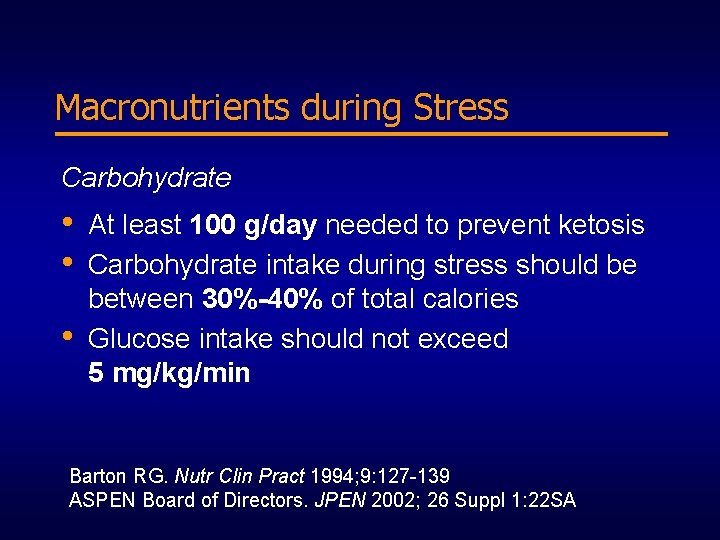
Macronutrients during Stress Carbohydrate • • • At least 100 g/day needed to prevent ketosis Carbohydrate intake during stress should be between 30%-40% of total calories Glucose intake should not exceed 5 mg/kg/min Barton RG. Nutr Clin Pract 1994; 9: 127 -139 ASPEN Board of Directors. JPEN 2002; 26 Suppl 1: 22 SA
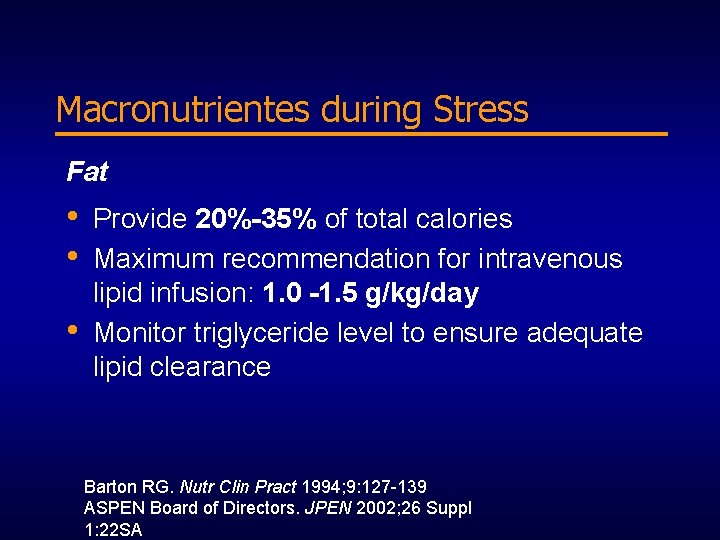
Macronutrientes during Stress Fat • • • Provide 20%-35% of total calories Maximum recommendation for intravenous lipid infusion: 1. 0 -1. 5 g/kg/day Monitor triglyceride level to ensure adequate lipid clearance Barton RG. Nutr Clin Pract 1994; 9: 127 -139 ASPEN Board of Directors. JPEN 2002; 26 Suppl 1: 22 SA
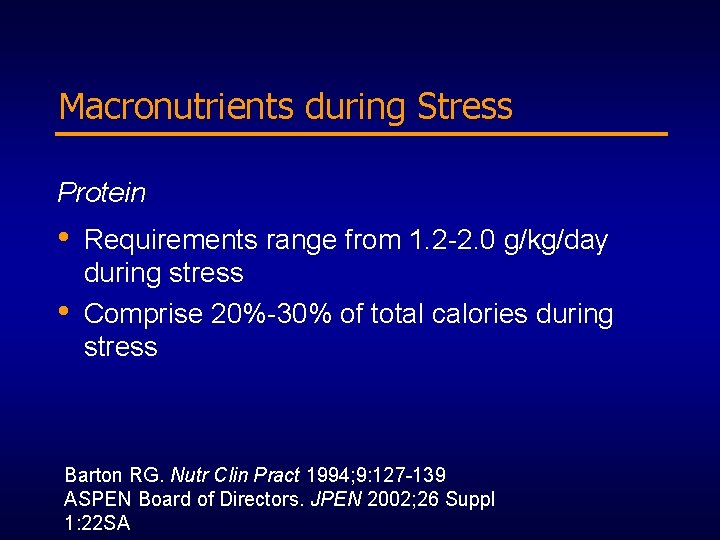
Macronutrients during Stress Protein • • Requirements range from 1. 2 -2. 0 g/kg/day during stress Comprise 20%-30% of total calories during stress Barton RG. Nutr Clin Pract 1994; 9: 127 -139 ASPEN Board of Directors. JPEN 2002; 26 Suppl 1: 22 SA
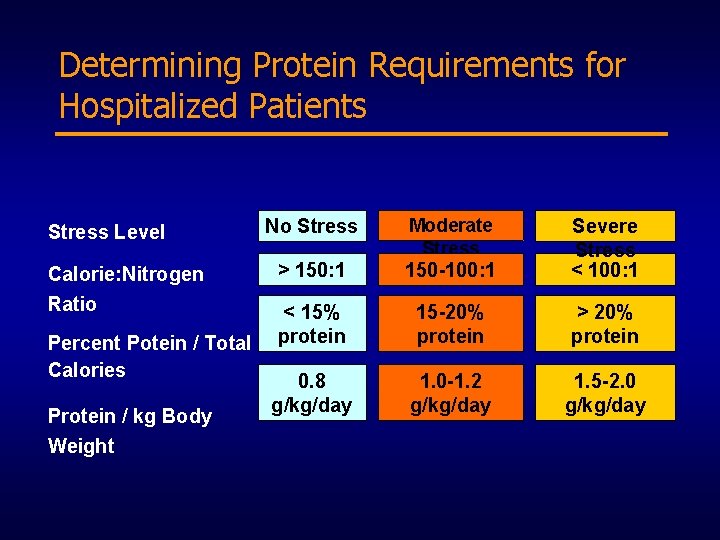
Determining Protein Requirements for Hospitalized Patients Stress Level Calorie: Nitrogen Ratio Percent Potein / Total Calories Protein / kg Body Weight > 150: 1 Moderate Stress 150 -100: 1 Severe Stress < 100: 1 < 15% protein 15 -20% protein > 20% protein 0. 8 g/kg/day 1. 0 -1. 2 g/kg/day 1. 5 -2. 0 g/kg/day No Stress
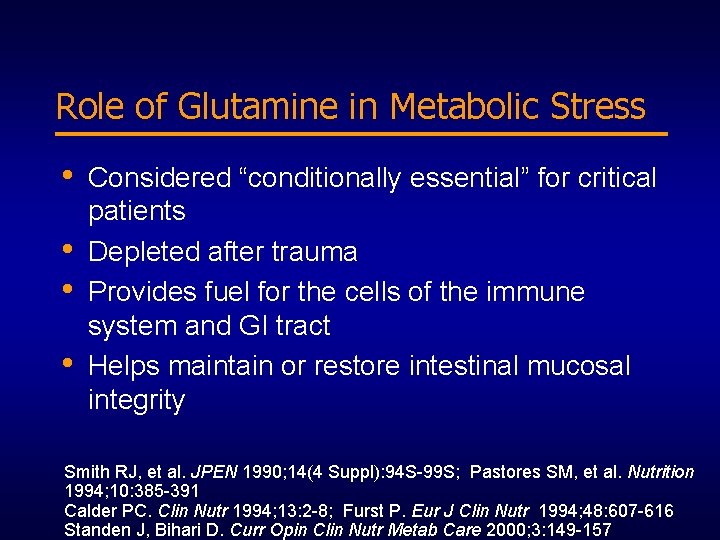
Role of Glutamine in Metabolic Stress • • Considered “conditionally essential” for critical patients Depleted after trauma Provides fuel for the cells of the immune system and GI tract Helps maintain or restore intestinal mucosal integrity Smith RJ, et al. JPEN 1990; 14(4 Suppl): 94 S-99 S; Pastores SM, et al. Nutrition 1994; 10: 385 -391 Calder PC. Clin Nutr 1994; 13: 2 -8; Furst P. Eur J Clin Nutr 1994; 48: 607 -616 Standen J, Bihari D. Curr Opin Clin Nutr Metab Care 2000; 3: 149 -157
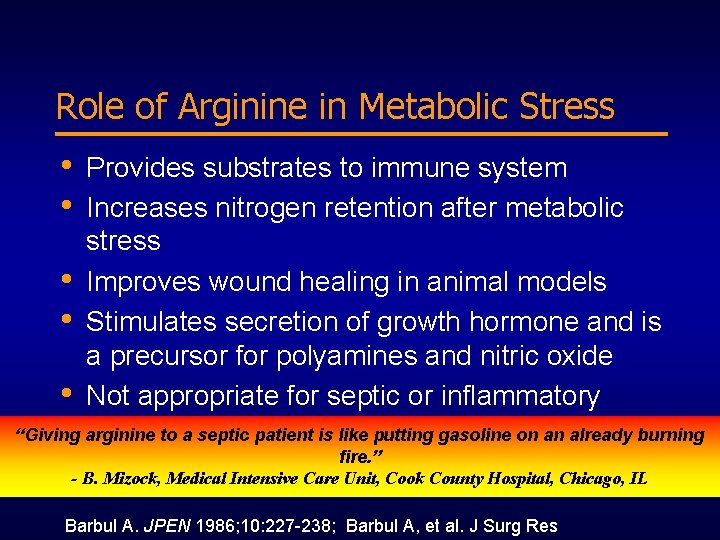
Role of Arginine in Metabolic Stress • • Provides substrates to immune system Increases nitrogen retention after metabolic stress • Improves wound healing in animal models • Stimulates secretion of growth hormone and is a precursor for polyamines and nitric oxide • Not appropriate for septic or inflammatory patients. “Giving arginine to a septic patient is like putting gasoline on an already burning fire. ” - B. Mizock, Medical Intensive Care Unit, Cook County Hospital, Chicago, IL Barbul A. JPEN 1986; 10: 227 -238; Barbul A, et al. J Surg Res
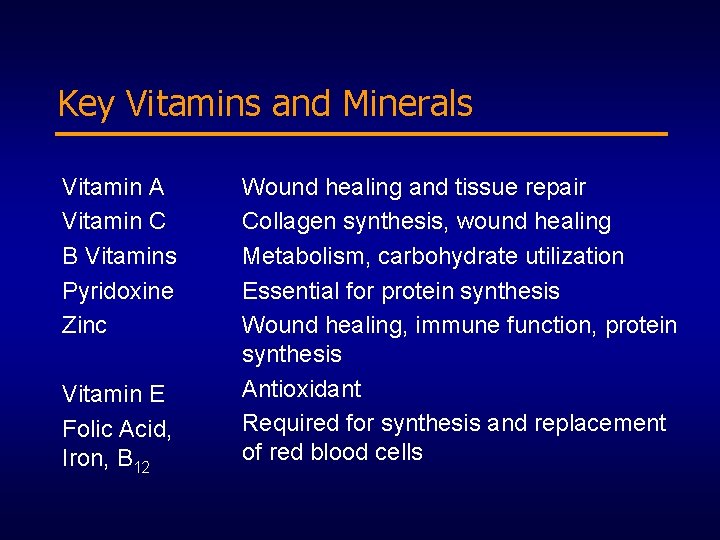
Key Vitamins and Minerals Vitamin A Vitamin C B Vitamins Pyridoxine Zinc Vitamin E Folic Acid, Iron, B 12 Wound healing and tissue repair Collagen synthesis, wound healing Metabolism, carbohydrate utilization Essential for protein synthesis Wound healing, immune function, protein synthesis Antioxidant Required for synthesis and replacement of red blood cells
- Slides: 34