
Metabolic relationships Seminar No 5 Chapter 16 1
Metabolic relationships Seminar No. 5 - Chapter 16 - 1
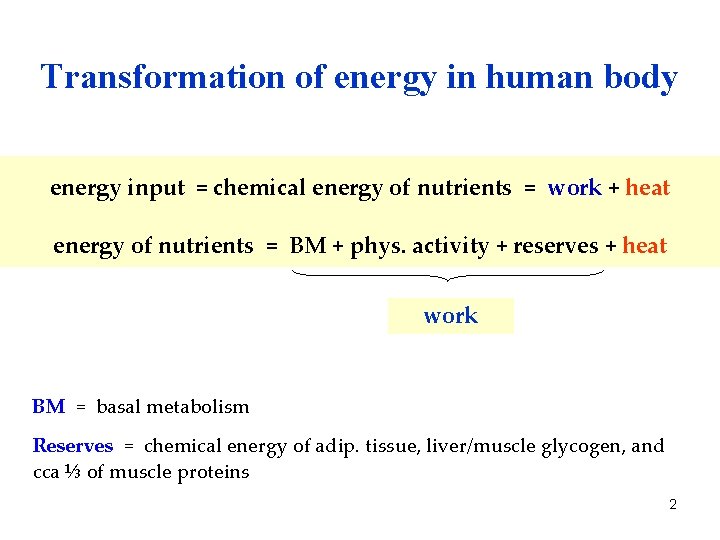
Transformation of energy in human body energy input = chemical energy of nutrients = work + heat energy of nutrients = BM + phys. activity + reserves + heat work BM = basal metabolism Reserves = chemical energy of adip. tissue, liver/muscle glycogen, and cca ⅓ of muscle proteins 2
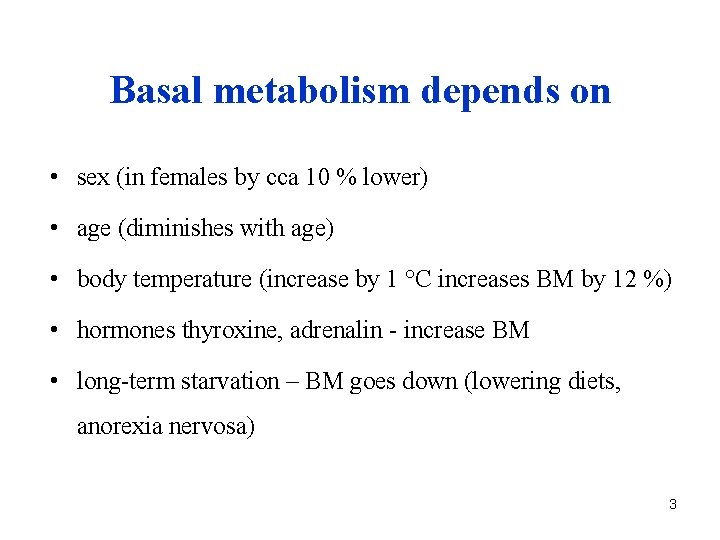
Basal metabolism depends on • sex (in females by cca 10 % lower) • age (diminishes with age) • body temperature (increase by 1 C increases BM by 12 %) • hormones thyroxine, adrenalin - increase BM • long-term starvation – BM goes down (lowering diets, anorexia nervosa) 3
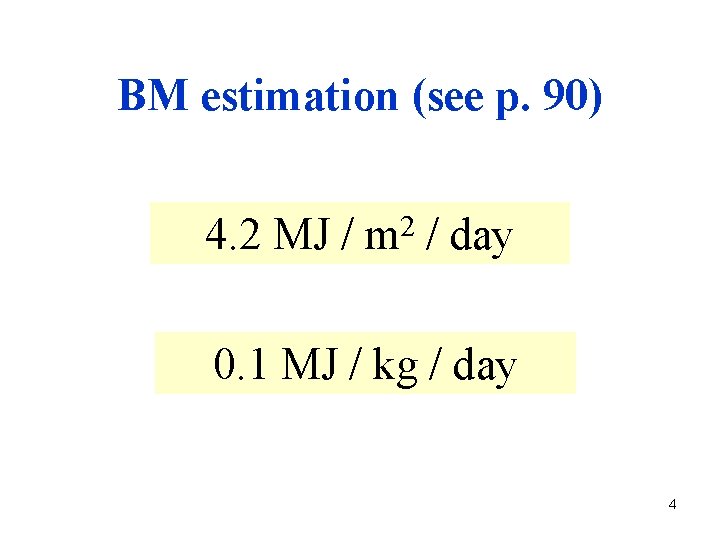
BM estimation (see p. 90) 4. 2 MJ / 2 m / day 0. 1 MJ / kg / day 4
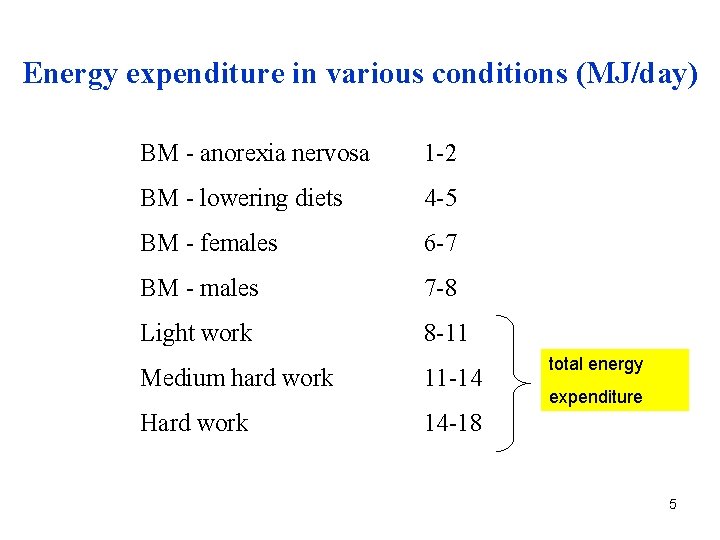
Energy expenditure in various conditions (MJ/day) BM - anorexia nervosa 1 -2 BM - lowering diets 4 -5 BM - females 6 -7 BM - males 7 -8 Light work 8 -11 Medium hard work 11 -14 Hard work 14 -18 total energy expenditure 5
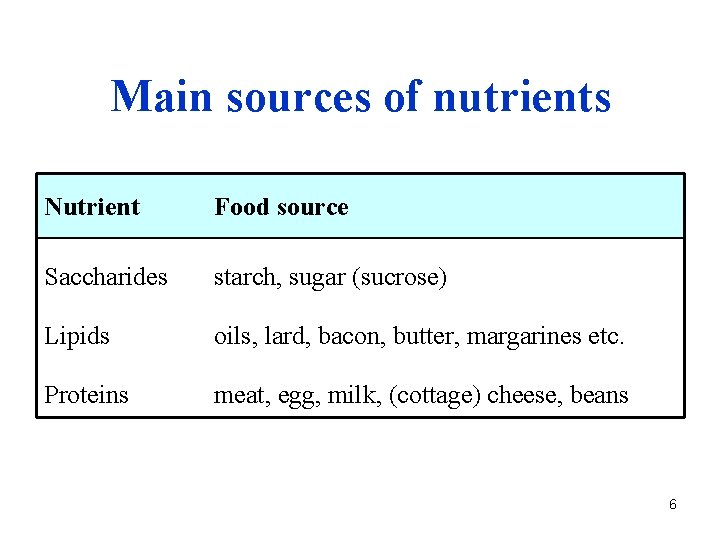
Main sources of nutrients Nutrient Food source Saccharides starch, sugar (sucrose) Lipids oils, lard, bacon, butter, margarines etc. Proteins meat, egg, milk, (cottage) cheese, beans 6
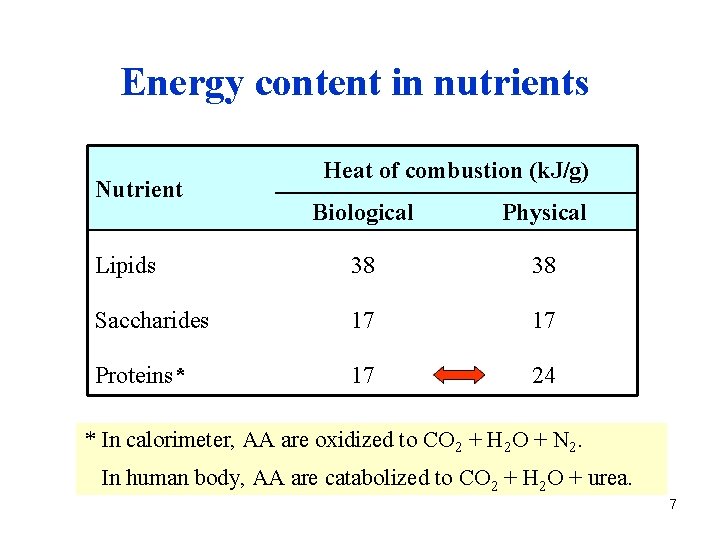
Energy content in nutrients Nutrient Heat of combustion (k. J/g) Biological Physical Lipids 38 38 Saccharides 17 17 Proteins* 17 24 * In calorimeter, AA are oxidized to CO 2 + H 2 O + N 2. In human body, AA are catabolized to CO 2 + H 2 O + urea. 7
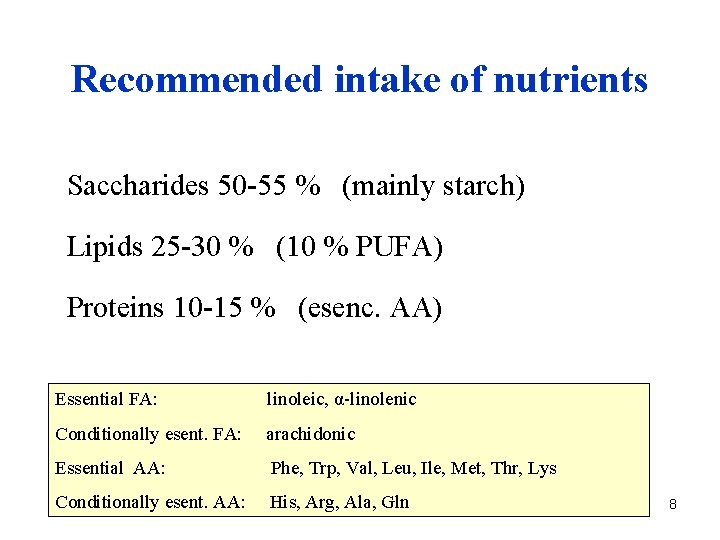
Recommended intake of nutrients Saccharides 50 -55 % (mainly starch) Lipids 25 -30 % (10 % PUFA) Proteins 10 -15 % (esenc. AA) Essential FA: linoleic, α-linolenic Conditionally esent. FA: arachidonic Essential AA: Phe, Trp, Val, Leu, Ile, Met, Thr, Lys Conditionally esent. AA: His, Arg, Ala, Gln 8
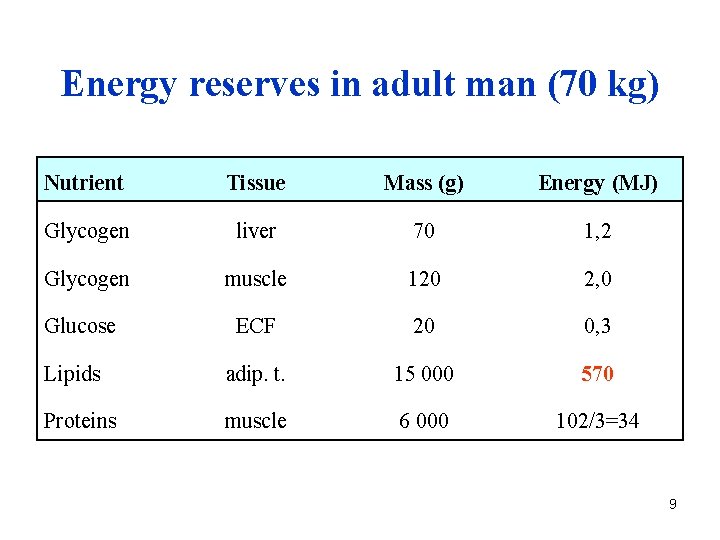
Energy reserves in adult man (70 kg) Nutrient Tissue Mass (g) Energy (MJ) Glycogen liver 70 1, 2 Glycogen muscle 120 2, 0 ECF 20 0, 3 Lipids adip. t. 15 000 570 Proteins muscle 6 000 102/3=34 Glucose 9
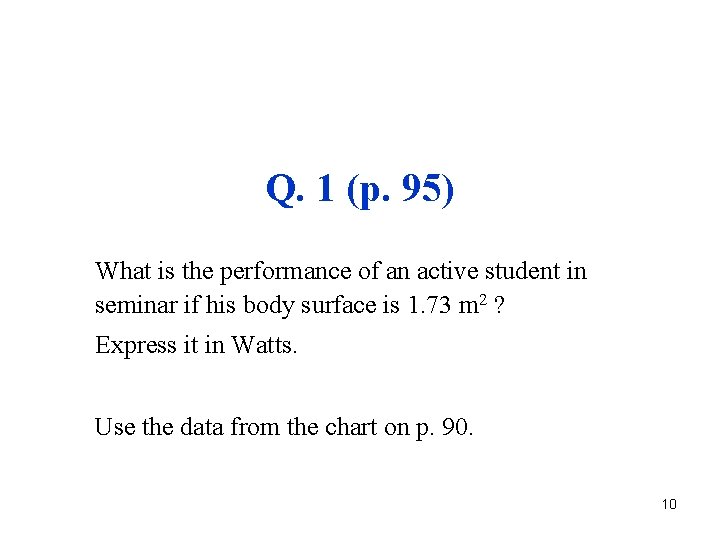
Q. 1 (p. 95) What is the performance of an active student in seminar if his body surface is 1. 73 m 2 ? Express it in Watts. Use the data from the chart on p. 90. 10
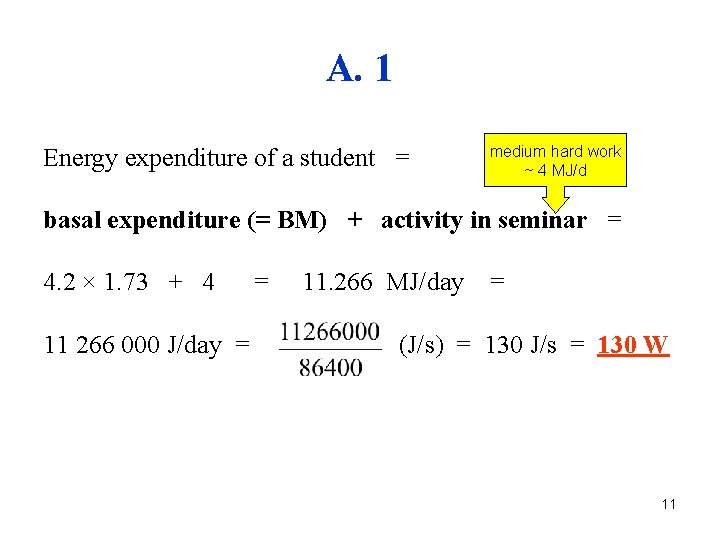
A. 1 Energy expenditure of a student = medium hard work ~ 4 MJ/d basal expenditure (= BM) + activity in seminar = 4. 2 × 1. 73 + 4 11 266 000 J/day = = 11. 266 MJ/day = (J/s) = 130 J/s = 130 W 11
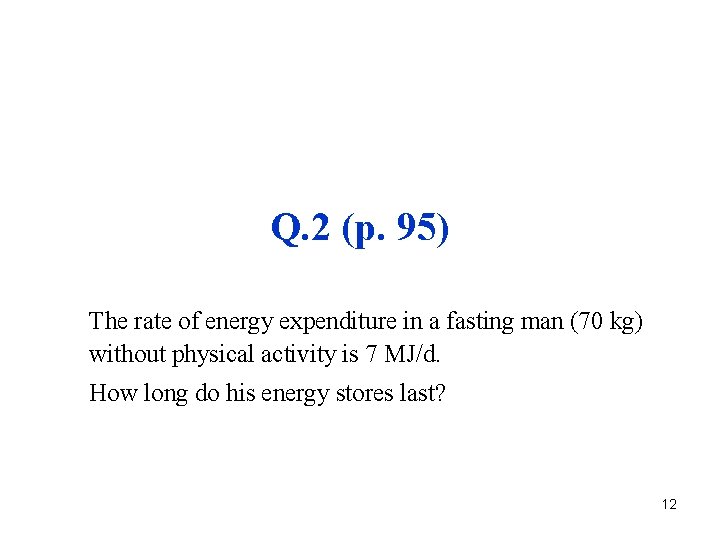
Q. 2 (p. 95) The rate of energy expenditure in a fasting man (70 kg) without physical activity is 7 MJ/d. How long do his energy stores last? 12
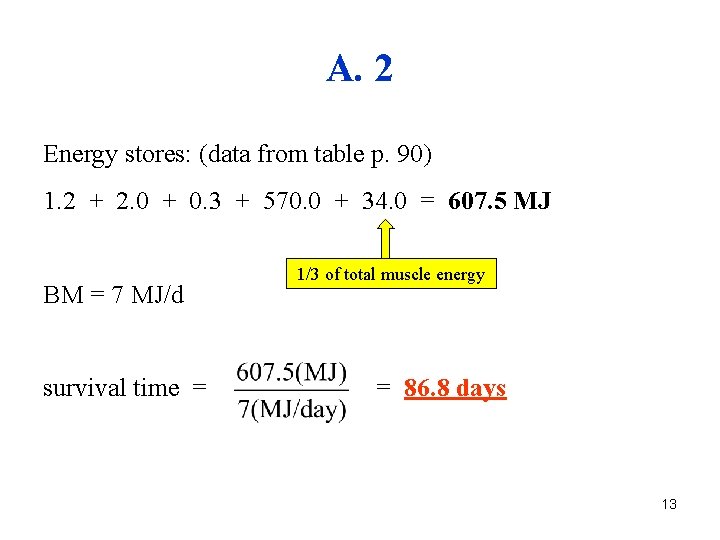
A. 2 Energy stores: (data from table p. 90) 1. 2 + 2. 0 + 0. 3 + 570. 0 + 34. 0 = 607. 5 MJ BM = 7 MJ/d survival time = 1/3 of total muscle energy = 86. 8 days 13
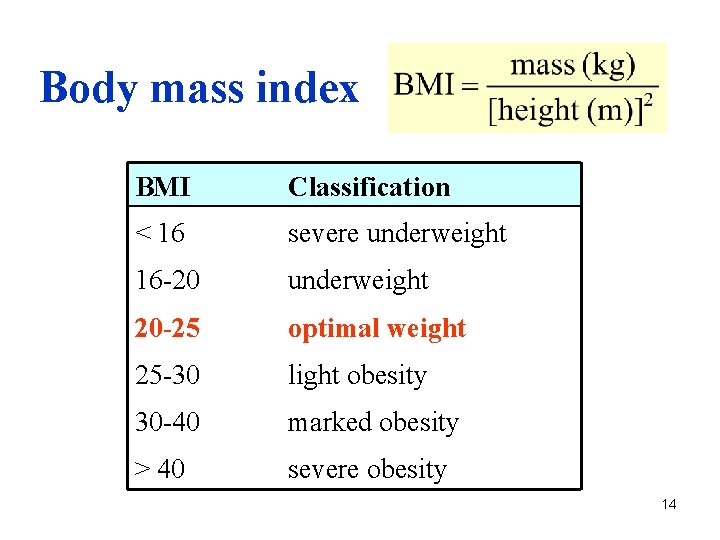
Body mass index BMI Classification < 16 severe underweight 16 -20 underweight 20 -25 optimal weight 25 -30 light obesity 30 -40 marked obesity > 40 severe obesity 14
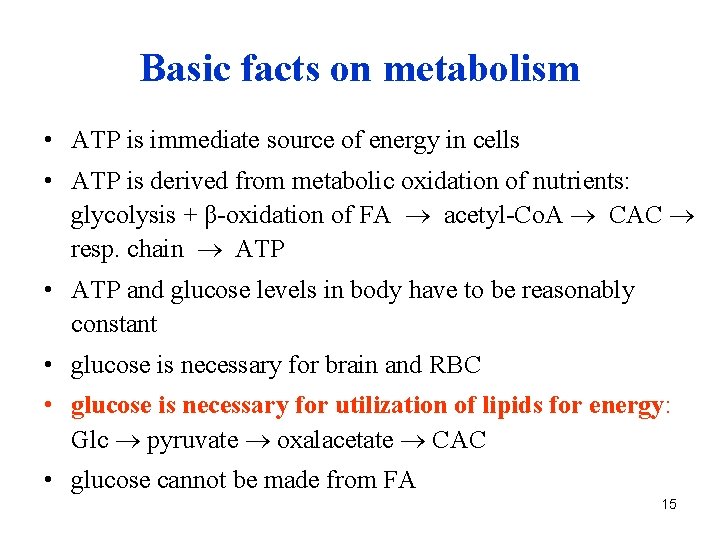
Basic facts on metabolism • ATP is immediate source of energy in cells • ATP is derived from metabolic oxidation of nutrients: glycolysis + β-oxidation of FA acetyl-Co. A CAC resp. chain ATP • ATP and glucose levels in body have to be reasonably constant • glucose is necessary for brain and RBC • glucose is necessary for utilization of lipids for energy: Glc pyruvate oxalacetate CAC • glucose cannot be made from FA 15
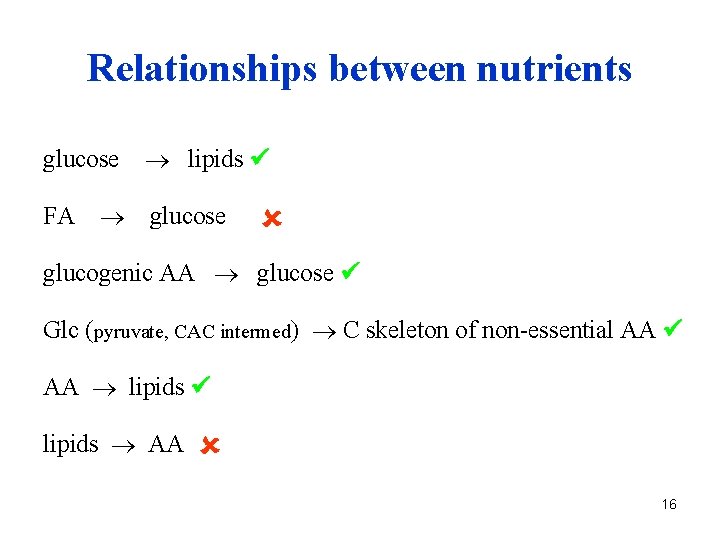
Relationships between nutrients glucose FA lipids glucose glucogenic AA glucose Glc (pyruvate, CAC intermed) C skeleton of non-essential AA lipids AA 16
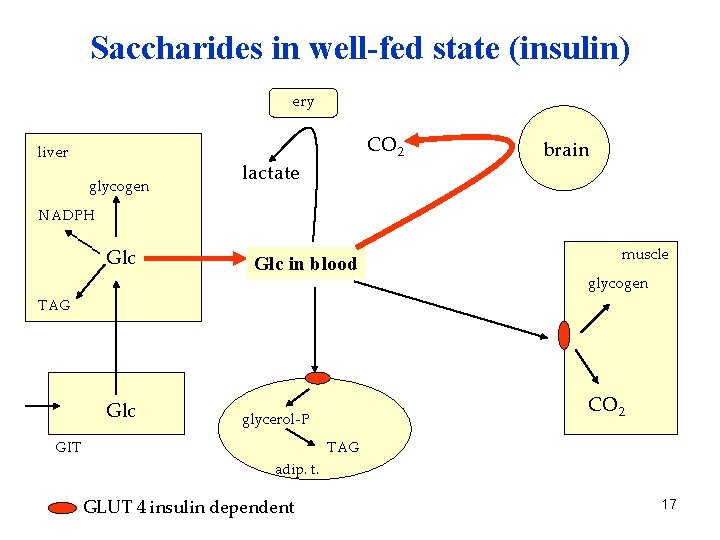
Saccharides in well-fed state (insulin) ery liver glycogen CO 2 lactate brain NADPH Glc in blood muscle glycogen TAG Glc CO 2 glycerol-P GIT TAG adip. t. GLUT 4 insulin dependent 17
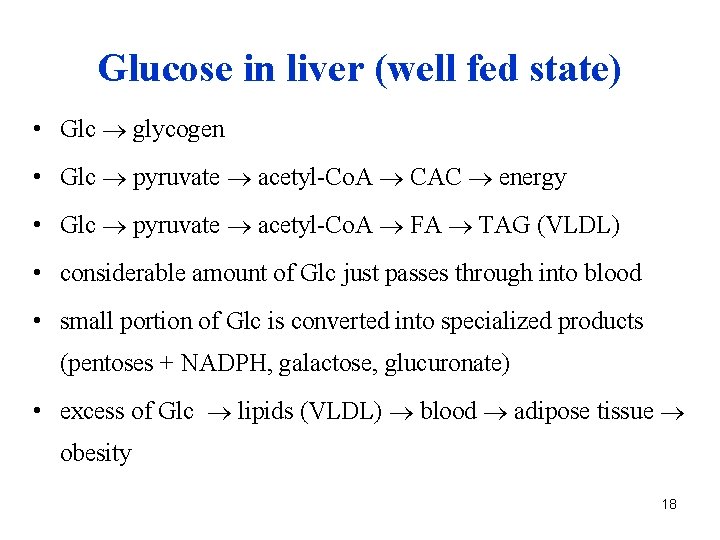
Glucose in liver (well fed state) • Glc glycogen • Glc pyruvate acetyl-Co. A CAC energy • Glc pyruvate acetyl-Co. A FA TAG (VLDL) • considerable amount of Glc just passes through into blood • small portion of Glc is converted into specialized products (pentoses + NADPH, galactose, glucuronate) • excess of Glc lipids (VLDL) blood adipose tissue obesity 18
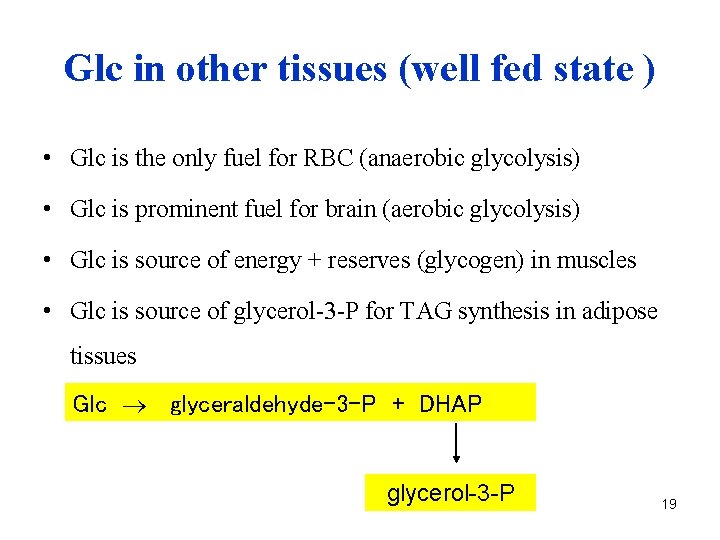
Glc in other tissues (well fed state ) • Glc is the only fuel for RBC (anaerobic glycolysis) • Glc is prominent fuel for brain (aerobic glycolysis) • Glc is source of energy + reserves (glycogen) in muscles • Glc is source of glycerol-3 -P for TAG synthesis in adipose tissues Glc glyceraldehyde-3 -P + DHAP glycerol-3 -P 19
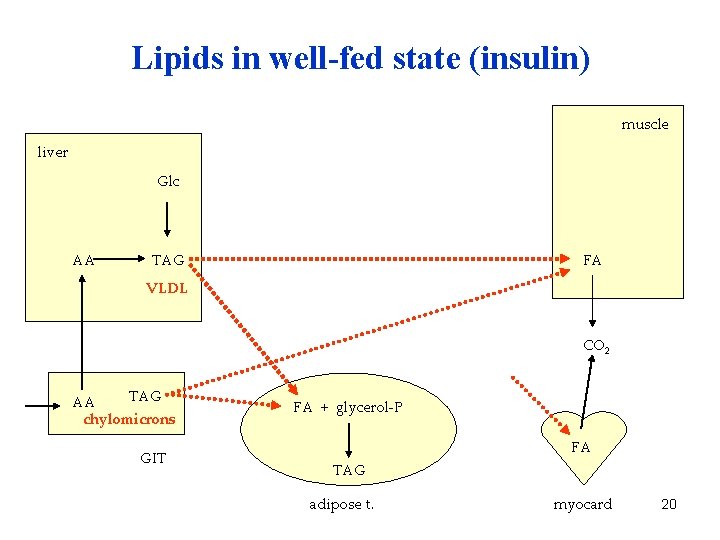
Lipids in well-fed state (insulin) muscle liver Glc AA TAG FA VLDL CO 2 TAG AA chylomicrons GIT FA + glycerol-P FA TAG adipose t. myocard 20
Lipids in well-fed state (insulin) • Exogen. TAG (CM) and endogen. lipids (VLDL) supply peripheral tissues (muscles, myocard, kidney, adip. t. ) • FA are released from TAG by the action of LPL • FA are fuel for muscles FA acetyl-Co. A CAC CO 2 + energy • In adipose tiss. , FA are substrates for TAG synthesis 21
Q. Which extrahepatal tissues utilize glucose in well-fed state? What is the role of insulin in this process? 22
A. • most tissues: • RBC + brain (exclusively in well-fed state) • muscles + adipose tissue + some other. . . • insulin stimulates the exposition of GLUT 4 in muscles and adip. tiss. cell membranes • Glc can enter these organs 23
Q. Why is glucose needed for adipose tissue? 24
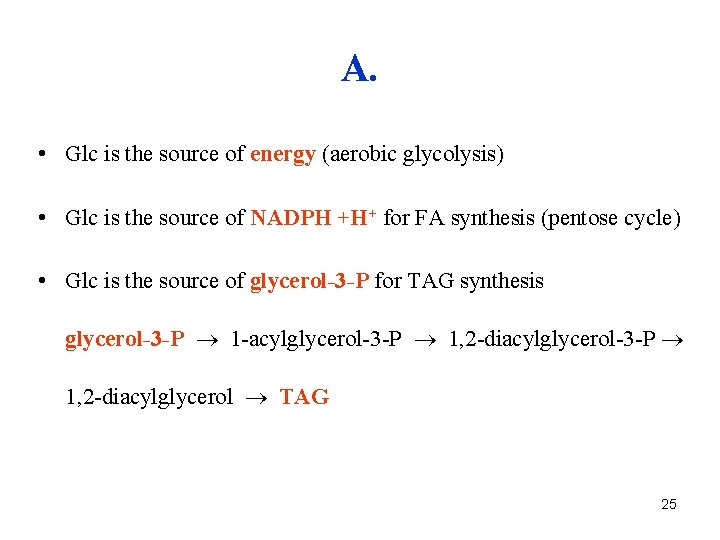
A. • Glc is the source of energy (aerobic glycolysis) • Glc is the source of NADPH +H+ for FA synthesis (pentose cycle) • Glc is the source of glycerol-3 -P for TAG synthesis glycerol-3 -P 1 -acylglycerol-3 -P 1, 2 -diacylglycerol TAG 25
Q. How can FA be formed from glucose? 26
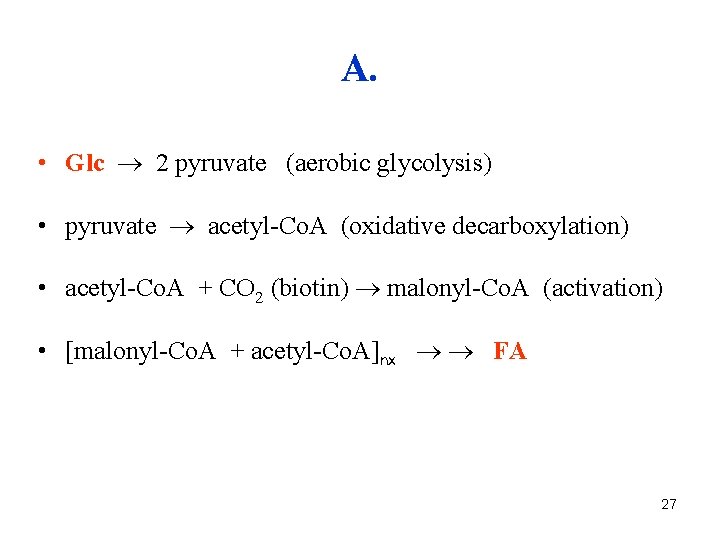
A. • Glc 2 pyruvate (aerobic glycolysis) • pyruvate acetyl-Co. A (oxidative decarboxylation) • acetyl-Co. A + CO 2 (biotin) malonyl-Co. A (activation) • [malonyl-Co. A + acetyl-Co. A]nx FA 27
Q. (p. 91) Why are KB not formed during resorption state? 28
A. • there is not enough substrate for KB synthesis • insulin has anti-lipolytic action not enough FA and acetyl-Co. A 29
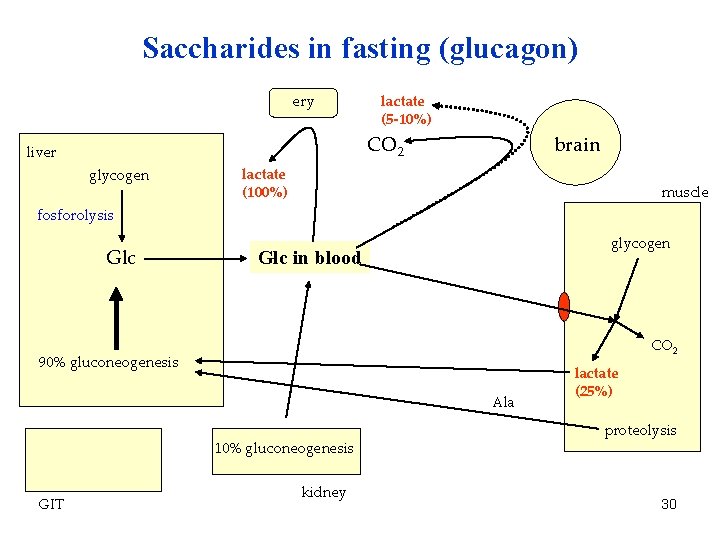
Saccharides in fasting (glucagon) ery lactate (5 -10%) CO 2 liver glycogen brain lactate (100%) muscle fosforolysis Glc glycogen Glc in blood CO 2 90% gluconeogenesis Ala 10% gluconeogenesis GIT kidney lactate (25%) proteolysis 30
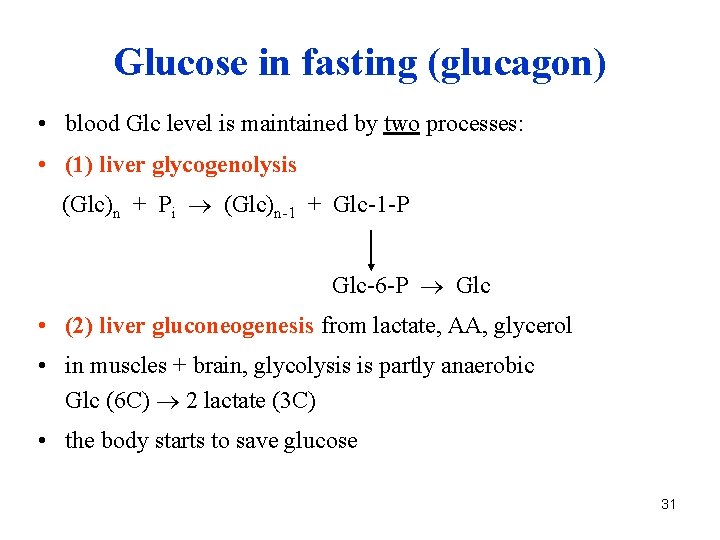
Glucose in fasting (glucagon) • blood Glc level is maintained by two processes: • (1) liver glycogenolysis (Glc)n + Pi (Glc)n-1 + Glc-1 -P Glc-6 -P Glc • (2) liver gluconeogenesis from lactate, AA, glycerol • in muscles + brain, glycolysis is partly anaerobic Glc (6 C) 2 lactate (3 C) • the body starts to save glucose 31
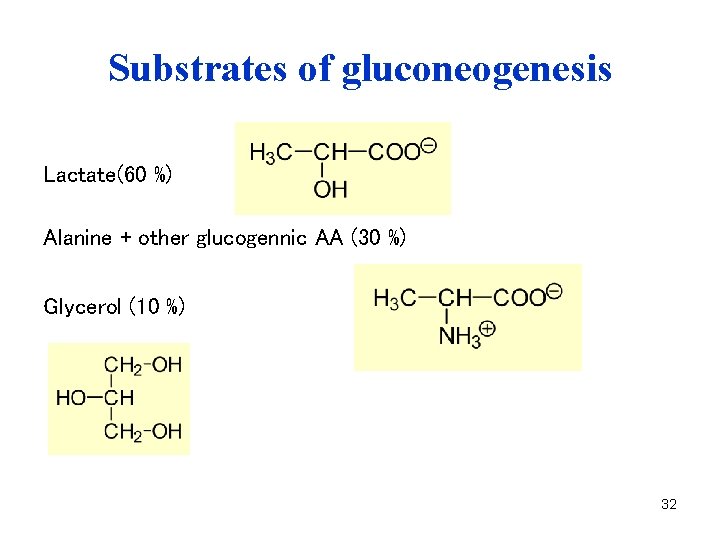
Substrates of gluconeogenesis Lactate(60 %) Alanine + other glucogennic AA (30 %) Glycerol (10 %) 32
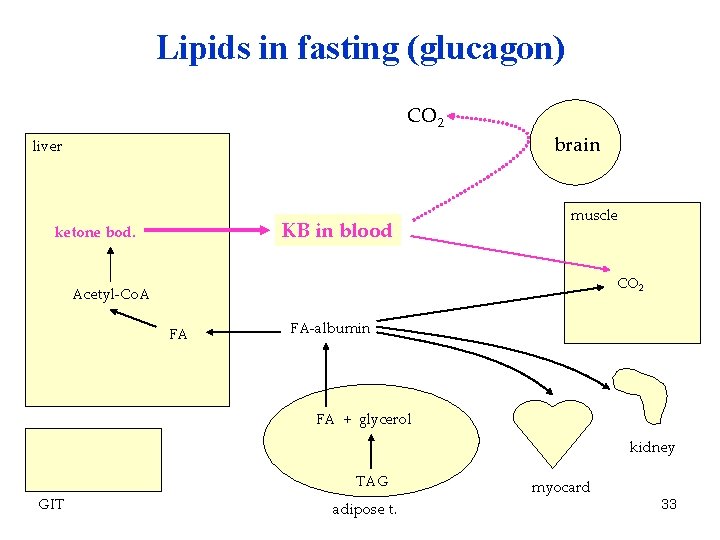
Lipids in fasting (glucagon) CO 2 liver KB in blood ketone bod. brain muscle CO 2 Acetyl-Co. A FA FA-albumin FA + glycerol kidney TAG GIT adipose t. myocard 33
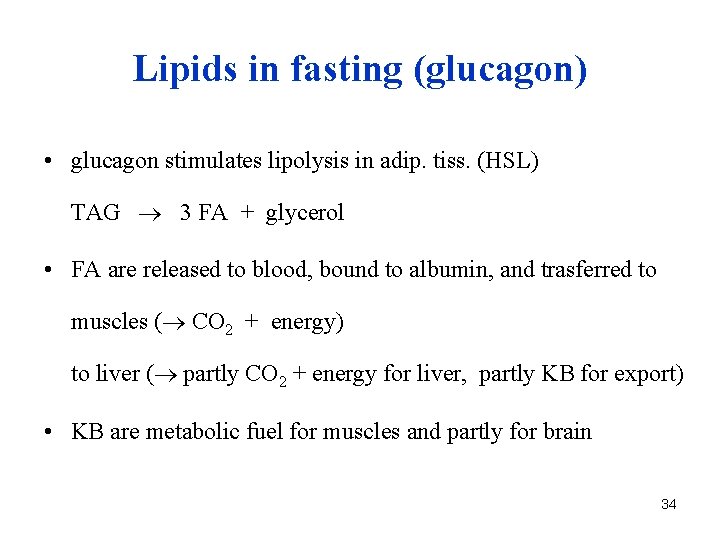
Lipids in fasting (glucagon) • glucagon stimulates lipolysis in adip. tiss. (HSL) TAG 3 FA + glycerol • FA are released to blood, bound to albumin, and trasferred to muscles ( CO 2 + energy) to liver ( partly CO 2 + energy for liver, partly KB for export) • KB are metabolic fuel for muscles and partly for brain 34
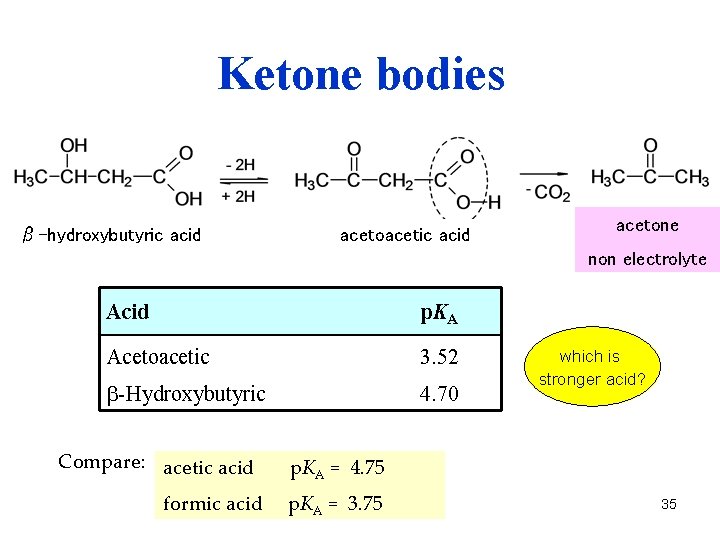
Ketone bodies β-hydroxybutyric acid acetoacetic acid acetone non electrolyte Acid p. KA Acetoacetic 3. 52 -Hydroxybutyric 4. 70 Compare: acetic acid formic acid which is stronger acid? p. KA = 4. 75 p. KA = 3. 75 35
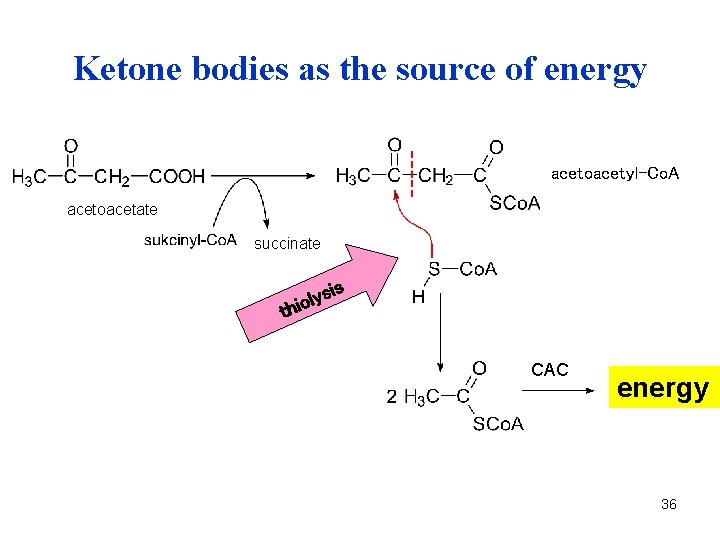
Ketone bodies as the source of energy acetoacetyl-Co. A acetoacetát acetoacetate succinate is s y l thio CAC energy 36
Q. In which tissue are KB produced? Which substrate is the source? What is the cause of increased synthesis of KB? 37
A. • KB are produced only in liver from acetyl-Co. A • liver is not able to utilize KB • the metabolic cause: the shortage of oxaloacetate and excess of acetyl-Co. A 38
Q. • How does lipoprotein lipase act on fat reserves in body? • How does hormon sensitive lipase act on fat reserves in body? 39
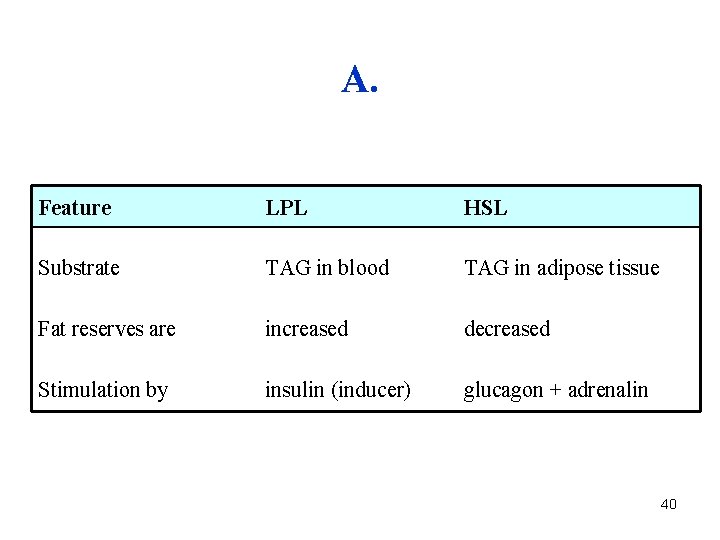
A. Feature LPL HSL Substrate TAG in blood TAG in adipose tissue Fat reserves are increased decreased Stimulation by insulin (inducer) glucagon + adrenalin 40
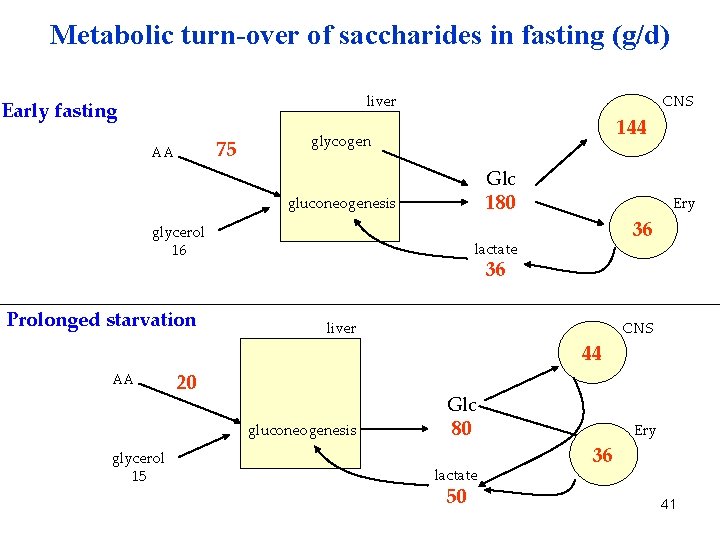
Metabolic turn-over of saccharides in fasting (g/d) liver Early fasting 75 AA CNS 144 glycogen Glc 180 gluconeogenesis glycerol 16 Prolonged starvation Ery 36 lactate 36 liver CNS 44 AA 20 gluconeogenesis glycerol 15 Glc 80 lactate 50 Ery 36 41
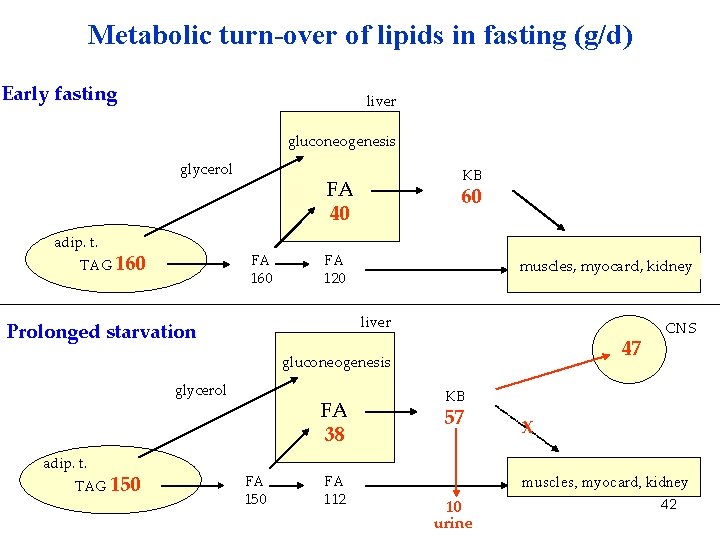
Metabolic turn-over of lipids in fasting (g/d) Early fasting liver gluconeogenesis glycerol adip. t. TAG 160 KB FA 40 FA 160 60 FA 120 muscles, myocard, kidney liver Prolonged starvation 47 gluconeogenesis glycerol adip. t. TAG 150 FA 38 FA 150 FA 112 CNS KB 57 x muscles, myocard, kidney 10 urine 42
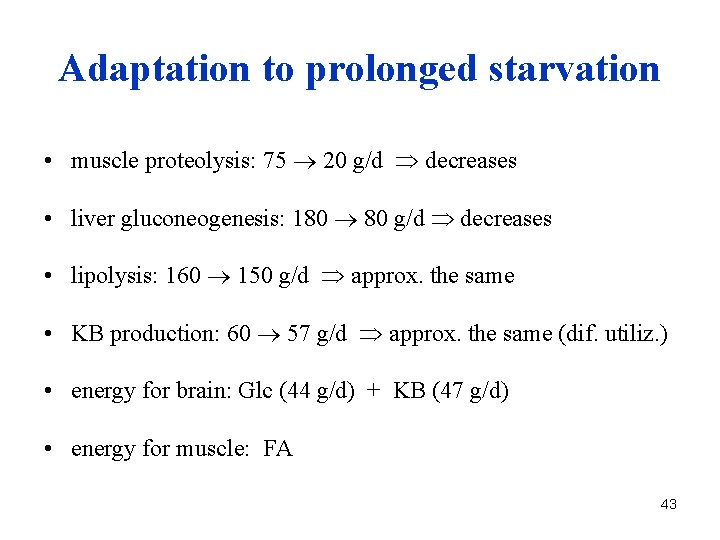
Adaptation to prolonged starvation • muscle proteolysis: 75 20 g/d decreases • liver gluconeogenesis: 180 80 g/d decreases • lipolysis: 160 150 g/d approx. the same • KB production: 60 57 g/d approx. the same (dif. utiliz. ) • energy for brain: Glc (44 g/d) + KB (47 g/d) • energy for muscle: FA 43
Q. Which are the main priorities of metabolism during long starvation? 44
A. 1. sparing glucose 2. sparing proteins 45
Q. How does a long term fasting affect the acid-base balance? 46
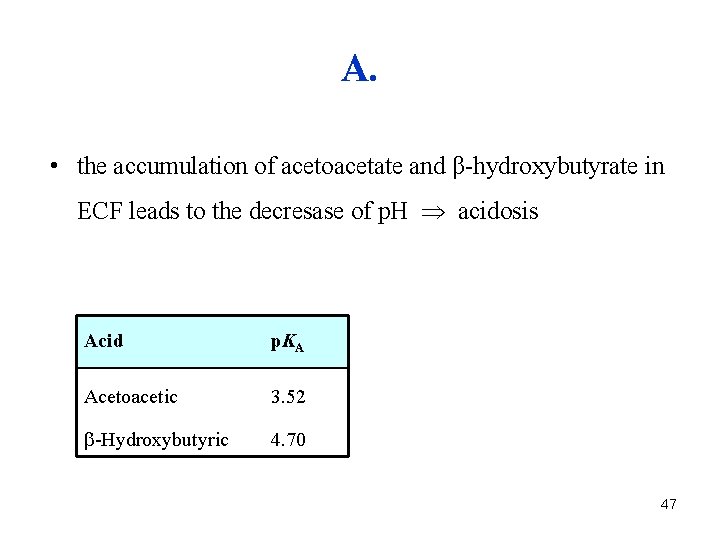
A. • the accumulation of acetoacetate and β-hydroxybutyrate in ECF leads to the decresase of p. H acidosis Acid p. KA Acetoacetic 3. 52 -Hydroxybutyric 4. 70 47
- Slides: 47