
Metabolic Processes Photosynthesis I The Light Reactions SBI
Metabolic Processes: Photosynthesis I The Light Reactions SBI 4 U – Ms. Richardson
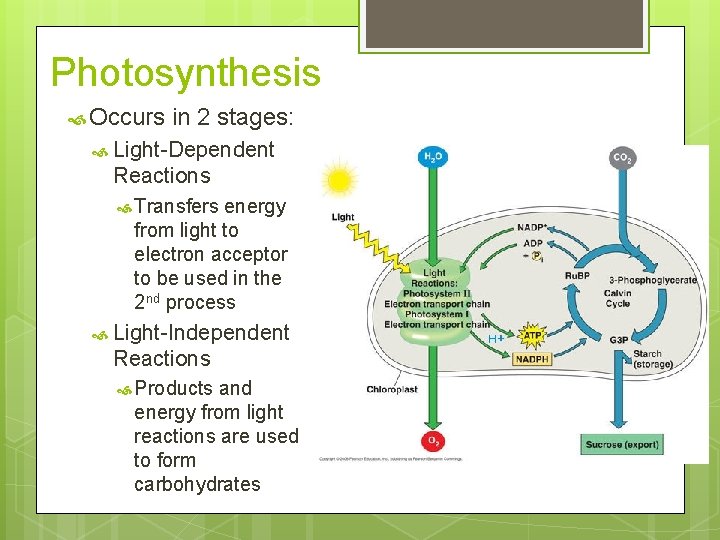
Photosynthesis Occurs in 2 stages: Light-Dependent Reactions Transfers energy from light to electron acceptor to be used in the 2 nd process Light-Independent Reactions Products and energy from light reactions are used to form carbohydrates
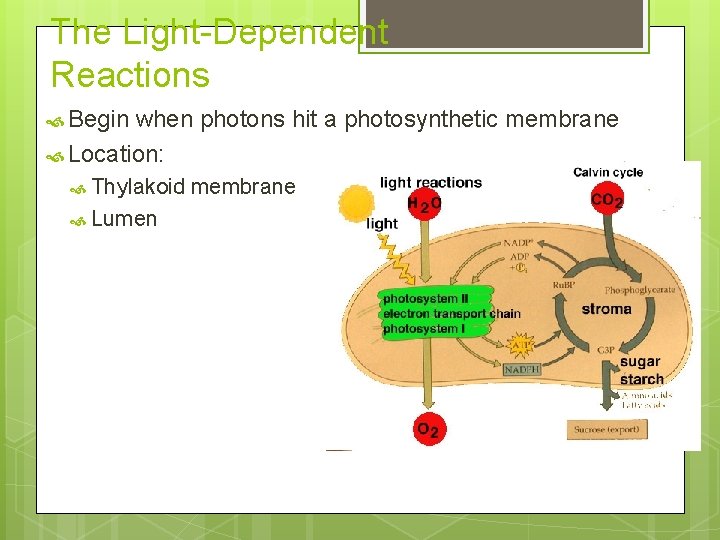
The Light-Dependent Reactions Begin when photons hit a photosynthetic membrane Location: Thylakoid Lumen membrane
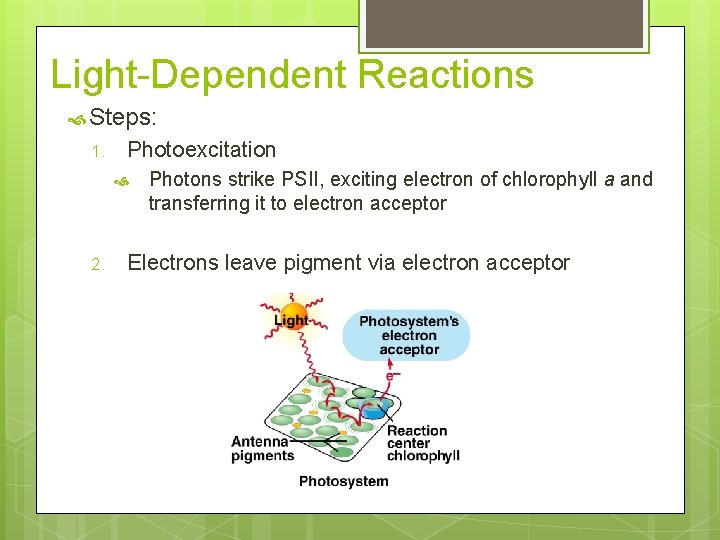
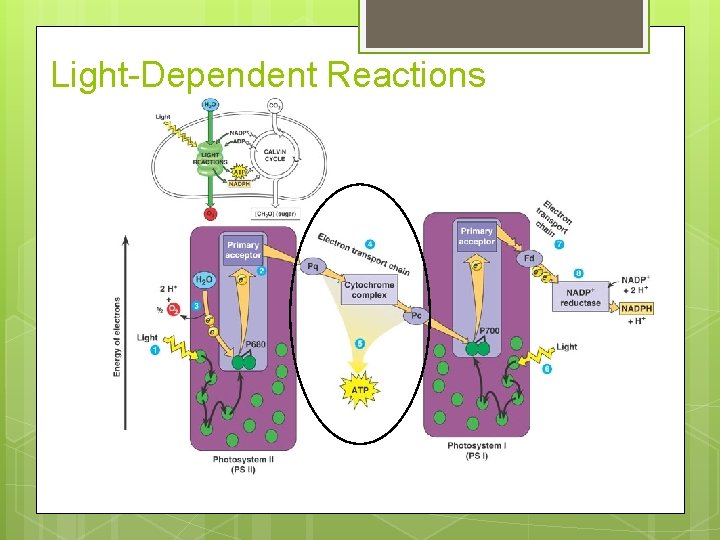
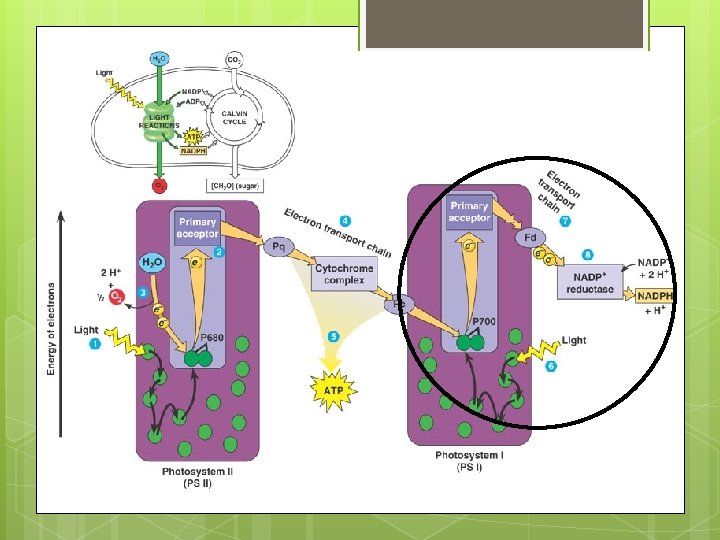
Light-Dependent Reactions Steps: 1. Photoexcitation 2. Photons strike PSII, exciting electron of chlorophyll a and transferring it to electron acceptor Electrons leave pigment via electron acceptor
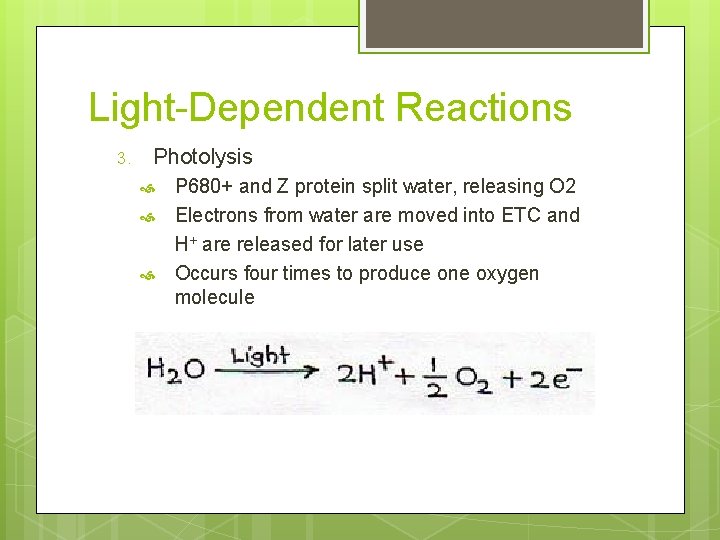
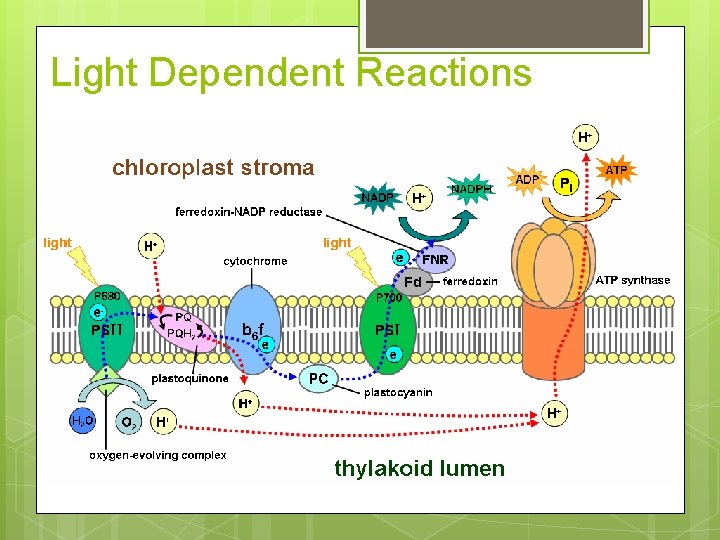
Light-Dependent Reactions 3. Photolysis P 680+ and Z protein split water, releasing O 2 Electrons from water are moved into ETC and H+ are released for later use Occurs four times to produce one oxygen molecule
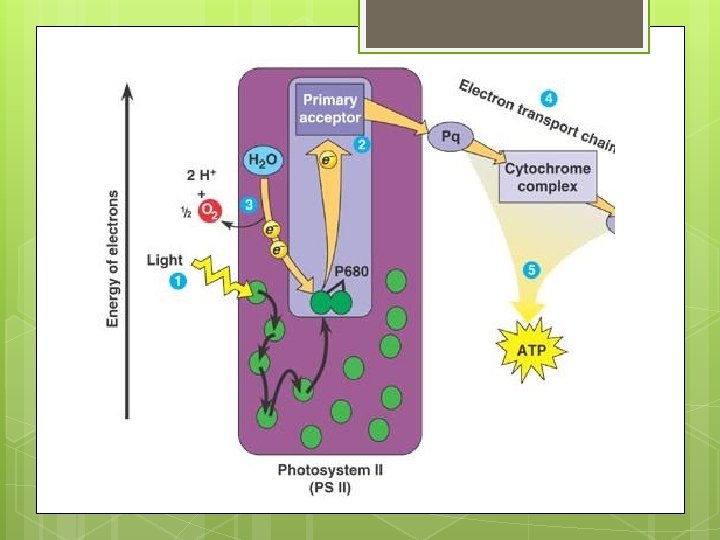
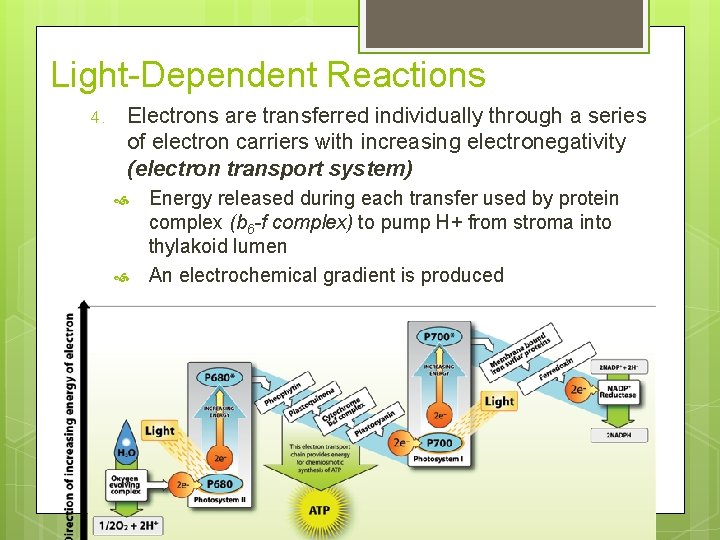
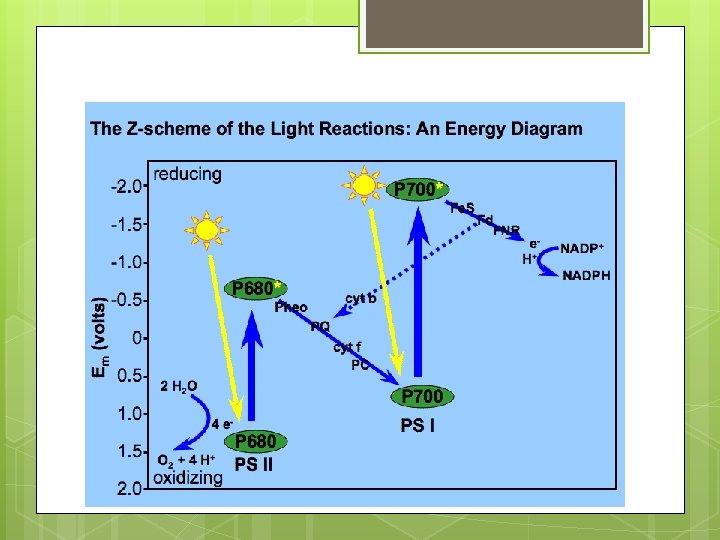
Light-Dependent Reactions 4. Electrons are transferred individually through a series of electron carriers with increasing electronegativity (electron transport system) Energy released during each transfer used by protein complex (b 6 -f complex) to pump H+ from stroma into thylakoid lumen An electrochemical gradient is produced
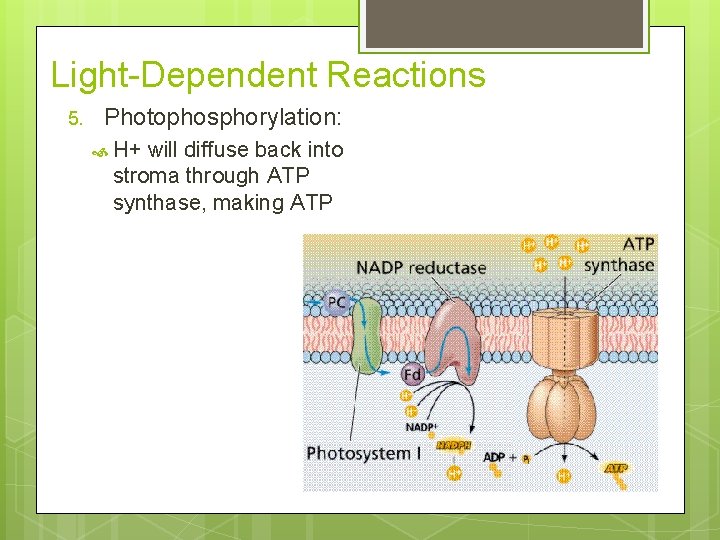
Light-Dependent Reactions 5. Photophosphorylation: H+ will diffuse back into stroma through ATP synthase, making ATP
Light-Dependent Reactions
Light Dependent Reactions
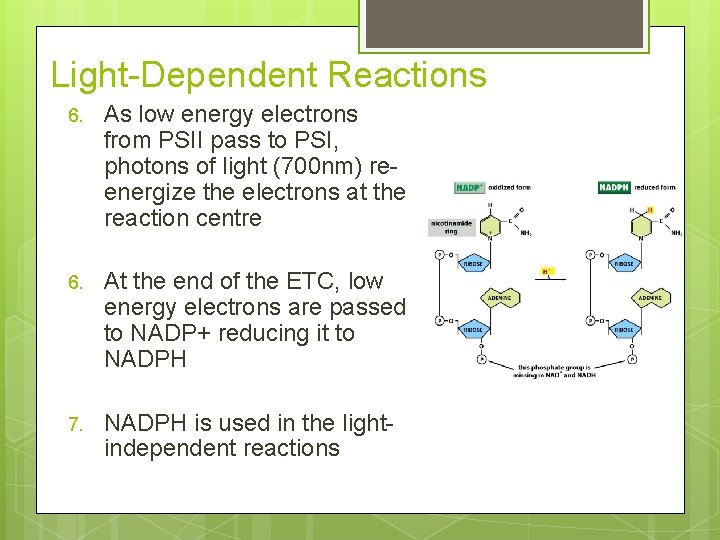
Light-Dependent Reactions 6. As low energy electrons from PSII pass to PSI, photons of light (700 nm) reenergize the electrons at the reaction centre 6. At the end of the ETC, low energy electrons are passed to NADP+ reducing it to NADPH 7. NADPH is used in the lightindependent reactions
Light-Dependent Reactions
Cyclic Photophosphorylation The previous process describes noncyclic photophosphorylation Produces 1 NADPH, 1 ATP Light-independent reactions need 2 NADPH, 3 ATP Chloroplasts can produce more ATP through cyclic photophosphorylation to meet needs of next process
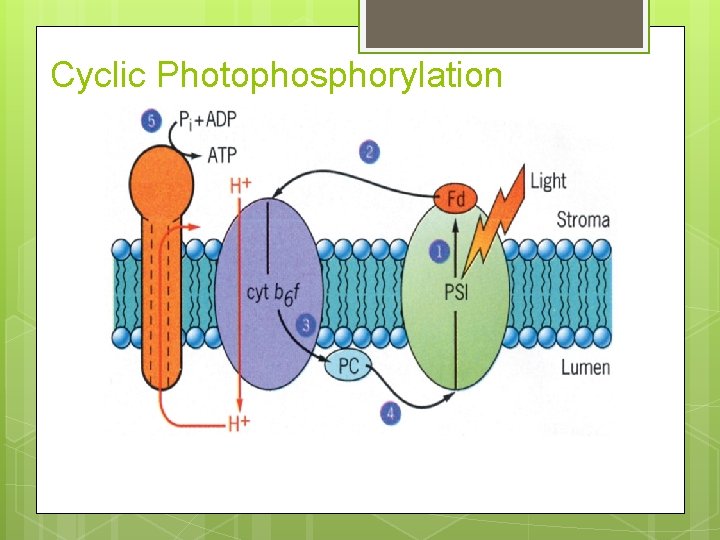
Cyclic Photophosphorylation Electrons in PSI, pass from primary electron acceptor, the B 6 -F complex and back to PSI Proton-motive force is produced and H+ are pumped across membrane Resulting gradient powers ATP synthase during chemiosmosis
Cyclic Photophosphorylation
- Slides: 16