
Metabolic Process and Thermoregulation LECTURE IN NORMAL PHYSIOLOGY
Metabolic Process and Thermoregulation LECTURE IN NORMAL PHYSIOLOGY
Metabolism (from Greak: μεταβολή metabolē, "change") is the set of lifesustaining chemical transformations within the cells of living organism. These enzymecatalyzed reactions allow organisms to grow and reproduce, maintain their structures, and respond to their environments.
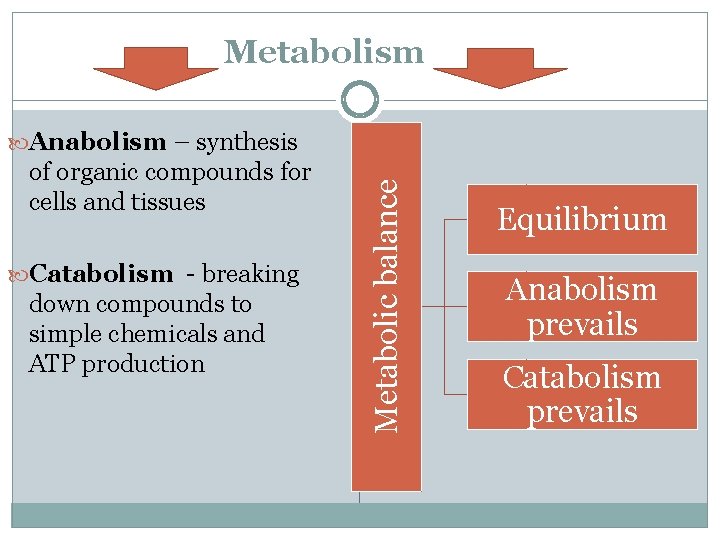
Metabolism of organic compounds for cells and tissues Catabolism - breaking down compounds to simple chemicals and ATP production Metabolic balance Anabolism – synthesis Equilibrium Anabolism prevails Catabolism prevails
The chemical reactions of metabolism are organized into metabolic pathways, in which one chemical is transformed through a series of steps into another chemical, by a sequence of enzymes. Enzymes are crucial to metabolism because they allow organisms to drive desirable reactions that require energy and will not occur by themselves, by coupling them to spontaneous reactions that release energy. Enzymes act as catalysts that allow the reactions to proceed more rapidly. Enzymes also allow the regulation of metabolic pathways in response to changes in the cell’s environment or to signals from other cells.
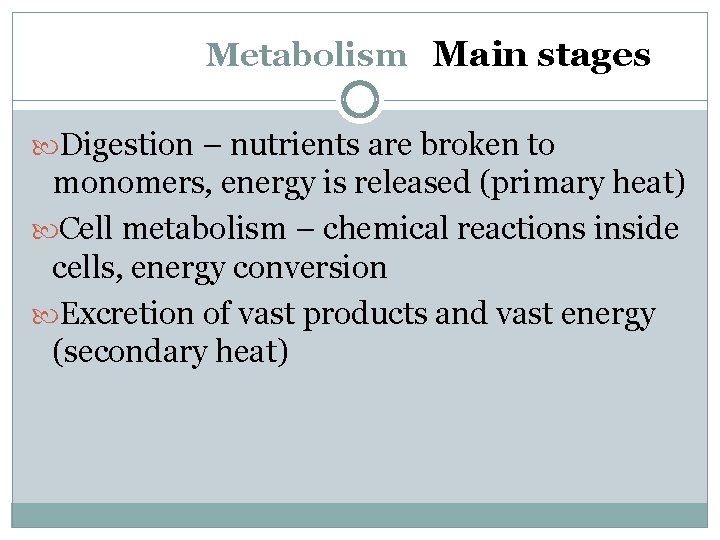
Metabolism Main stages Digestion – nutrients are broken to monomers, energy is released (primary heat) Cell metabolism – chemical reactions inside cells, energy conversion Excretion of vast products and vast energy (secondary heat)
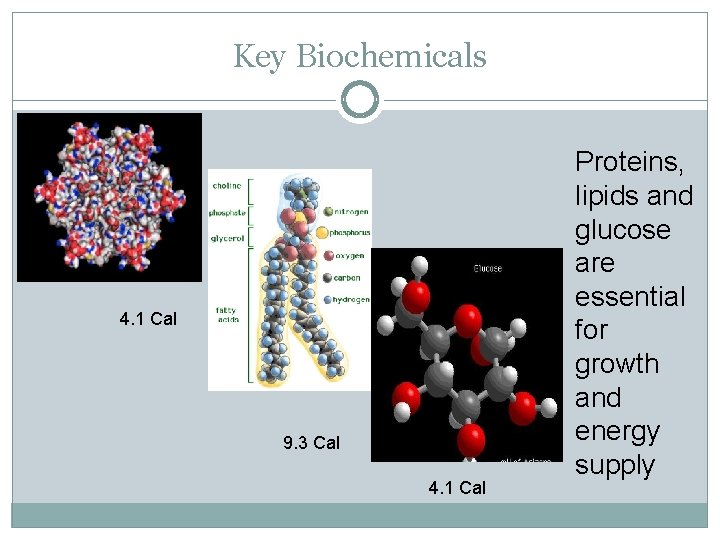
Key Biochemicals 4. 1 Cal 9. 3 Cal 4. 1 Cal Proteins, lipids and glucose are essential for growth and energy supply
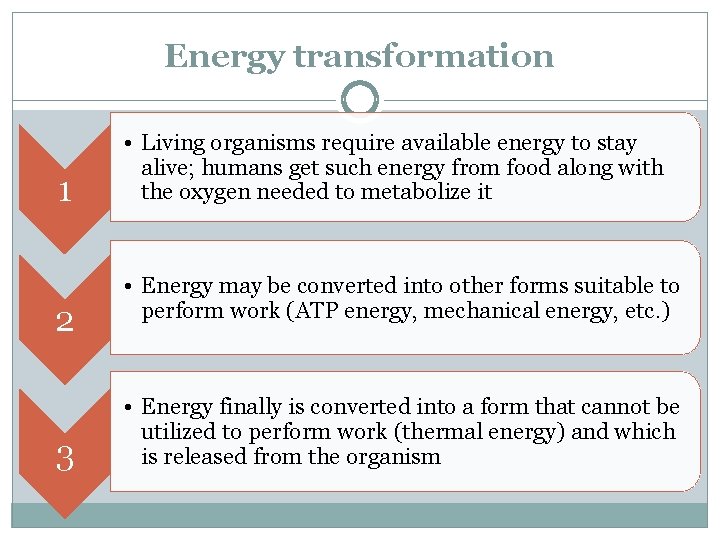
Energy transformation 1 2 3 • Living organisms require available energy to stay alive; humans get such energy from food along with the oxygen needed to metabolize it • Energy may be converted into other forms suitable to perform work (ATP energy, mechanical energy, etc. ) • Energy finally is converted into a form that cannot be utilized to perform work (thermal energy) and which is released from the organism
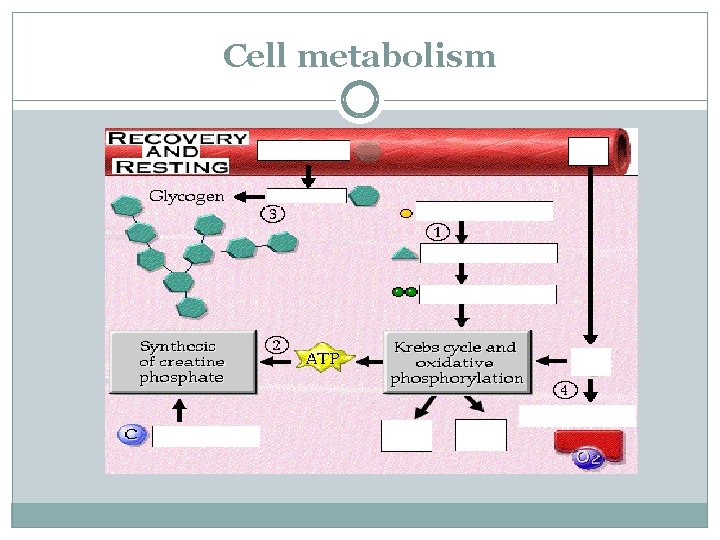
Cell metabolism
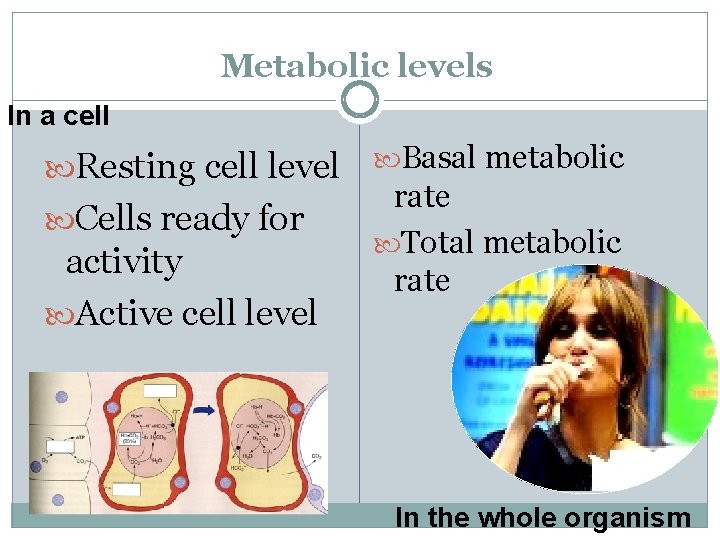
Metabolic levels In a cell Resting cell level Cells ready for activity Active cell level Basal metabolic rate Total metabolic rate In the whole organism
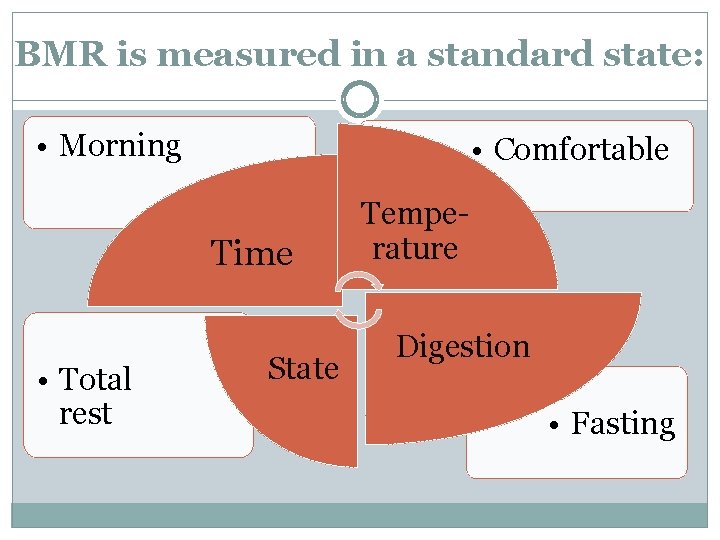
BMR is measured in a standard state: • Morning • Comfortable Time • Total rest State Temperature Digestion • Fasting
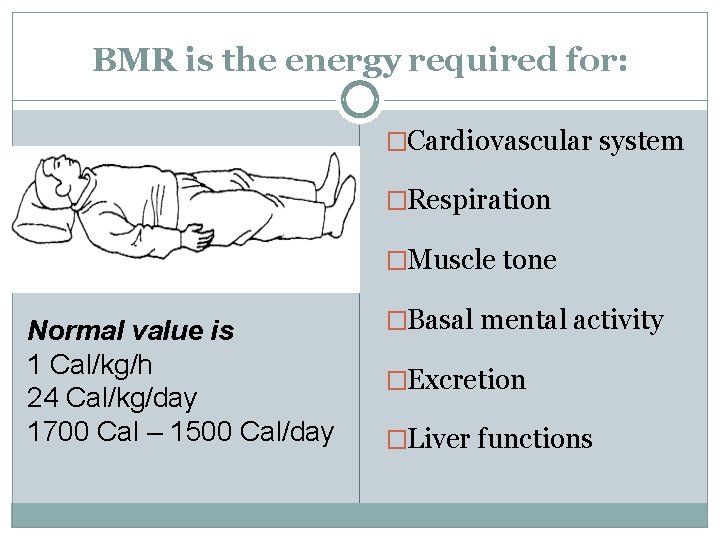
BMR is the energy required for: �Cardiovascular system �Respiration �Muscle tone Normal value is 1 Cal/kg/h 24 Cal/kg/day 1700 Cal – 1500 Cal/day �Basal mental activity �Excretion �Liver functions
Basal Metabolic Rate Depends on: Gender Age Anthropometric data Individual characteristics of regulation mechanisms
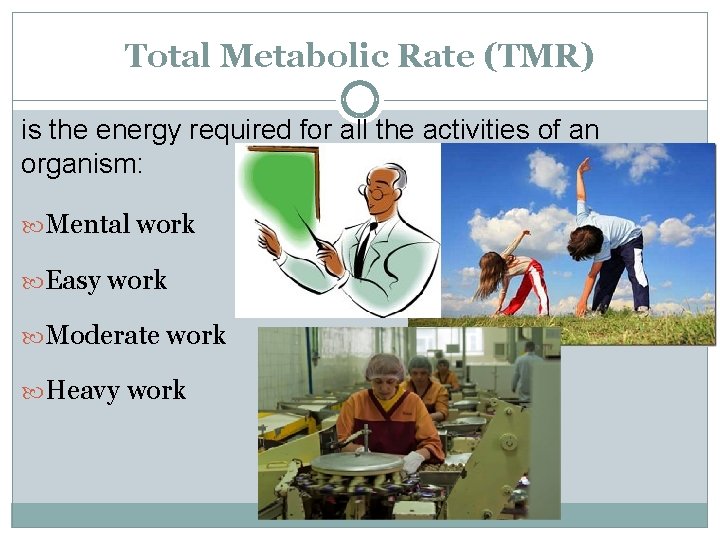
Total Metabolic Rate (TMR) is the energy required for all the activities of an organism: Mental work Easy work Moderate work Heavy work
Methodic to test energy metabolism �Direct biocalorimetry �Indirect biocalorimetry �Calculation of predicted BMR �Calculation of BMR deviation
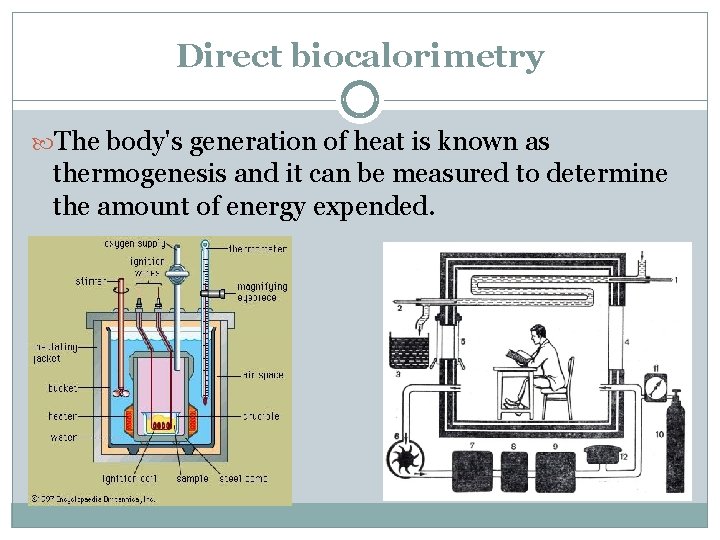
Direct biocalorimetry The body's generation of heat is known as thermogenesis and it can be measured to determine the amount of energy expended.
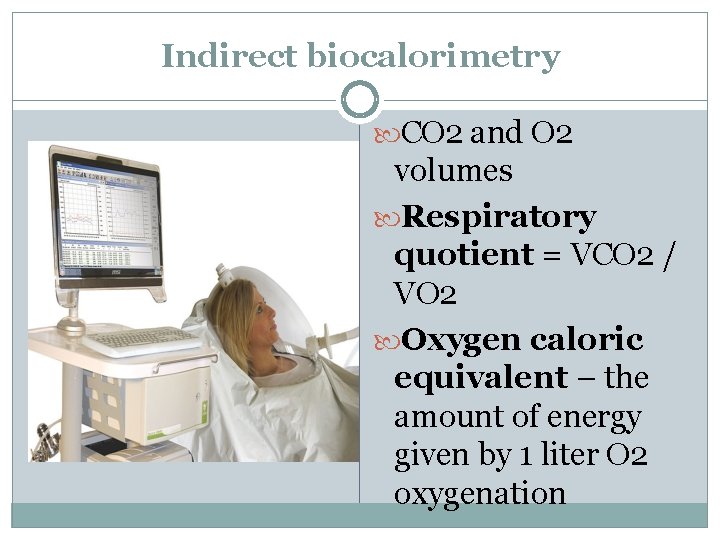
Indirect biocalorimetry CO 2 and O 2 volumes Respiratory quotient = VCO 2 / VO 2 Oxygen caloric equivalent – the amount of energy given by 1 liter O 2 oxygenation
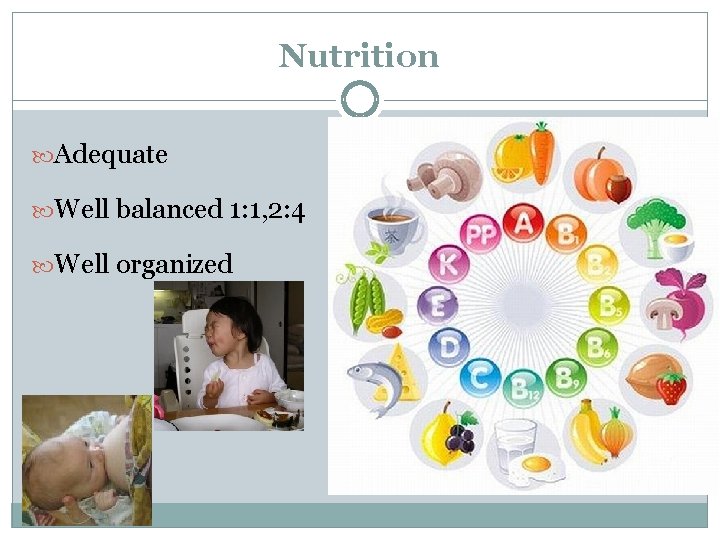
Nutrition Adequate Well balanced 1: 1, 2: 4 Well organized
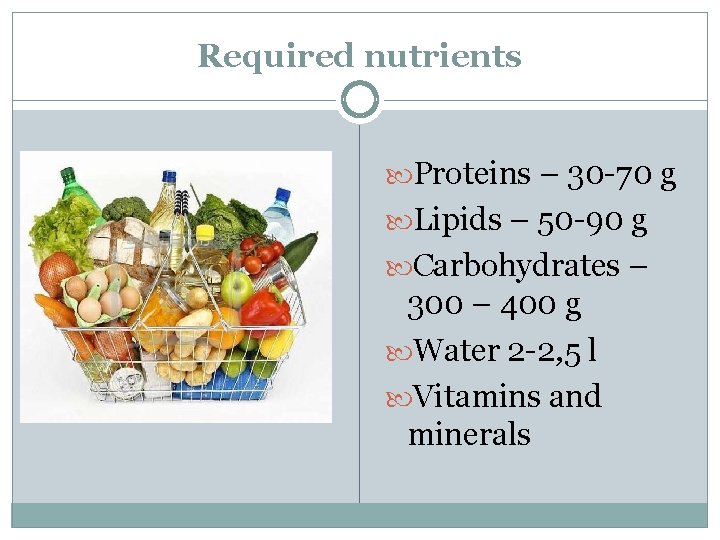
Required nutrients Proteins – 30 -70 g Lipids – 50 -90 g Carbohydrates – 300 – 400 g Water 2 -2, 5 l Vitamins and minerals
Regulation of Metabolism Conscious sensations – hunger and satiety, appetite Emotional stress Heat production Regulation of metabolic process in a cell
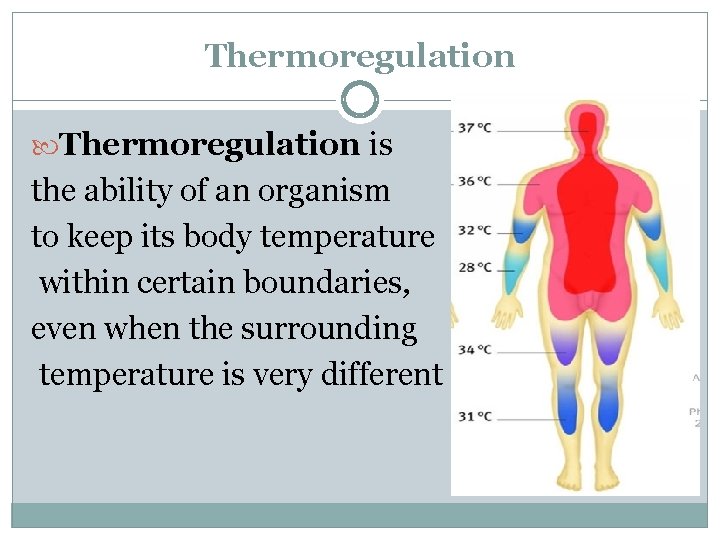
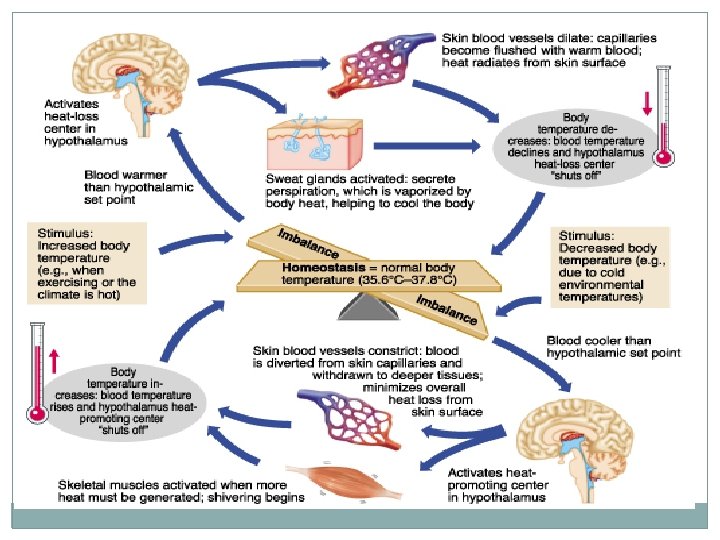
Thermoregulation is the ability of an organism to keep its body temperature within certain boundaries, even when the surrounding temperature is very different
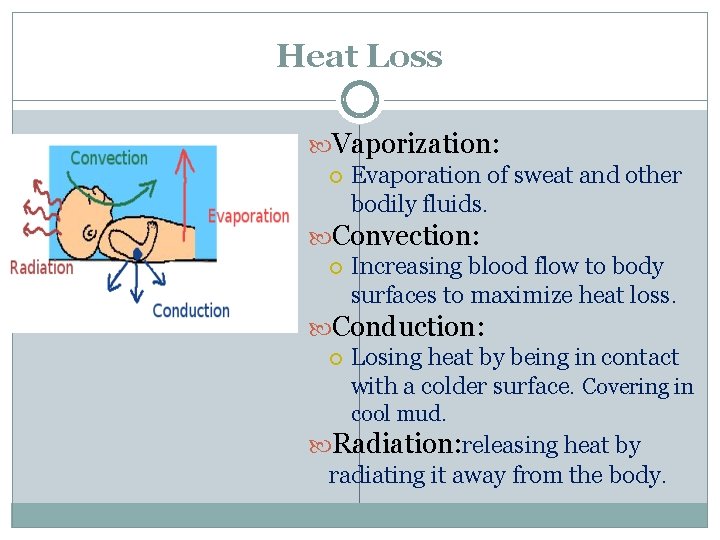
Heat Loss Vaporization: Evaporation of sweat and other bodily fluids. Convection: Increasing blood flow to body surfaces to maximize heat loss. Conduction: Losing heat by being in contact with a colder surface. Covering in cool mud. Radiation: releasing heat by radiating it away from the body.
Heat Production Chemical thermogenesis: increasing BMR, increasing metabolic activity Increased muscular activity
- Slides: 23