
Metabolic Pathways for Lipids Ketogenesis and Ketone Bodies
Metabolic Pathways for Lipids. Ketogenesis and Ketone Bodies. 1
Metabolism of ketonе bodies


Ketogenesis and Ketone Bodies In ketogenesis: �Body fat breaks down to meet energy needs. �Keto compounds called ketone bodies, form. 6

KETONE BODIES �Are an easy way of transporting the energy stored in fat from the liver to other tissues because they are soluble in the blood. �Ketone bodies are a water-soluble, transportable form of acetyl units Ketone bodies are fuel molecules (can fuel brain and other cells during starvation)
Ketone bodies �Excessive ketone bodies can be produced in diabetes mellitus or starvation (a lot of acetyl Co. A in liver) �When rate of production exceeds utilization, ketonemia, ketonuria, and acidemia can result
Ketogenesis What is it and What For ? Ketogenesis is the conversion of long chain FA to the Four- carbon acetoacetate and 3 hydroxy butyrate (Ketone Bodies). {ACETONE ? } The primary utility of ketogenesis is to provide a universally accepted * fuel for energy production… ( an adaptive response in starvation) *The Brain oxidizes KB but not Fat. *Other Tissues oxidize KB and Fat.

KETOGENESIS It occurs when there is a high rate of fatty acid oxidation in the liver. These three substances are collectively known as the ketone bodies (also called acetone bodies or acetone). Enzymes responsible for ketone bodies formation are associated with mitochondria
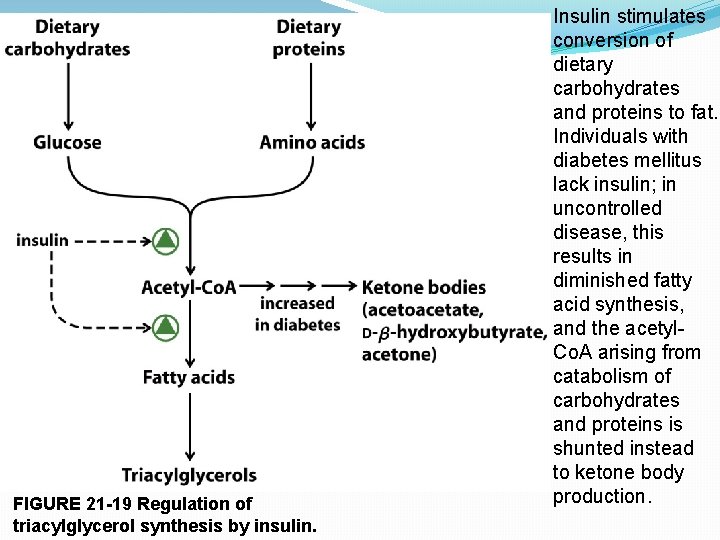
FIGURE 21 -19 Regulation of triacylglycerol synthesis by insulin. Insulin stimulates conversion of dietary carbohydrates and proteins to fat. Individuals with diabetes mellitus lack insulin; in uncontrolled disease, this results in diminished fatty acid synthesis, and the acetyl. Co. A arising from catabolism of carbohydrates and proteins is shunted instead to ketone body production.

KETONE BODIES The entry of acetyl Co. A into the citric acid cycle depends on the availability of oxaloacetate. The concentration of oxaloacetate is lowered if carbohydrate is unavailable (starvation) or improperly utilized (diabetes). Oxaloacetate is normally formed from pyruvate by pyruvate carboxylase.
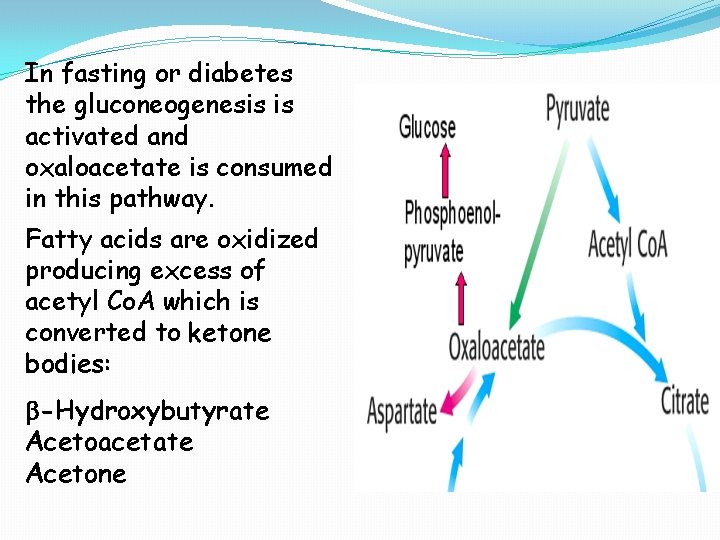
In fasting or diabetes the gluconeogenesis is activated and oxaloacetate is consumed in this pathway. Fatty acids are oxidized producing excess of acetyl Co. A which is converted to ketone bodies: b-Hydroxybutyrate Acetoacetate Acetone
In fasting or diabetes the gluconeogenesis is activated and oxaloacetate is consumed in this pathway. Fatty acids are oxidized producing excess of acetyl Co. A which is converted to ketone bodies: b-Hydroxybutyrate Acetoacetate Acetone

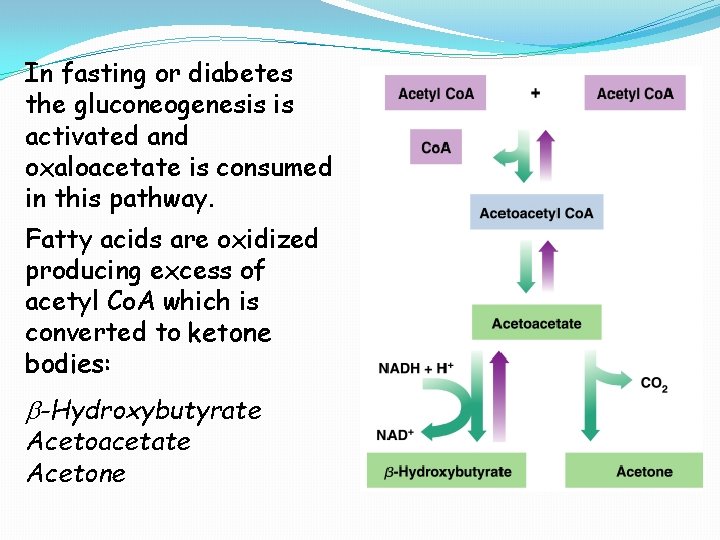
Acetoacetyl Co. A is formed by incomplete FA degradation or by condensation of two acetyl Co. As by thiolase Acetoacetyl Co. A condenses with a third acetyl Co. A to form hydroxymethylglutaryl Co. A (HMG-Co. A) HMG-Co. A is cleaved to produce acetoacetate + acetyl Co. A Reduction of acetoacetate to β-hydroxybutyrate, or spontaneous decarboxylation to acetone, produces the other two ketone bodies

Acetoacetate also undergoes a slow, spontaneous decarboxylation to acetone. The odor of acetone may be detected in the breath of a person who has a high level of acetoacetate in the blood.

In summary in ketogenesis: �Acetoacetyl Co. A condenses with a third acetyl Co. A to form hydroxymethylglutaryl Co. A (HMG-Co. A) �HMG-Co. A is cleaved to produce acetoacetate + acetyl Co. A �Reduction of acetoacetate to βhydroxybutyrate, or spontaneous decarboxylation to acetone. 17

The liver makes ketone bodies because: 1) it has the enzymatic machinery to do it (HMG Co. A Synthase is present in significant quantities only in the liver); AND 2) acetyl Co. A builds up in the liver (and not in other tissues) because only in the liver is oxaloacetate drained from the TCA cycle to support gluconeogenesis (recall that PEP carboxykinase converts OAA to PEP). The resulting decrease in OAA renders insufficient quantities to condense with acetyl Co. A in the TCA cycle, and hence acetyl Co. A levels increase, thereby shunting it into the ketogenic pathway.
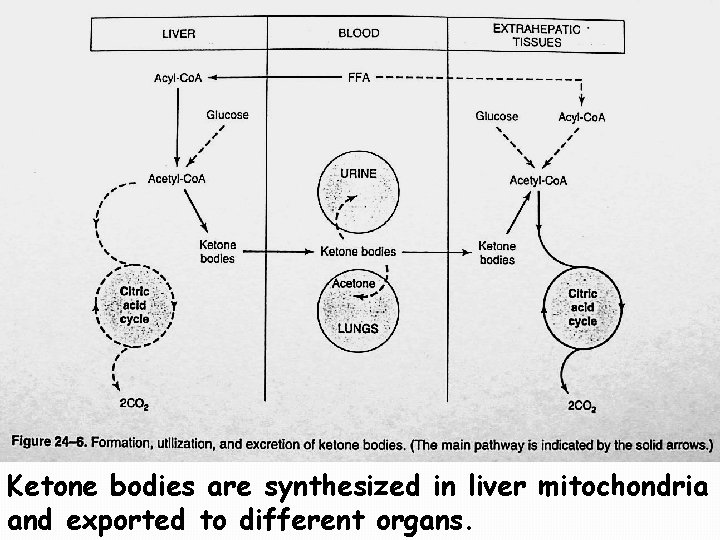
Ketone bodies are synthesized in liver mitochondria and exported to different organs.
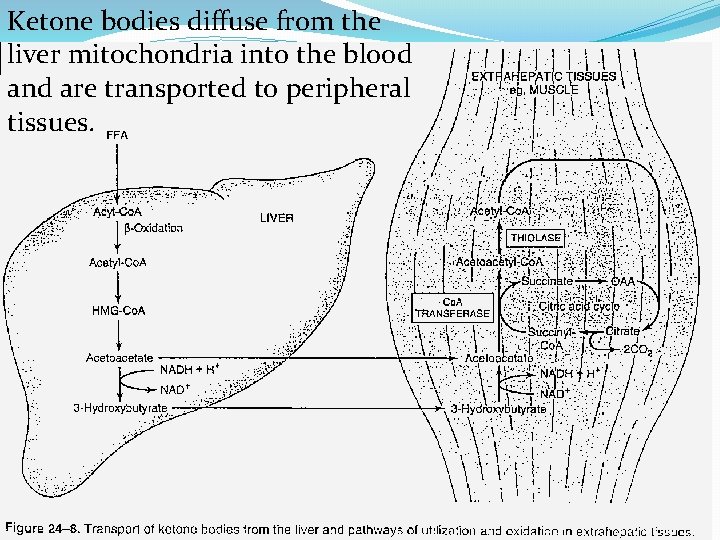
Ketone bodies diffuse from the liver mitochondria into the blood and are transported to peripheral tissues.
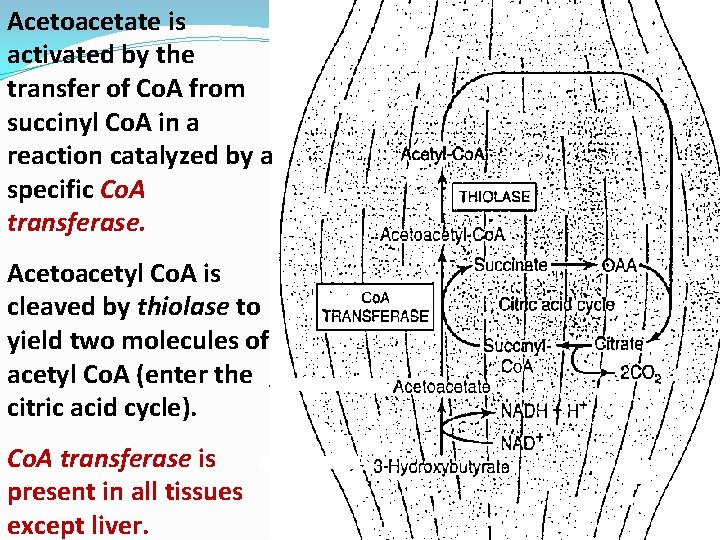
Acetoacetate is activated by the transfer of Co. A from succinyl Co. A in a reaction catalyzed by a specific Co. A transferase. Acetoacetyl Co. A is cleaved by thiolase to yield two molecules of acetyl Co. A (enter the citric acid cycle). Co. A transferase is present in all tissues except liver.
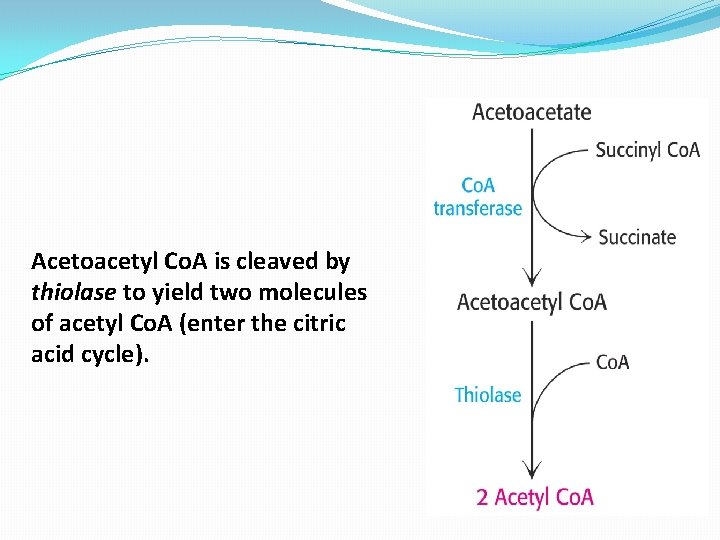
Acetoacetyl Co. A is cleaved by thiolase to yield two molecules of acetyl Co. A (enter the citric acid cycle).
The rate of ketogenesis depends upon the activity of two enzymes: hormone-sensitive lipase (or triglyceride lipase), which is found in peripheral adipocytes and acetyl Co. A carboxylase , which is found in the liver. Insulin inhibits lipolysis and stimulates lipogenesis through deactivation of hormone-sensitive lipase and activation of acetyl Co. A carboxylase, respectively. In other words, a low glucagon/insulin ratio inhibits ketogenesis while a high glucagon/insulin ratio, as occurs with fasting or diabetes, favors ketogenesis through promotion of lipolysis in the adipocyte and stimulation of β-oxidation of free fatty acids in the liver.
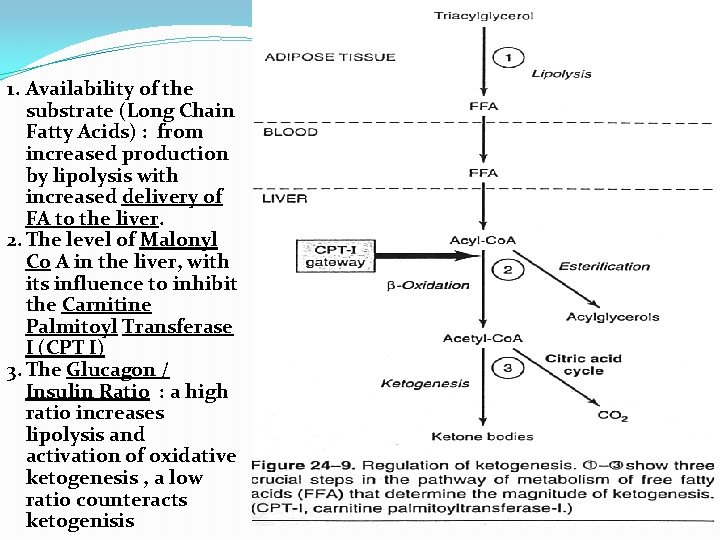
1. Availability of the substrate (Long Chain Fatty Acids) : from increased production by lipolysis with increased delivery of FA to the liver. 2. The level of Malonyl Co A in the liver, with its influence to inhibit the Carnitine Palmitoyl Transferase I (CPT I) 3. The Glucagon / Insulin Ratio : a high ratio increases lipolysis and activation of oxidative ketogenesis , a low ratio counteracts ketogenisis
Ketosis or Keto-Acidosis A large accumulation of KB is dangerous, because it leads to profound metabolic acidosis. The physiologic Ketogenesis of fasting and the adaptive ketosis in starvation never progress to life threatening acidosis
Ketosis means a condtion in which blood ketone level is equal or more than 0. 2 m. M(200μmol/L). Ketoacidosis is defined as a condition in which blood ketone level is equal or more than 7 m. M. Blood ketone level decreases to about 0. 05~0. 1 m. M in postprandial condition, and increases up to 6 m. M after 24 -hour fast in young children. This means ketone levels increases 100 -fold after fasting.
Ketosis is nearly always a transient condition that is characterized by elevated serum levels of ketone bodies. Both hyperketonemia and ketoacidosis are considered to be forms of ketosis. The most common causes of ketosis are ‘physiological’, in which mildly to moderately elevated levels of circulating ketone bodies are present in response to fasting (especially during infancy or pregnancy), prolonged exercise, or a ketogenic (high-fat) diet.
Ketosis can also be caused by pathological processes such as those precipitated by endocrine diseases including diabetes mellitus, cortisol deficiency, and growth hormone deficiency; toxic ingestions of ethanol or salicylates; and certain rare inborn errors of metabolism. The most common pathological causes of ketosis are diabetic ketoacidosis and toxic ketoacidoses, especially those associated withdrawal following binge drinking (alcoholic ketoacidosis), salicylate overdose and isopropyl alcohol ingestion.
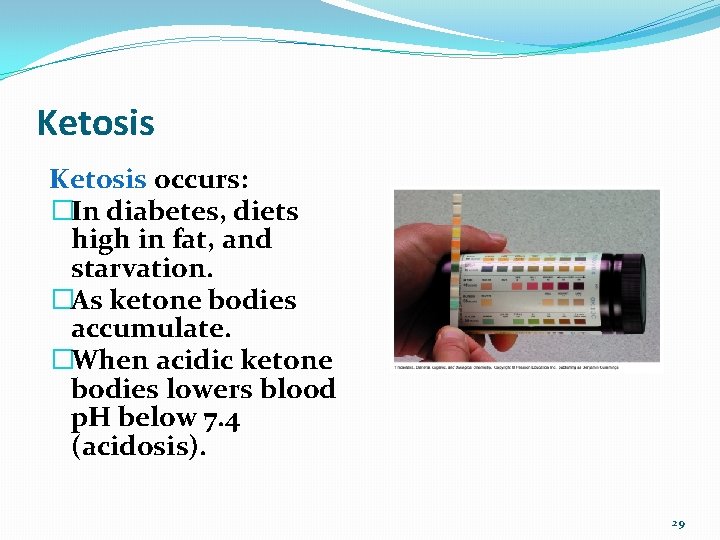
Ketosis occurs: �In diabetes, diets high in fat, and starvation. �As ketone bodies accumulate. �When acidic ketone bodies lowers blood p. H below 7. 4 (acidosis). 29

S K N A TH
- Slides: 30