
Metabolic Pathways A metabolic pathway begins with a
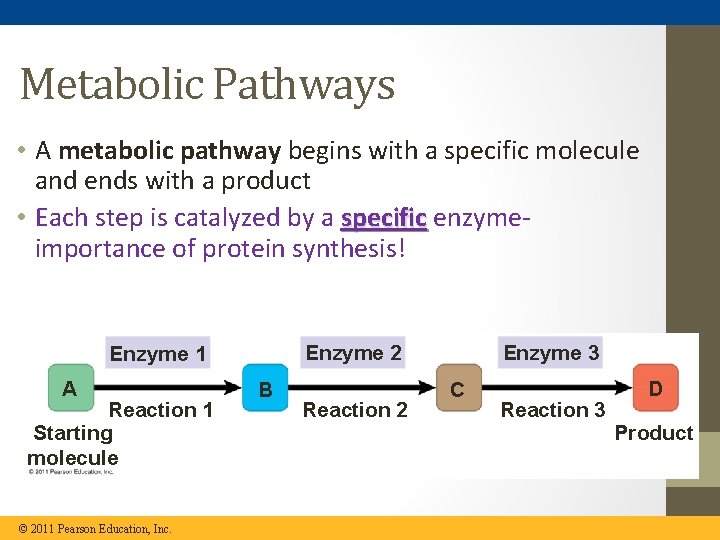
Metabolic Pathways • A metabolic pathway begins with a specific molecule and ends with a product • Each step is catalyzed by a specific enzymeimportance of protein synthesis! Enzyme 2 Enzyme 1 A Reaction 1 Starting molecule © 2011 Pearson Education, Inc. B Reaction 2 Enzyme 3 C Reaction 3 D Product

METABOLISM = Catabolism + Anabolism • Catabolic pathways release energy by breaking down complex molecules into simpler compounds (Cellular respiration, the breakdown of glucose in the presence of oxygen) • Anabolic pathways consume energy to build complex molecules from simpler ones (synthesis of protein from amino acids) © 2011 Pearson Education, Inc.
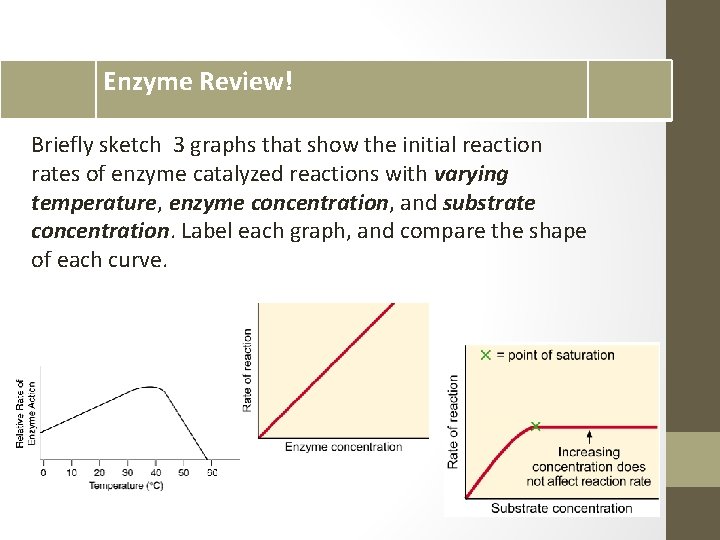
Enzyme Review! Briefly sketch 3 graphs that show the initial reaction rates of enzyme catalyzed reactions with varying temperature, enzyme concentration, and substrate concentration. Label each graph, and compare the shape of each curve.

www. kahoot. it
Enzyme Inhibitors Enzyme Unit –Part 2

Inhibition • Active site of enzyme fits perfectly to substrate • However, it is possible for another molecule to bind to an enzymes active site if it is very similar in shape to the enzyme’s substrate • This would inhibit the enzyme’s function Substrate Enzyme Inhibitor
Enzyme Inhibitors • Competitive inhibitors bind to the active site of an enzyme, competing with the substrate • Noncompetitive inhibitors bind to another part of an enzyme, causing the enzyme to change shape and making the active site less effective • Examples of inhibitors include toxins, poisons, pesticides, and antibiotics • Cyanide poisoning © 2011 Pearson Education, Inc.

Figure 8. 17 (a) Normal binding (b) Competitive inhibition Substrate Active site (c) Noncompetitive inhibition Competitive inhibitor Enzyme Noncompetitive inhibitor Allosteric
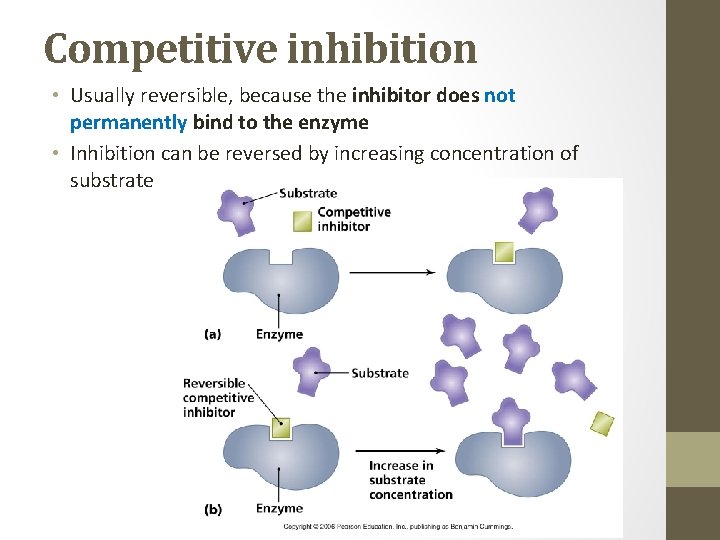
Competitive inhibition • Usually reversible, because the inhibitor does not permanently bind to the enzyme • Inhibition can be reversed by increasing concentration of substrate
Competitive inhibition examples • ACE inhibitors – Block the pathway of hormone, angiotensin II, from constricting blood vessel and increasing blood pressure (Blood vessel dilate) • ACE Inhibition animation • Carbon Monoxide poisoning – CO vs. O 2 with hemoglobin
Non-competitive inhibition • NON-COMPETITIVE Inhibition does not depend on substrate concentration • Inhibitor will STILL block enzyme function, regardless of low/high concentration of substrate • Two main types • Irreversible inhibition- *could be at ACTIVE SITE! • Allosteric inhibition
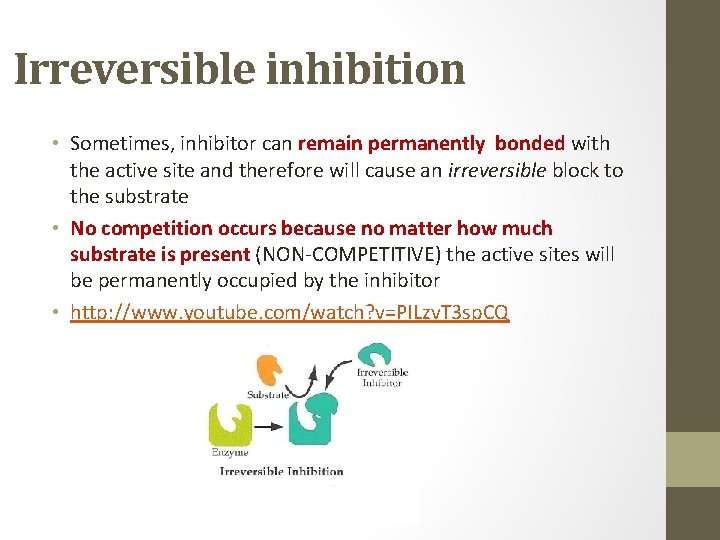
Irreversible inhibition • Sometimes, inhibitor can remain permanently bonded with the active site and therefore will cause an irreversible block to the substrate • No competition occurs because no matter how much substrate is present (NON-COMPETITIVE) the active sites will be permanently occupied by the inhibitor • http: //www. youtube. com/watch? v=PILzv. T 3 sp. CQ
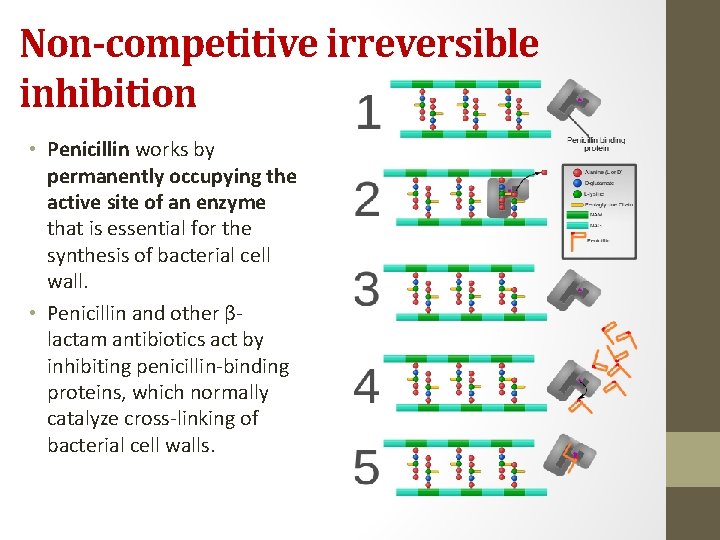
Non-competitive irreversible inhibition • Penicillin works by permanently occupying the active site of an enzyme that is essential for the synthesis of bacterial cell wall. • Penicillin and other βlactam antibiotics act by inhibiting penicillin-binding proteins, which normally catalyze cross-linking of bacterial cell walls.

Non-competitive allosteric inhibition • If a molecule can bind to another site on the enzyme (besides active site) and stop enzyme function, it is an allosteric inhibitor • Can disrupt the 3 D shape of enzyme molecule so active site cannot accept substrate • Can be reversible or irreversible
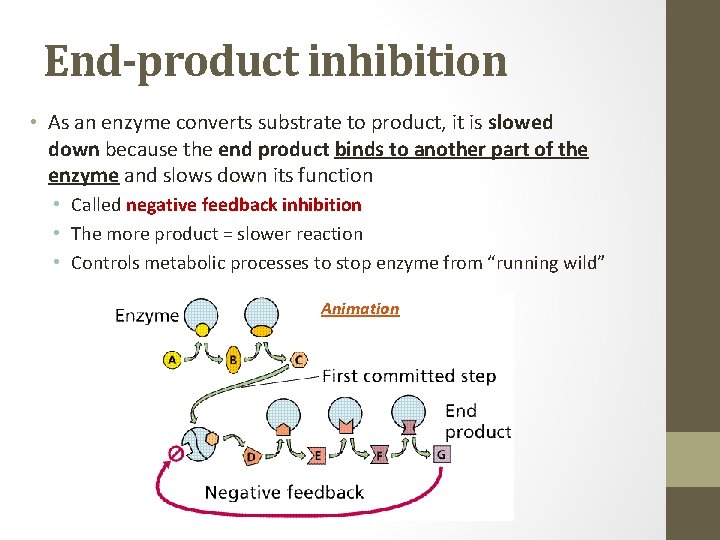
End-product inhibition • As an enzyme converts substrate to product, it is slowed down because the end product binds to another part of the enzyme and slows down its function • Called negative feedback inhibition • The more product = slower reaction • Controls metabolic processes to stop enzyme from “running wild” Animation
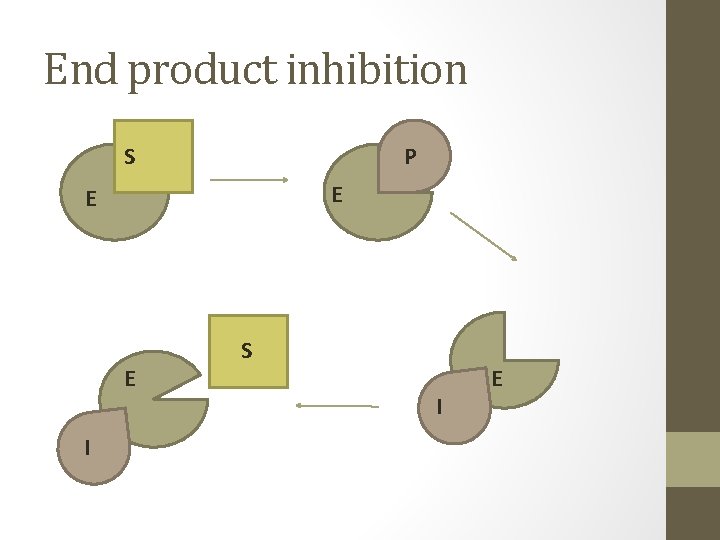
End product inhibition P S E E E I S I E
Enzyme Inhibitors Vioxx and other prescription nonsteroidal antiinflammatory drugs (NSAIDs) are potent inhibitors of the cycloxygenase-2 (COX-2) enzyme. High substrate concentrations reduce the efficacy of inhibition by these drugs. These drugs are a) b) c) d) competitive inhibitors. noncompetitive inhibitors. allosteric regulators. feedback inhibitors.
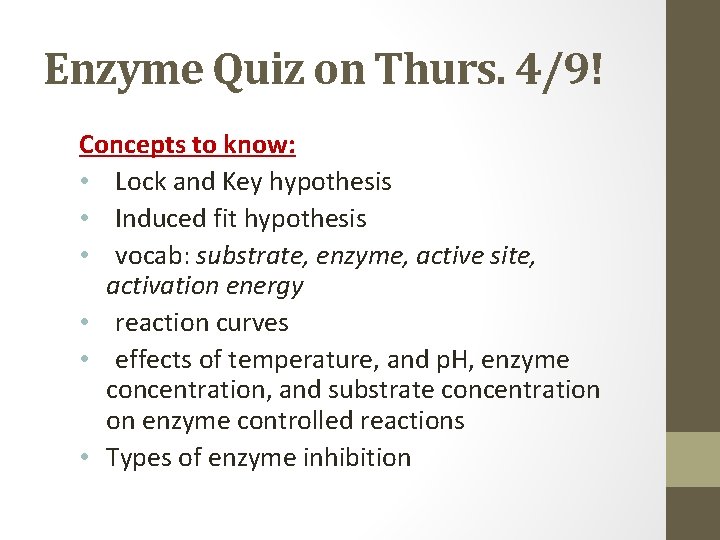
Enzyme Quiz on Thurs. 4/9! Concepts to know: • Lock and Key hypothesis • Induced fit hypothesis • vocab: substrate, enzyme, active site, activation energy • reaction curves • effects of temperature, and p. H, enzyme concentration, and substrate concentration on enzyme controlled reactions • Types of enzyme inhibition
- Slides: 18