
Metabolic Energy for Dummies A quick look at

Metabolic Energy for Dummies: A quick look at Cellular Metabolism (Energetics) By Richard Belicek
Introduction: This presentation will cover the general steps that nutrient sources take to be utilized by the body and how energy is created through metabolism.
What is Metabolism? metabolism defined: the total chemical activity and flow of resources that occurs within an organism’s boundary. Where does it start?
Nutrient sources from food. Foods such as steak, pizza, salad, ice cream and chocolate are broken down into these MACROMOLECULES: Proteins Fats Carbohydrates
Macromolecules to Simple Subunits Proteins = Amino Acids Fats = Fatty Acids and Glycerol Carbohydrates = Simple Sugars
Subunits follow metabolic pathways Amino Acids >Protein catabolism = Acetyl Co. A >Gluconeogenesis = Pyruvate Fatty Acids and Glycerol >Oxidation = Acetyl Co. A >Gluconeogenesis = Pyruvate Simple Sugars (Glucose) >Glycolysis =Pyruvate
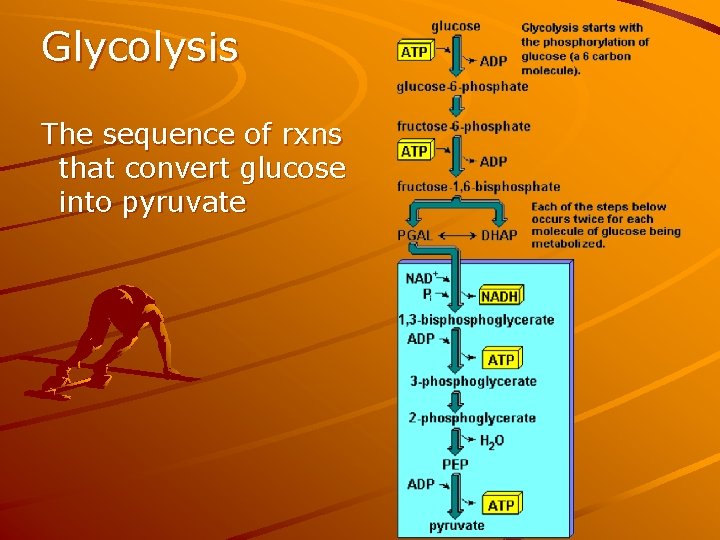
Glycolysis The sequence of rxns that convert glucose into pyruvate
Glycolysis Occurs in the Cytoplasm Aerobic or Anaerobic Glucose enters the glycolytic pathway ATP: gross= 4, net= 2 NADH, transported to the Electron Transport Chain (ETC)
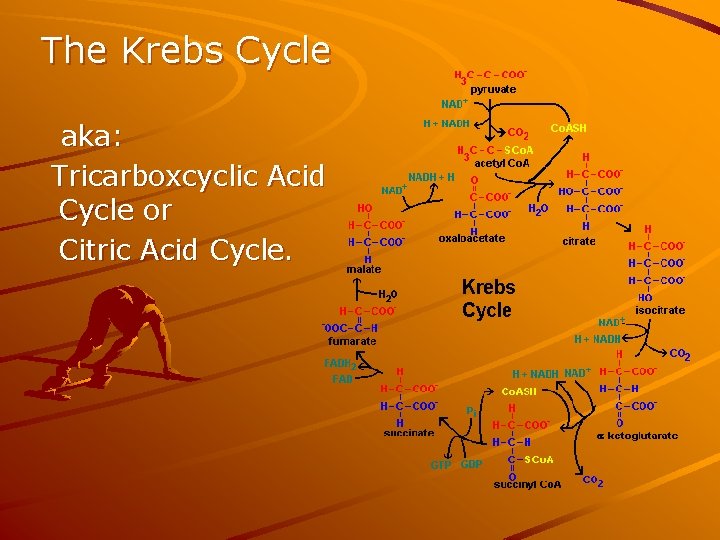
The Krebs Cycle aka: Tricarboxcyclic Acid Cycle or Citric Acid Cycle.
Krebs Cycle Pyruvate enters cycle 2 cycles per Pyruvate molecule 1 ATP is produced per cycle NAD and FAD = 6 NADH and 2 FADH 2 NADH and FADH 2 are transported to the (ETC)
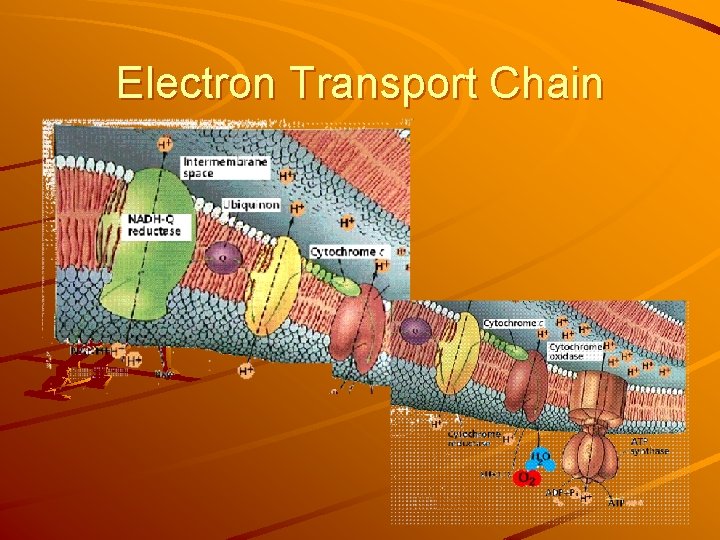
Electron Transport Chain
Electron Transport Chain Occurs in the Cristea of the mitochondria NADH and FADH 2 are oxidized Hydrogen and electrons are carried along chain transfer energy Electrochemical gradient = ATP O 2 final acceptor = H 2 O
Electron Transport Chain (1 NADH = 3 ATP, 1 FADH 2 = 2 ATP) Krebs Cycle = 8 NADH = 24 ATP = 2 FADH 2 = 4 ATP For glycolysis (1 NADH= 2 ATP) Glycolysis = 2 NADH = 4 ATP
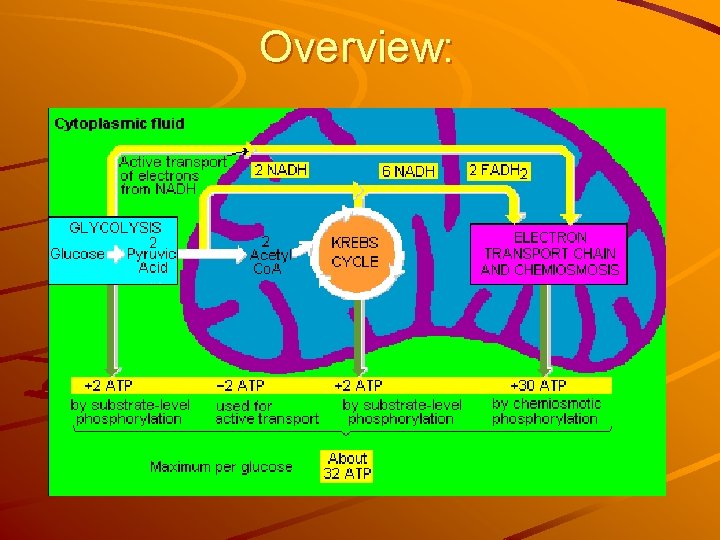
Overview:
Summary Glycolysis Krebs Cycle Electron Transport Chain Total ATP = 36 net

NO Questions, Thank you.

HOORAY!

Thank you Have a good break!!
- Slides: 19