
Metabolic Diseases Lesson 2 3 Glucose homeostasis in
Metabolic Diseases Lesson 2. 3 Glucose homeostasis in the blood – Part 2
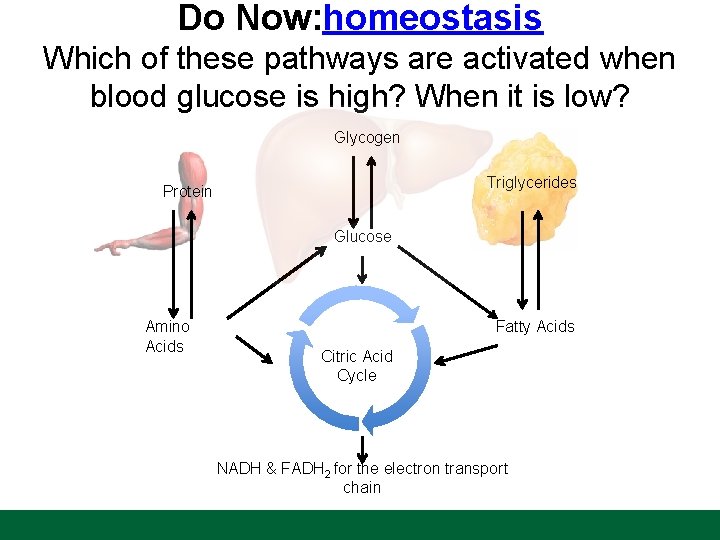
Do Now: homeostasis Which of these pathways are activated when blood glucose is high? When it is low? Glycogen Triglycerides Protein Glucose Amino Acids Fatty Acids Citric Acid Cycle NADH & FADH 2 for the electron transport chain
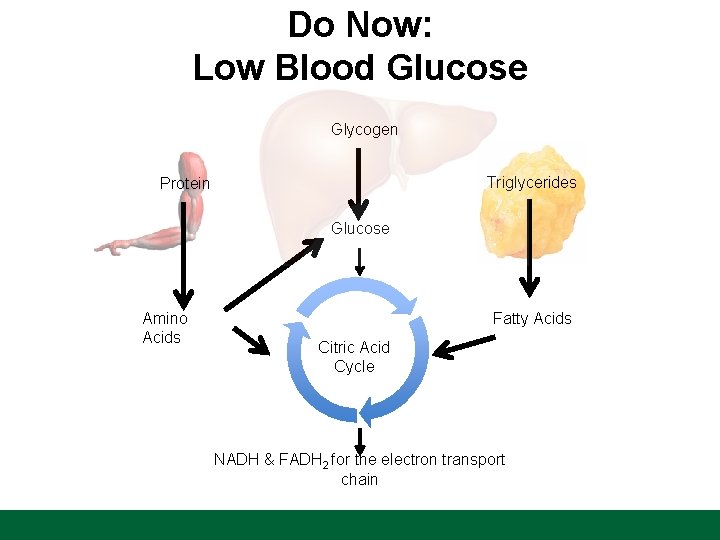
Do Now: Low Blood Glucose Glycogen Triglycerides Protein Glucose Amino Acids Fatty Acids Citric Acid Cycle NADH & FADH 2 for the electron transport chain
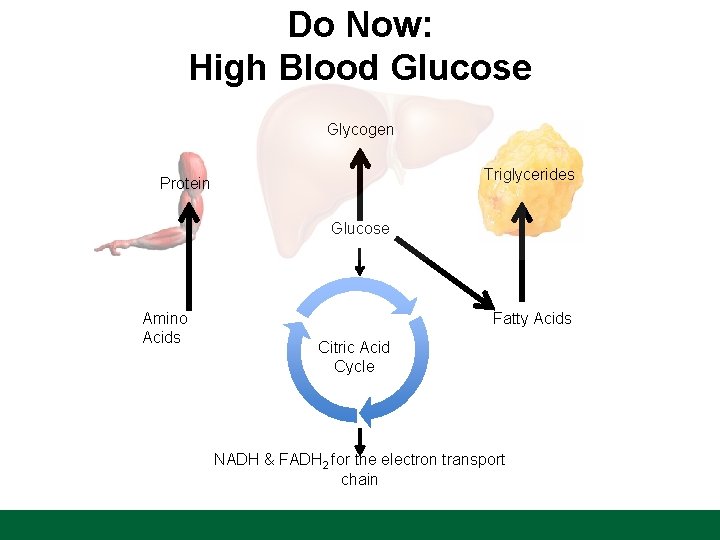
Do Now: High Blood Glucose Glycogen Triglycerides Protein Glucose Amino Acids Fatty Acids Citric Acid Cycle NADH & FADH 2 for the electron transport chain

What organs are involved in energy metabolism? Where do the metabolic pathways happen? 5
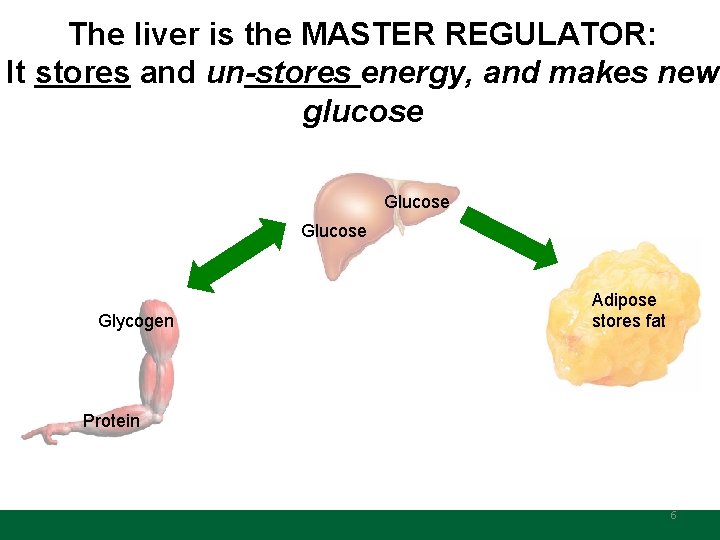
The liver is the MASTER REGULATOR: It stores and un-stores energy, and makes new glucose Glucose Glycogen Adipose stores fat Protein 6
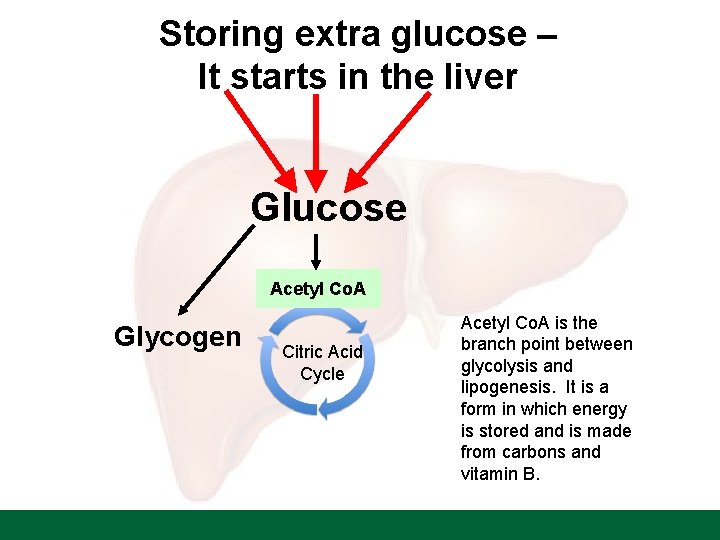
Storing extra glucose – It starts in the liver Glucose Acetyl Co. A Glycogen Citric Acid Cycle Acetyl Co. A is the branch point between glycolysis and lipogenesis. It is a form in which energy is stored and is made from carbons and vitamin B.
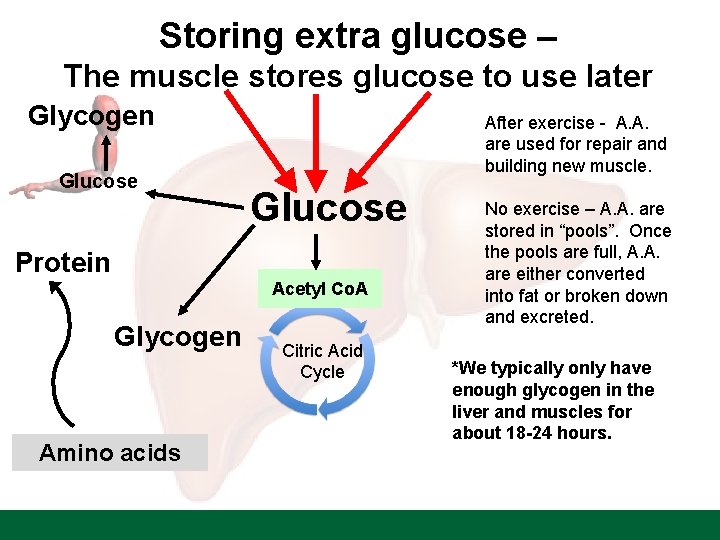
Storing extra glucose – The muscle stores glucose to use later Glycogen Glucose After exercise - A. A. are used for repair and building new muscle. Glucose Protein Acetyl Co. A Glycogen Amino acids Citric Acid Cycle No exercise – A. A. are stored in “pools”. Once the pools are full, A. A. are either converted into fat or broken down and excreted. *We typically only have enough glycogen in the liver and muscles for about 18 -24 hours.
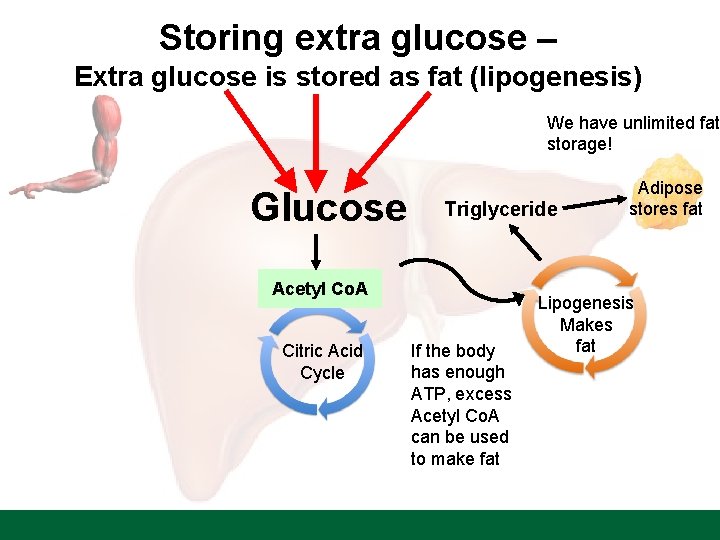
Storing extra glucose – Extra glucose is stored as fat (lipogenesis) We have unlimited fat storage! Glucose Triglyceride Acetyl Co. A Citric Acid Cycle If the body has enough ATP, excess Acetyl Co. A can be used to make fat Adipose stores fat Lipogenesis Makes fat
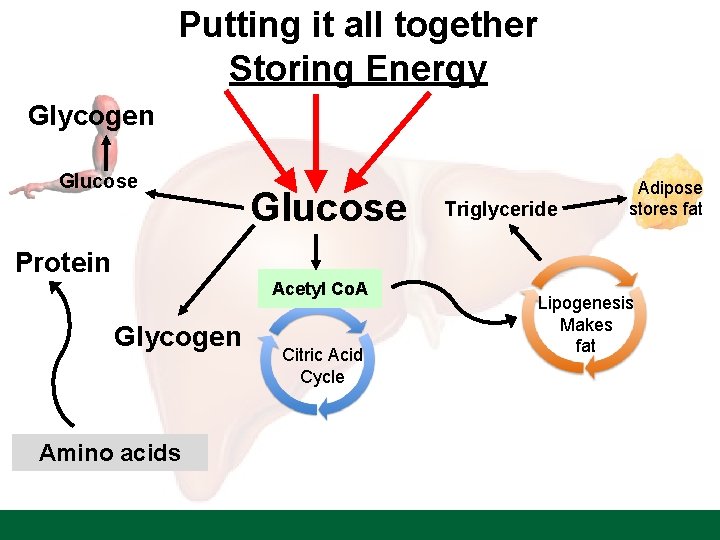
Putting it all together Storing Energy Glycogen Glucose Triglyceride Adipose stores fat Protein Acetyl Co. A Glycogen Amino acids Citric Acid Cycle Lipogenesis Makes fat
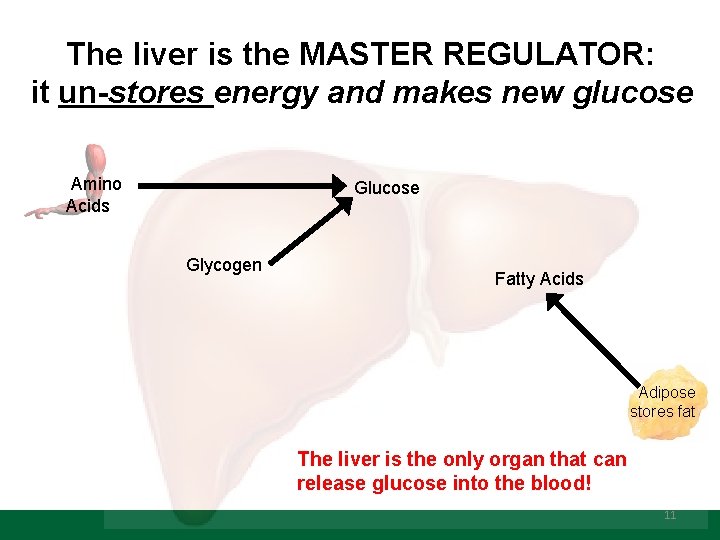
The liver is the MASTER REGULATOR: it un-stores energy and makes new glucose Amino Acids Glucose Glycogen Fatty Acids Adipose stores fat The liver is the only organ that can release glucose into the blood! 11
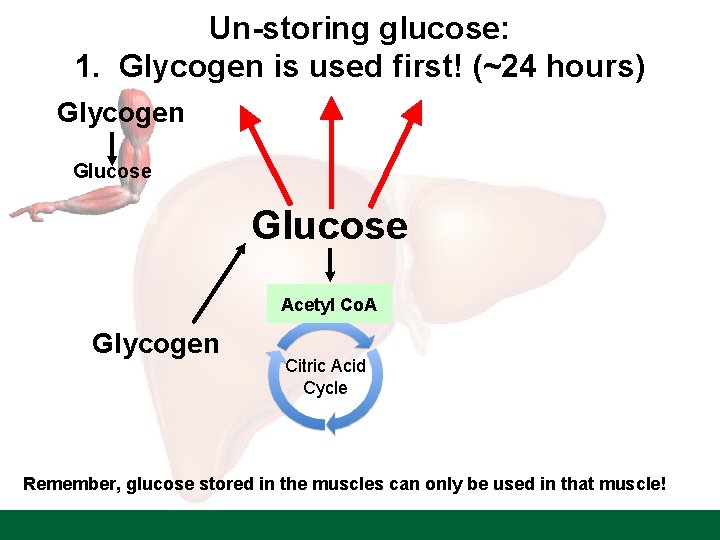
Un-storing glucose: 1. Glycogen is used first! (~24 hours) Glycogen Glucose Acetyl Co. A Glycogen Citric Acid Cycle Remember, glucose stored in the muscles can only be used in that muscle!
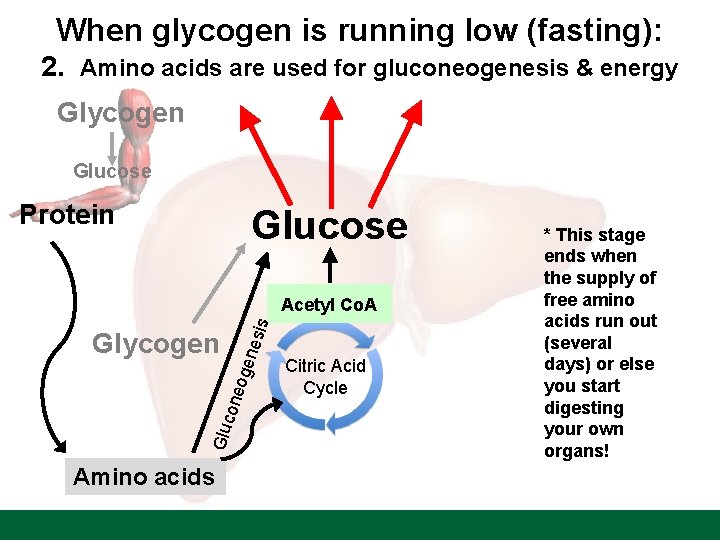
When glycogen is running low (fasting): 2. Amino acids are used for gluconeogenesis & energy Glycogen Glucose Protein Glucose eog ene s Glu con Glycogen is Acetyl Co. A Amino acids Citric Acid Cycle * This stage ends when the supply of free amino acids run out (several days) or else you start digesting your own organs!
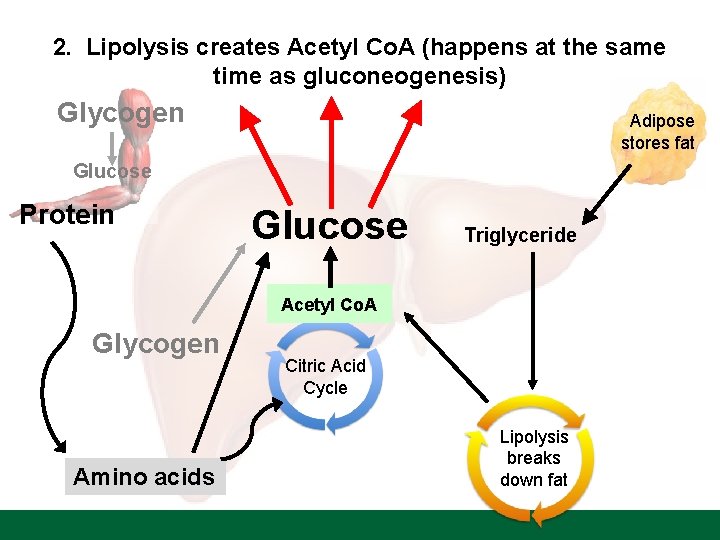
2. Lipolysis creates Acetyl Co. A (happens at the same time as gluconeogenesis) Glycogen Adipose stores fat Glucose Protein Glucose Triglyceride Acetyl Co. A Glycogen Amino acids Citric Acid Cycle Lipolysis breaks down fat
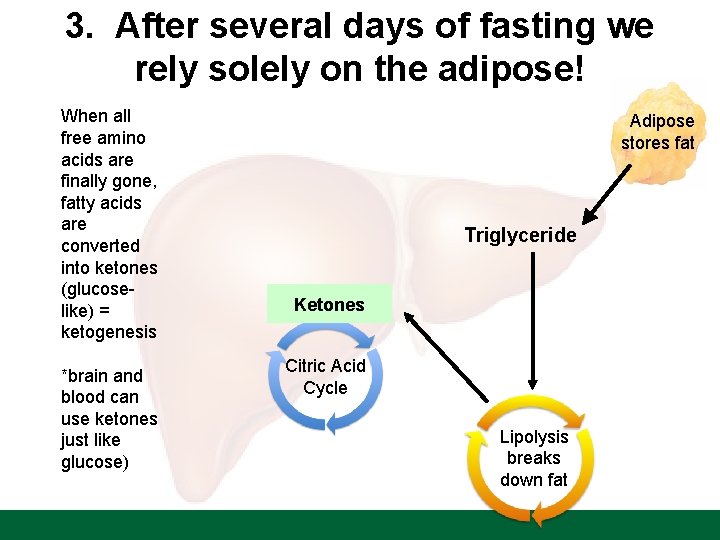
3. After several days of fasting we rely solely on the adipose! When all free amino acids are finally gone, fatty acids are converted into ketones (glucoselike) = ketogenesis *brain and blood can use ketones just like glucose) Adipose stores fat Triglyceride Ketones Citric Acid Cycle Lipolysis breaks down fat
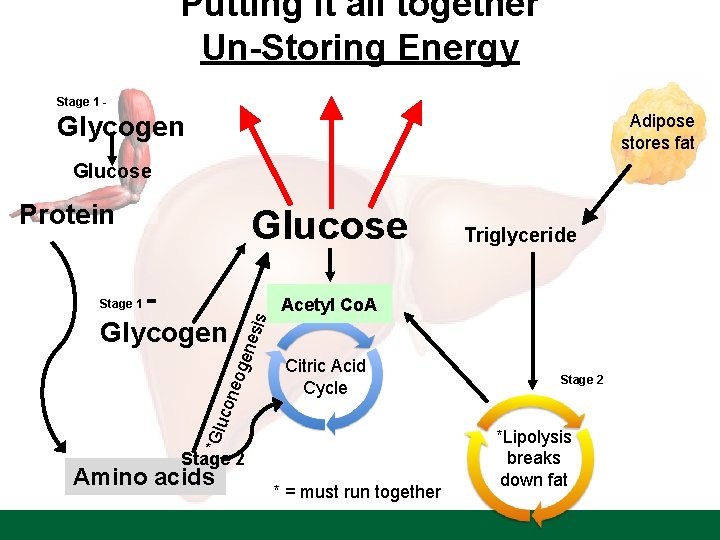
Putting it all together Un-Storing Energy Stage 1 - Adipose stores fat Glycogen Glucose Protein Glucose Glycogen Acetyl Co. A Citric Acid Cycle *Glu con eog ene sis Stage 1 Stage 2 Amino acids Triglyceride * = must run together Stage 2 *Lipolysis breaks down fat
Worksheet 2. 4 Directions - Work in small groups to draw arrows into the figures on the first page. Describe the processes of storing energy and un-storing energy.

Wrap Up: Storing Energy Glycogen Glucose Triglyceride Adipose stores fat Protein Acetyl Co. A Glycogen Amino acids Citric Acid Cycle Lipogenesis Makes fat

Wrap Up: Un-Storing Energy Glycogen Adipose stores fat Glucose Protein Glucose Triglyceride Acetyl Co. A Glycogen Amino acids Citric Acid Cycle Lipolysis breaks down fat

Homework Complete/revise your work on the worksheet.
- Slides: 20