
Metabolic Alkalosis Mazen Kherallah MD FCCP FCCM FACP
Metabolic Alkalosis Mazen Kherallah, MD, FCCP, FCCM, FACP Michigan State University Society of Critical Care Medicine
Metabolic Alkalosis Definition • Elevated HCO 3 • Decline in [H+] in the ECF
Metabolic Alkalosis HCO 3/ ECF Volume
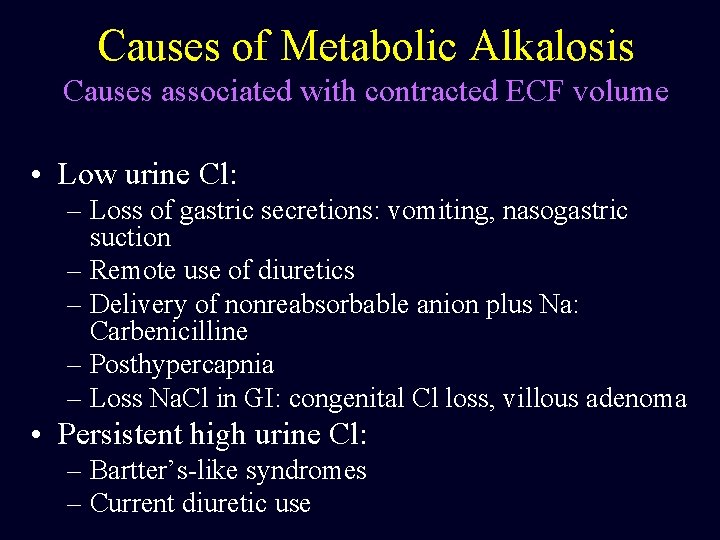
Causes of Metabolic Alkalosis Causes associated with contracted ECF volume • Low urine Cl: – Loss of gastric secretions: vomiting, nasogastric suction – Remote use of diuretics – Delivery of nonreabsorbable anion plus Na: Carbenicilline – Posthypercapnia – Loss Na. Cl in GI: congenital Cl loss, villous adenoma • Persistent high urine Cl: – Bartter’s-like syndromes – Current diuretic use
Causes of Metabolic Alkalosis Causes associated with normal or expanded ECF volume • Large reduction in GFR plus a source of HCO 3: – Alkali ingestion • Enhanced mineralocorticoid activity: – primary aldosteronism – Secondary hyperaldosteronism: renal artery stenosis, malignant hypertension, renin producing tumor, low effective arterial blood volume with an alkali load – Endogenous or exogenous mineralocorticoid, licorice ingestion, ACTH secretion
Metabolic Alkalosis • Extracellular elevation of HCO 3– Absolute: by addition of HCO 3 - to the ECF – Relative: by the loss of ECF volume • Intracellular events: – Hypokalemia: Kaliuresis – Intracellular acidosis: replacement of K by H
Addition of HCO 3 to the ECF • With the constraints of electroneutrality, there are only two ways to add a specific anion HCO 3 - to a compartment: – Loss of an anion such as Cl– Retention of a cation such as Na+
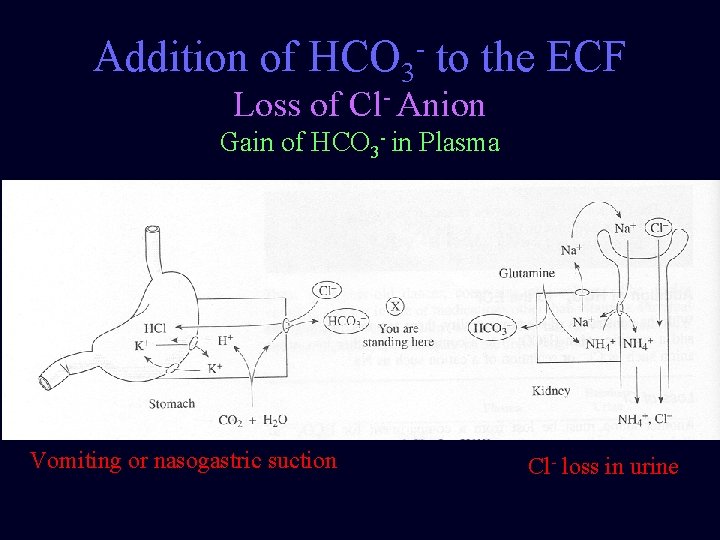
Addition of HCO 3 - to the ECF Loss of Cl- Anion Gain of HCO 3 - in Plasma Vomiting or nasogastric suction Cl- loss in urine
Addition of HCO 3 - to the ECF Retention of Na. HCO 3 Gain of HCO 3 - in Plasma • When Na is retained in the ECF, its volume is expanded • If GFR is normal this extra Na and bicarbonate will be excreted via the kidney • GFR should be low (permission of the kidneys) to retain extra Na and HCO 3
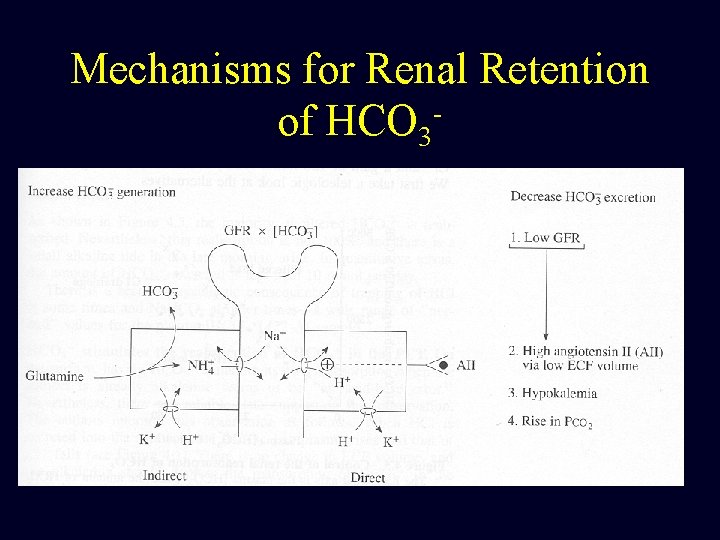
Mechanisms for Renal Retention of HCO 3 -
Contraction of the ECF Volume Increased [HCO 3 -] • The ECF volume is contracted secondary to removal of Na. Cl and water • The [HCO 3 -] is increased and the content is unchanged • Same HCO 3 - are distributed in smaller volume • Metabolic alkalosis: contraction alkalosis
Contraction of the ECF Volume Diuretic Ingestion • Diuretic ingestion causes Na. Cl loss in the urine and ECF volume contraction • Increased production and excretion of NH 4 consequent to hypokalemia, thus new HCO 3 formation
Causes Associated with ECF Volume Contraction
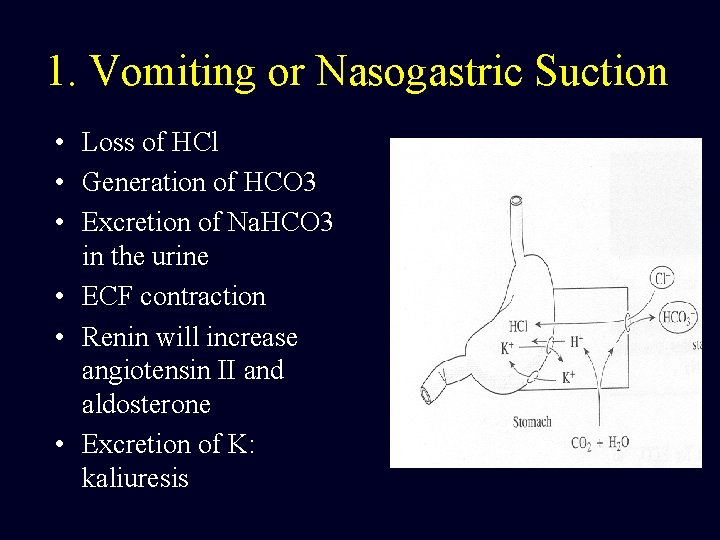
1. Vomiting or Nasogastric Suction • Loss of HCl • Generation of HCO 3 • Excretion of Na. HCO 3 in the urine • ECF contraction • Renin will increase angiotensin II and aldosterone • Excretion of K: kaliuresis
• • • How many liters of emesis must be lost in order to raise the [HCO 3 -] in plasma by 10 mmol/L in 70 -kg adult? Extracellular [HCO 3 -] is 25 mmol/L and intracellular is 10 mmol/L 10 X 15= 150 mmol extracellular 3. 5 X 30= 100 mmol intracellular Total HCO 3 added is 250 1 liter of gastric fluid contains 100 mmol of H+ and 100 mmol of Cl 2. 5 liters is needed to be lost before HCO 3 is raised to 35
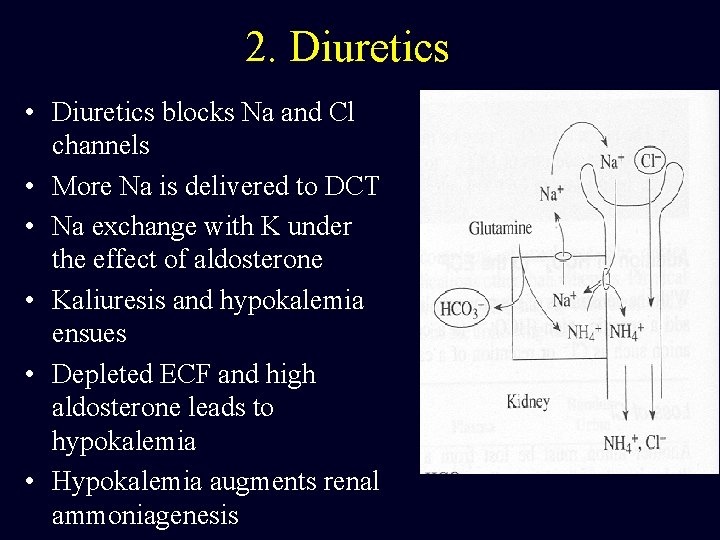
2. Diuretics • Diuretics blocks Na and Cl channels • More Na is delivered to DCT • Na exchange with K under the effect of aldosterone • Kaliuresis and hypokalemia ensues • Depleted ECF and high aldosterone leads to hypokalemia • Hypokalemia augments renal ammoniagenesis
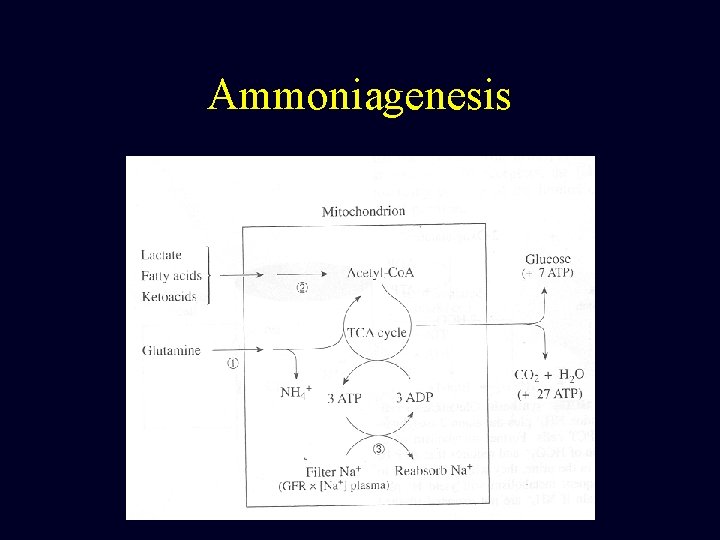
Ammoniagenesis
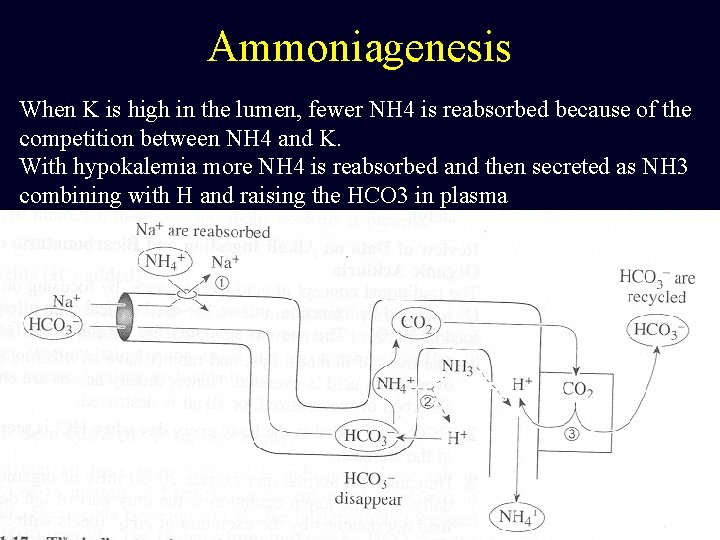
Ammoniagenesis When K is high in the lumen, fewer NH 4 is reabsorbed because of the competition between NH 4 and K. With hypokalemia more NH 4 is reabsorbed and then secreted as NH 3 combining with H and raising the HCO 3 in plasma
Intracellular Acidosis in Metabolic Alkalosis associated with Hypokalemia • The depletion of K leads to a shift of cation Na and H into the cells • This shift exacerbates the degree of HCO 3 elevation in the ECF and cause intracellular acidosis • Hypokalemia must be corrected first
3. Nonreabsorbable Anions • If a patient has a contracted ECF volume and takes an Na salt with an anion that cannot be reabsorbed by the kidney: Carbenicillin • There is stimulus for Na reabsorption but it cannot be reabsorbed. • In CCD the action of aldosterone will lead to hypokalemia • Hypokalemia will cause more ammoniagenesis and thus increased plasma HCO 3 and metabolic alkalosis
3. Nonreabsorbable Anions • Cl in urine should be < 20 • Na in the urine should be high • Na + K should be > Cl due to the presence of unmeasured anion
4. Posthypercapnia • During chronic hypoventilation and hypercapnia, plasma HCO 3 concentration is increased. • HCO 3 is generated in the kidney and excretion of NH 4 Cl ensues • When hypercapnia resolves increased HCO 3 content will cause metabolic alkalosis
5. Loss of Na. Cl via the GI tract • Congenital chloridorrhea, villous adenoma • Loss of Na and Cl in stool • Similar to diuretic induced metabolic alkalosis • The urine always has Na and Cl
6. Bartter-like Syndromes • • Hypokalemia Renal Na and Cl wasting Contracted ECF volume Metabolic alkalosis hypereninemia Deficiency of Mg Hypertrophy of justaglomerular apparatus High rate of Ca excretion
6. Bartter-like Syndromes • The pathophysiology can be considered as having a loop diuretic acting 24 hour a day • Defect in Na, K, 2 Cl electroneutral cotransporter: NKCC in the Luminal membrane of the thick ascending limb of Henle • this causes delivery of Na and Cl to CCD and thus K excretion • Na. Cl wasting and a low ECF volume results in high level of renin
Causes Associated with Normal or Expanded ECF Volume
1. Hyperaldosteronism • Aldosterone causes hypokalemia • Hypokalemia enhances ammoniagenesis, which enables renal new CO 3 formation • Hypokalemia causes an increased indirect reabsorption of HCO 3 via the rise in proximal tubular intracellular H • Hypokalemia reduces GFR and thereby maintains the elevated blood HCO 3
2. Alkali Loading • Under usual circumstances, Na. HCO 3 loading leads to only a mild elevation in plasma HCO 3 because most of these HCO 3 are excreted • In the presence of Na depletion or in renal failure, clinically important elevation of plasma HCO 3 occur with Na. HCO 3 administration
3. Magnesium Depletion • Mg enhances the NKCC mechanism • Depleted Mg results in higher Na and Cl excretion and Hypokalemia with metabolic alkalosis
4. Milk-Alkali Syndrome • Ingestion of large amount of milk and absorbable antacids: Ca. CO 3 • Patient excrete large amount of Ca and HCO 3 in the urine • Ca deposits more in alkaline urine • Deposition of Ca leads to renal function impairment • Thus HCO 3 increased in plasma
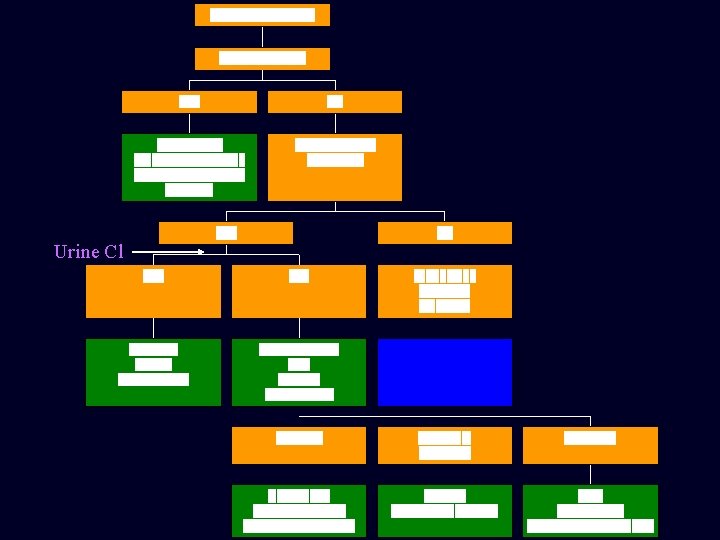
Urine Cl
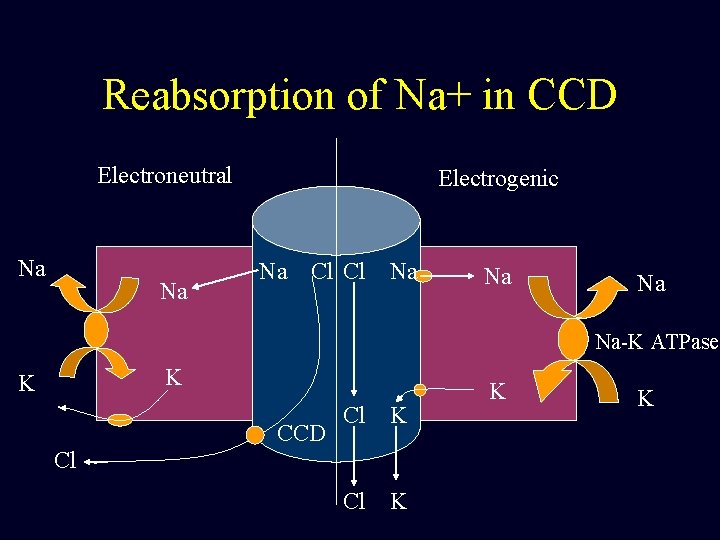
Reabsorption of Na+ in CCD Electroneutral Na Na Electrogenic Na Cl Cl Na Na-K ATPase K K CCD Cl K K
Case # 1 • Toby, a 26 -year old dancer, complains of weakness. She denies vomiting and the intake of medications other than vitamins. • Physical examination reveals a thin woman who has a contracted ECF volume.
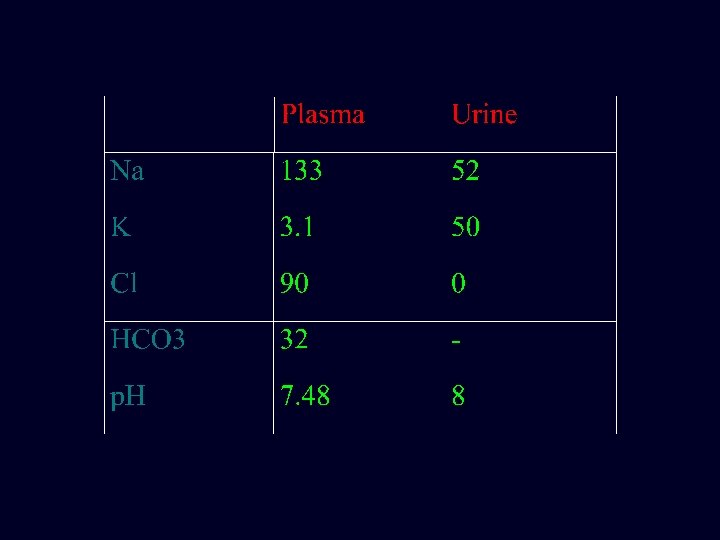
Questions? ? • What acid-base disturbance is present? • Why is the Na in urine not lower, given the presence of ECF volume contraction? • Why is Toby hypokalemic? • What is the basis for the acid-base disturbance?
Discussion of Case # 1 • Metabolic alkalosis with hypokalemia • Cl is low in urine because of the ECF volume contraction and reabsorption of Na. Cl • Na is high in the urine because it is excreted with an anion other than Cl • The very high urine p. H indicated that the other anion is HCO 3: bicarbonaturia • To the degree that the filtered load of HCO 3 exceeds the tubular capacity to reabsorb it, HCO 3 are excreted • Hypokalemia secondary to high urine delivery to CCD and high aldosterone secondary to contracted ECF volume • Body shape disorder and induced vomiting
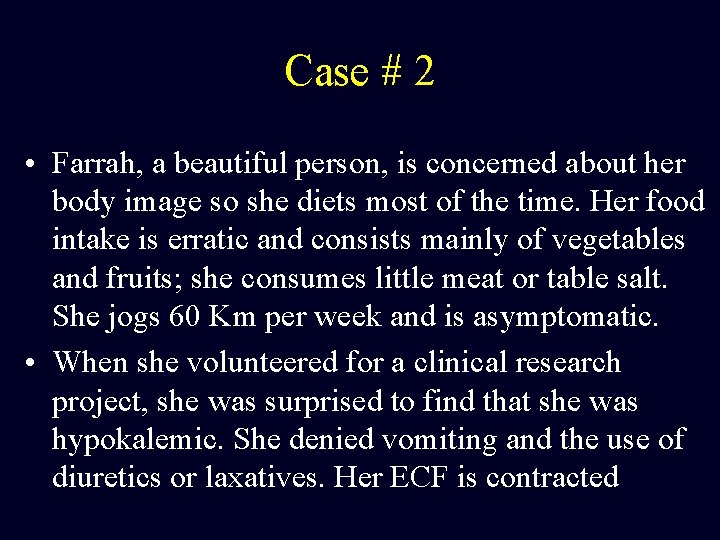
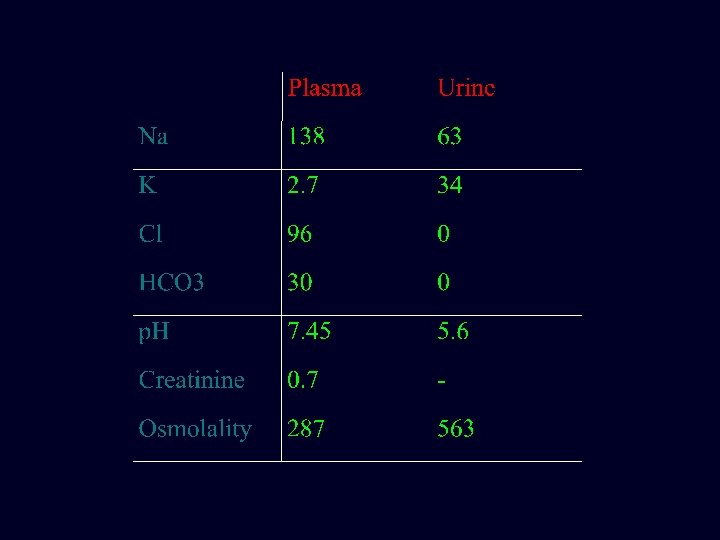
Case # 2 • Farrah, a beautiful person, is concerned about her body image so she diets most of the time. Her food intake is erratic and consists mainly of vegetables and fruits; she consumes little meat or table salt. She jogs 60 Km per week and is asymptomatic. • When she volunteered for a clinical research project, she was surprised to find that she was hypokalemic. She denied vomiting and the use of diuretics or laxatives. Her ECF is contracted
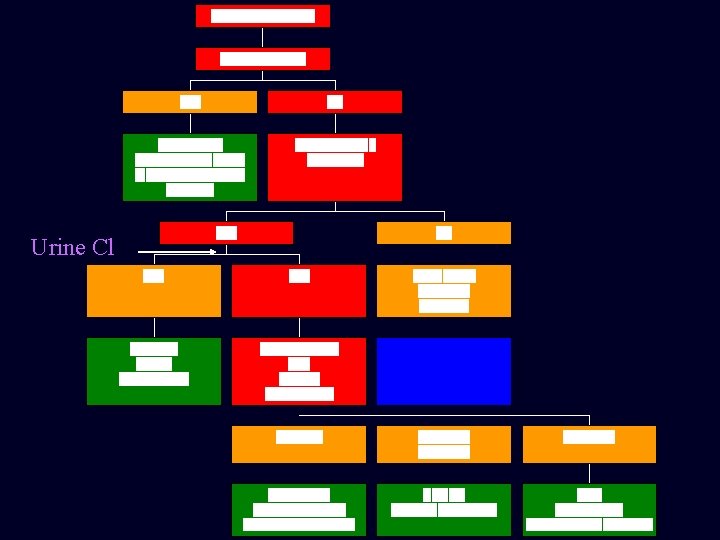
Urine Cl
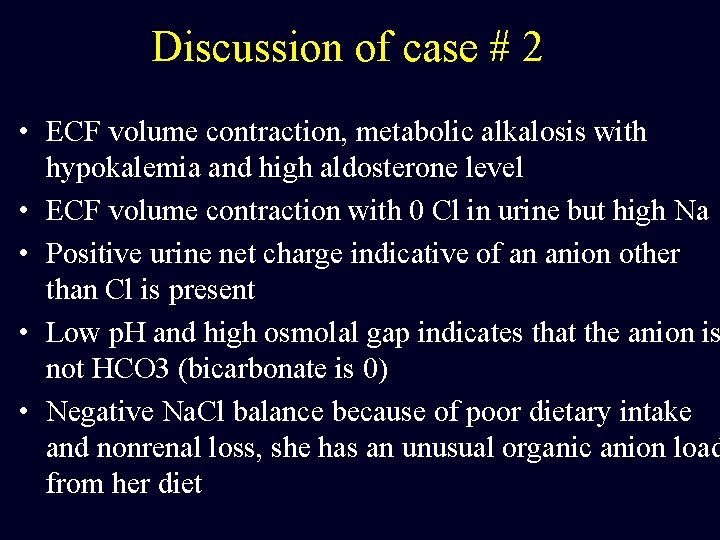
Discussion of case # 2 • ECF volume contraction, metabolic alkalosis with hypokalemia and high aldosterone level • ECF volume contraction with 0 Cl in urine but high Na • Positive urine net charge indicative of an anion other than Cl is present • Low p. H and high osmolal gap indicates that the anion is not HCO 3 (bicarbonate is 0) • Negative Na. Cl balance because of poor dietary intake and nonrenal loss, she has an unusual organic anion load from her diet
Case # 3 • Solly has episodes of abdominal pain and profuse diarrhea for months. More recently he has vomited on occasion and has suffered from episodic tingling and weakness. He took antacids to relieve his abdominal pain, but their beneficial effect was transitory. • Each time his condition reverts to normal without therapy
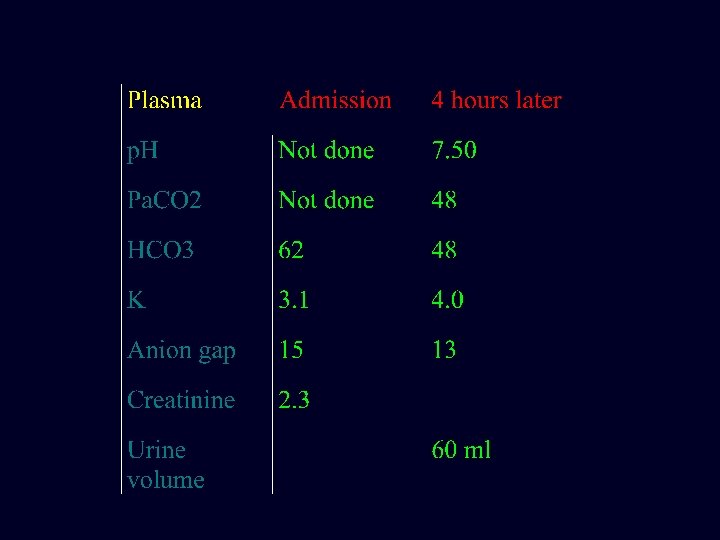
Discussion of Case # 3 • Metabolic alkalosis with hypokalemia • Bicarbonate gain of non-renal cause secondary to gastric HCl secretion • Most-likely HCl loss from GI • Low rate of excretion of HCO 3 due to decreased GFR • ECF volume is not contracted due to Low GFR • HCl reabsorption led to improvement in metabolic alkalosis • Zollinger-Ellison syndrome
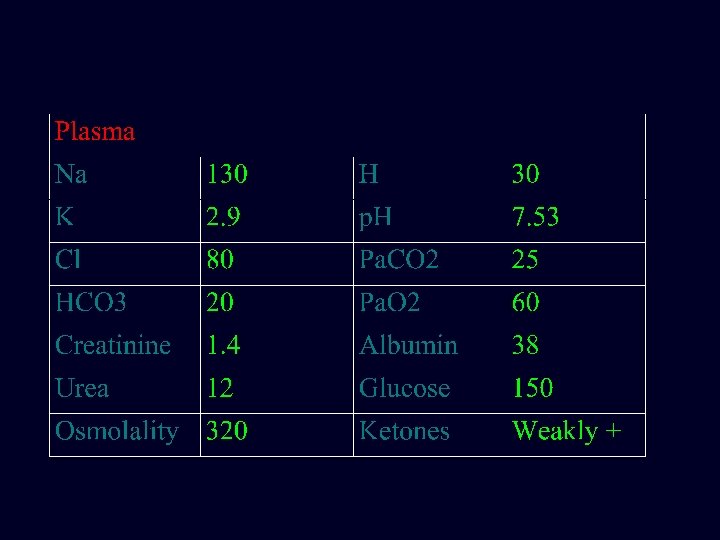
Case # 4 • Mr. Green is 42 year old and is a chronic alcoholic. He was brought to the emergency room, obviously intoxicated. He had been lying in the park in a pool of vomitus. On physical examination, he was unkempt and incoherent. He had a markedly contracted ECF volume, was febrile (39) and had evidence of pneumonia.
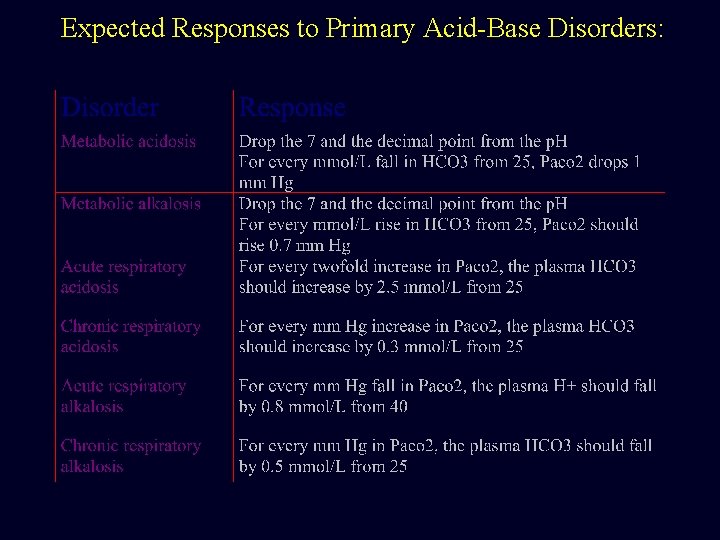
Expected Responses to Primary Acid-Base Disorders:
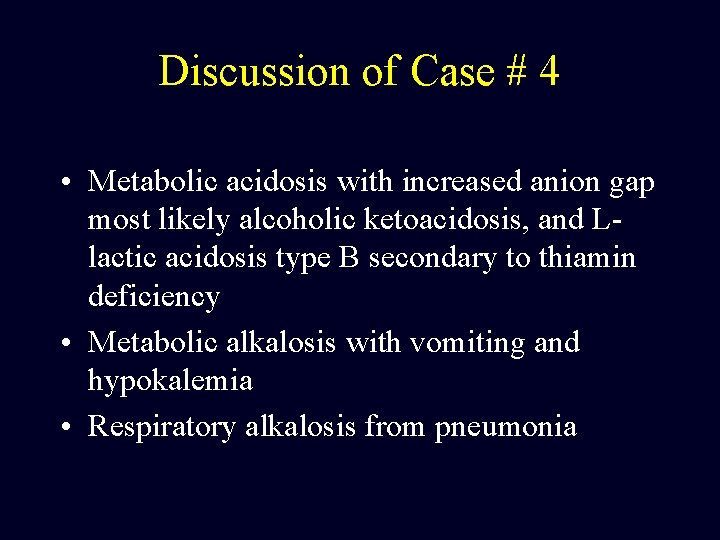
Discussion of Case # 4 • Metabolic acidosis with increased anion gap most likely alcoholic ketoacidosis, and Llactic acidosis type B secondary to thiamin deficiency • Metabolic alkalosis with vomiting and hypokalemia • Respiratory alkalosis from pneumonia
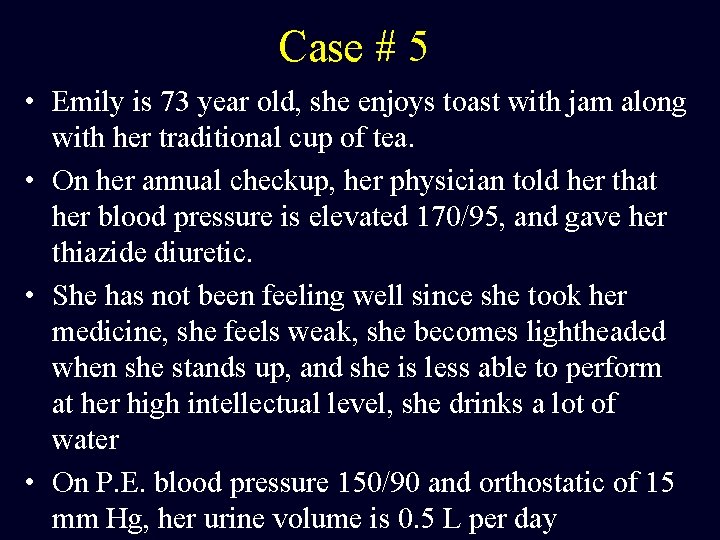
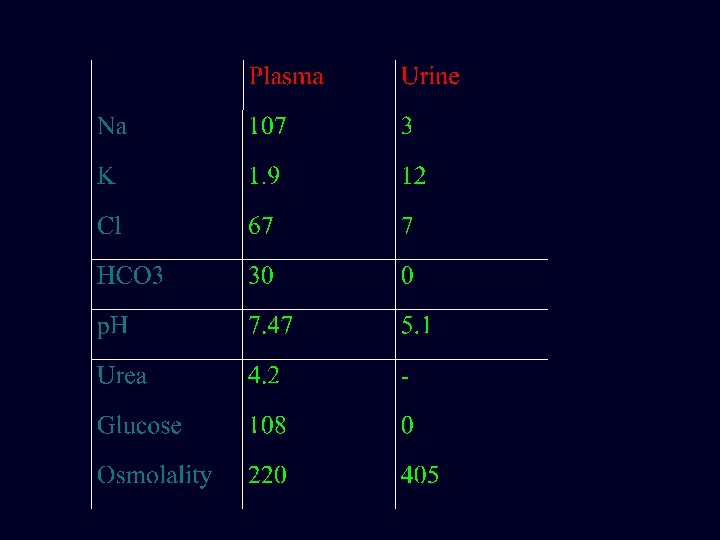
Case # 5 • Emily is 73 year old, she enjoys toast with jam along with her traditional cup of tea. • On her annual checkup, her physician told her that her blood pressure is elevated 170/95, and gave her thiazide diuretic. • She has not been feeling well since she took her medicine, she feels weak, she becomes lightheaded when she stands up, and she is less able to perform at her high intellectual level, she drinks a lot of water • On P. E. blood pressure 150/90 and orthostatic of 15 mm Hg, her urine volume is 0. 5 L per day
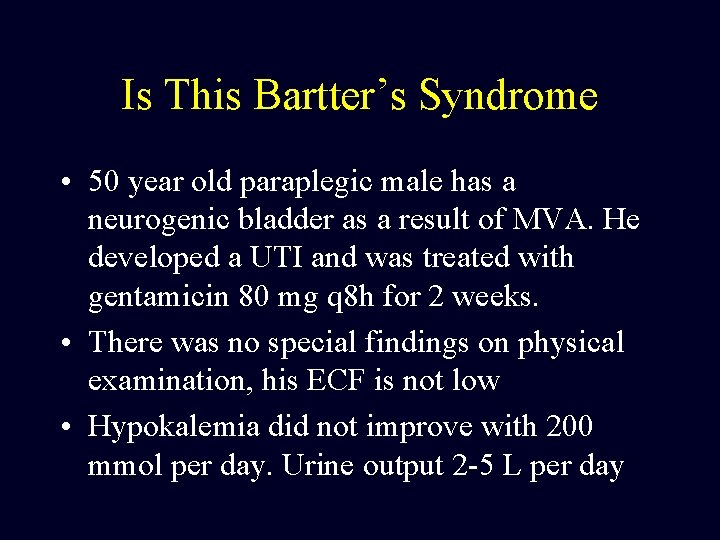
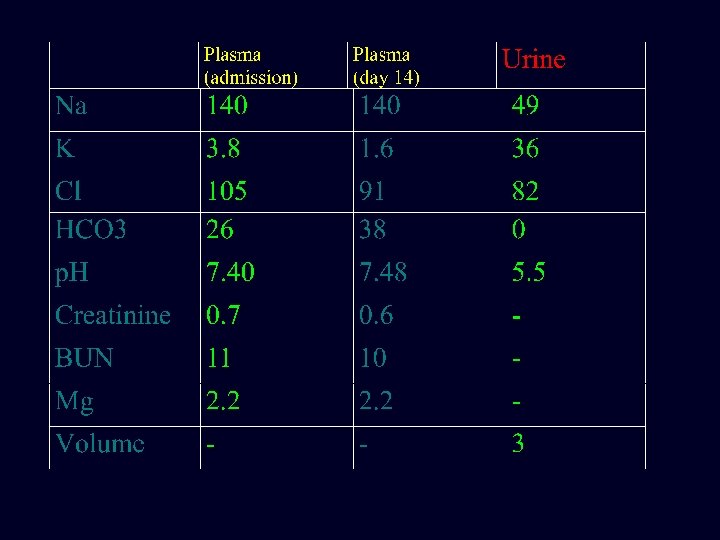
Is This Bartter’s Syndrome • 50 year old paraplegic male has a neurogenic bladder as a result of MVA. He developed a UTI and was treated with gentamicin 80 mg q 8 h for 2 weeks. • There was no special findings on physical examination, his ECF is not low • Hypokalemia did not improve with 200 mmol per day. Urine output 2 -5 L per day
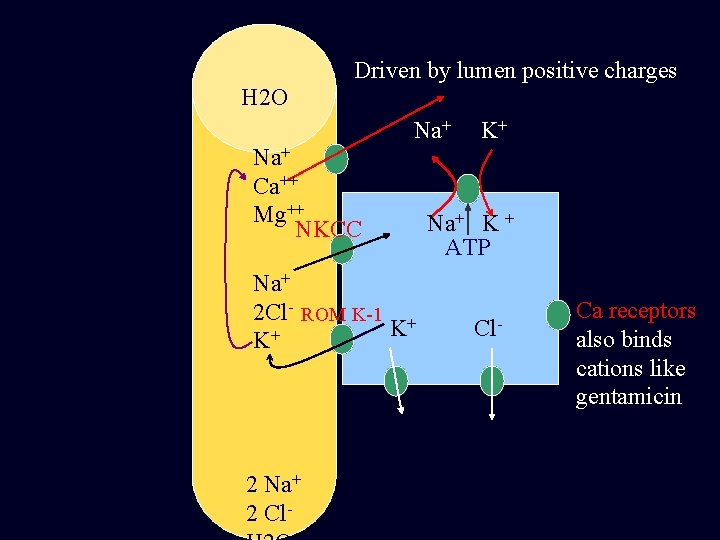
Driven by lumen positive charges H 2 O Na+ Ca++ Mg++ NKCC Na+ 2 Cl- ROM K-1 + K K+ 2 Na+ 2 Cl- K+ Na+ K + ATP Cl- Ca receptors also binds cations like gentamicin
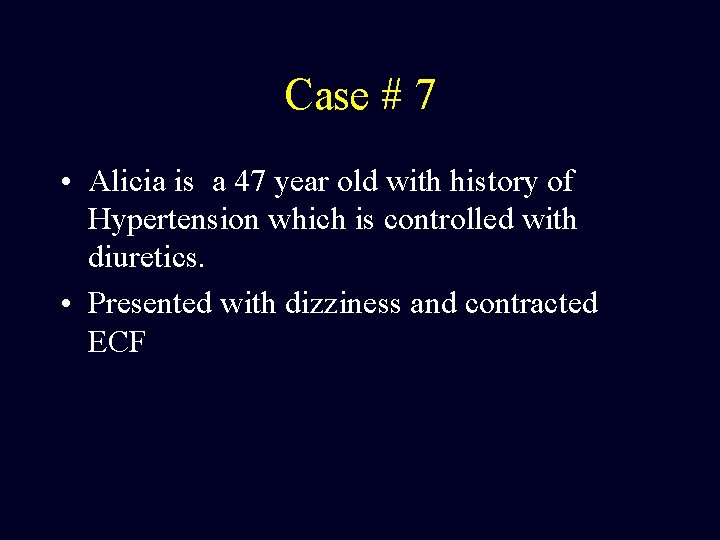
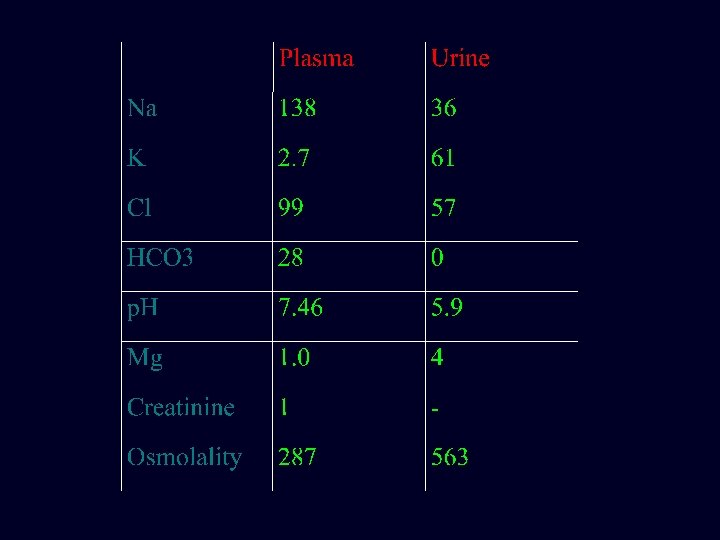
Case # 7 • Alicia is a 47 year old with history of Hypertension which is controlled with diuretics. • Presented with dizziness and contracted ECF
- Slides: 54