
Metabolic Acidosis From Henderson to Stewart ACCS training
Metabolic Acidosis From Henderson to Stewart ACCS training day 13/01/2015 Dr Josip Stosic ICU
Quiz 1 § Lovely lady § 85 y/o § In ED § Bowel obstruction § Waiting for theatre to become available
2, 45 yo drug abuser § p. H § p. CO 2 § p. O 2 § Bic § Na § Cl § Alb § Lac § BE 6. 95 1. 19 17. 02 2 130 98 32 2. 4 -34
3, 45 y/o Abdominal pain, obese § Fio 2 § p. H § p. CO 2 § p. O 2 § Bic § BE § Na §K § Gluc § Lac § Chl § Alb § Creat 90% 7. 177 7. 81 16. 24 21. 2 -7. 6 138 4. 6 4. 3 2. 8 109 22 41
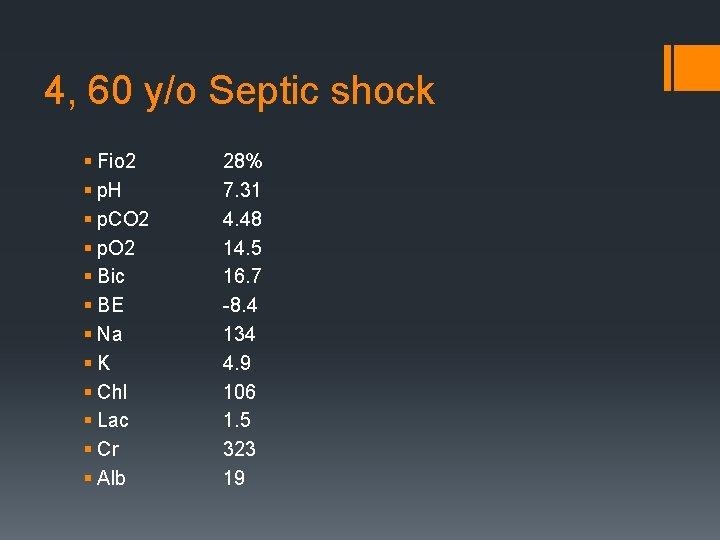
4, 60 y/o Septic shock § Fio 2 § p. H § p. CO 2 § p. O 2 § Bic § BE § Na §K § Chl § Lac § Cr § Alb 28% 7. 31 4. 48 14. 5 16. 7 -8. 4 134 4. 9 106 1. 5 323 19
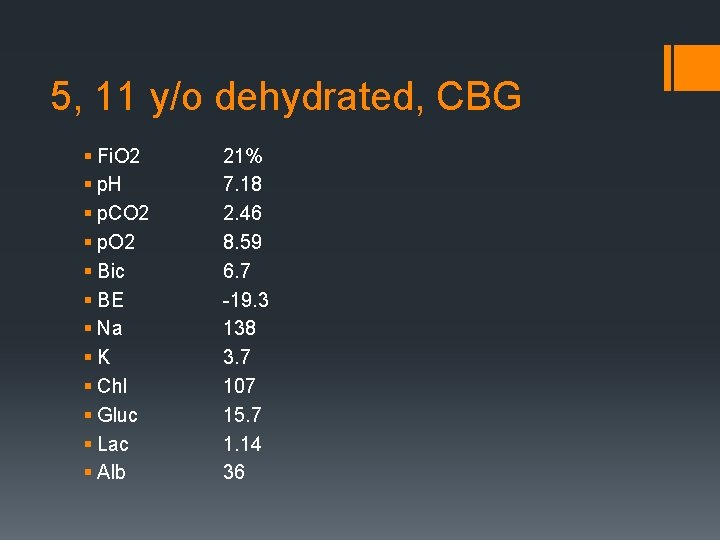
5, 11 y/o dehydrated, CBG § Fi. O 2 § p. H § p. CO 2 § p. O 2 § Bic § BE § Na §K § Chl § Gluc § Lac § Alb 21% 7. 18 2. 46 8. 59 6. 7 -19. 3 138 3. 7 107 15. 7 1. 14 36
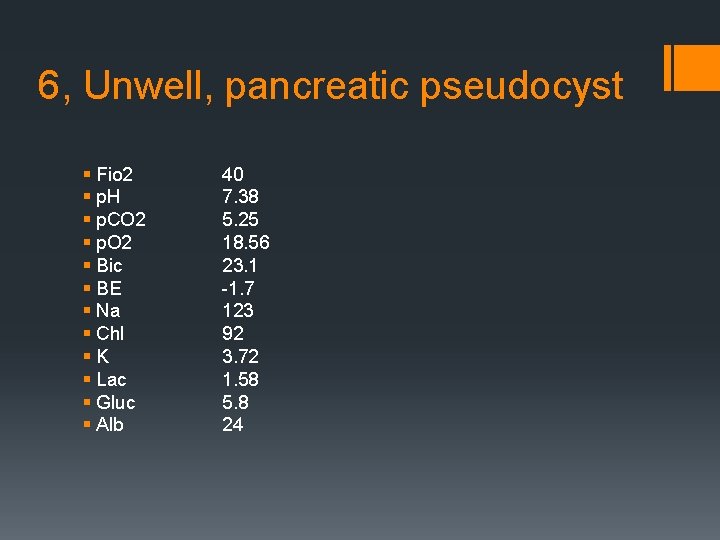
6, Unwell, pancreatic pseudocyst § Fio 2 § p. H § p. CO 2 § p. O 2 § Bic § BE § Na § Chl §K § Lac § Gluc § Alb 40 7. 38 5. 25 18. 56 23. 1 -1. 7 123 92 3. 72 1. 58 5. 8 24
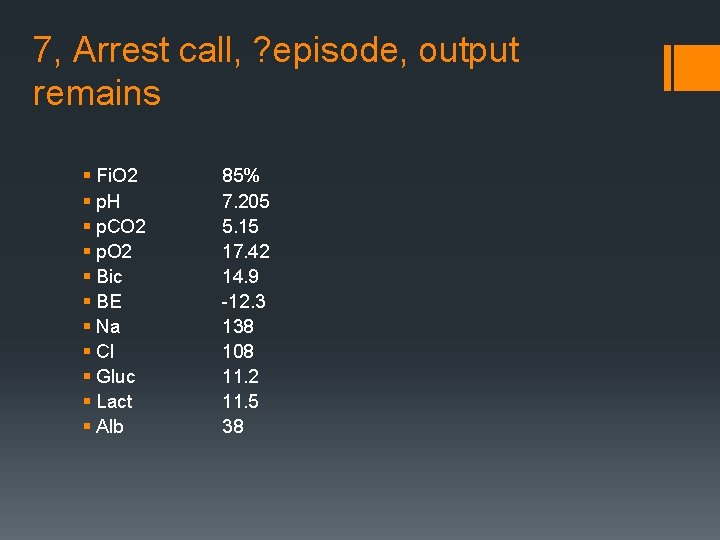
7, Arrest call, ? episode, output remains § Fi. O 2 § p. H § p. CO 2 § p. O 2 § Bic § BE § Na § Cl § Gluc § Lact § Alb 85% 7. 205 5. 15 17. 42 14. 9 -12. 3 138 108 11. 2 11. 5 38
Some Concepts § We are Water § Water is OH- and H+
What Causes Acidaemia § CO 2 obviously! § Anion Excess § The principle of electroneutrality applies § Anions are paired with Cations! § H+ is dissociated from water § p. H is H+ § Weak acids
Approach to Acid Base Balance Reading ABG § Do ABG § What is p. H? § What is p. CO 2? § What is Bicarbonate? § Or do I care? § What is the buffer status? (BE, SID) § What is the cause? Do Anion gap/Strong Ion Gap § Narrow it down if high AG/SIG- Osmolar Gap
Revelation § Our machines measure only p. H and p. CO 2 § Bic and BE are derived!
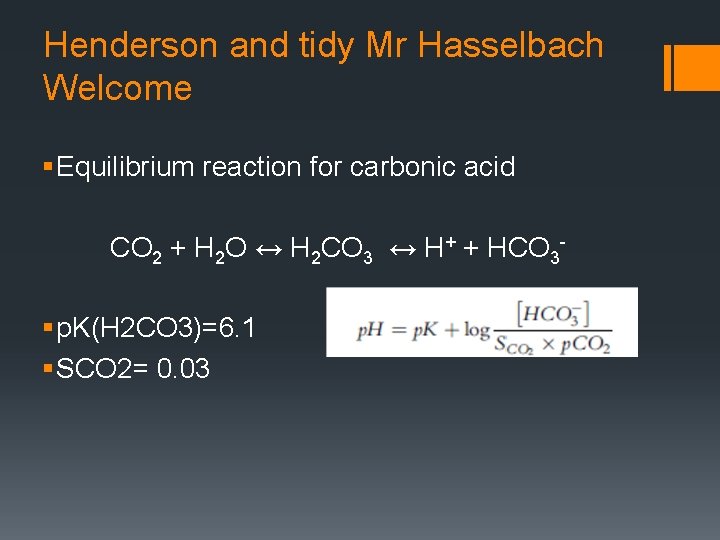
Henderson and tidy Mr Hasselbach Welcome § Equilibrium reaction for carbonic acid CO 2 + H 2 O ↔ H 2 CO 3 ↔ H+ + HCO 3 - § p. K(H 2 CO 3)=6. 1 § SCO 2= 0. 03
Problem § Acid base balance cannot be explained by HH: § CO 2 effects Bicarb! § CO 2 + H 2 O ↔ H 2 CO 3 ↔ H+ + HCO 3 - § We need to quantify the acid/base metabolic contributors!
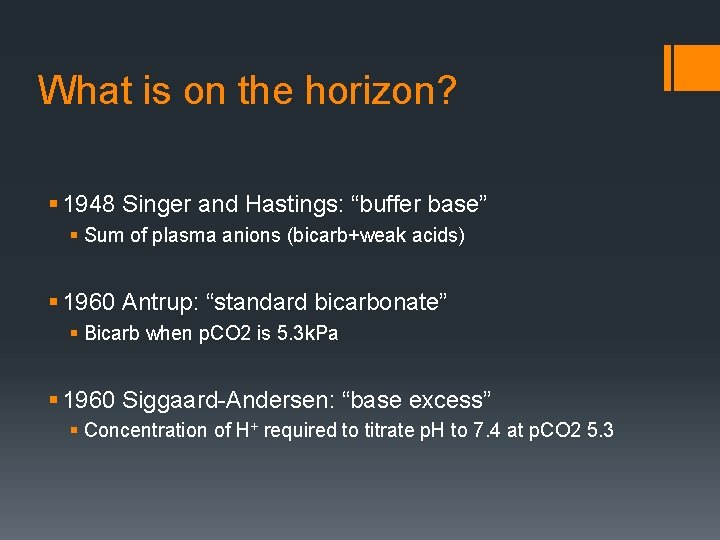
What is on the horizon? § 1948 Singer and Hastings: “buffer base” § Sum of plasma anions (bicarb+weak acids) § 1960 Antrup: “standard bicarbonate” § Bicarb when p. CO 2 is 5. 3 k. Pa § 1960 Siggaard-Andersen: “base excess” § Concentration of H+ required to titrate p. H to 7. 4 at p. CO 2 5. 3
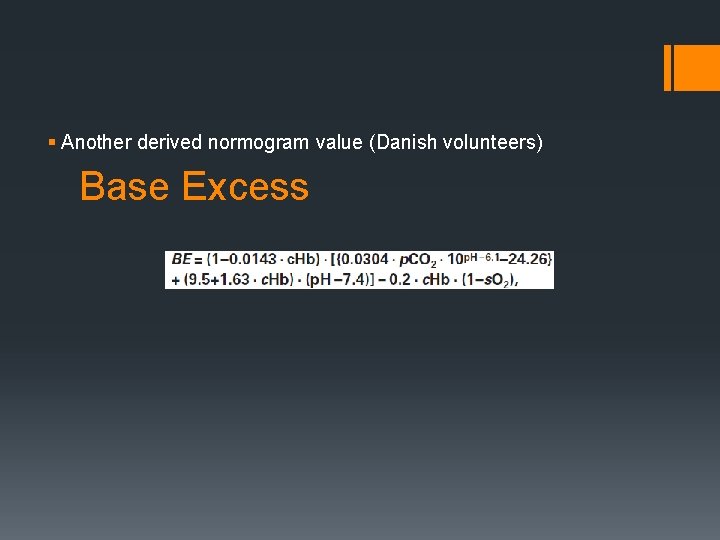
§ Another derived normogram value (Danish volunteers) Base Excess
What now! § If BE negative, there is a metabolic component to acidaemia § Need to find the cause § Normal Anion Gap § High Anion Gap
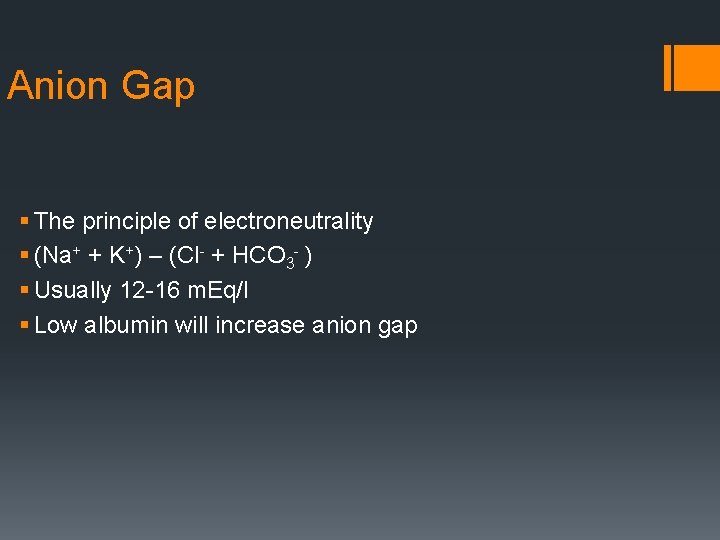
Anion Gap § The principle of electroneutrality § (Na+ + K+) – (Cl- + HCO 3 - ) § Usually 12 -16 m. Eq/l § Low albumin will increase anion gap
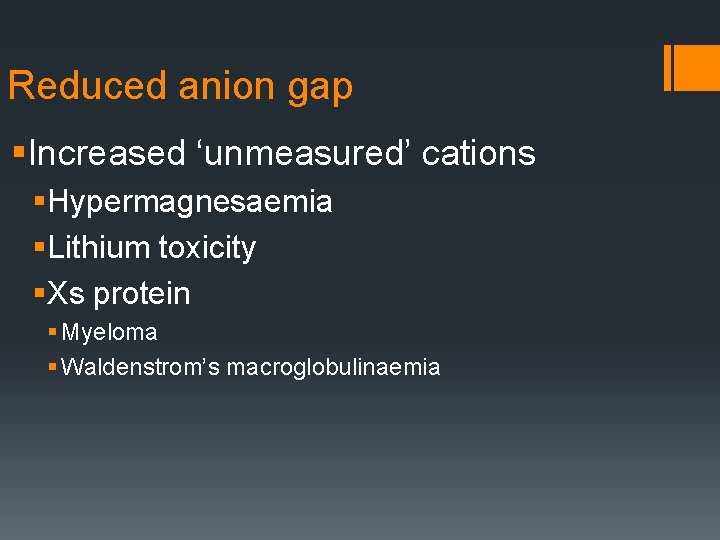
Reduced anion gap §Increased ‘unmeasured’ cations §Hypermagnesaemia §Lithium toxicity §Xs protein § Myeloma § Waldenstrom’s macroglobulinaemia
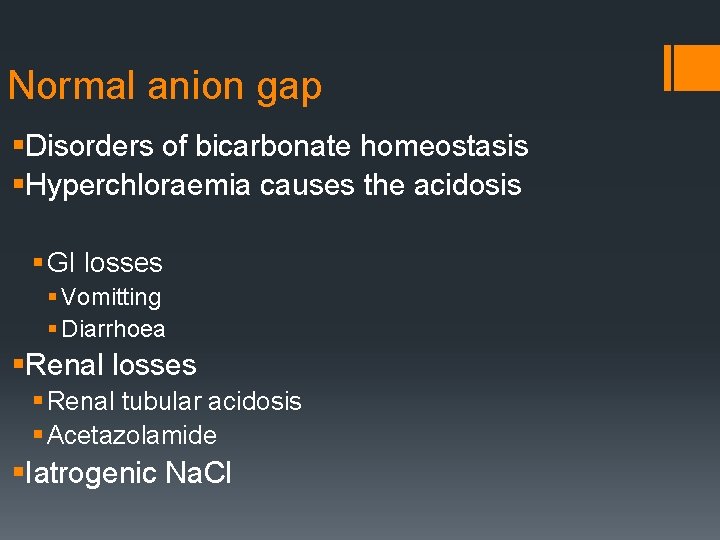
Normal anion gap §Disorders of bicarbonate homeostasis §Hyperchloraemia causes the acidosis § GI losses § Vomitting § Diarrhoea §Renal losses § Renal tubular acidosis § Acetazolamide §Iatrogenic Na. Cl
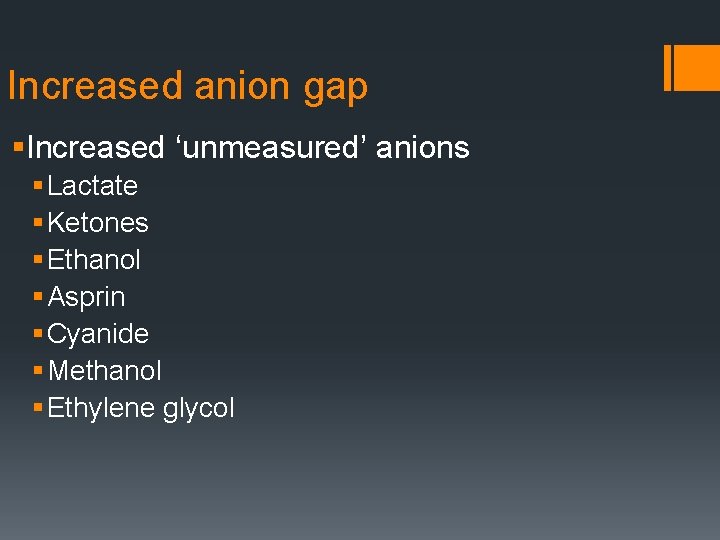
Increased anion gap §Increased ‘unmeasured’ anions § Lactate § Ketones § Ethanol § Asprin § Cyanide § Methanol § Ethylene glycol
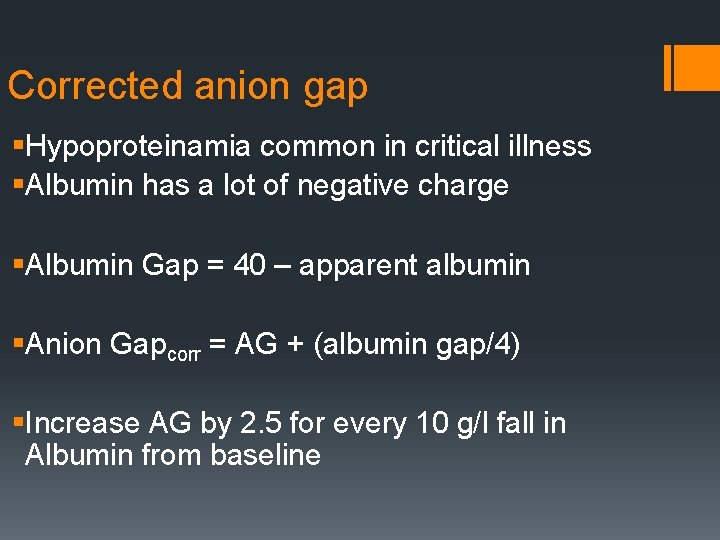
Corrected anion gap §Hypoproteinamia common in critical illness §Albumin has a lot of negative charge §Albumin Gap = 40 – apparent albumin §Anion Gapcorr = AG + (albumin gap/4) §Increase AG by 2. 5 for every 10 g/l fall in Albumin from baseline
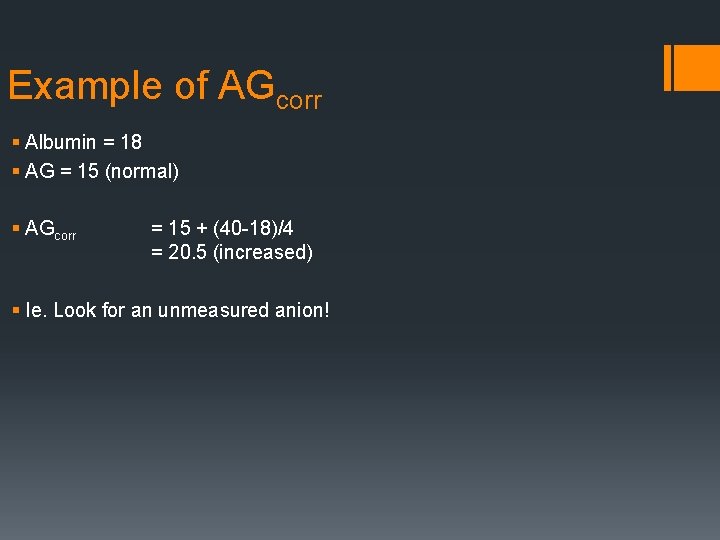
Example of AGcorr § Albumin = 18 § AG = 15 (normal) § AGcorr = 15 + (40 -18)/4 = 20. 5 (increased) § Ie. Look for an unmeasured anion!
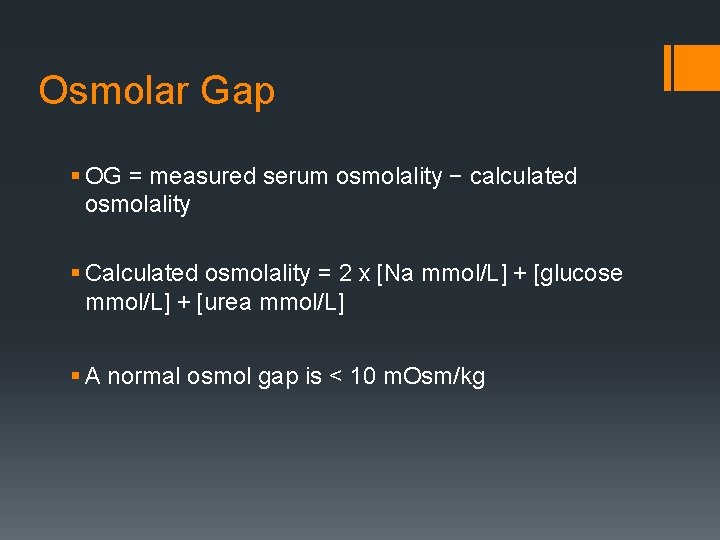
Osmolar Gap § OG = measured serum osmolality − calculated osmolality § Calculated osmolality = 2 x [Na mmol/L] + [glucose mmol/L] + [urea mmol/L] § A normal osmol gap is < 10 m. Osm/kg
The physico-chemical approach Stewart
Clever? § I will let you decide § Bottom line is that it measures contributors of the BE! § The concept of what contributors are is genius!
Components of human fluids 1. 2. 3. 4. Water Strong ions in solution in water Buffer solutions in water CO 2 containing solutions
Water § High dielectric constant § Things with electrostatic bonds dissociate in it § Water only dissociates slightly
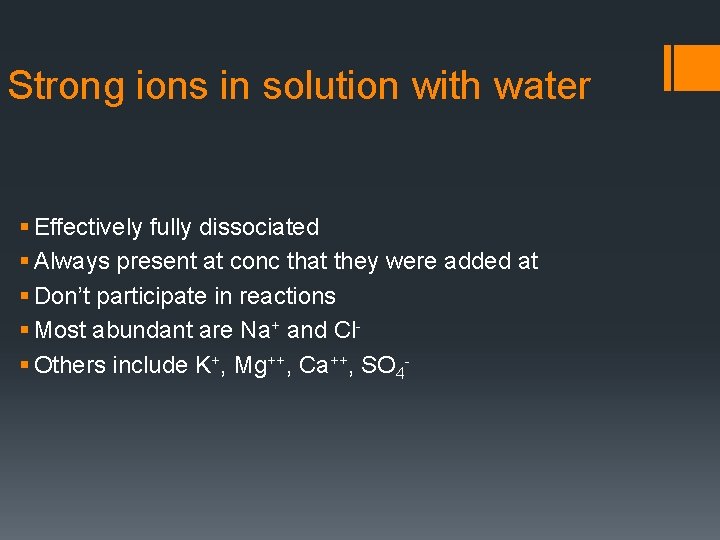
Strong ions in solution with water § Effectively fully dissociated § Always present at conc that they were added at § Don’t participate in reactions § Most abundant are Na+ and Cl§ Others include K+, Mg++, Ca++, SO 4 -
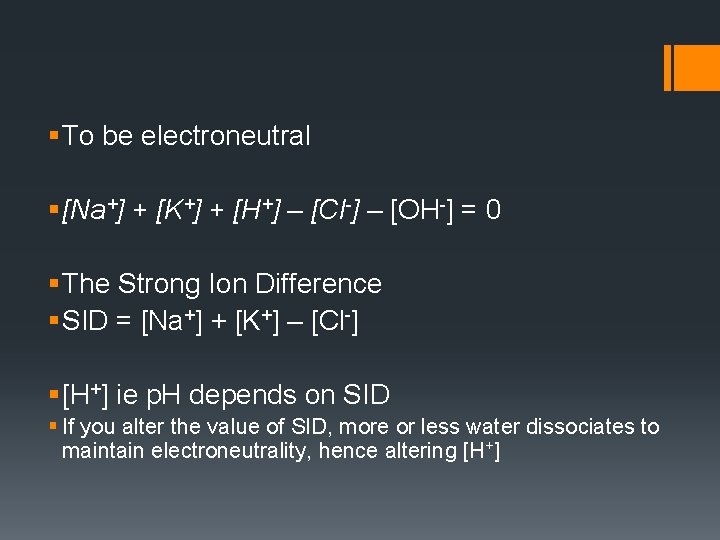
§ To be electroneutral § [Na+] + [K+] + [H+] – [Cl-] – [OH-] = 0 § The Strong Ion Difference § SID = [Na+] + [K+] – [Cl-] § [H+] ie p. H depends on SID § If you alter the value of SID, more or less water dissociates to maintain electroneutrality, hence altering [H+]
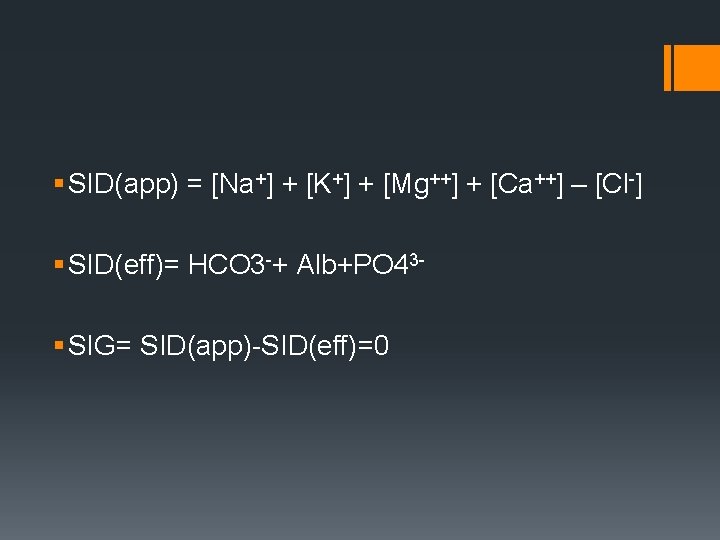
§ SID(app) = [Na+] + [K+] + [Mg++] + [Ca++] – [Cl-] § SID(eff)= HCO 3 -+ Alb+PO 43§ SIG= SID(app)-SID(eff)=0
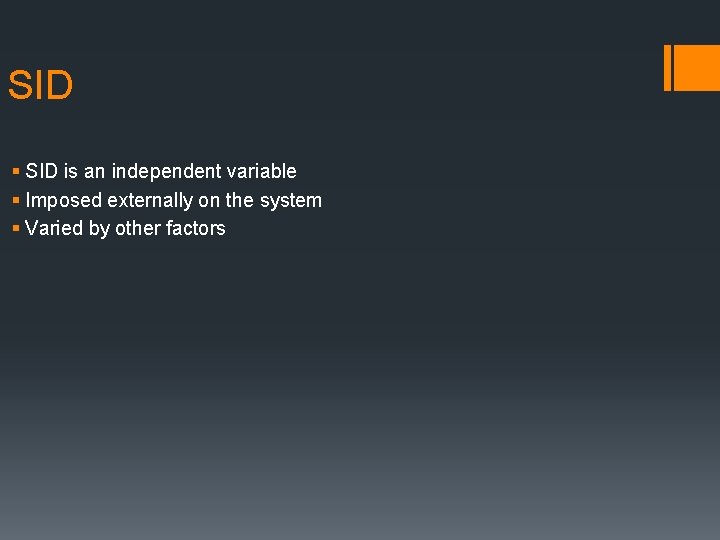
SID § SID is an independent variable § Imposed externally on the system § Varied by other factors
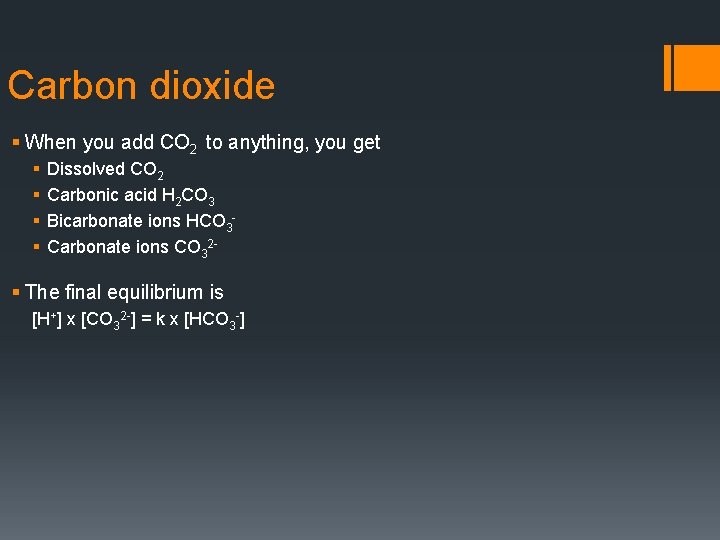
Carbon dioxide § When you add CO 2 to anything, you get § § Dissolved CO 2 Carbonic acid H 2 CO 3 Bicarbonate ions HCO 3 Carbonate ions CO 32 - § The final equilibrium is [H+] x [CO 32 -] = k x [HCO 3 -]
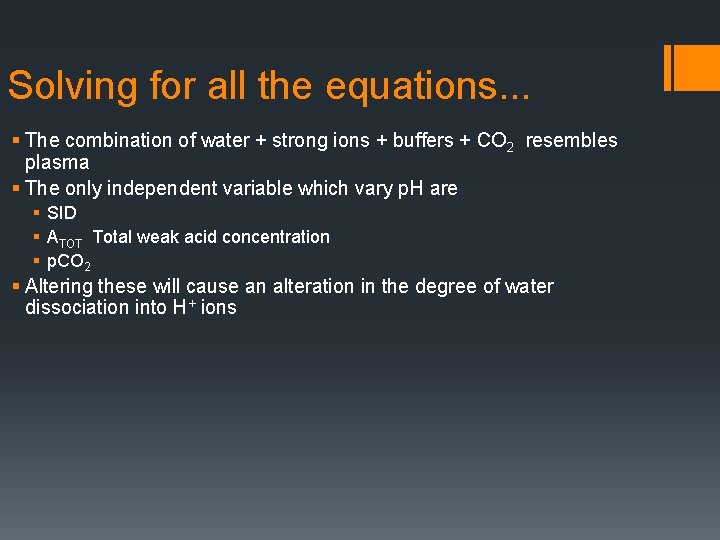
Solving for all the equations. . . § The combination of water + strong ions + buffers + CO 2 resembles plasma § The only independent variable which vary p. H are § SID § ATOT Total weak acid concentration § p. CO 2 § Altering these will cause an alteration in the degree of water dissociation into H+ ions

Putting it all together Are we any wiser?
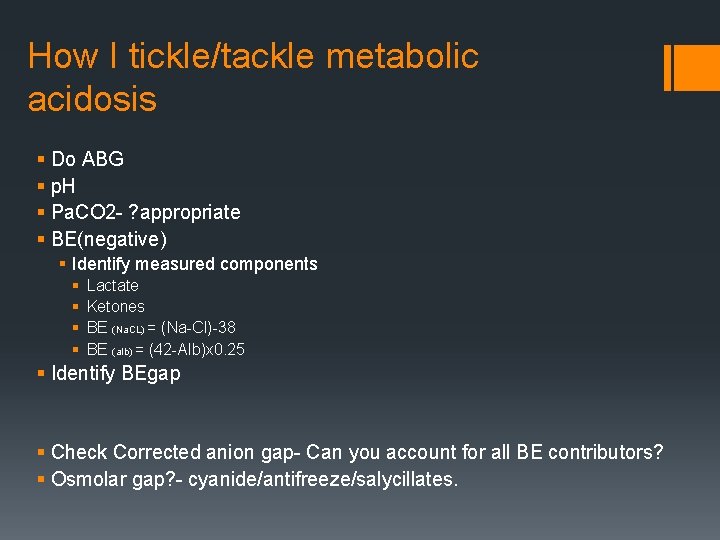
How I tickle/tackle metabolic acidosis § Do ABG § p. H § Pa. CO 2 - ? appropriate § BE(negative) § Identify measured components § § Lactate Ketones BE (Na. CL) = (Na-Cl)-38 BE (alb) = (42 -Alb)x 0. 25 § Identify BEgap § Check Corrected anion gap- Can you account for all BE contributors? § Osmolar gap? - cyanide/antifreeze/salycillates.
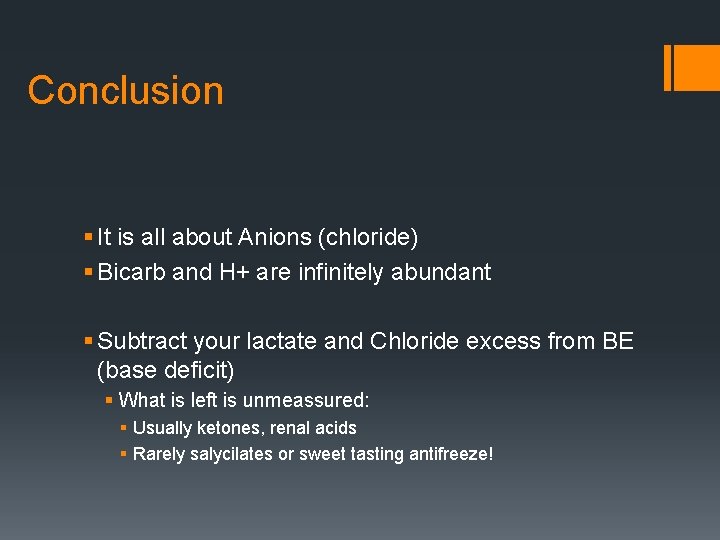
Conclusion § It is all about Anions (chloride) § Bicarb and H+ are infinitely abundant § Subtract your lactate and Chloride excess from BE (base deficit) § What is left is unmeassured: § Usually ketones, renal acids § Rarely salycilates or sweet tasting antifreeze!
Quiz § Lovely lady § 85 y/o § In ED § Bowel obstruction § Waiting for theatre to become available
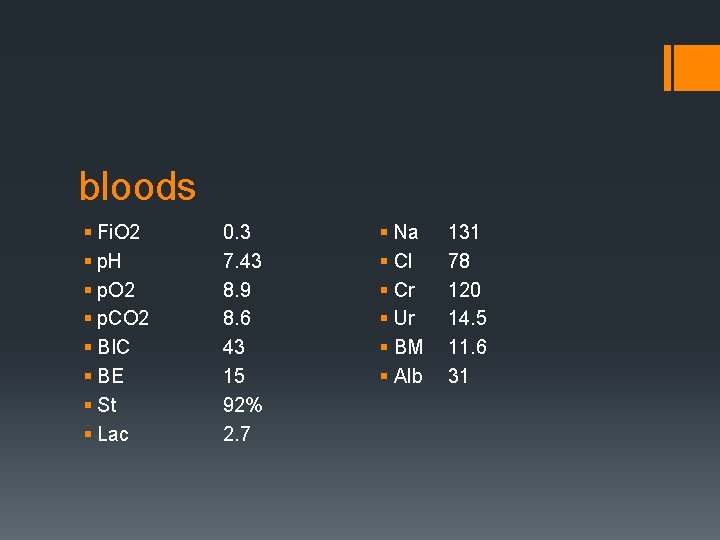
bloods § Fi. O 2 § p. H § p. O 2 § p. CO 2 § BIC § BE § St § Lac 0. 3 7. 43 8. 9 8. 6 43 15 92% 2. 7 § Na § Cl § Cr § Ur § BM § Alb 131 78 120 14. 5 11. 6 31
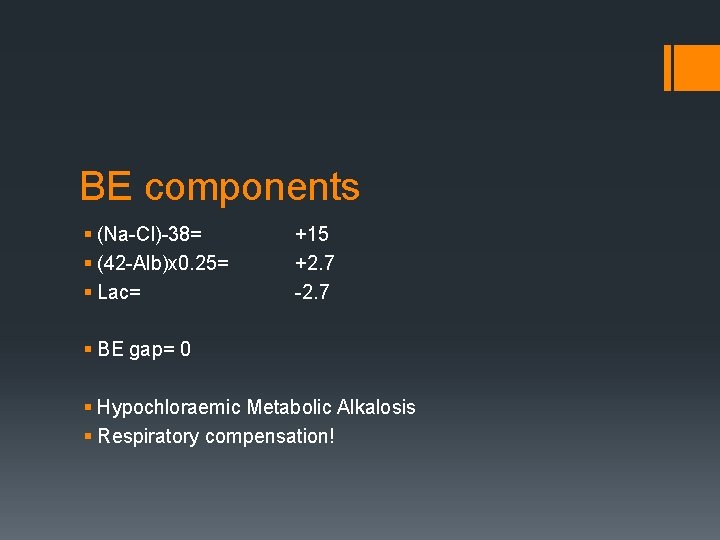
BE components § (Na-Cl)-38= § (42 -Alb)x 0. 25= § Lac= +15 +2. 7 -2. 7 § BE gap= 0 § Hypochloraemic Metabolic Alkalosis § Respiratory compensation!
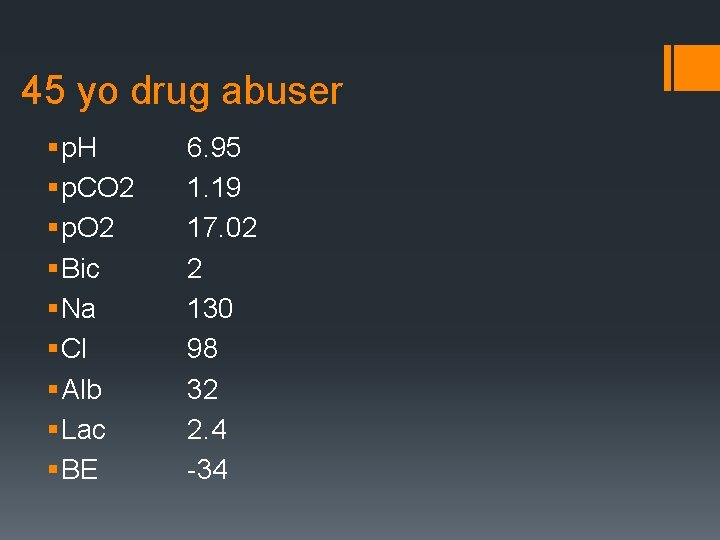
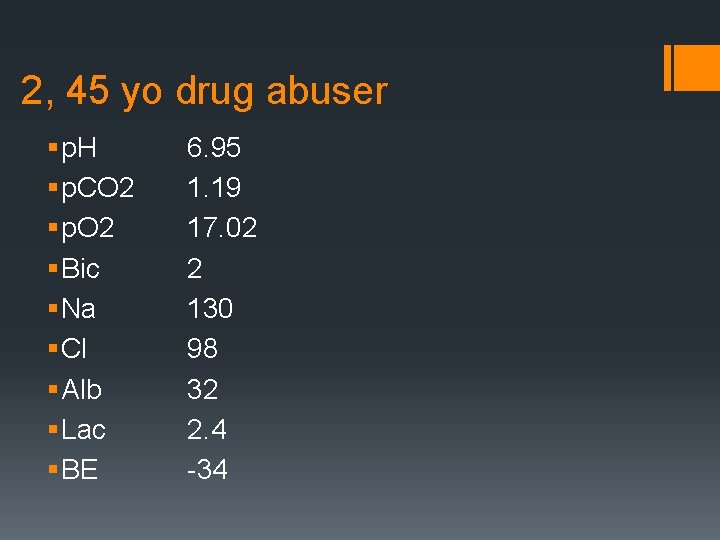
45 yo drug abuser § p. H § p. CO 2 § p. O 2 § Bic § Na § Cl § Alb § Lac § BE 6. 95 1. 19 17. 02 2 130 98 32 2. 4 -34
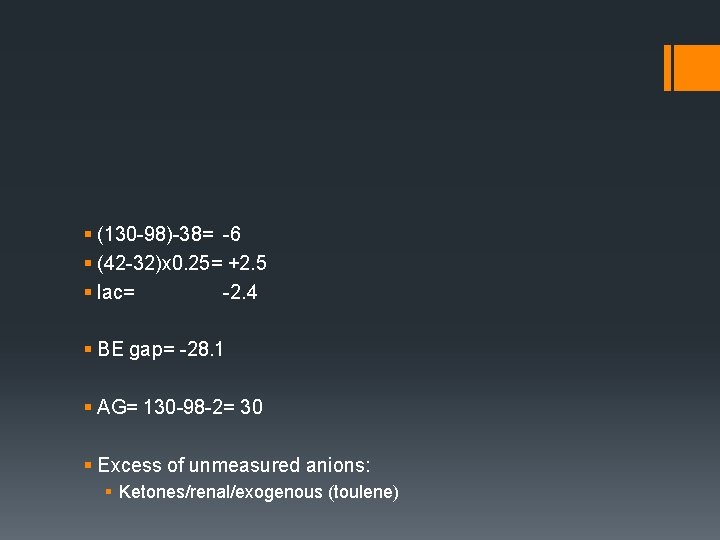
§ (130 -98)-38= -6 § (42 -32)x 0. 25= +2. 5 § lac= -2. 4 § BE gap= -28. 1 § AG= 130 -98 -2= 30 § Excess of unmeasured anions: § Ketones/renal/exogenous (toulene)
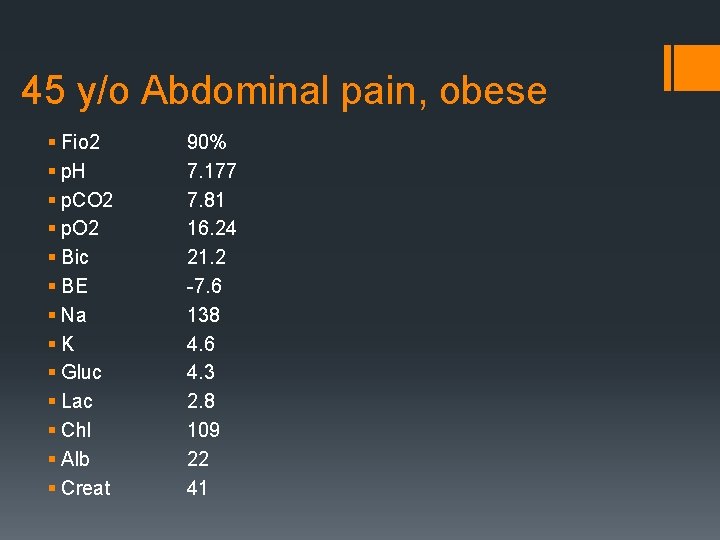
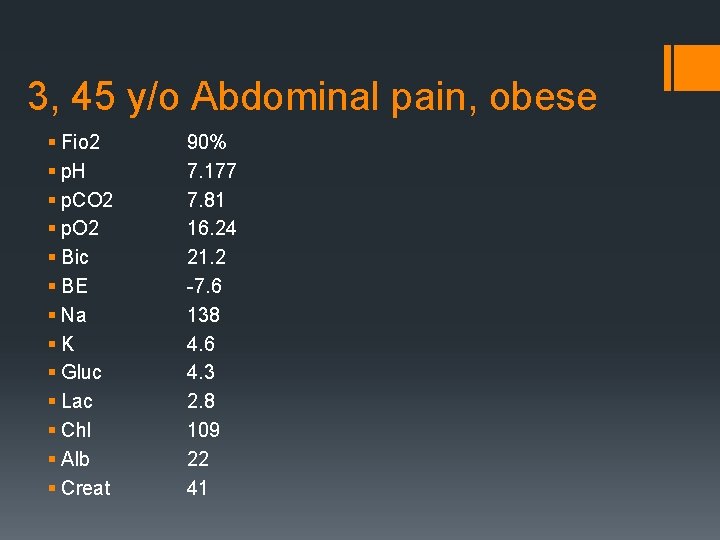
45 y/o Abdominal pain, obese § Fio 2 § p. H § p. CO 2 § p. O 2 § Bic § BE § Na §K § Gluc § Lac § Chl § Alb § Creat 90% 7. 177 7. 81 16. 24 21. 2 -7. 6 138 4. 6 4. 3 2. 8 109 22 41
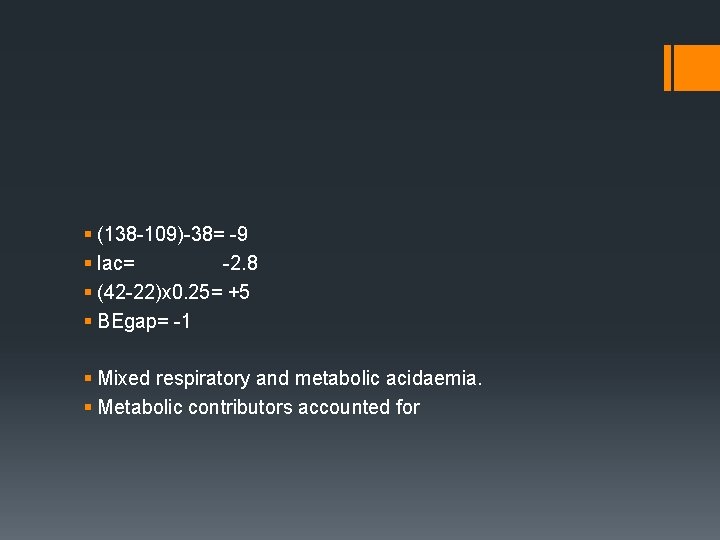
§ (138 -109)-38= -9 § lac= -2. 8 § (42 -22)x 0. 25= +5 § BEgap= -1 § Mixed respiratory and metabolic acidaemia. § Metabolic contributors accounted for
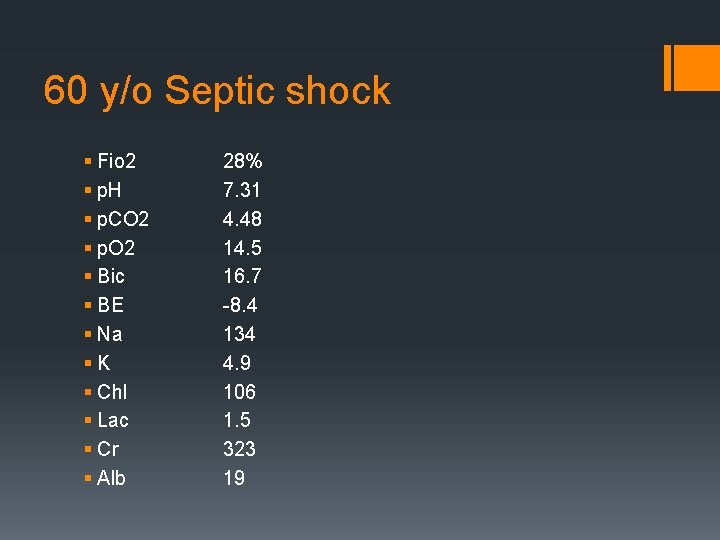
60 y/o Septic shock § Fio 2 § p. H § p. CO 2 § p. O 2 § Bic § BE § Na §K § Chl § Lac § Cr § Alb 28% 7. 31 4. 48 14. 5 16. 7 -8. 4 134 4. 9 106 1. 5 323 19
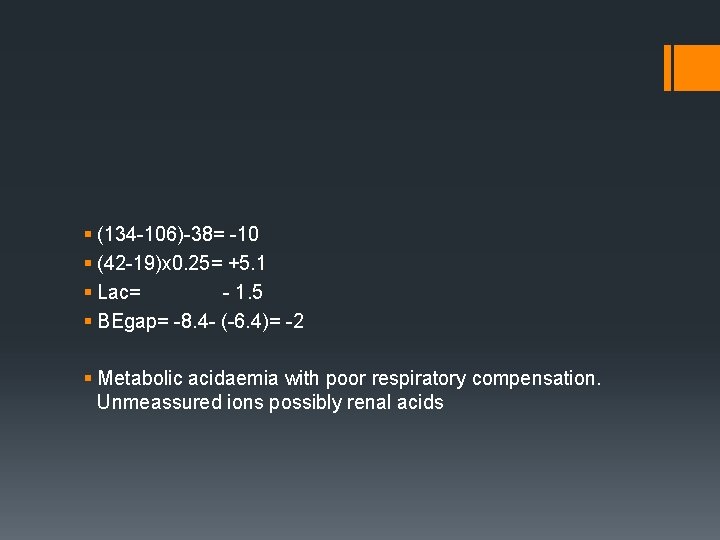
§ (134 -106)-38= -10 § (42 -19)x 0. 25= +5. 1 § Lac= - 1. 5 § BEgap= -8. 4 - (-6. 4)= -2 § Metabolic acidaemia with poor respiratory compensation. Unmeassured ions possibly renal acids
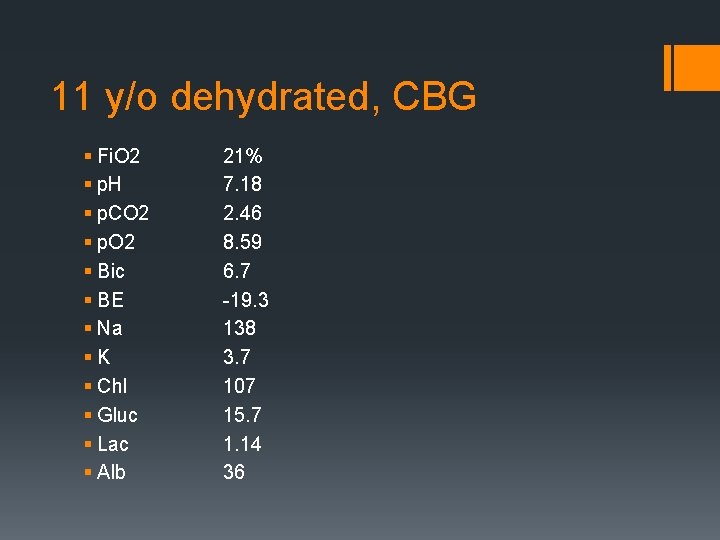
11 y/o dehydrated, CBG § Fi. O 2 § p. H § p. CO 2 § p. O 2 § Bic § BE § Na §K § Chl § Gluc § Lac § Alb 21% 7. 18 2. 46 8. 59 6. 7 -19. 3 138 3. 7 107 15. 7 1. 14 36
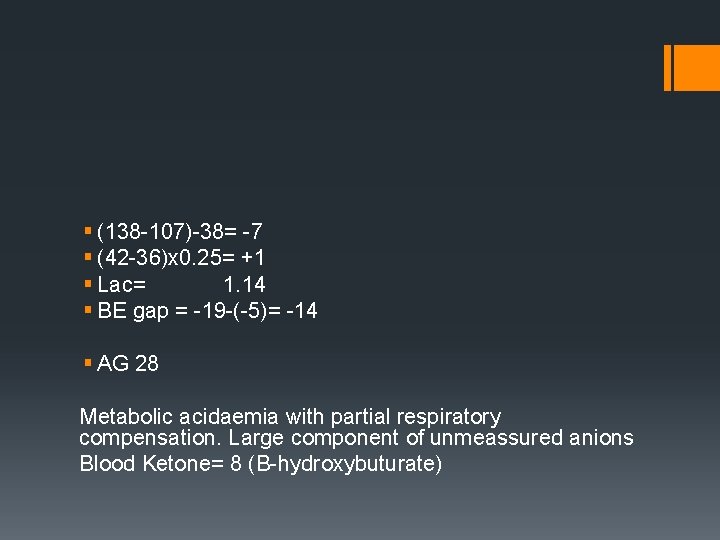
§ (138 -107)-38= -7 § (42 -36)x 0. 25= +1 § Lac= 1. 14 § BE gap = -19 -(-5)= -14 § AG 28 Metabolic acidaemia with partial respiratory compensation. Large component of unmeassured anions Blood Ketone= 8 (B-hydroxybuturate)
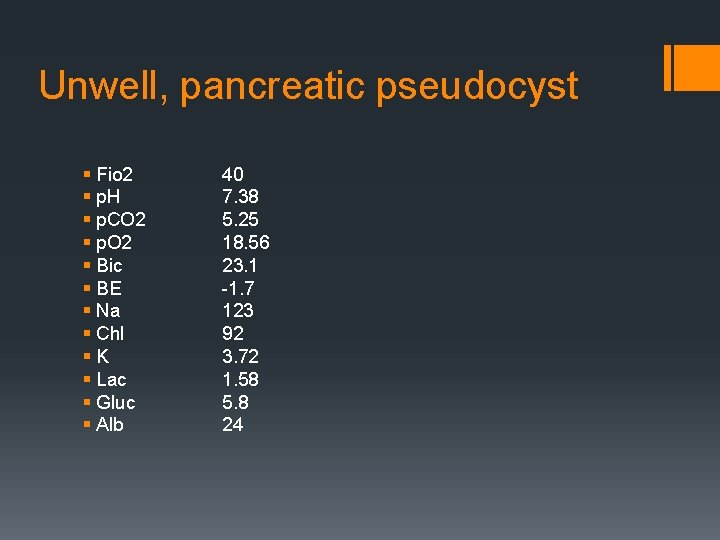
Unwell, pancreatic pseudocyst § Fio 2 § p. H § p. CO 2 § p. O 2 § Bic § BE § Na § Chl §K § Lac § Gluc § Alb 40 7. 38 5. 25 18. 56 23. 1 -1. 7 123 92 3. 72 1. 58 5. 8 24
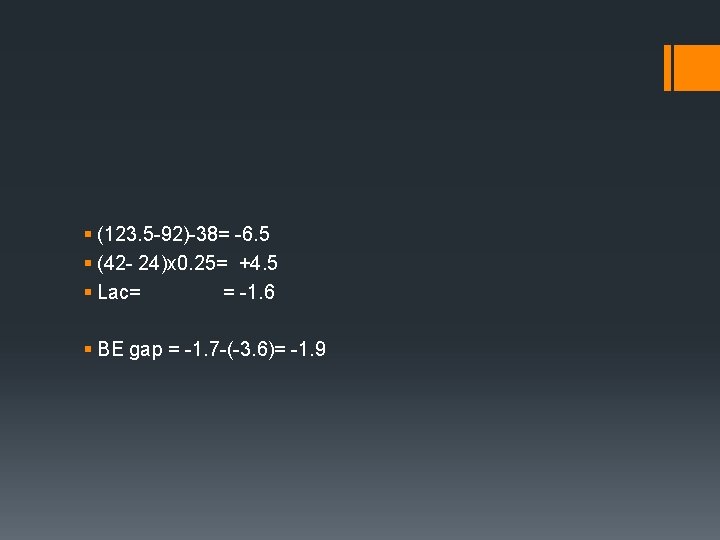
§ (123. 5 -92)-38= -6. 5 § (42 - 24)x 0. 25= +4. 5 § Lac= = -1. 6 § BE gap = -1. 7 -(-3. 6)= -1. 9
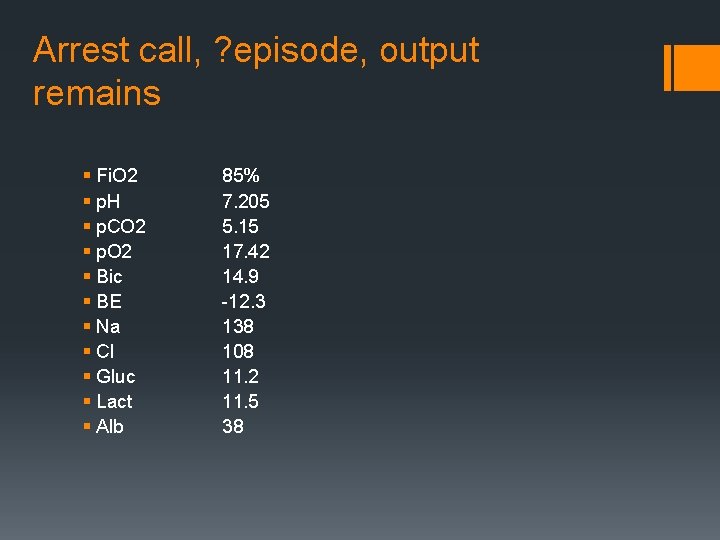
Arrest call, ? episode, output remains § Fi. O 2 § p. H § p. CO 2 § p. O 2 § Bic § BE § Na § Cl § Gluc § Lact § Alb 85% 7. 205 5. 15 17. 42 14. 9 -12. 3 138 108 11. 2 11. 5 38
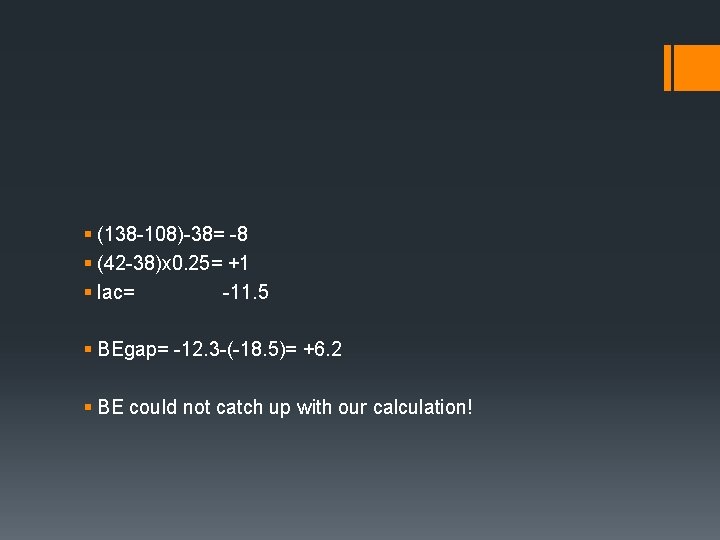
§ (138 -108)-38= -8 § (42 -38)x 0. 25= +1 § lac= -11. 5 § BEgap= -12. 3 -(-18. 5)= +6. 2 § BE could not catch up with our calculation!
- Slides: 52