
Metabiotics Their protective role in the pathogenesis of
Metabiotics: Their protective role in the pathogenesis of CRC Adamantini Kyriacou Associate Professor in Microbiology Depatment of Nutriton & Dietetics Harokopio University
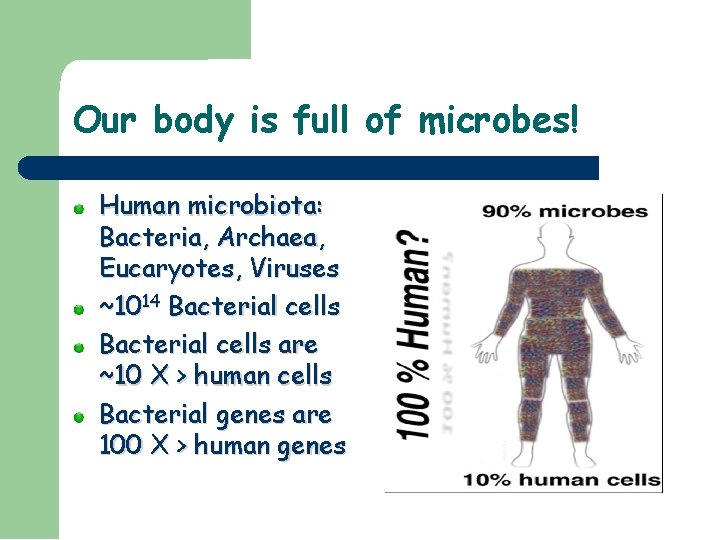
Our body is full of microbes! Human microbiota: Bacteria, Archaea, Eucaryotes, Viruses ~1014 Bacterial cells are ~10 X > human cells Bacterial genes are 100 Χ > human genes
Human Gut microbiota Adults: ~1012 microorganisms- High microbial density Bacteria dominate Bacteroidetes +Firmicutes: >60% Proteobacteria, Verrucomicrobia, Actinobacteria, Fusobacteria : minor proportions o Sekirov et al. , 2010

Main functions of the Gut Microbiota Metabolic, Trophic, Protecive Supporting the microbial growth and proliferation From the fermentation of non-digestable dietary residue and endogenous mucus are produced: Short Chain Fatty Acids (main products) Metabolic Energy Gut microorganisms facilitate: Absorption of Ca, Fe, Mg
Main products of the microbial fermentations in the gut: SCFAs Butyrate: important source of energy for coloncytes. Stimulates the differentiation and the apoptosis of coloncytes. Reduced in inflammation Acetate & Propionate: traced in portal vein, transported and metabolised by the liver (propionate) or in the peripheral tissues (acetate). Modulators of glucose metabolism (Guarner & Malagelada, 2003)
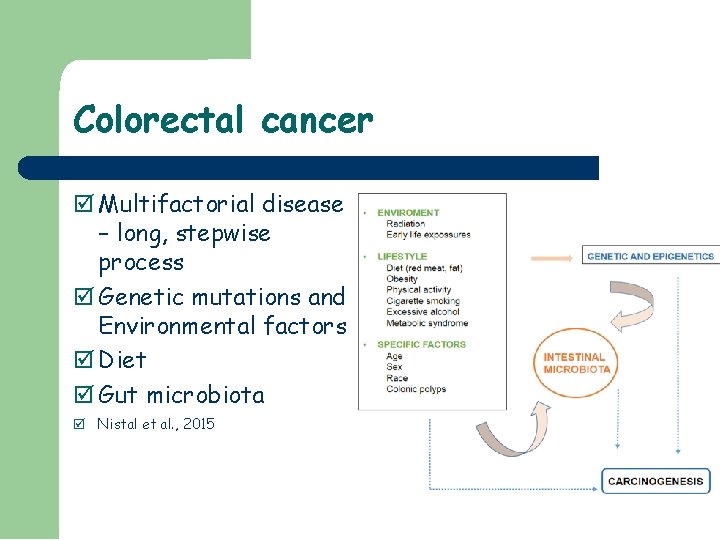
Colorectal cancer Multifactorial disease – long, stepwise process Genetic mutations and Environmental factors Diet Gut microbiota Nistal et al. , 2015

Changes in gut microbiota: Dysbiosis Gradual changes in the colonic microbiota Significant difference in the gut microbiota of subjects with adenomas and carcinomas compared to healthy
Changes in the gut microbiota of individuals with adenomas Biopsies from healthy subjects +/- adenomas Significant difference in the gut microbiota of the two groups Adenomas: Proteobacteria, decrease of Bacteroidetes (Shen et al. , 2010) Adenomas: opportunistic pathogens (Pseudomonas, Helicobacter, Acinetobacter : Proteobacteria) (Sanapareddy et al. , 2012) Adenomas: Fusobacteria (Mc. Coy et al. , 2013)
Changes in the gut microbiota of CRC patients Recent studies: biopsies from tumor tissue compared to nontumor tissue (off-tumor sites), faeces several different results but also important similarities: Significant changes of the gut micorbiota, of the biodiversity in the tumor tissue, certain bacterial groups related with inflammation, of butyrate-producers bacteria Clostridium cluster IV (F. prausnitzii, Roseburia) Fusobacterium, (F. nucleatum), Porphyromonas, Peptostreptococcus, Mogibacterium, Enterococcaceae Conflicting results related to Bacteroides, Firmicutes Dulal S. & Keku T. (2014); Candela et al. , (2014)
Driver-Passenger model Tjalsma et al. , Nature Reviews (2012) Drivers: Gut bacteria with pro-carcinogenic activity that may initiate CRC development (produce DNA damaging compounds) Physiological and Metabolic changes during colon carcinogenesis alter the colonic microenvironment gradual replacement of driver bacteria Passengers: Replacement of drivers by passengers (opportunistic pathogens, commensal or even probiotic bacteria)
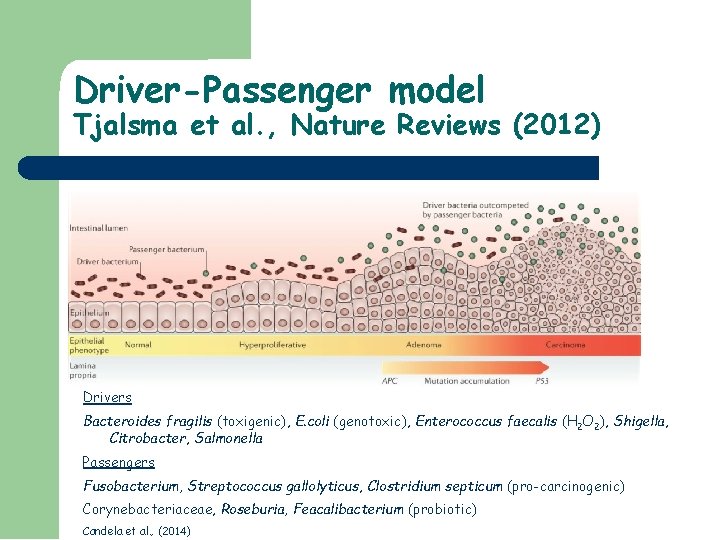
Driver-Passenger model Tjalsma et al. , Nature Reviews (2012) Drivers Bacteroides fragilis (toxigenic), E. coli (genotoxic), Enterococcus faecalis (H 2 O 2), Shigella, Citrobacter, Salmonella Passengers Fusobacterium, Streptococcus gallolyticus, Clostridium septicum (pro-carcinogenic) Corynebacteriaceae, Roseburia, Feacalibacterium (probiotic) Candela et al. , (2014)
Modifying the gut microbiota to a healthier profile Probiotics are live microorganisms that when administered in adequate amounts confer a health benefit on the host (Sanders et al. , 2007) Probiotics may be beneficial because: Maintain the epithelial integrity Stimulate cell mediated immunity Enhance Ig. A production Detoxify carcinogens Safe use. . but as live microorganisms may be dangerous to immunocompromised individuals (Sharma M. & Shukla G. , 2016)
Metabiotics Components of probiotic microorganisms and/or their metabolites with a determined chemical structure that can optimize hostspecific physiological functions Most important potential metabiotics: SCFAs (Shenderov B. , 2013)
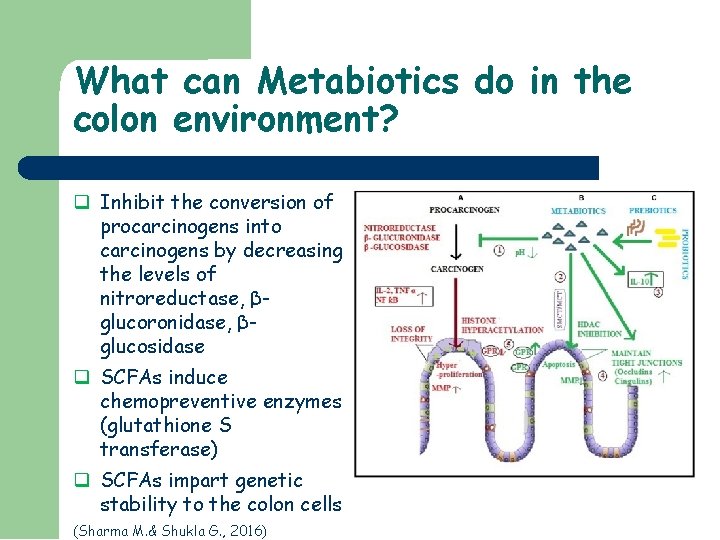
What can Metabiotics do in the colon environment? Inhibit the conversion of procarcinogens into carcinogens by decreasing the levels of nitroreductase, βglucoronidase, βglucosidase SCFAs induce chemopreventive enzymes (glutathione S transferase) SCFAs impart genetic stability to the colon cells (Sharma M. & Shukla G. , 2016)
Metabiotics – Epigenetic changes Histone Diacetylases (HDA): posttranslational modifications of histones alter chromatin structure silencing tumor suppressor genes Epigenetic drugs: HDA inhibitors: SCFAs (Butyrate) Butyrate effect is differentiated between normal and cancer cells
Metabiotics - Antimutagenic activity Cell free extracts of probiotics, supernatants of prebiotics' fermentation reduce the genotoxicity of human fecal slurry Butyrate: Binds irreversibly to mutagen Enhances the production of GST-pi in colon cells Inhibits the genotoxicity of nitrosamides and H 2 O 2 in colon cells and animal models (Sharma M. & Shukla G. , 2016)
Metabiotics - Immunomodulatory potential SCFAs: optimise immune response from the intestinal epithelial cells to prevent chronic inflammation SCFAs: inhibit inflammatory cytokines (IL-2, IL-6, TNFα), stimulate anti-inflammatory IL-10 Various components and metabolites from intestinal bacteria (probiotics) have immunomodulatory activity (EPS, peptidoglycan, lipoteichoic acids, conjugated linoleic acid, peptides) (Sharma M. & Shukla G. , 2016)
Metabiotics - Antiproliferative effects Butyrate: induces differentiation, apoptosis in cancer cells and inhibits angiogenesis Propionate + Acetate: enhances apoptosis but in higher amounts (affect the mitochondrial trans-membrane potential, generating ROS, condensation of nuclear chomatin in colon cancer cells) Medium chain Fatty Acids (capric, caprylic, caproic): cytotoxic against colon cancer cells (Sharma M. & Shukla G. , 2016)
Metabiotics - Intestinal integrity Leaky gut syndrome: promotes inflammation and cancer development Butyrate: promotes intestinal epithelial barrier integrity by regulating the expression of tight junctions proteins (occludin) Surface components of probiotics (pilus, lipoteichoic acids, mucus binding proteins): interract with epithelial and immune cells to maintain gut barrier homeostasis
Metabiotics - Metastasis inhibition Butyrate and cell-free extracts of probiotics or synbiotics inhibit cell invasion by: decreasing Matrix. Metalloproteinases activity (MMPs) and/or increasing ZO-1 (Sharma M. & Shukla G. , 2016)
Intervention with barley β-glucan in polypectomized patients (Turunen et al. , 2013 ; 2015) 69 polypectomized subjects Every day consumption of barley β-glucan (3 g) or placebo for 3 months Faecal samples at t=0, 30, 90 days και 2 weeks after the end of intervention Microbiota, gastrointestinal symptoms, p. H, faecal moisture, nutrition analysis, physical activity, genotoxicity of feacal water
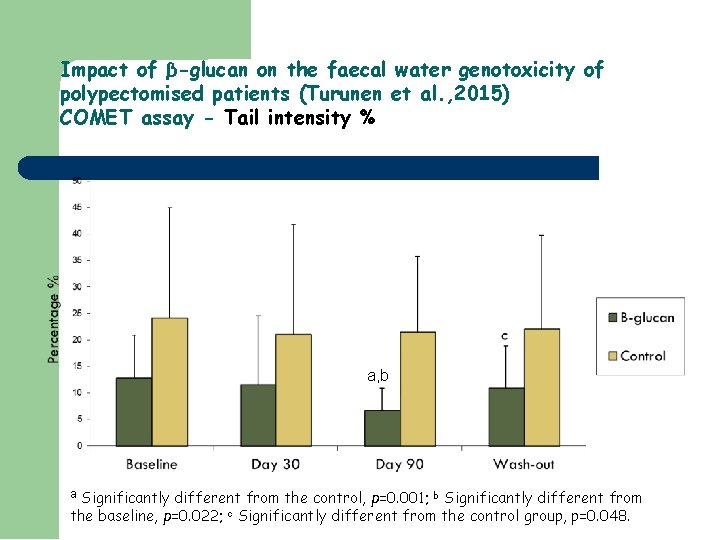
Impact of β-glucan on the faecal water genotoxicity of polypectomised patients (Turunen et al. , 2015) COMET assay - Tail intensity % a, b Significantly different from the control, p=0. 001; b Significantly different from the baseline, p=0. 022; c Significantly different from the control group, p=0. 048. a

Thank you for your attention!!!
- Slides: 23