
MetaAnalysis An Introduction George A Kelley DA FACSM


- Slides: 28
Meta-Analysis: An Introduction George A. Kelley, DA, FACSM School of Medicine, Dept. of Community Medicine, West Virginia University, Morgantown, WV Bio Funding Publications
Interest and Excitement for Meta-Analysis ØProliferation of information on health-related disease ØNeed to try and “make sense out of nonsense” ØEnjoyment for combining and analyzing data
Learning Objectives ØIdentify what meta-analysis is ØIdentify the advantages and different types of meta-analyses ØIdentify the steps for conducting a meta-analysis of summary data
Performance Objectives ØDefine meta-analysis ØList and describe the advantages and types of meta-analyses ØList and describe the steps necessary for conducting a meta -analysis of summary data
Major Topics Covered · · Overview of Meta-Analysis Steps for Conducting A Meta. Analysis
I. Overview of Meta-Analysis A. Meta-Analysis Defined B. Advantages of Meta. Analysis C. Types of Meta-Analyses
A. Meta-Analysis – Combining the results from many studies dealing with the same topic.
B. Advantages of Meta-Analysis 1. Study question specific & narrow 2. Data collection comprehensive & specific 3. Study selection based on uniformly applied criteria 4. Data synthesis quantitative
C. Types of Meta-Analyses 1. Summary Data 2. Individual Patient Data
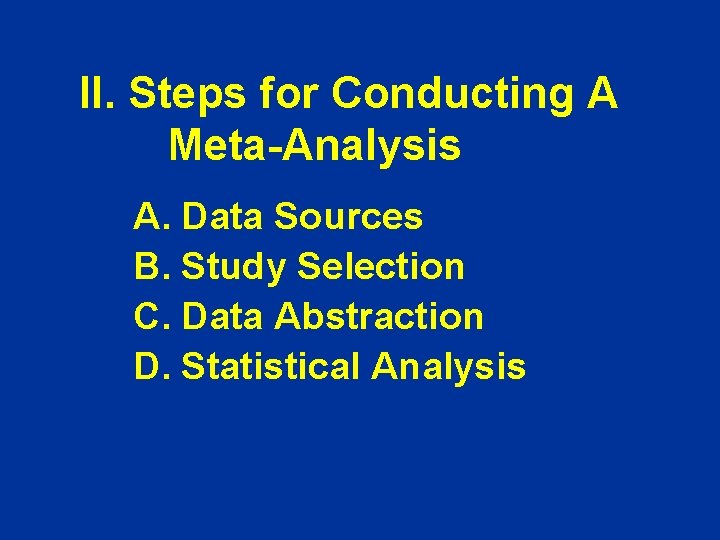
II. Steps for Conducting A Meta-Analysis A. Data Sources B. Study Selection C. Data Abstraction D. Statistical Analysis
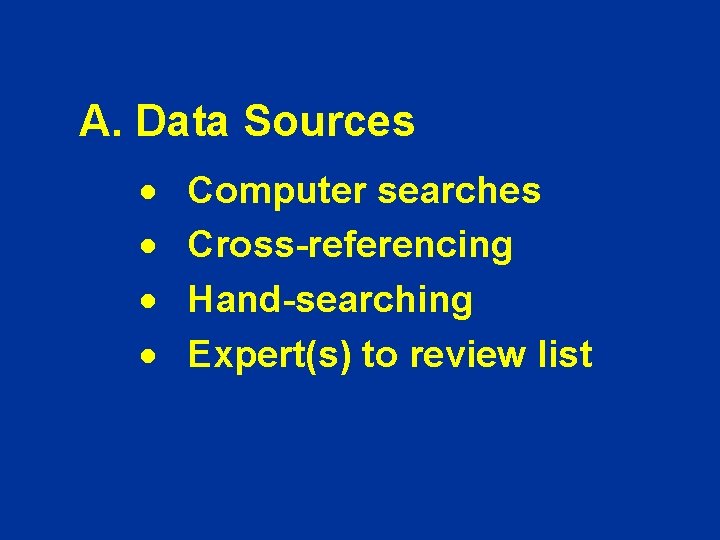
A. Data Sources · · Computer searches Cross-referencing Hand-searching Expert(s) to review list
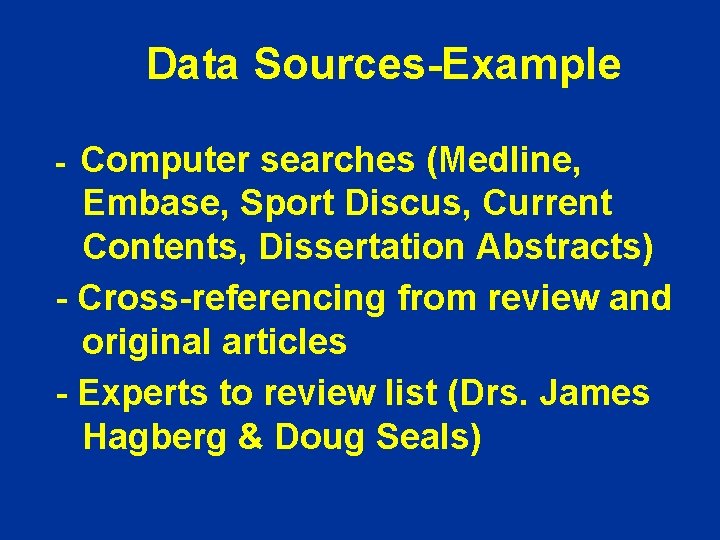
Data Sources-Example Computer searches (Medline, Embase, Sport Discus, Current Contents, Dissertation Abstracts) - Cross-referencing from review and original articles - Experts to review list (Drs. James Hagberg & Doug Seals) -
B. Study Selection 1. 2. 3. 4. 5. 6. Study designs Subjects Publication types Languages Interventions Time Frame
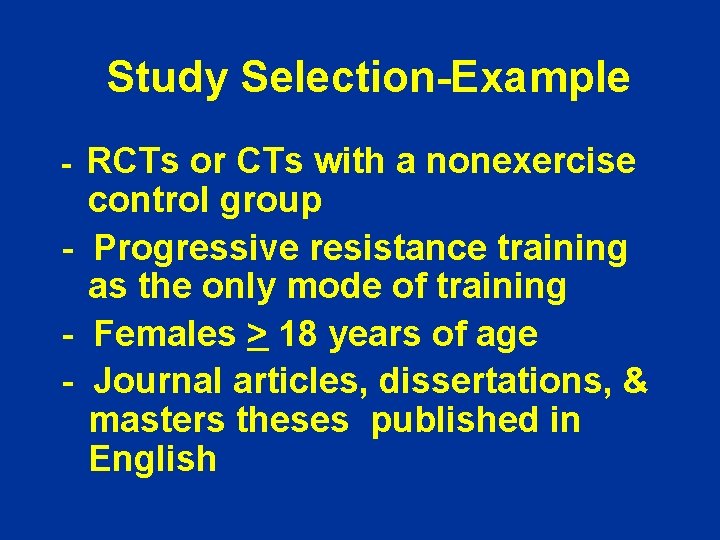
Study Selection-Example RCTs or CTs with a nonexercise control group - Progressive resistance training as the only mode of training - Females > 18 years of age - Journal articles, dissertations, & masters theses published in English -
Study Selection (cont. ) • Studies published & indexed between January 1966 and December 1998 • Bone mineral density assessed at femur, spine, and/or radius • Training studies > 16 weeks
C. Data Abstraction 1. Number of items coded 2. Inter-coder bias 3. Items coded
Data Abstraction – Example · 242 possible items coded · Data independently abstracted by first two authors · Every data point reviewed for accuracy and consistency · Major characteristics coded – study, physical, exercise, primary & secondary outcomes
D. Statistical Analysis · Choice of metric · Choice of model/ heterogeneity · Publication bias · Study quality · Moderator analysis
1. Choice of Metric · Original · Standardized mean difference (Mean/Standard Deviation)
2. Choice of Model/ Heterogeneity · Fixed Effects · Random Effects
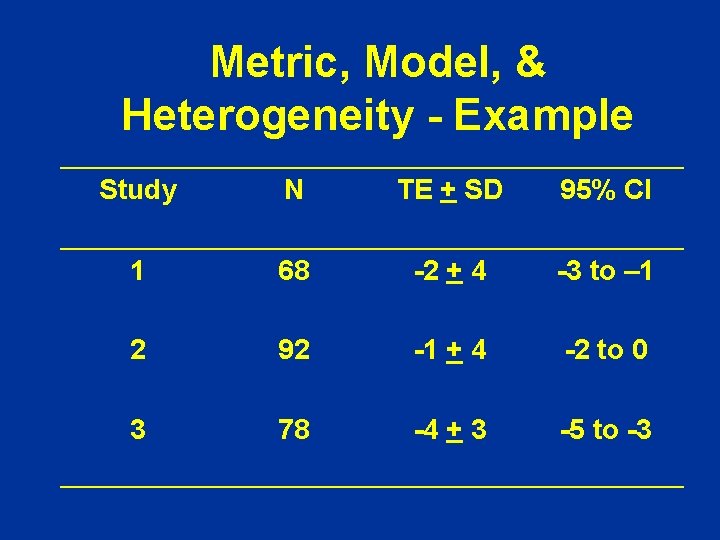
Metric, Model, & Heterogeneity - Example Study N TE + SD 95% CI 1 68 -2 + 4 -3 to – 1 2 92 -1 + 4 -2 to 0 3 78 -4 + 3 -5 to -3
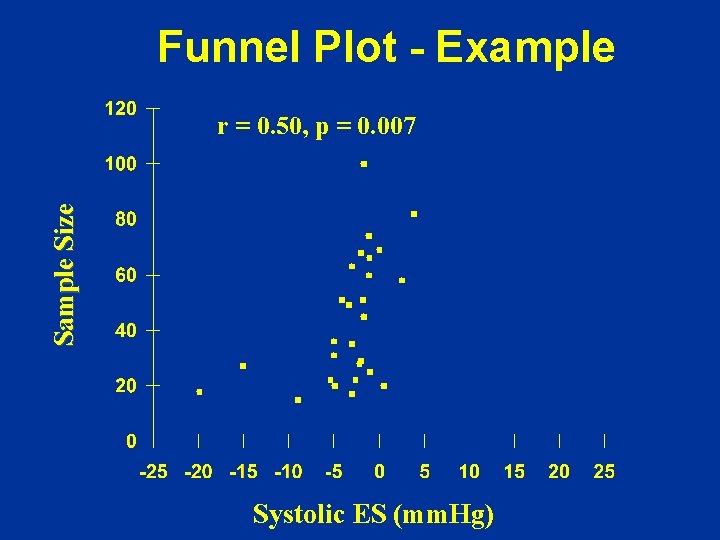
3. Publication Bias · Graphical methods · Quantitative methods
Funnel Plot - Example Size r = 0. 50, p = 0. 007 Systolic ES (mm. Hg)
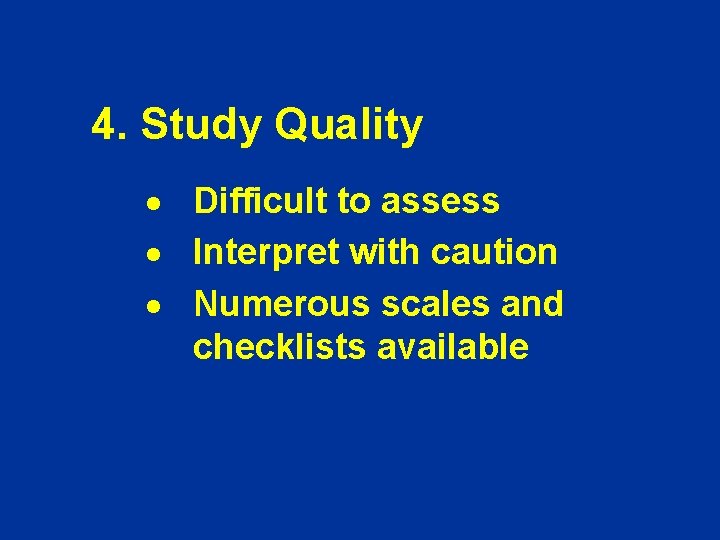
4. Study Quality · Difficult to assess · Interpret with caution · Numerous scales and checklists available
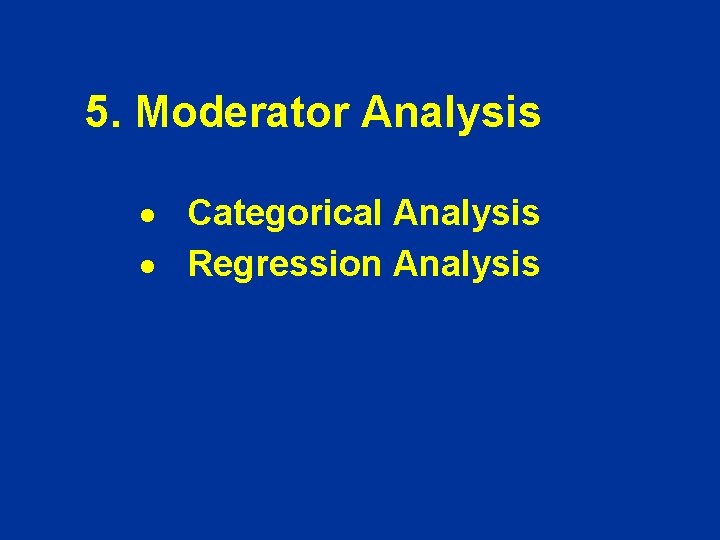
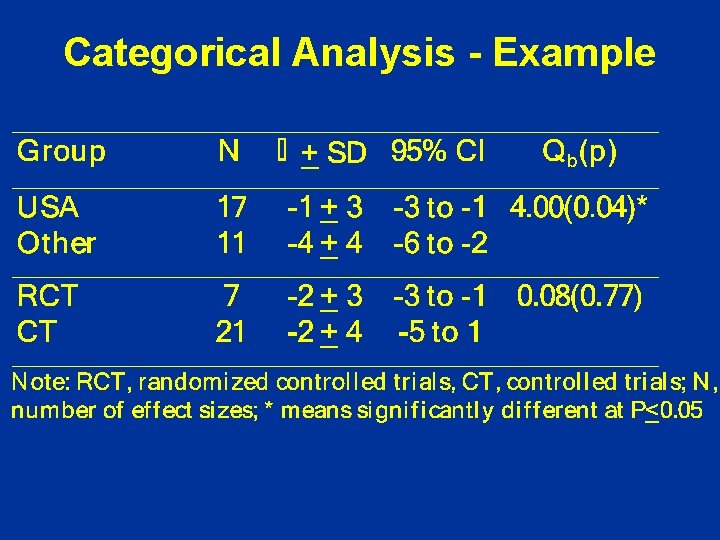
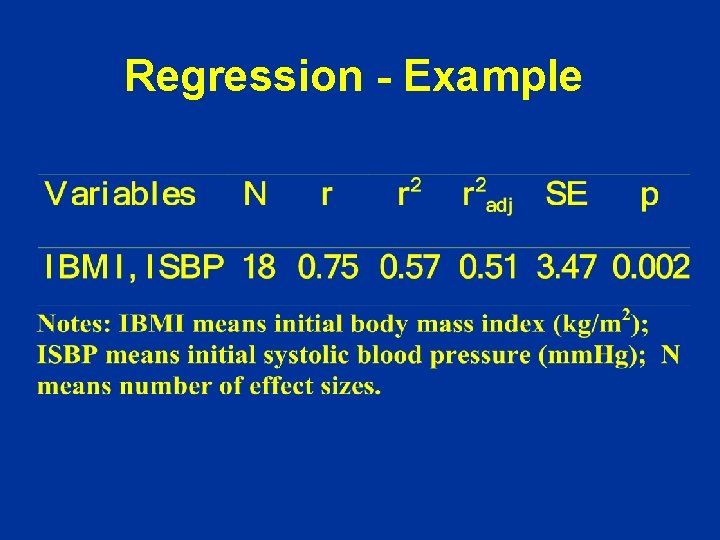
5. Moderator Analysis · Categorical Analysis · Regression Analysis
Categorical Analysis - Example
Regression - Example
THANKS FOR VIEWING