
Message Strategy Message strategy Focused on the content
- Slides: 11
Message Strategy
Message strategy • Focused on the content of your communication, NOT THE ultimate slogan , scripts and headlines • Fokus pada pesan utama What do you want your target audience to do What do you want them to know What do you want them to believe
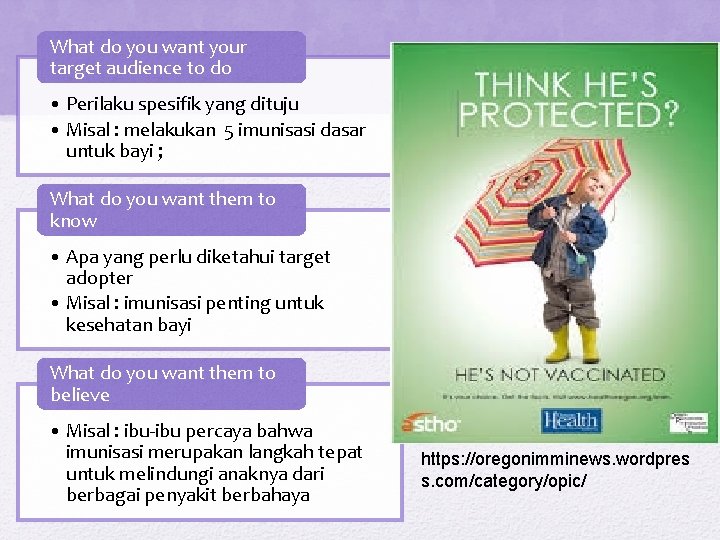
What do you want your target audience to do • Perilaku spesifik yang dituju • Misal : melakukan 5 imunisasi dasar untuk bayi ; What do you want them to know • Apa yang perlu diketahui target adopter • Misal : imunisasi penting untuk kesehatan bayi What do you want them to believe • Misal : ibu-ibu percaya bahwa imunisasi merupakan langkah tepat untuk melindungi anaknya dari berbagai penyakit berbahaya https: //oregonimminews. wordpres s. com/category/opic/
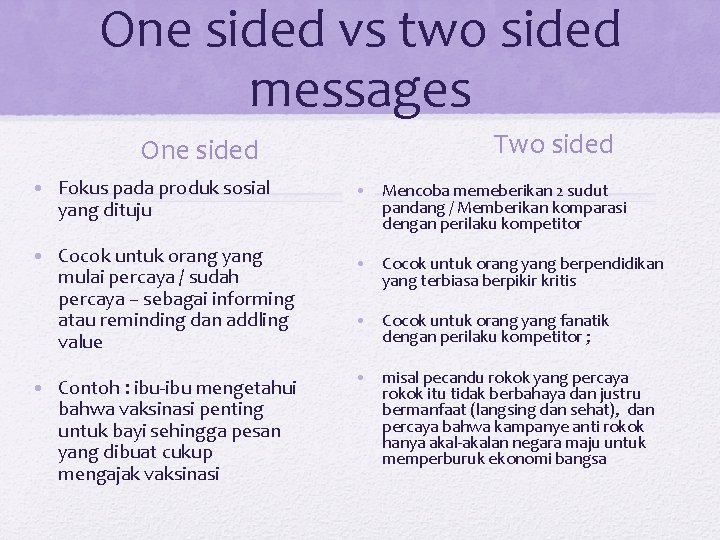
One sided vs two sided messages One sided • Fokus pada produk sosial yang dituju • Cocok untuk orang yang mulai percaya / sudah percaya – sebagai informing atau reminding dan addling value • Contoh : ibu-ibu mengetahui bahwa vaksinasi penting untuk bayi sehingga pesan yang dibuat cukup mengajak vaksinasi Two sided • Mencoba memeberikan 2 sudut pandang / Memberikan komparasi dengan perilaku kompetitor • Cocok untuk orang yang berpendidikan yang terbiasa berpikir kritis • Cocok untuk orang yang fanatik dengan perilaku kompetitor ; • misal pecandu rokok yang percaya rokok itu tidak berbahaya dan justru bermanfaat (langsing dan sehat), dan percaya bahwa kampanye anti rokok hanya akal-akalan negara maju untuk memperburuk ekonomi bangsa
Why Do Information Campaigns Often Fail?
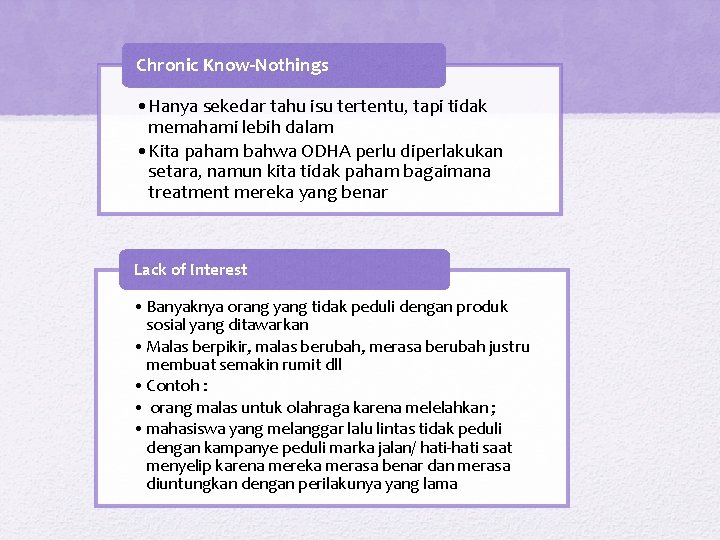
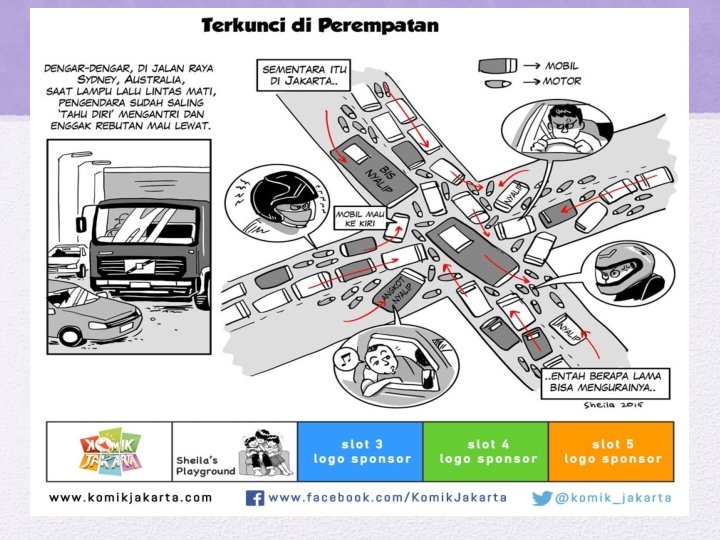
Chronic Know-Nothings • Hanya sekedar tahu isu tertentu, tapi tidak memahami lebih dalam • Kita paham bahwa ODHA perlu diperlakukan setara, namun kita tidak paham bagaimana treatment mereka yang benar Lack of Interest • Banyaknya orang yang tidak peduli dengan produk sosial yang ditawarkan • Malas berpikir, malas berubah, merasa berubah justru membuat semakin rumit dll • Contoh : • orang malas untuk olahraga karena melelahkan ; • mahasiswa yang melanggar lalu lintas tidak peduli dengan kampanye peduli marka jalan/ hati-hati saat menyelip karena mereka merasa benar dan merasa diuntungkan dengan perilakunya yang lama
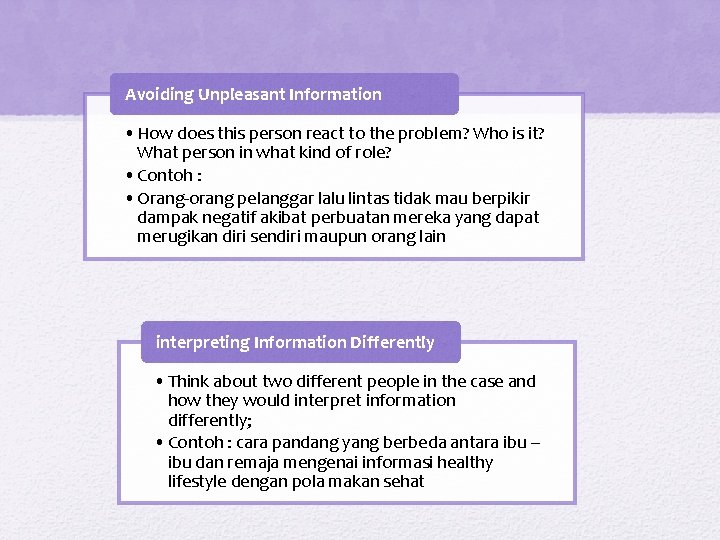
Avoiding Unpleasant Information • How does this person react to the problem? Who is it? What person in what kind of role? • Contoh : • Orang-orang pelanggar lalu lintas tidak mau berpikir dampak negatif akibat perbuatan mereka yang dapat merugikan diri sendiri maupun orang lain interpreting Information Differently • Think about two different people in the case and how they would interpret information differently; • Contoh : cara pandang yang berbeda antara ibu – ibu dan remaja mengenai informasi healthy lifestyle dengan pola makan sehat
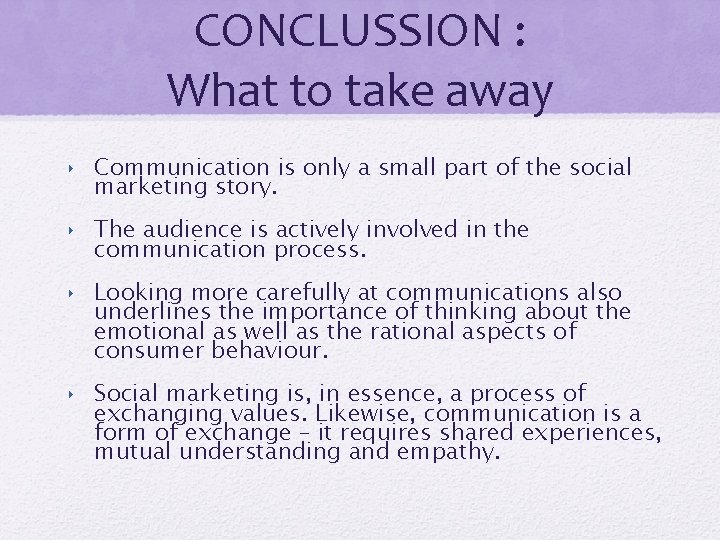
CONCLUSSION : What to take away ‣ Communication is only a small part of the social marketing story. ‣ The audience is actively involved in the communication process. ‣ Looking more carefully at communications also underlines the importance of thinking about the emotional as well as the rational aspects of consumer behaviour. ‣ Social marketing is, in essence, a process of exchanging values. Likewise, communication is a form of exchange – it requires shared experiences, mutual understanding and empathy.
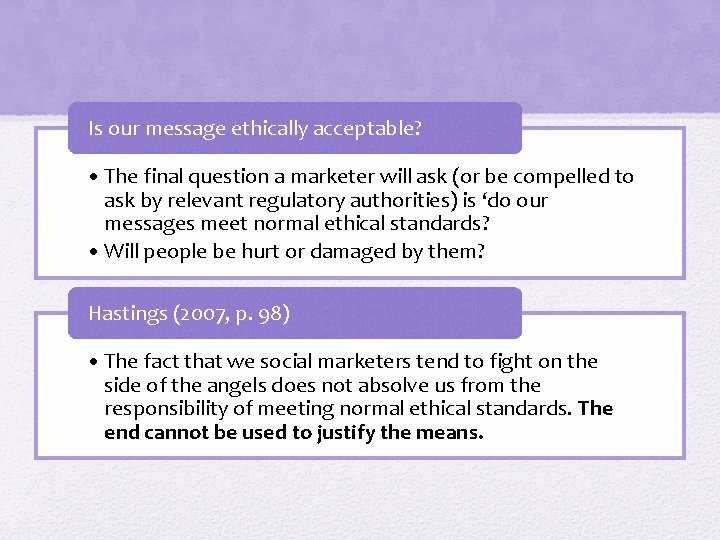
Is our message ethically acceptable? • The final question a marketer will ask (or be compelled to ask by relevant regulatory authorities) is ‘do our messages meet normal ethical standards? • Will people be hurt or damaged by them? Hastings (2007, p. 98) • The fact that we social marketers tend to fight on the side of the angels does not absolve us from the responsibility of meeting normal ethical standards. The end cannot be used to justify the means.
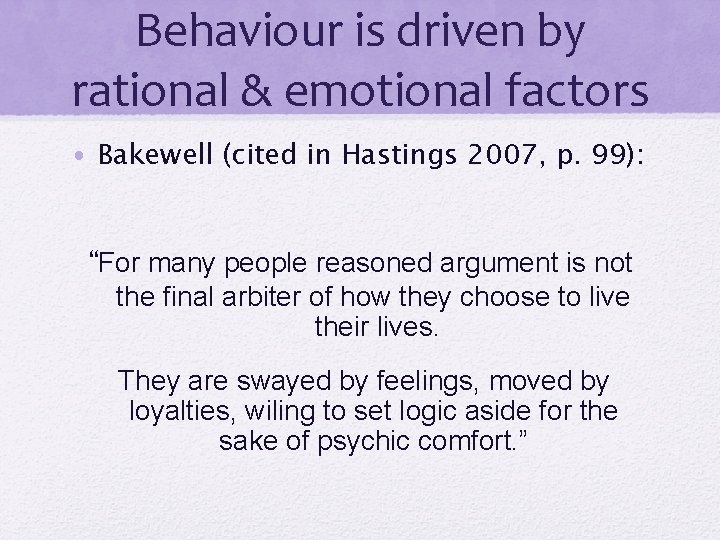
Behaviour is driven by rational & emotional factors • Bakewell (cited in Hastings 2007, p. 99): “For many people reasoned argument is not the final arbiter of how they choose to live their lives. They are swayed by feelings, moved by loyalties, wiling to set logic aside for the sake of psychic comfort. ”