
Mesopotamian Civilization Tigris Euphrates Rivers Egyptian Civilization Nile
- Slides: 13
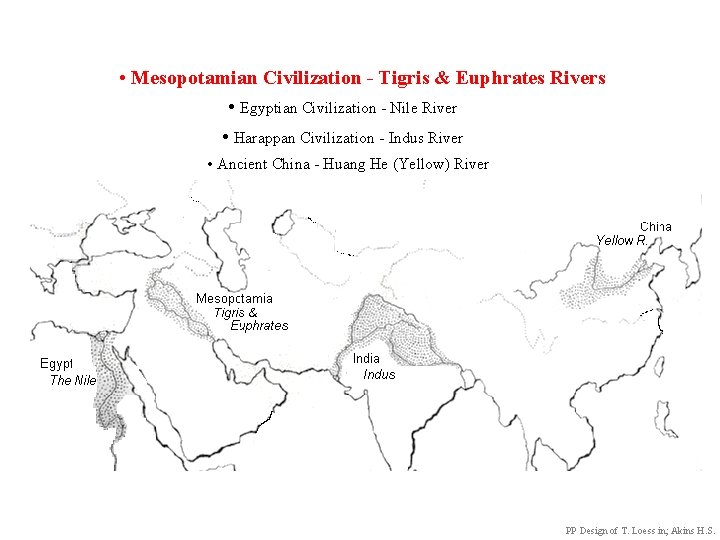
• Mesopotamian Civilization - Tigris & Euphrates Rivers • Egyptian Civilization - Nile River • Harappan Civilization - Indus River • Ancient China - Huang He (Yellow) River PP Design of T. Loess in; Akins H. S.
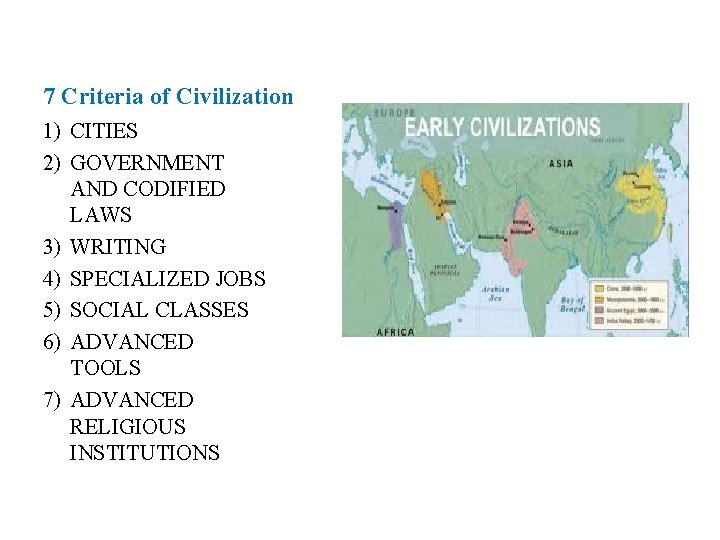
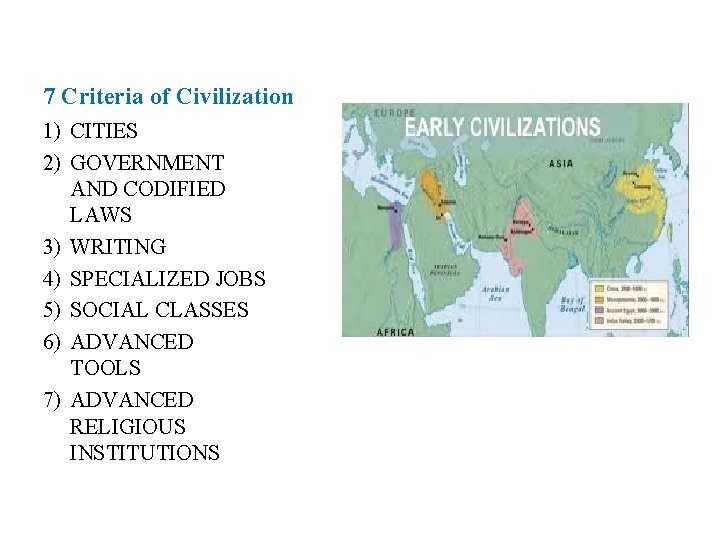
7 Criteria of Civilization 1) CITIES 2) GOVERNMENT AND CODIFIED LAWS 3) WRITING 4) SPECIALIZED JOBS 5) SOCIAL CLASSES 6) ADVANCED TOOLS 7) ADVANCED RELIGIOUS INSTITUTIONS
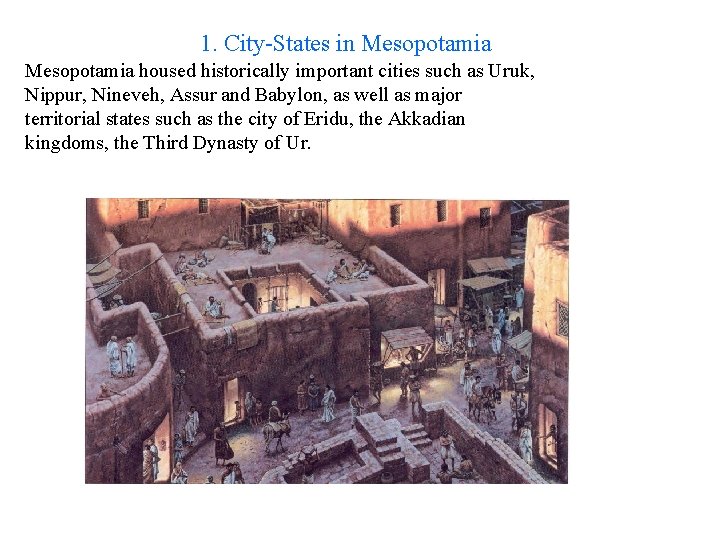
1. City-States in Mesopotamia housed historically important cities such as Uruk, Nippur, Nineveh, Assur and Babylon, as well as major territorial states such as the city of Eridu, the Akkadian kingdoms, the Third Dynasty of Ur.
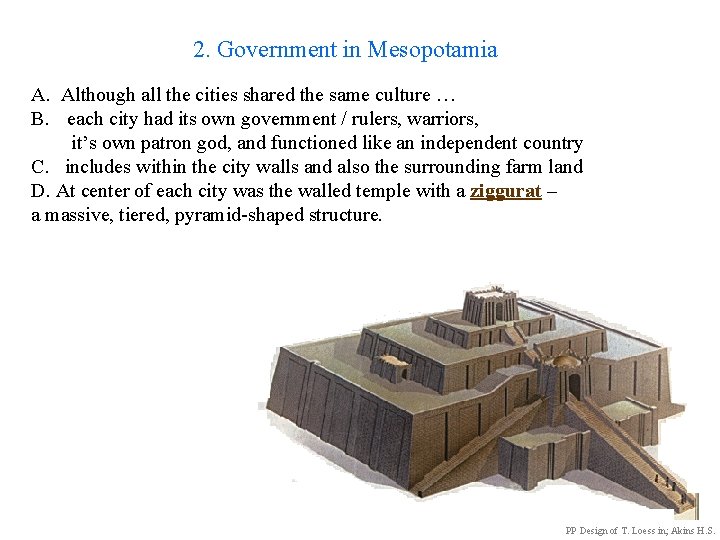
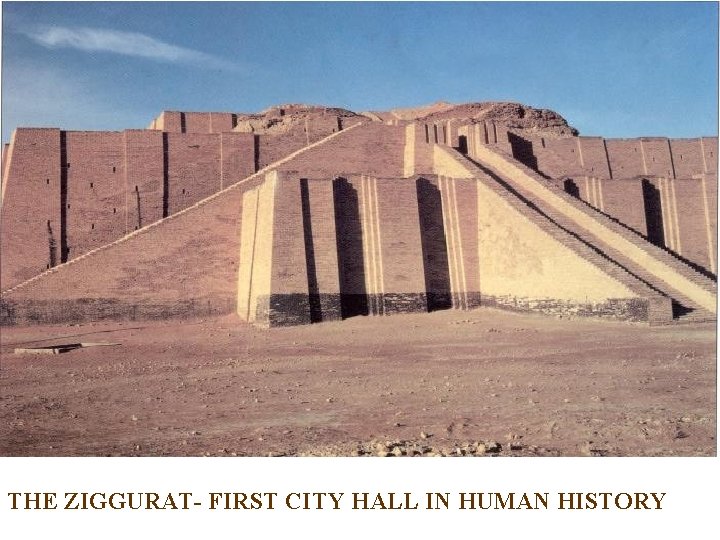
2. Government in Mesopotamia A. Although all the cities shared the same culture … B. each city had its own government / rulers, warriors, it’s own patron god, and functioned like an independent country C. includes within the city walls and also the surrounding farm land D. At center of each city was the walled temple with a ziggurat – a massive, tiered, pyramid-shaped structure. PP Design of T. Loess in; Akins H. S.
THE ZIGGURAT- FIRST CITY HALL IN HUMAN HISTORY
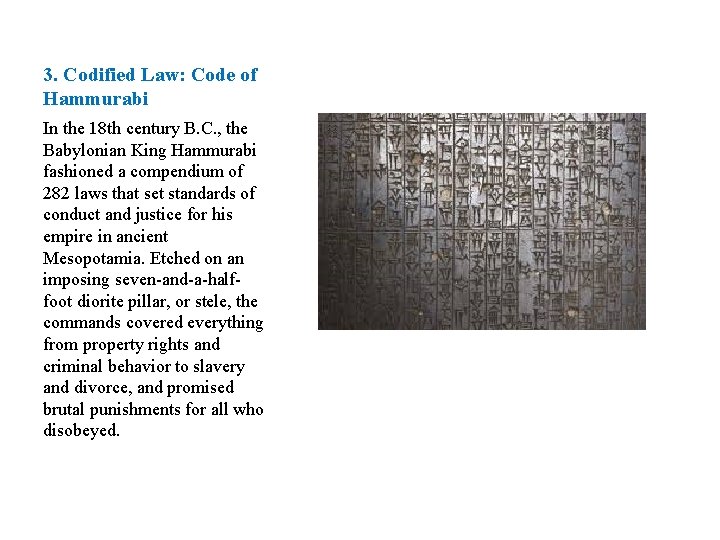
3. Codified Law: Code of Hammurabi In the 18 th century B. C. , the Babylonian King Hammurabi fashioned a compendium of 282 laws that set standards of conduct and justice for his empire in ancient Mesopotamia. Etched on an imposing seven-and-a-halffoot diorite pillar, or stele, the commands covered everything from property rights and criminal behavior to slavery and divorce, and promised brutal punishments for all who disobeyed.
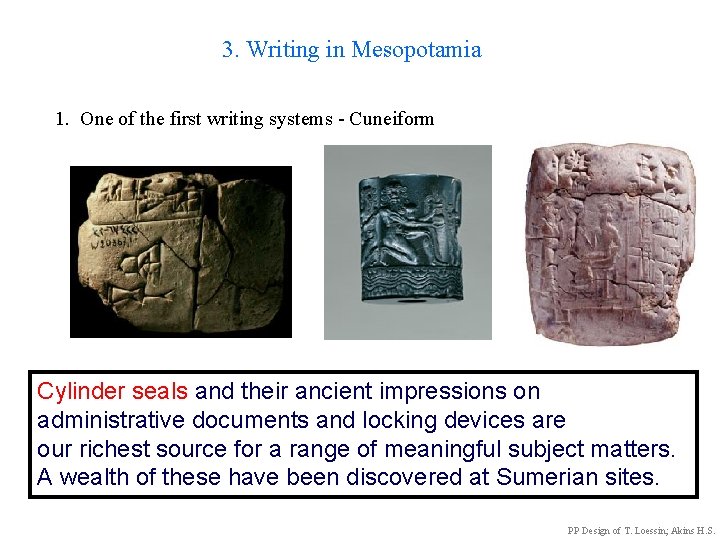
3. Writing in Mesopotamia 1. One of the first writing systems - Cuneiform Cylinder seals and their ancient impressions on administrative documents and locking devices are our richest source for a range of meaningful subject matters. A wealth of these have been discovered at Sumerian sites. PP Design of T. Loessin; Akins H. S.
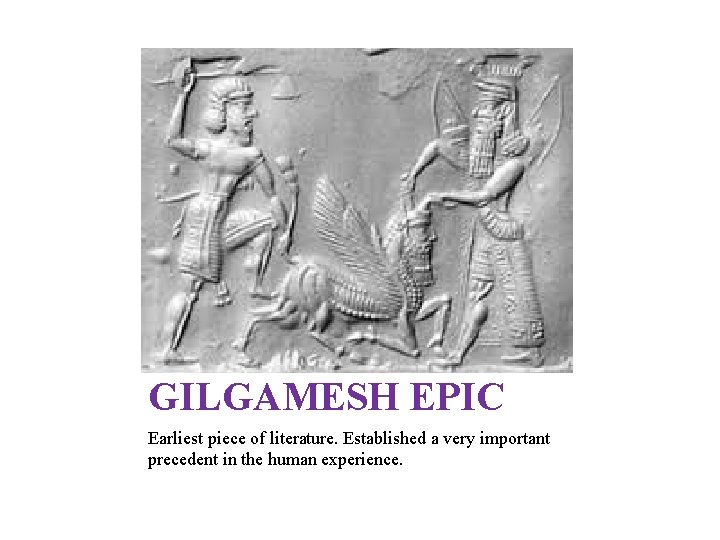
GILGAMESH EPIC Earliest piece of literature. Established a very important precedent in the human experience.
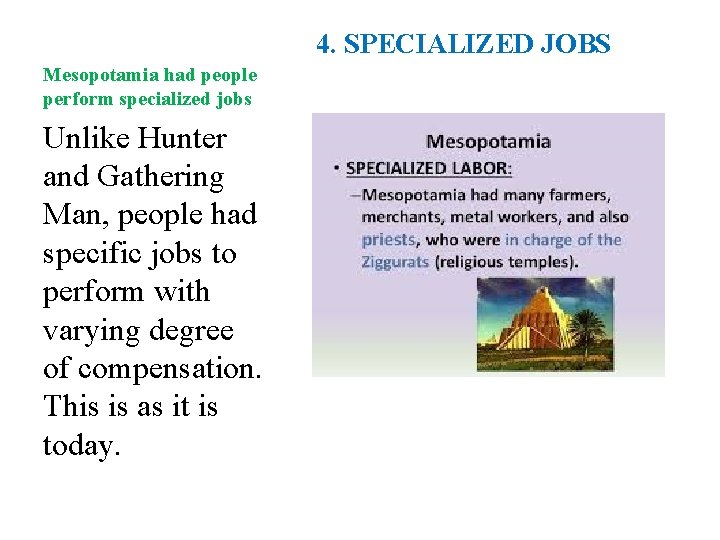
4. SPECIALIZED JOBS Mesopotamia had people perform specialized jobs Unlike Hunter and Gathering Man, people had specific jobs to perform with varying degree of compensation. This is as it is today.
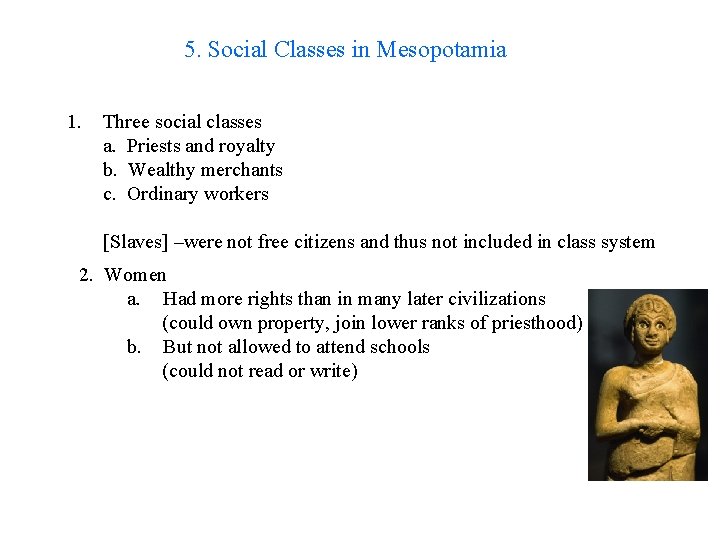
5. Social Classes in Mesopotamia 1. Three social classes a. Priests and royalty b. Wealthy merchants c. Ordinary workers [Slaves] –were not free citizens and thus not included in class system 2. Women a. Had more rights than in many later civilizations (could own property, join lower ranks of priesthood) b. But not allowed to attend schools (could not read or write)
6. Advanced Tools in Mesopotamia C. SCIENCE & TECHNOLOGY 1. One of the first writing systems - Cuneiform 2. Invented wheel, the sail, the plow 3. First to use bronze. Other Sumerian Achievements • one of the earliest sketched maps • astronomy • a number system in base 60 from which stems our modern units of measuring time and the 360 degrees of a circle. PP Design of T. Loessin; Akins H. S.
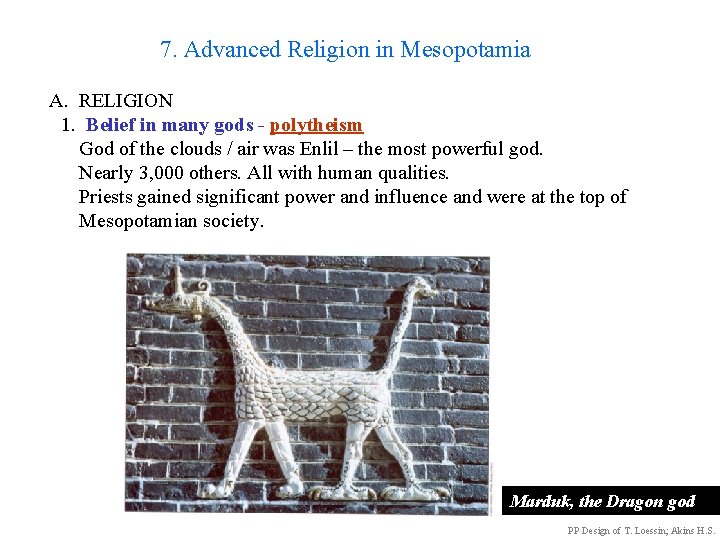
7. Advanced Religion in Mesopotamia A. RELIGION 1. Belief in many gods - polytheism God of the clouds / air was Enlil – the most powerful god. Nearly 3, 000 others. All with human qualities. Priests gained significant power and influence and were at the top of Mesopotamian society. Marduk, the Dragon god PP Design of T. Loessin; Akins H. S.
7 Criteria of Civilization 1) CITIES 2) GOVERNMENT AND CODIFIED LAWS 3) WRITING 4) SPECIALIZED JOBS 5) SOCIAL CLASSES 6) ADVANCED TOOLS 7) ADVANCED RELIGIOUS INSTITUTIONS