
Mesopotamia The Cradle of Civilization Unit 1 2
- Slides: 14
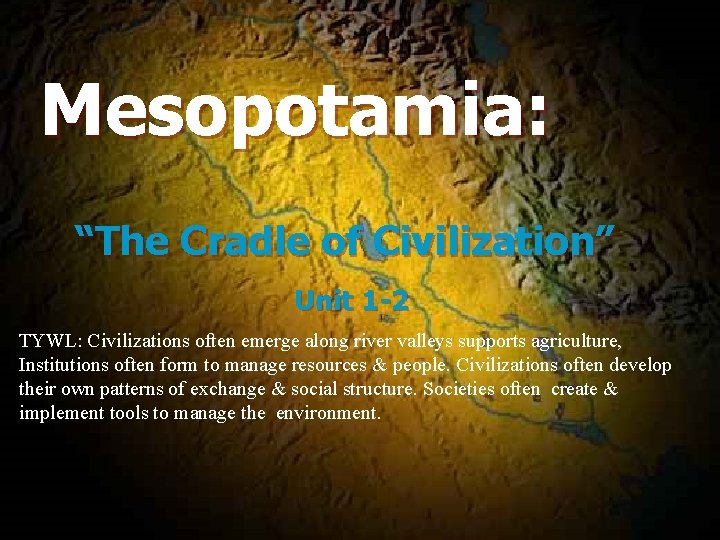
Mesopotamia: “The Cradle of Civilization” Unit 1 -2 TYWL: Civilizations often emerge along river valleys supports agriculture, Institutions often form to manage resources & people. Civilizations often develop their own patterns of exchange & social structure. Societies often create & implement tools to manage the environment.
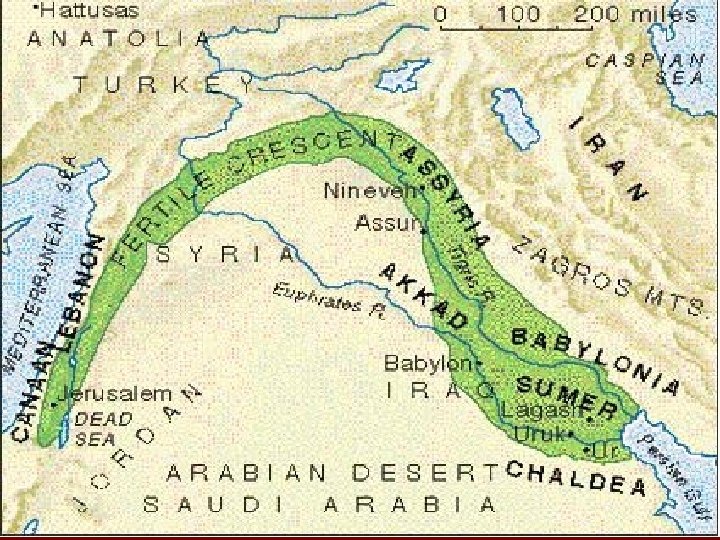
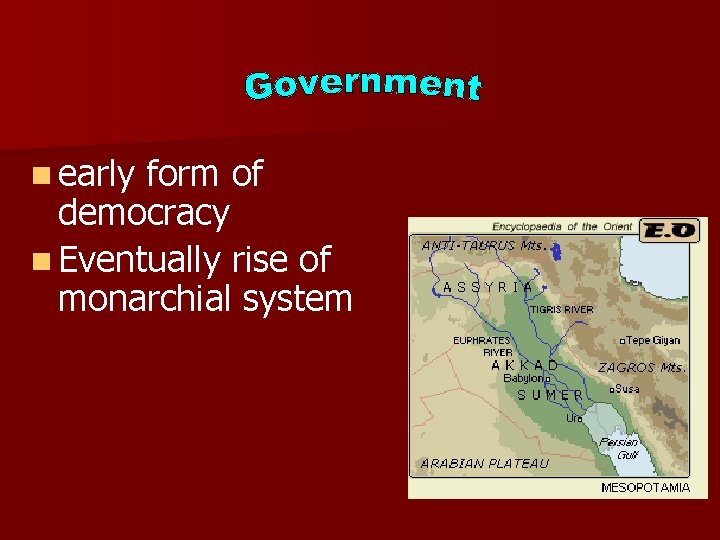
Earliest Civilization: the Fertile Crescent n earliest of all civilizations n Mesopotamia: Greek word “between the rivers”, specifically, Tigris River & Euphrates River (present day Iraq) n Lasted for approximately 3000 years n 1 st to irrigate fields, devised a system of writing, developed mathematics, invented the wheel and learned to work with metal n Flooding: in spring
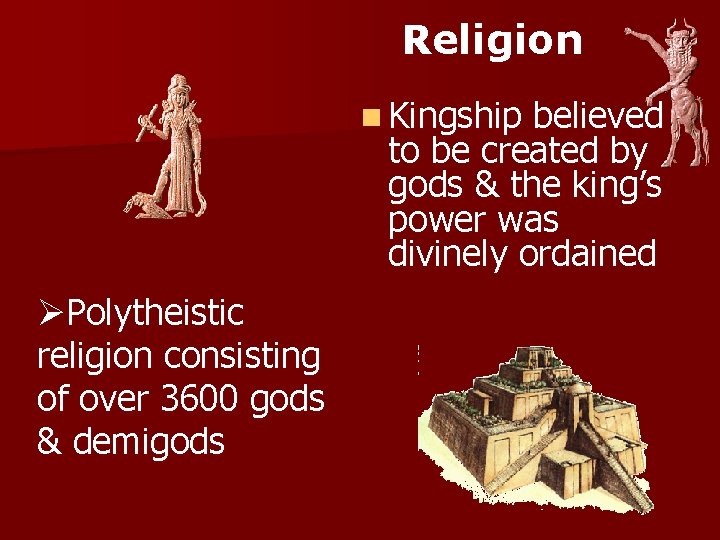
Religion n Kingship believed to be created by gods & the king’s power was divinely ordained ØPolytheistic religion consisting of over 3600 gods & demigods
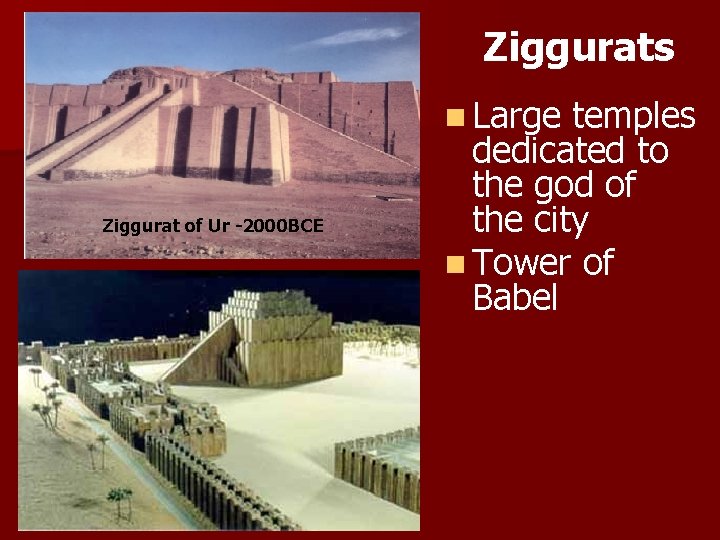
Ziggurats n Large Ziggurat of Ur -2000 BCE temples dedicated to the god of the city n Tower of Babel
n early form of democracy n Eventually rise of monarchial system
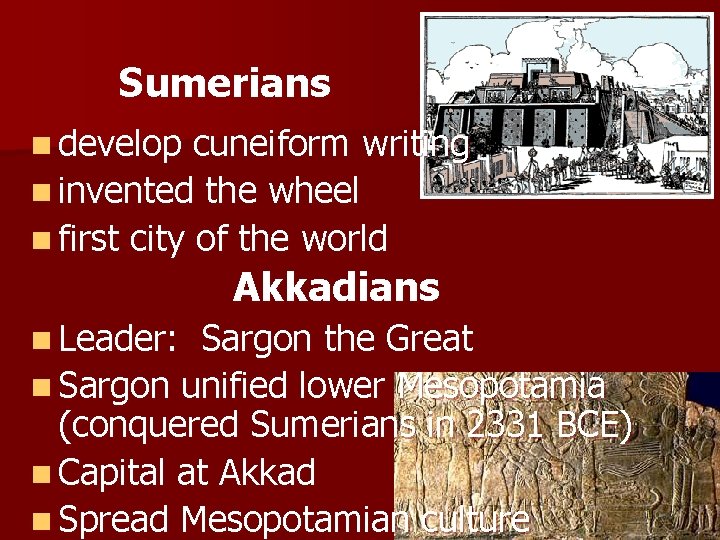
Sumerians n develop cuneiform writing n invented the wheel n first city of the world Akkadians n Leader: Sargon the Great n Sargon unified lower Mesopotamia (conquered Sumerians in 2331 BCE) n Capital at Akkad n Spread Mesopotamian culture
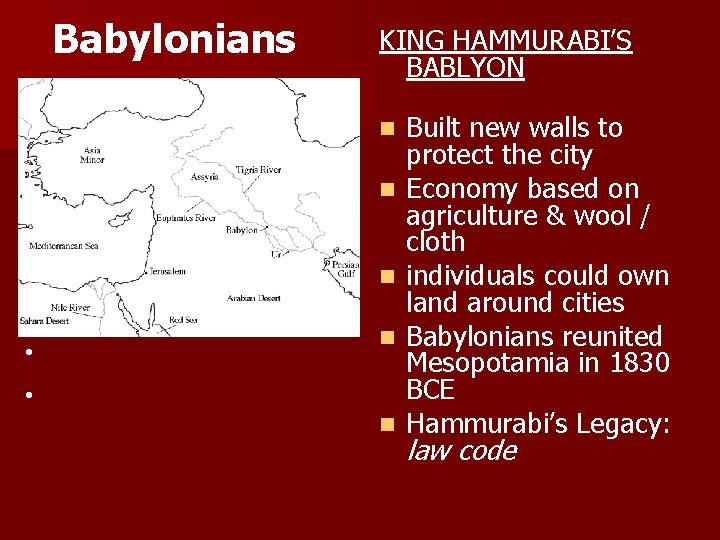
Babylonians KING HAMMURABI’S BABLYON n n n • n Built new walls to protect the city Economy based on agriculture & wool / cloth individuals could own land around cities Babylonians reunited Mesopotamia in 1830 BCE Hammurabi’s Legacy: law code
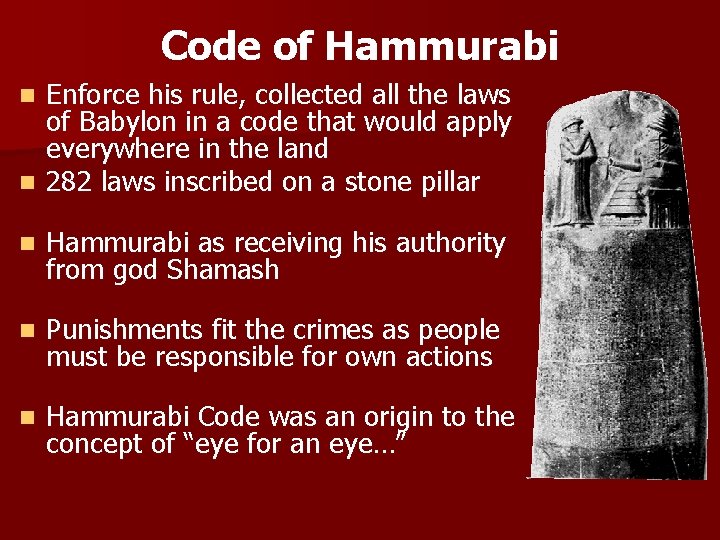
Code of Hammurabi Enforce his rule, collected all the laws of Babylon in a code that would apply everywhere in the land n 282 laws inscribed on a stone pillar n n Hammurabi as receiving his authority from god Shamash n Punishments fit the crimes as people must be responsible for own actions n Hammurabi Code was an origin to the concept of “eye for an eye…”
n 1 st The Code of Hammurabi to codify & set down in writing. Est. Civil Law n civil law, dealt w/private rights and matters ( taxes etc. ) Defining Crime & Punishment n criminal law, dealt w/offenses against others (assault or murder).
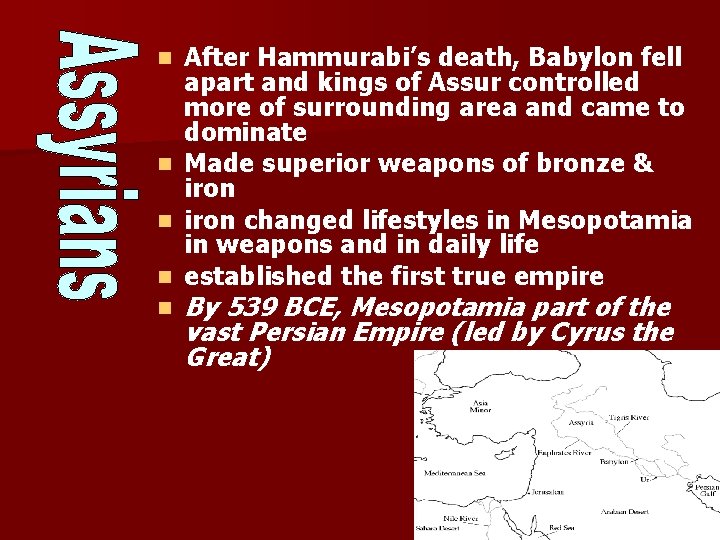
After Hammurabi’s death, Babylon fell apart and kings of Assur controlled more of surrounding area and came to dominate n Made superior weapons of bronze & iron n iron changed lifestyles in Mesopotamia in weapons and in daily life n established the first true empire n n By 539 BCE, Mesopotamia part of the vast Persian Empire (led by Cyrus the Great)
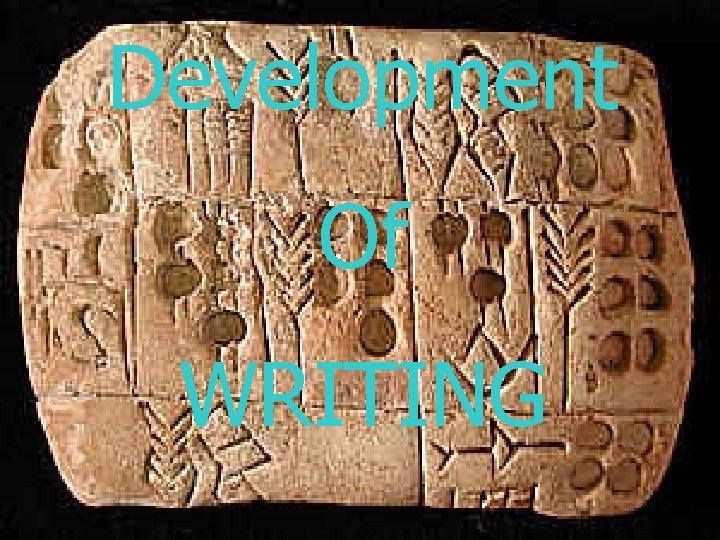
Development Of WRITING
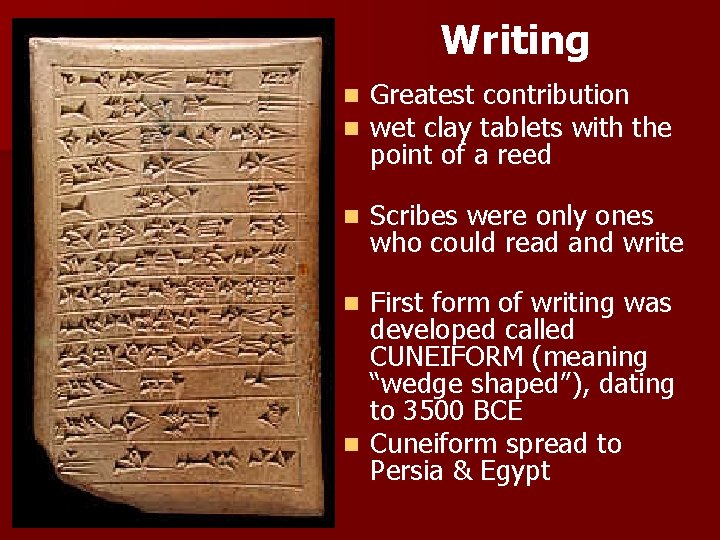
Writing n n Greatest contribution wet clay tablets with the point of a reed n Scribes were only ones who could read and write First form of writing was developed called CUNEIFORM (meaning “wedge shaped”), dating to 3500 BCE n Cuneiform spread to Persia & Egypt n
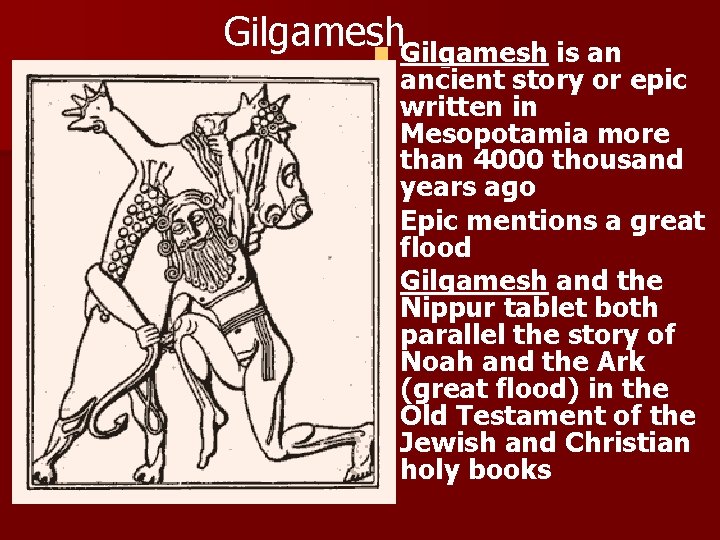
Gilgamesh n Gilgamesh is an ancient story or epic written in Mesopotamia more than 4000 thousand years ago n Epic mentions a great flood n Gilgamesh and the Nippur tablet both parallel the story of Noah and the Ark (great flood) in the Old Testament of the Jewish and Christian holy books