
Mesopotamia Part II Conflict and Warfare Trade routes


- Slides: 15
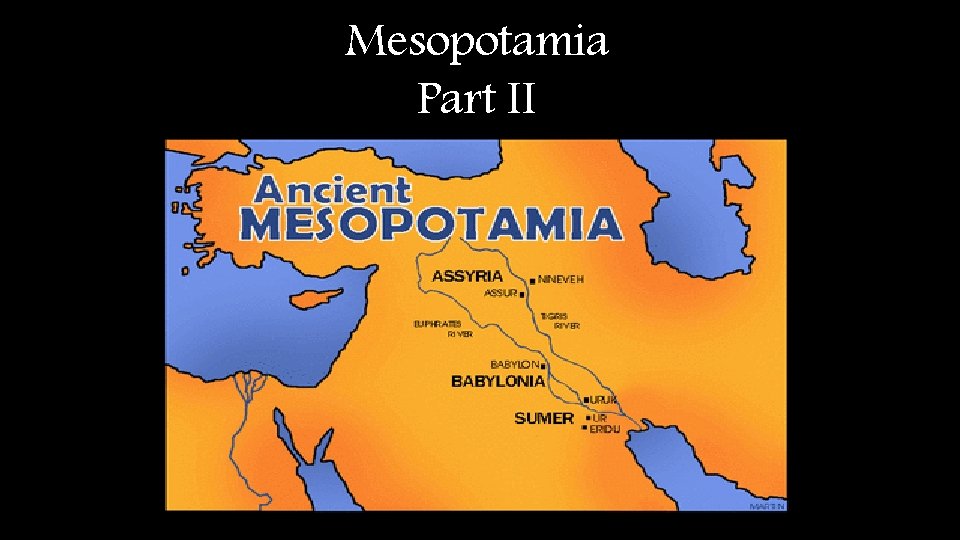
Mesopotamia Part II
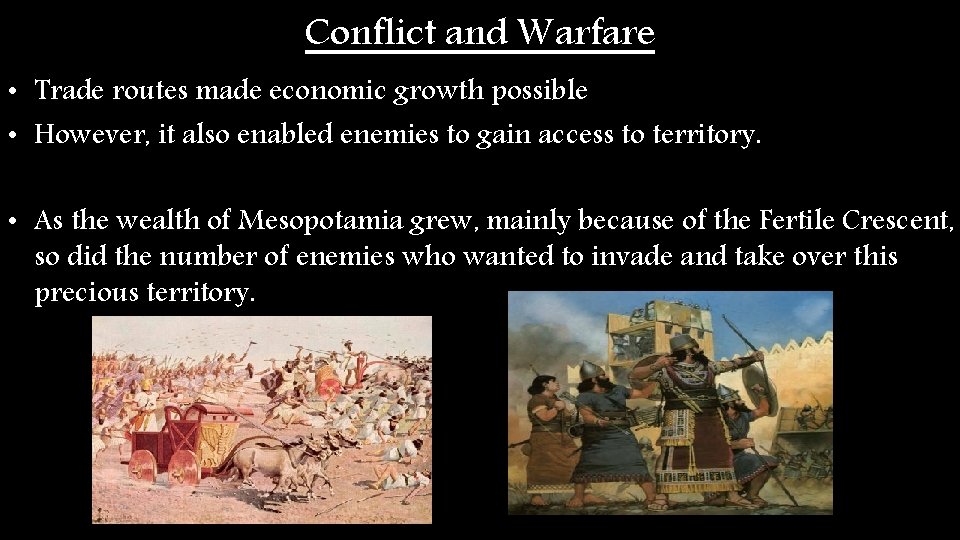
Conflict and Warfare • Trade routes made economic growth possible • However, it also enabled enemies to gain access to territory. • As the wealth of Mesopotamia grew, mainly because of the Fertile Crescent, so did the number of enemies who wanted to invade and take over this precious territory.
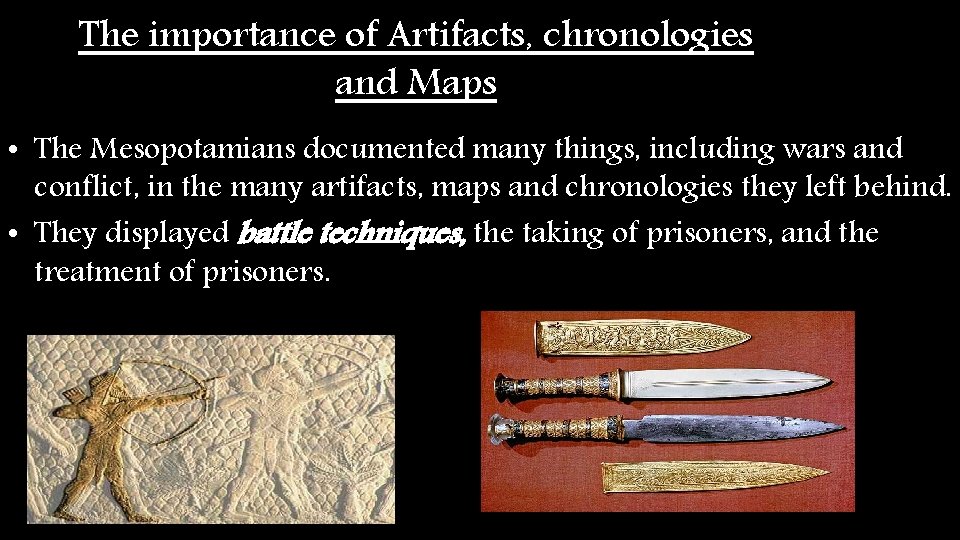
The importance of Artifacts, chronologies and Maps • The Mesopotamians documented many things, including wars and conflict, in the many artifacts, maps and chronologies they left behind. • They displayed battle techniques, the taking of prisoners, and the treatment of prisoners.
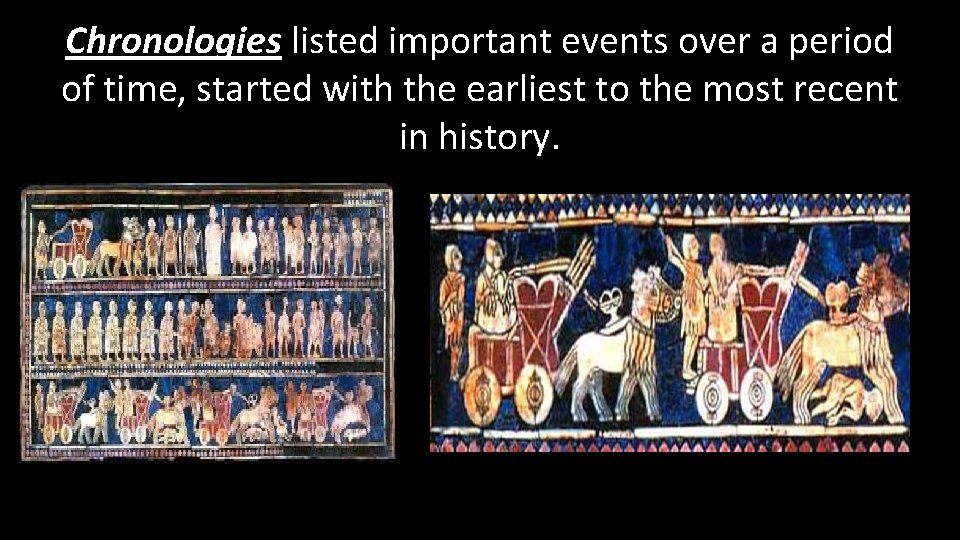
Chronologies listed important events over a period of time, started with the earliest to the most recent in history.
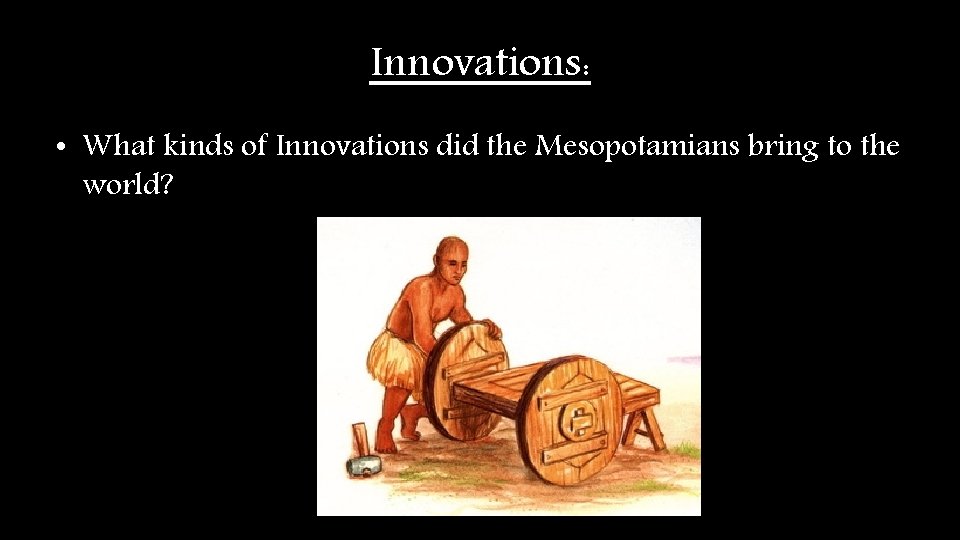
Innovations: • What kinds of Innovations did the Mesopotamians bring to the world?
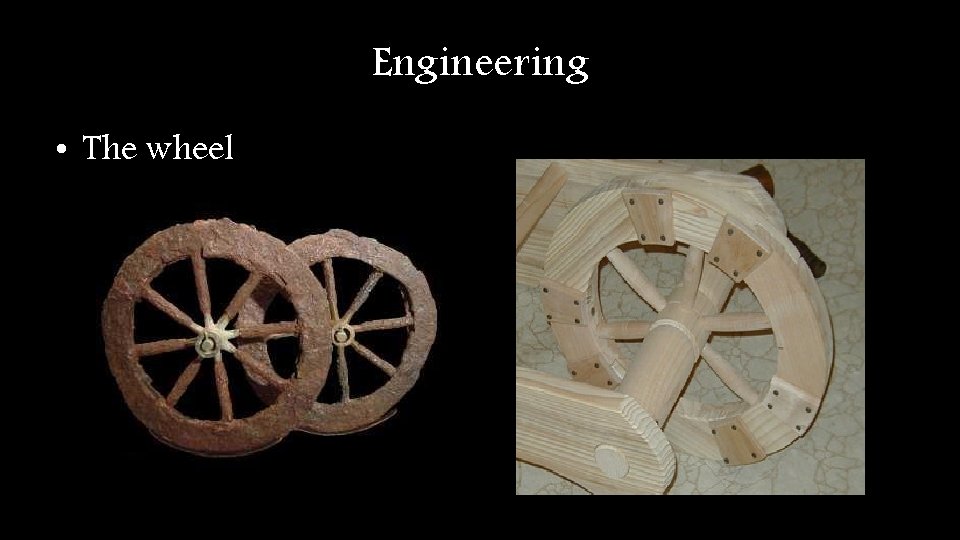
Engineering • The wheel
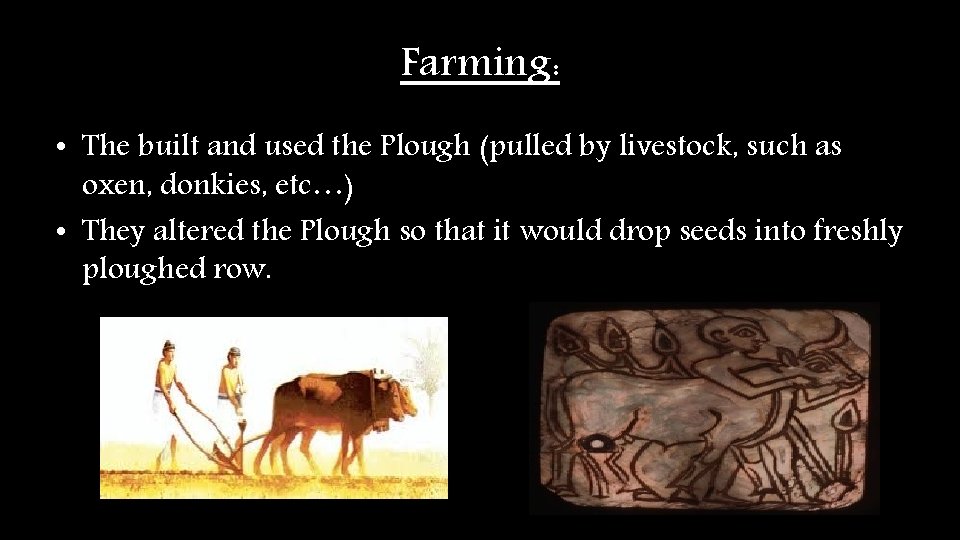
Farming: • The built and used the Plough (pulled by livestock, such as oxen, donkies, etc…) • They altered the Plough so that it would drop seeds into freshly ploughed row.
Farming, continued… • They used irrigation systems. • They built dikes to direct and control the flow of water to and from different areas.
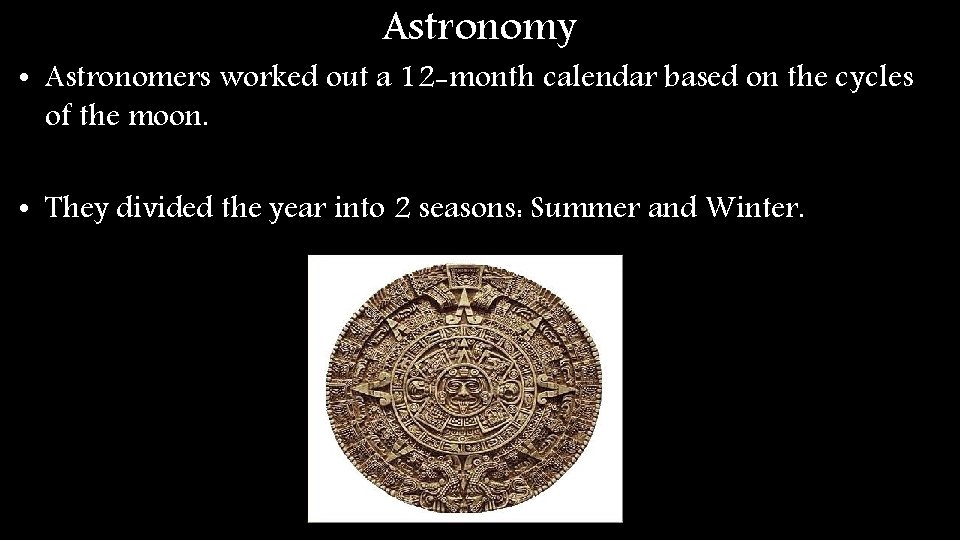
Astronomy • Astronomers worked out a 12 -month calendar based on the cycles of the moon. • They divided the year into 2 seasons: Summer and Winter.
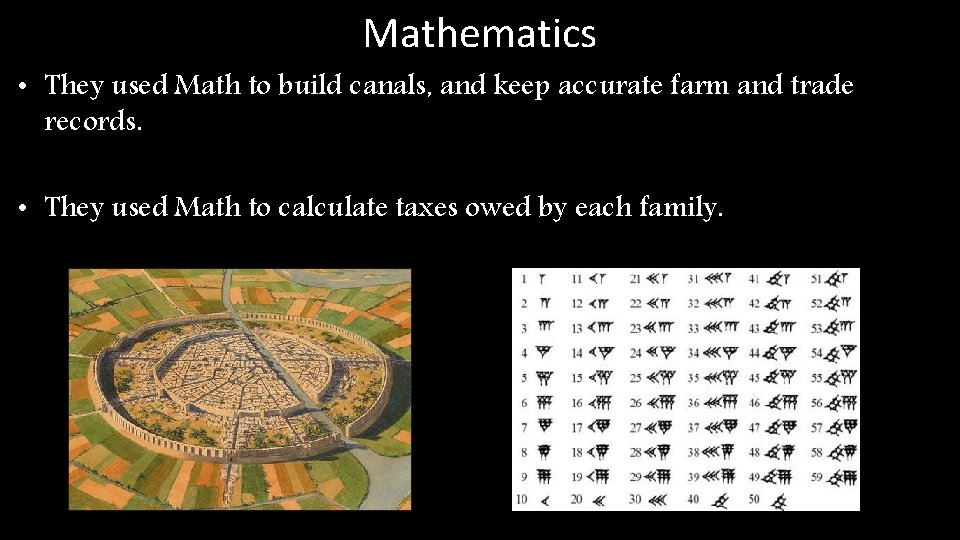
Mathematics • They used Math to build canals, and keep accurate farm and trade records. • They used Math to calculate taxes owed by each family.
Mathematics in Mesopotamia • They based their counting system on the number 60. We used this number still today when we measure the degrees in a circle or count time in minutes or seconds.
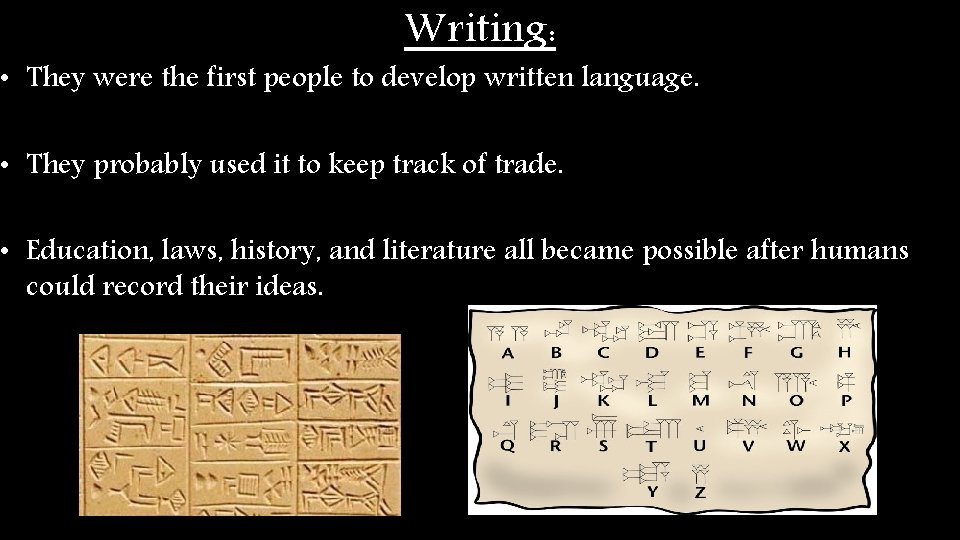
Writing: • They were the first people to develop written language. • They probably used it to keep track of trade. • Education, laws, history, and literature all became possible after humans could record their ideas.
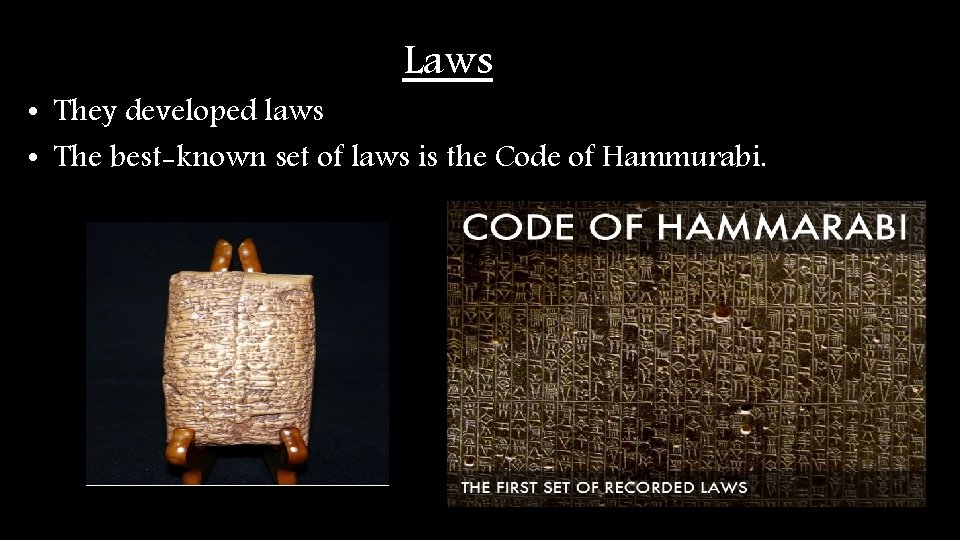
Laws • They developed laws • The best-known set of laws is the Code of Hammurabi.
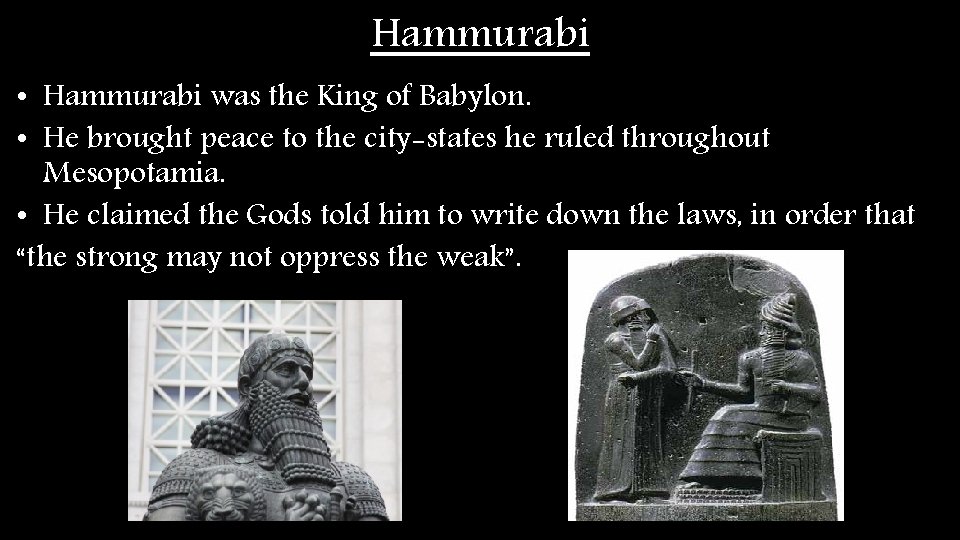
Hammurabi • Hammurabi was the King of Babylon. • He brought peace to the city-states he ruled throughout Mesopotamia. • He claimed the Gods told him to write down the laws, in order that “the strong may not oppress the weak”.
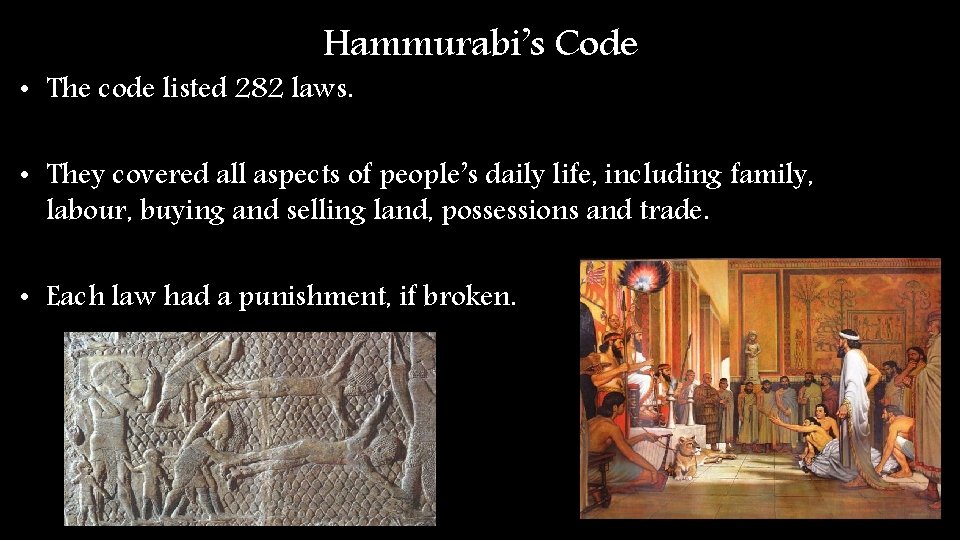
Hammurabi’s Code • The code listed 282 laws. • They covered all aspects of people’s daily life, including family, labour, buying and selling land, possessions and trade. • Each law had a punishment, if broken.