
Mesopotamia Mesopotamia means land between the rivers is
Mesopotamia
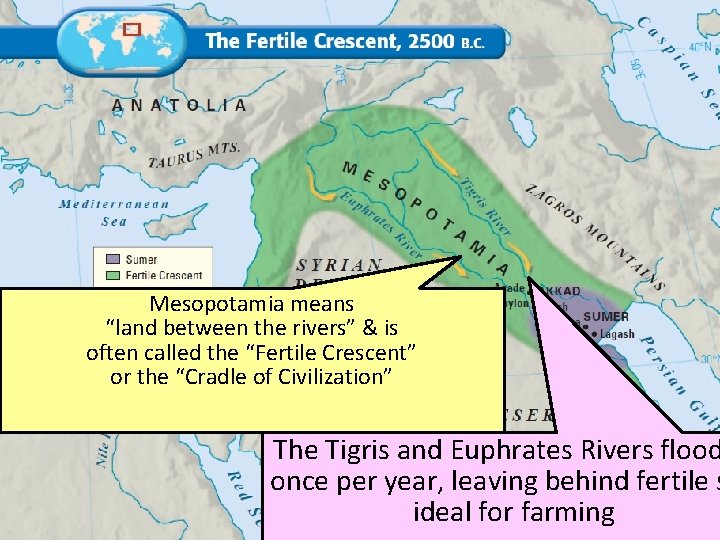
Mesopotamia means “land between the rivers” & is often called the “Fertile Crescent” or the “Cradle of Civilization” The Tigris and Euphrates Rivers flood once per year, leaving behind fertile s ideal for farming
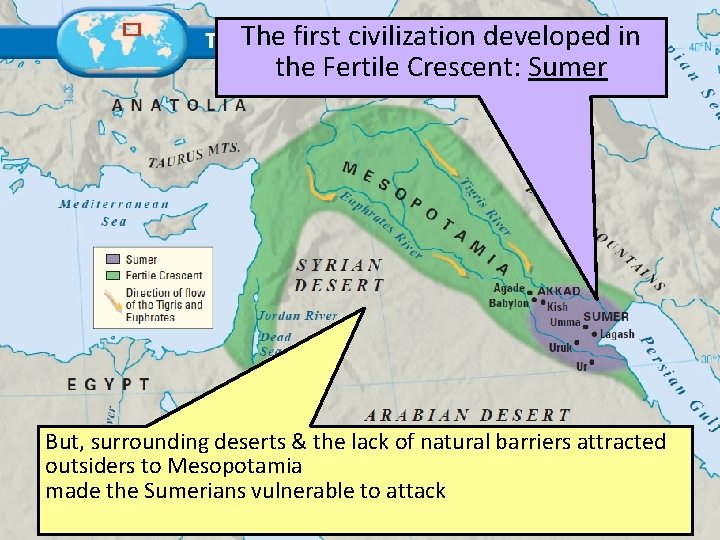
The first civilization developed in the Fertile Crescent: Sumer But, surrounding deserts & the lack of natural barriers attracted outsiders to Mesopotamia made the Sumerians vulnerable to attack
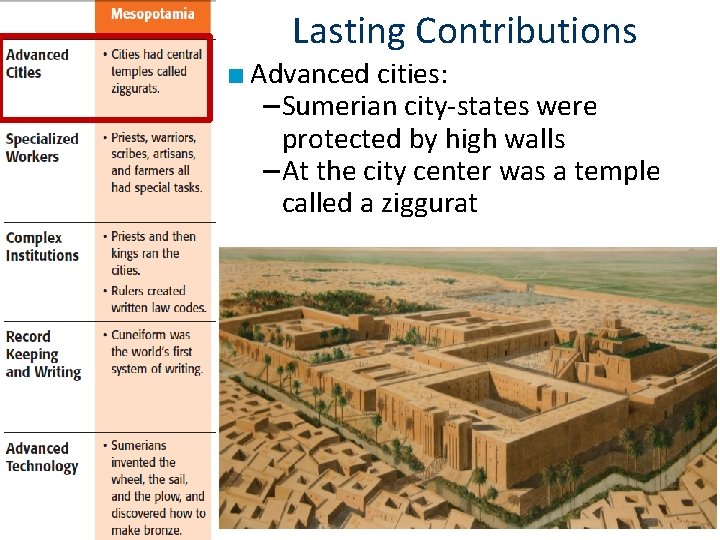
Lasting Contributions ■ Advanced cities: – Sumerian city-states were protected by high walls – At the city center was a temple called a ziggurat
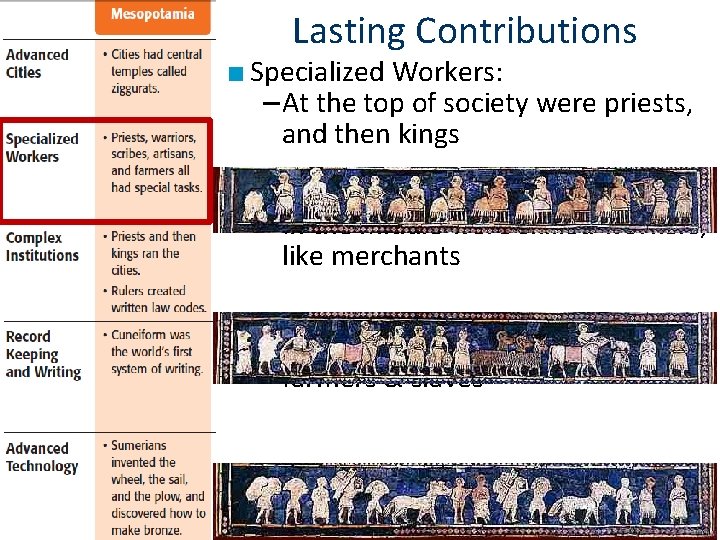
Lasting Contributions ■ Specialized Workers: – At the top of society were priests, and then kings – In the middle were skilled workers, like merchants – At the bottom, were common farmers & slaves
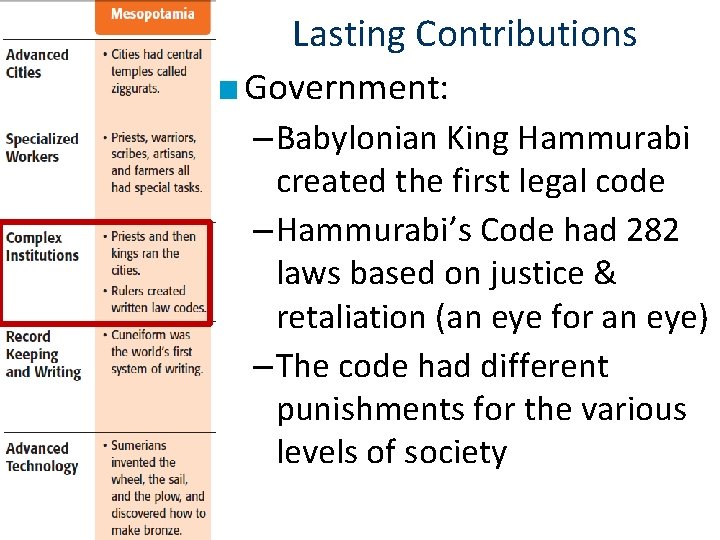
Lasting Contributions ■ Government: – Babylonian King Hammurabi created the first legal code – Hammurabi’s Code had 282 laws based on justice & retaliation (an eye for an eye) – The code had different punishments for the various levels of society
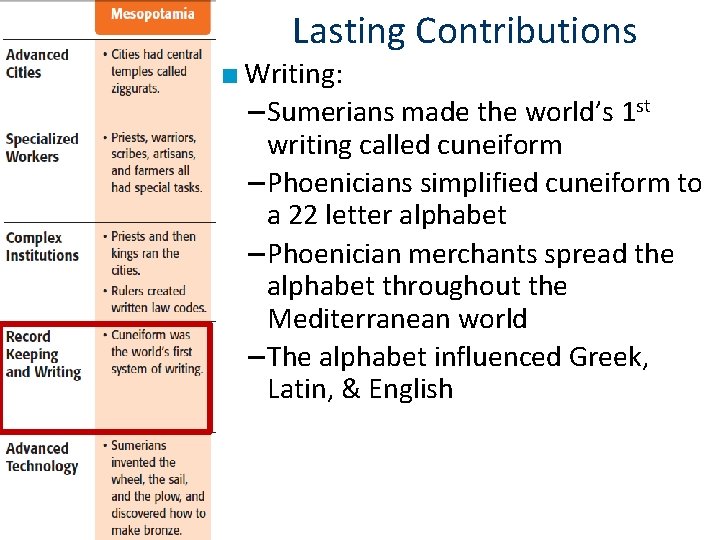
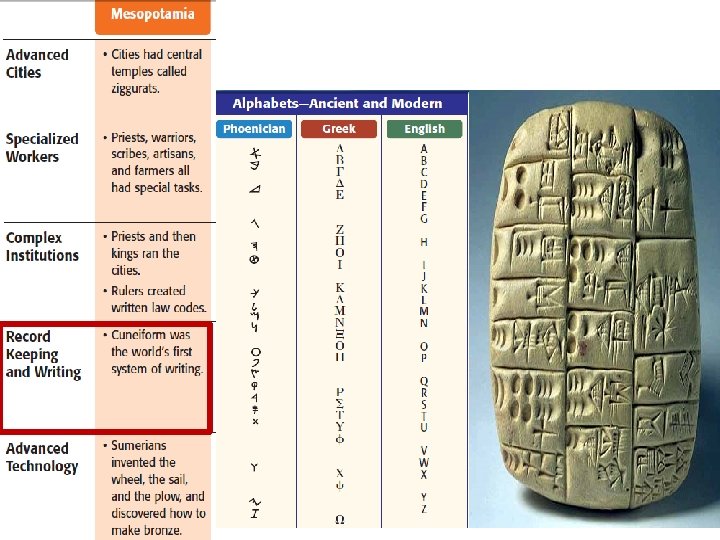
Lasting Contributions ■ Writing: – Sumerians made the world’s 1 st writing called cuneiform – Phoenicians simplified cuneiform to a 22 letter alphabet – Phoenician merchants spread the alphabet throughout the Mediterranean world – The alphabet influenced Greek, Latin, & English
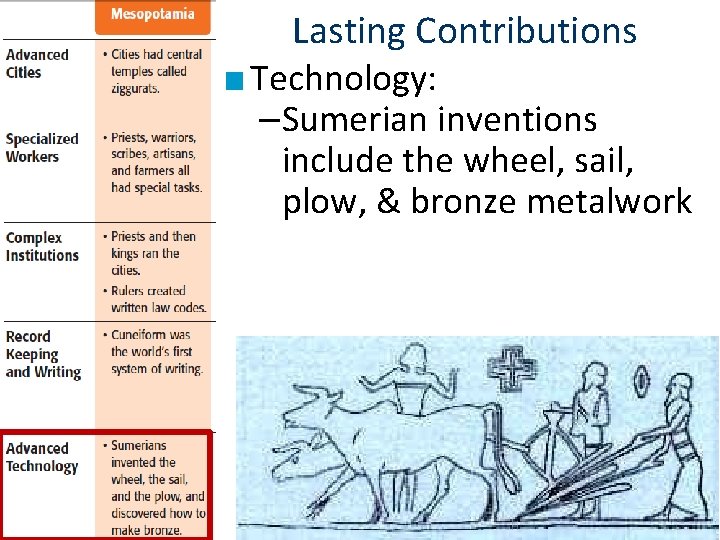
Lasting Contributions ■ Technology: –Sumerian inventions include the wheel, sail, plow, & bronze metalwork
Closure Activity 1. What advantages did the living in the “Fertile Crescent” provide for the Sumerians? 2. Who governed the Sumerian citystates? 3. Why was Hammurabi’s Code important?
- Slides: 10