
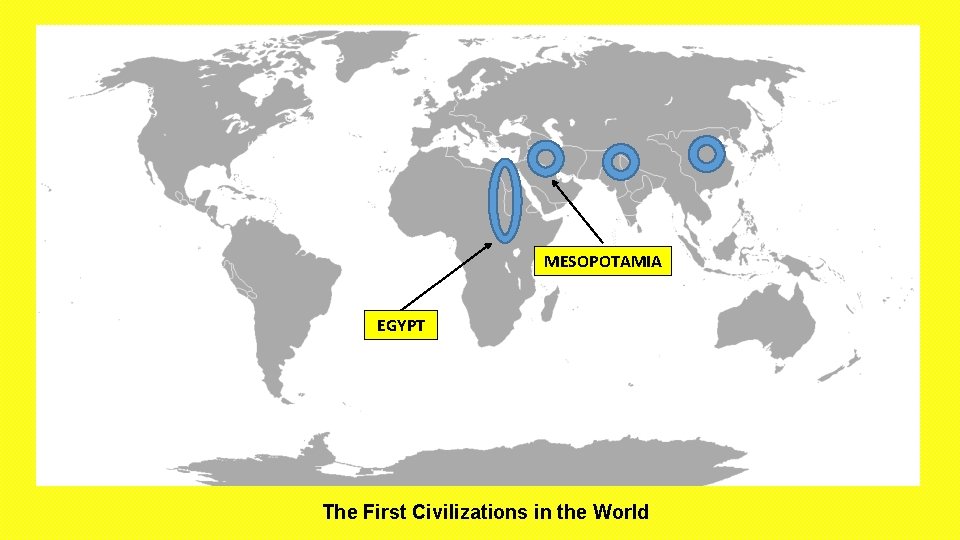
MESOPOTAMIA EGYPT The First Civilizations in the World
- Slides: 15
MESOPOTAMIA EGYPT The First Civilizations in the World
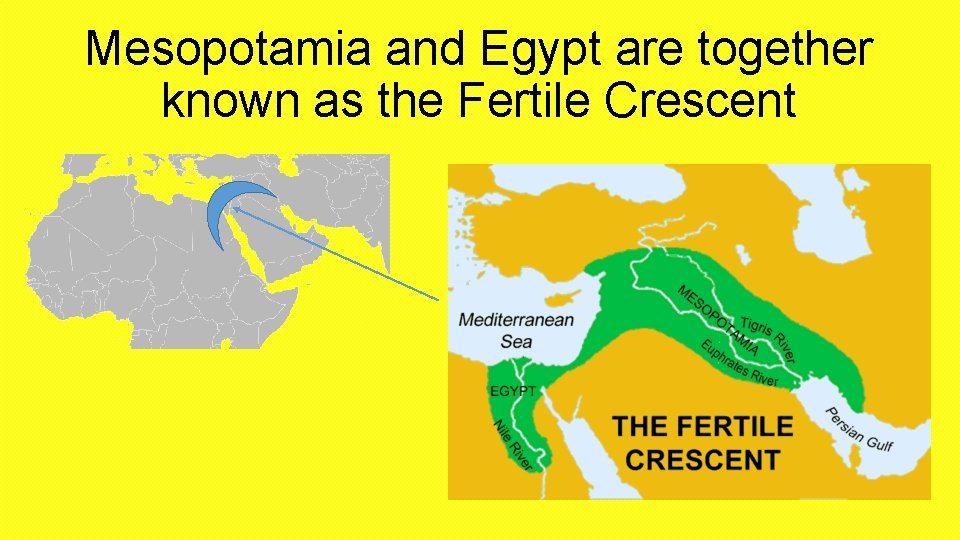
Mesopotamia and Egypt are together known as the Fertile Crescent
Just like Mesopotamia, Egypt is one of the oldest civilizations in the world. Although Egypt arose after Mesopotamia, what characteristics do you think they shared?
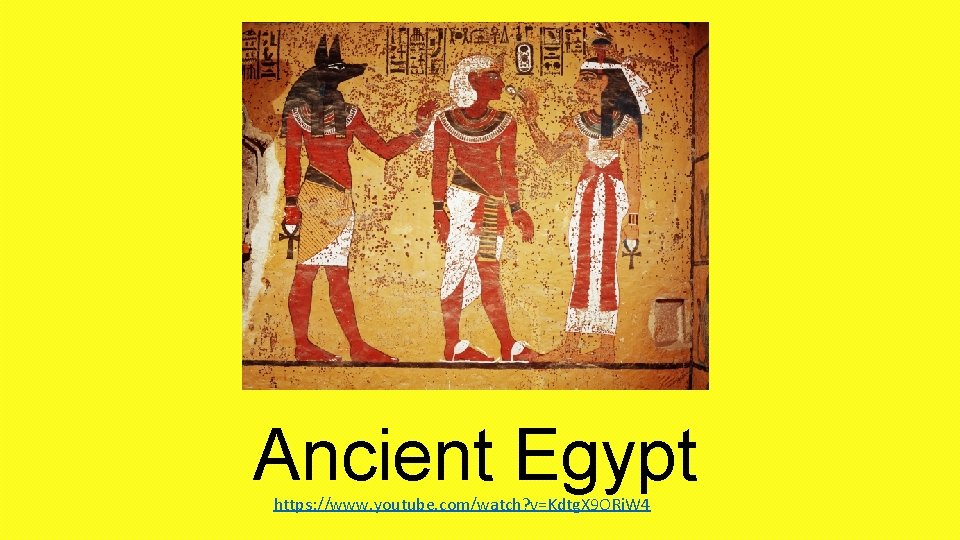
Ancient Egypt https: //www. youtube. com/watch? v=Kdtg. X 9 ORi. W 4
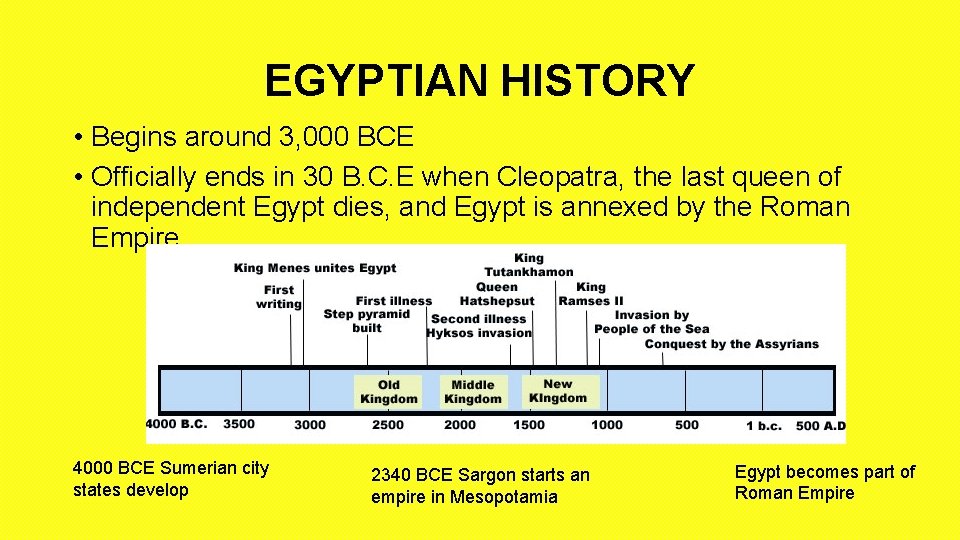
EGYPTIAN HISTORY • Begins around 3, 000 BCE • Officially ends in 30 B. C. E when Cleopatra, the last queen of independent Egypt dies, and Egypt is annexed by the Roman Empire 4000 BCE Sumerian city states develop 2340 BCE Sargon starts an empire in Mesopotamia Egypt becomes part of Roman Empire
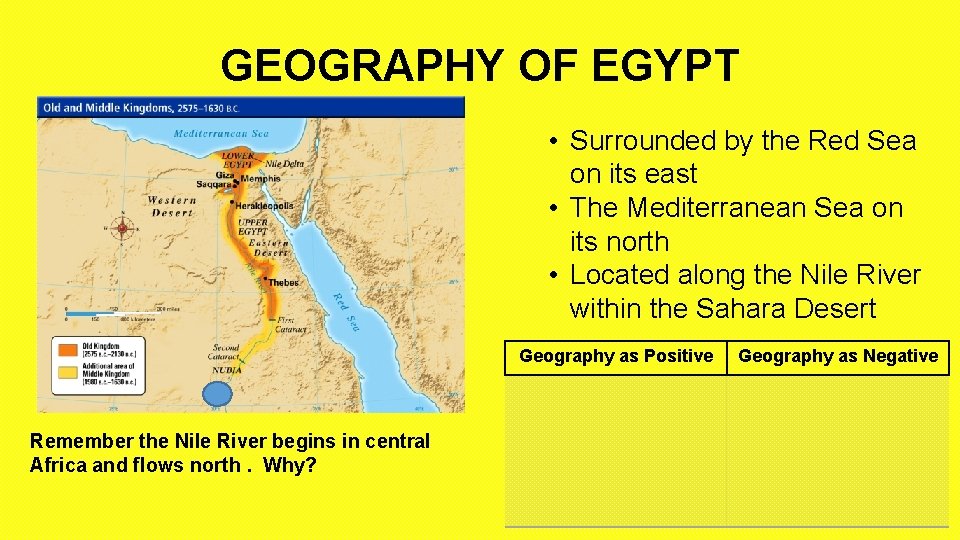
GEOGRAPHY OF EGYPT • Surrounded by the Red Sea on its east • The Mediterranean Sea on its north • Located along the Nile River within the Sahara Desert Geography as Positive Remember the Nile River begins in central Africa and flows north. Why? Geography as Negative
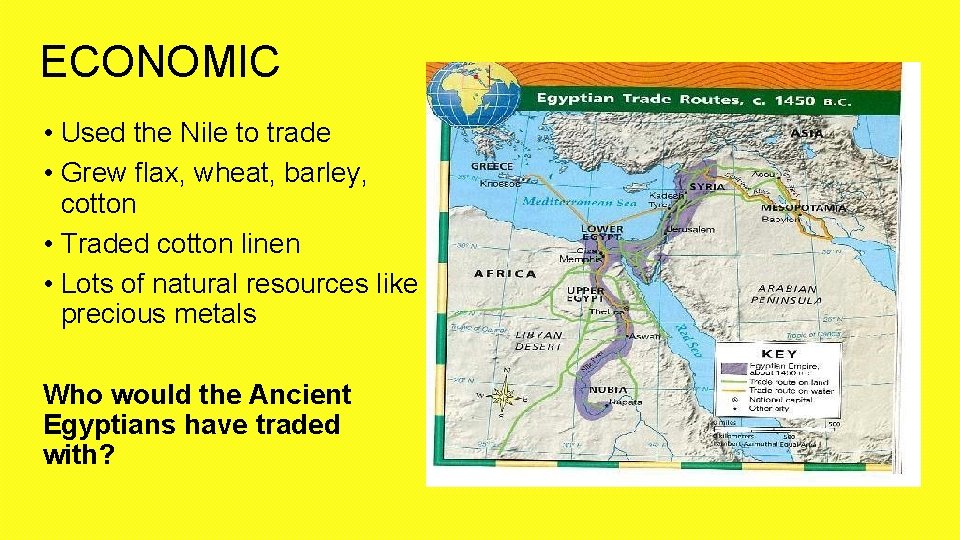
ECONOMIC • Used the Nile to trade • Grew flax, wheat, barley, cotton • Traded cotton linen • Lots of natural resources like precious metals Who would the Ancient Egyptians have traded with?
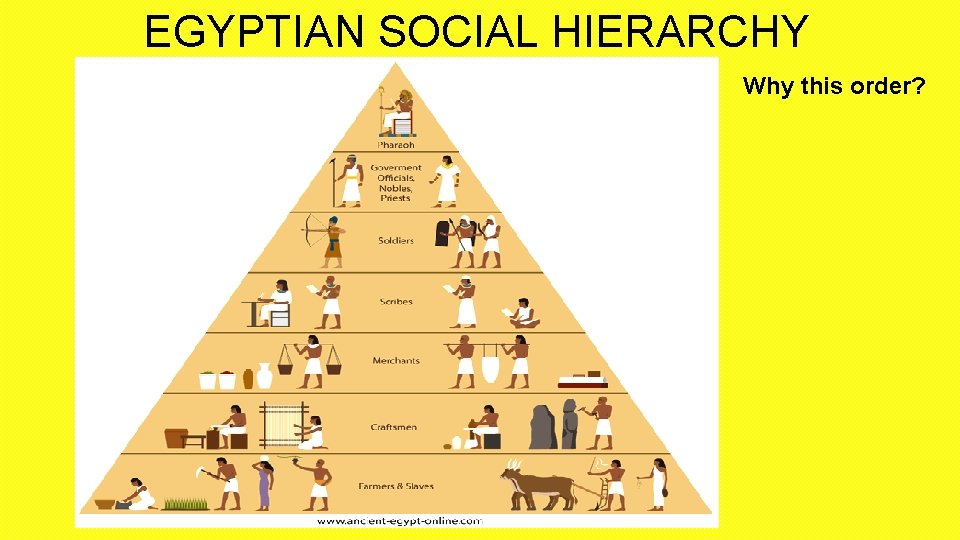
EGYPTIAN SOCIAL HIERARCHY Why this order?
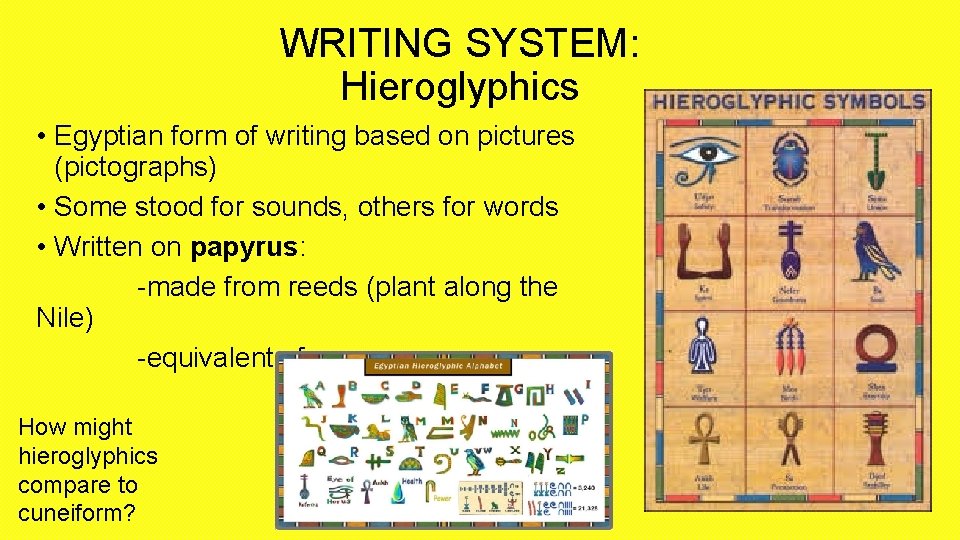
WRITING SYSTEM: Hieroglyphics • Egyptian form of writing based on pictures (pictographs) • Some stood for sounds, others for words • Written on papyrus: -made from reeds (plant along the Nile) -equivalent of paper How might hieroglyphics compare to cuneiform?
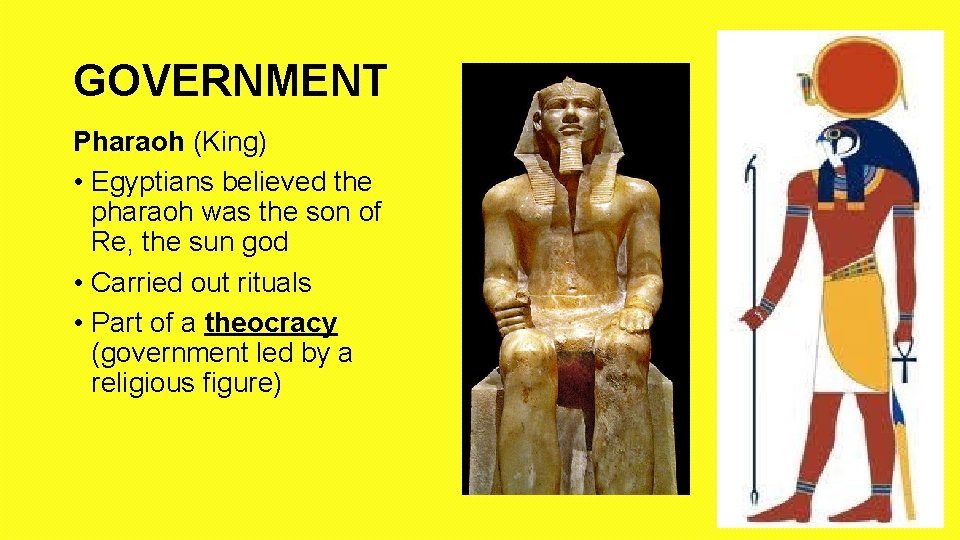
GOVERNMENT Pharaoh (King) • Egyptians believed the pharaoh was the son of Re, the sun god • Carried out rituals • Part of a theocracy (government led by a religious figure)
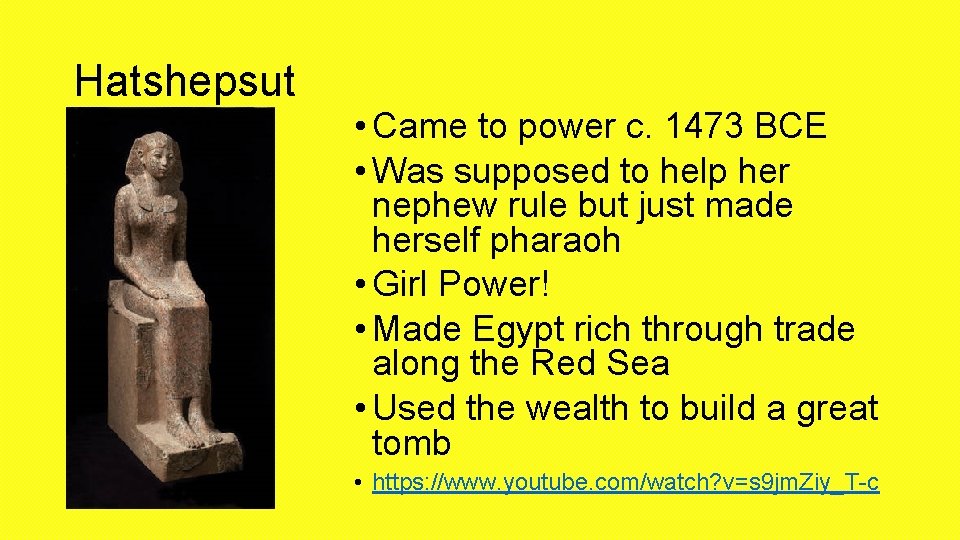
Hatshepsut • Came to power c. 1473 BCE • Was supposed to help her nephew rule but just made herself pharaoh • Girl Power! • Made Egypt rich through trade along the Red Sea • Used the wealth to build a great tomb • https: //www. youtube. com/watch? v=s 9 jm. Ziy_T-c
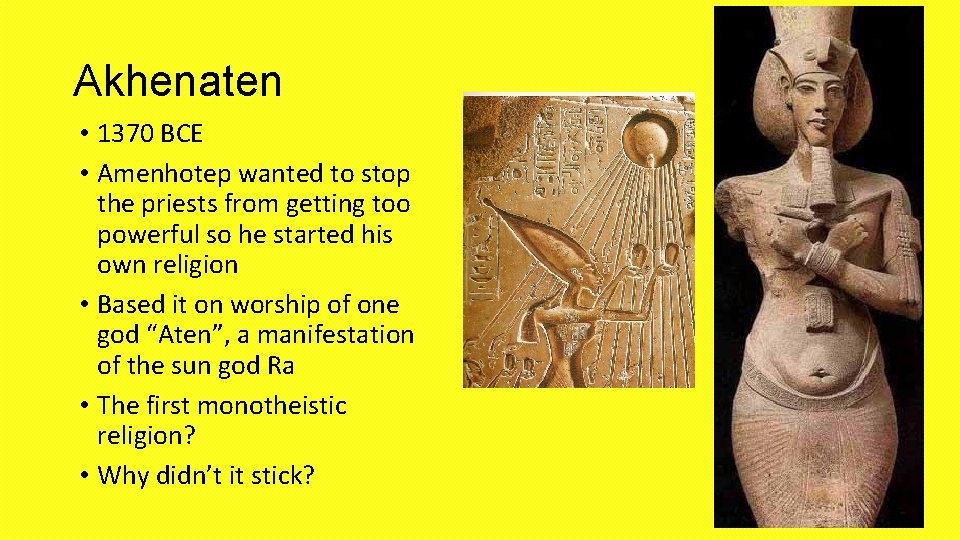
Akhenaten • 1370 BCE • Amenhotep wanted to stop the priests from getting too powerful so he started his own religion • Based it on worship of one god “Aten”, a manifestation of the sun god Ra • The first monotheistic religion? • Why didn’t it stick?
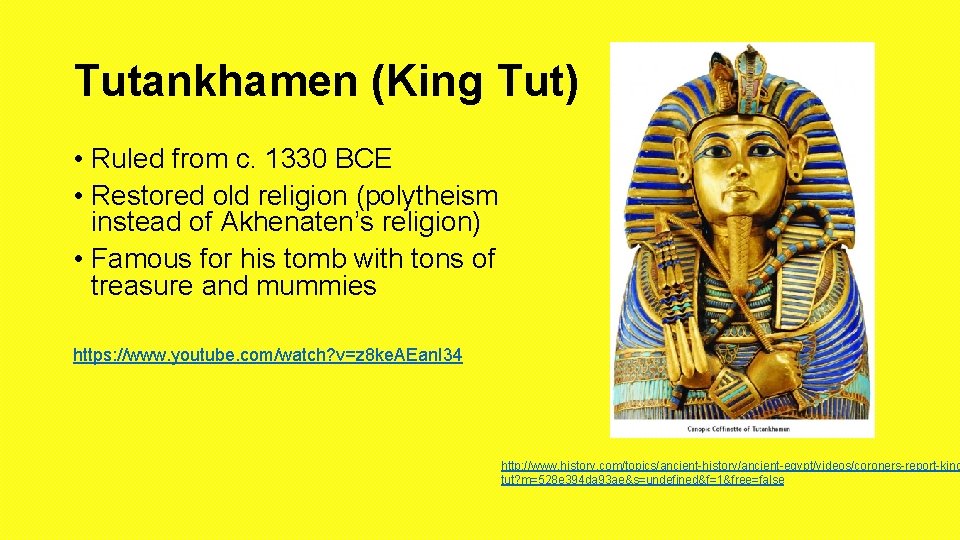
Tutankhamen (King Tut) • Ruled from c. 1330 BCE • Restored old religion (polytheism instead of Akhenaten’s religion) • Famous for his tomb with tons of treasure and mummies https: //www. youtube. com/watch? v=z 8 ke. AEan. I 34 http: //www. history. com/topics/ancient-history/ancient-egypt/videos/coroners-report-king tut? m=528 e 394 da 93 ae&s=undefined&f=1&free=false
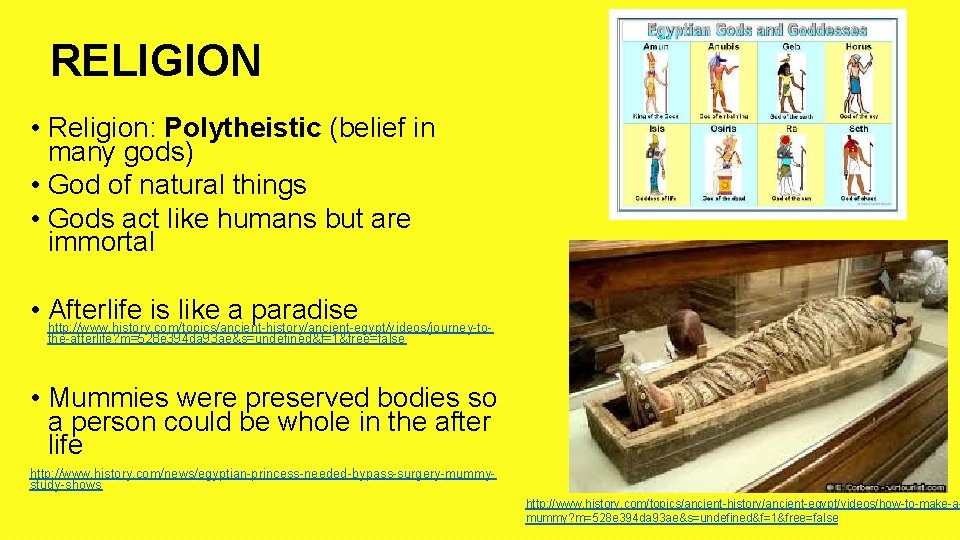
RELIGION • Religion: Polytheistic (belief in many gods) • God of natural things • Gods act like humans but are immortal • Afterlife is like a paradise http: //www. history. com/topics/ancient-history/ancient-egypt/videos/journey-tothe-afterlife? m=528 e 394 da 93 ae&s=undefined&f=1&free=false • Mummies were preserved bodies so a person could be whole in the after life http: //www. history. com/news/egyptian-princess-needed-bypass-surgery-mummystudy-shows http: //www. history. com/topics/ancient-history/ancient-egypt/videos/how-to-make-amummy? m=528 e 394 da 93 ae&s=undefined&f=1&free=false
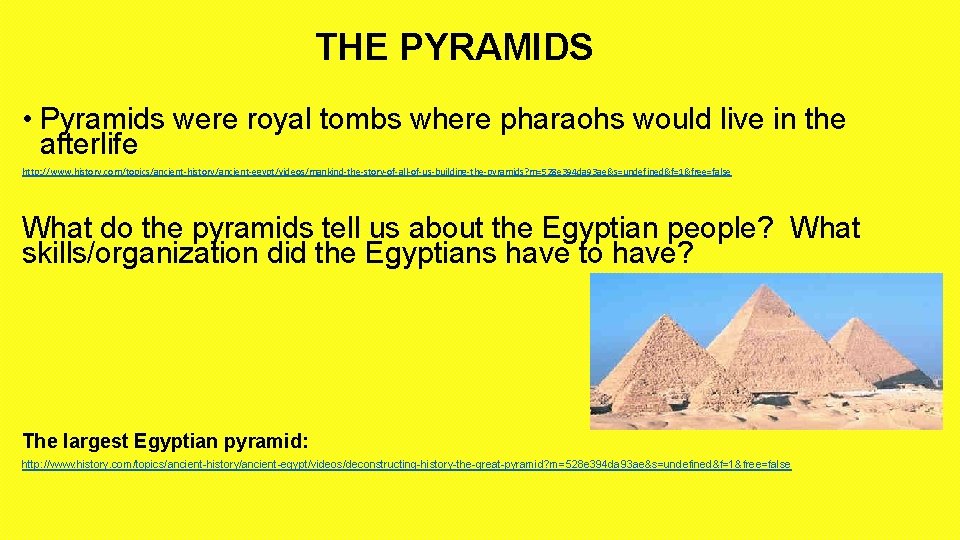
THE PYRAMIDS • Pyramids were royal tombs where pharaohs would live in the afterlife http: //www. history. com/topics/ancient-history/ancient-egypt/videos/mankind-the-story-of-all-of-us-building-the-pyramids? m=528 e 394 da 93 ae&s=undefined&f=1&free=false What do the pyramids tell us about the Egyptian people? What skills/organization did the Egyptians have to have? The largest Egyptian pyramid: http: //www. history. com/topics/ancient-history/ancient-egypt/videos/deconstructing-history-the-great-pyramid? m=528 e 394 da 93 ae&s=undefined&f=1&free=false