
MESOPOTAMIA Agenda 1 Take pretest with data sheet







- Slides: 70
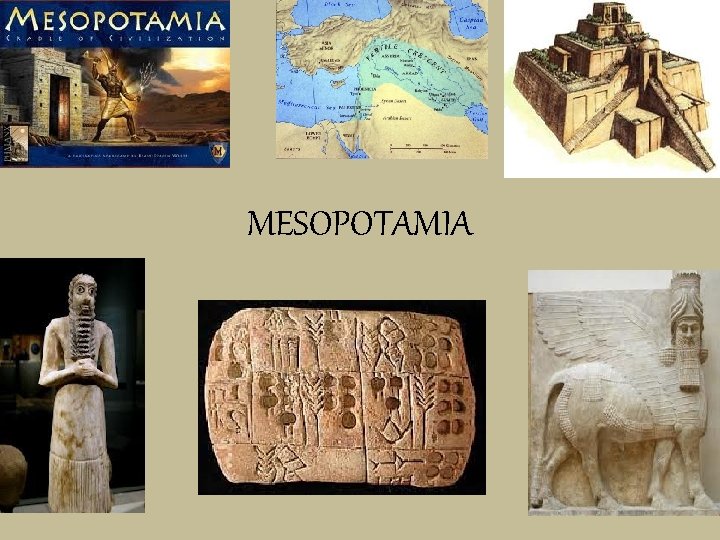
MESOPOTAMIA
Agenda 1. Take pretest with data sheet (#2 in notebook) 2. Grade notebook (Record and file into cabinet) 3. Assign title page (#1)– Computer images of map of Mesopotamia, achievements, etc.
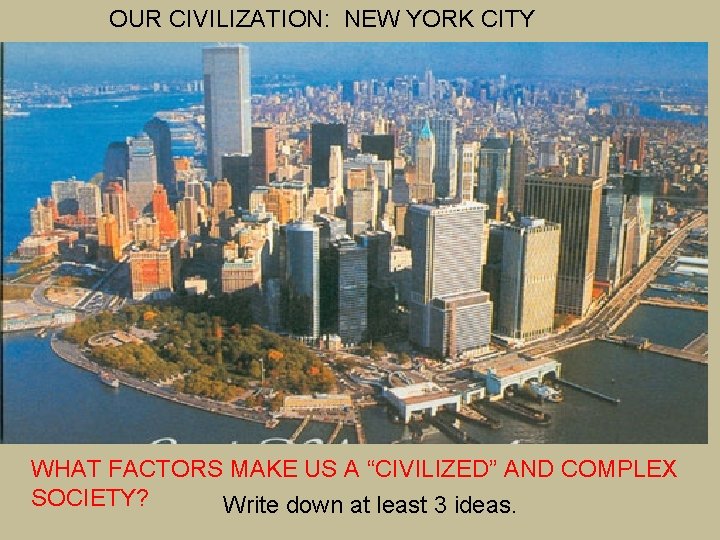
OUR CIVILIZATION: NEW YORK CITY WHAT FACTORS MAKE US A “CIVILIZED” AND COMPLEX SOCIETY? Write down at least 3 ideas.
*NOTES* WHAT IS A CIVILIZATION? ? ? CIVILIZATION- (1) group of people living and working together for the purpose of creating an organized society. (2) “the highest cultural grouping of people which distinguishes humans from other species” (3) “complex systems or network of cities that emerge from pre-urban culture”
*NOTES* EIGHT BASIC FEATURES OF A CIVILIZATION: (1) Writing Systems (2) Infrastructure- public works such as bridges, roads etc. (3) Government / Laws
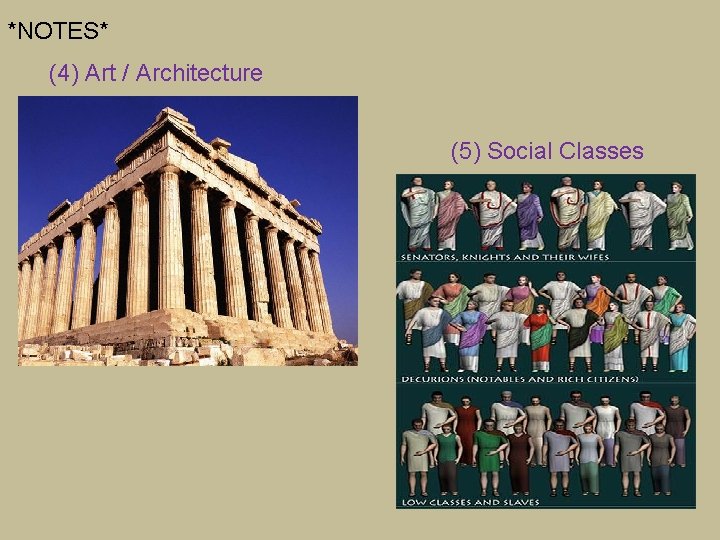
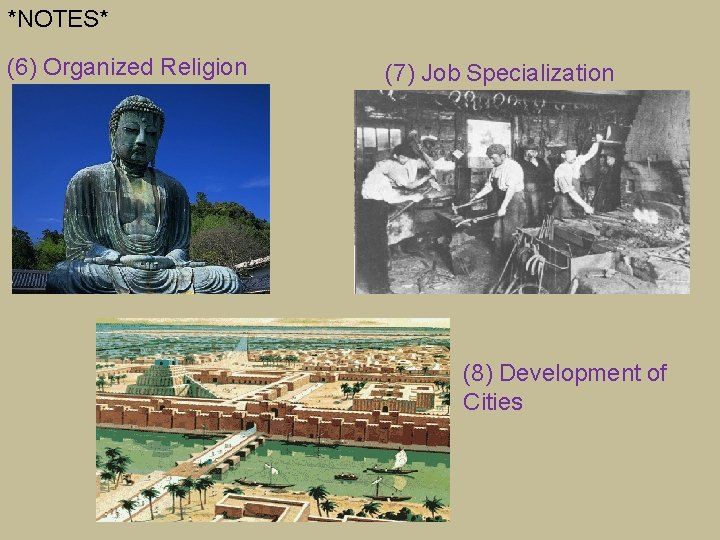
*NOTES* (4) Art / Architecture (5) Social Classes
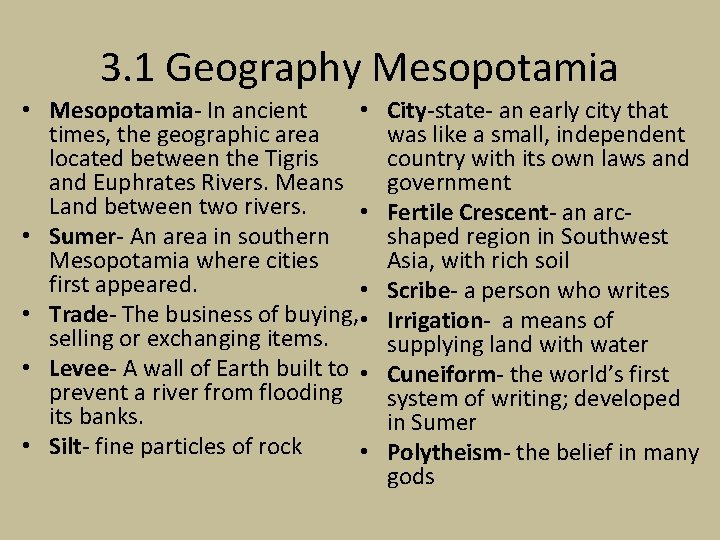
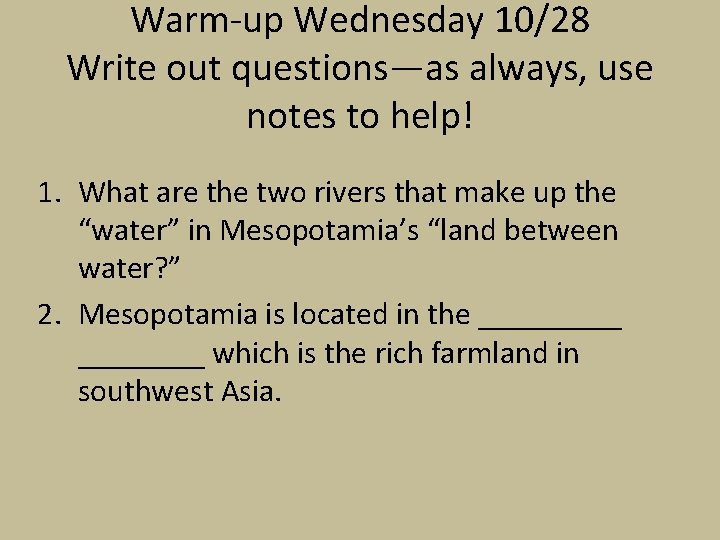
*NOTES* (6) Organized Religion (7) Job Specialization (8) Development of Cities
3. 1 Geography Mesopotamia • Mesopotamia- In ancient • times, the geographic area located between the Tigris and Euphrates Rivers. Means Land between two rivers. • • Sumer- An area in southern Mesopotamia where cities first appeared. • • Trade- The business of buying, • selling or exchanging items. • Levee- A wall of Earth built to • prevent a river from flooding its banks. • Silt- fine particles of rock • City-state- an early city that was like a small, independent country with its own laws and government Fertile Crescent- an arcshaped region in Southwest Asia, with rich soil Scribe- a person who writes Irrigation- a means of supplying land with water Cuneiform- the world’s first system of writing; developed in Sumer Polytheism- the belief in many gods
Warm-up Wednesday 10/28 Write out questions—as always, use notes to help! 1. What are the two rivers that make up the “water” in Mesopotamia’s “land between water? ” 2. Mesopotamia is located in the _____ which is the rich farmland in southwest Asia.
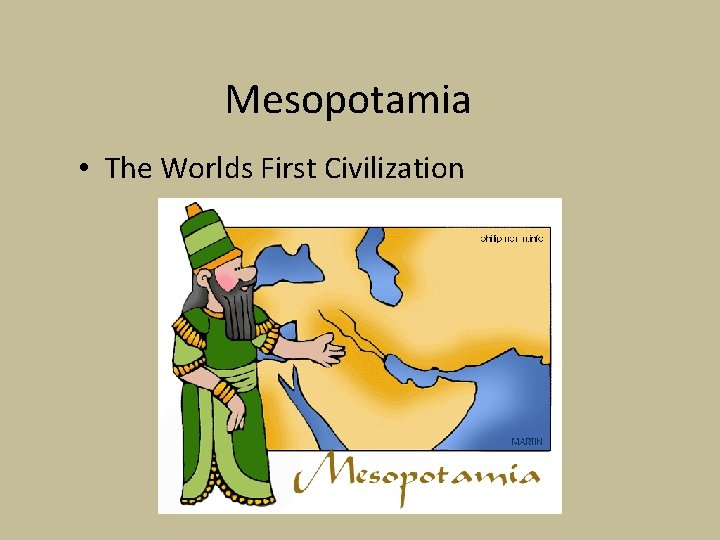
Mesopotamia • The Worlds First Civilization
What is a civilization? Civilizations (SIH • vuh • luh • ZAY • shuhns) are complex societies. They have cities, organized governments, art, religion, class divisions, and a writing system.
Why were river valleys important? Farming - large amounts of people could be fed Trade - goods and ideas to move from place to place. Cities - grow up in these valleys and became the centers of civilizations.
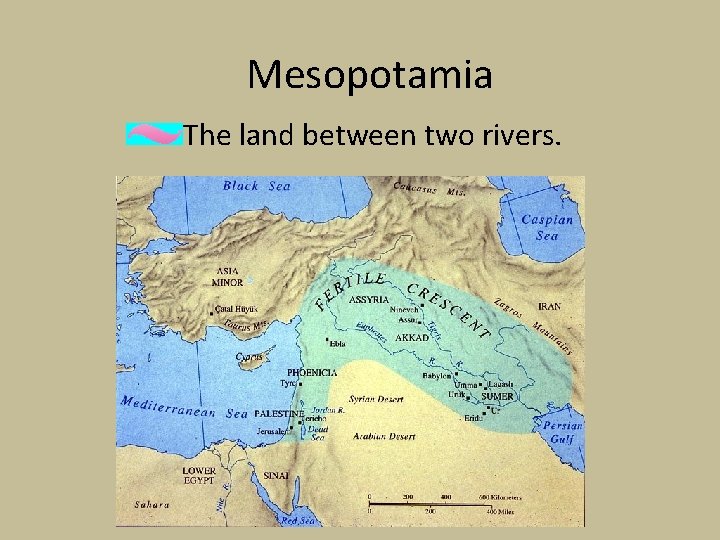
Mesopotamia The land between two rivers.
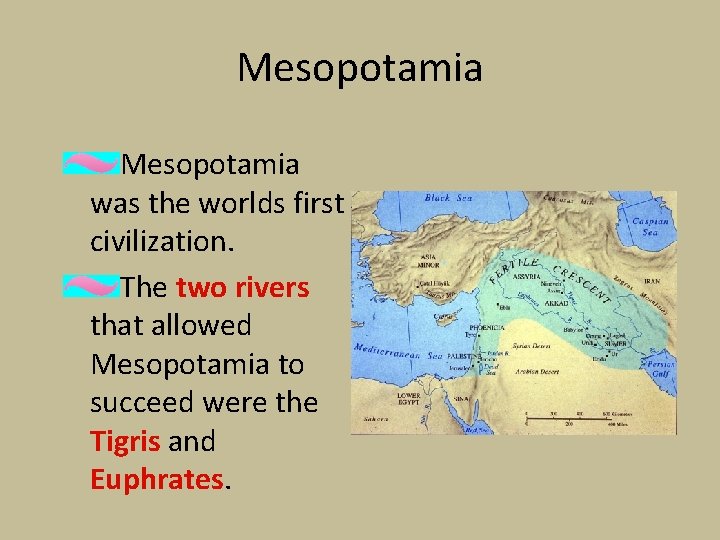
Mesopotamia was the worlds first civilization. The two rivers that allowed Mesopotamia to succeed were the Tigris and Euphrates.
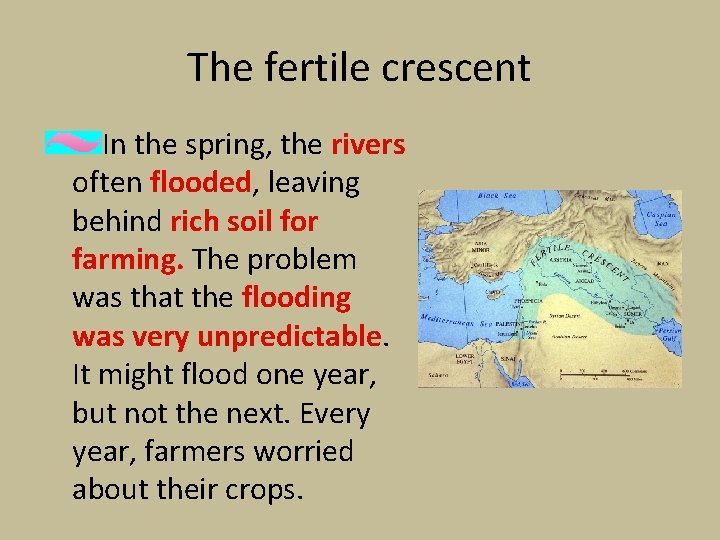
The fertile crescent In the spring, the rivers often flooded, leaving behind rich soil for farming. The problem was that the flooding was very unpredictable. It might flood one year, but not the next. Every year, farmers worried about their crops.
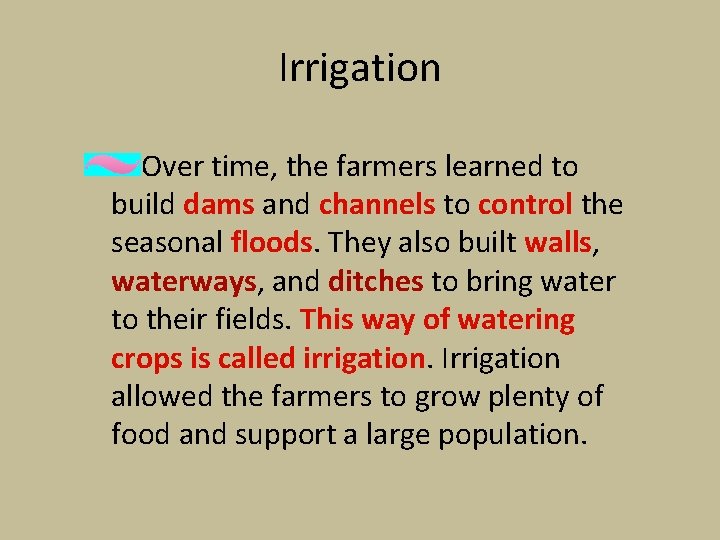
Irrigation Over time, the farmers learned to build dams and channels to control the seasonal floods. They also built walls, waterways, and ditches to bring water to their fields. This way of watering crops is called irrigation. Irrigation allowed the farmers to grow plenty of food and support a large population.
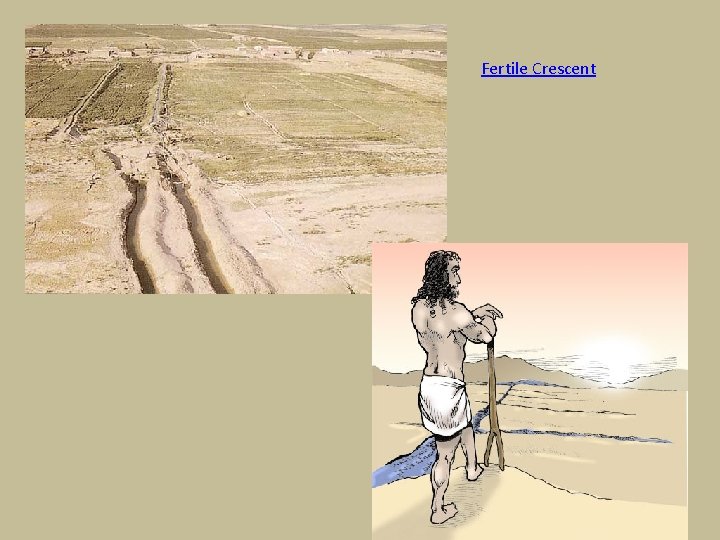
Fertile Crescent
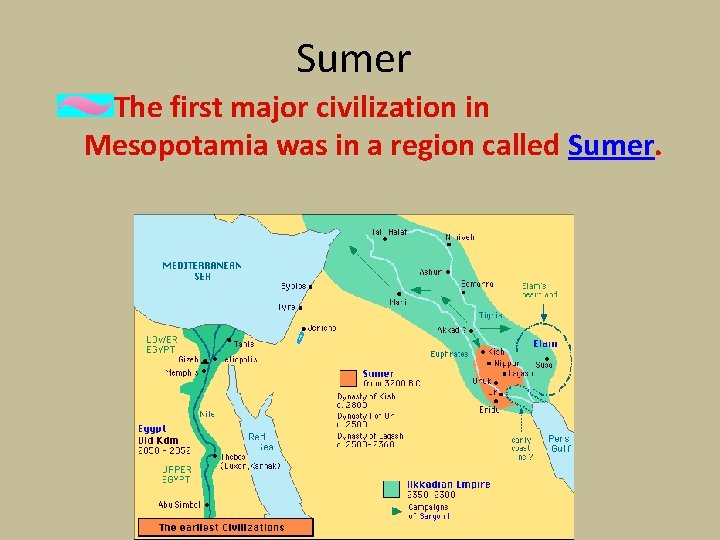
Sumer The first major civilization in Mesopotamia was in a region called Sumer.
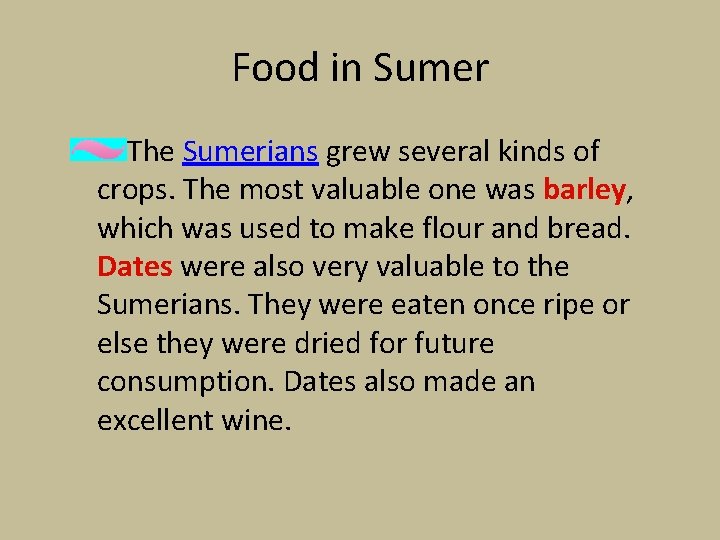
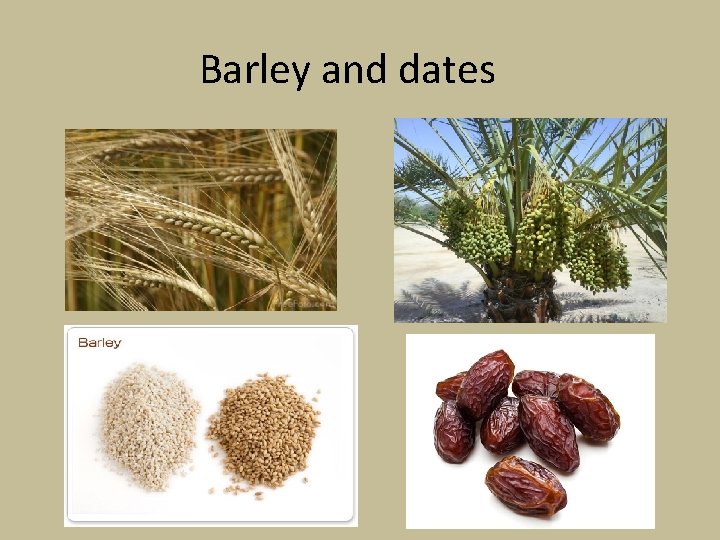
Food in Sumer The Sumerians grew several kinds of crops. The most valuable one was barley, which was used to make flour and bread. Dates were also very valuable to the Sumerians. They were eaten once ripe or else they were dried for future consumption. Dates also made an excellent wine.
Barley and dates
City-states Each Sumerian city and the land around it became a separate city-state. Each city-state had its own government and was not part of any larger unit.
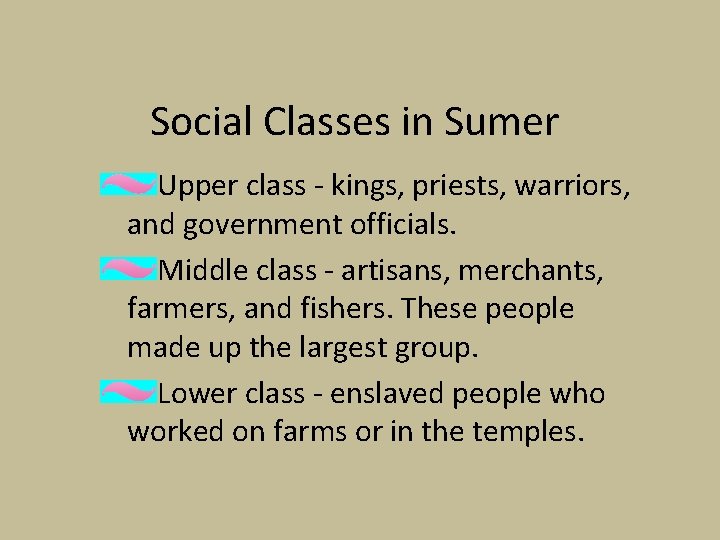
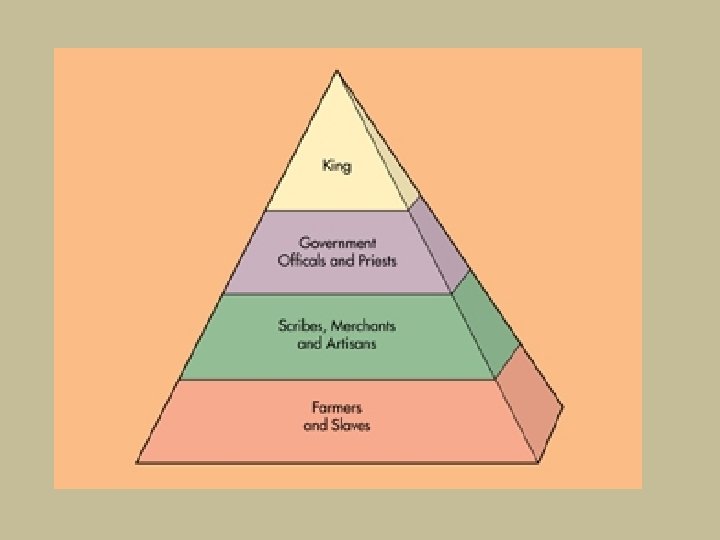
Social Classes in Sumer Upper class - kings, priests, warriors, and government officials. Middle class - artisans, merchants, farmers, and fishers. These people made up the largest group. Lower class - enslaved people who worked on farms or in the temples.
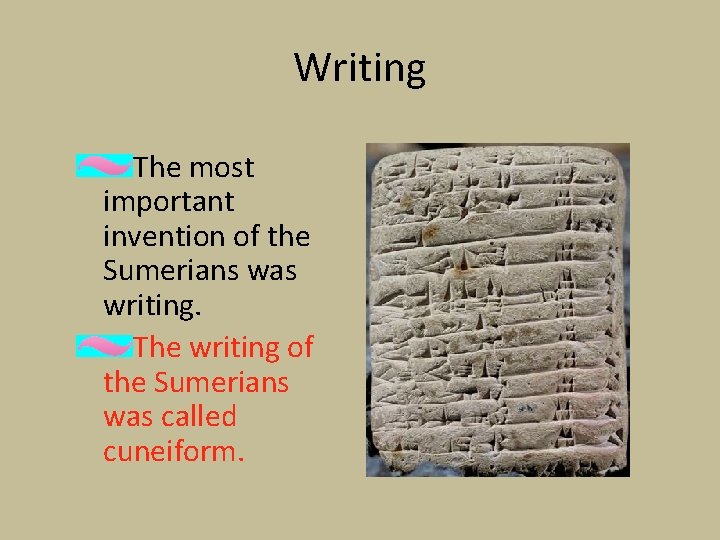
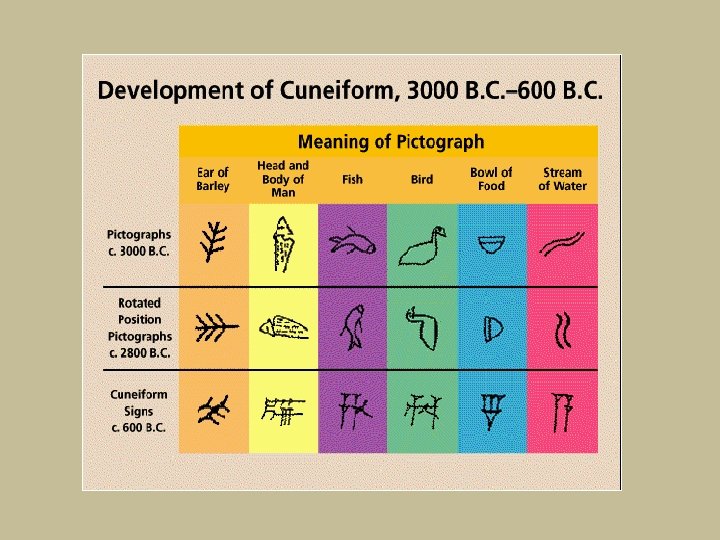
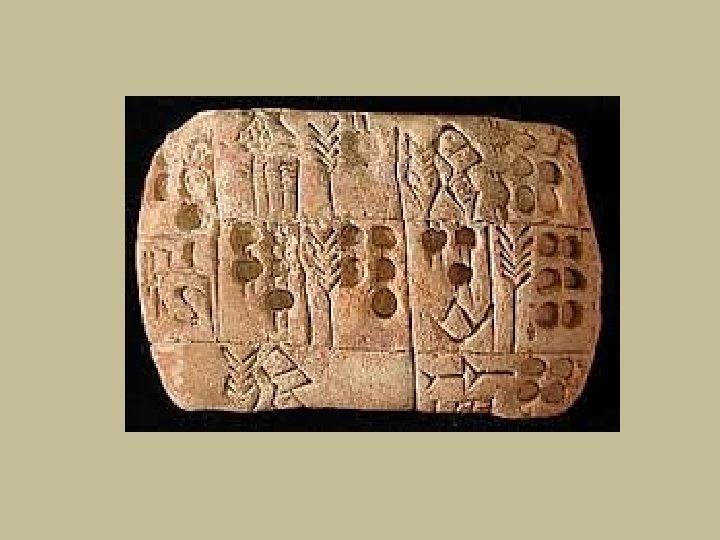
Writing The most important invention of the Sumerians was writing. The writing of the Sumerians was called cuneiform.
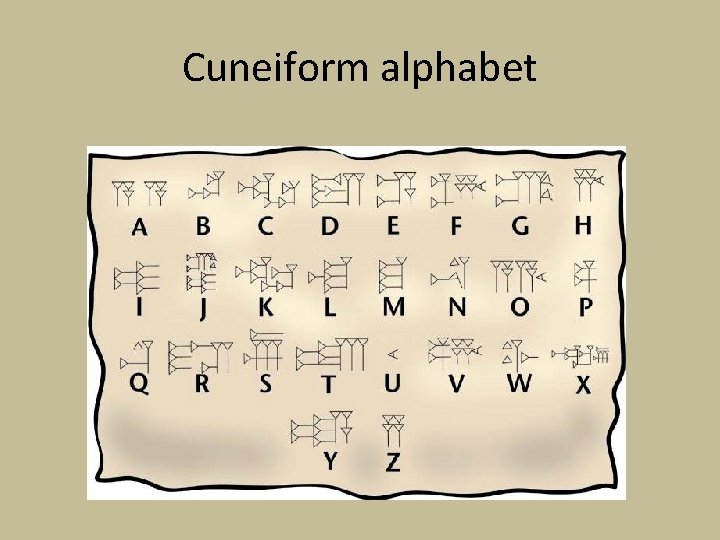
Cuneiform alphabet
1. B) The region was bordered by rivers on two sides. 2. Tigris and Euphrates (order doesn’t matter) 3. A) Mesopotamia contained a fertile river valley. 4. rich soil/good farm land/silt 5. to have water year round/control water to have for crops/so crops wouldn’t be washed away 6. not having enough water year round/droughts/how to fertilize crops 7. flooding; water; crops
8. water 9. (seeder) plow 10. Food/agriculture/crops 11. Trade/commerce 12. the act of buying and selling (goods and services)/ trade 13. (lightweight/river) boat; with reeds/ canvas/ tar/ bitumen/ to be waterproof 14. stone; bitumen (order doesn’t matter) 15. backs; donkeys/carts
Mesopotamia Advertisement You may work with a partner or alone. • • Advertisement on one of the following: – – – Levee Dam Seeder plow Pavement Guffa • Requirements: – – – – Colorful Catch phrase/motto Pictures of the product/how you can use it Explain what problem this solved Include at least 3 words describing the product Describe the product- how was it made? What was it used for? Name on back • Graphic Organizer will go in binder as item #6 • Option: Classroom Turn In Electronic or Hand-drawn • This is a formal grade. Due on Monday. I will check your graphic organizer tomorrow.
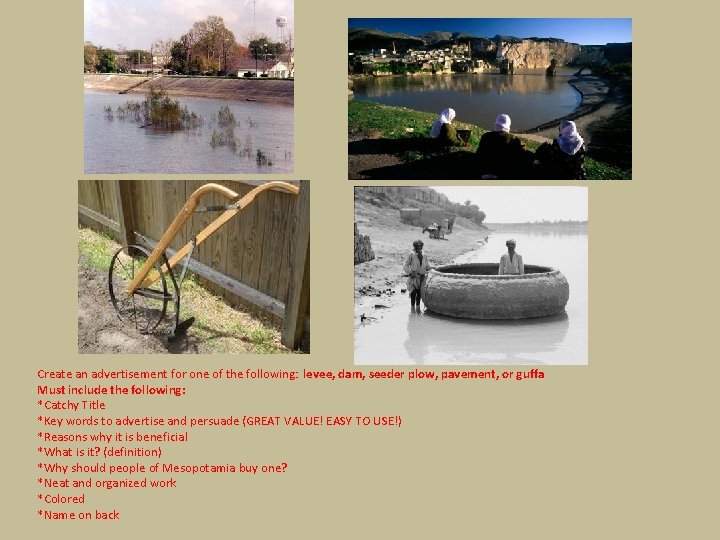
Create an advertisement for one of the following: levee, dam, seeder plow, pavement, or guffa Must include the following: *Catchy Title *Key words to advertise and persuade (GREAT VALUE! EASY TO USE!) *Reasons why it is beneficial *What is it? (definition) *Why should people of Mesopotamia buy one? *Neat and organized work *Colored *Name on back
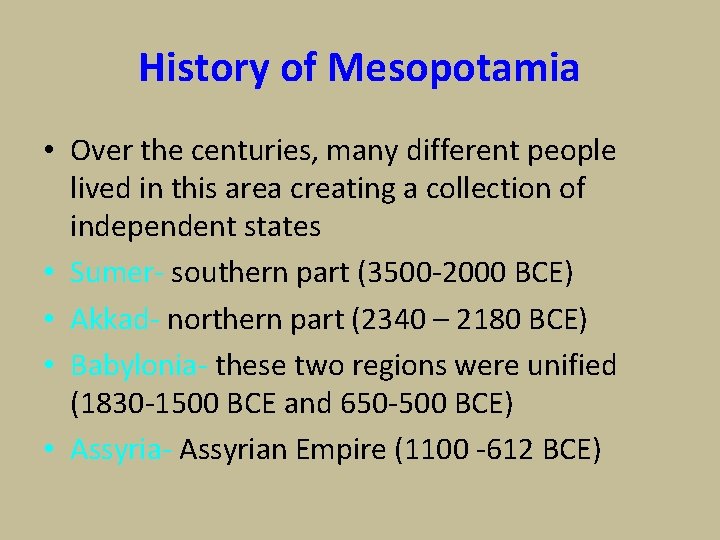
History of Mesopotamia • Over the centuries, many different people lived in this area creating a collection of independent states • Sumer- southern part (3500 -2000 BCE) • Akkad- northern part (2340 – 2180 BCE) • Babylonia- these two regions were unified (1830 -1500 BCE and 650 -500 BCE) • Assyria- Assyrian Empire (1100 -612 BCE)
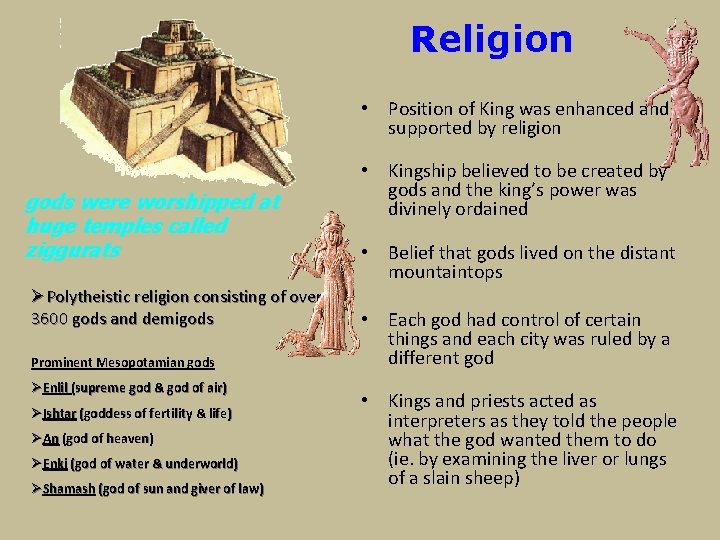
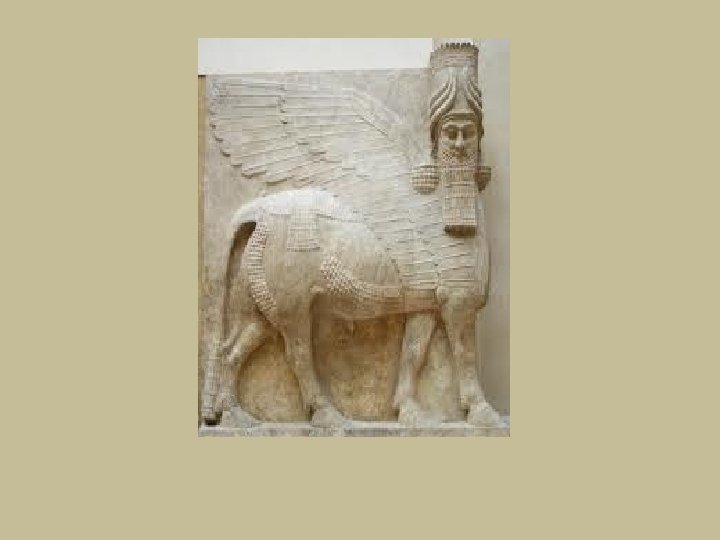
Religion • Position of King was enhanced and supported by religion gods were worshipped at huge temples called ziggurats ØPolytheistic religion consisting of over 3600 gods and demigods Prominent Mesopotamian gods ØEnlil (supreme god & god of air) ØIshtar (goddess of fertility & life) ØAn (god of heaven) ØEnki (god of water & underworld) ØShamash (god of sun and giver of law) • Kingship believed to be created by gods and the king’s power was divinely ordained • Belief that gods lived on the distant mountaintops • Each god had control of certain things and each city was ruled by a different god • Kings and priests acted as interpreters as they told the people what the god wanted them to do (ie. by examining the liver or lungs of a slain sheep)
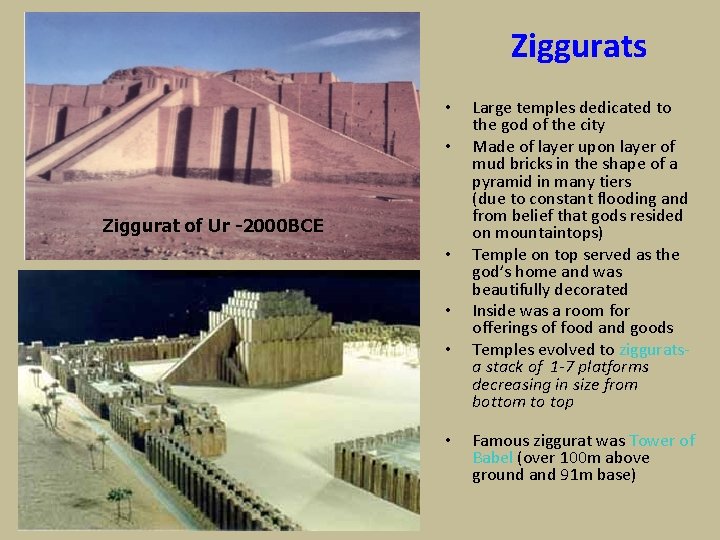
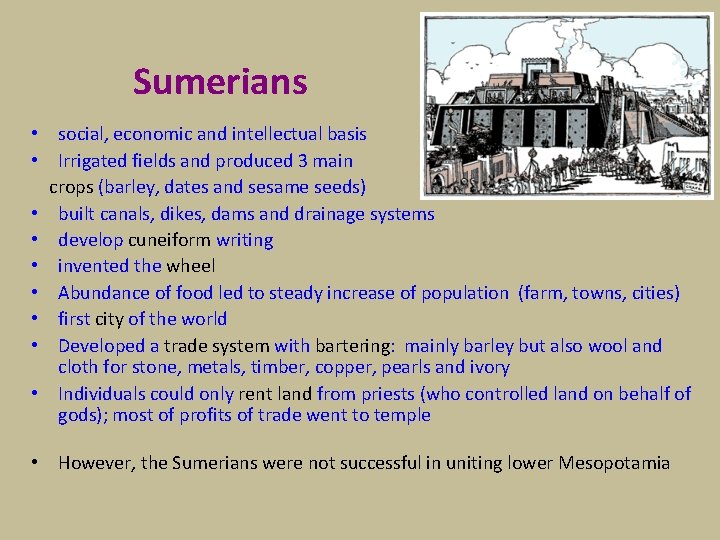
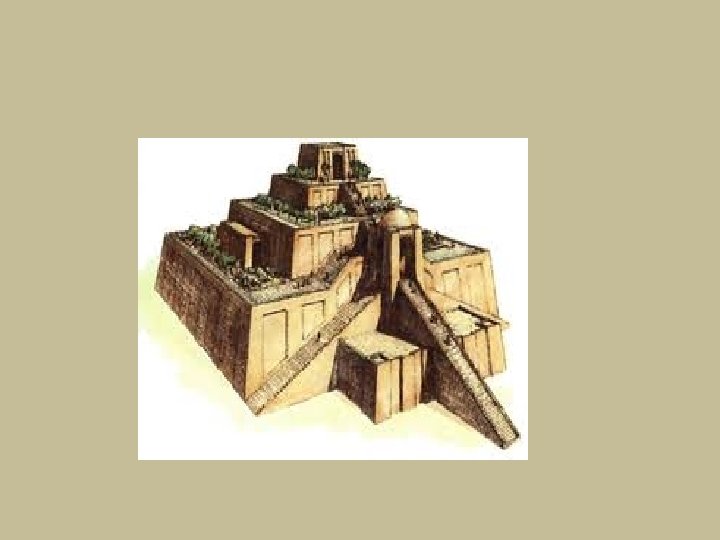
Ziggurats • • Ziggurat of Ur -2000 BCE • • Large temples dedicated to the god of the city Made of layer upon layer of mud bricks in the shape of a pyramid in many tiers (due to constant flooding and from belief that gods resided on mountaintops) Temple on top served as the god’s home and was beautifully decorated Inside was a room for offerings of food and goods Temples evolved to ziggurats- a stack of 1 -7 platforms decreasing in size from bottom to top Famous ziggurat was Tower of Babel (over 100 m above ground and 91 m base)
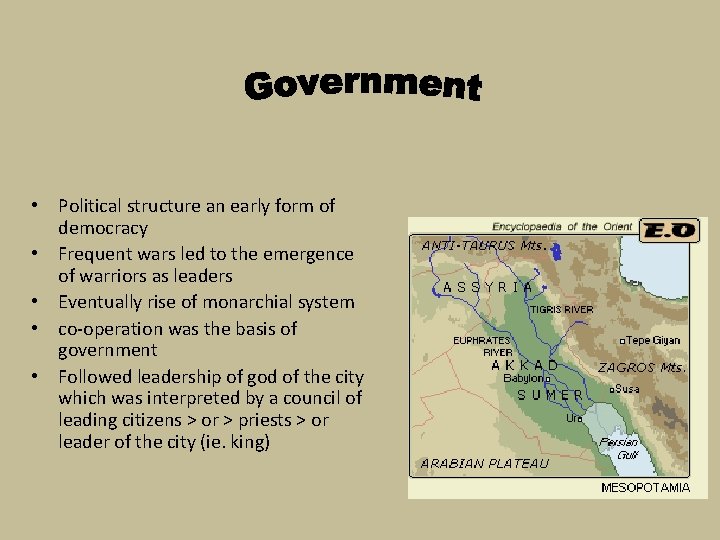
• Political structure an early form of democracy • Frequent wars led to the emergence of warriors as leaders • Eventually rise of monarchial system • co-operation was the basis of government • Followed leadership of god of the city which was interpreted by a council of leading citizens > or > priests > or leader of the city (ie. king)
Sumerians • social, economic and intellectual basis • Irrigated fields and produced 3 main crops (barley, dates and sesame seeds) • built canals, dikes, dams and drainage systems • develop cuneiform writing • invented the wheel • Abundance of food led to steady increase of population (farm, towns, cities) • first city of the world • Developed a trade system with bartering: mainly barley but also wool and cloth for stone, metals, timber, copper, pearls and ivory • Individuals could only rent land from priests (who controlled land on behalf of gods); most of profits of trade went to temple • However, the Sumerians were not successful in uniting lower Mesopotamia
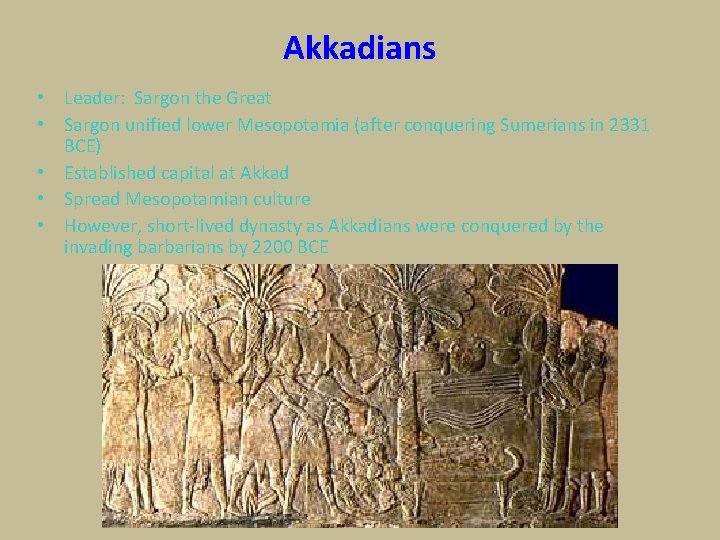
Akkadians • Leader: Sargon the Great • Sargon unified lower Mesopotamia (after conquering Sumerians in 2331 BCE) • Established capital at Akkad • Spread Mesopotamian culture • However, short-lived dynasty as Akkadians were conquered by the invading barbarians by 2200 BCE
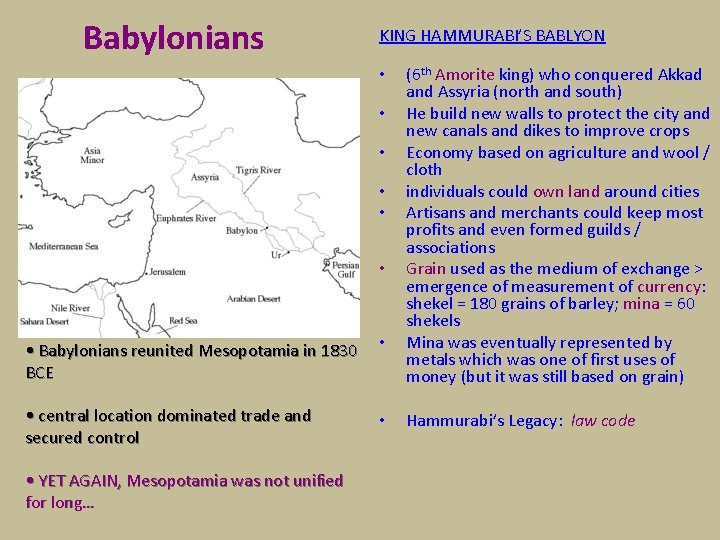
Babylonians KING HAMMURABI’S BABLYON • • Babylonians reunited Mesopotamia in 1830 • BCE • central location dominated trade and secured control • YET AGAIN, Mesopotamia was not unified for long… • (6 th Amorite king) who conquered Akkad and Assyria (north and south) He build new walls to protect the city and new canals and dikes to improve crops Economy based on agriculture and wool / cloth individuals could own land around cities Artisans and merchants could keep most profits and even formed guilds / associations Grain used as the medium of exchange > emergence of measurement of currency: shekel = 180 grains of barley; mina = 60 shekels Mina was eventually represented by metals which was one of first uses of money (but it was still based on grain) Hammurabi’s Legacy: law code
Vocabulary for Mesopotamian Society and Innovations • • • Polytheism- the belief that there are • many gods Ziggurat- an ancient Mesopotamian • temple tower with outside staircases and a shrine at the top Artisan- a craftsperson Patriarchal- describes societies, tribes, clans, families, or other groups ruled by • a man who is known as a patriarch. • Empire- a large territory in which several groups of people are ruled by a single leader or government Cuneiform- writing that uses wedgeshaped characters Hammurabi- Hammurabi was the ruler of the first dynasty of Babylon, from about 1792 to 1750 BCE. He is the most famous ruler of that dynasty mainly because of the laws he set down. Code of law- a collection of written laws and rules Siege- a military blockade and attack on a city to force it to surrender
Nomads to farmers • http: //app. discoveryeducation. com/player/vie w/asset. Guid/3029357 E-9 BB 7 -40 D 5 -93 E 2 EFFBDCA 2 AFFE • Complete video notes while watching
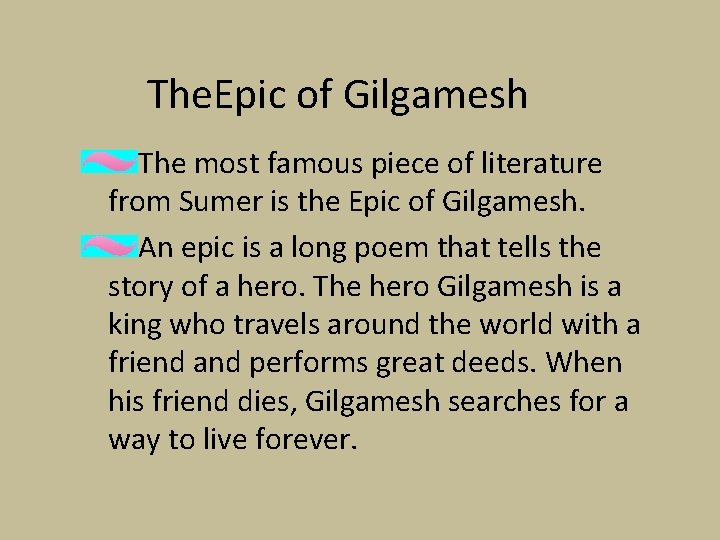
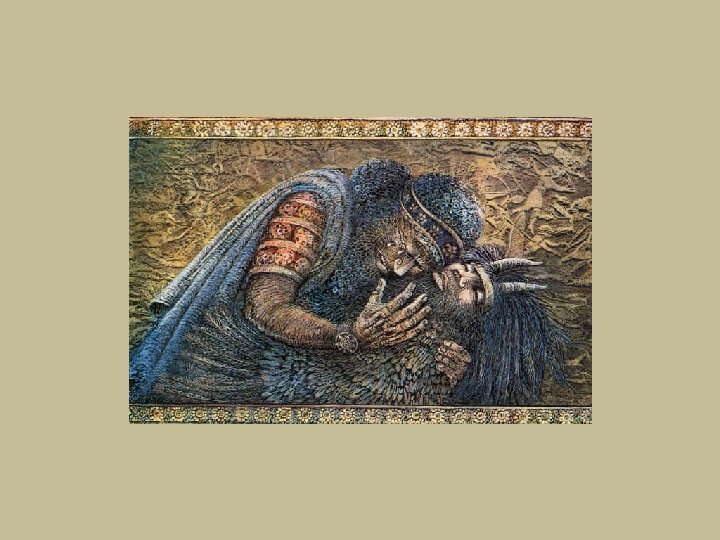
The. Epic of Gilgamesh The most famous piece of literature from Sumer is the Epic of Gilgamesh. An epic is a long poem that tells the story of a hero. The hero Gilgamesh is a king who travels around the world with a friend and performs great deeds. When his friend dies, Gilgamesh searches for a way to live forever.
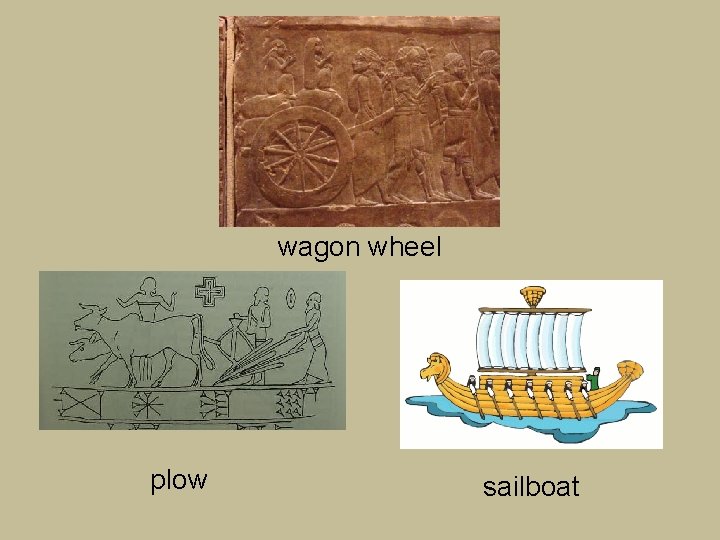
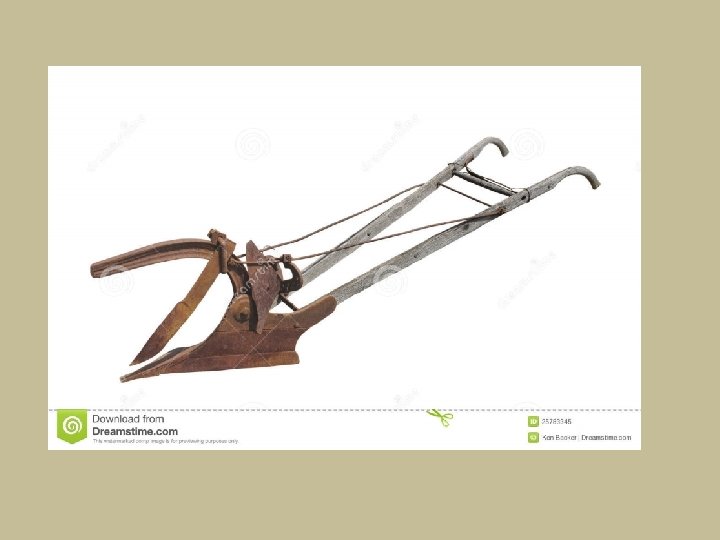
Sumerian Inventions wagon wheel plow sailboat number system based on 60 geometry 12 month calendar
wagon wheel plow sailboat
Sargon In about 2340 B. C. , Sargon conquered all of Mesopotamia creating the world’s first empire. An empire is a group of many different lands under one ruler. Sargon’s empire lasted for more than 200 years before falling to invaders.
Hammurabi is best known for his law code, or collection of laws. Law 5: If a judge makes an error through his own fault when trying a case, he must pay a fine, be removed from the judge’s bench, and never judge another case. Law 195: If a son strikes his father, the son’s hands shall be cut off.
Mesopotamia Artifact Analysis
Warm up Thursday 11/5 Do not write out, just answer. 1. 2. 3. 4. 5. What is the purpose of a law? What laws make you feel safe in this country? Do you think our laws are “fair”? What makes a law “fair”? What do you think the saying “an eye for an eye” means?
nearpod • https: //app. nearpod. com/#/? pin=0 A 39 D 572 C EE 7660 CDB 2 CF 10286 A 183 B 4
King Hammurabi • Hammurabi was king of Babylonia, a city-state in ancient Mesopotamia. • He ruled from about 1792 to 1750 BCE. • During his long reign, he recorded a set of rules for his kingdom to obey. • These rules are thought to be the oldest laws in the world!
The Code • Mesopotamians believed that the Code of Hammurabi was not created by the king, but rather that it was given to him by Shamash, god of the sun, who was associated with justice. • Many historians believe that Hammurabi’s Code was created by recording a number of the legal decisions he had made throughout his reign. His decisions were based on old Sumerian laws that had existed for centuries. No written record of those laws has been found. • It is believed that the copies of the law code were placed in important locations throughout Babylon, so that people would know the law and be aware of their rights. Most aspects of life were covered by parts of the code.
Hammurabi’s 3 -Part Code Part 1, the prologue, details Hammurabi’s contributions to the kingdom. It also declares that he was sent by the god Marduk to rule over men and ensure the protection of the oppressed. Part 2 is a collection of rigid societal laws Part 3 is the epilogue. Hammurabi addresses every social class in Babylonian society with his rules.
Fair? • If a man has knocked out the eye of a patrician, his eye shall be knocked out. • If a patrician has knocked out the tooth of a man that is his equal, his tooth shall be knocked out. • If a man has stolen a child, he shall be put to death. • If a life [has been lost], the city or district governor shall pay one mina of silver to the deceased's relatives.
What about these? • If a man has stolen goods from a temple, or house, he shall be put to death; and he that has received the stolen property from him shall be put to death. • If a son has struck his father, his hands shall be cut off.
• Hammurabi's Code lays out a clear and specific structure of laws and punishments. These laws not only protected innocent people who had been harmed, but they also prevented criminals from being given a punishment that did not fit their crime. For instance, under the code, a thief might have his own property taken away instead of being put to death. The idea of having the punishment match the crime, both in type of punishment and severity, is known today as the principle of "an eye for an eye. " Even though the code standardized laws throughout the land, a person’s social status made a difference in how the laws were applied. For example, there was a greater penalty for striking a man of a higher social class than there was for striking a man who was equal to you.
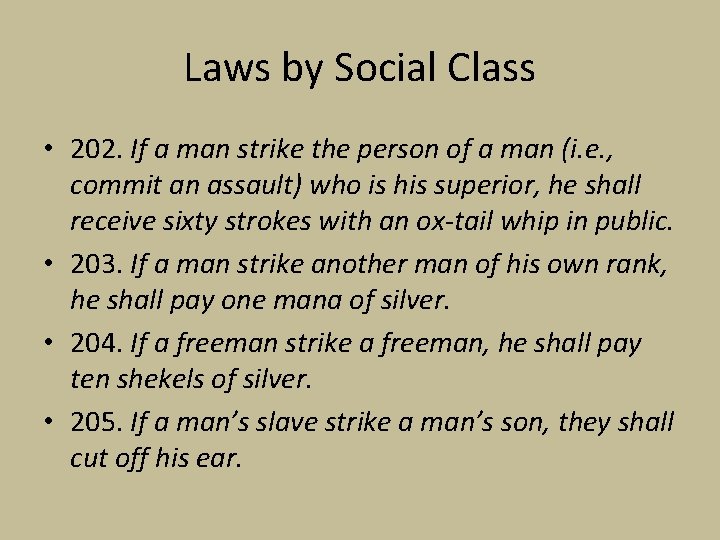
Laws by Social Class • 202. If a man strike the person of a man (i. e. , commit an assault) who is his superior, he shall receive sixty strokes with an ox-tail whip in public. • 203. If a man strike another man of his own rank, he shall pay one mana of silver. • 204. If a freeman strike a freeman, he shall pay ten shekels of silver. • 205. If a man’s slave strike a man’s son, they shall cut off his ear.
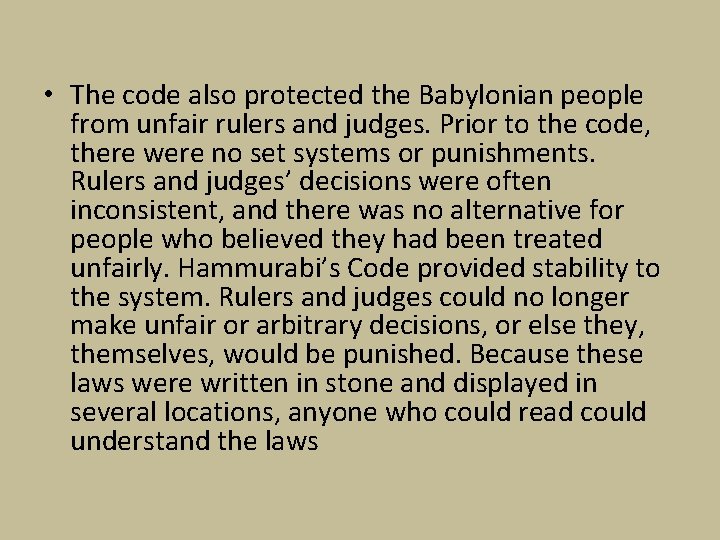
• The code also protected the Babylonian people from unfair rulers and judges. Prior to the code, there were no set systems or punishments. Rulers and judges’ decisions were often inconsistent, and there was no alternative for people who believed they had been treated unfairly. Hammurabi’s Code provided stability to the system. Rulers and judges could no longer make unfair or arbitrary decisions, or else they, themselves, would be punished. Because these laws were written in stone and displayed in several locations, anyone who could read could understand the laws
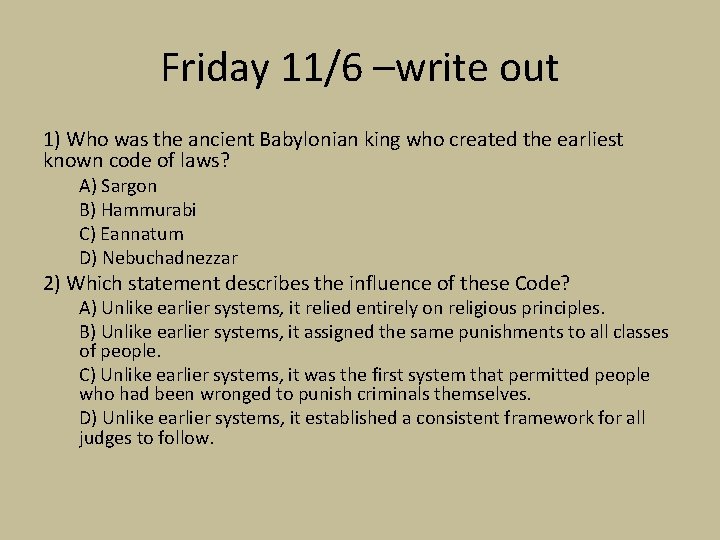
Friday 11/6 –write out 1) Who was the ancient Babylonian king who created the earliest known code of laws? A) Sargon B) Hammurabi C) Eannatum D) Nebuchadnezzar 2) Which statement describes the influence of these Code? A) Unlike earlier systems, it relied entirely on religious principles. B) Unlike earlier systems, it assigned the same punishments to all classes of people. C) Unlike earlier systems, it was the first system that permitted people who had been wronged to punish criminals themselves. D) Unlike earlier systems, it established a consistent framework for all judges to follow.
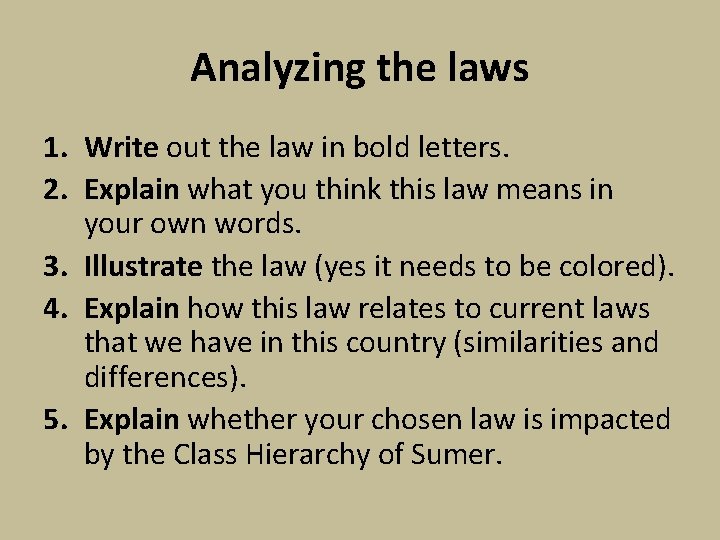
Analyzing the laws 1. Write out the law in bold letters. 2. Explain what you think this law means in your own words. 3. Illustrate the law (yes it needs to be colored). 4. Explain how this law relates to current laws that we have in this country (similarities and differences). 5. Explain whether your chosen law is impacted by the Class Hierarchy of Sumer.
Sample Hammurabi Analysis 25. If fire break out in a house, and some one who comes to put it out cast his eye upon the property of the owner of the house, and take the property of the master of the house, he shall be thrown into that self-same fire. *I believe this law means that if a person steals property from another during a fire or other disaster, the punishment will fit the crime and that person will be thrown into that fire. * Under our laws criminals are punished for theft, but not with physical harm. *Punishment doesn’t appear to vary by class.
Warm up- Monday 11/9 1) The legal phrase “an eye for an eye” refers to the idea that A) citizens should watch over the well-being of their neighbors B) no crime can be proven without witnesses C) a criminal’s punishment should match his or her crime D) punishment of criminals should be done in public 2) Which statement best explains why it was uncommon for an ancient Mesopotamian woman to work as a scribe? A) Women could not own property. B) Very few women were taught how to read and write. C) Scribes were forbidden by law to have children. D) Food production and supplies would decrease if women left farm work.
Reading Centers • With your table, you will be reading 3 out of 4 reading passages in the packet given to you. You MUST read 3. 3 and answer the questions, then you can pick 2 of the green book passages. • If you finished 3 passages, complete the 4 th passage for BONUS points!! • After you have finished reading, create a list of 10 questions from section 3. 1 -3. 3 that you think might be on the test! • TEST is Friday, November 13!
Warm-up Tuesday 11/10 Copy each question and answer: 1. How did calendars contribute to the growth of cities in Ancient Mesopotamia? 2. The Sumerians developed the first alphabetbased system of writing. This system is called: 3. Which innovation benefitted traders the most?
Warm-up - Have notebook organized and numbered for turn in tomorrow. - Get chromebook (don’t open) - Silent Read until we go over Study Guide. - If you did not do Study Guide you can’t play Kahoot! - Test tomorrow!!!!
Warm-up Friday • Happy Test Day!!!! • Get out data sheet (#2) • Get out a Chromebook, silent reading book, writing utensil (for data sheet). • Silent Read until the test. • After test, complete your data sheet and read!