
MESA Day 2012 Mousetrap Car Distance 6 th8
- Slides: 11
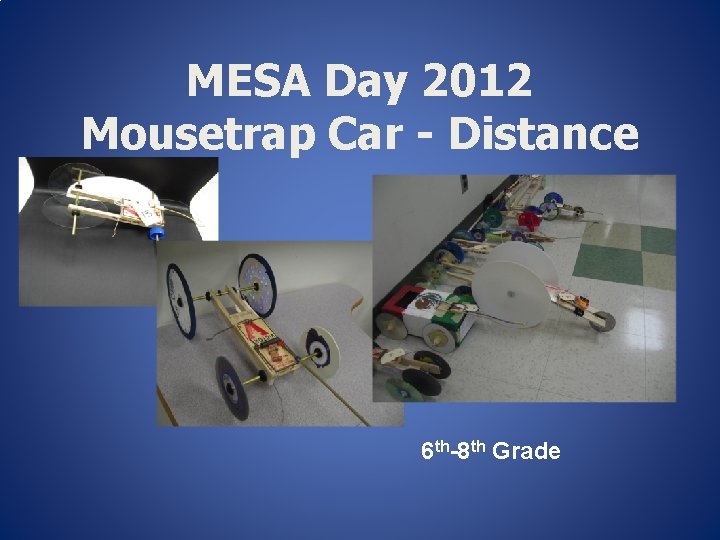
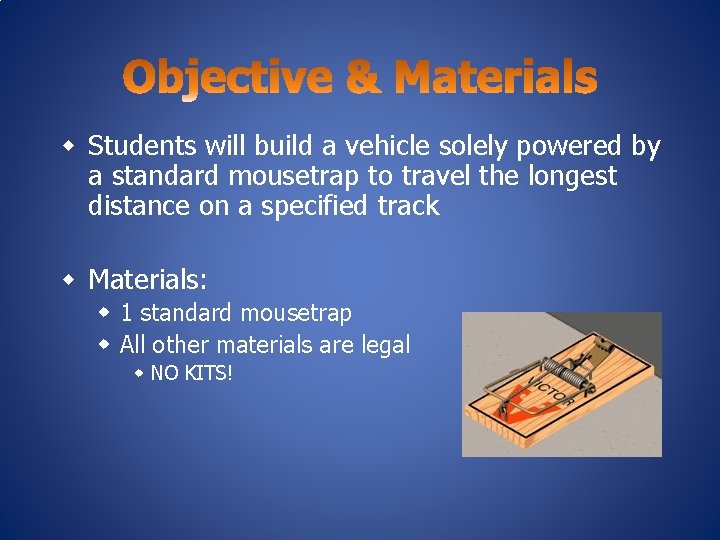
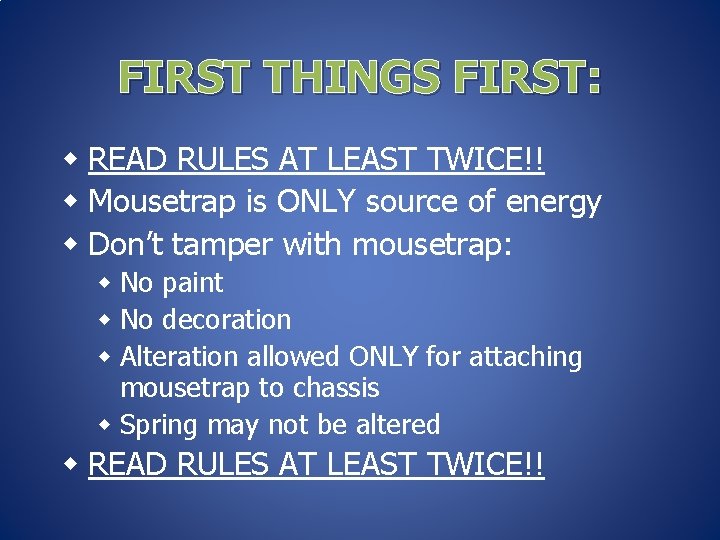
MESA Day 2012 Mousetrap Car - Distance 6 th-8 th Grade
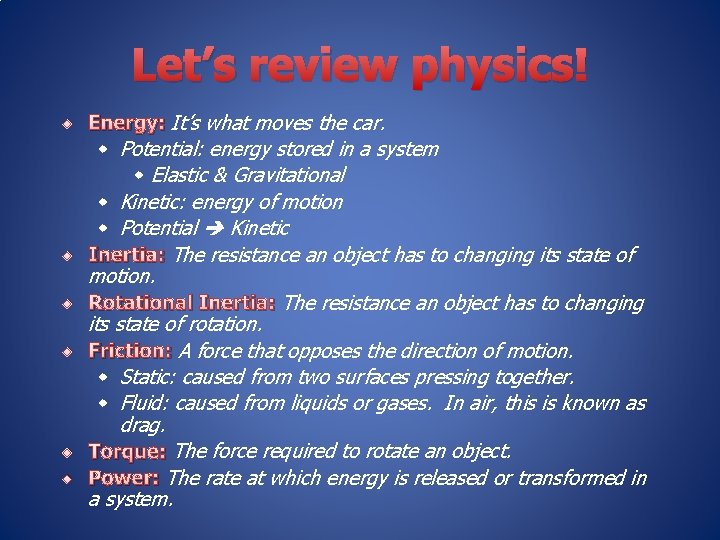
w Students will build a vehicle solely powered by a standard mousetrap to travel the longest distance on a specified track w Materials: w 1 standard mousetrap w All other materials are legal w NO KITS!
FIRST THINGS FIRST: w READ RULES AT LEAST TWICE!! w Mousetrap is ONLY source of energy w Don’t tamper with mousetrap: w No paint w No decoration w Alteration allowed ONLY for attaching mousetrap to chassis w Spring may not be altered w READ RULES AT LEAST TWICE!!
Let’s review physics! w Energy: It’s what moves the car. w Potential: energy stored in a system w Elastic & Gravitational w Kinetic: energy of motion w Potential Kinetic w Inertia: The resistance an object has to changing its state of motion. w Rotational Inertia: The resistance an object has to changing its state of rotation. w Friction: A force that opposes the direction of motion. w Static: caused from two surfaces pressing together. w Fluid: caused from liquids or gases. In air, this is known as drag. w Torque: The force required to rotate an object. w Power: The rate at which energy is released or transformed in a system.
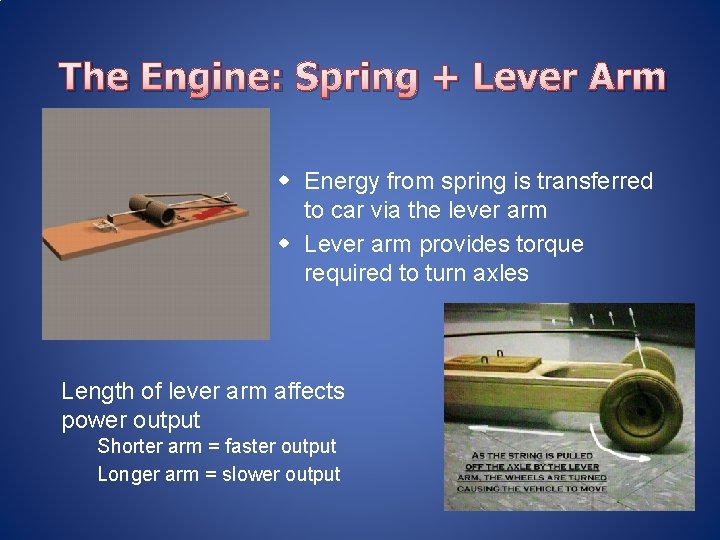
The Engine: Spring + Lever Arm w Energy from spring is transferred to car via the lever arm w Lever arm provides torque required to turn axles Length of lever arm affects power output Shorter arm = faster output Longer arm = slower output
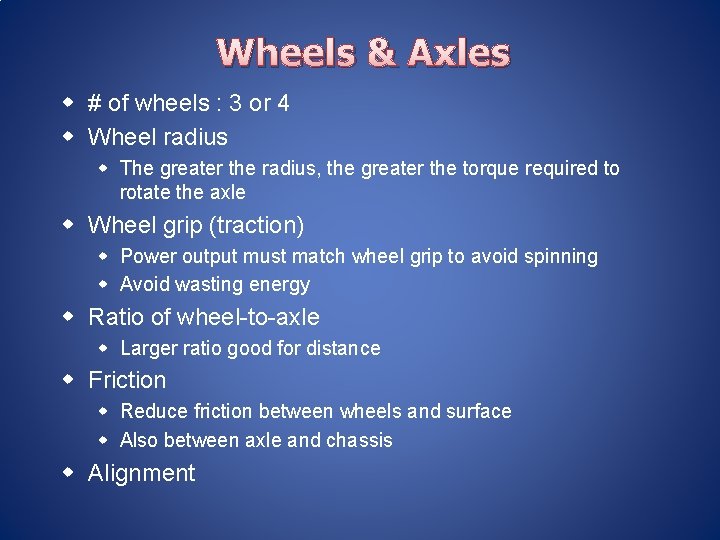
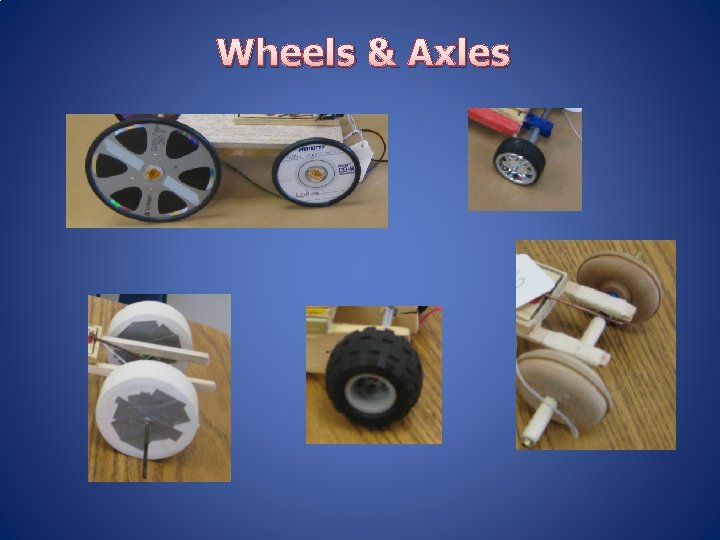
Wheels & Axles w # of wheels : 3 or 4 w Wheel radius w The greater the radius, the greater the torque required to rotate the axle w Wheel grip (traction) w Power output must match wheel grip to avoid spinning w Avoid wasting energy w Ratio of wheel-to-axle w Larger ratio good for distance w Friction w Reduce friction between wheels and surface w Also between axle and chassis w Alignment
Wheels & Axles
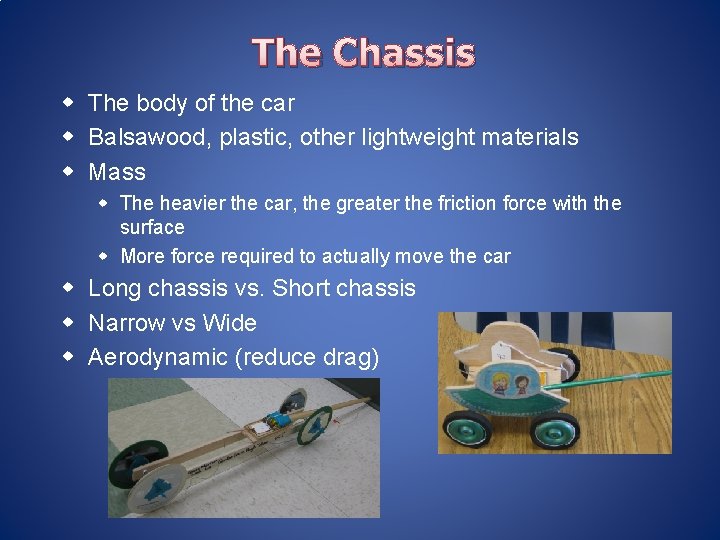
The Chassis w The body of the car w Balsawood, plastic, other lightweight materials w Mass w The heavier the car, the greater the friction force with the surface w More force required to actually move the car w Long chassis vs. Short chassis w Narrow vs Wide w Aerodynamic (reduce drag)
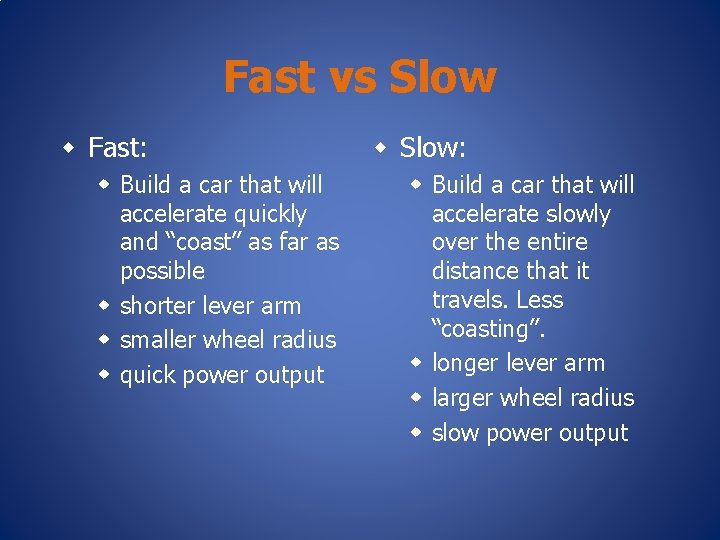
Fast vs Slow w Fast: w Build a car that will accelerate quickly and “coast” as far as possible w shorter lever arm w smaller wheel radius w quick power output w Slow: w Build a car that will accelerate slowly over the entire distance that it travels. Less “coasting”. w longer lever arm w larger wheel radius w slow power output
Remind Students: w Research, research! w Experimentation is the key w Set a working timeline w READ THE RULES…. twice…. again!! w HAVE FUN!!!: It’s not the end of the world.
Let’s Build… Marvin Maldonado Associate Director, UCI MESA mjmaldon@uci. edu