
Mergers Acquisitions Dysfunction Welcome to the MADness of
- Slides: 22
Mergers. Acquisitions. Dysfunction. Welcome to the MAD-ness of scholarly publishing Jon Tennant , Open Science MOOC @protohedgehog
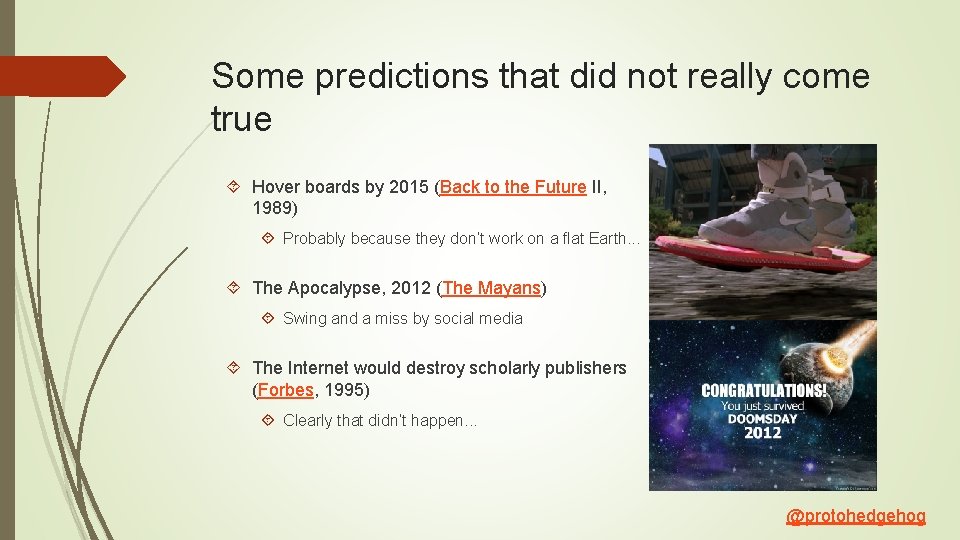
Some predictions that did not really come true Hover boards by 2015 (Back to the Future II, 1989) Probably because they don‘t work on a flat Earth. . . The Apocalypse, 2012 (The Mayans) Swing and a miss by social media The Internet would destroy scholarly publishers (Forbes, 1995) Clearly that didn‘t happen. . . @protohedgehog
Do you believe that science helps solve issues with. . Public education? Public health and disease? Global climatic disruption? Environmental conservation? Technological innovation? Economic growth? A more knowledgeable and healthy society? Evidence-informed policy making? Helping solve the biodiversity crisis? Virtually anything else. . ? @protohedgehog
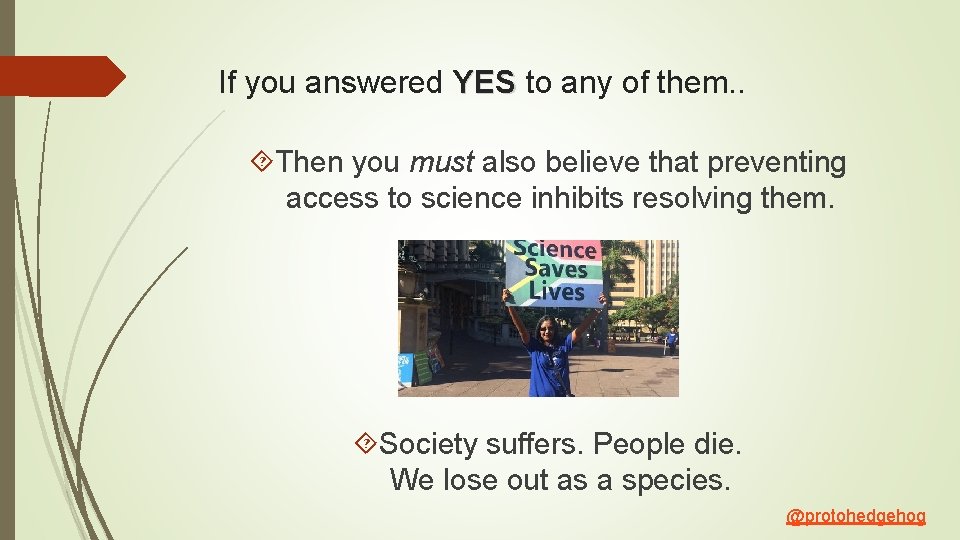
If you answered YES to any of them. . Then you must also believe that preventing access to science inhibits resolving them. Society suffers. People die. We lose out as a species. @protohedgehog
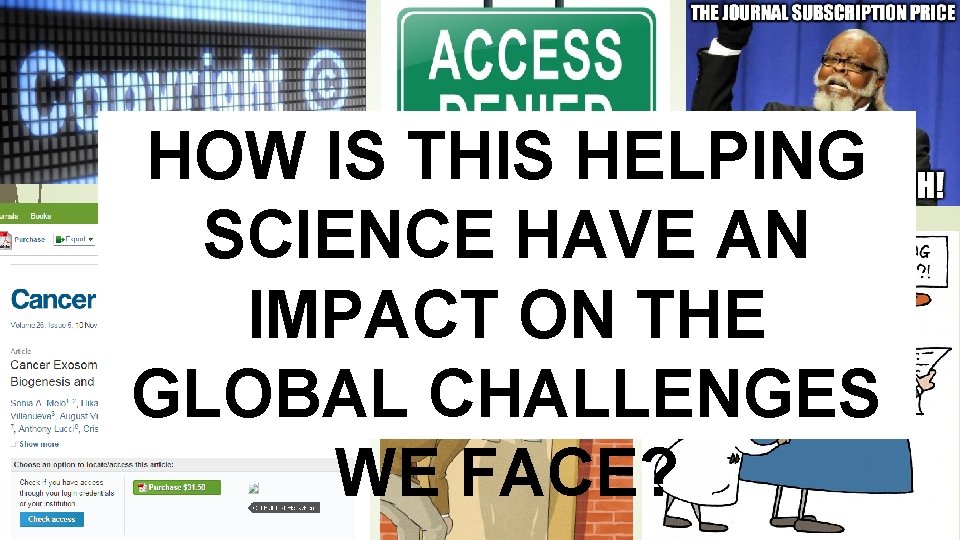
HOW IS THIS HELPING BARRIE SCIENCE HAVE AN RS IMPACT ON THE GLOBAL CHALLENGES WE FACE?
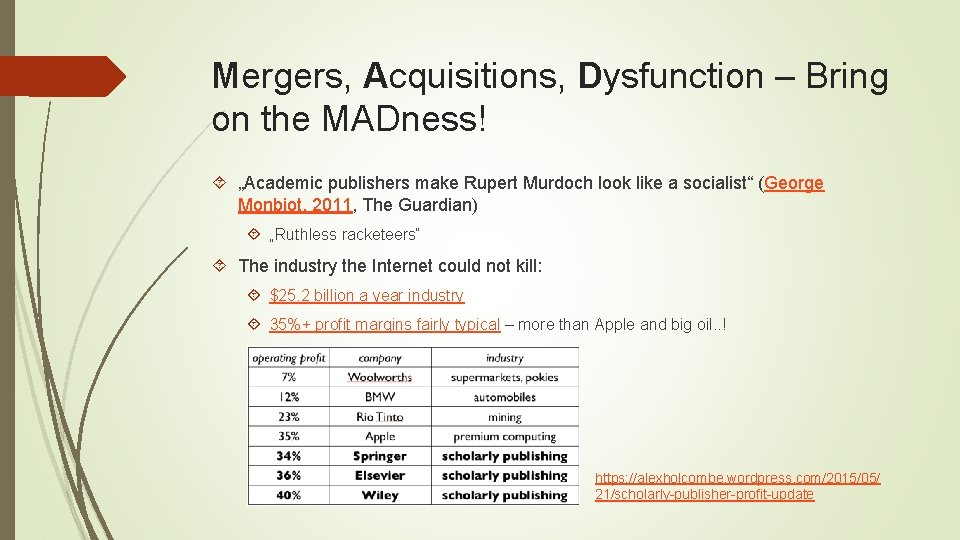
Mergers, Acquisitions, Dysfunction – Bring on the MADness! „Academic publishers make Rupert Murdoch look like a socialist“ (George Monbiot, 2011, The Guardian) „Ruthless racketeers“ The industry the Internet could not kill: $25. 2 billion a year industry 35%+ profit margins fairly typical – more than Apple and big oil. . ! https: //alexholcombe. wordpress. com/2015/05/ 21/scholarly-publisher-profit-update
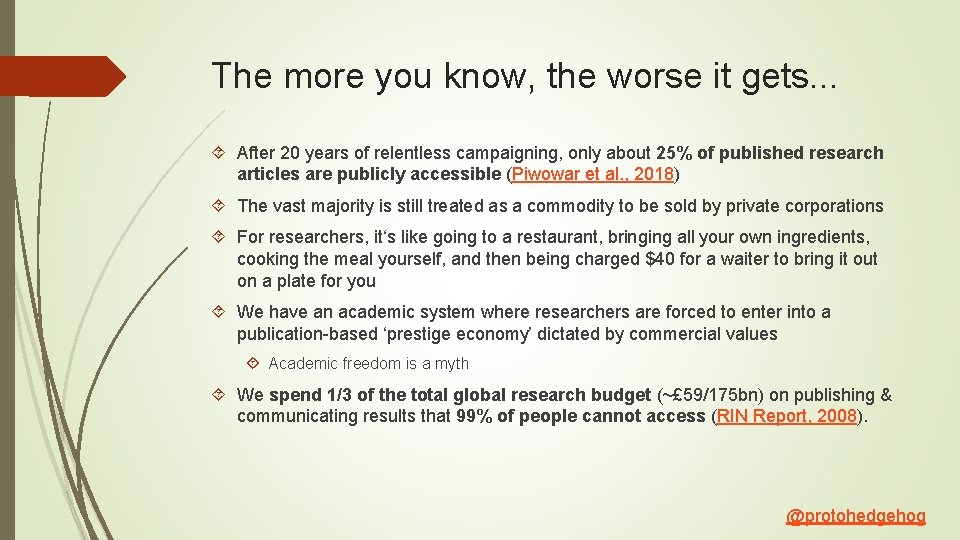
The more you know, the worse it gets. . . After 20 years of relentless campaigning, only about 25% of published research articles are publicly accessible (Piwowar et al. , 2018) The vast majority is still treated as a commodity to be sold by private corporations For researchers, it‘s like going to a restaurant, bringing all your own ingredients, cooking the meal yourself, and then being charged $40 for a waiter to bring it out on a plate for you We have an academic system where researchers are forced to enter into a publication-based ‘prestige economy’ dictated by commercial values Academic freedom is a myth We spend 1/3 of the total global research budget (~£ 59/175 bn) on publishing & communicating results that 99% of people cannot access (RIN Report, 2008). @protohedgehog
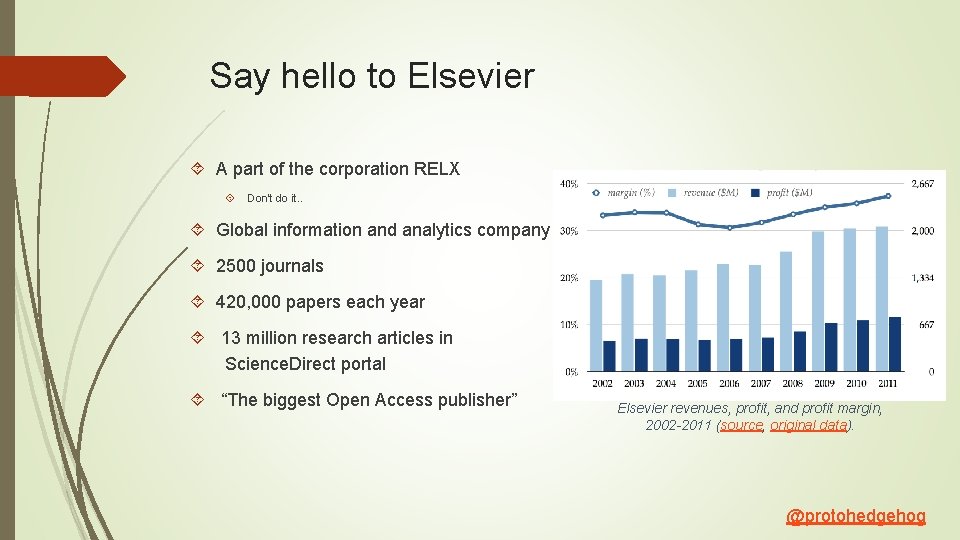
Say hello to Elsevier A part of the corporation RELX Don‘t do it. . Global information and analytics company 2500 journals 420, 000 papers each year 13 million research articles in Science. Direct portal “The biggest Open Access publisher” Elsevier revenues, profit, and profit margin, 2002 -2011 (source, original data). @protohedgehog
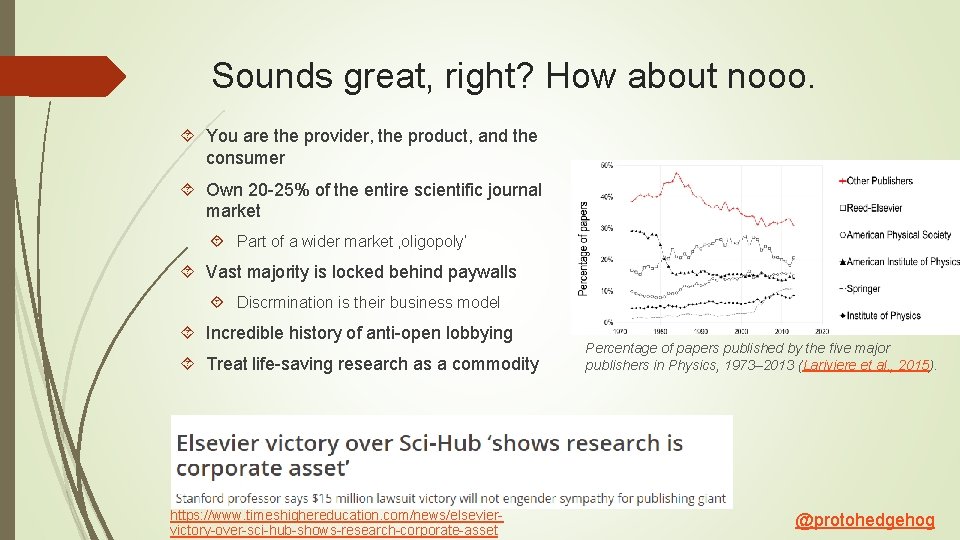
Sounds great, right? How about nooo. You are the provider, the product, and the consumer Own 20 -25% of the entire scientific journal market Part of a wider market ‚oligopoly‘ Vast majority is locked behind paywalls Discrmination is their business model Incredible history of anti-open lobbying Treat life-saving research as a commodity https: //www. timeshighereducation. com/news/elseviervictory-over-sci-hub-shows-research-corporate-asset Percentage of papers published by the five major publishers in Physics, 1973– 2013 (Lariviere et al. , 2015). @protohedgehog
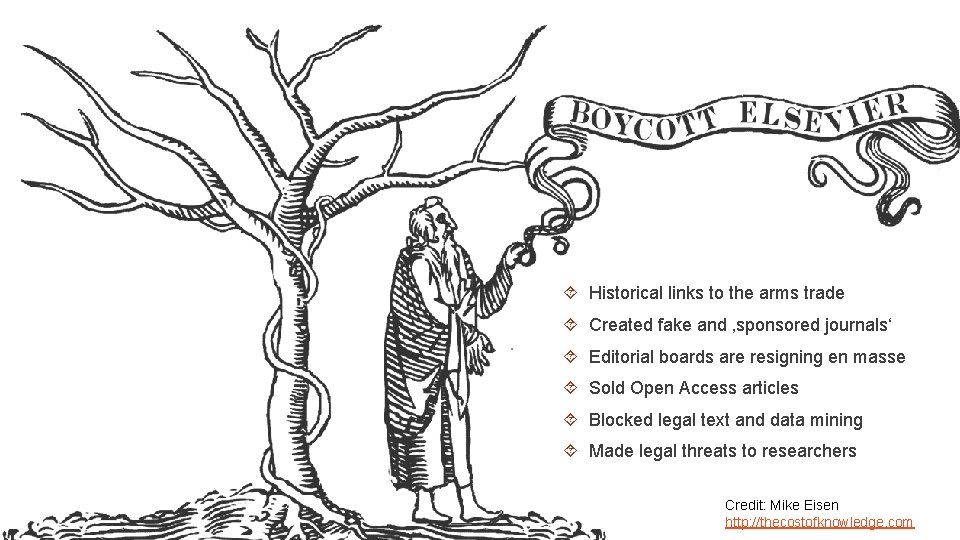
Historical links to the arms trade Created fake and ‚sponsored journals‘ Editorial boards are resigning en masse Sold Open Access articles Blocked legal text and data mining Made legal threats to researchers Credit: Mike Eisen http: //thecostofknowledge. com
The MADness of Elsevier I MAD Mergers @protohedgehog
I‘m going to make them an offer they can‘t refuse Elsevier are the largest scholarly publisher, a position gained through serial acquisition and mergers with smaller publishers In 1998, Elsevier and Wolters Kluwer called off a proposed merger between the two publishing groups after it became apparent that European regulatory bodies would intervene due to the monopolisation of scholarly publishing that would have resulted. Subsequently, the UK Office of Fair Trading standards released a report in 2002 investigating the market for STM journals after a merger between Elsevier and Harcourt. In 2016, Elsevier were referred to the UK Competition and Markets Authority following the advice of Ann Mc. Kechin MP during an inquiry into Open Access in 2013. These events all shook shareholders briefly, but they always seem to recover. . @protohedgehog
The MADness of Elsevier II MAD Acquisitions @protohedgehog
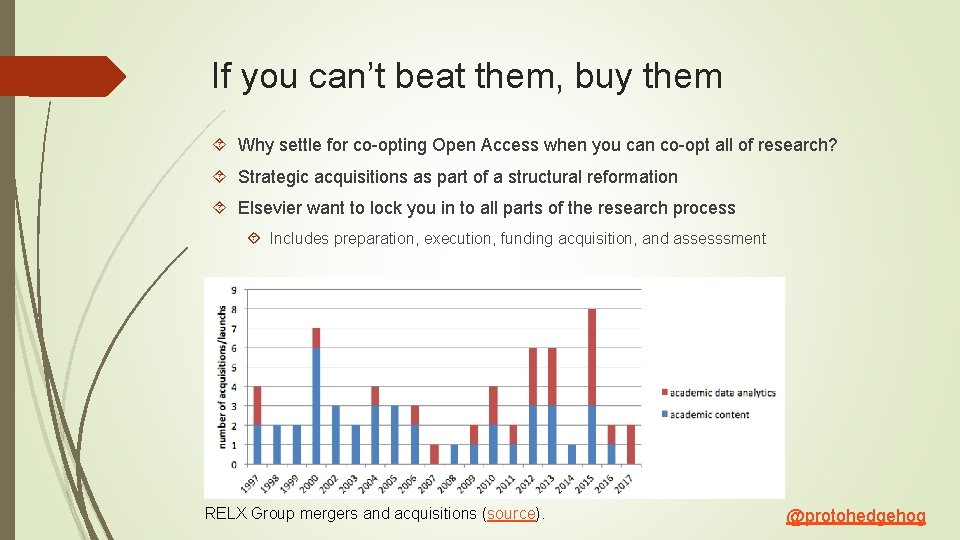
If you can’t beat them, buy them Why settle for co-opting Open Access when you can co-opt all of research? Strategic acquisitions as part of a structural reformation Elsevier want to lock you in to all parts of the research process Includes preparation, execution, funding acquisition, and assesssment RELX Group mergers and acquisitions (source). @protohedgehog
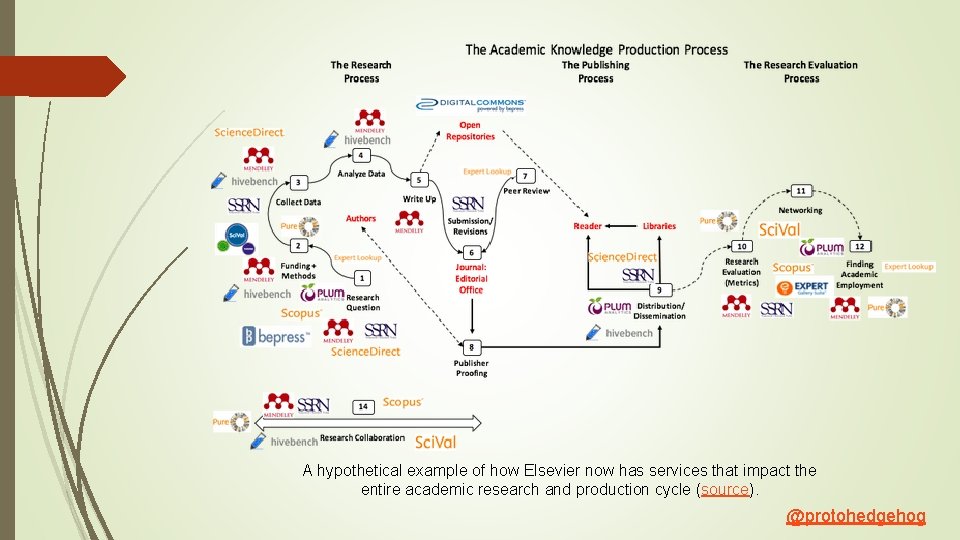
A hypothetical example of how Elsevier now has services that impact the entire academic research and production cycle (source). @protohedgehog
The MADness of Elsevier III MAD Dysfunction @protohedgehog
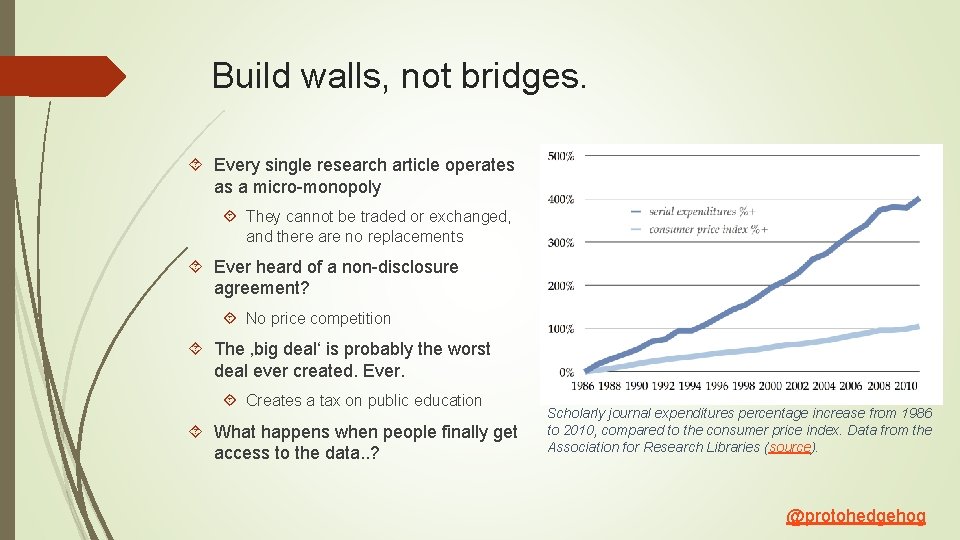
Build walls, not bridges. Every single research article operates as a micro-monopoly They cannot be traded or exchanged, and there are no replacements Ever heard of a non-disclosure agreement? No price competition The ‚big deal‘ is probably the worst deal ever created. Ever. Creates a tax on public education What happens when people finally get access to the data. . ? Scholarly journal expenditures percentage increase from 1986 to 2010, compared to the consumer price index. Data from the Association for Research Libraries (source). @protohedgehog
Viva la revolución? Project DEAL in Germany is causing quite a mess. . Strong negotiation tactics with cross-sectorial support Negligible impact of not renewing journal subscriptions Demonstrated quite effectively that Elsevier have nothing of value to offer So we should stop wasting billions on them each year Other countries around the world are gearing up to follow suit @protohedgehog
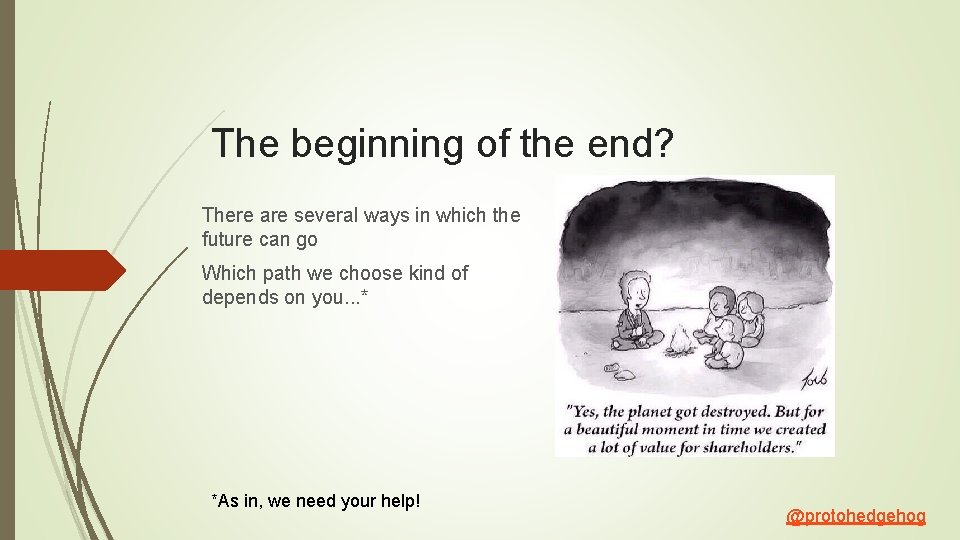
The beginning of the end? There are several ways in which the future can go Which path we choose kind of depends on you. . . * *As in, we need your help! @protohedgehog
What can we, here in this room, do? Stop reviewing, authoring and editing for Elsevier Fight for fairer copyright agreements (i. e. , public interest) Stop wasting money and support ongoing negotiations and boycotts Form new coalitions where they don‘t exist Work with education organisations and unions to actively support research institutes Raise awareness of their business practices, and the harm this is causing across the global higher education sector Find effective communication strategies: Mis-use of public funds Destruction of academic freedom Harmful copyright tactics Creation of a system of ‚knowledge apartheid‘ @protohedgehog
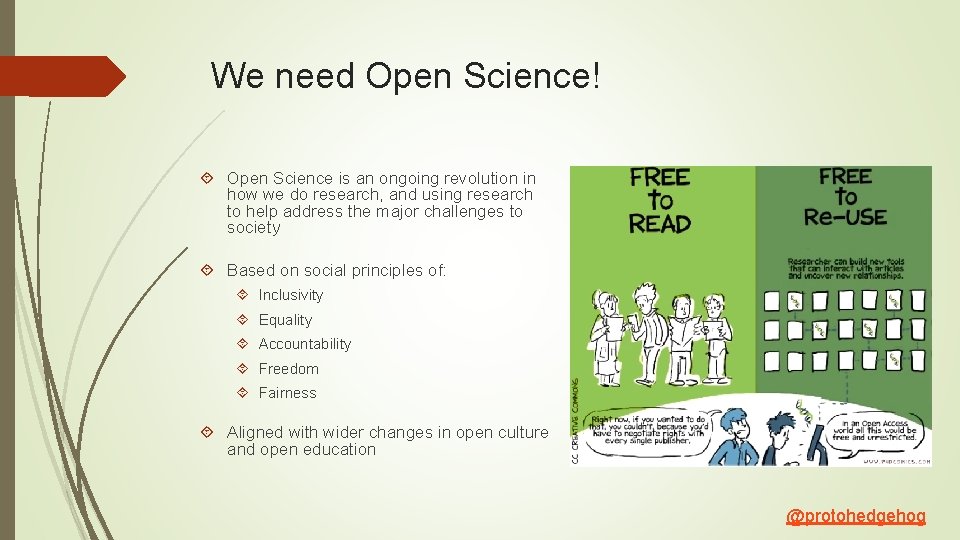
We need Open Science! Open Science is an ongoing revolution in how we do research, and using research to help address the major challenges to society Based on social principles of: Inclusivity Equality Accountability Freedom Fairness Aligned with wider changes in open culture and open education @protohedgehog
Want to find out more? Well, you‘ll just have to wait for now. . . (and also listen to the next three presentations!) Jon. tennant. 2@gmail. com @protohedgehog