
Merge Sort Merge Sort Merge Sort was developed
![Continued Merge Sort WHILE LCounter < len(Left. Half) DO Age[Main. Counter] = Left.](https://slidetodoc.com/presentation_image_h/eed65602ce34ecfef12277bf4e55b52e/image-30.jpg "Continued Merge Sort WHILE LCounter < len(Left. Half) DO Age[Main. Counter] = Left.")
- Slides: 32
Merge Sort
Merge Sort • Merge Sort was developed by John von Neumann in 1945.
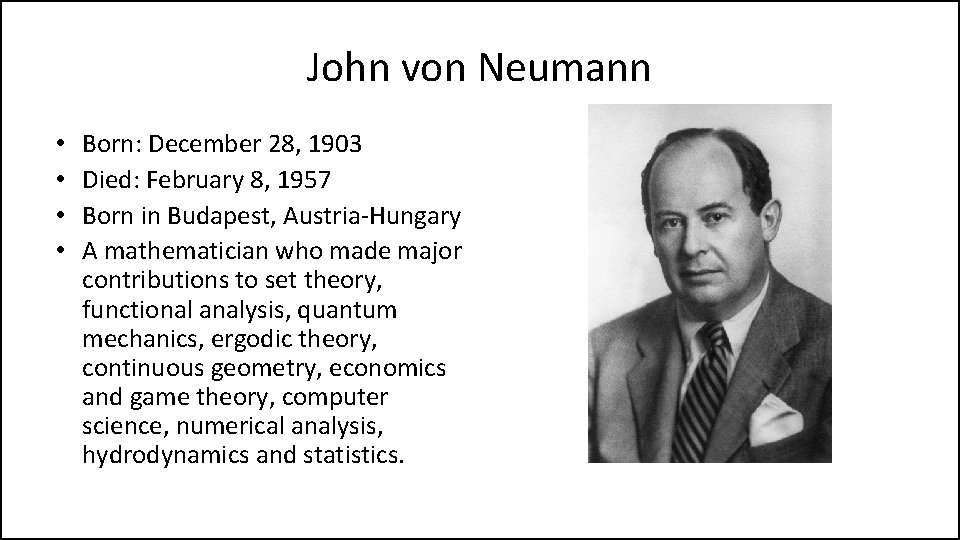
John von Neumann • • Born: December 28, 1903 Died: February 8, 1957 Born in Budapest, Austria-Hungary A mathematician who made major contributions to set theory, functional analysis, quantum mechanics, ergodic theory, continuous geometry, economics and game theory, computer science, numerical analysis, hydrodynamics and statistics.
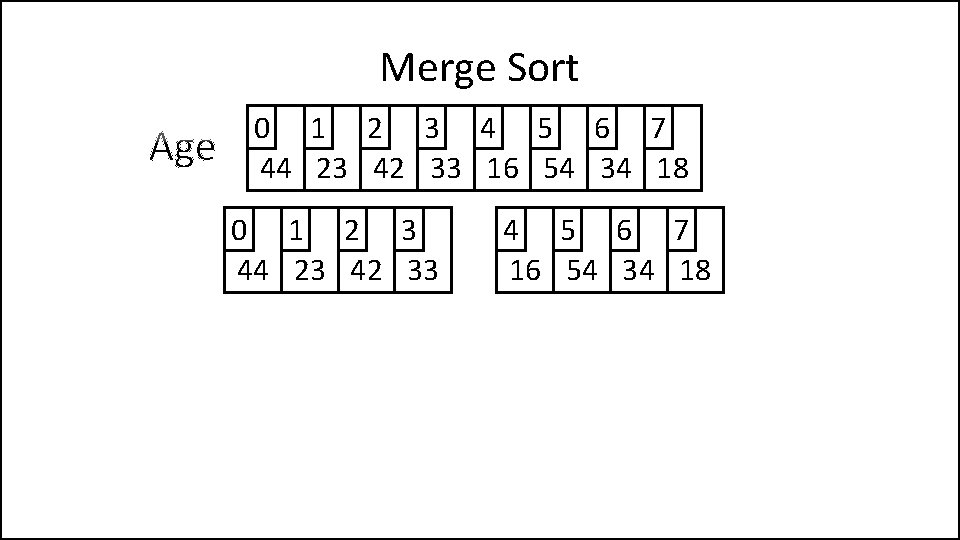
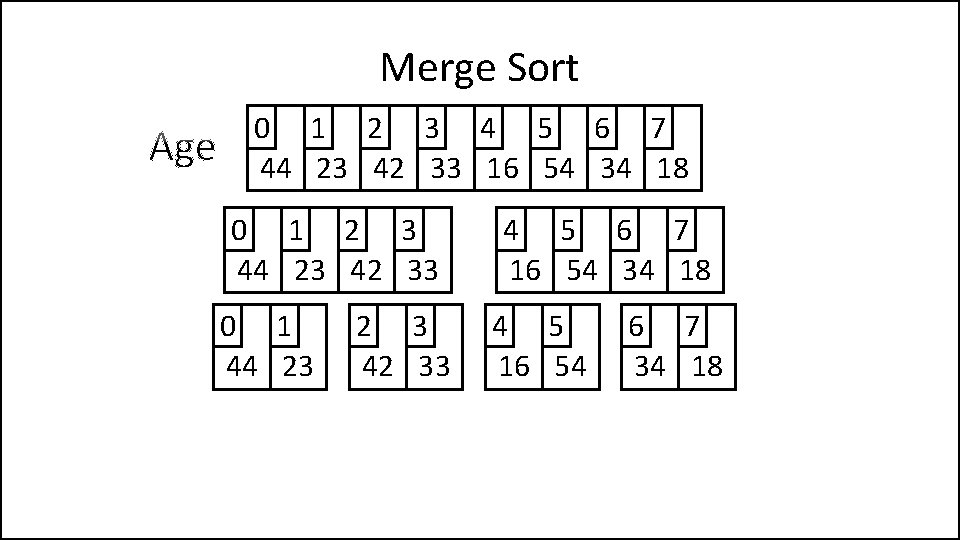
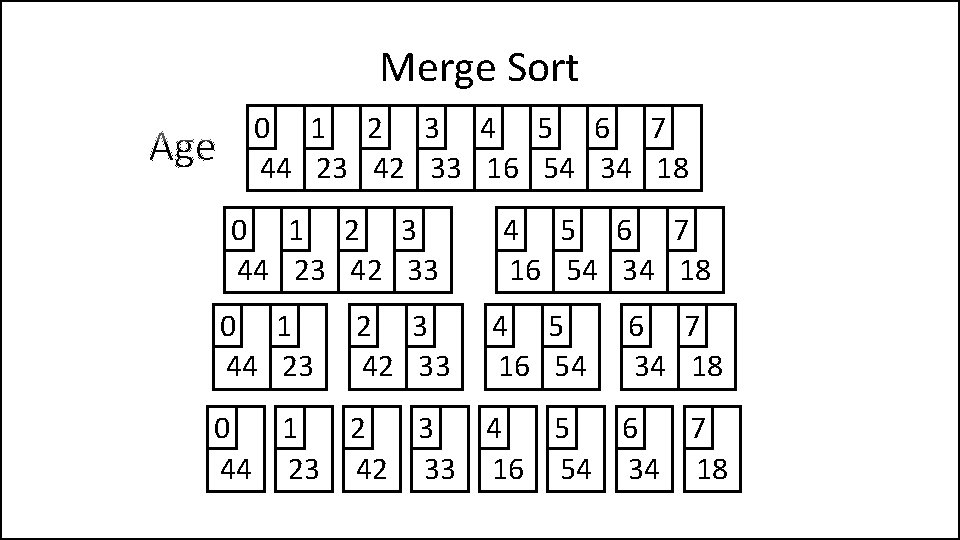
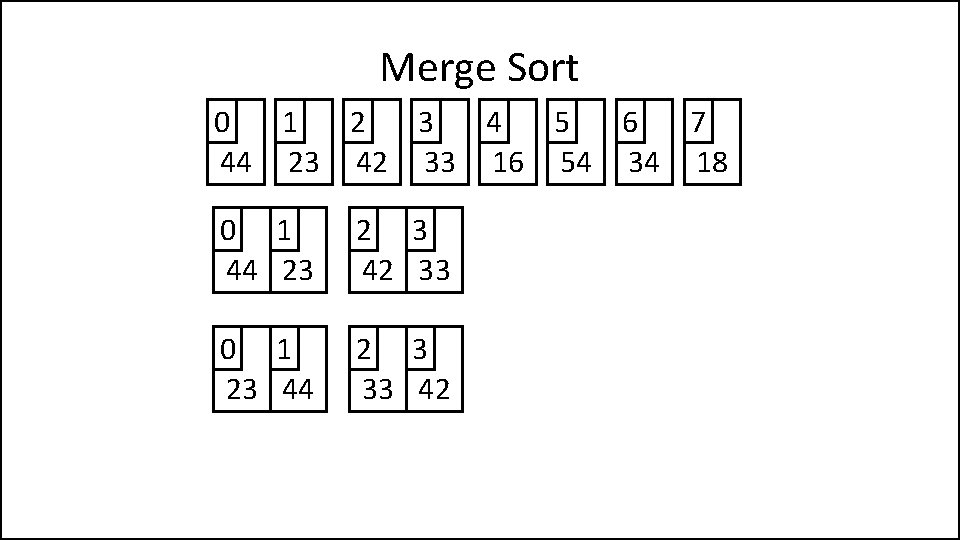
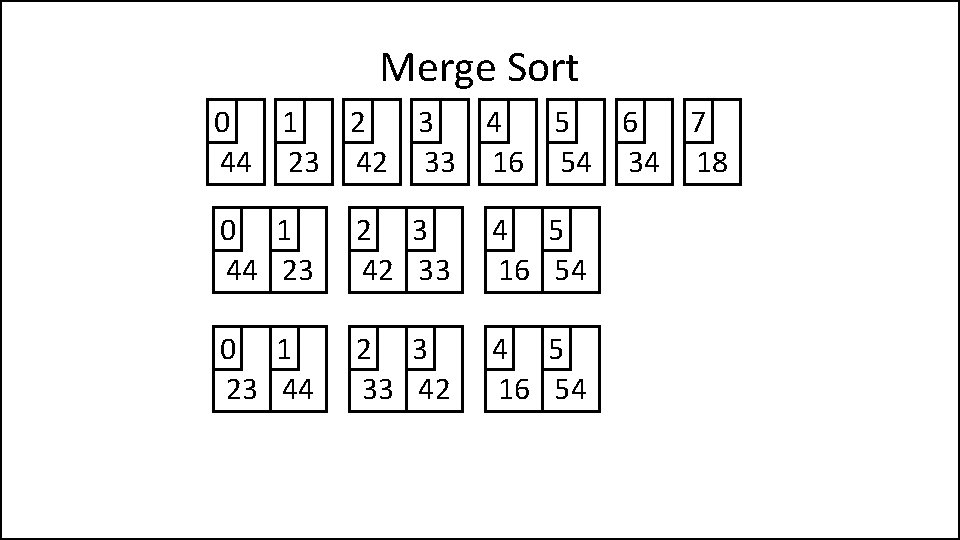
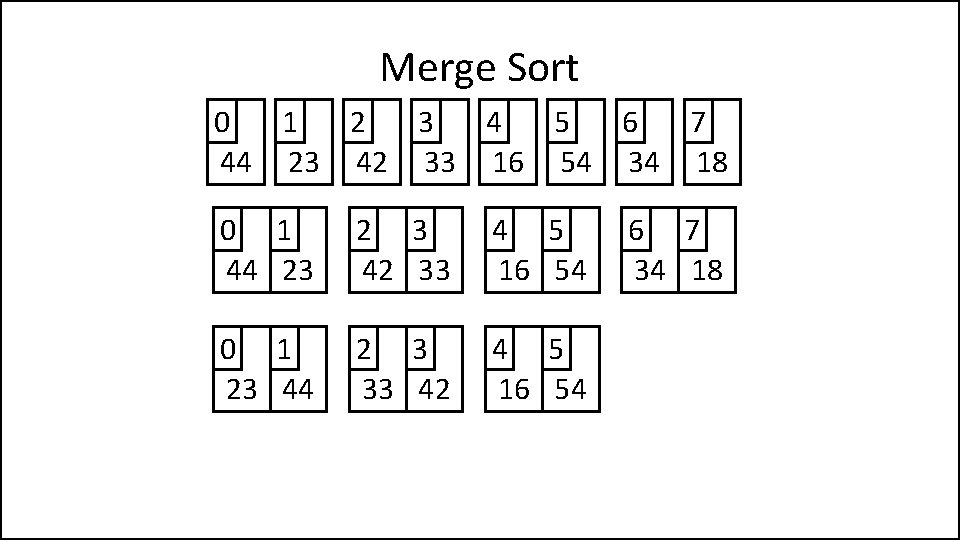
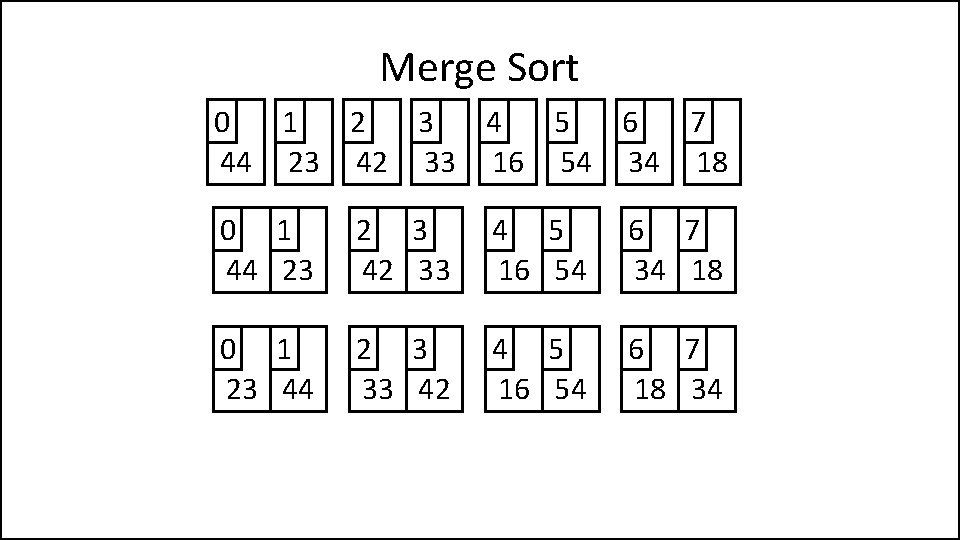
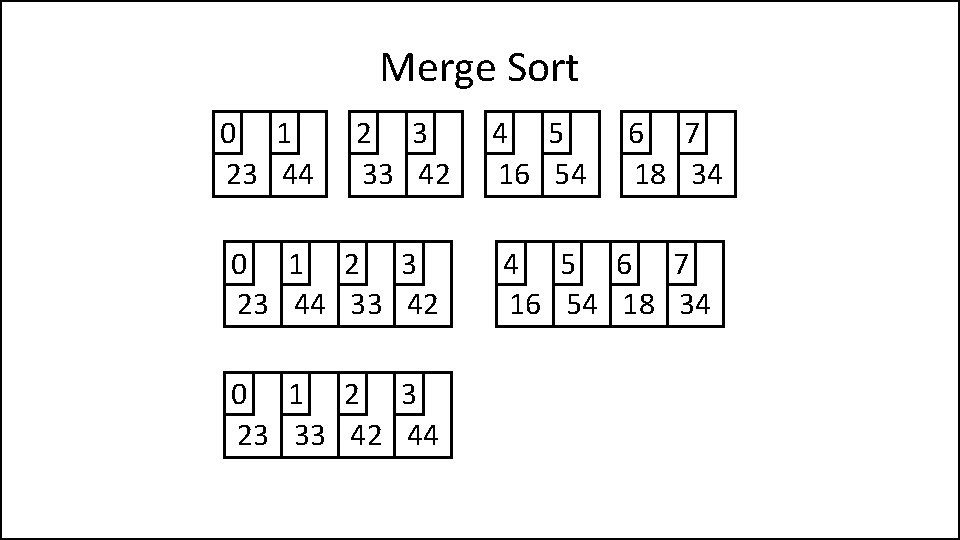
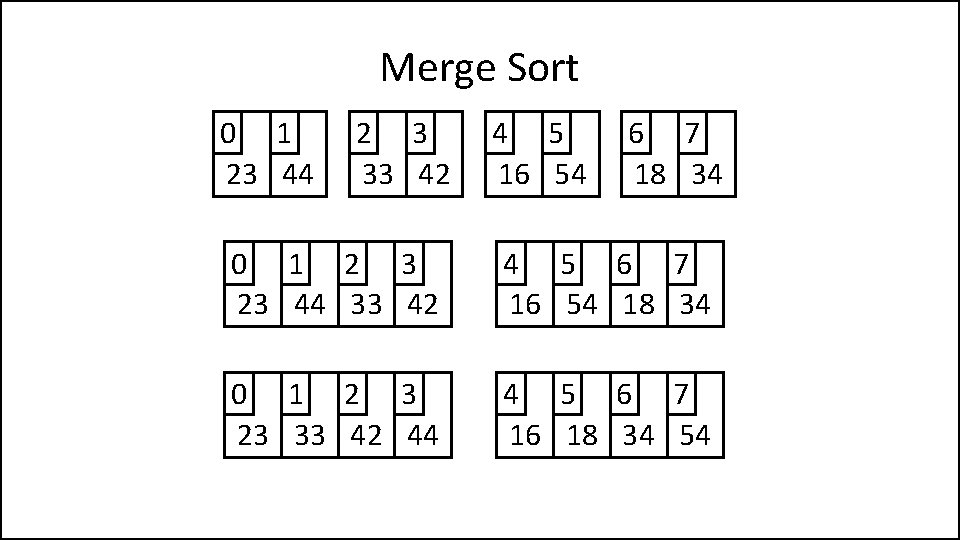
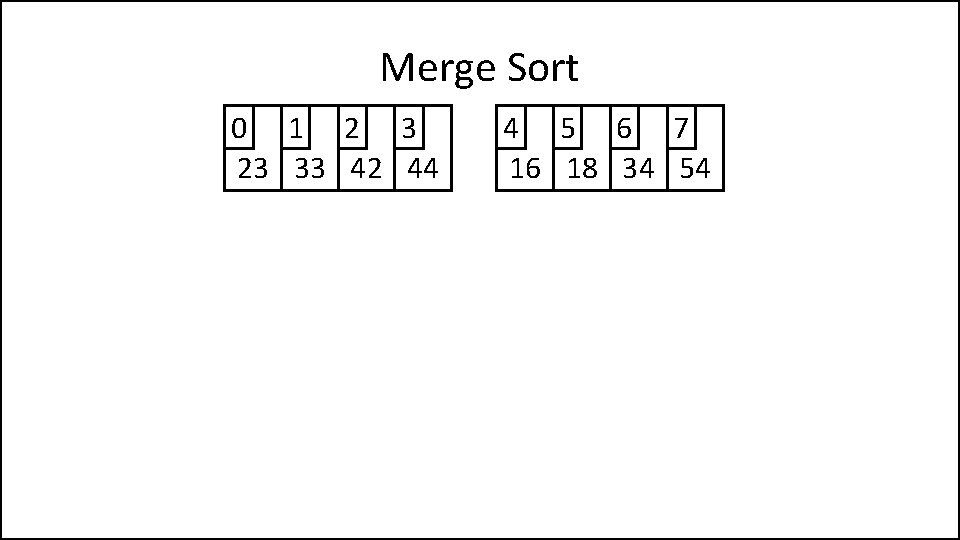
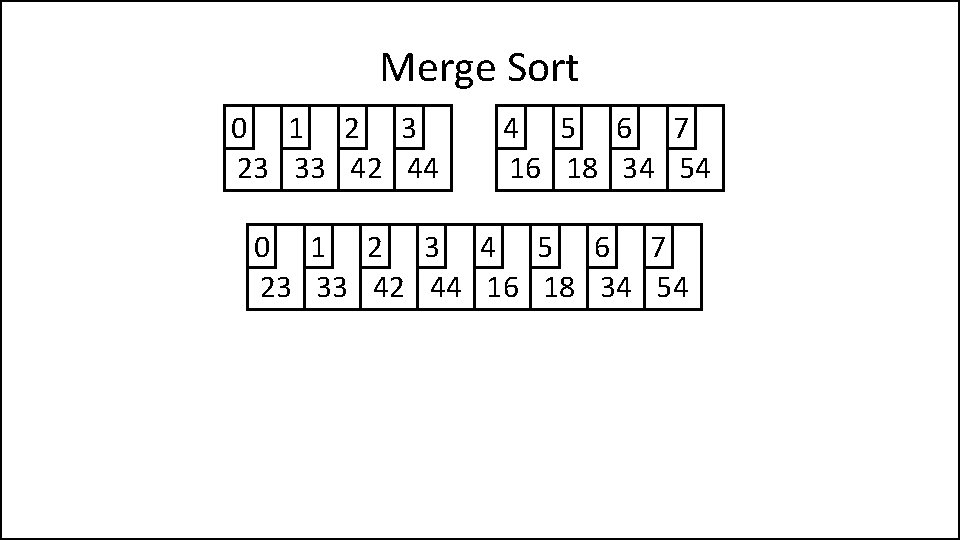
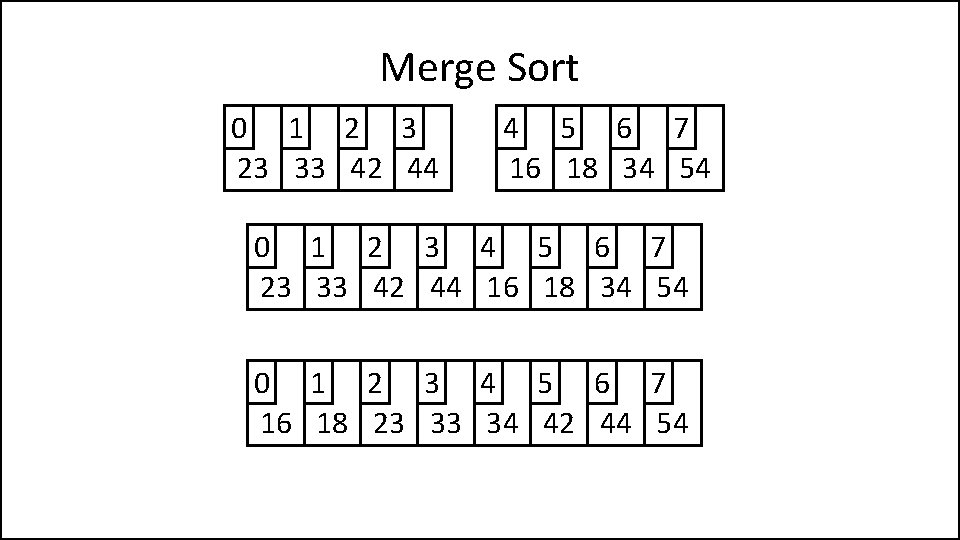
Merge Sort • Merge Sort used a “divide-and-conquer” strategy. • It’s a two-step process: – 1. Keep splitting the array in half until you end up with sub-arrays of one item (which are sorted by definition). – 2. Successively merge each sub-array together, and sort with each merge.
Merge Sort • Let’s look at an example:
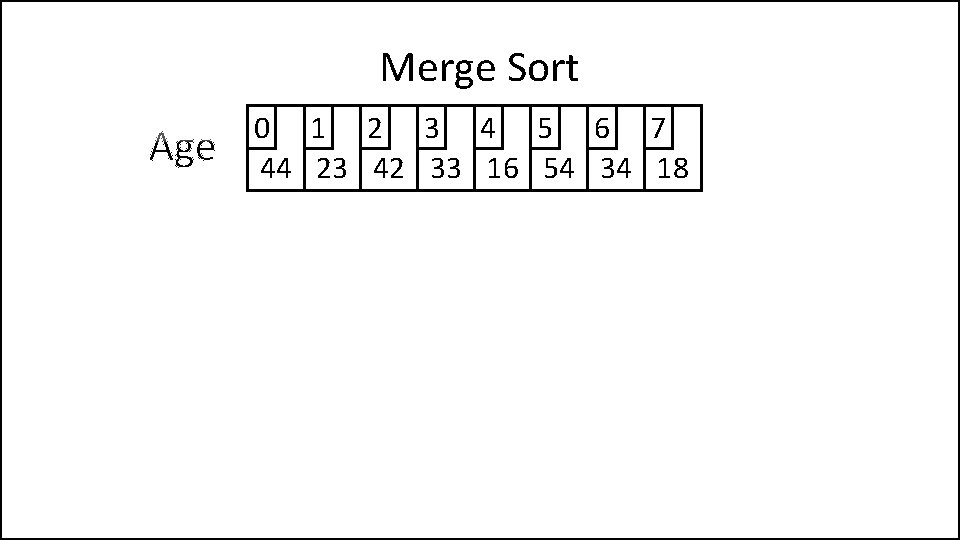
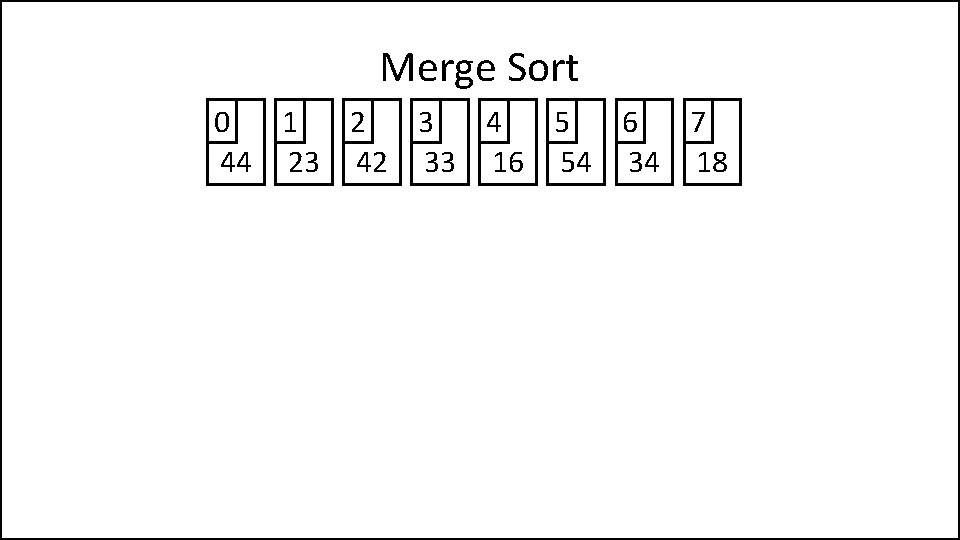
Merge Sort 0 1 2 3 4 5 6 7 44 23 42 33 16 54 34 18
Merge Sort 0 1 2 3 4 5 6 7 44 23 42 33 16 54 34 18 0 1 2 3 44 23 42 33 4 5 6 7 16 54 34 18
Merge Sort 0 1 2 3 4 5 6 7 44 23 42 33 16 54 34 18 0 1 2 3 44 23 42 33 0 1 44 23 2 3 42 33 4 5 6 7 16 54 34 18 4 5 16 54 6 7 34 18
Merge Sort 0 1 2 3 4 5 6 7 44 23 42 33 16 54 34 18 0 1 2 3 44 23 42 33 0 1 44 23 2 3 42 33 4 5 6 7 16 54 34 18 4 5 16 54 6 7 34 18 0 1 2 3 4 5 6 7 44 23 42 33 16 54 34 18
Merge Sort 0 1 2 3 4 5 6 7 44 23 42 33 16 54 34 18
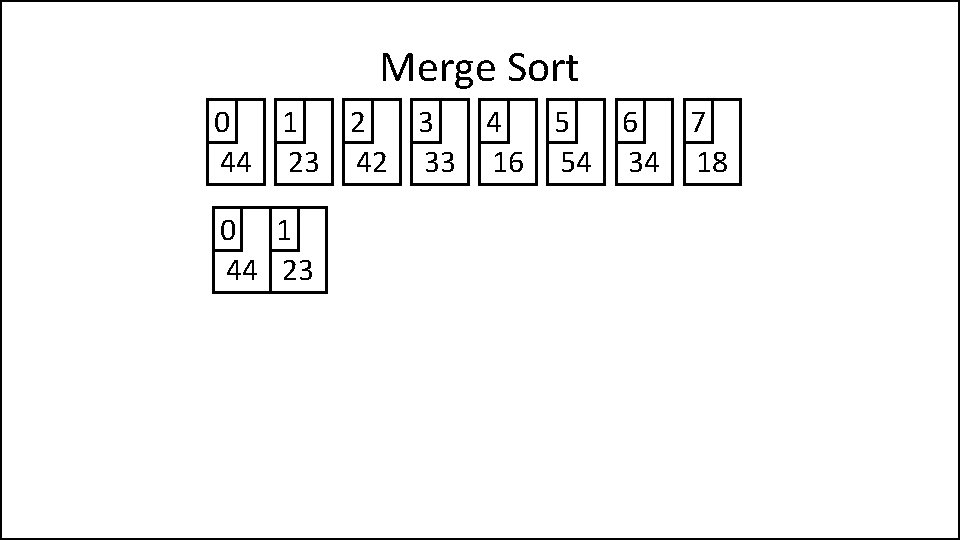
Merge Sort 0 1 2 3 4 5 6 7 44 23 42 33 16 54 34 18 0 1 44 23
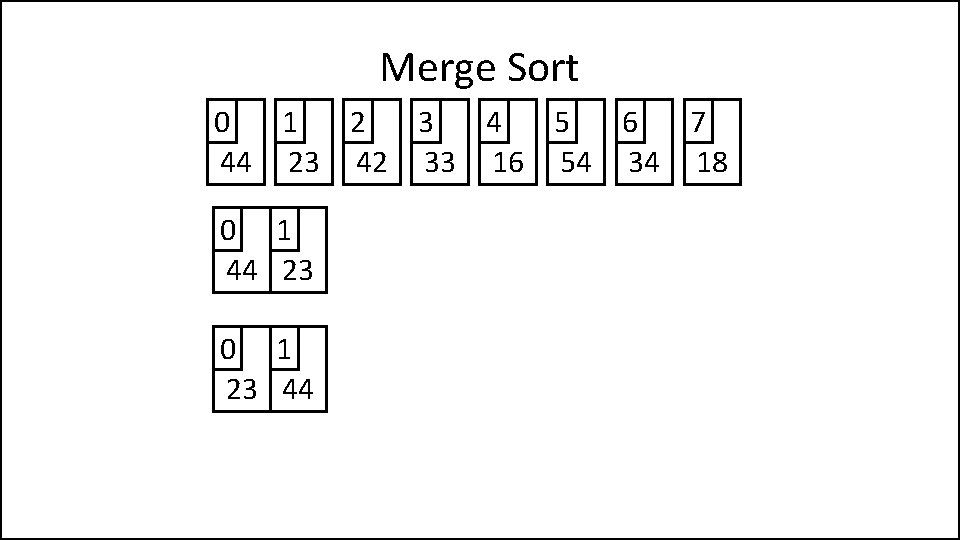
Merge Sort 0 1 2 3 4 5 6 7 44 23 42 33 16 54 34 18 0 1 44 23 0 1 23 44
Merge Sort 0 1 2 3 4 5 6 7 44 23 42 33 16 54 34 18 0 1 44 23 0 1 23 44 2 3 42 33
Merge Sort 0 1 2 3 4 5 6 7 44 23 42 33 16 54 34 18 0 1 44 23 2 3 42 33 0 1 23 44 2 3 33 42
Merge Sort 0 1 2 3 4 5 6 7 44 23 42 33 16 54 34 18 0 1 44 23 2 3 42 33 4 5 16 54 0 1 23 44 2 3 33 42 4 5 16 54
Merge Sort 0 1 2 3 4 5 6 7 44 23 42 33 16 54 34 18 0 1 44 23 2 3 42 33 4 5 16 54 0 1 23 44 2 3 33 42 4 5 16 54 6 7 34 18
Merge Sort 0 1 2 3 4 5 6 7 44 23 42 33 16 54 34 18 0 1 44 23 2 3 42 33 4 5 16 54 6 7 34 18 0 1 23 44 2 3 33 42 4 5 16 54 6 7 18 34
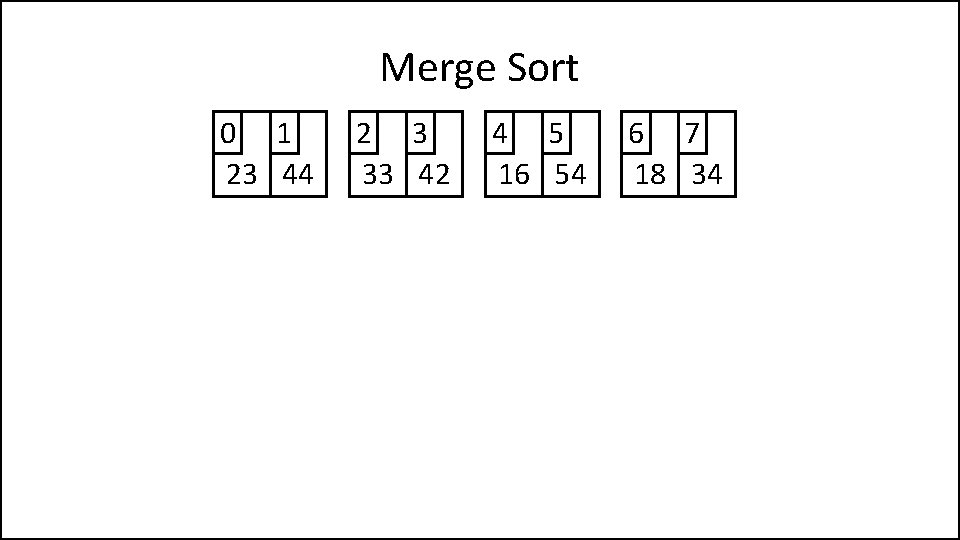
Merge Sort 0 1 23 44 2 3 33 42 4 5 16 54 6 7 18 34
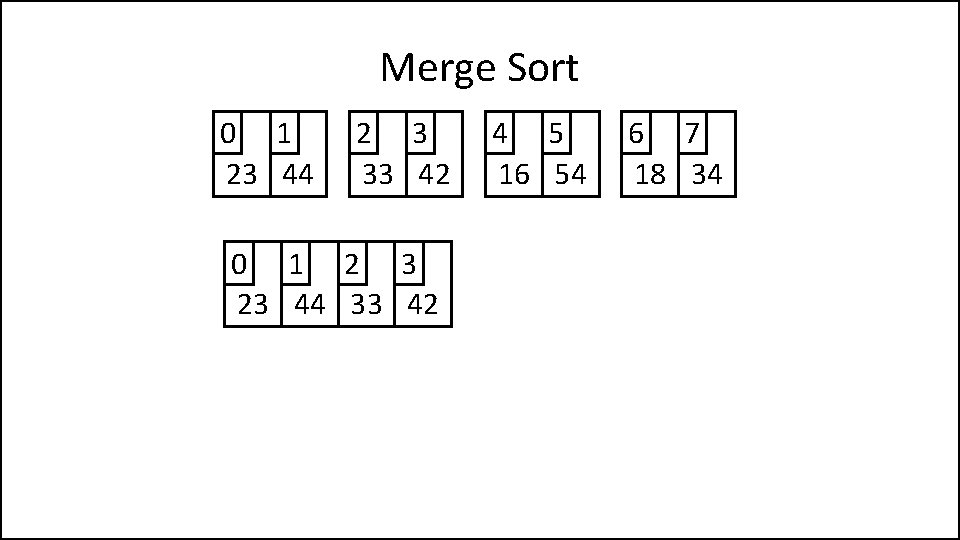
Merge Sort 0 1 23 44 2 3 33 42 0 1 2 3 23 44 33 42 4 5 16 54 6 7 18 34
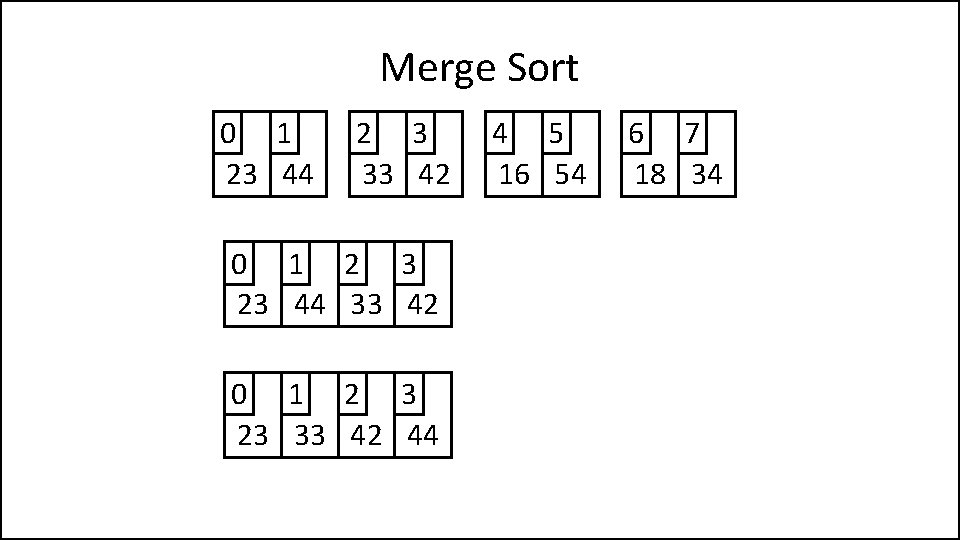
Merge Sort 0 1 23 44 2 3 33 42 0 1 2 3 23 44 33 42 0 1 2 3 23 33 42 44 4 5 16 54 6 7 18 34
Merge Sort 0 1 23 44 2 3 33 42 0 1 2 3 23 44 33 42 0 1 2 3 23 33 42 44 4 5 16 54 6 7 18 34 4 5 6 7 16 54 18 34
Merge Sort 0 1 23 44 2 3 33 42 4 5 16 54 6 7 18 34 0 1 2 3 23 44 33 42 4 5 6 7 16 54 18 34 0 1 2 3 23 33 42 44 4 5 6 7 16 18 34 54
Merge Sort 0 1 2 3 23 33 42 44 4 5 6 7 16 18 34 54
Merge Sort 0 1 2 3 23 33 42 44 4 5 6 7 16 18 34 54 0 1 2 3 4 5 6 7 23 33 42 44 16 18 34 54
Merge Sort 0 1 2 3 23 33 42 44 4 5 6 7 16 18 34 54 0 1 2 3 4 5 6 7 23 33 42 44 16 18 34 54 0 1 2 3 4 5 6 7 16 18 23 33 34 42 44 54
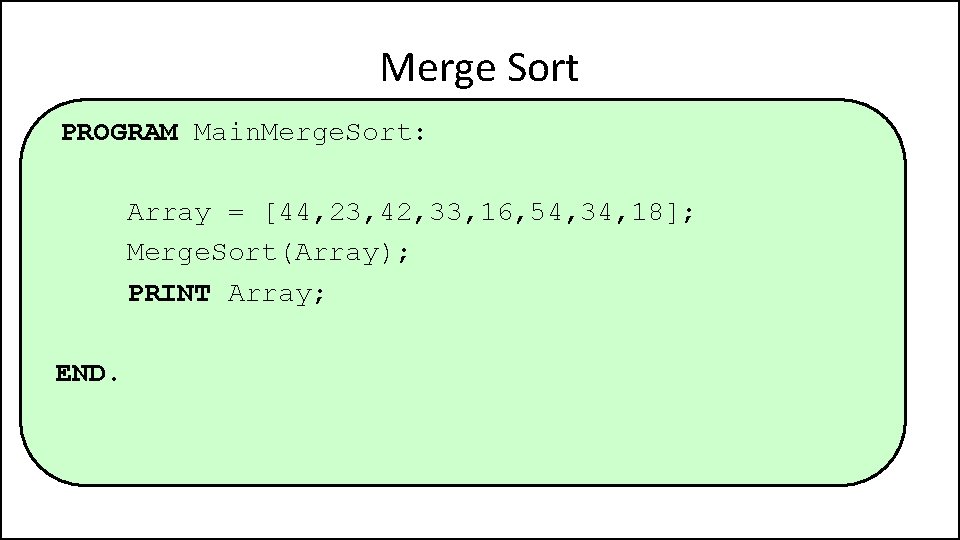
Merge Sort PROGRAM Main. Merge. Sort: Array = [44, 23, 42, 33, 16, 54, 34, 18]; Merge. Sort(Array); PRINT Array; END.
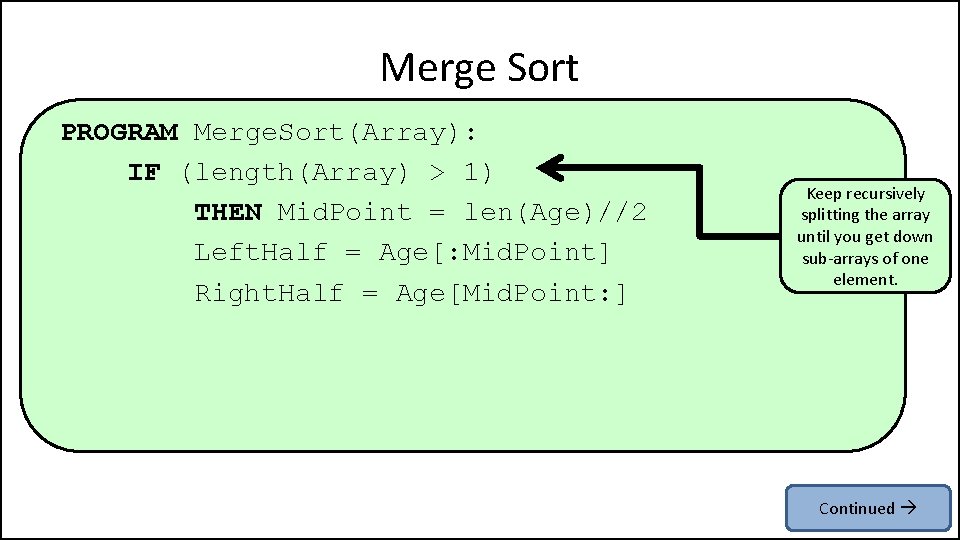
Merge Sort PROGRAM Merge. Sort(Array): IF (length(Array) > 1) THEN Mid. Point = len(Age)//2 Left. Half = Age[: Mid. Point] Right. Half = Age[Mid. Point: ] Keep recursively splitting the array until you get down sub-arrays of one element. Continued
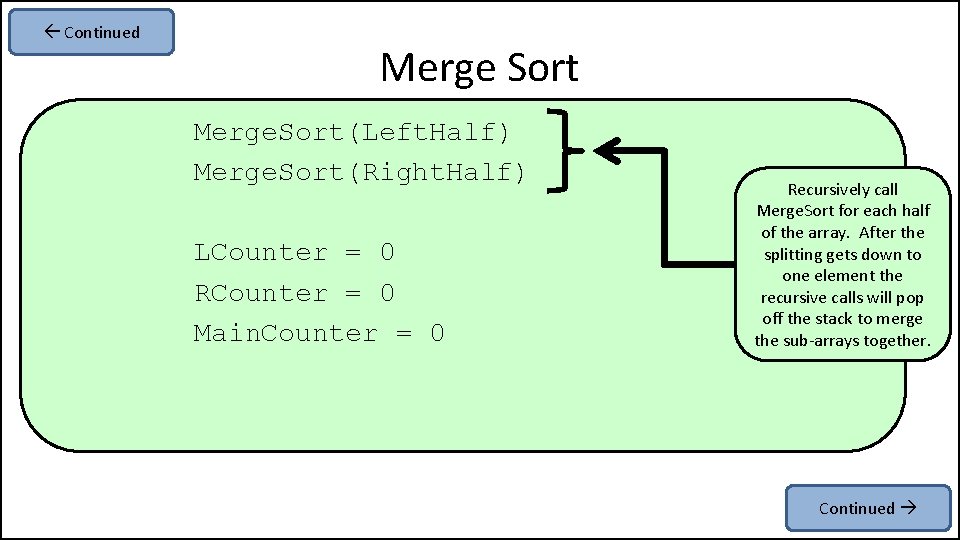
Continued Merge Sort Merge. Sort(Left. Half) Merge. Sort(Right. Half) LCounter = 0 RCounter = 0 Main. Counter = 0 Recursively call Merge. Sort for each half of the array. After the splitting gets down to one element the recursive calls will pop off the stack to merge the sub-arrays together. Continued
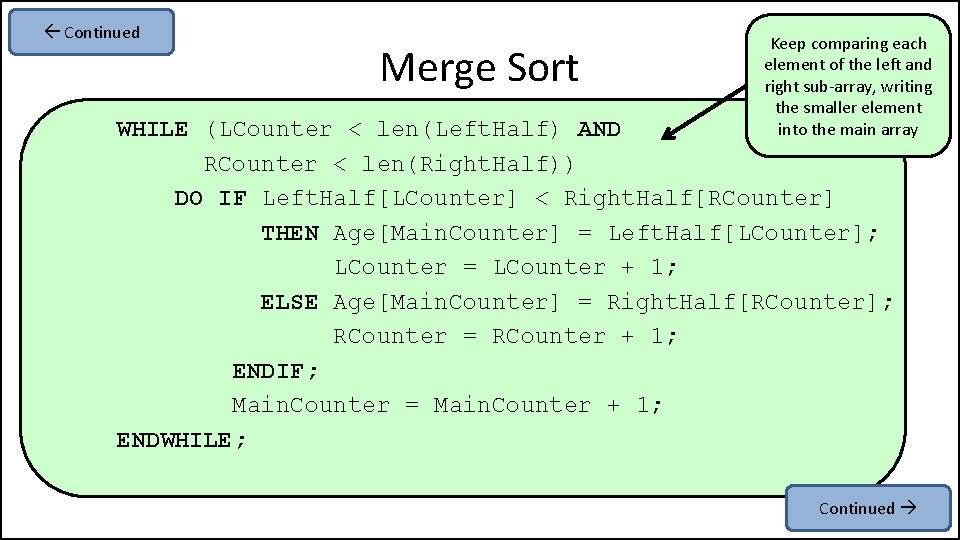
Continued Merge Sort Keep comparing each element of the left and right sub-array, writing the smaller element into the main array WHILE (LCounter < len(Left. Half) AND RCounter < len(Right. Half)) DO IF Left. Half[LCounter] < Right. Half[RCounter] THEN Age[Main. Counter] = Left. Half[LCounter]; LCounter = LCounter + 1; ELSE Age[Main. Counter] = Right. Half[RCounter]; RCounter = RCounter + 1; ENDIF; Main. Counter = Main. Counter + 1; ENDWHILE; Continued
Continued Merge Sort WHILE LCounter < len(Left. Half) DO Age[Main. Counter] = Left. Half[LCounter]; LCounter = LCounter + 1; After the comparisons are done, write either Main. Counter = Main. Counter + 1; the rest of the left array or the right array into ENDWHILE; the main array that WHILE Rcounter < len(Right. Half) DO Age[Main. Counter] = Right. Half[RCounter] RCounter = RCounter + 1 Main. Counter = Main. Counter + 1 ENDWHILE; ENDIF;
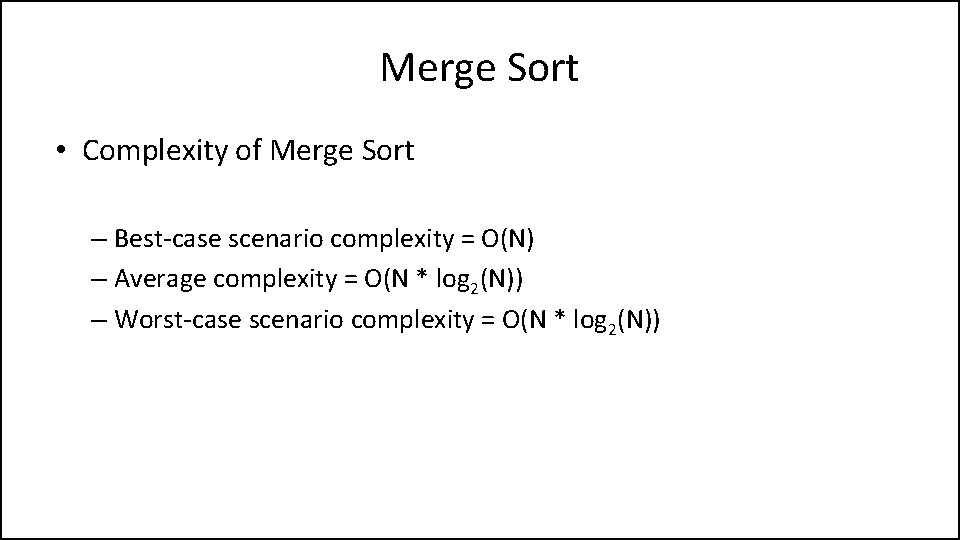
Merge Sort • Complexity of Merge Sort – Best-case scenario complexity = O(N) – Average complexity = O(N * log 2(N)) – Worst-case scenario complexity = O(N * log 2(N))
etc.