
Mercy Corps PAHAL Data Use 30 November 2017

Mercy Corps PAHAL Data Use 30 November 2017
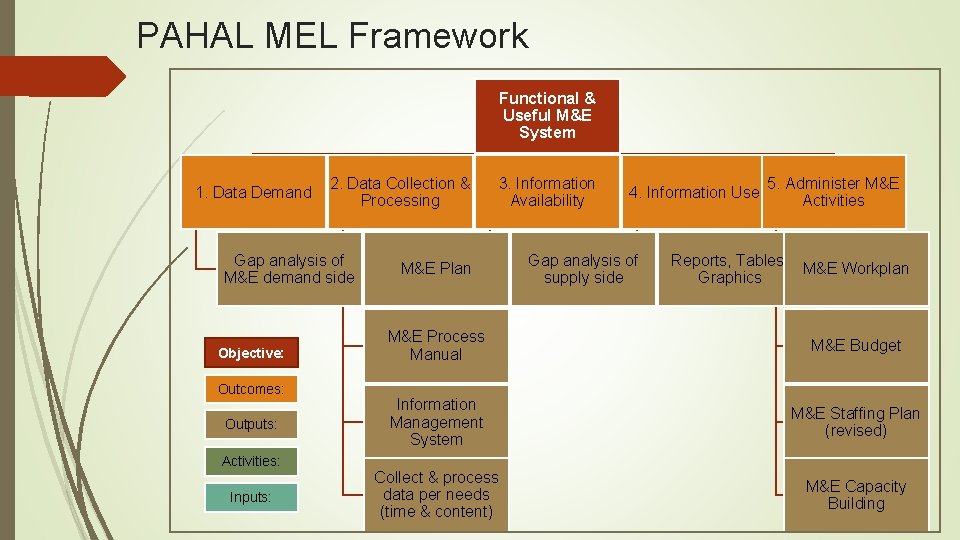
PAHAL MEL Framework Functional & Useful M&E System 1. Data Demand 2. Data Collection & Processing Gap analysis of M&E demand side Objective: Outcomes: Outputs: Activities: Inputs: 3. Information Availability M&E Plan 4. Information Use Gap analysis of supply side 5. Administer M&E Activities Reports, Tables, M&E Workplan Graphics M&E Process Manual M&E Budget Information Management System M&E Staffing Plan (revised) Collect & process data per needs (time & content) M&E Capacity Building
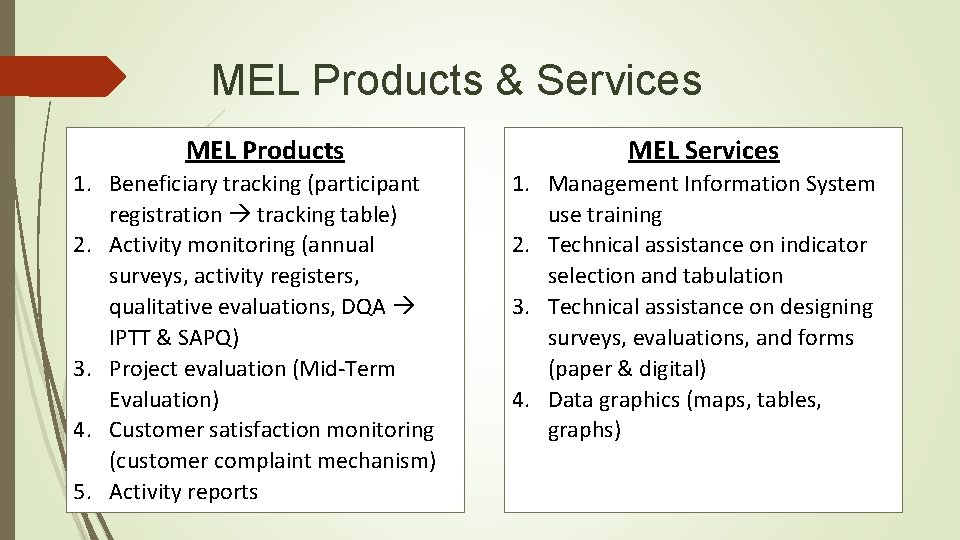
MEL Products & Services MEL Products 1. Beneficiary tracking (participant registration tracking table) 2. Activity monitoring (annual surveys, activity registers, qualitative evaluations, DQA IPTT & SAPQ) 3. Project evaluation (Mid-Term Evaluation) 4. Customer satisfaction monitoring (customer complaint mechanism) 5. Activity reports MEL Services 1. Management Information System use training 2. Technical assistance on indicator selection and tabulation 3. Technical assistance on designing surveys, evaluations, and forms (paper & digital) 4. Data graphics (maps, tables, graphs)
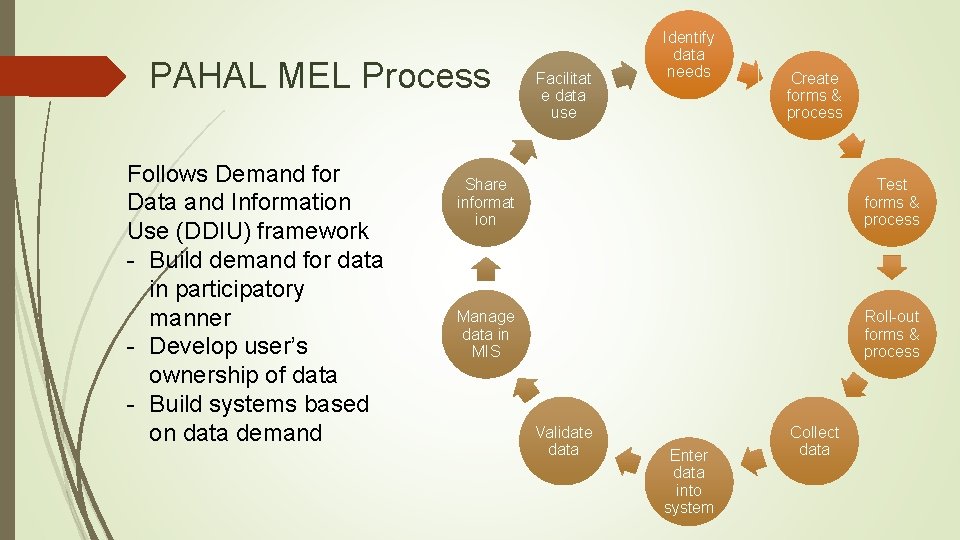
PAHAL MEL Process Follows Demand for Data and Information Use (DDIU) framework - Build demand for data in participatory manner - Develop user’s ownership of data - Build systems based on data demand Facilitat e data use Identify data needs Create forms & process Share informat ion Test forms & process Manage data in MIS Roll-out forms & process Validate data Enter data into system Collect data
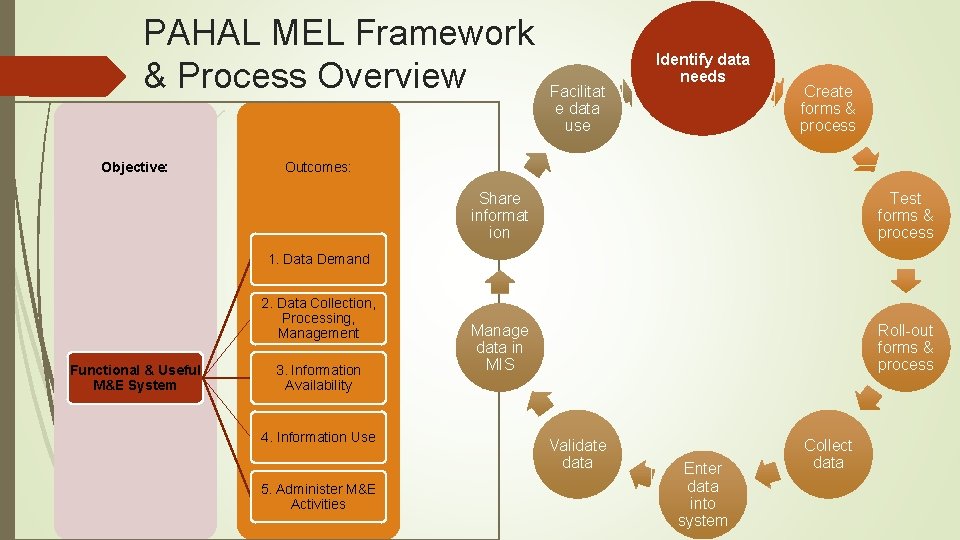
PAHAL MEL Framework & Process Overview Objective: Facilitat e data use Identify data needs Create forms & process Outcomes: Share informat ion Test forms & process Manage data in MIS Roll-out forms & process 1. Data Demand 2. Data Collection, Processing, Management Functional & Useful M&E System 3. Information Availability 4. Information Use 5. Administer M&E Activities Validate data Enter data into system Collect data

Demand for Data and Information Use Thematic Sector WASH Decisions Water Available water sources in the vicinity and their possible use Where to promote hand washing more? Type of Data Disaggregation Needed % of hand. By washers Location(VDC) By Caste/Ethnicity By HH Type # By source type # By potential use Location Discharge Reliability Quality Dispute Type of Data Frequency Stakeholders Output Needed Table Quarterly Social Mobiliser – Geocoverage area tagged District LNGO – For activity planning and budgeting Regional Office Table Yearly Social Mobiliser – to Geo-tagged determine areas to cover
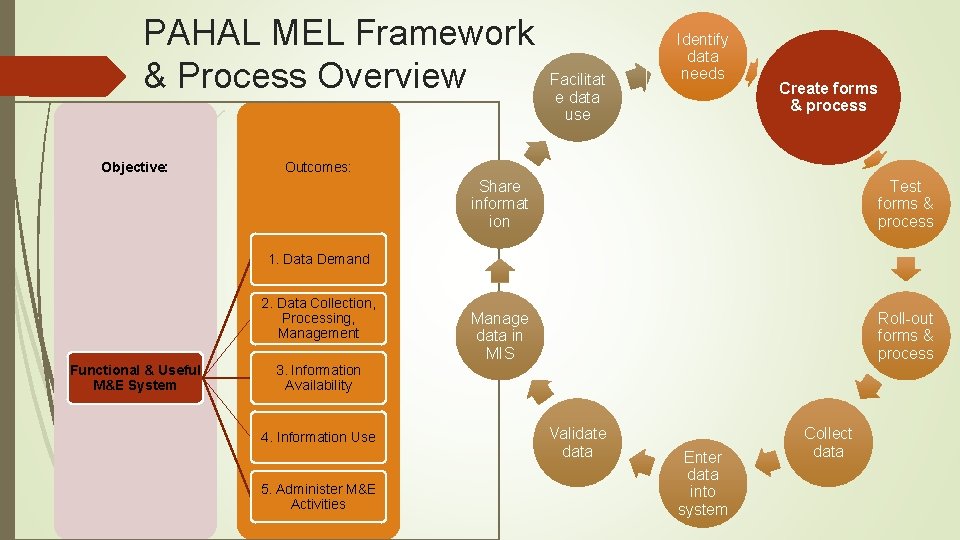
PAHAL MEL Framework & Process Overview Objective: Facilitat e data use Identify data needs Create forms & process Outcomes: Share informat ion Test forms & process Manage data in MIS Roll-out forms & process 1. Data Demand 2. Data Collection, Processing, Management Functional & Useful M&E System 3. Information Availability 4. Information Use 5. Administer M&E Activities Validate data Enter data into system Collect data
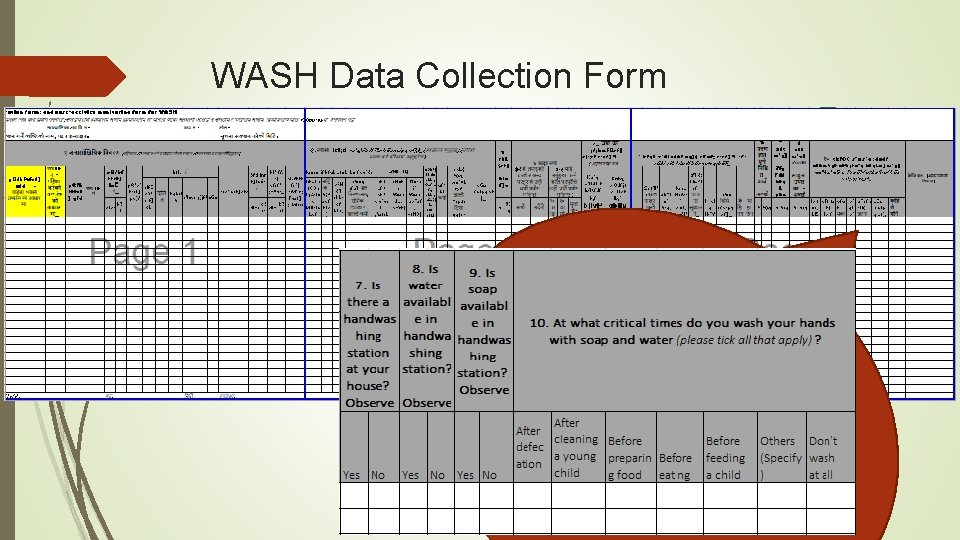
WASH Data Collection Form
Water Data Collection Form
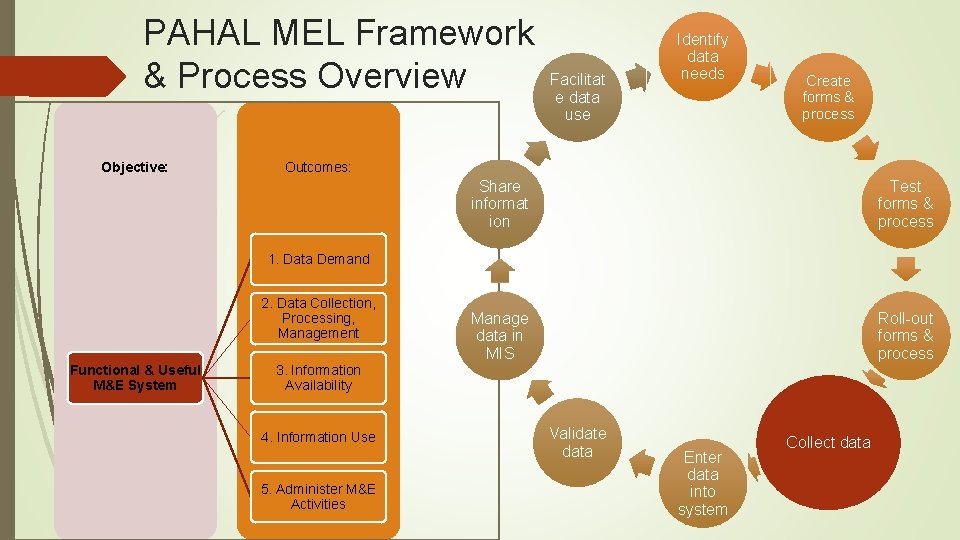
PAHAL MEL Framework & Process Overview Objective: Facilitat e data use Identify data needs Create forms & process Outcomes: Share informat ion Test forms & process Manage data in MIS Roll-out forms & process 1. Data Demand 2. Data Collection, Processing, Management Functional & Useful M&E System 3. Information Availability 4. Information Use 5. Administer M&E Activities Validate data Enter data into system Collect data
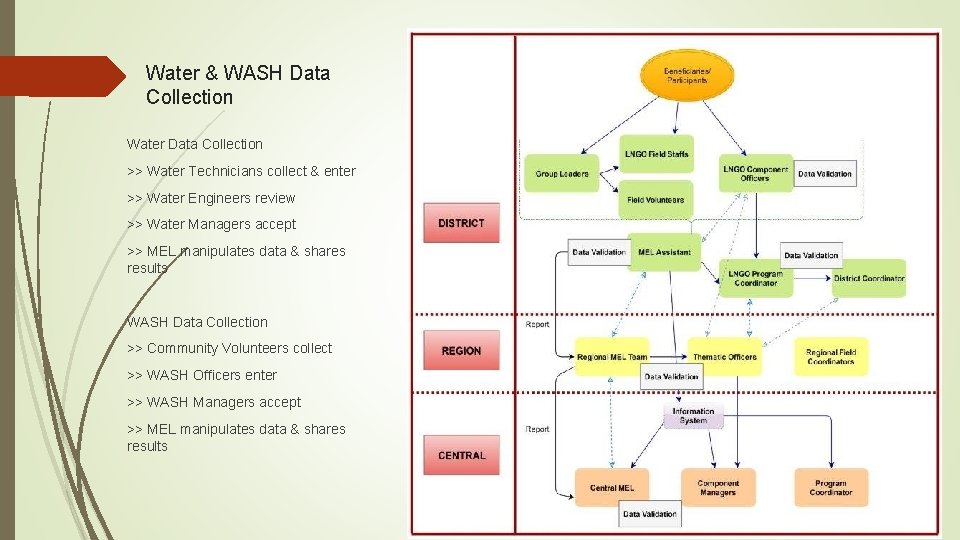
Water & WASH Data Collection Water Data Collection >> Water Technicians collect & enter >> Water Engineers review >> Water Managers accept >> MEL manipulates data & shares results WASH Data Collection >> Community Volunteers collect >> WASH Officers enter >> WASH Managers accept >> MEL manipulates data & shares results
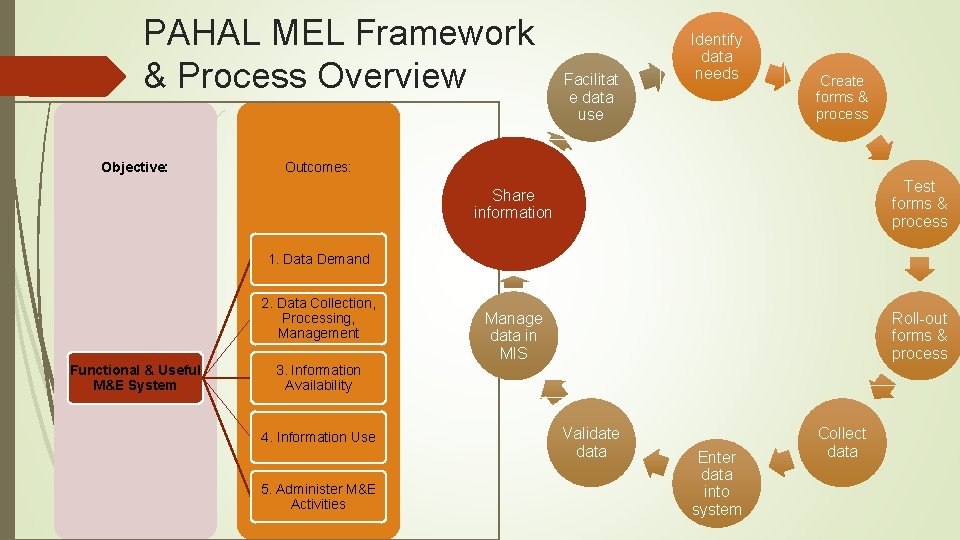
PAHAL MEL Framework & Process Overview Objective: Facilitat e data use Identify data needs Create forms & process Outcomes: Share information Test forms & process Manage data in MIS Roll-out forms & process 1. Data Demand 2. Data Collection, Processing, Management Functional & Useful M&E System 3. Information Availability 4. Information Use 5. Administer M&E Activities Validate data Enter data into system Collect data
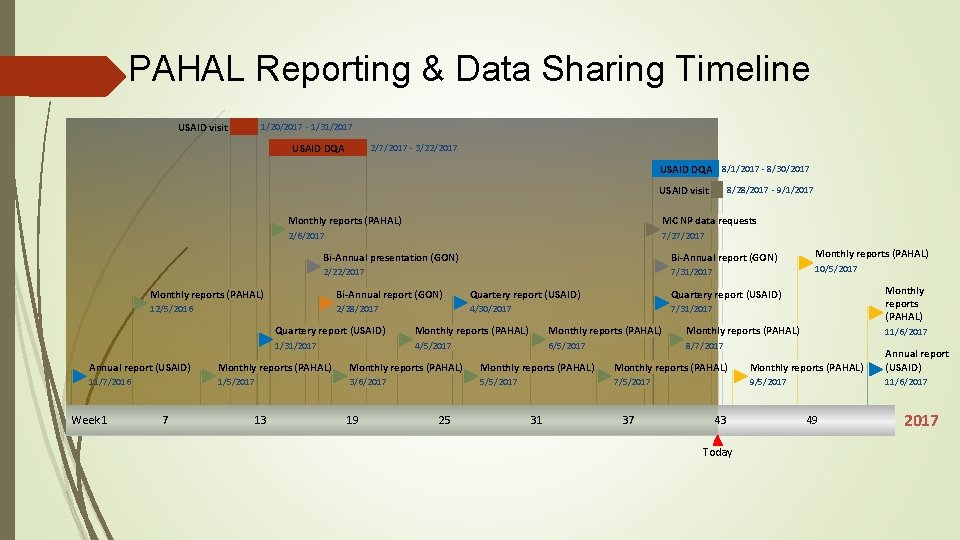
PAHAL Reporting & Data Sharing Timeline USAID visit 1/20/2017 - 1/31/2017 USAID DQA 2/7/2017 - 3/22/2017 USAID DQA 8/1/2017 - 8/30/2017 USAID visit 8/28/2017 - 9/1/2017 Monthly reports (PAHAL) MC NP data requests 2/6/2017 7/27/2017 Bi-Annual presentation (GON) Bi-Annual report (GON) 2/22/2017 7/31/2017 Monthly reports (PAHAL) Bi-Annual report (GON) Quartery report (USAID) 12/5/2016 2/28/2017 4/30/2017 7/31/2017 Quartery report (USAID) Monthly reports (PAHAL) 1/31/2017 4/5/2017 6/5/2017 8/7/2017 Monthly reports (PAHAL) 10/5/2017 Monthly reports (PAHAL) 11/6/2017 Annual report (USAID) Monthly reports (PAHAL) Monthly reports (PAHAL) Annual report (USAID) 11/7/2016 1/5/2017 3/6/2017 5/5/2017 7/5/2017 9/5/2017 11/6/2017 Week 1 7 13 19 25 31 37 43 Today 49 2017
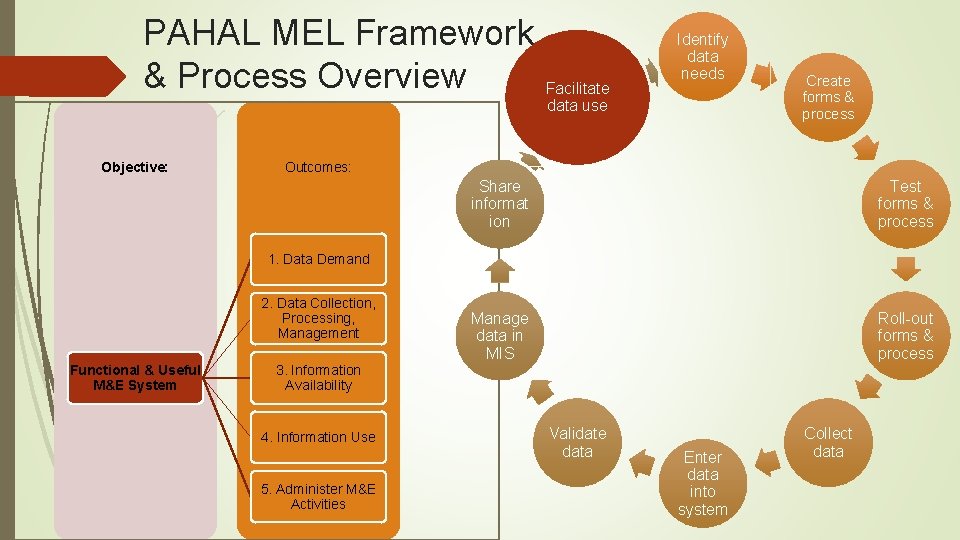
PAHAL MEL Framework & Process Overview Objective: Facilitate data use Identify data needs Create forms & process Outcomes: Share informat ion Test forms & process Manage data in MIS Roll-out forms & process 1. Data Demand 2. Data Collection, Processing, Management Functional & Useful M&E System 3. Information Availability 4. Information Use 5. Administer M&E Activities Validate data Enter data into system Collect data
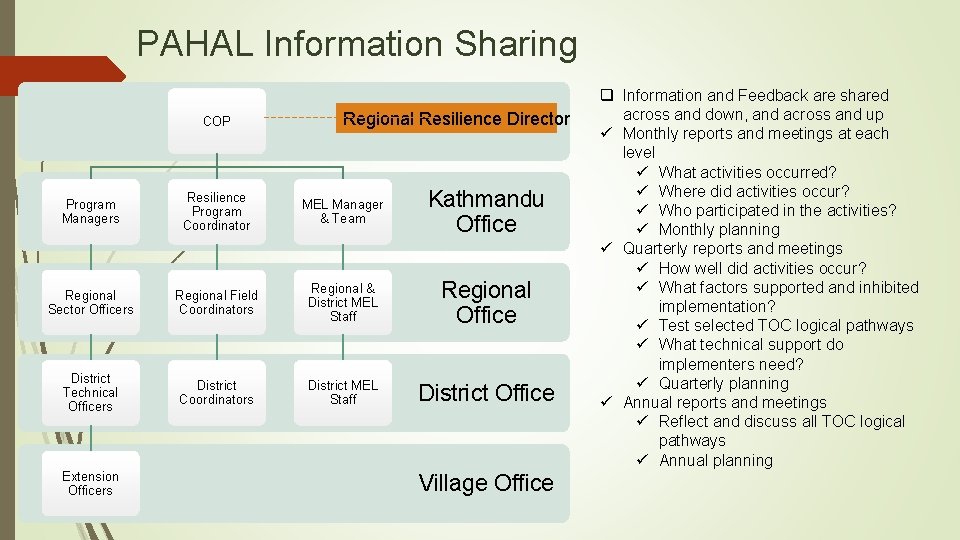
PAHAL Information Sharing COP Regional Resilience Director Program Managers Resilience Program Coordinator MEL Manager & Team Kathmandu Office Regional Sector Officers Regional Field Coordinators Regional & District MEL Staff Regional Office District Technical Officers District Coordinators District MEL Staff District Office Extension Officers Village Office q Information and Feedback are shared across and down, and across and up ü Monthly reports and meetings at each level ü What activities occurred? ü Where did activities occur? ü Who participated in the activities? ü Monthly planning ü Quarterly reports and meetings ü How well did activities occur? ü What factors supported and inhibited implementation? ü Test selected TOC logical pathways ü What technical support do implementers need? ü Quarterly planning ü Annual reports and meetings ü Reflect and discuss all TOC logical pathways ü Annual planning

“This presentation is made possible by the generous support of the American people through the United States Agency for International Development (USAID). The contents of this presentation are the responsibility of the presenter and do not necessarily reflect the views of USAID or the United States Government. ”
- Slides: 16