
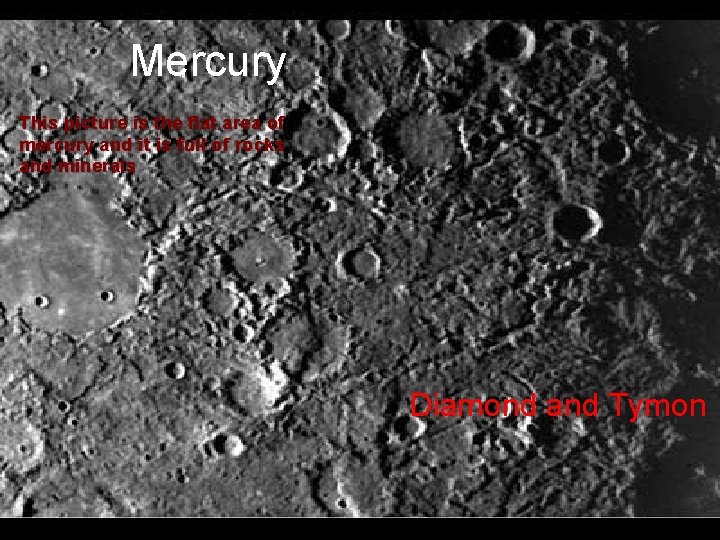
Mercury This picture is the flat area of
- Slides: 9
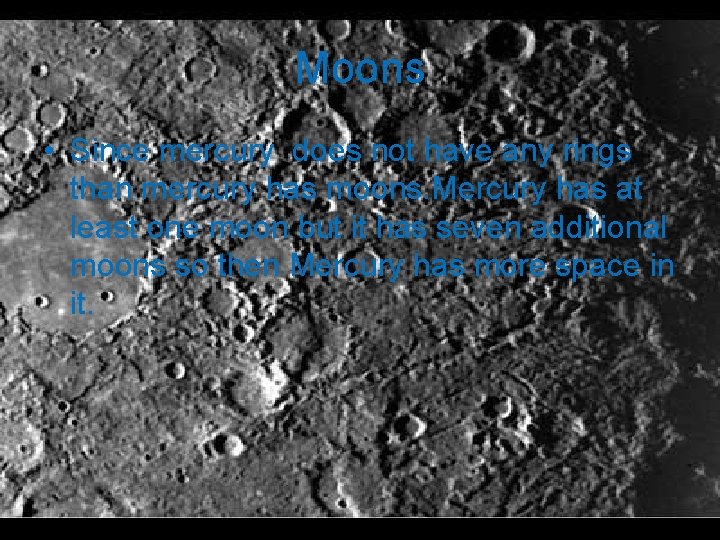
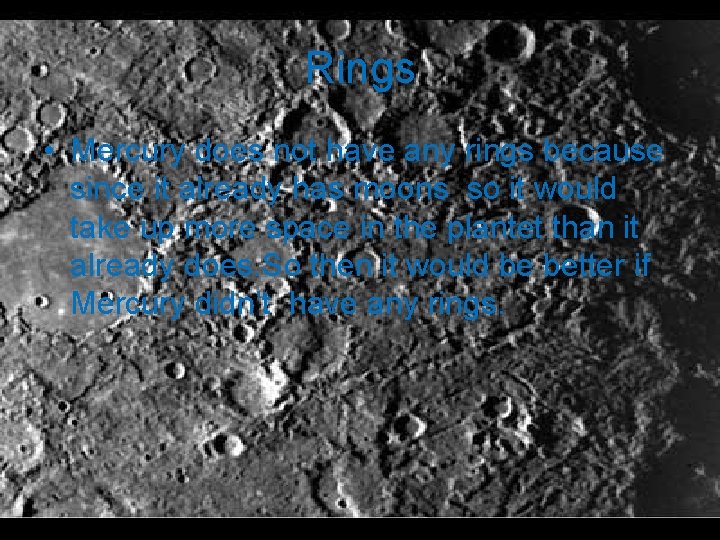
Mercury This picture is the flat area of mercury and it is full of rocks and minerals Diamond and Tymon
Mercury is the closest to the sun. The distance of planets from each other and from the sun are often measured in astronomical units, au. Diamond and Tymon
History The person who discovered mercury is the messenger of the Roman gods in 88 days and 249 years. • When they got there it was 8000 f.
Solar System • Unlike the earth and the most other plantes mercury only turns very slowly on its axis, taking 5 -9 days to complete the turn from day to night.
Moons • Since mercury does not have any rings than mercury has moons. Mercury has at least one moon but it has seven additional moons so then Mercury has more space in it.
Planet appearance Mercury has a grayish black color on the outside and on the inside is made with a lot of rocks and minerals. And including the small moons Mercury is a really big planet and since it has no rings it is a little bit smaller.
Rings • Mercury does not have any rings because since it already has moons so it would take up more space in the plantet than it already does. So then it would be better if Mercury didn’t have any rings.
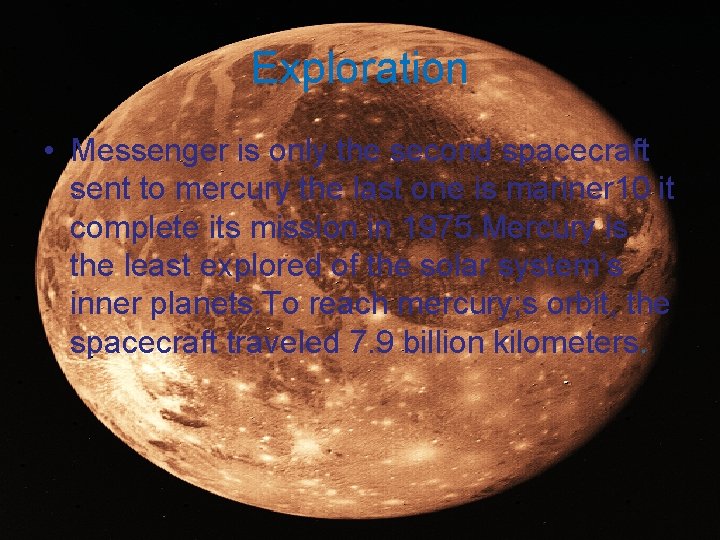
Exploration • Messenger is only the second spacecraft sent to mercury the last one is mariner 10 it complete its mission in 1975. Mercury is the least explored of the solar system’s inner planets. To reach mercury; s orbit, the spacecraft traveled 7. 9 billion kilometers.
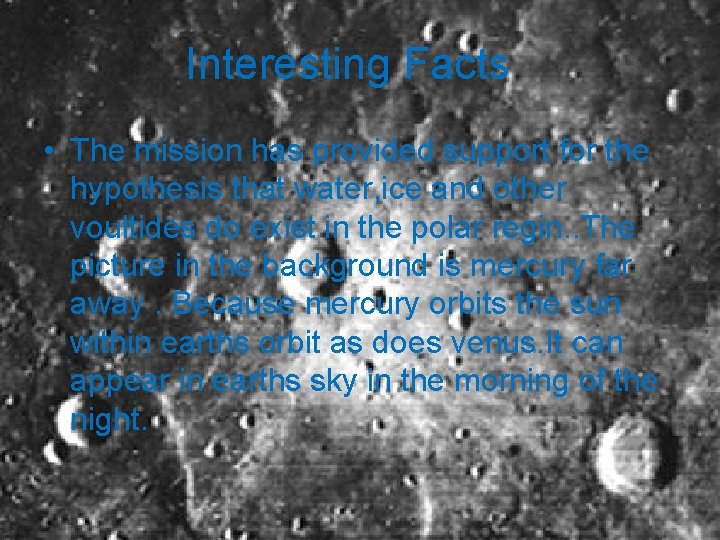
Interesting Facts • The mission has provided support for the hypothesis that water, ice and other voultides do exist in the polar regin. . The picture in the background is mercury far away. Because mercury orbits the sun within earths orbit as does venus. It can appear in earths sky in the morning of the night.