
Mercury Mercurys Atmosphere The low mass and high

- Slides: 42
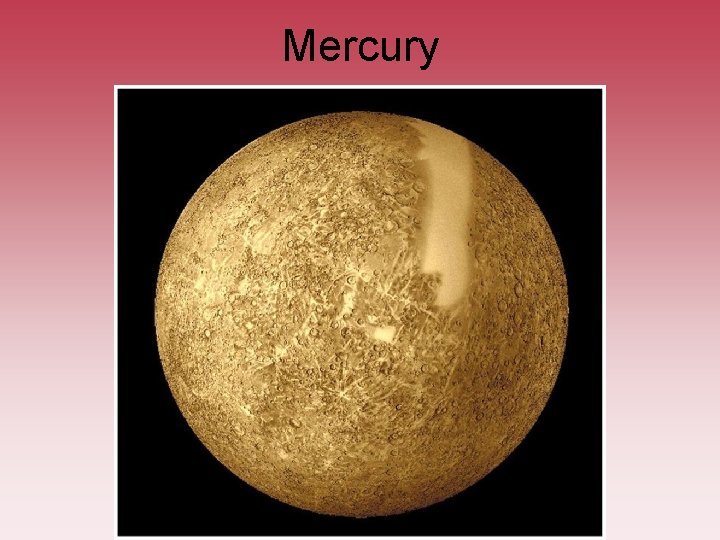
Mercury
Mercury’s Atmosphere • The low mass and high temperature of Mercury prevent it from retaining an atmosphere • Without an atmosphere, the planet’s surface temperature cannot be regulated effectively
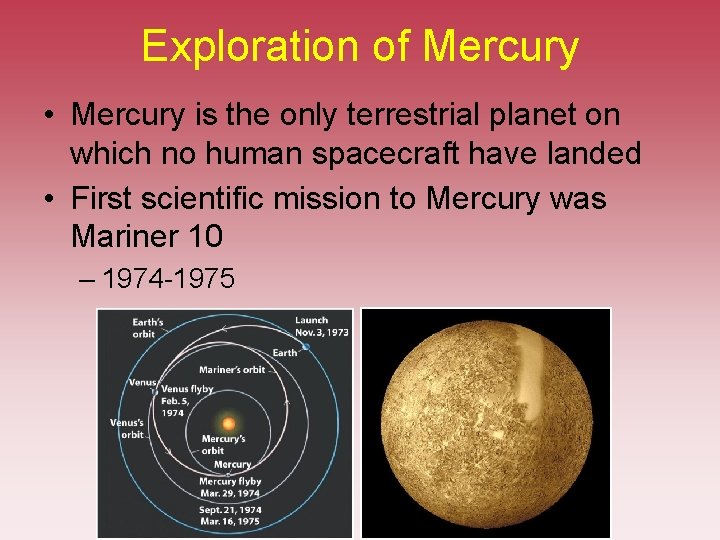
Exploration of Mercury • Mercury is the only terrestrial planet on which no human spacecraft have landed • First scientific mission to Mercury was Mariner 10 – 1974 -1975
Exploration of Mercury • MESSENGER – MErcury Surface, Space ENvironment, GEochemistry, & Ranging • http: //messenger. jhuapl. edu/
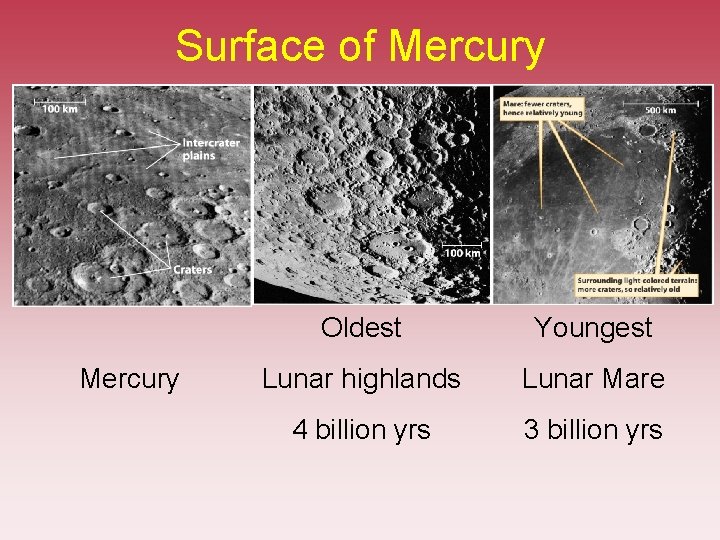
Surface of Mercury Oldest Youngest Lunar highlands Lunar Mare 4 billion yrs 3 billion yrs
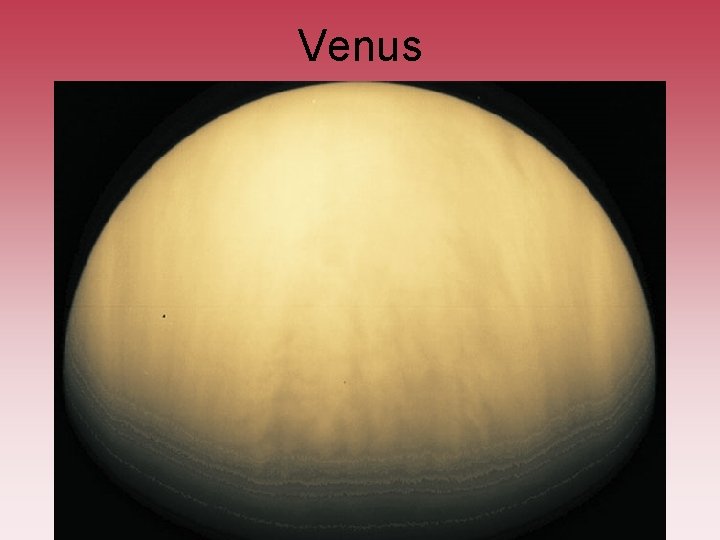
Venus
Venus’ Bulk Properties • Based upon the first 2 properties, Venus is sometimes referred to as Earth’s “twin” • Almost perfectly circular orbit • Sidereal day on Venus is longer than its sidereal year
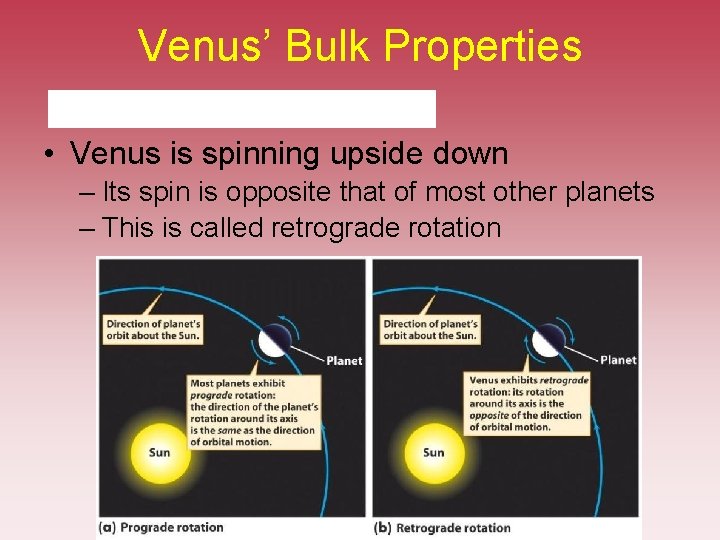
Venus’ Bulk Properties • Venus is spinning upside down – Its spin is opposite that of most other planets – This is called retrograde rotation
Venus’ Bulk Properties • The temperature on Venus is fairly constant over the entire planet. Why might that be the case? – Thick, dense atmosphere • At its brightest Venus is the 3 rd brightest object in the sky – high albedo – fairly close proximity to Earth & Sun
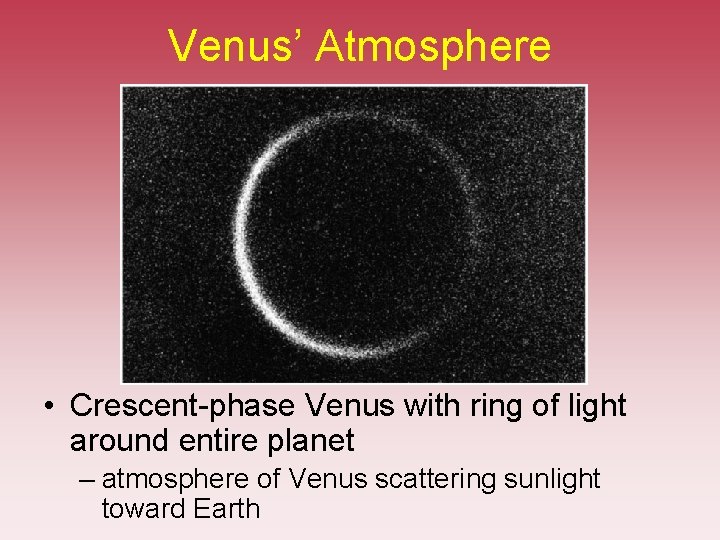
Venus’ Atmosphere • Crescent-phase Venus with ring of light around entire planet – atmosphere of Venus scattering sunlight toward Earth
Venus’ Atmosphere • Much denser than Earth’s – surface pressure on Venus is 90 times higher than on Earth – equivalent to diving 1 km below the surface of the ocean on Earth
Venus’ Atmosphere • Surface of Venus is covered by a perpetual layer of clouds – cover the entire surface – opaque • can’t “see” the surface of Venus • by same token, couldn’t see the Sun or stars from the surface of Venus – have learned about the surface through • radar images • spacecraft landings
Atmosphere Comparison • Venus – clouds are made of droplets of concentrated sulfuric acid • rains acid – CO 2 : 96% – N 2 : 3% • Earth – clouds are made of water vapor • rains water – N 2 : 78% – O 2 : 21%
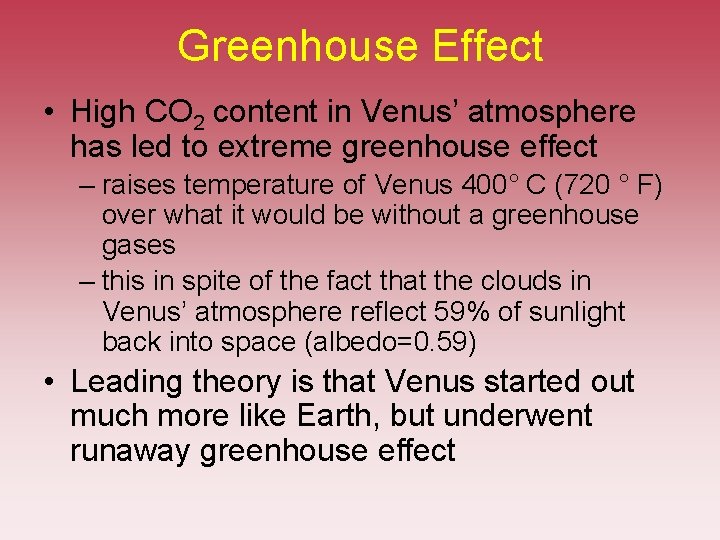
Greenhouse Effect • High CO 2 content in Venus’ atmosphere has led to extreme greenhouse effect – raises temperature of Venus 400° C (720 ° F) over what it would be without a greenhouse gases – this in spite of the fact that the clouds in Venus’ atmosphere reflect 59% of sunlight back into space (albedo=0. 59) • Leading theory is that Venus started out much more like Earth, but underwent runaway greenhouse effect
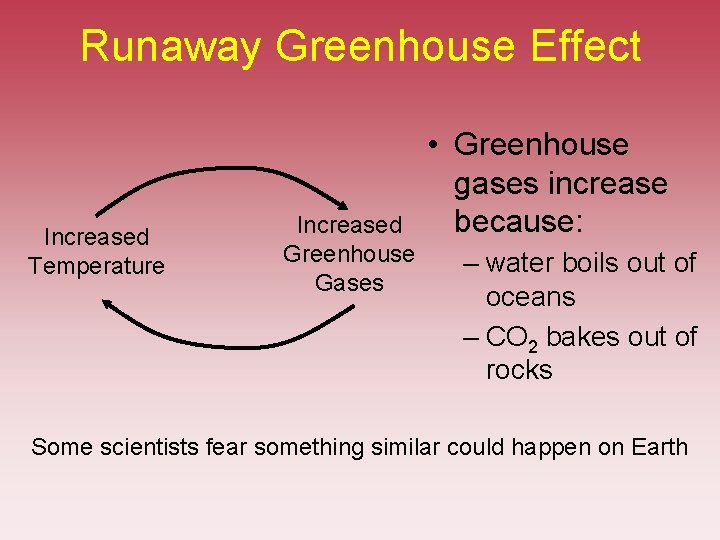
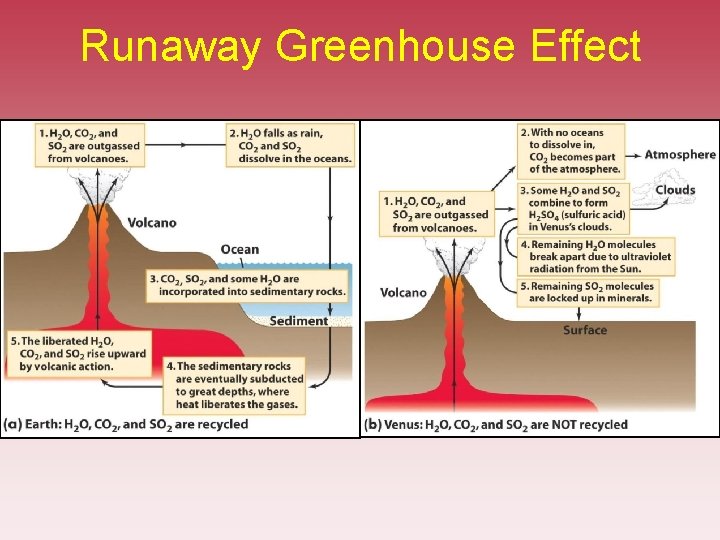
Runaway Greenhouse Effect Increased Temperature Increased Greenhouse Gases • Greenhouse gases increase because: – water boils out of oceans – CO 2 bakes out of rocks Some scientists fear something similar could happen on Earth
Runaway Greenhouse Effect
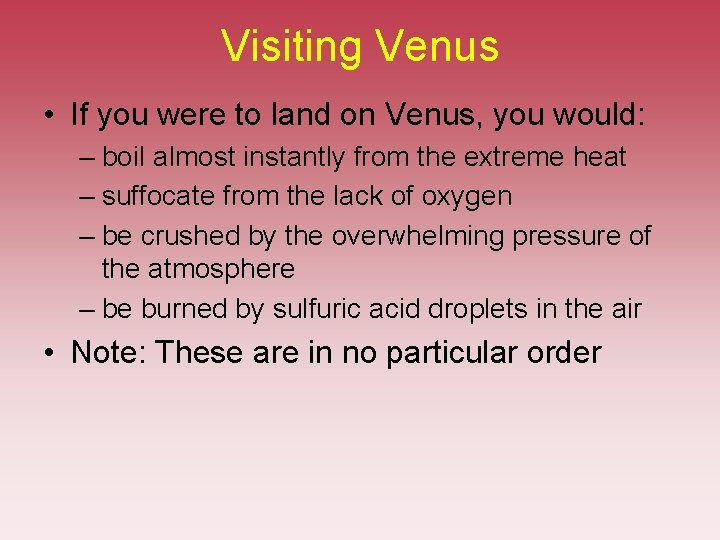
Visiting Venus • If you were to land on Venus, you would: – boil almost instantly from the extreme heat – suffocate from the lack of oxygen – be crushed by the overwhelming pressure of the atmosphere – be burned by sulfuric acid droplets in the air • Note: These are in no particular order
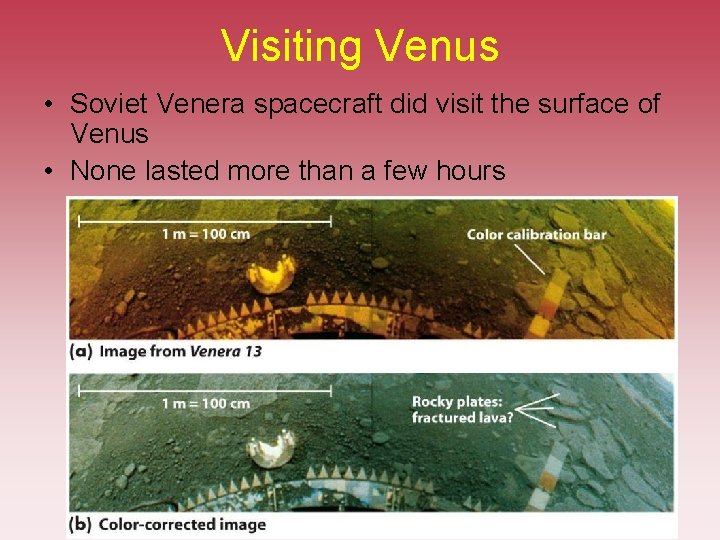
Visiting Venus • Soviet Venera spacecraft did visit the surface of Venus • None lasted more than a few hours
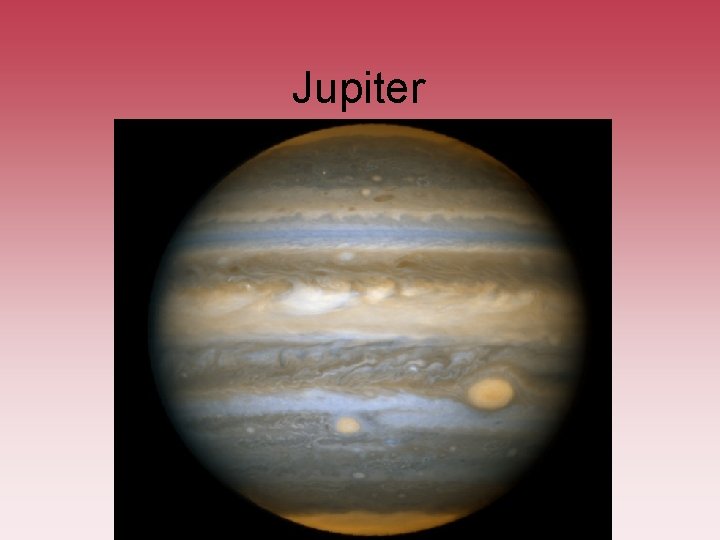
Jupiter
Jupiter • First of the Jovian planets – Defining characteristics of Jovian planets: • large diameter • large mass – Jupiter is twice as massive as all the other planets combined • low average density
Jovian planets • Composed mostly of low mass elements – primarily hydrogen & helium • Gravity of Jovian planets is strong enough to retain these light elements – H & He escape from terrestrial atmospheres • Gravity of Jovian planets is strong enough to compress H & He into liquid phase – Incorrect to call them “gas” giants • Jovian planets do not have hard, rocky surfaces
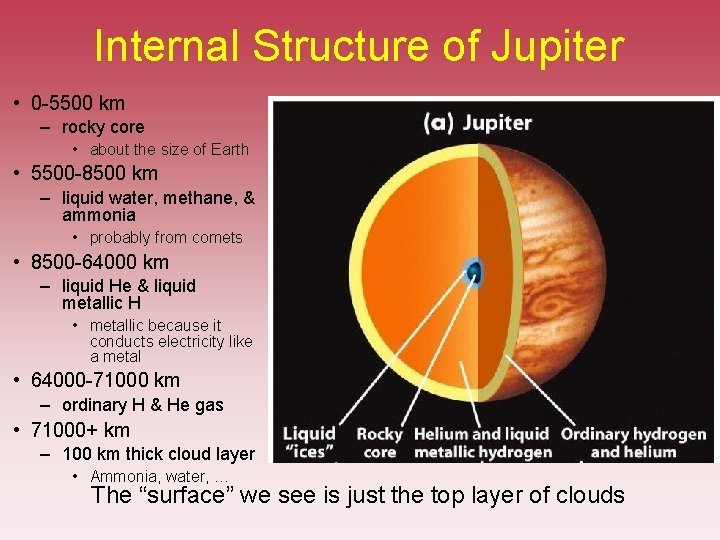
Internal Structure of Jupiter • 0 -5500 km – rocky core • about the size of Earth • 5500 -8500 km – liquid water, methane, & ammonia • probably from comets • 8500 -64000 km – liquid He & liquid metallic H • metallic because it conducts electricity like a metal • 64000 -71000 km – ordinary H & He gas • 71000+ km – 100 km thick cloud layer • Ammonia, water, … The “surface” we see is just the top layer of clouds
Rotation of Jupiter • Jupiter is the fastest rotating planet in the Solar System • Jovian planets undergo differential rotation – different parts of planet rotate at different speeds – differential rotation is possible because there is no solid crust
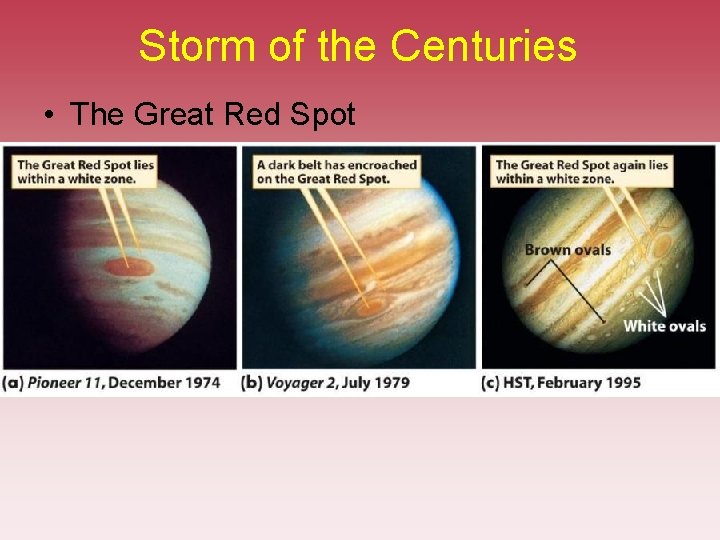
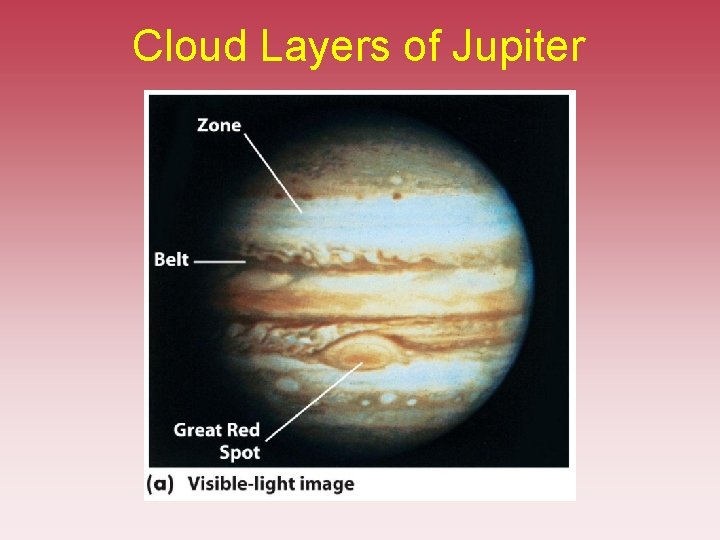
Storm of the Centuries • The Great Red Spot
Storm of the Centuries • The Great Red Spot – the longest lived, most powerful storm known in the Solar System • First observed over 300 years ago • documented in 1664 • Has changed but never disappeared – Similar to a hurricane on Earth • except it’s large enough that our entire planet would fit inside the Great Red Spot!!! – http: //bcs. whfreeman. com/universe 8 e/ • Video 12 -3
Cloud Layers of Jupiter
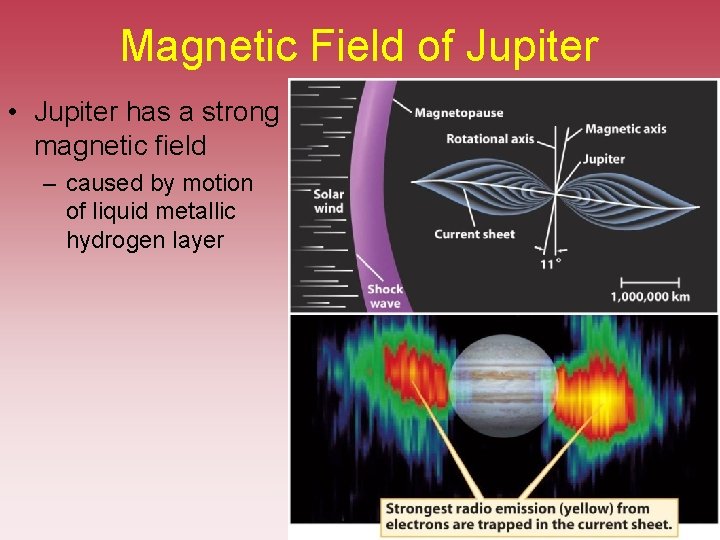
Magnetic Field of Jupiter • Jupiter has a strong magnetic field – caused by motion of liquid metallic hydrogen layer
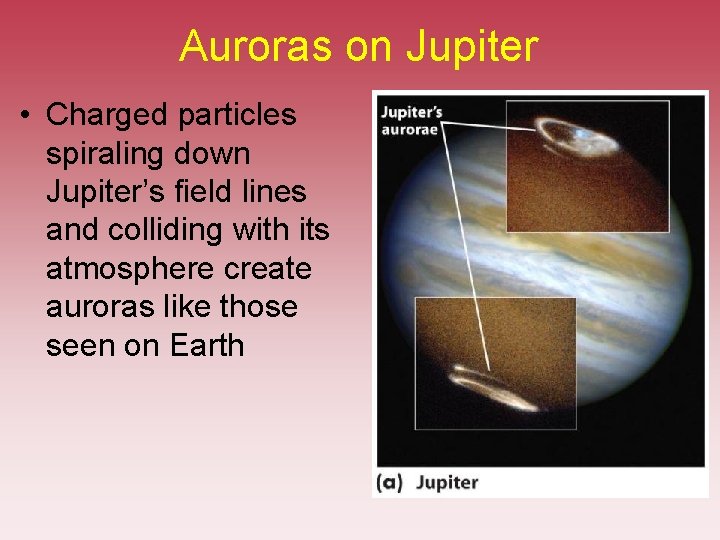
Auroras on Jupiter • Charged particles spiraling down Jupiter’s field lines and colliding with its atmosphere create auroras like those seen on Earth
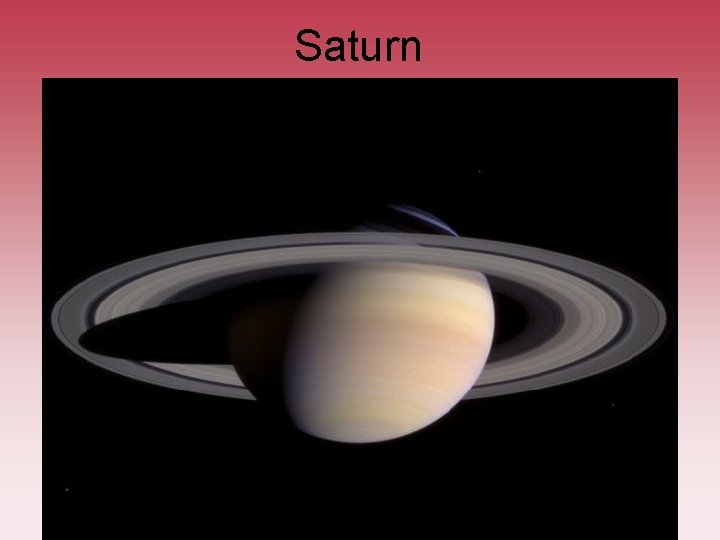
Saturn
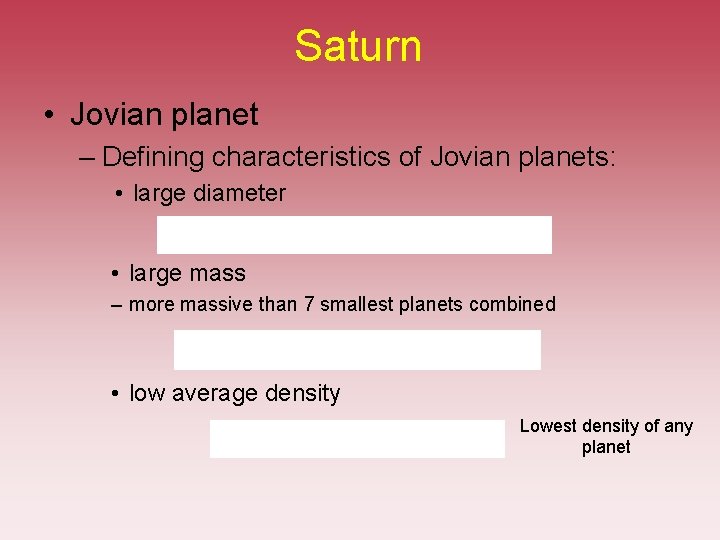
Saturn • Jovian planet – Defining characteristics of Jovian planets: • large diameter • large mass – more massive than 7 smallest planets combined • low average density Lowest density of any planet
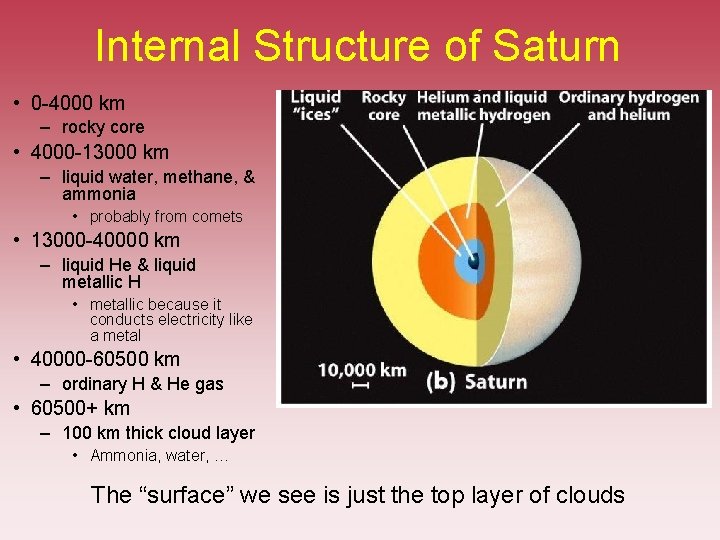
Internal Structure of Saturn • 0 -4000 km – rocky core • 4000 -13000 km – liquid water, methane, & ammonia • probably from comets • 13000 -40000 km – liquid He & liquid metallic H • metallic because it conducts electricity like a metal • 40000 -60500 km – ordinary H & He gas • 60500+ km – 100 km thick cloud layer • Ammonia, water, … The “surface” we see is just the top layer of clouds
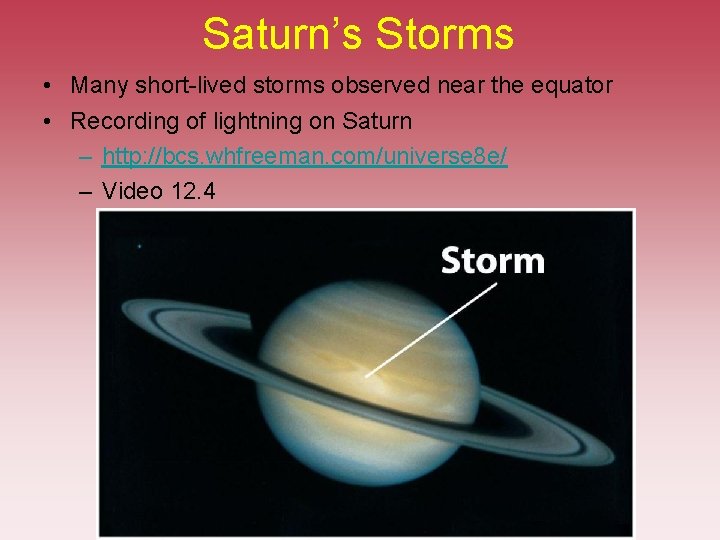
Saturn’s Storms • Many short-lived storms observed near the equator • Recording of lightning on Saturn – http: //bcs. whfreeman. com/universe 8 e/ – Video 12. 4
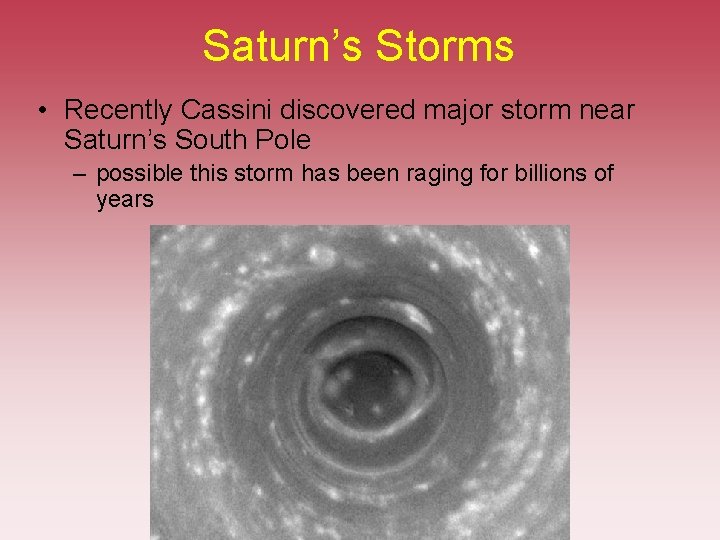
Saturn’s Storms • Recently Cassini discovered major storm near Saturn’s South Pole – possible this storm has been raging for billions of years
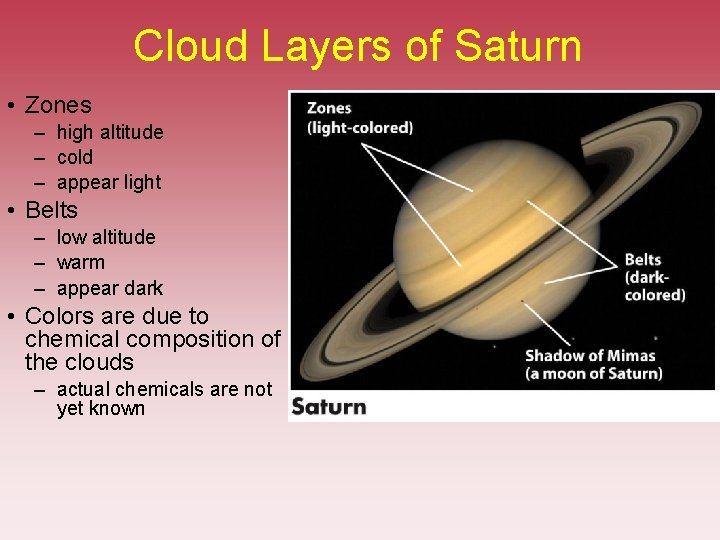
Cloud Layers of Saturn • Zones – high altitude – cold – appear light • Belts – low altitude – warm – appear dark • Colors are due to chemical composition of the clouds – actual chemicals are not yet known
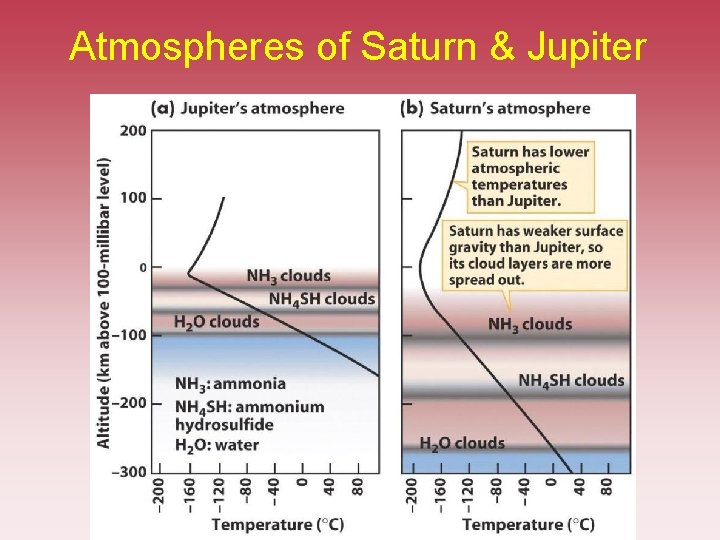
Atmospheres of Saturn & Jupiter
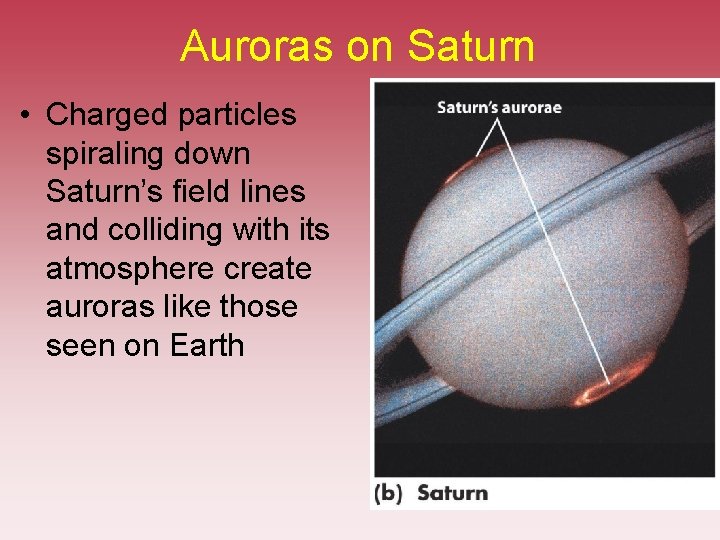
Auroras on Saturn • Charged particles spiraling down Saturn’s field lines and colliding with its atmosphere create auroras like those seen on Earth
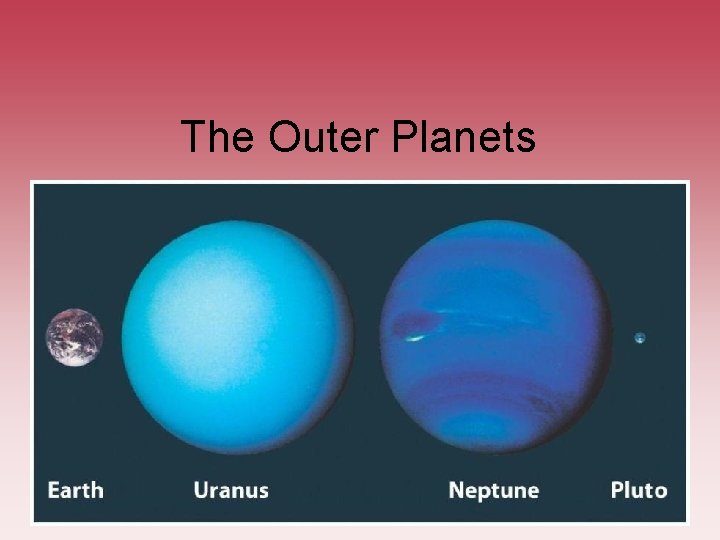
The Outer Planets
Very Long Orbital Periods • Uranus – 84 years • Neptune – 165 years • Pluto – 249 years • Neptune and Pluto have not even completed 1 orbit since their discovery!! – Neptune will complete its first orbit since discovery in 2011
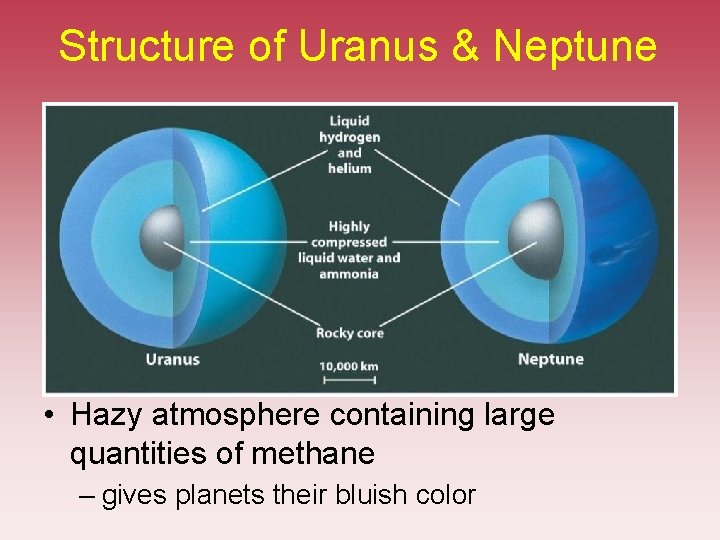
Structure of Uranus & Neptune • Jovian planets – expect them to be similar to Jupiter & Saturn • However, there are some significant differences – Contain relatively little H & He – Higher percentages of denser materials
Structure of Uranus & Neptune • Hazy atmosphere containing large quantities of methane – gives planets their bluish color
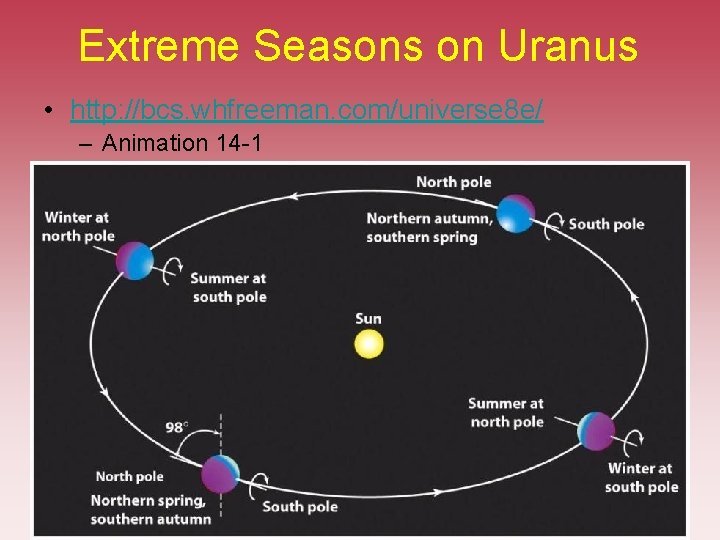
Tilt of Uranus & Pluto • Prograde rotation – planets that rotate in the same direction as they orbit • Retrograde rotation – planets that rotate opposite the direction they orbit – Examples: • Venus - 178° • Uranus - 98° • Pluto - 123° • Uranus orbits “on its side” – spin axis lies almost in the plane of its orbit – what effect might this have? • extreme seasons
Extreme Seasons on Uranus • http: //bcs. whfreeman. com/universe 8 e/ – Animation 14 -1