
Merchandising Operations and the MultipleStep Income Statement Perpetual
- Slides: 20
Merchandising Operations and the Multiple-Step Income Statement Perpetual and Periodic Inventory Systems
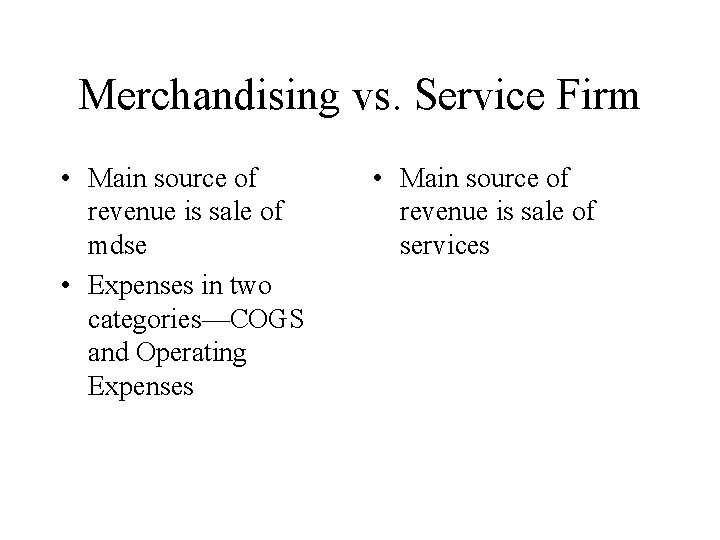
Merchandising vs. Service Firm • Main source of revenue is sale of mdse • Expenses in two categories—COGS and Operating Expenses • Main source of revenue is sale of services
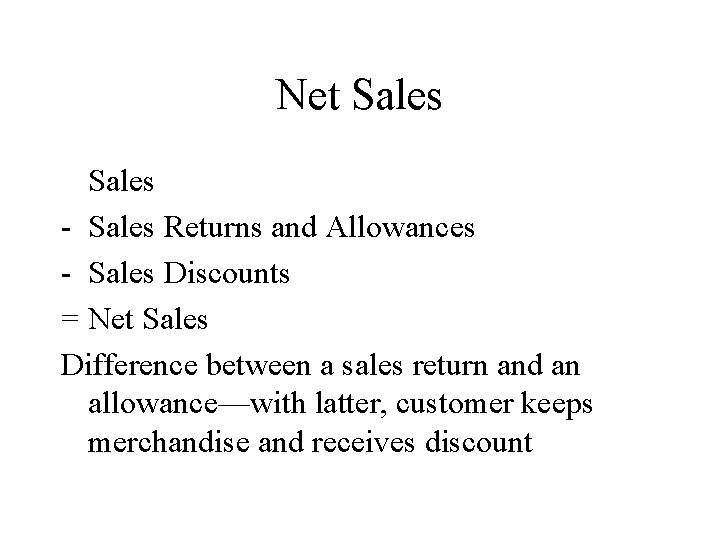
Net Sales - Sales Returns and Allowances - Sales Discounts = Net Sales Difference between a sales return and an allowance—with latter, customer keeps merchandise and receives discount
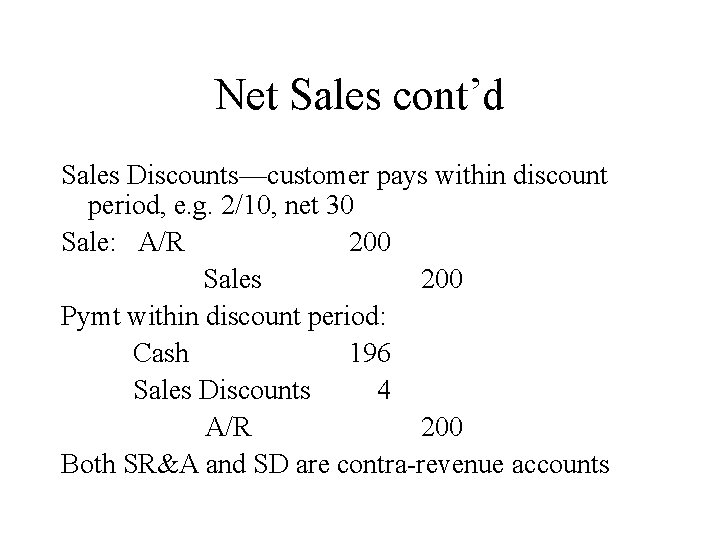
Net Sales cont’d Sales Discounts—customer pays within discount period, e. g. 2/10, net 30 Sale: A/R 200 Sales 200 Pymt within discount period: Cash 196 Sales Discounts 4 A/R 200 Both SR&A and SD are contra-revenue accounts
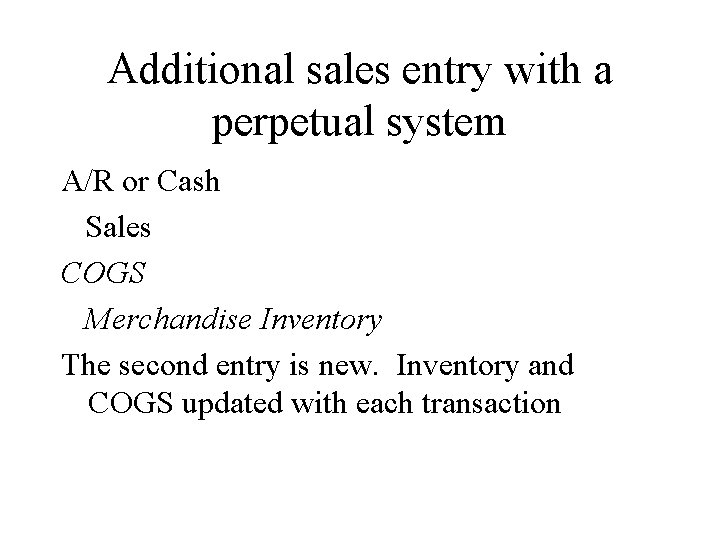
Additional sales entry with a perpetual system A/R or Cash Sales COGS Merchandise Inventory The second entry is new. Inventory and COGS updated with each transaction
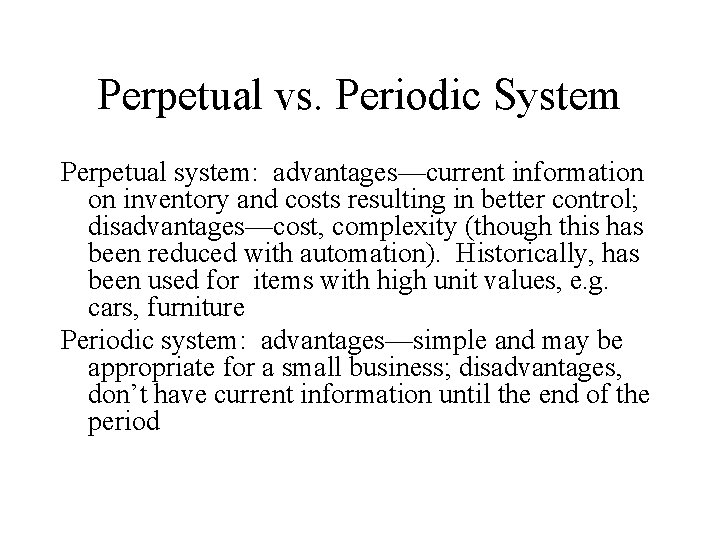
Perpetual vs. Periodic System Perpetual system: advantages—current information on inventory and costs resulting in better control; disadvantages—cost, complexity (though this has been reduced with automation). Historically, has been used for items with high unit values, e. g. cars, furniture Periodic system: advantages—simple and may be appropriate for a small business; disadvantages, don’t have current information until the end of the period
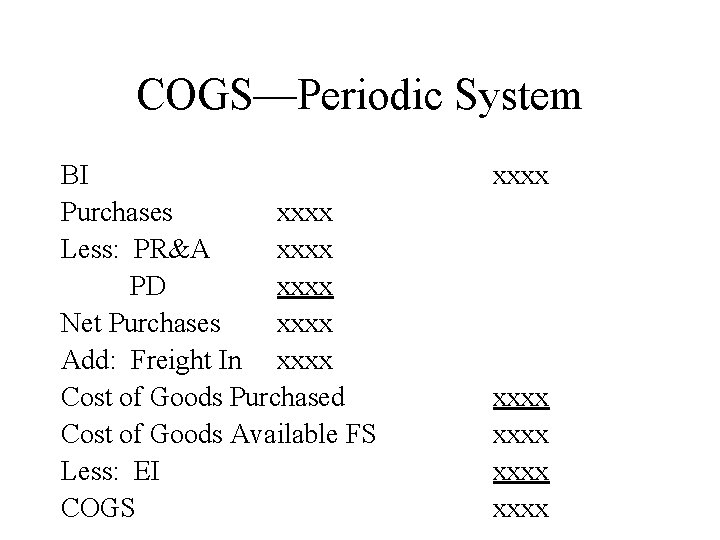
COGS—Periodic System BI Purchases xxxx Less: PR&A xxxx PD xxxx Net Purchases xxxx Add: Freight In xxxx Cost of Goods Purchased Cost of Goods Available FS Less: EI COGS xxxx xxxx
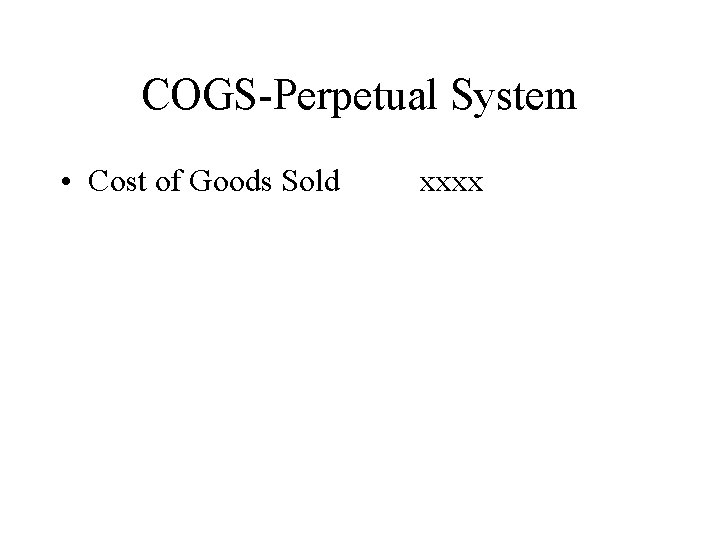
COGS-Perpetual System • Cost of Goods Sold xxxx
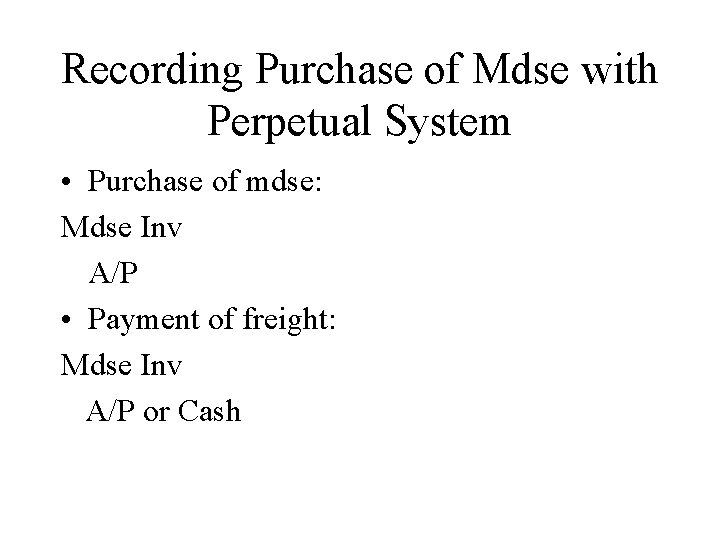
Recording Purchase of Mdse with Perpetual System • Purchase of mdse: Mdse Inv A/P • Payment of freight: Mdse Inv A/P or Cash
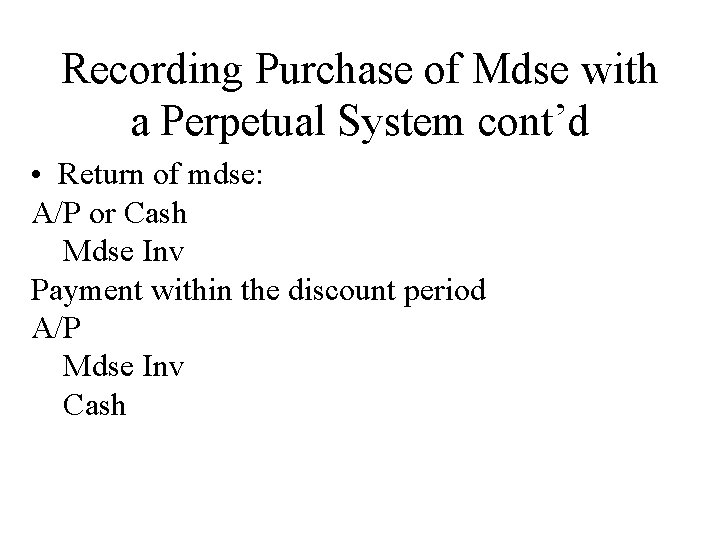
Recording Purchase of Mdse with a Perpetual System cont’d • Return of mdse: A/P or Cash Mdse Inv Payment within the discount period A/P Mdse Inv Cash
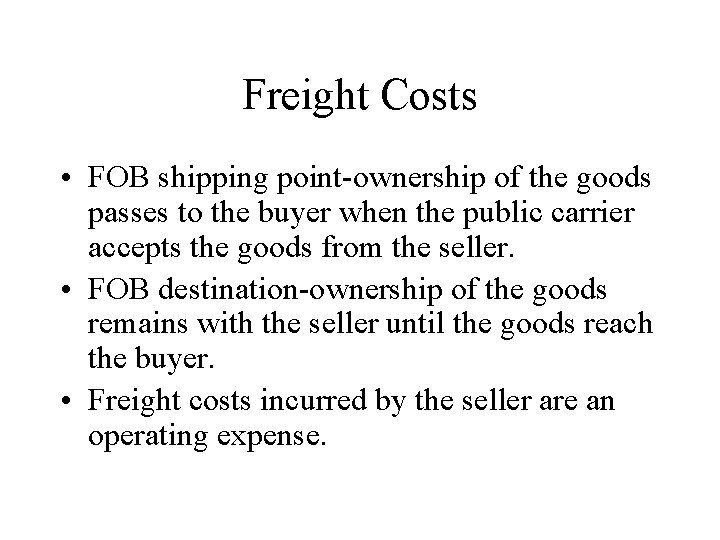
Freight Costs • FOB shipping point-ownership of the goods passes to the buyer when the public carrier accepts the goods from the seller. • FOB destination-ownership of the goods remains with the seller until the goods reach the buyer. • Freight costs incurred by the seller are an operating expense.
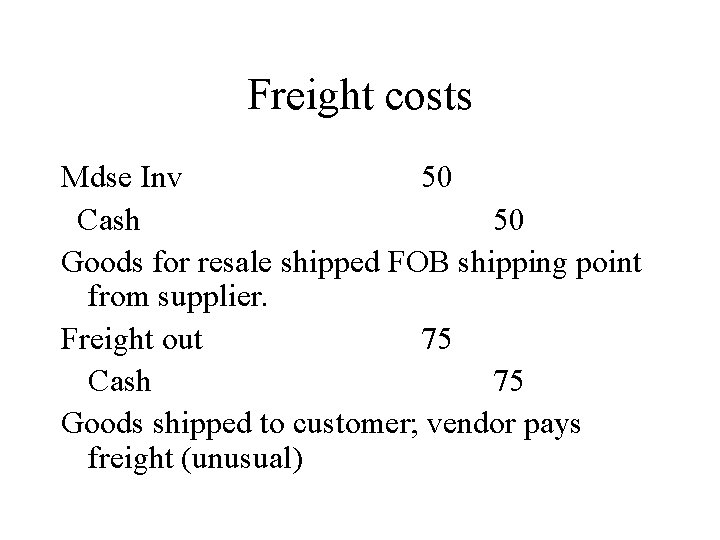
Freight costs Mdse Inv 50 Cash 50 Goods for resale shipped FOB shipping point from supplier. Freight out 75 Cash 75 Goods shipped to customer; vendor pays freight (unusual)
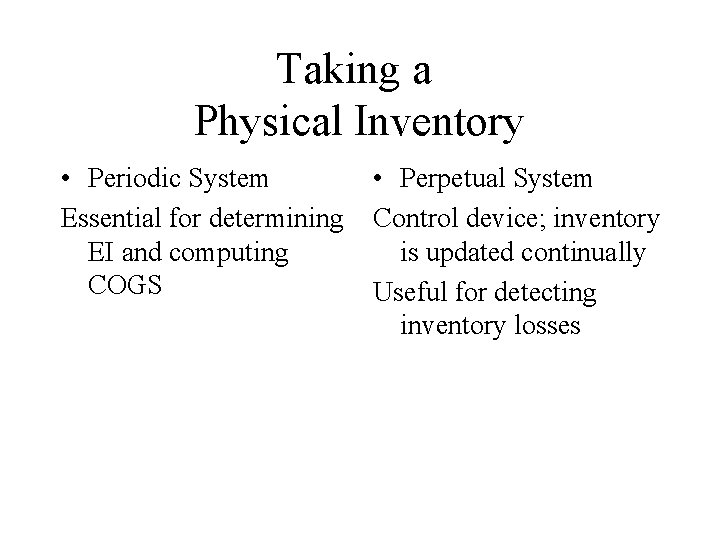
Taking a Physical Inventory • Periodic System Essential for determining EI and computing COGS • Perpetual System Control device; inventory is updated continually Useful for detecting inventory losses
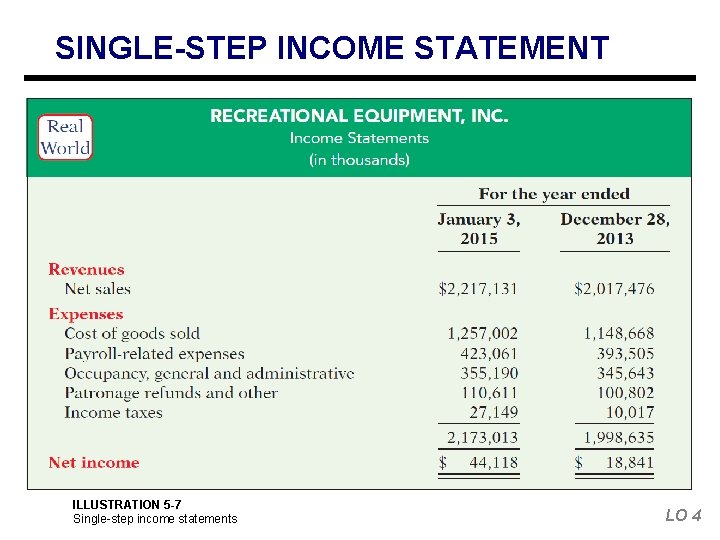
SINGLE-STEP INCOME STATEMENT Illustration 5 -7 ILLUSTRATION 5 -7 Single-step income statements LO 4
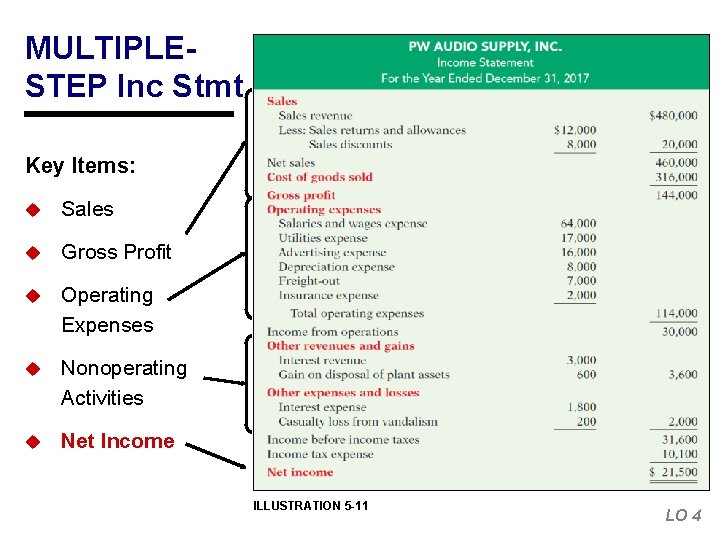
MULTIPLESTEP Inc Stmt Key Items: u Sales u Gross Profit u Operating Expenses u Nonoperating Activities u Net Income ILLUSTRATION 5 -11 LO 4
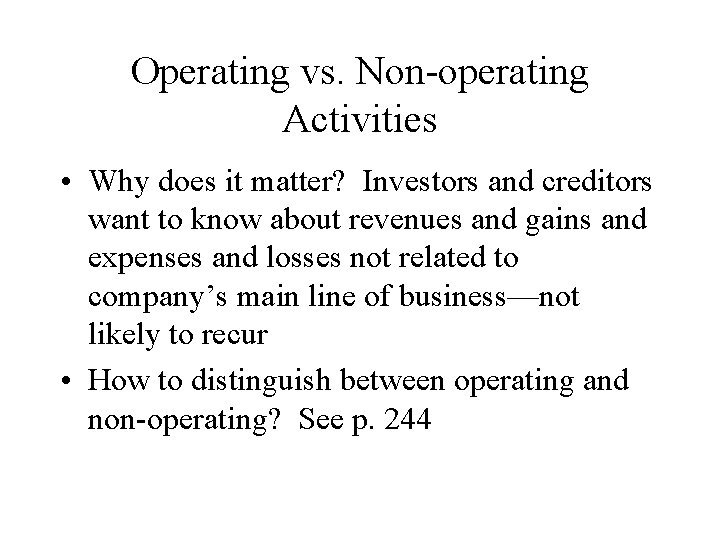
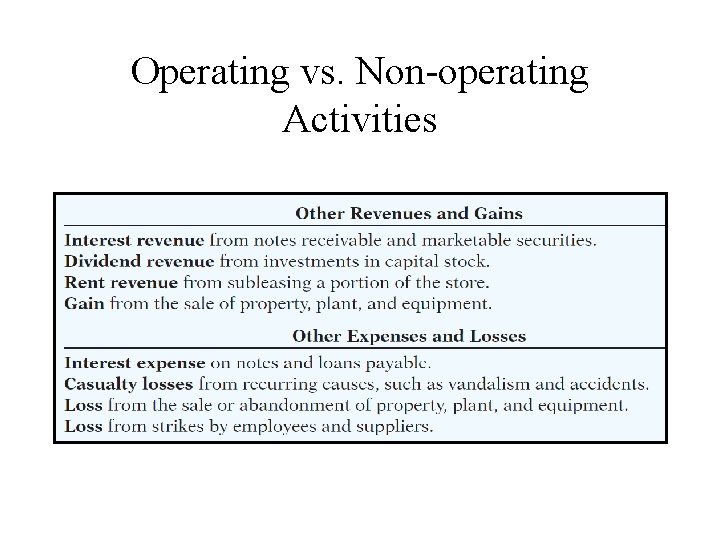
Operating vs. Non-operating Activities • Why does it matter? Investors and creditors want to know about revenues and gains and expenses and losses not related to company’s main line of business—not likely to recur • How to distinguish between operating and non-operating? See p. 244
Operating vs. Non-operating Activities
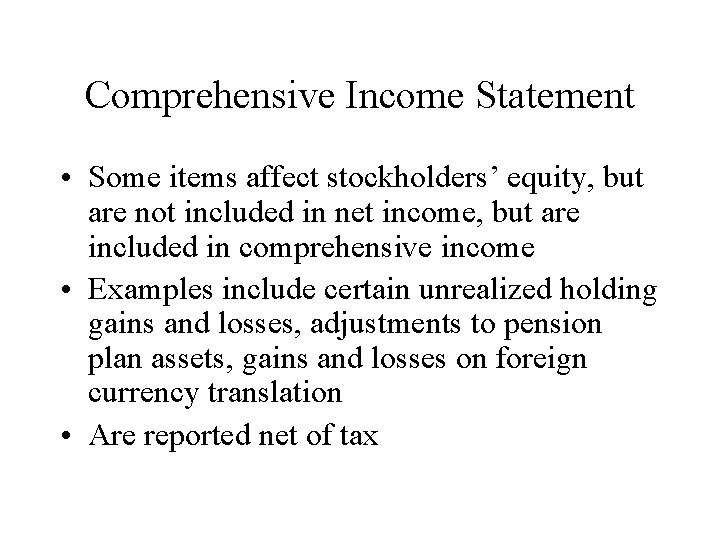
Comprehensive Income Statement • Some items affect stockholders’ equity, but are not included in net income, but are included in comprehensive income • Examples include certain unrealized holding gains and losses, adjustments to pension plan assets, gains and losses on foreign currency translation • Are reported net of tax
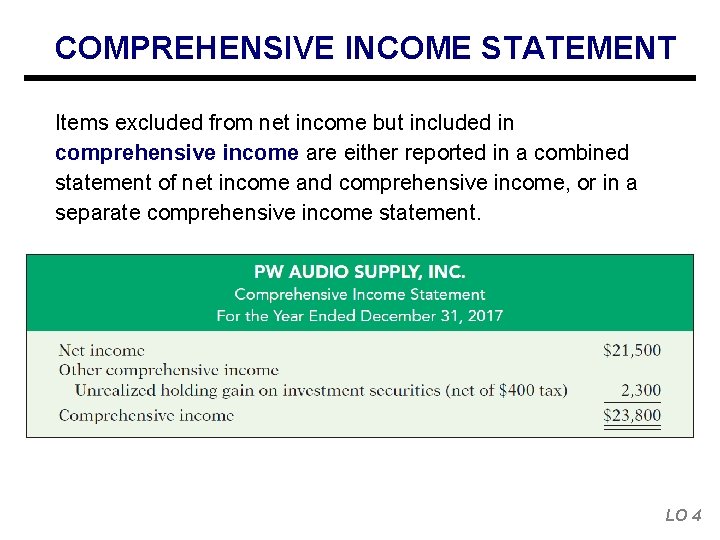
COMPREHENSIVE INCOME STATEMENT Items excluded from net income but included in comprehensive income are either reported in a combined statement of net income and comprehensive income, or in a separate comprehensive income statement. LO 4
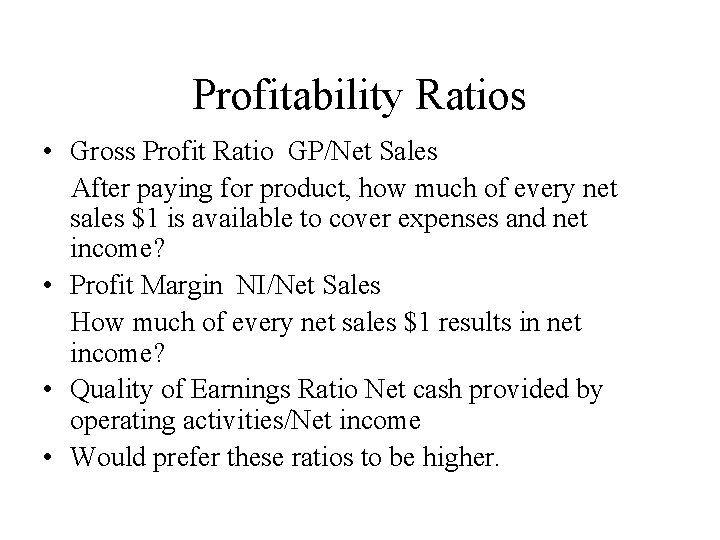
Profitability Ratios • Gross Profit Ratio GP/Net Sales After paying for product, how much of every net sales $1 is available to cover expenses and net income? • Profit Margin NI/Net Sales How much of every net sales $1 results in net income? • Quality of Earnings Ratio Net cash provided by operating activities/Net income • Would prefer these ratios to be higher.