
Mercantilism Mercantilism An economic theory that states that




- Slides: 38
Mercantilism
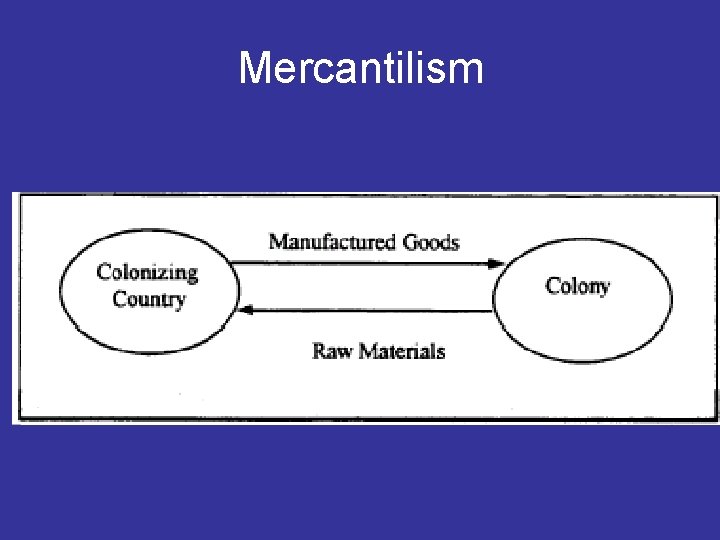
Mercantilism • An economic theory that states that the world only contained a fixed amount of wealth and that to increase a countries wealth, one country had to take some wealth from another either through having a higher import/export ratio or in actual conquest of new lands and resources.
Mercantilism in History • Between the 15 th and the 18 th centuries in Europe, powerful states were created and were dedicated to the pursuit of economic power and wealth. • Governments organized their then-limited capabilities to increase the wealth of the country. • Mercantilist governments promoted… – exports over imports – industrialization over agriculture – the protection of domestic production against competition from imports – the intervention in trade to promote domestic employment
Mercantilist Perspective • Views of human nature • Relationship between individuals, society, state and market • Relationship between domestic and international society • Humans are aggressive and have conflictual tendencies • Goal is to increase state power, achieved by regulating economic life; economics is subordinate to state interests. • International economy is conflictual; • insecurity of anarchy breeds competition; • each state defends itself.
Favorable Balance of Trade • Regulated commerce could produce a favorable balance of trade. • In general, tariffs should be high on imported manufactured goods and low on imported raw material.
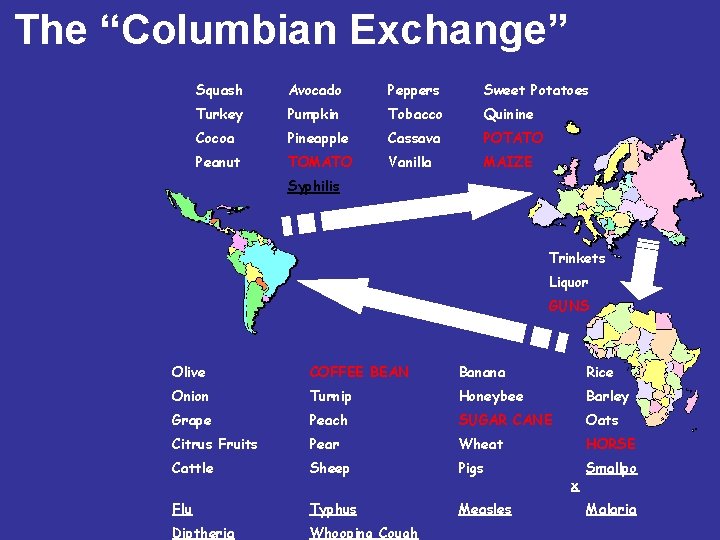
The “Columbian Exchange” v Squash v Avocado v Peppers v Sweet Potatoes v Turkey v Pumpkin v Tobacco v Quinine v Cocoa v Pineapple v Cassava v POTATO v Peanut v TOMATO v Vanilla v MAIZE v Syphilis v Trinkets v Liquor v GUNS v Olive v COFFEE BEAN v Banana v Rice v Onion v Turnip v Honeybee v Barley v Grape v Peach v SUGAR CANE v Oats v Citrus Fruits v Pear v Wheat v HORSE v Cattle v Sheep v Pigs v Smallpo v Flu v Typhus v Measles v Malaria v Diptheria v Whooping Cough x
Bullionism (gold) • Bullionism was the belief that the economic health of a nation could be measured by the amount of precious metal, gold, or silver, which it possessed. – The rise of a money economy, the stimulation produced by the influx of bullion from America, the fact that taxes were collected in money, all seemed to support the view that hard money was the source of prosperity, prestige, and strength. • Bullionism dictated a favorable balance of trade. – That is, for a nation to have gold on hand at he end of the year, it must export more than it imports. Exports were later defined to include money spent on freight, or insurance, or travel. • Each nation tried to achieve economic self-sufficiency. • Those who founded new industries should be rewarded by the state.
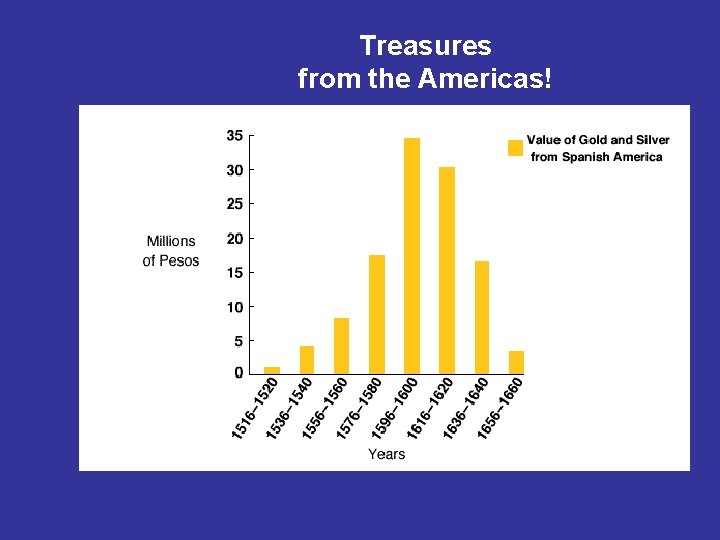
Treasures from the Americas!
Fleets • Sea power was necessary to control foreign markets. • A powerful merchant fleet would obviate the necessity of using the ships of another nation and becoming dependent on foreign assistance. • In addition, a fleet in being could add to a nation's prestige and military power. • Established an international exchange of foods, diseases and manufactured products
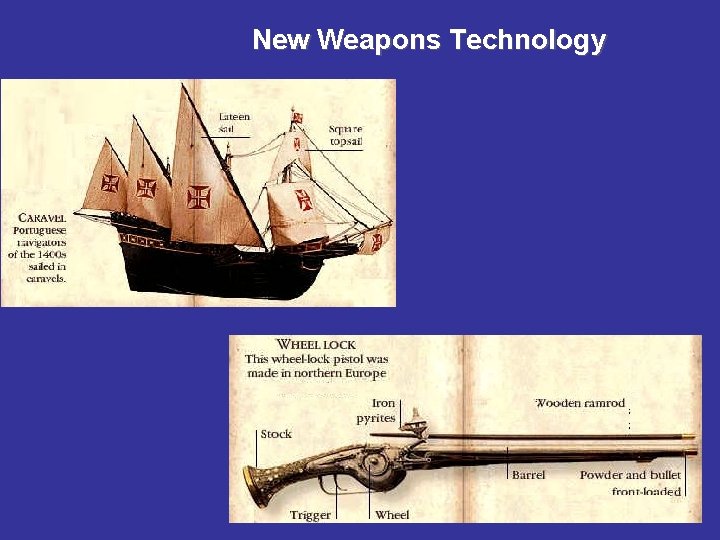
New Weapons Technology
Zones of world economy • Core nations (mostly European) profited from the world economy. – Controlled international banking and commercial services – Exported manufactured goods and imported raw materials • Dependent economic zones are the regions within the world economy that produced raw materials (peripheries). – They were dependent upon European markets and shipping; tendency to build systems based on forced and cheap labor
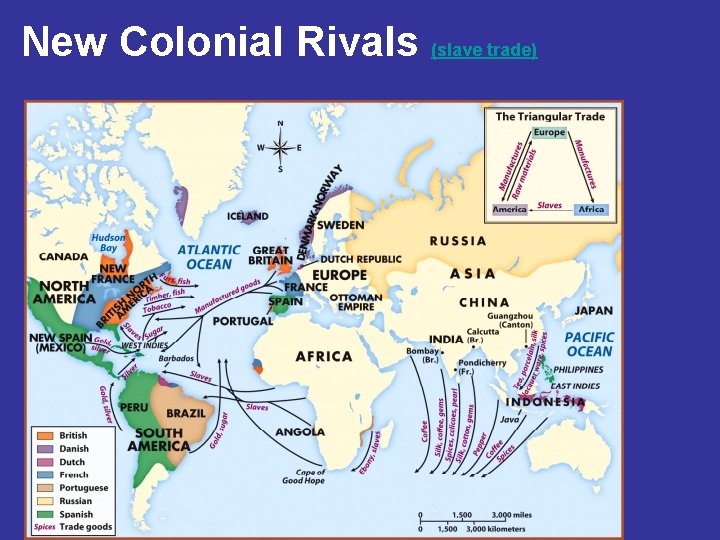
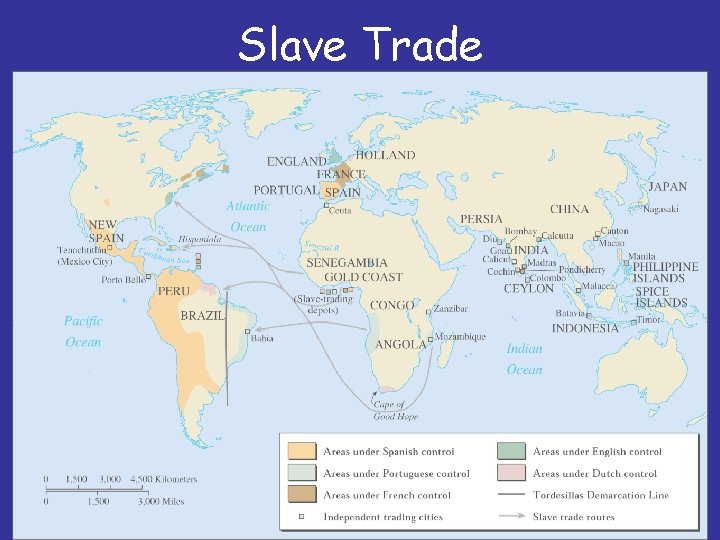
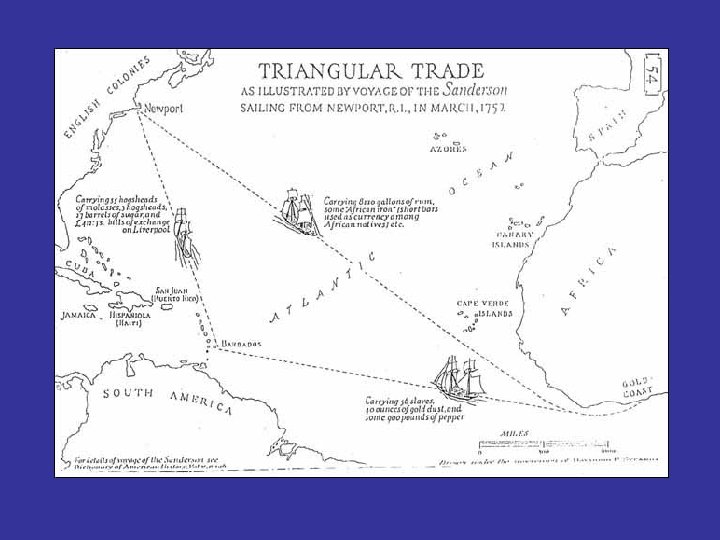
New Colonial Rivals (slave trade)
Slave Trade
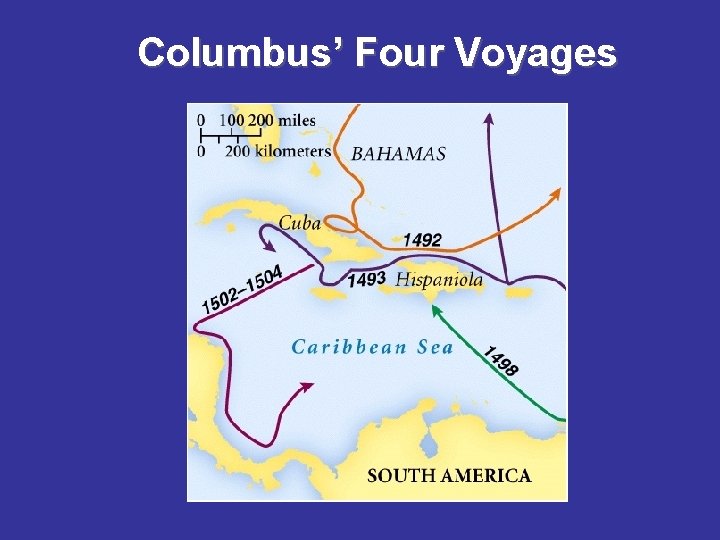
Columbus’ Four Voyages
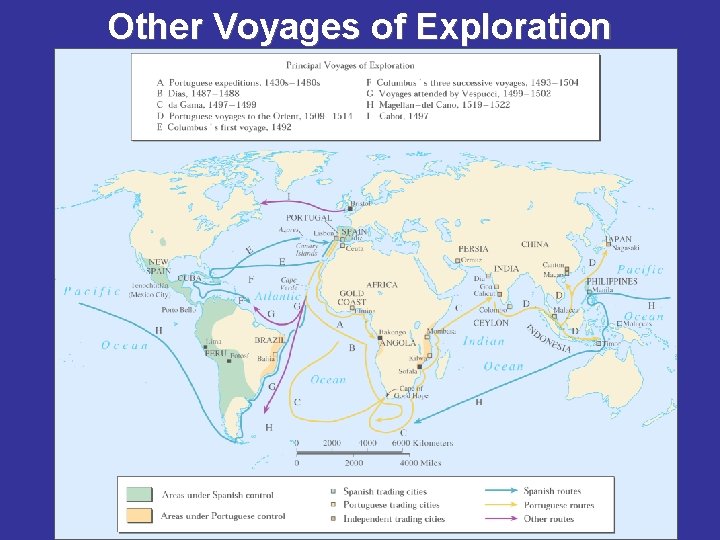
Other Voyages of Exploration
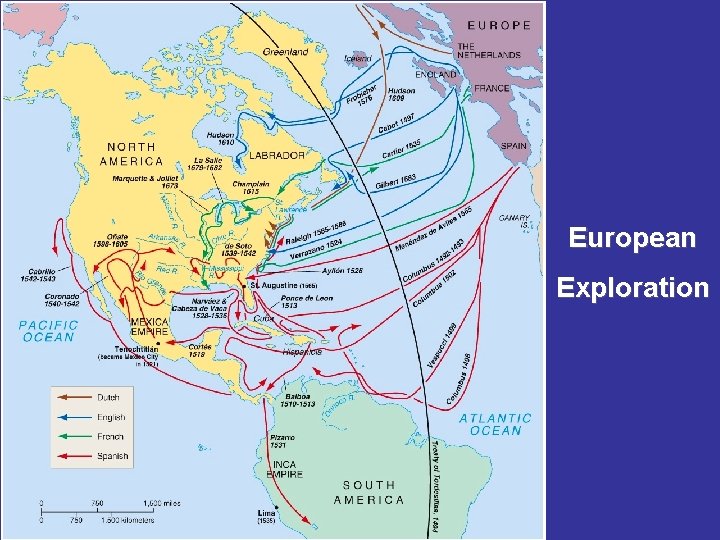
European Exploration
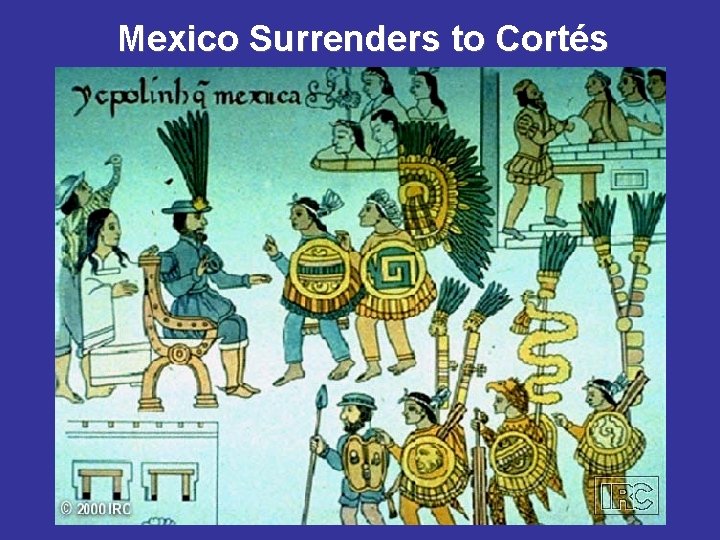
Mexico Surrenders to Cortés
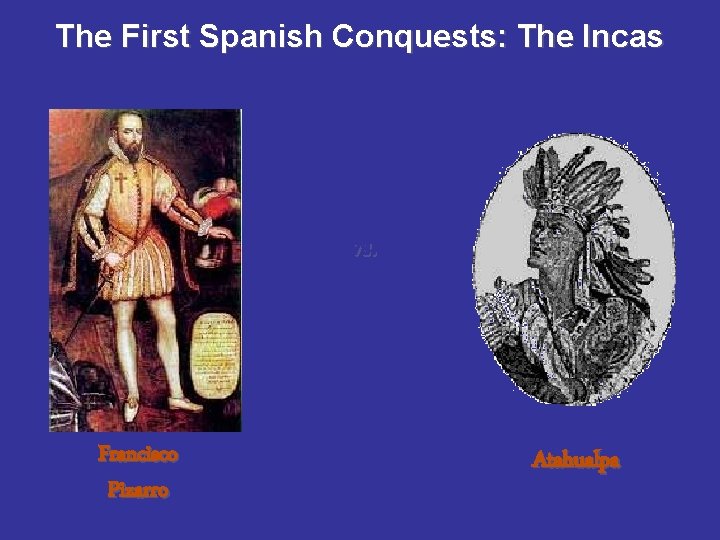
The First Spanish Conquests: The Incas vs. Francisco Pizarro Atahualpa
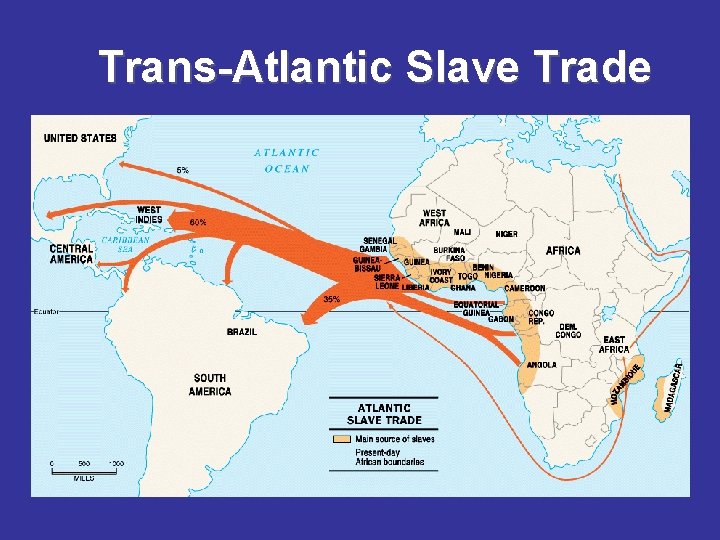
Trans-Atlantic Slave Trade
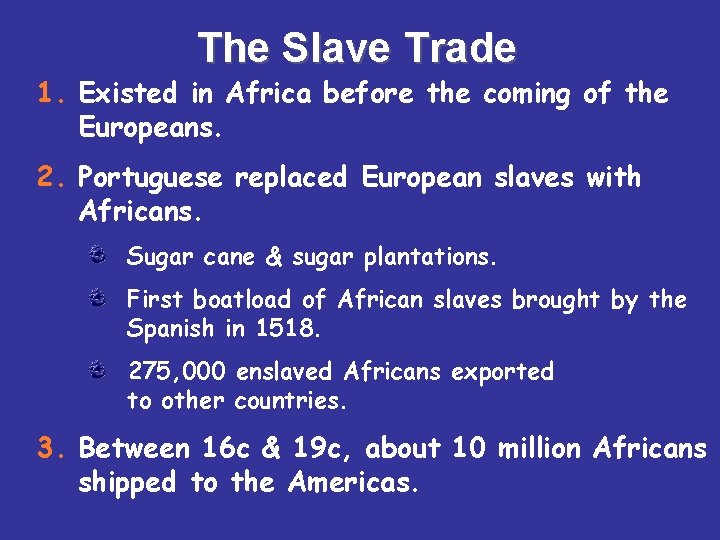
The Slave Trade 1. Existed in Africa before the coming of the Europeans. 2. Portuguese replaced European slaves with Africans. Sugar cane & sugar plantations. First boatload of African slaves brought by the Spanish in 1518. 275, 000 enslaved Africans exported to other countries. 3. Between 16 c & 19 c, about 10 million Africans shipped to the Americas.
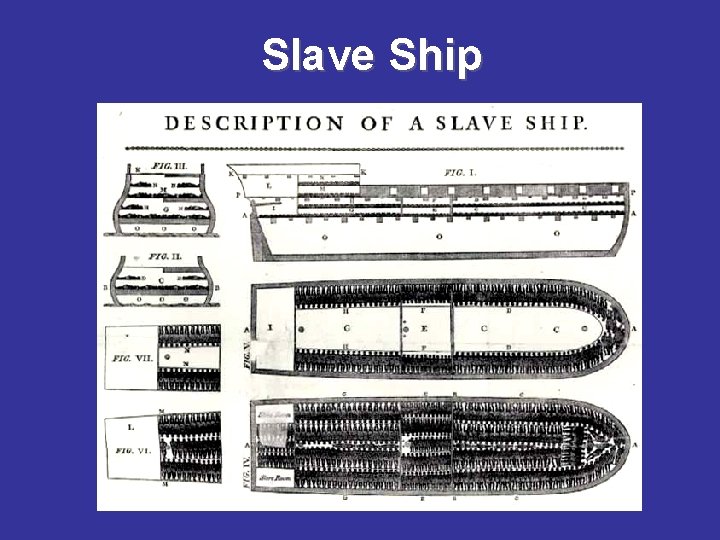
Slave Ship
“Coffin” Position Below Deck
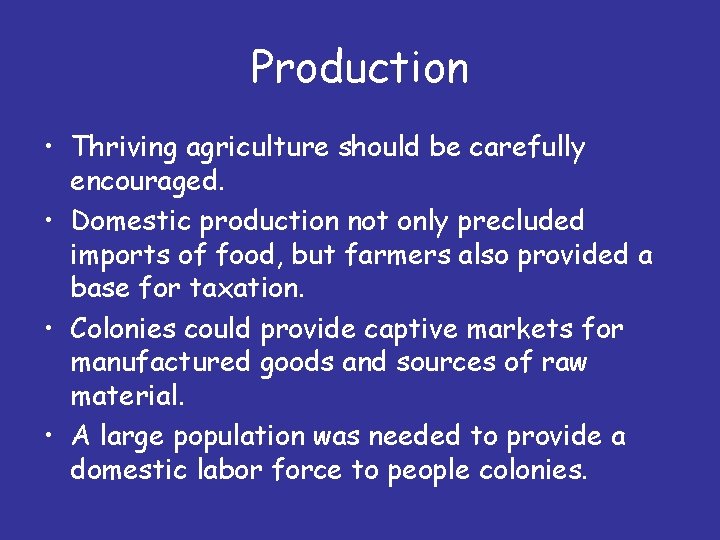
Production • Thriving agriculture should be carefully encouraged. • Domestic production not only precluded imports of food, but farmers also provided a base for taxation. • Colonies could provide captive markets for manufactured goods and sources of raw material. • A large population was needed to provide a domestic labor force to people colonies.
Need to keep wealth at home • Luxury items were to be avoided because they took money out of the economy unnecessarily. • State action was needed to regulate and enforce the above policies. • One might add that there was nothing logical or consistent about mercantilism, and that it displayed, in fact, enormous variation.
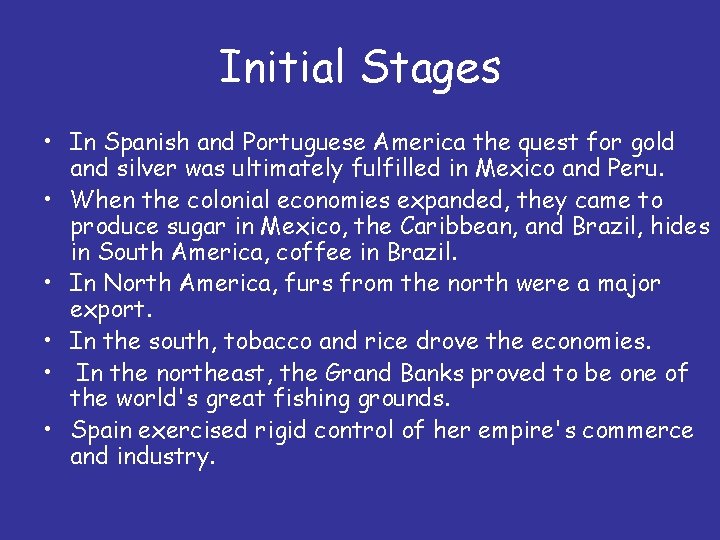
Initial Stages • In Spanish and Portuguese America the quest for gold and silver was ultimately fulfilled in Mexico and Peru. • When the colonial economies expanded, they came to produce sugar in Mexico, the Caribbean, and Brazil, hides in South America, coffee in Brazil. • In North America, furs from the north were a major export. • In the south, tobacco and rice drove the economies. • In the northeast, the Grand Banks proved to be one of the world's great fishing grounds. • Spain exercised rigid control of her empire's commerce and industry.
England • Mercantilist policies adopted during the reign of Elizabeth were continued in the seventeenth century under the Stuarts and Oliver Cromwell. • Elizabethan laws were passed to discourage idleness, to reward industrial enterprise with monopolies, and to control the commerce by means of Navigation Acts. • Elizabeth gave her justices of the peace the authority to fix prices, regulate hours, and compel every able-bodied subject to work at some useful trade.
England vs. Spain • England was late in joining the competition for Asian trade, but England also reached out. • In the New World England Spain were bound to come in conflict. England had participated little in the process of exploration yet insisted that its occupation provided a legitimate claim to title. • Of course, Spain claimed that discovery provided the claim to title. The Spanish not only desired to monopolize the trade of their colonies, but they also wished to prevent the English from establishing a foothold which would constitute a base for penetration of Spanish territory. • Generally speaking, the English disliked the Spanish.
Goes back to Fleets • The Secret of English success was seamanship. • The Spanish conceived of a naval battle as a contest of armies on floating platforms. • When Philip II decided to put an end to English depredations by means of the Spanish Armada, he put a soldier in charge. • As Philip II prepared to invade England, English "sea dogs" harried Spanish shipping. Drake singed the beard of the Spanish king by sailing boldly into Cadiz Harbor and destroying a number of great ships. • Still in May 1588 the Armada was ready and sailed from Lisbon. It is true that weather was against the Spanish, but seamanship and maneuverability saved England, not the winds.
What was needed to maintain mercantilism • • • Regulation of international trade State intervention Monopoly Protection of manufacturers Strong state government
Lead to: • • Competition between nations Navigation and other Trade Acts Avoidance of tariffs Need for large labor force Slave Trade Conflict on the seas Larger Ships more maneuverable ships
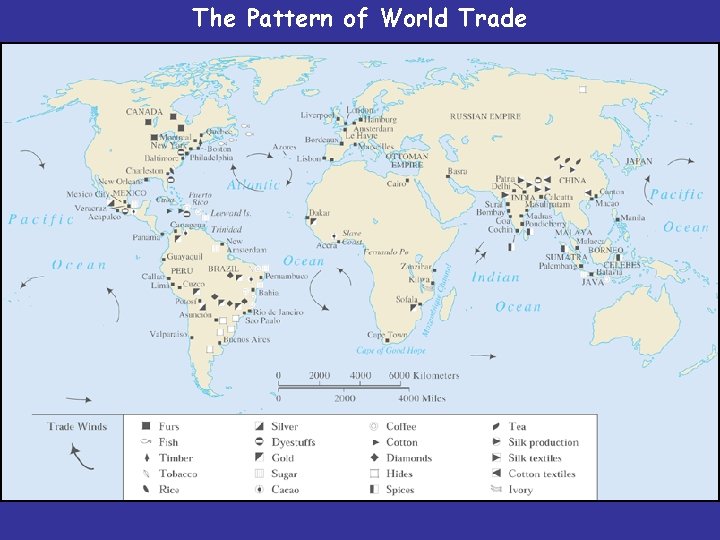
The Pattern of World Trade
The Pattern of World Trade • One of the consequences of the Portuguese exploration of the African coast was the discovery of sources of gold as well as ivory and slaves. • Pushing their exploration on to India in the sixteenth century, the Portuguese were able to establish a monopoly over the spice trade thereby considerably damaging the Muslim middlemen. • Establishing a headquarters at Goa in 1510, the Portuguese ranged further east to Malacca and the Moluccas (Spice Islands) in search for spices. • Later, the Spanish, Dutch, English, and French would interject themselves into the Asian trade. • While spices were the mainstay of the international trade, silk textiles were also a prominent trade item.
Connections • As capitalism and wealth grew in Europe, there was more and more demand for the goods from overseas. • Meanwhile, trade was not only international but also regional, especially in Asia where tin, copper, gold, agricultural products, cloth, textiles, and ceramics were exchanged. • For the colonizing powers, the availability of luxury goods and raw materials from overseas was counterbalanced by the opening of markets for goods produced in the mother countries. • Mercantilism ruled the day as each state sought to close it markets to its own businessmen, this being especially so with Spain and England. • The ultimate objective was to cut out the foreign middlemen.
Impact of Commercial Revolution • sixteenth century change the social structure of the West – Produced proletariat people without access to real property – worked in domestic manufacturing, as agricultural labor, or as unemployed, urban poor – created greater divisions between estates signified by popular risings of sixteenth and seventeenth centuries – distrust of poor reflected in witchcraft hysteria. • absolute monarchy of the seventeenth century – Balance between monarchy and nobles shifted in favor of the monarchy – loss of feudal independence – monarchs gained new powers – more ambitious military organization marked by professionalized armies, improved methods of tax collection – appointment of bureaucracies more common – decline of parliamentary government • use of mercantilism as state-controlled economic system.
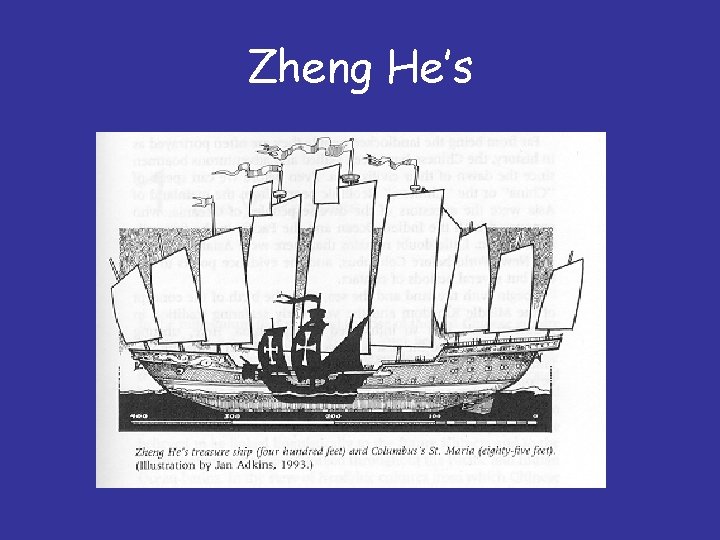
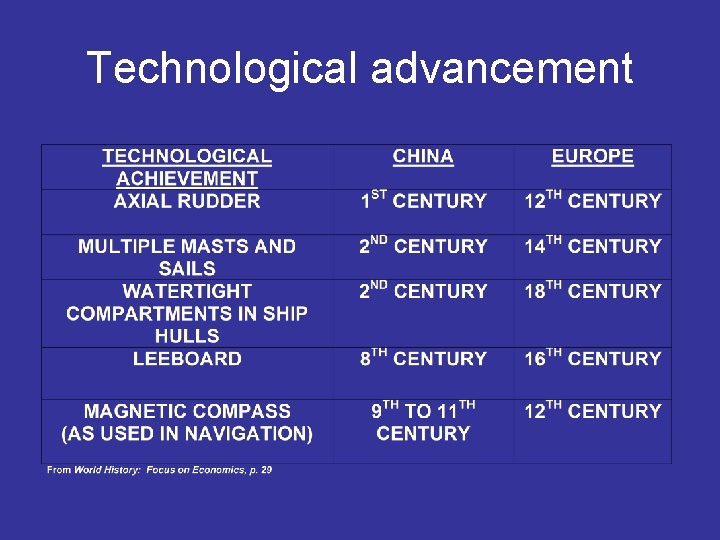
Why Europe and not China? • Guns, Germs and Steel, Jared Diamond, ethnobiologist • Plant and animal domestication meant much more food and hence much denser human populations. The resulting food surpluses, and (in some areas) the animal-based means of transporting those surpluses, were a prerequisite for the development of a settled, politically centralized, socially stratified, economically complex, technologically innovative societies. • Hence the availability of domestic plants and animals ultimately explains why empires, literacy, and steel weapons developed earliest in Eurasia and later, or not at all, on other continents. The military uses of horses and camels, and the killing power of animal-derived germs, complete the list of major links between food production and conquest. . . • Eurasian peoples happened to inherit many more species of domesticable large wild mammalian herbivores than did people of the other continents. That outcome, with all of its momentous advantages for Eurasian societies, stemmed from three basic facts of mammalian geography, history and biology. First, Eurasia, benefiting its large area and ecological diversity, started out with the most candidates. Second Australia and the Americas, but not Eurasia or Africa, lost most of their candidates in a massive wave of late-Pleistocene extinctions. . . Finally, a higher percentage of the surviving candidates proved suitable for domestication on Eurasia than on other continents.
Zheng He’s
Technological advancement