
MEP 203 CONTEMPORARY MEDIA THEORY 4 STRUCTURALISM AND
- Slides: 8
MEP 203 CONTEMPORARY MEDIA THEORY 4. STRUCTURALISM AND SEMIOTICS
What is structuralism? § A body of theory on how society is structured/shaped by systems of codes § Language n Politics n Fashion n Sport n Taste, and so on. . .
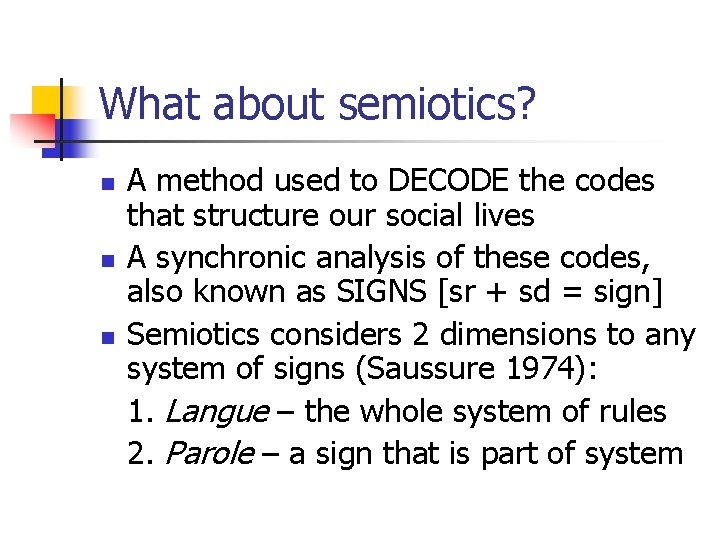
What about semiotics? n n n A method used to DECODE the codes that structure our social lives A synchronic analysis of these codes, also known as SIGNS [sr + sd = sign] Semiotics considers 2 dimensions to any system of signs (Saussure 1974): 1. Langue – the whole system of rules 2. Parole – a sign that is part of system
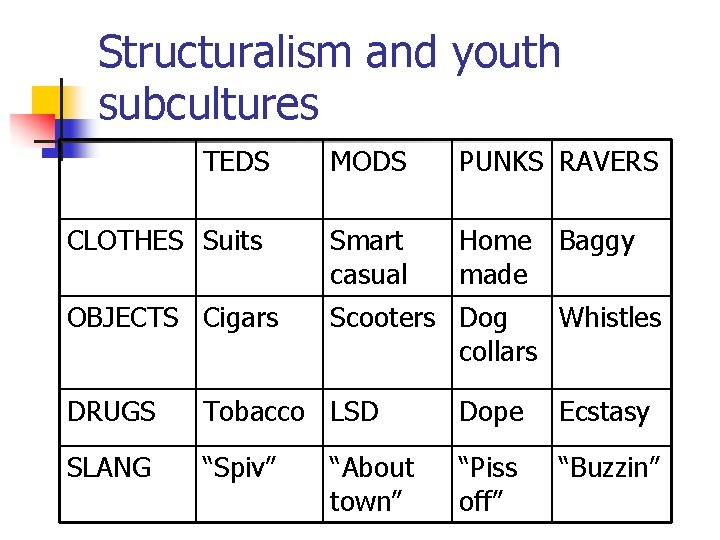
Structuralism and youth subcultures TEDS MODS PUNKS RAVERS CLOTHES Suits Smart casual Home Baggy made OBJECTS Cigars Scooters Dog Whistles collars DRUGS Tobacco LSD Dope Ecstasy SLANG “Spiv” “Piss off” “Buzzin” “About town”
Hebdige’s Subculture (1979) n n n Used semiotics to read the systems of codes expressed by youth groups A subculture operates through a system of codes which offend the majority, threaten the status quo, contradict the “myth of consensus” (p. 18) HOMOLOGY – the symbolic fit between values and lifestyles
Hall (1999), Encoding/Decoding n n Media producers ENCODE the texts they produce within a professional code (political, commercial, technical, etc. ) Audiences DECODE these texts in 3 ways: 1. Dominant/preferred code 2. Negotiated code 3. Oppositional code
Morley (1980), The ‘Nationwide’ Audience n Used Hall’s Encoding/Decoding model to interpret audience focus-group responses: 1. Preferred decodings – bank managers, apprentices (trainee labourers) 2. Negotiated decodings – uni students, trade union officials 3. Oppositional decodings – FE students, shopkeepers
Conclusions n n Structuralist theories interpret CODES Media texts (such as TV programmes) hold meanings in how they are made (ENCODED) and received (DECODED) However… encoded media messages are decoded in POLYSEMIC ways Do Hall and Morley underestimate the complexity of audience decodings?