
Menu Brief History A Pythagorean Puzzle Pythagoras Theorem

Menu Brief History A Pythagorean Puzzle Pythagoras’ Theorem Using Pythagoras’ Theorem Finding the shorter side Further examples
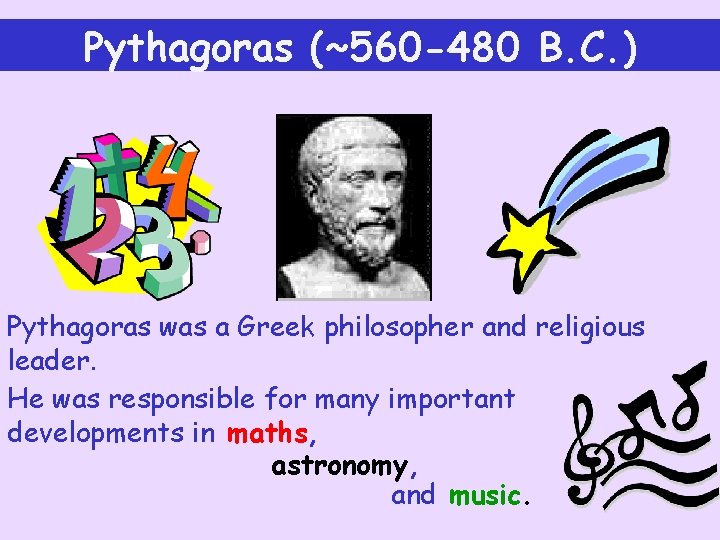
Pythagoras (~560 -480 B. C. ) Pythagoras was a Greek philosopher and religious leader. He was responsible for many important developments in maths, astronomy, and music.
The Secret Brotherhood His students formed a secret society called the Pythagoreans. As well as studying maths, they were a political and religious organisation. Members could be identified by a five pointed star they wore on their clothes.
The Secret Brotherhood They had to follow some unusual rules. They were not allowed to wear wool, drink wine or pick up anything they had dropped! Eating beans was also strictly forbidden!
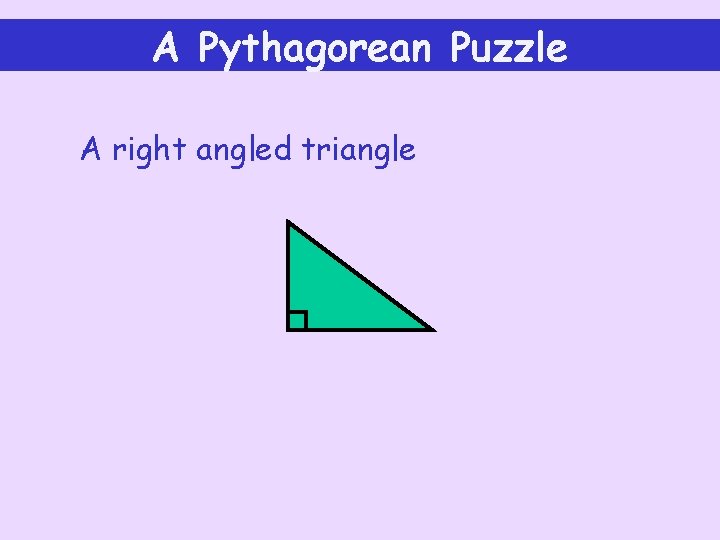
A Pythagorean Puzzle A right angled triangle
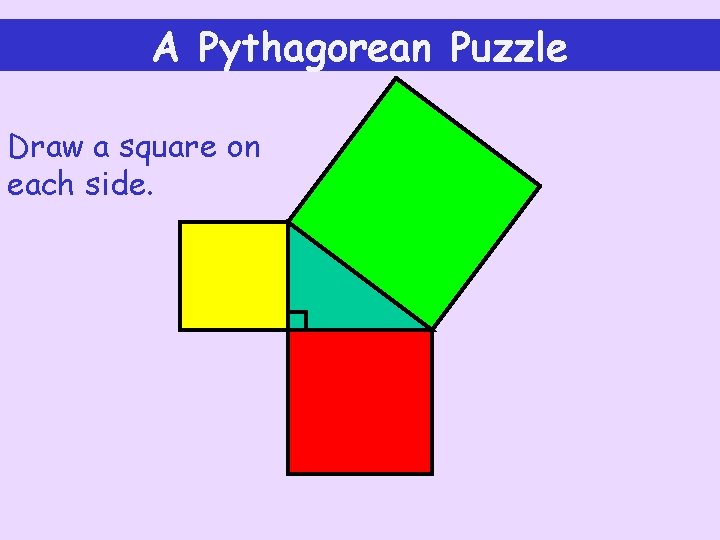
A Pythagorean Puzzle Draw a square on each side.
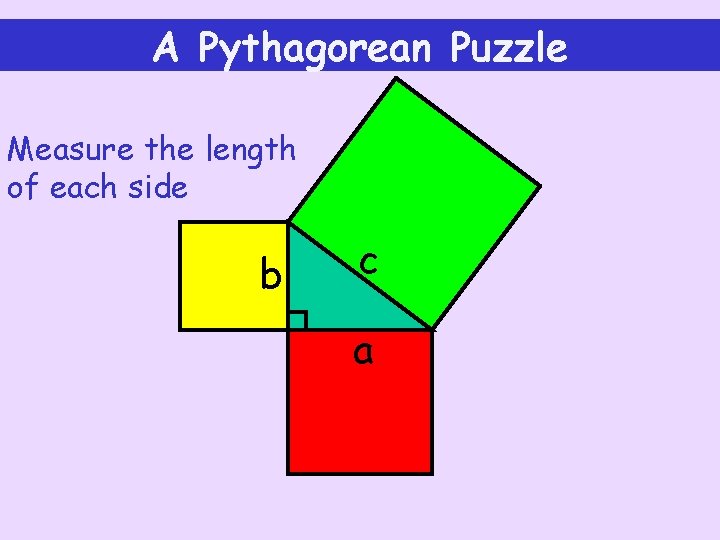
A Pythagorean Puzzle Measure the length of each side b c a
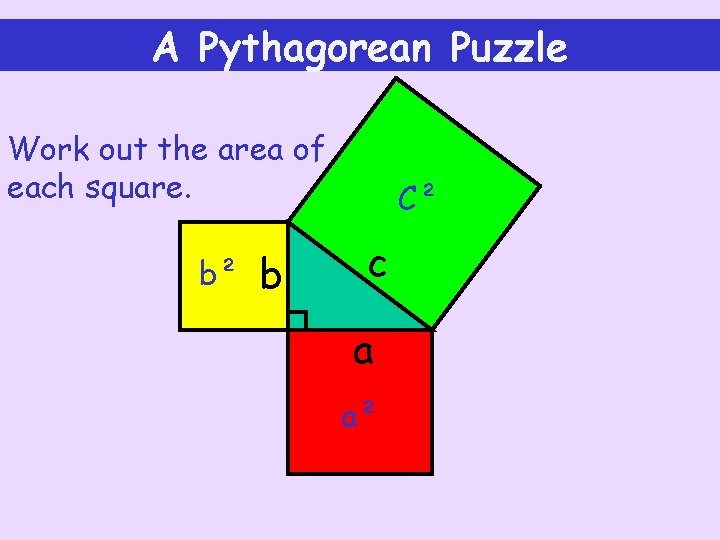
A Pythagorean Puzzle Work out the area of each square. b² b C² c a a²
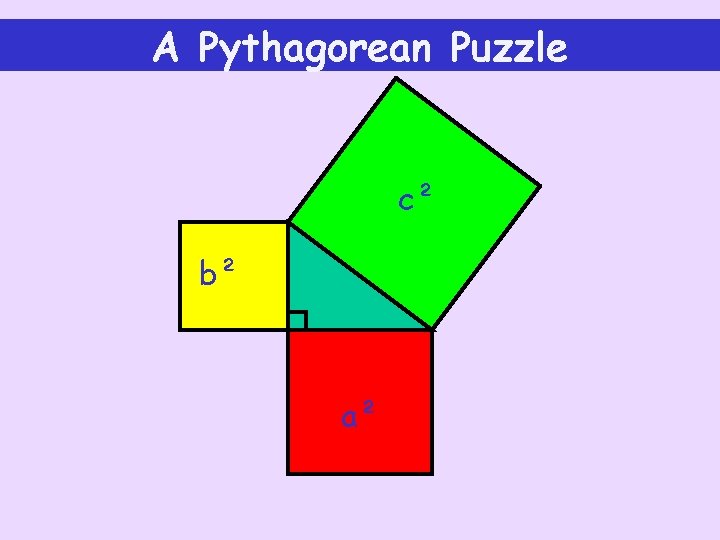
A Pythagorean Puzzle c² b² a²
A Pythagorean Puzzle
A Pythagorean Puzzle 1
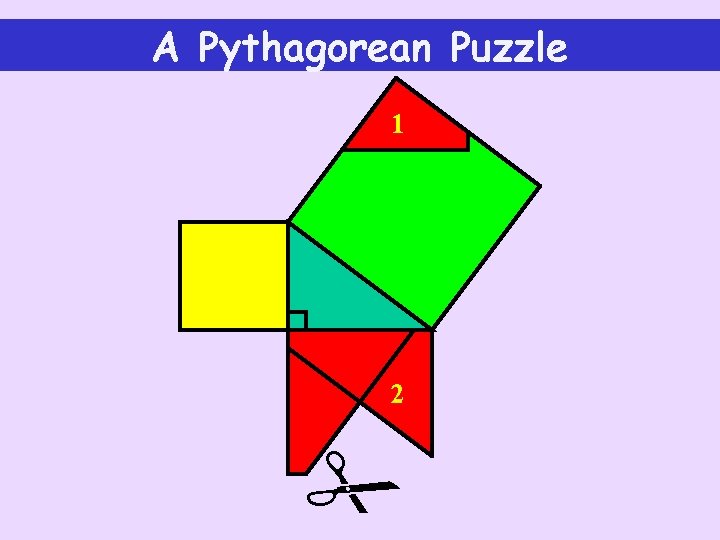
A Pythagorean Puzzle 1 2
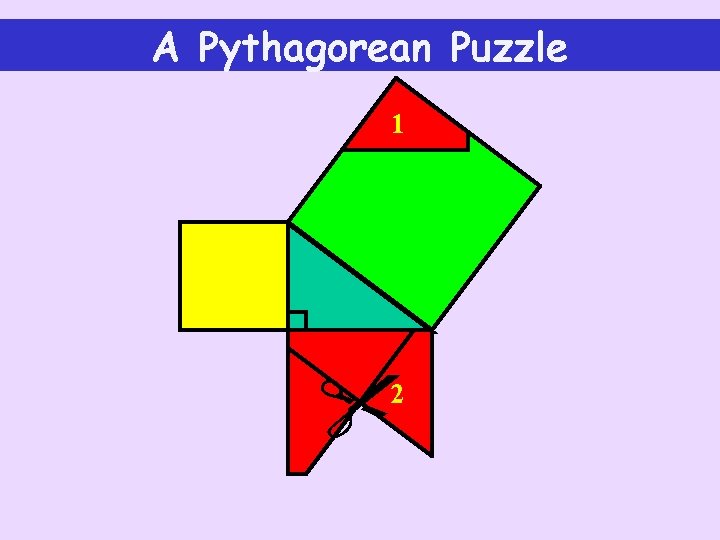
A Pythagorean Puzzle 1 2
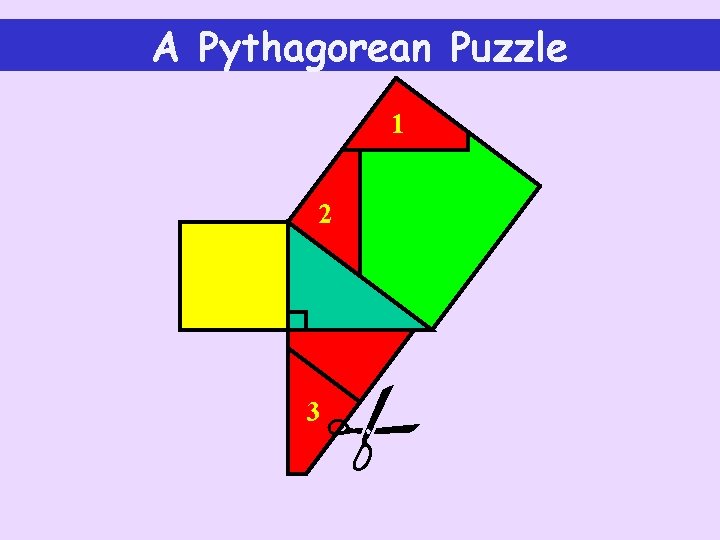
A Pythagorean Puzzle 1 2 3
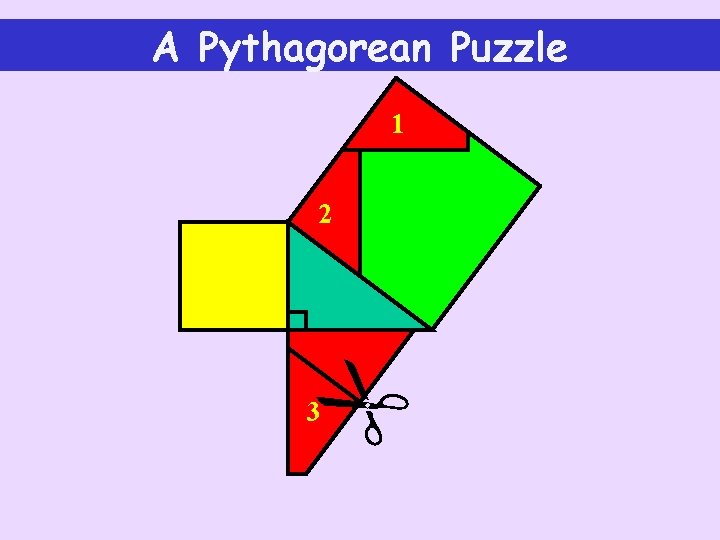
A Pythagorean Puzzle 1 2 3
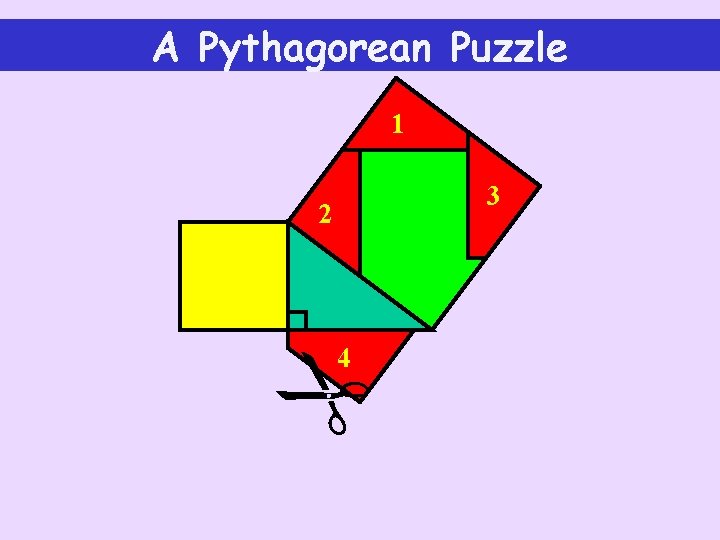
A Pythagorean Puzzle 1 3 2 4
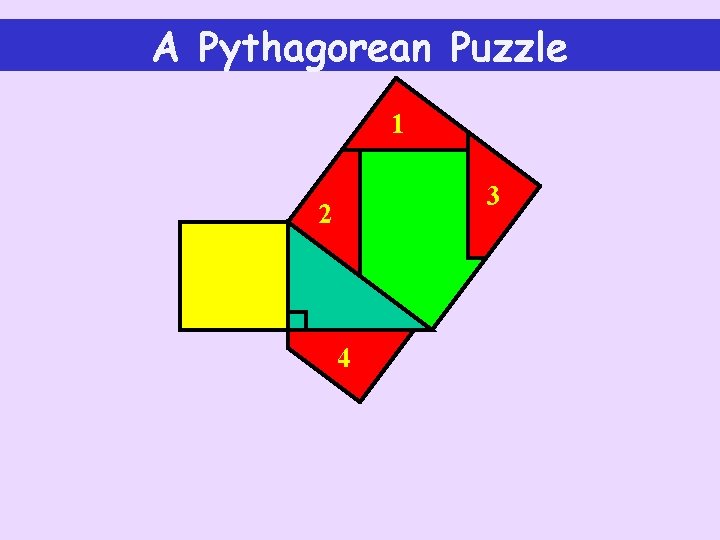
A Pythagorean Puzzle 1 3 2 4
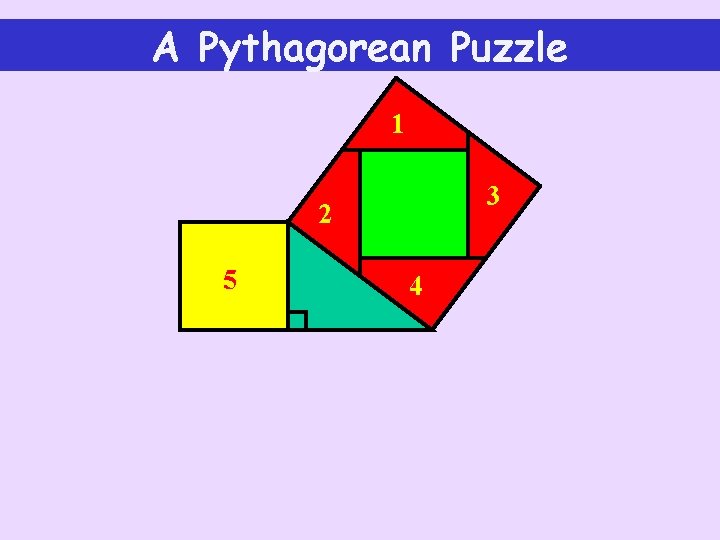
A Pythagorean Puzzle 1 3 2 5 4
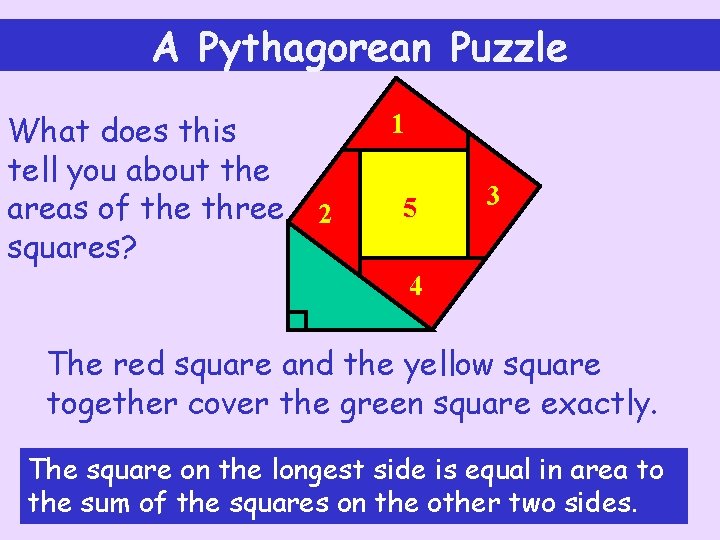
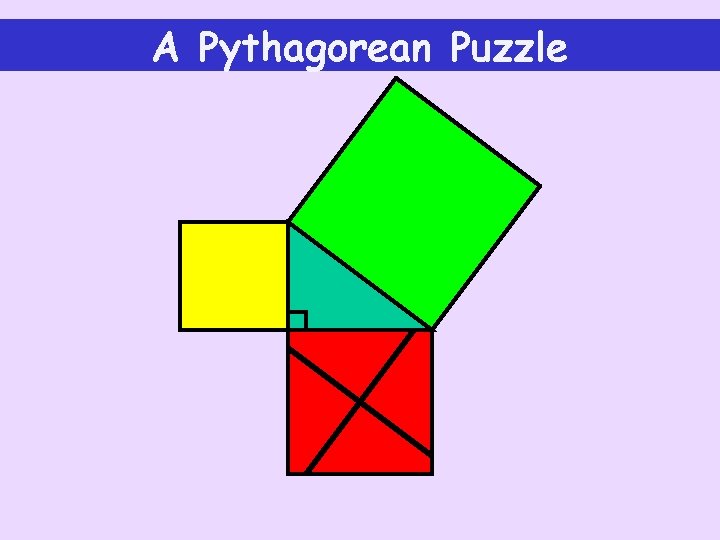
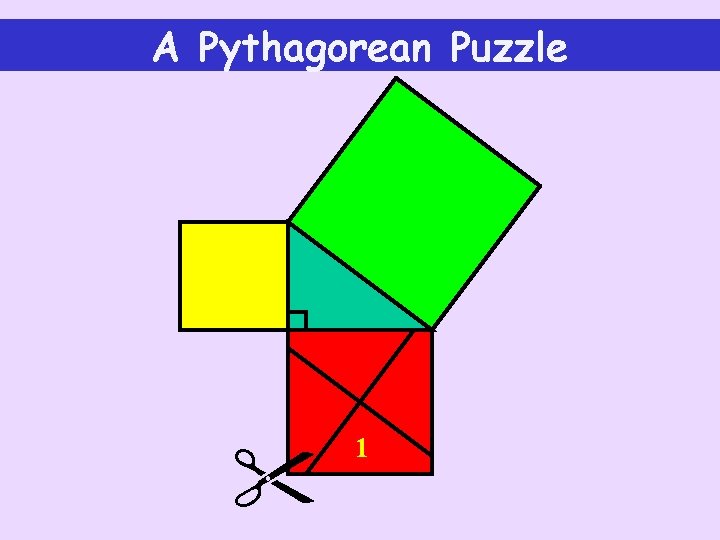
A Pythagorean Puzzle What does this tell you about the areas of the three squares? 1 2 5 3 4 The red square and the yellow square together cover the green square exactly. The square on the longest side is equal in area to the sum of the squares on the other two sides.
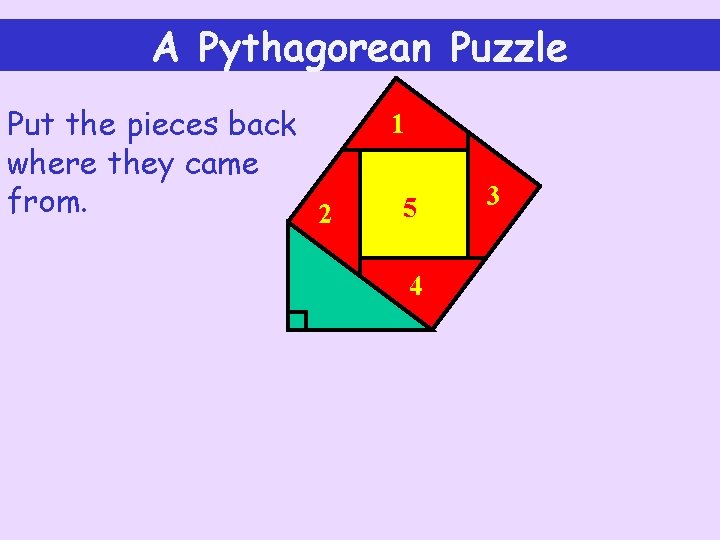
A Pythagorean Puzzle Put the pieces back where they came from. 2 1 5 4 3
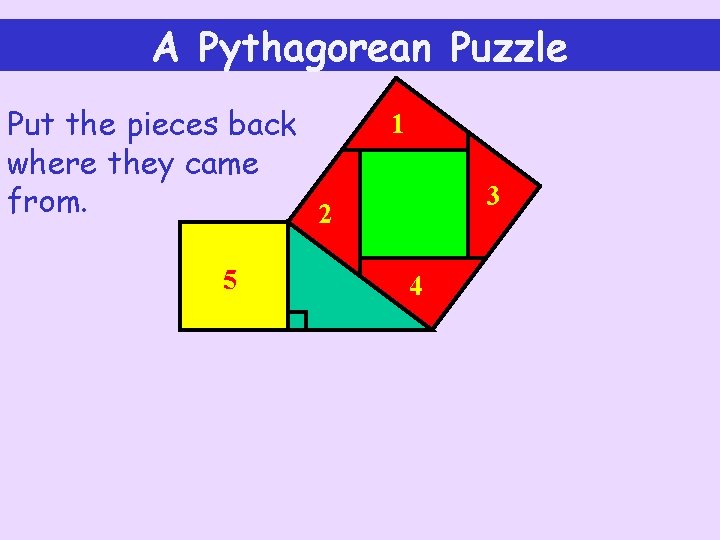
A Pythagorean Puzzle Put the pieces back where they came from. 2 5 1 3 4
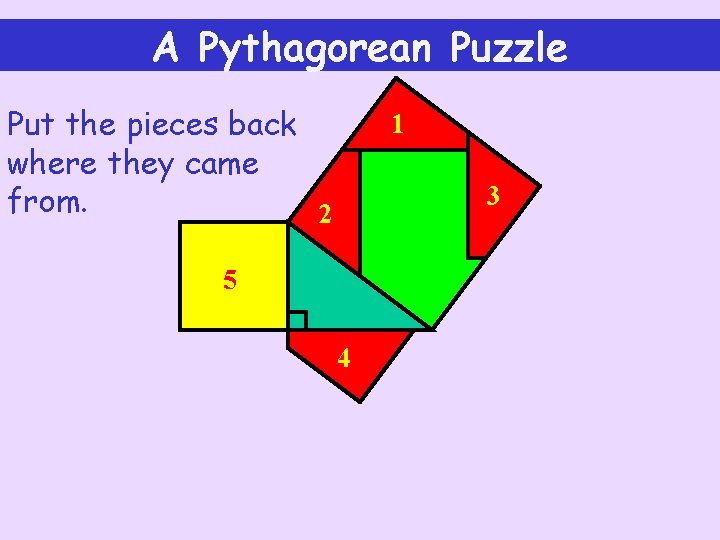
A Pythagorean Puzzle Put the pieces back where they came from. 2 1 3 5 4
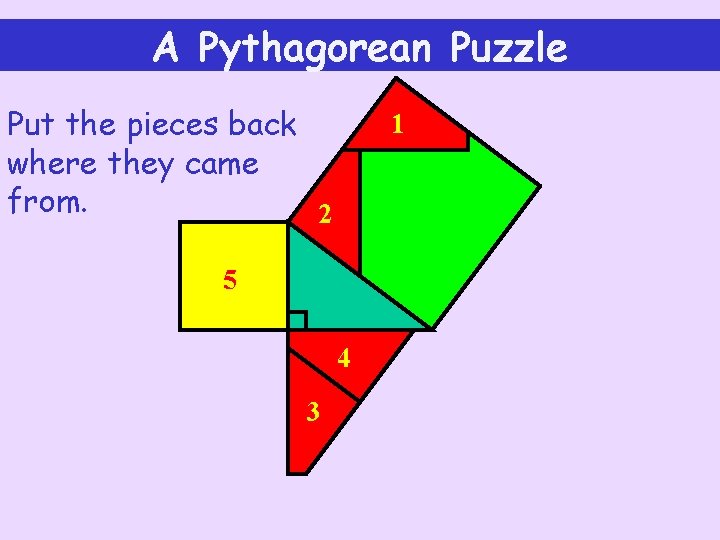
A Pythagorean Puzzle Put the pieces back where they came from. 2 1 5 4 3
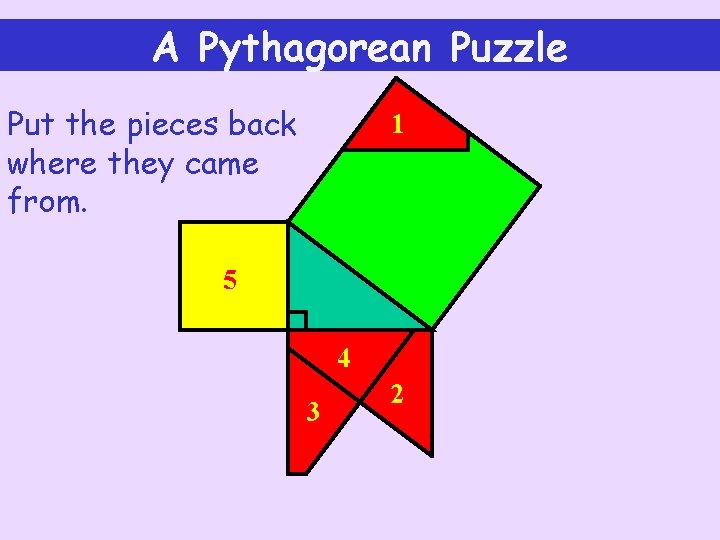
A Pythagorean Puzzle Put the pieces back where they came from. 1 5 4 3 2
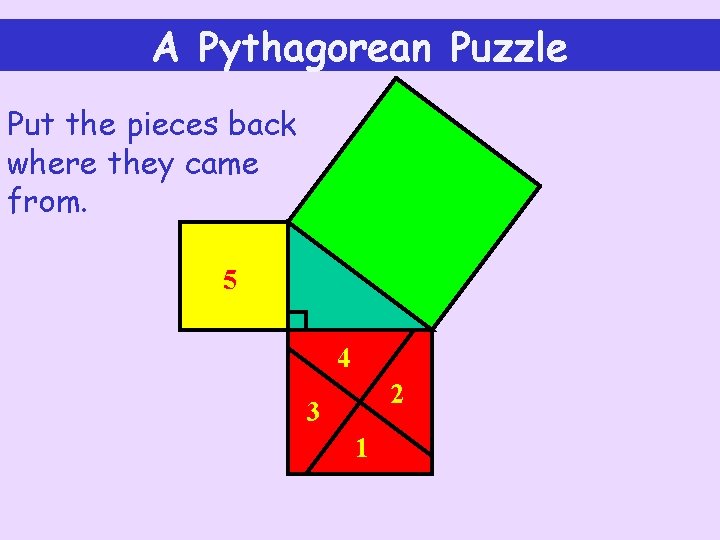
A Pythagorean Puzzle Put the pieces back where they came from. 5 4 2 3 1
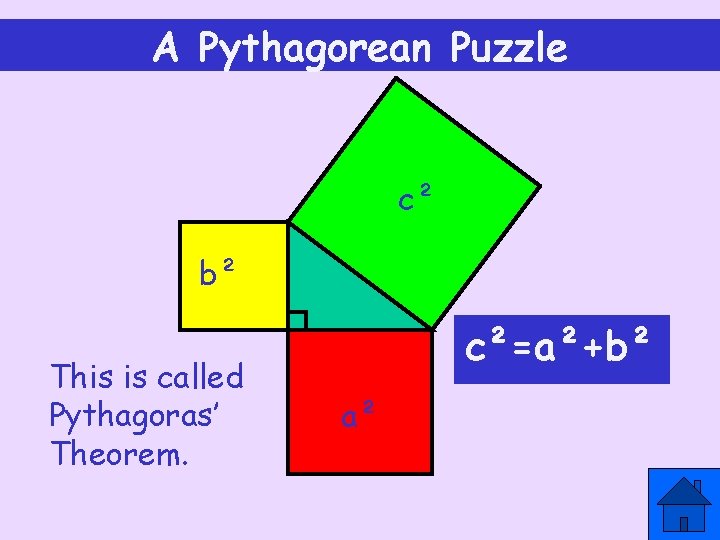
A Pythagorean Puzzle c² b² This is called Pythagoras’ Theorem. c²=a²+b² a²
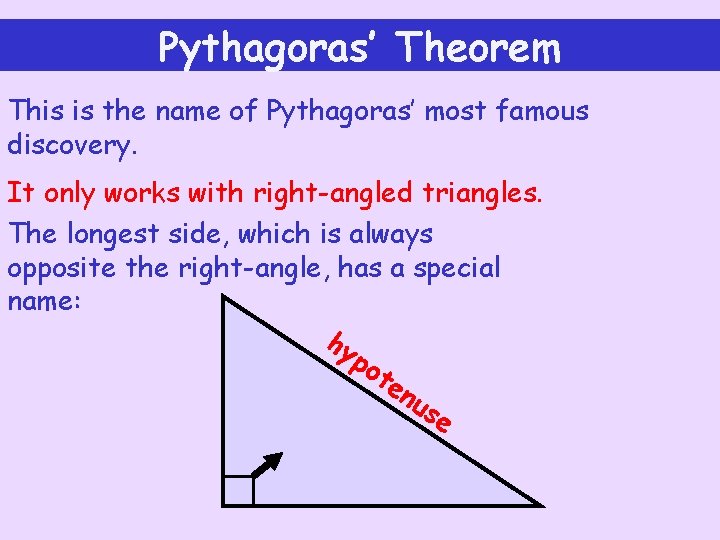
Pythagoras’ Theorem This is the name of Pythagoras’ most famous discovery. It only works with right-angled triangles. The longest side, which is always opposite the right-angle, has a special name: hy po te nu se
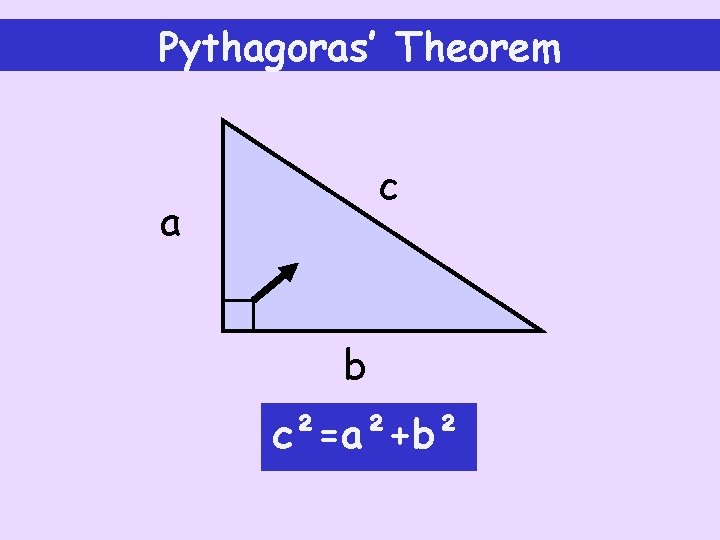
Pythagoras’ Theorem c a b c²=a²+b²
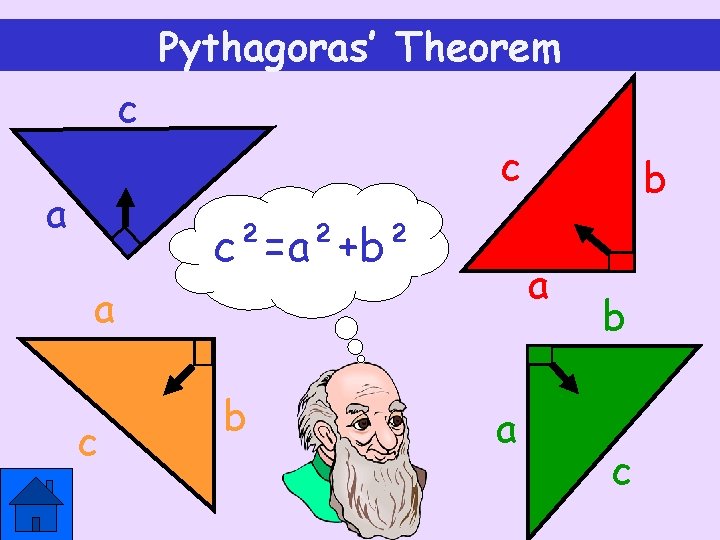
Pythagoras’ Theorem c a c y c²=a²+b² a a c b b a b c
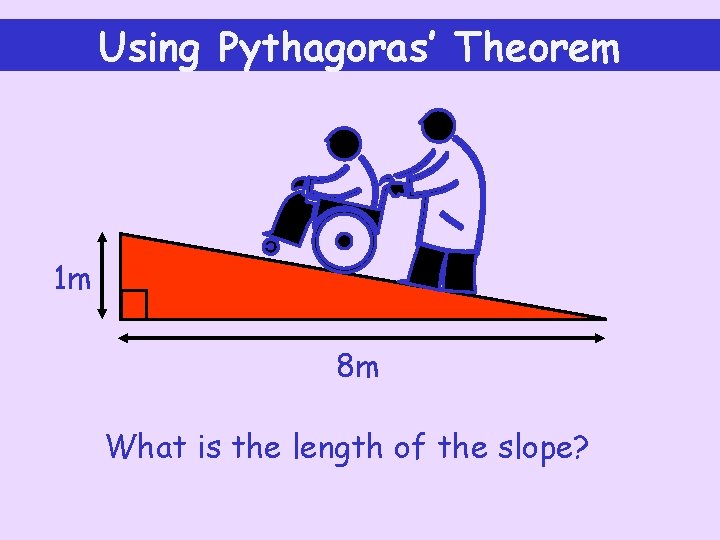
Using Pythagoras’ Theorem 1 m 8 m What is the length of the slope?
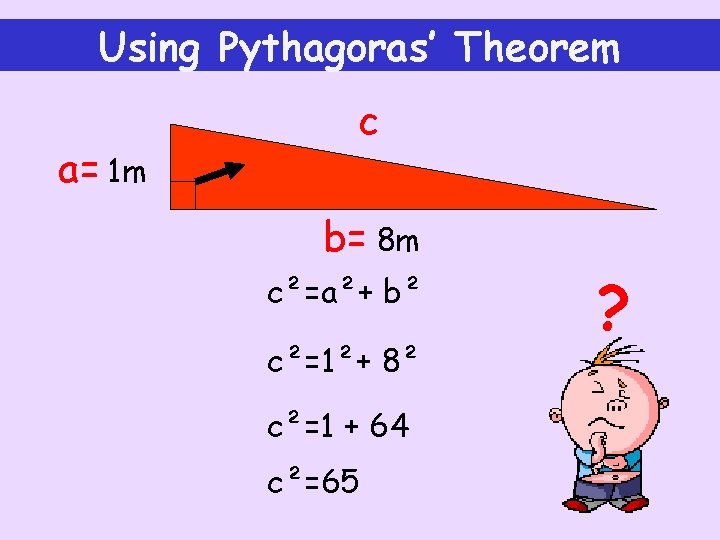
Using Pythagoras’ Theorem a= 1 m c b= 8 m c²=a²+ b² c²=1²+ 8² c²=1 + 64 c²=65 ?
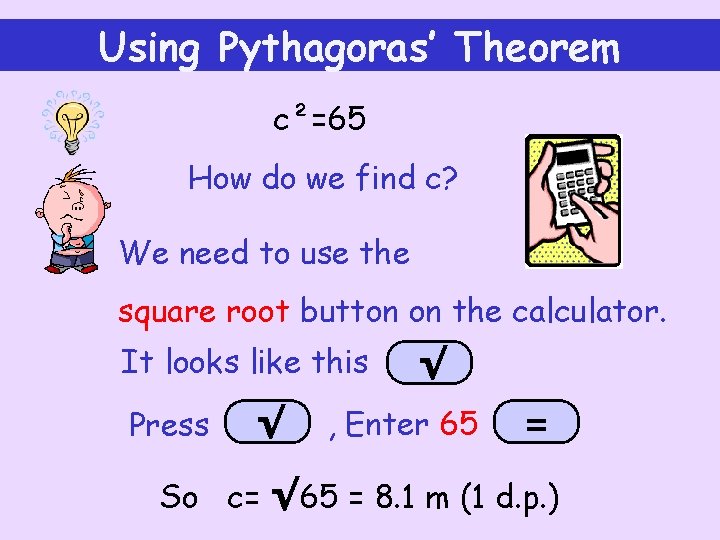
Using Pythagoras’ Theorem c²=65 How do we find c? We need to use the square root button on the calculator. It looks like this Press √ √ , Enter 65 = So c= √ 65 = 8. 1 m (1 d. p. )
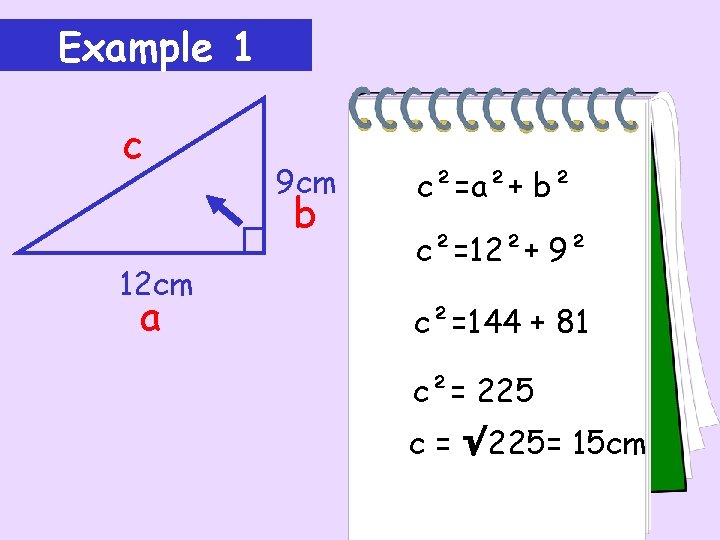
Example 1 c 9 cm b 12 cm a c²=a²+ b² c²=12²+ 9² c²=144 + 81 c²= 225 c = √ 225= 15 cm
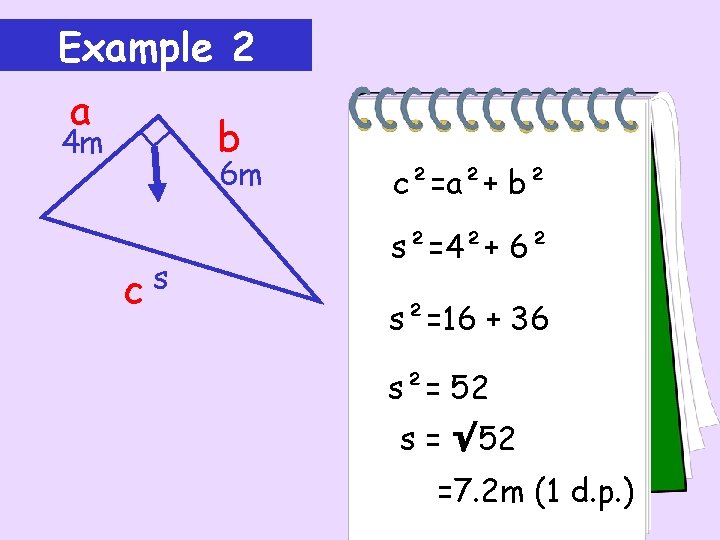
Example 2 a b 4 m 6 m cs c²=a²+ b² s²=4²+ 6² s²=16 + 36 s²= 52 s = √ 52 =7. 2 m (1 d. p. )
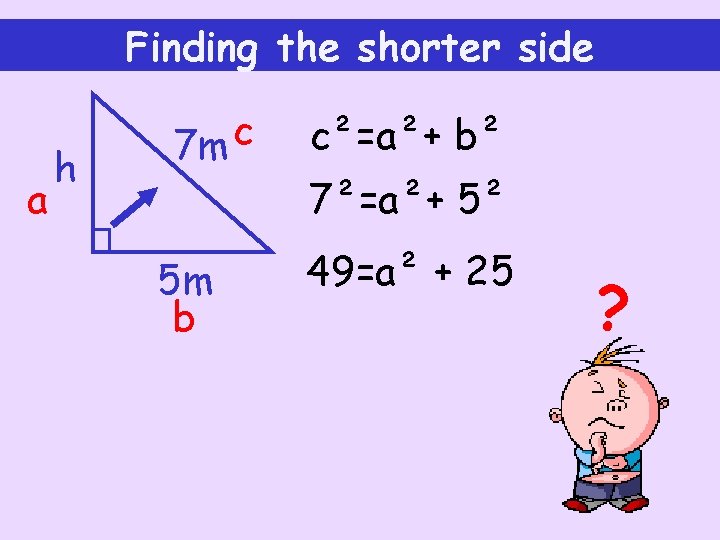
Finding the shorter side a h 7 m c 5 m b c²=a²+ b² 7²=a²+ 5² 49=a² + 25 ?
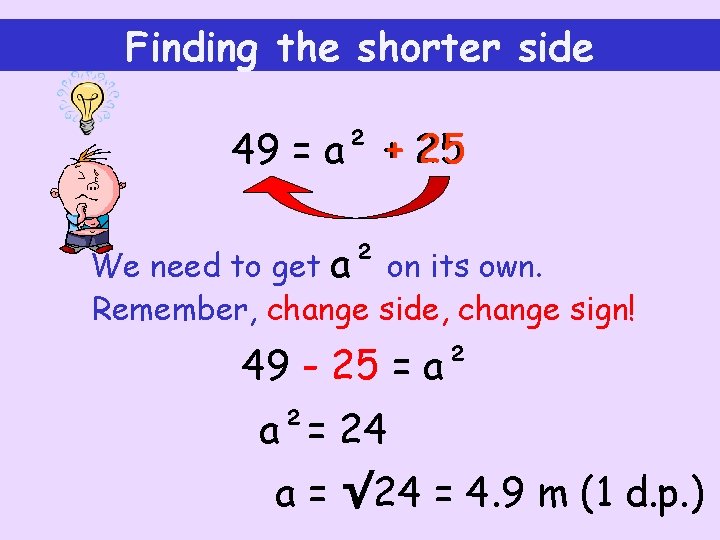
Finding the shorter side 49 = a² + 25 We need to get a² on its own. Remember, change side, change sign! 49 - 25 = a² a²= 24 a = √ 24 = 4. 9 m (1 d. p. )
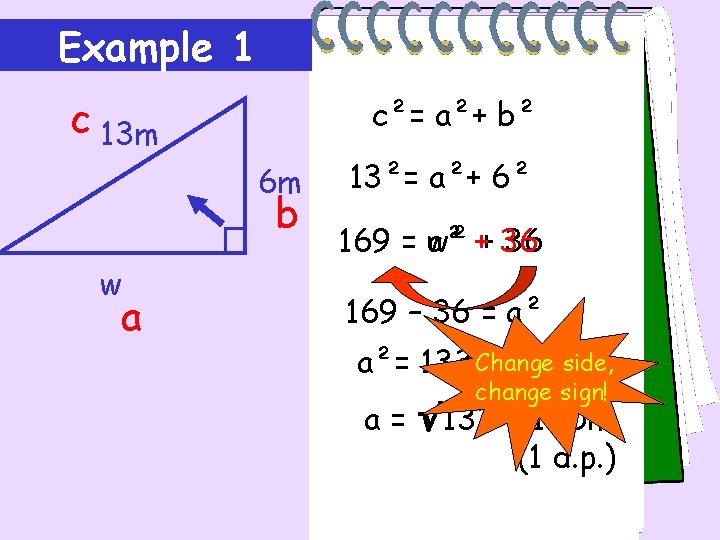
Example 1 c 13 m c²= a²+ b² 6 m b w a 13²= a²+ 6² a² ++ 36 169 = w² 36 169 – 36 = a² a²= 133 Change side, change sign! a = √ 133 = 11. 5 m (1 d. p. )
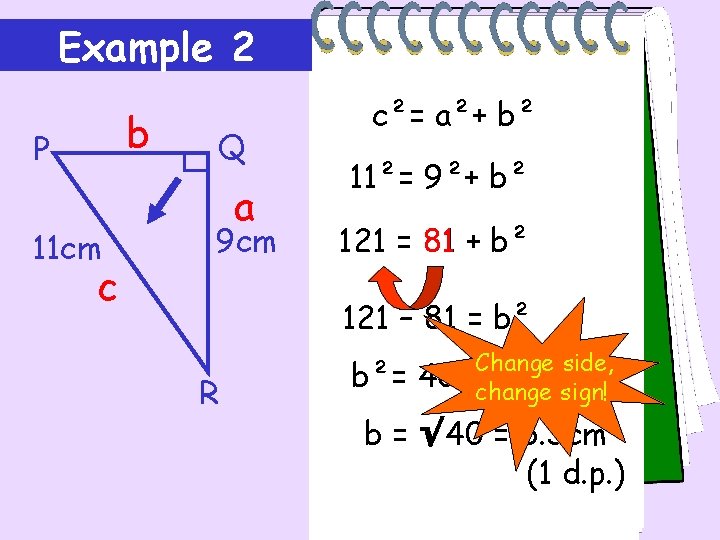
Example 2 b P 11 cm c Q a 9 cm c²= a²+ b² 11²= 9²+ b² 121 = 81 + b² 121 – 81 = b² R b²= 40 Change side, change sign! b = √ 40 = 6. 3 cm (1 d. p. )
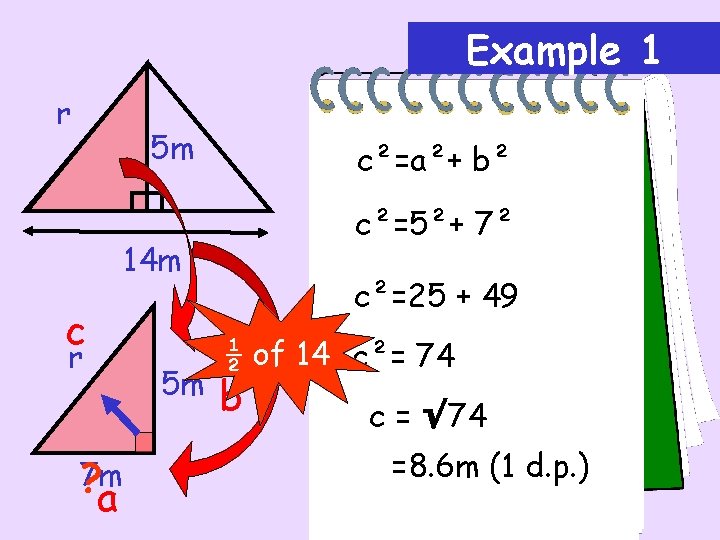
Example 1 r 5 m c²=a²+ b² c²=5²+ 7² 14 m c r 5 m 7 m ? a c²=25 + 49 ½ of 14 c²= 74 b c = √ 74 =8. 6 m (1 d. p. )
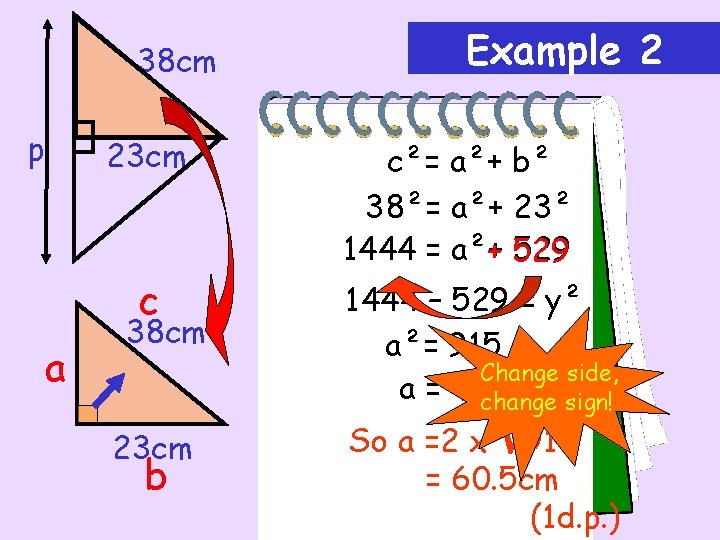
38 cm p 23 cm c a 38 cm 23 cm b Example 2 c²= a²+ b² 38²= a²+ 23² 1444 = a²+ + 529 1444 – 529 = y² a²= 915 Change side, a = √ 915 change sign! So a =2 x √ 915 = 60. 5 cm (1 d. p. )
HOMEWORK
- Slides: 43