
MENTORSHIP Creating a Culture of Inclusivity Jennifer Edgoose
- Slides: 39
MENTORSHIP: Creating a Culture of Inclusivity Jennifer Edgoose, MD, MPH; Melissa Stiles, MD; Kacia Stevenson; Kjersti Knox, MD; Ronni Hayon, MD; Sarina Schrager, MD, MS; Andrea Martonffy, MD; Thomas Hahn, MD
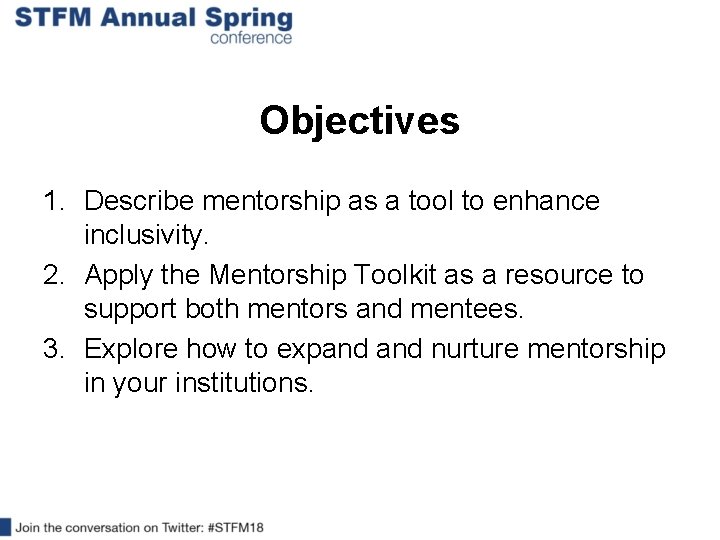
Objectives 1. Describe mentorship as a tool to enhance inclusivity. 2. Apply the Mentorship Toolkit as a resource to support both mentors and mentees. 3. Explore how to expand nurture mentorship in your institutions.
Disclosures • We have no disclosures.
Inclusivity The practice or policy of including people who might otherwise be excluded or marginalized, such as those who have physical or mental disabilities and members of minority groups. https: //en. oxforddictionaries. com/definition/us/inclusivity
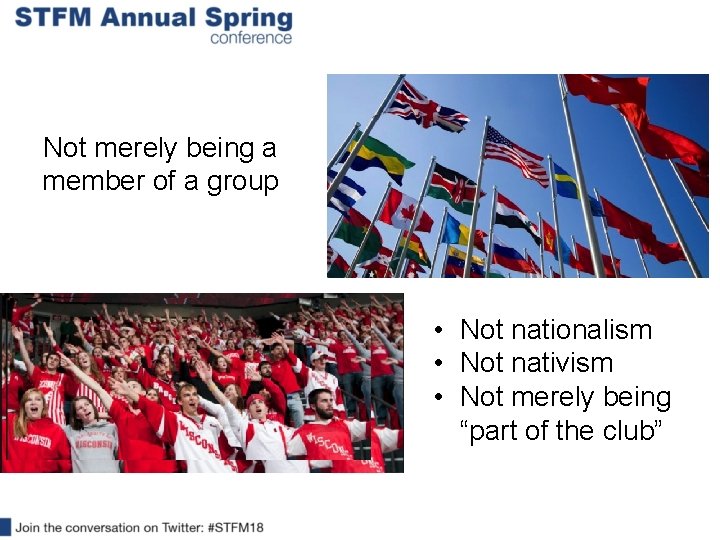
Not merely being a member of a group • Not nationalism • Not nativism • Not merely being “part of the club”
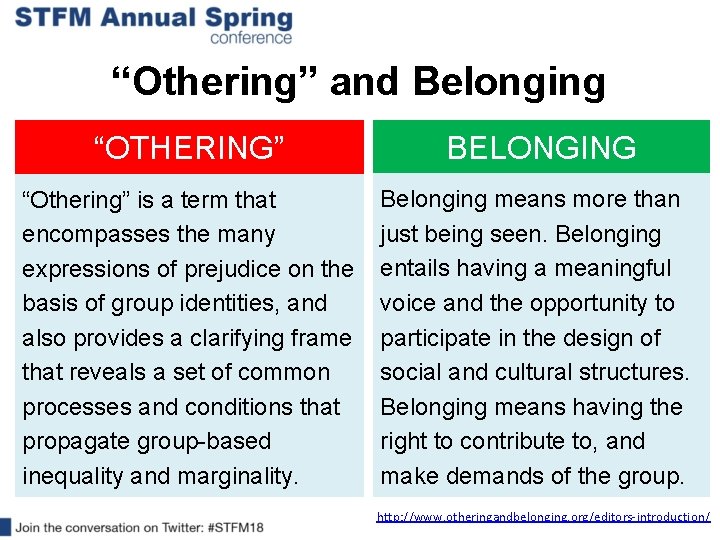
“Othering” and Belonging “OTHERING” BELONGING “Othering” is a term that encompasses the many expressions of prejudice on the basis of group identities, and also provides a clarifying frame that reveals a set of common processes and conditions that propagate group-based inequality and marginality. Belonging means more than just being seen. Belonging entails having a meaningful voice and the opportunity to participate in the design of social and cultural structures. Belonging means having the right to contribute to, and make demands of the group. http: //www. otheringandbelonging. org/editors-introduction/
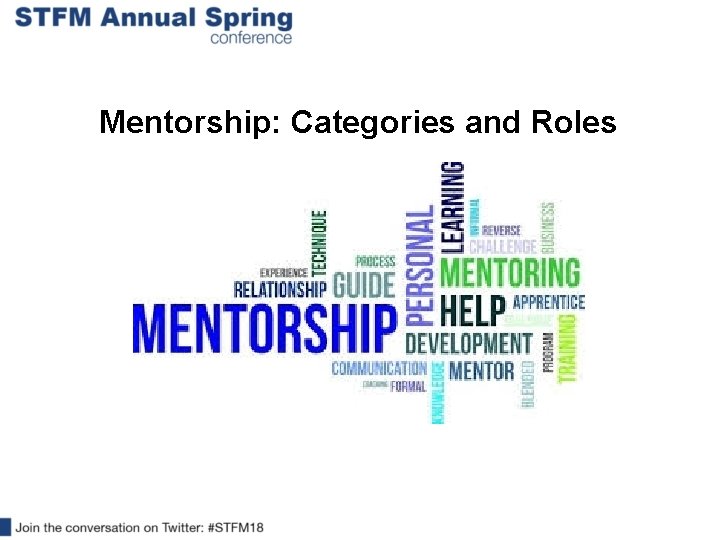
Mentorship: Categories and Roles
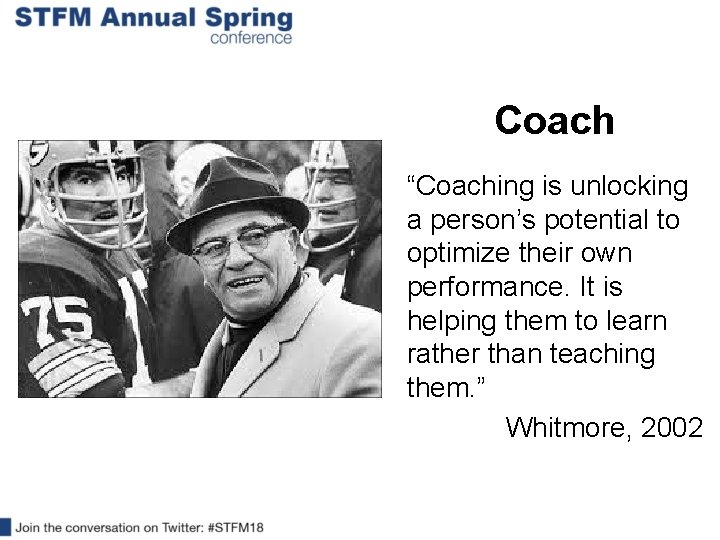
Coach “Coaching is unlocking a person’s potential to optimize their own performance. It is helping them to learn rather than teaching them. ” Whitmore, 2002
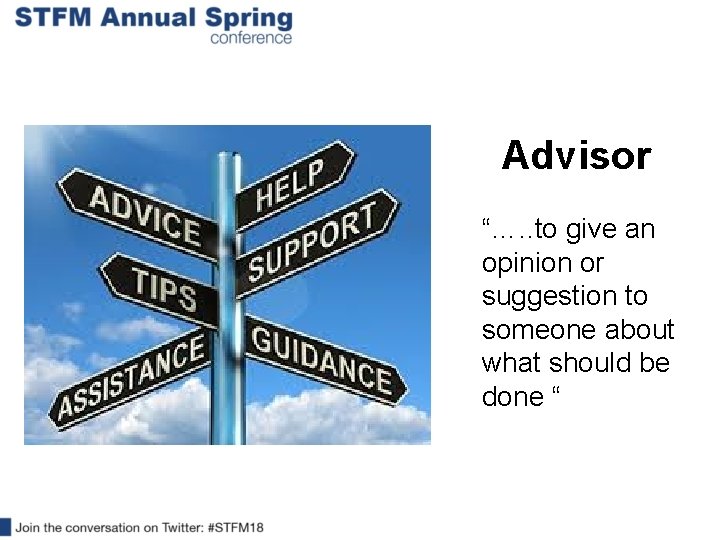
Advisor “…. . to give an opinion or suggestion to someone about what should be done “
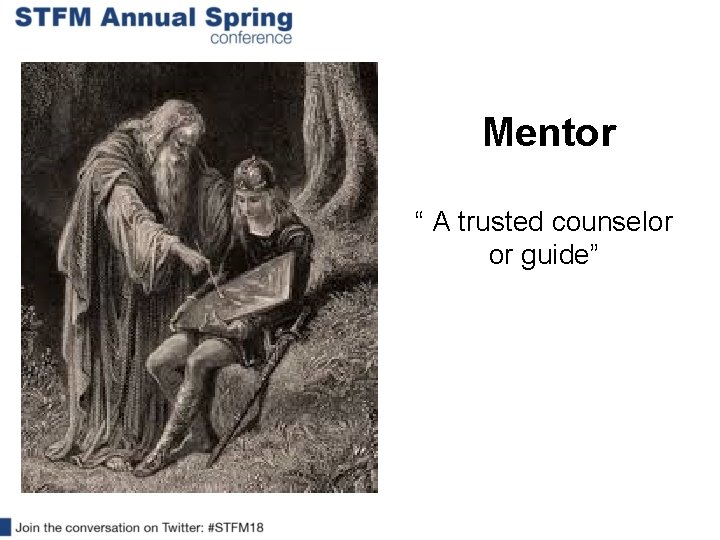
Mentor “ A trusted counselor or guide”
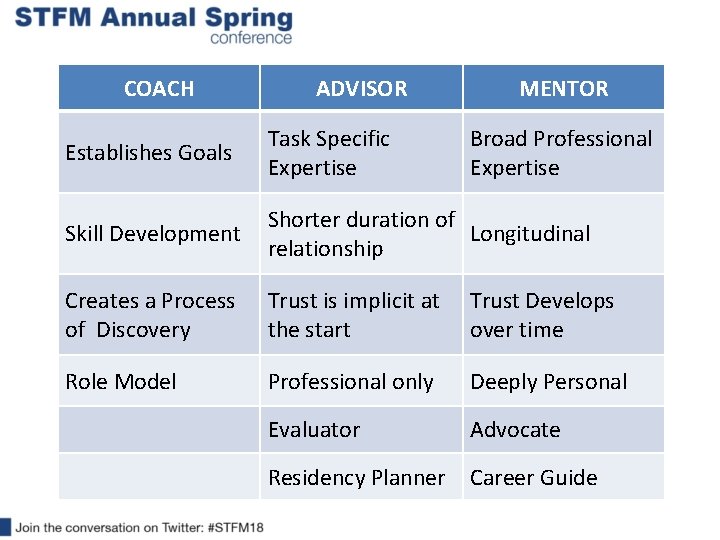
COACH ADVISOR MENTOR Establishes Goals Task Specific Expertise Broad Professional Expertise Skill Development Shorter duration of Longitudinal relationship Creates a Process of Discovery Trust is implicit at the start Trust Develops over time Role Model Professional only Deeply Personal Evaluator Advocate Residency Planner Career Guide
Mentorship Mapping
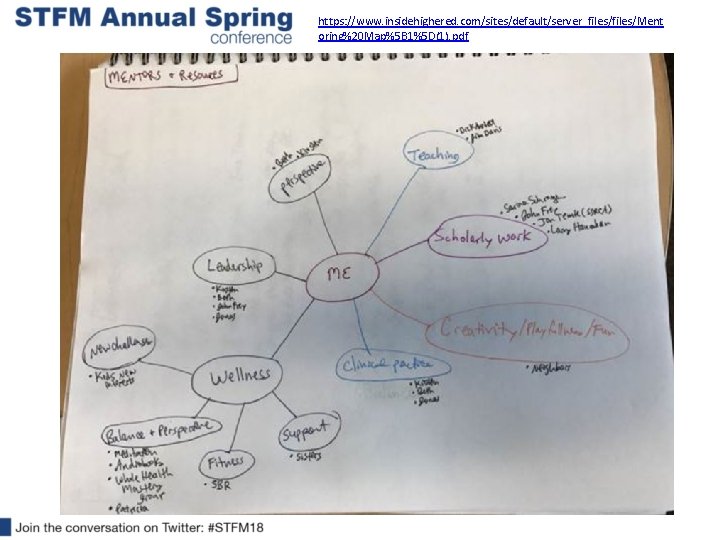
What is mentor mapping? • An opportunity to map mentors in different parts of your professional life and identify the roles they play.
Why mentor map? • Identify mentors who may have not realized are mentors • Identify people you want to have as a mentor • Identify areas that you are lacking in mentorship
How to mentor map • For each category of mentors, list your mentors. • You can make notes about how often you meet with that mentor or how they specifically help
How to mentor map It is okay to: • List more than 1 mentor per category • List the same mentor under multiple categories • Leave a category blank if you don’t have mentors • List mentors outside of the DFM • Think of mentors for categories not listed
https: //www. insidehighered. com/sites/default/server_files/Ment oring%20 Map%5 B 1%5 D(1). pdf
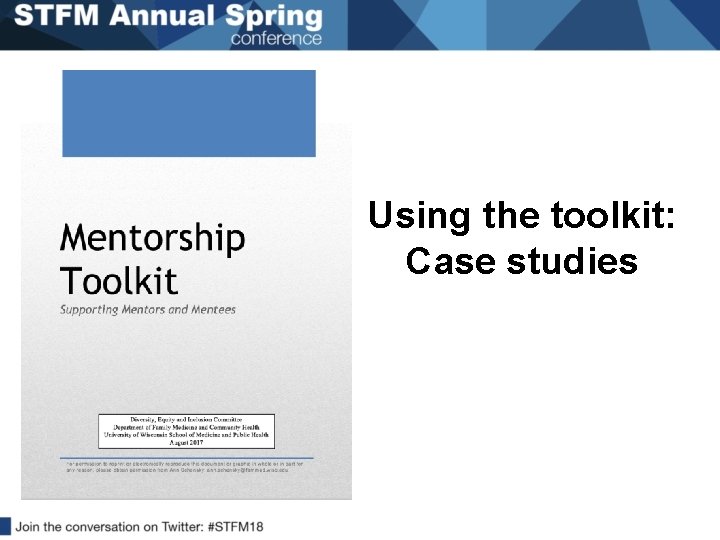
Using the toolkit: Case studies
Our framing • Mentorship consists ideally of a “reciprocal, dynamic relationship between mentor and mentee that promotes the satisfaction and/or development of both. ” (Mc. Gee, 2016) • Strong mentoring relationships that strive to mentor across difference have the potential to be transformative for mentor and mentee alike. • Mentorship can promote a more inclusive environment and can promote diversity.
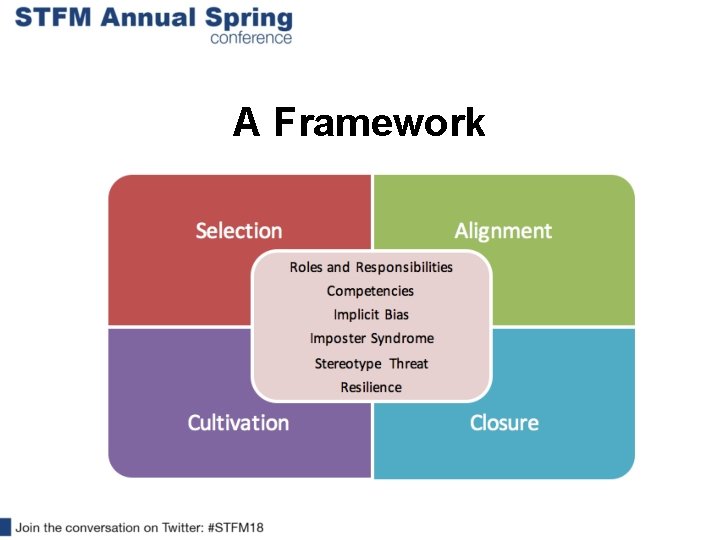
A Framework
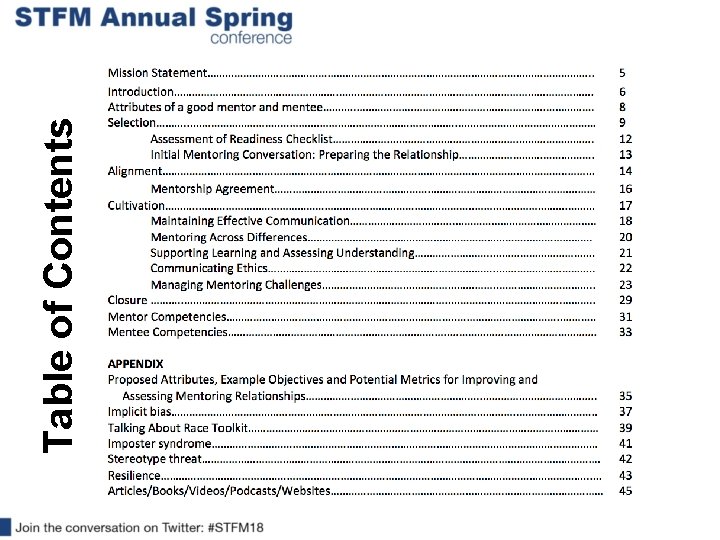
Table of Contents
Case 1 • You are a new faculty member and have been assigned one of the first year residents as your new clinical advisee. You are excited to get to know her and invite her for lunch. • What could you consider before your luncheon?
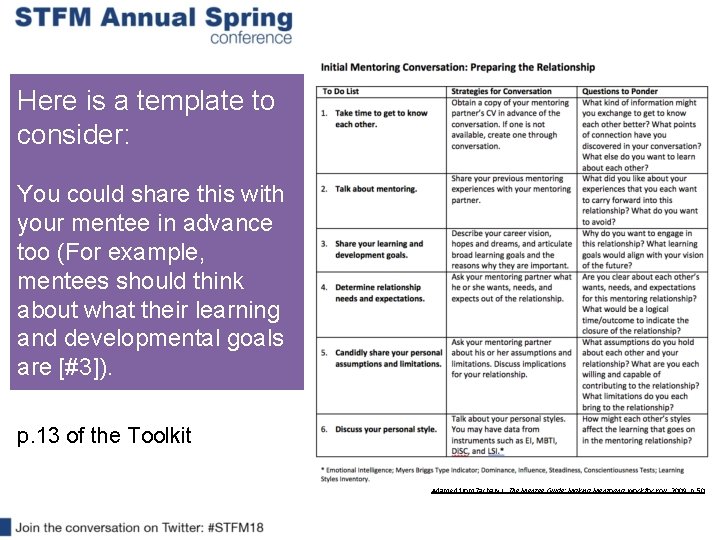
Here is a template to consider: You could share this with your mentee in advance too (For example, mentees should think about what their learning and developmental goals are [#3]). p. 13 of the Toolkit Adapted from Zachary L. The Mentee Guide: Making Mentoring Work for You , 2009, p. 50
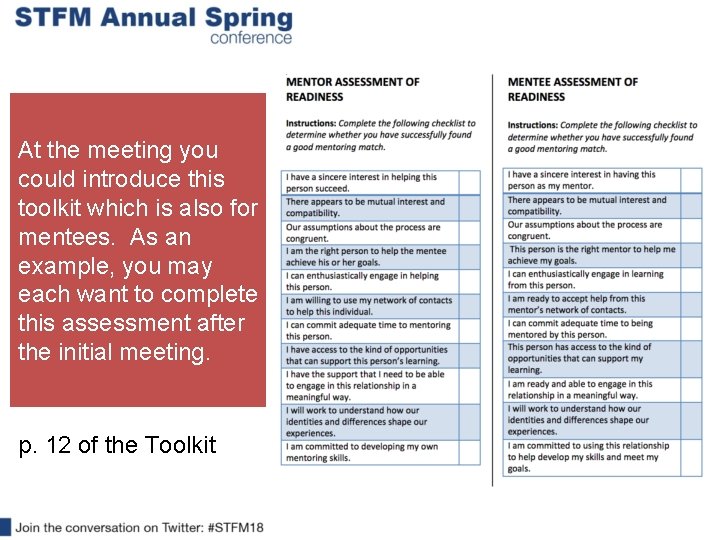
At the meeting you could introduce this toolkit which is also for mentees. As an example, you may each want to complete this assessment after the initial meeting. p. 12 of the Toolkit
Case 2 • You’ve had an experience of being assigned to a mentee who didn’t respond to her emails in a timely manner so you had difficulty providing her with evaluation reviews on a regular basis. • What could help you?
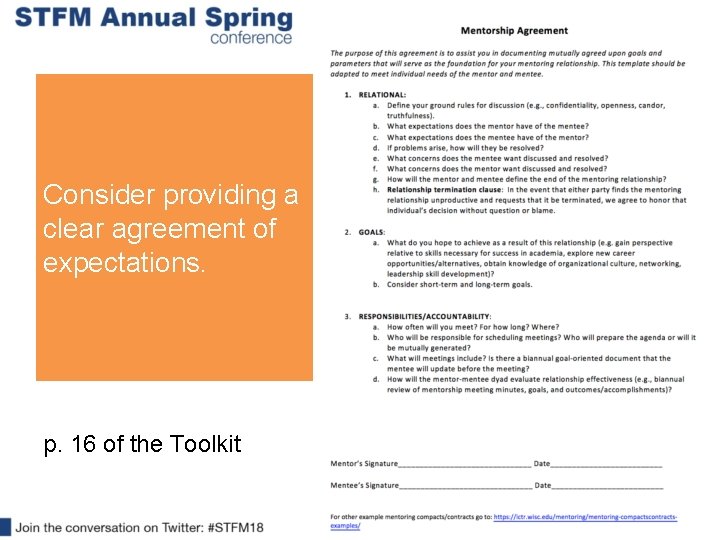
Consider providing a clear agreement of expectations. p. 16 of the Toolkit
Case 3 • You are printing out something at clinic and notice a resident next to you is clearly frustrated. He tells you “I’m supposed to be learning skills of advocacy but every time I go to a meeting with my mentor she does all the talking and I don’t get to participate. ” • What could you do?
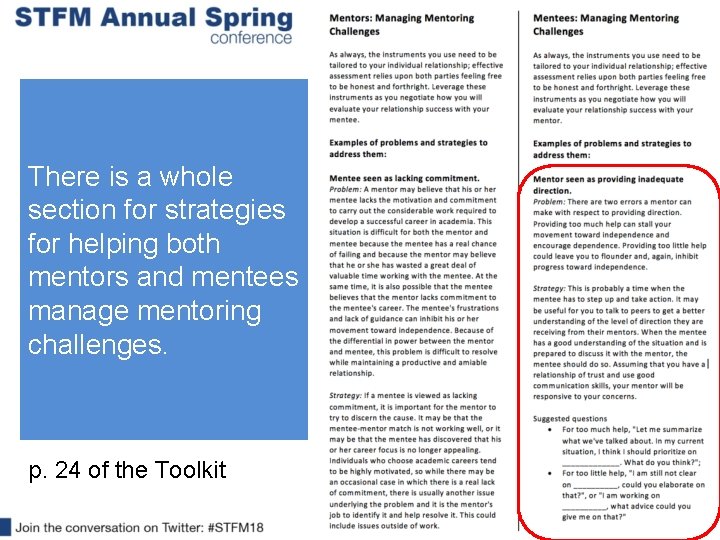
There is a whole section for strategies for helping both mentors and mentees manage mentoring challenges. p. 24 of the Toolkit
Case 4 • Your mentee comes to you and is mad because her patient accused her of being a racist. • What do you do?
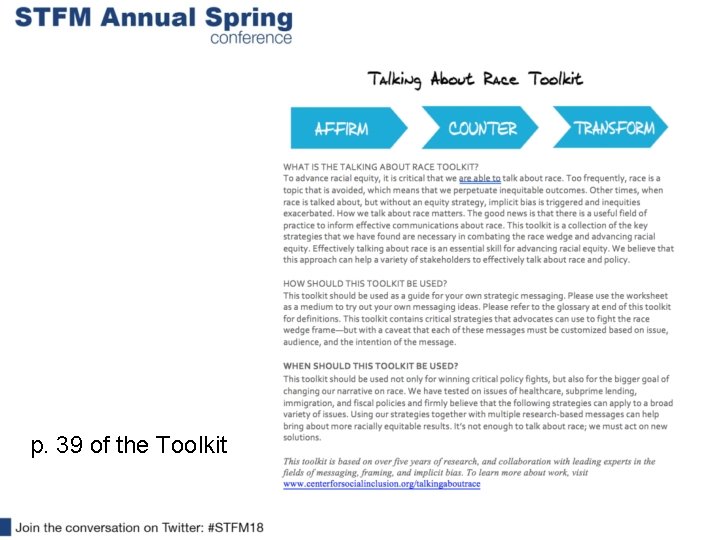
p. 39 of the Toolkit
Case 5 • Your mentee, an African American male resident, was pulled over by the police for not making a full stop at a stop sign as he was rushing to a continuity delivery at 2 am. • What do you do?
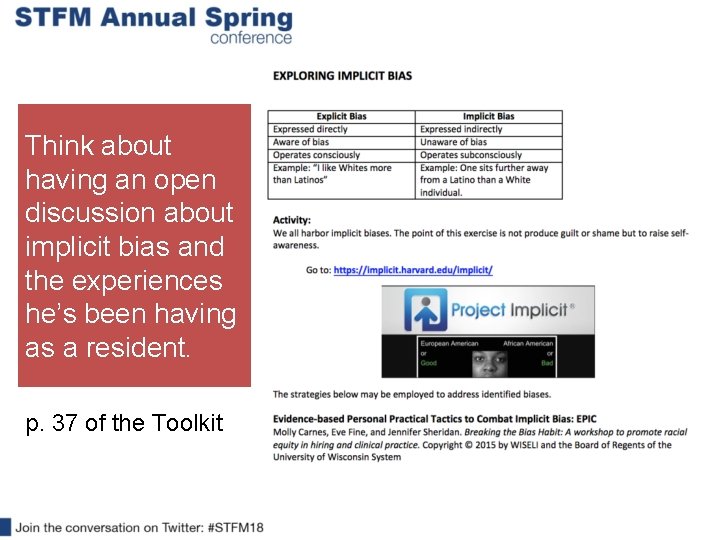
Think about having an open discussion about implicit bias and the experiences he’s been having as a resident. p. 37 of the Toolkit
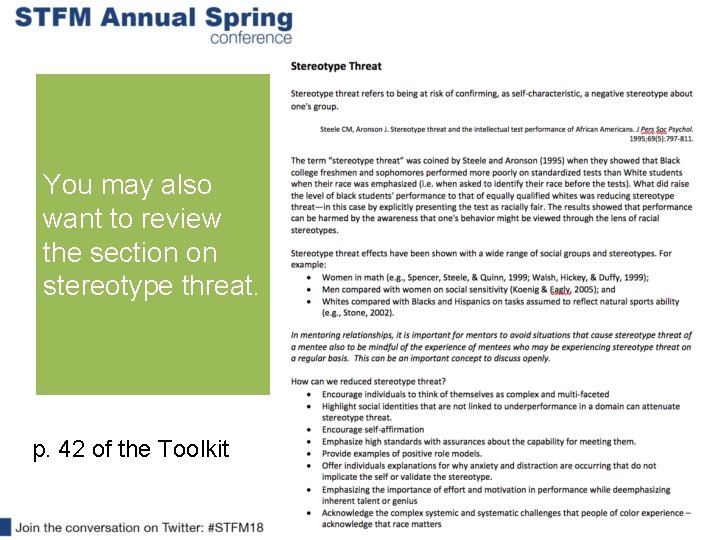
You may also want to review the section on stereotype threat. p. 42 of the Toolkit
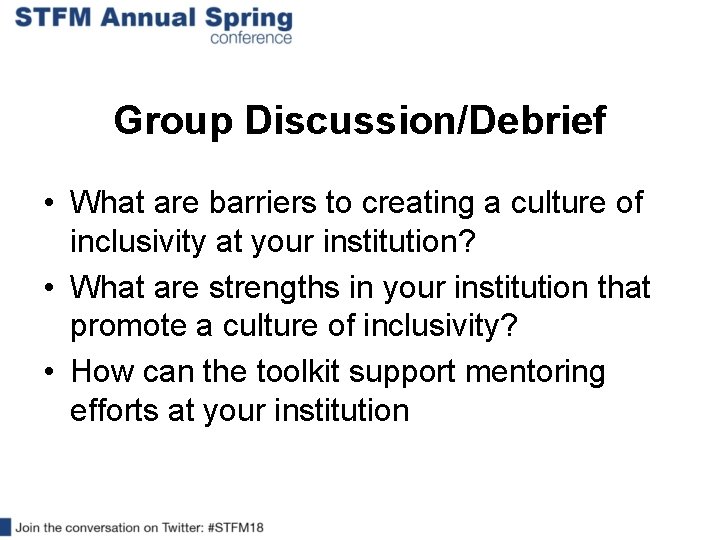
Group Discussion/Debrief • What are barriers to creating a culture of inclusivity at your institution? • What are strengths in your institution that promote a culture of inclusivity? • How can the toolkit support mentoring efforts at your institution
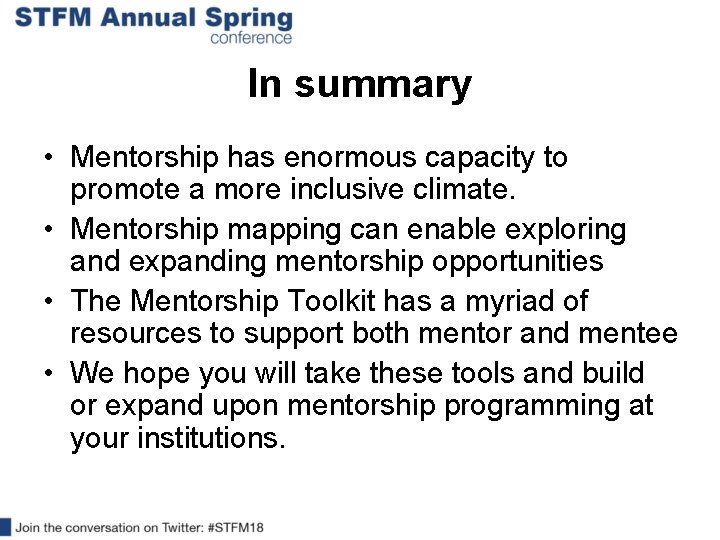
In summary • Mentorship has enormous capacity to promote a more inclusive climate. • Mentorship mapping can enable exploring and expanding mentorship opportunities • The Mentorship Toolkit has a myriad of resources to support both mentor and mentee • We hope you will take these tools and build or expand upon mentorship programming at your institutions.
Acknowledgements • • • Christine Athmann Shiva Bidar-Sielaff Angela Black Jennifer Edgoose Mary Fendry Kjersti Knox Robin Lankton Angelica Salinas Manuel Santiago Kacia Stevenson Lea Veltum Special thanks to: Angela Byars-Winston, Chris Pfund, Karin Silet, Stephanie House, and Melissa Stiles for their guidance, input and support; Ann Schensky for her administrative support; and Laura Cruz for her editorial support.
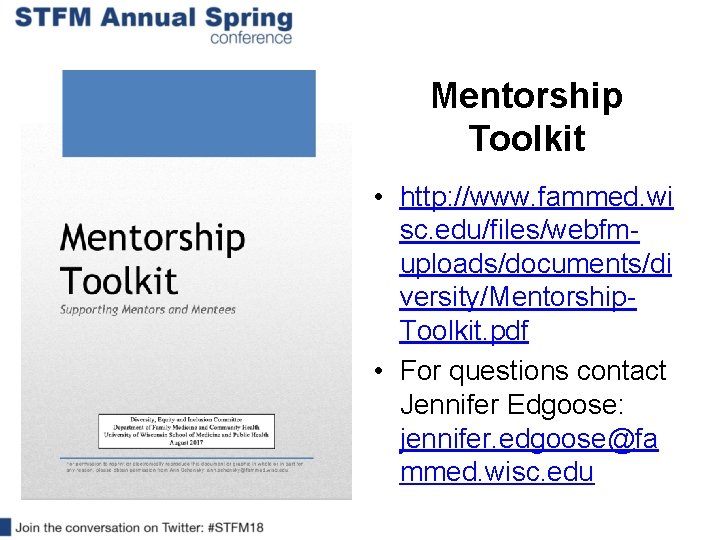
Mentorship Toolkit • http: //www. fammed. wi sc. edu/files/webfmuploads/documents/di versity/Mentorship. Toolkit. pdf • For questions contact Jennifer Edgoose: jennifer. edgoose@fa mmed. wisc. edu
Please evaluate this presentation using the conference mobile app! Simply click on the "clipboard" icon on the presentation page.