
Mentoring Styles Factors Which Determine Style Our temperament
- Slides: 6
Mentoring Styles Factors Which Determine Style • Our temperament - affects. . . the manner in which we act, feel and think. • Our perception of mentoring – mentoree-centred, concerned mainly with his or her personal development and well-being – performance-centred, getting a task done well Directive and Non-directive Styles • Directive mentors can often become manipulative, keeping the mentoree in a highly dependent role. (Not all unhelpful. ) • Non-directive mentors act gently and reassuringly. © John Mallison 18. 1
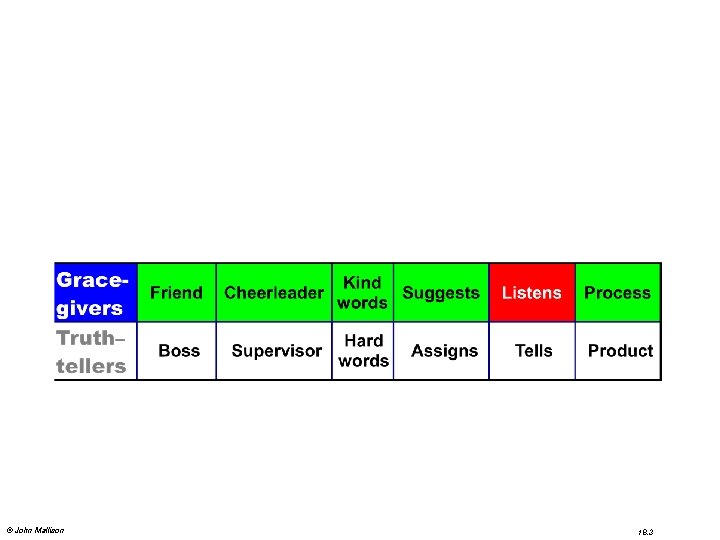
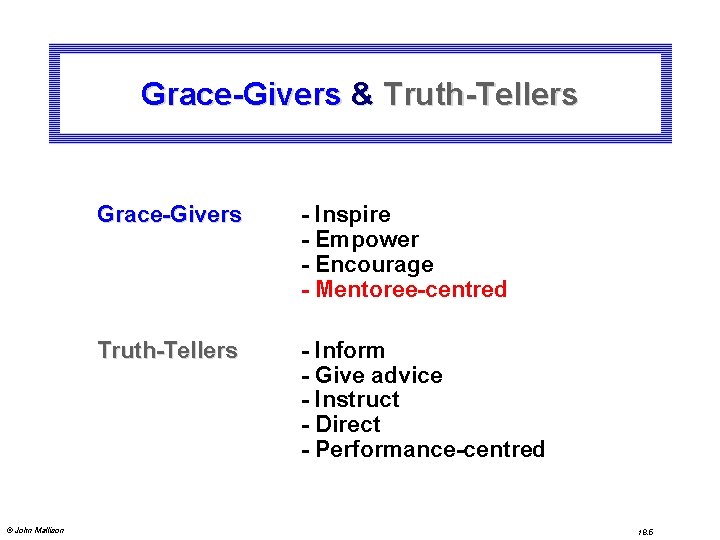
Mentoring Styles cont. . . Functional Style • A functional mentor responds to the needs of the mentoree in varying situations. • Flexible in their styles. • Both mentoree- and performance-centred. • Holistic in their approach Grace-Givers and Truth-Tellers • Grace-giving ‘ the art of empowering or encouraging someone in their ministry or their station in life’. • Truth-telling ‘is the art of informing someone about objective reality’. © John Mallison 18. 2
© John Mallison 18. 3
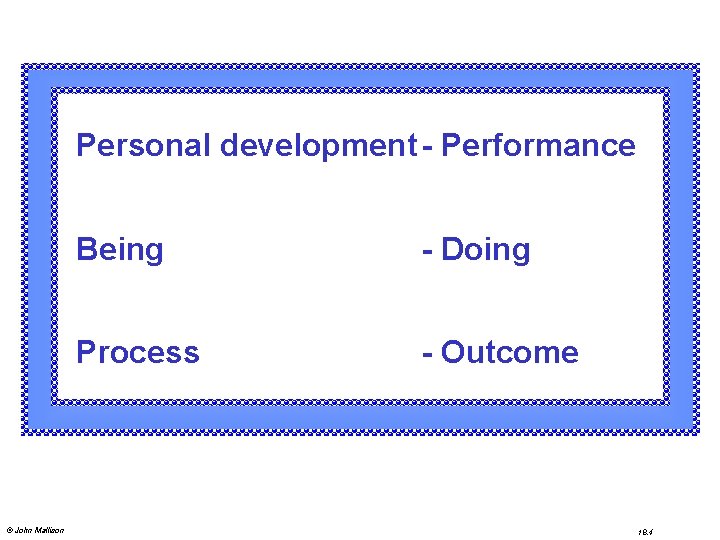
Personal development - Performance © John Mallison Being - Doing Process - Outcome 18. 4
Grace-Givers & Truth-Tellers © John Mallison Grace-Givers - Inspire - Empower - Encourage - Mentoree-centred Truth-Tellers - Inform - Give advice - Instruct - Direct - Performance-centred 18. 5
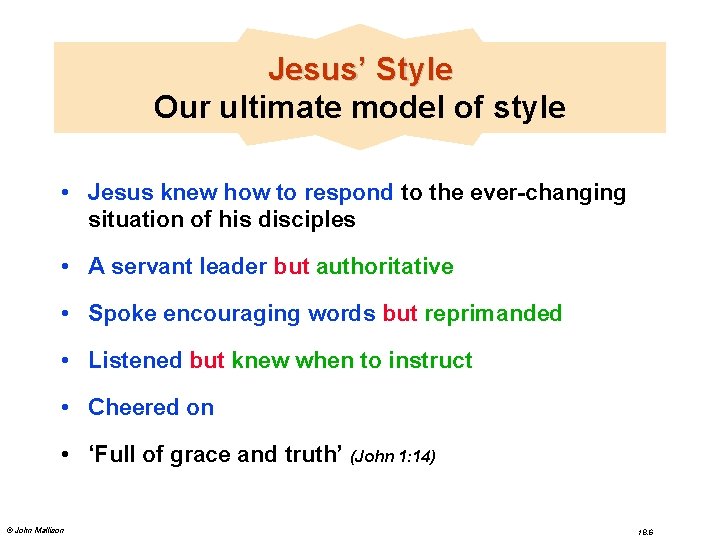
Jesus’ Style Our ultimate model of style • Jesus knew how to respond to the ever-changing situation of his disciples • A servant leader but authoritative • Spoke encouraging words but reprimanded • Listened but knew when to instruct • Cheered on • ‘Full of grace and truth’ (John 1: 14) © John Mallison 18. 6