
Mentoring Capitalizing on Diverse Personalities Cathy Quiones Associate
- Slides: 12
Mentoring: Capitalizing on Diverse Personalities Cathy Quiñones Associate Director Center for Science Education Emory University cquinon@emory. edu
• Mentoring vs. managing • What is diversity? – Often discussed in terms of gender, race, ethnicity but we also need to be aware of differences in personality, generational cohort, culture, developmental / life stage, etc. • The importance of creating an environment of trust
Diversity • People want to be recognized as individuals • Human desire for – Dignity – Fairness – Have contributions recognized – Operate in an environment of trust
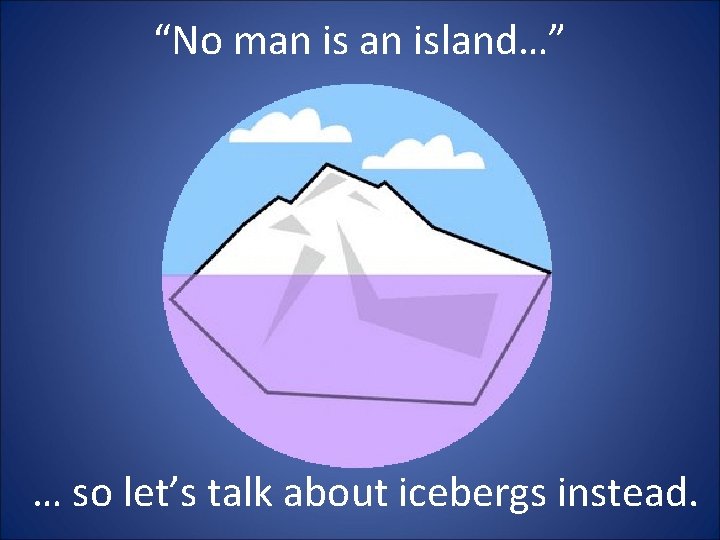
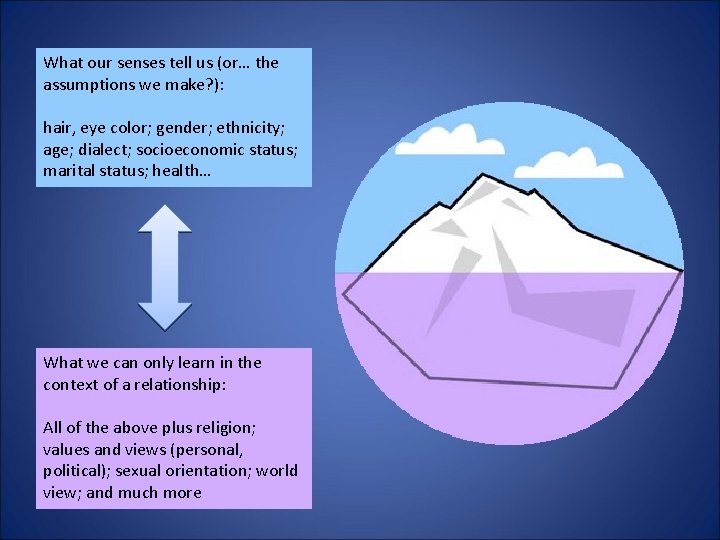
“No man island…” … so let’s talk about icebergs instead.
What our senses tell us (or… the assumptions we make? ): hair, eye color; gender; ethnicity; age; dialect; socioeconomic status; marital status; health… What we can only learn in the context of a relationship: All of the above plus religion; values and views (personal, political); sexual orientation; world view; and much more
Diversity • • Generational Personality Cultural Individual – disabilities – special needs – performance issues – preferences & worldviews
Diverse Generations See Table entitled “Personal and Lifestyle Characteristics by Generation” From: G. Hammill. “Mixing and Managing Four Generations of Employees. ” FDU Magazine Online (Winter/Spring 2005) http: //www. fdu. edu/newspubs/magazine/05 ws/generations. htm
See Table entitled “Workplace Characterists” From: G. Hammill. “Mixing and Managing Four Generations of Employees. ” FDU Magazine Online (Winter/Spring 2005) http: //www. fdu. edu/newspubs/magazine/05 ws/generations. htm
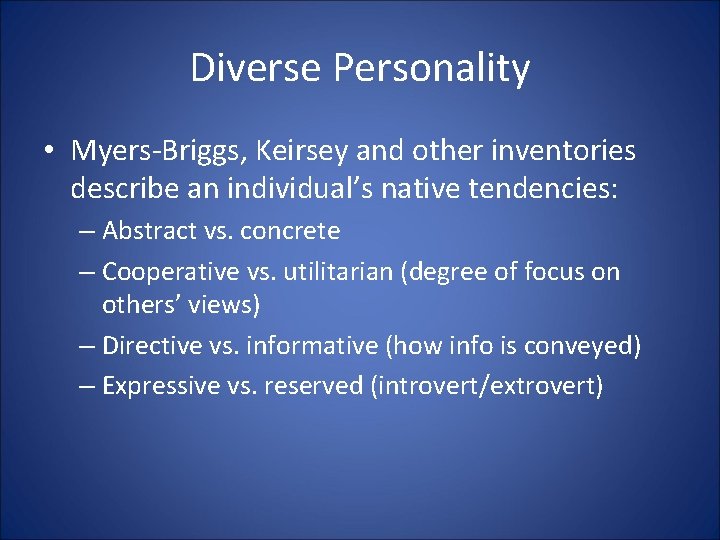
Diverse Personality • Myers-Briggs, Keirsey and other inventories describe an individual’s native tendencies: – Abstract vs. concrete – Cooperative vs. utilitarian (degree of focus on others’ views) – Directive vs. informative (how info is conveyed) – Expressive vs. reserved (introvert/extrovert)
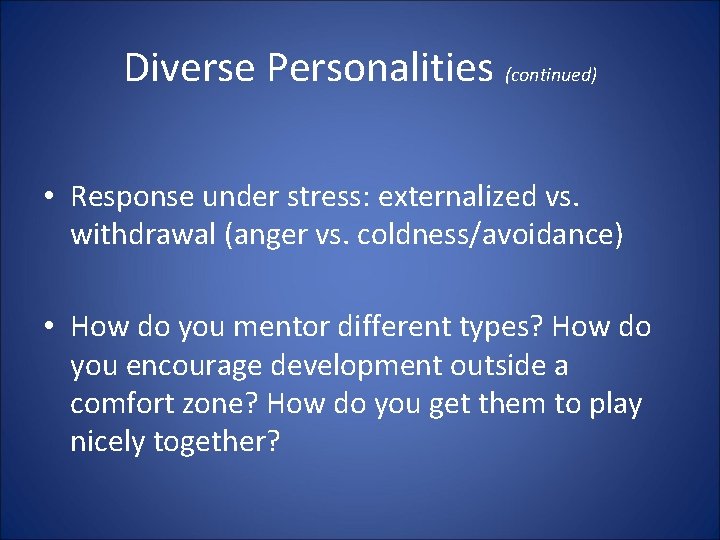
Diverse Personalities (continued) • Response under stress: externalized vs. withdrawal (anger vs. coldness/avoidance) • How do you mentor different types? How do you encourage development outside a comfort zone? How do you get them to play nicely together?
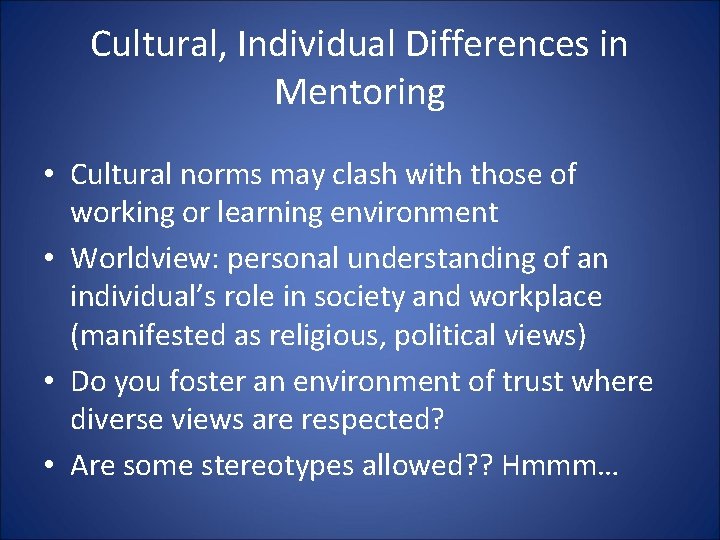
Cultural, Individual Differences in Mentoring • Cultural norms may clash with those of working or learning environment • Worldview: personal understanding of an individual’s role in society and workplace (manifested as religious, political views) • Do you foster an environment of trust where diverse views are respected? • Are some stereotypes allowed? ? Hmmm…
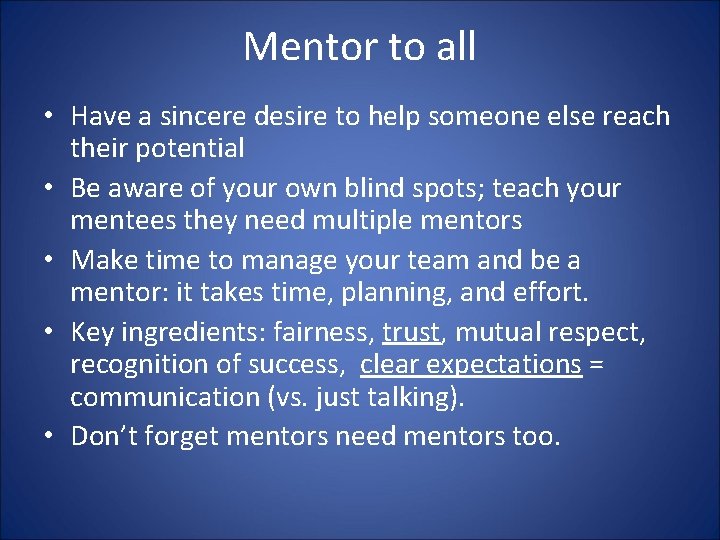
Mentor to all • Have a sincere desire to help someone else reach their potential • Be aware of your own blind spots; teach your mentees they need multiple mentors • Make time to manage your team and be a mentor: it takes time, planning, and effort. • Key ingredients: fairness, trust, mutual respect, recognition of success, clear expectations = communication (vs. just talking). • Don’t forget mentors need mentors too.