
MENTORING as a form of onthejob learning Michaela
MENTORING as a form of on-the-job learning Michaela Píšová Masaryk University in Brno 2010
INTRODUCTION the roots of mentoring modern mentoring: l U. S. A. since 1970 s - in training contexts, later in organisations, management since 1980 s - in education (Parsloe, 2000) l Great Britain – since 1980 s in working environment and training + in education / teacher training: 1992 (Furlong, Maynard, 1995) l France, Spain, Italy, Greece – since 1990 s recent European trends: accent on mentoring in teacher education: European Commission key documents (Improving the Quality of Teacher Education, 2008) research, projects, conferences (Association for Teacher Education in Europe) etc. GROWING IMPORTANCE changing world educational change institutional change teacher as a key agent
CURRENT VIEW MENTORING AS A VEHICLE towards NEW PROFESSIONALISM OF TEACHERS A. mentoring as facilitation of individual professional induction or growth in various stages of professional teaching career “grooming mentoring“ (Mullen, Lick, 1999) B. mentoring as professional learning opportunity for the mentor C. mentoring as a device for changing school culture (towards collegiality) - “comentoring“ (ibid. )
B. mentoring as professional learning opportunity for the mentor studies – benefits of mentoring: Davies et al. (1999) – improvement in teaching style, improvement in the ability to address children´s needs, increase in professional growth Wepner, Mobley (1998) – increase in the ability to cater for the individual needs of students, increase of the repertoire of teaching strategies, increase in reflectivity about own practice Knight et al. (2000) – substantial professional development value …
C. mentoring as a device for changing school culture (towards collegiality, COLLABORATIVE CULTURE) research findings vary: Cochran-Smith and Paris (1995): mentoring programs, based as they usually are on skill and culture transmission, are essentially conservative; Caldwell and Carter (1992): mentoring, or one of the other forms of collaboration in the workplace, is a prerequisite if restructuring of organisations is to be effective; AND Hargreaves (1994): “culture of individualism“ programs like mentoring which mandate teachers working together can lead to "contrived collegiality", rather than to the cultures of collaboration which are seen as desirable + Little, Mc. Laughlin (1993) – scepticism …. Little (1990): functioning collegial teams newcomer

MENTOR - MENTORING l defining the terms Clutterbuck (2004) – randomly chosen 30 studies – only 4 provided a clear definition; Lane (2004) – opinions vary widely; terms mentoring, coaching, counselling may mean opposite things depending on the discipline; l brief definition in Shorter Oxford Dictionary - mentor as “an experienced and trusted advisor“ “a guide on the side“ – Vonk, (1993, s 32) “helper – sharer – carer“ - Baird (1993, s. 55) l l MENTOR x learning partnership SUPERVISOR S x COACH M no expertise in the field no benefit for coach a specific problem (development)
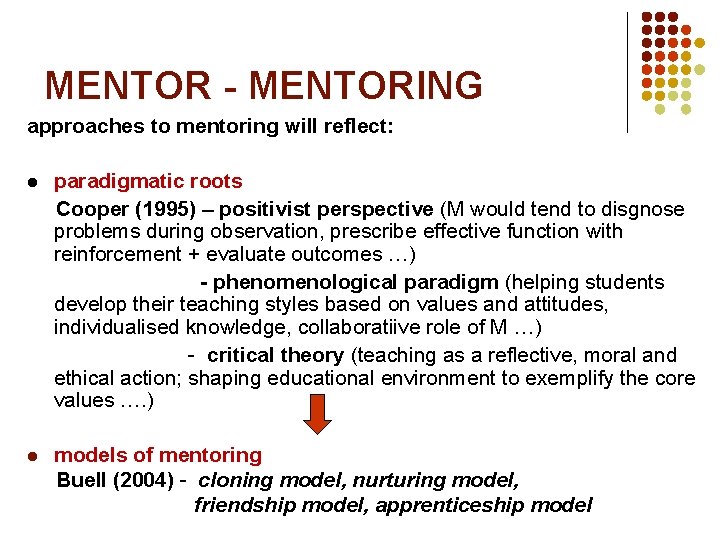
MENTOR - MENTORING approaches to mentoring will reflect: l paradigmatic roots Cooper (1995) – positivist perspective (M would tend to disgnose problems during observation, prescribe effective function with reinforcement + evaluate outcomes …) - phenomenological paradigm (helping students develop their teaching styles based on values and attitudes, individualised knowledge, collaboratiive role of M …) - critical theory (teaching as a reflective, moral and ethical action; shaping educational environment to exemplify the core values …. ) l models of mentoring Buell (2004) - cloning model, nurturing model, friendship model, apprenticeship model
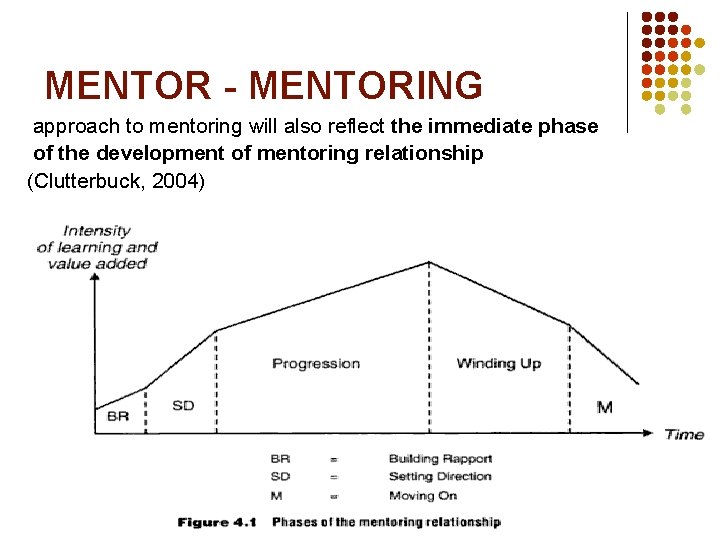
MENTOR - MENTORING approach to mentoring will also reflect the immediate phase of the development of mentoring relationship (Clutterbuck, 2004) :
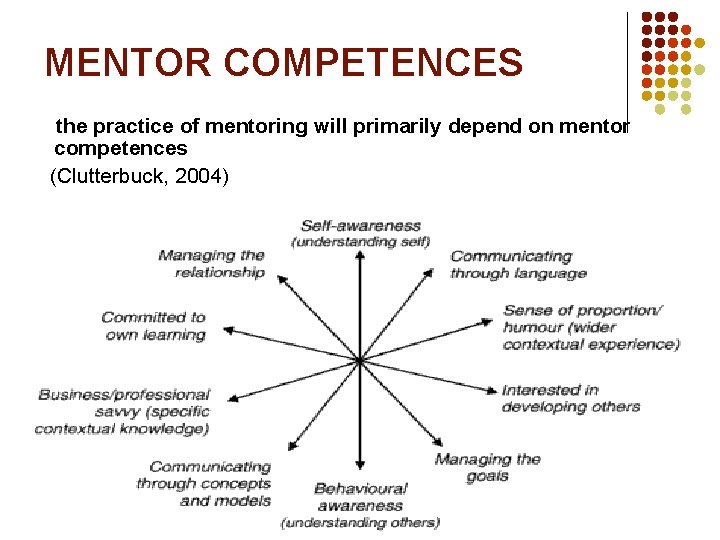
MENTOR COMPETENCES the practice of mentoring will primarily depend on mentor competences (Clutterbuck, 2004)
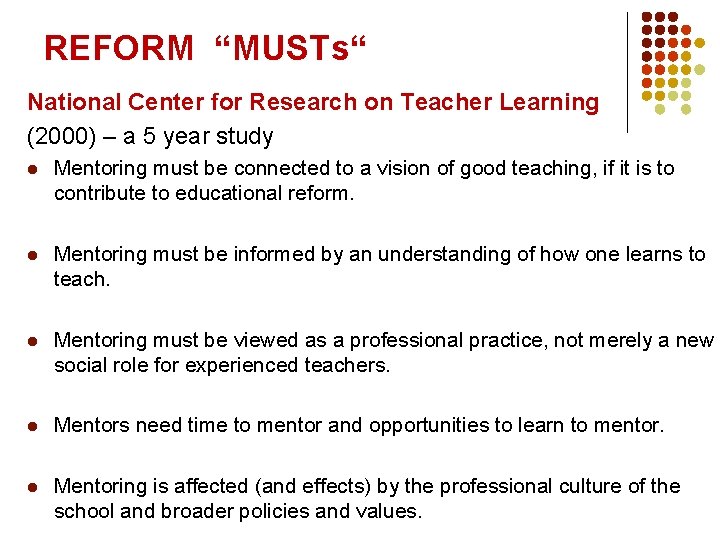
REFORM “MUSTs“ National Center for Research on Teacher Learning (2000) – a 5 year study l Mentoring must be connected to a vision of good teaching, if it is to contribute to educational reform. l Mentoring must be informed by an understanding of how one learns to teach. l Mentoring must be viewed as a professional practice, not merely a new social role for experienced teachers. l Mentors need time to mentor and opportunities to learn to mentor. l Mentoring is affected (and effects) by the professional culture of the school and broader policies and values.
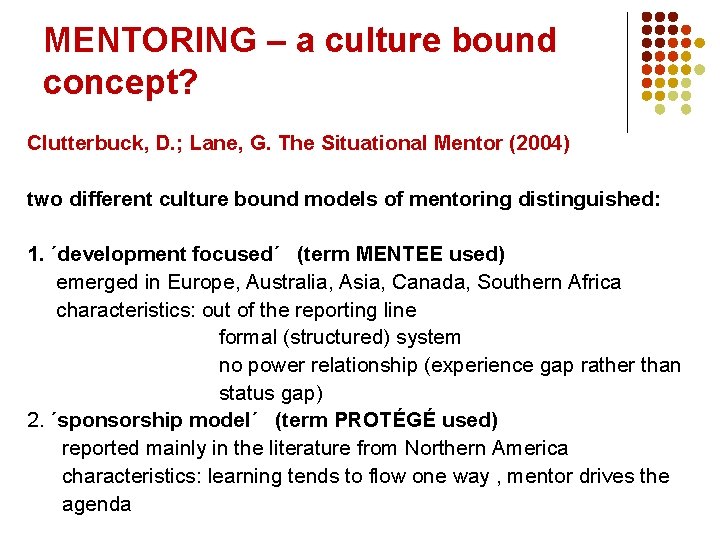
MENTORING – a culture bound concept? Clutterbuck, D. ; Lane, G. The Situational Mentor (2004) two different culture bound models of mentoring distinguished: 1. ´development focused´ (term MENTEE used) emerged in Europe, Australia, Asia, Canada, Southern Africa characteristics: out of the reporting line formal (structured) system no power relationship (experience gap rather than status gap) 2. ´sponsorship model´ (term PROTÉGÉ used) reported mainly in the literature from Northern America characteristics: learning tends to flow one way , mentor drives the agenda
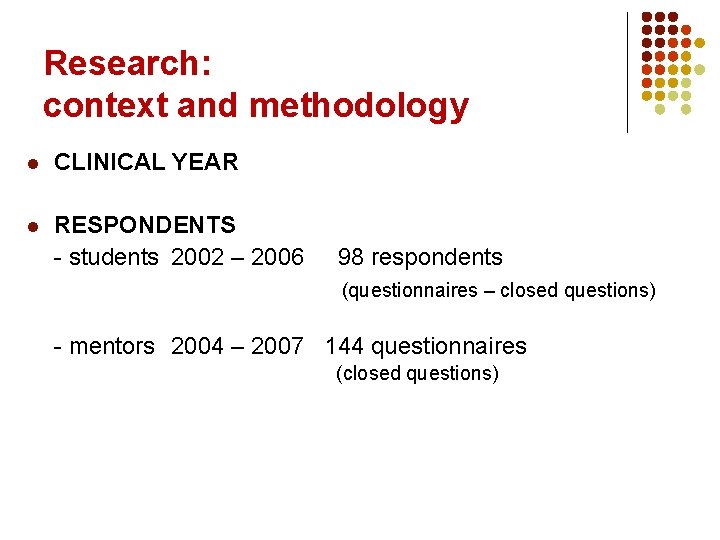
Research: context and methodology l CLINICAL YEAR l RESPONDENTS - students 2002 – 2006 98 respondents (questionnaires – closed questions) - mentors 2004 – 2007 144 questionnaires (closed questions)
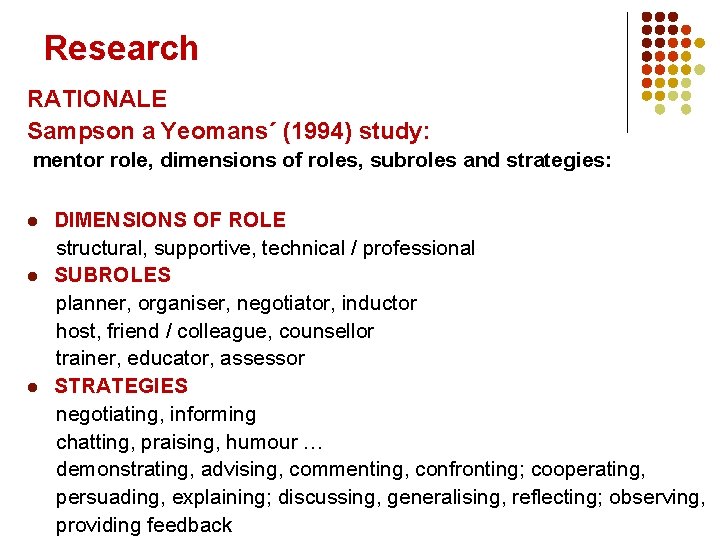
Research RATIONALE Sampson a Yeomans´ (1994) study: mentor role, dimensions of roles, subroles and strategies: l l l DIMENSIONS OF ROLE structural, supportive, technical / professional SUBROLES planner, organiser, negotiator, inductor host, friend / colleague, counsellor trainer, educator, assessor STRATEGIES negotiating, informing chatting, praising, humour … demonstrating, advising, commenting, confronting; cooperating, persuading, explaining; discussing, generalising, reflecting; observing, providing feedback
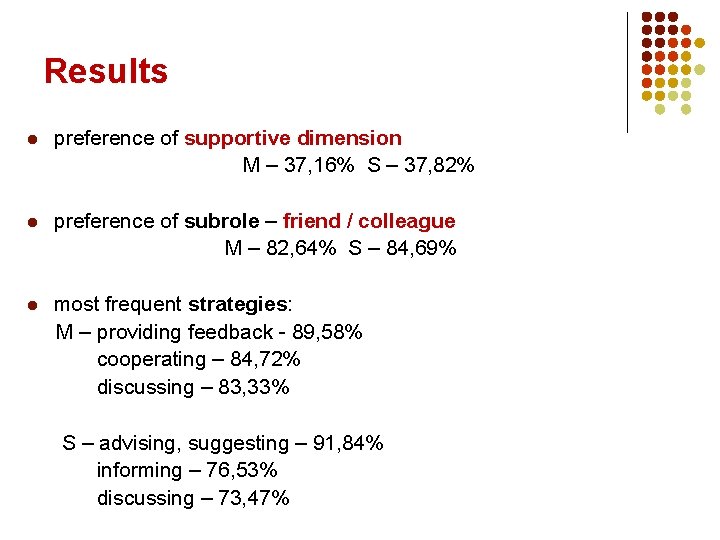
Results l preference of supportive dimension M – 37, 16% S – 37, 82% l preference of subrole – friend / colleague M – 82, 64% S – 84, 69% l most frequent strategies: M – providing feedback - 89, 58% cooperating – 84, 72% discussing – 83, 33% S – advising, suggesting – 91, 84% informing – 76, 53% discussing – 73, 47%
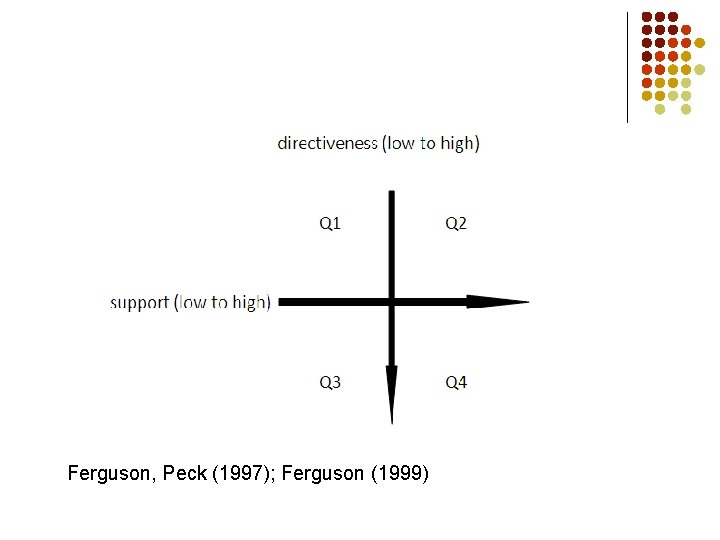
Ferguson, Peck (1997); Ferguson (1999)
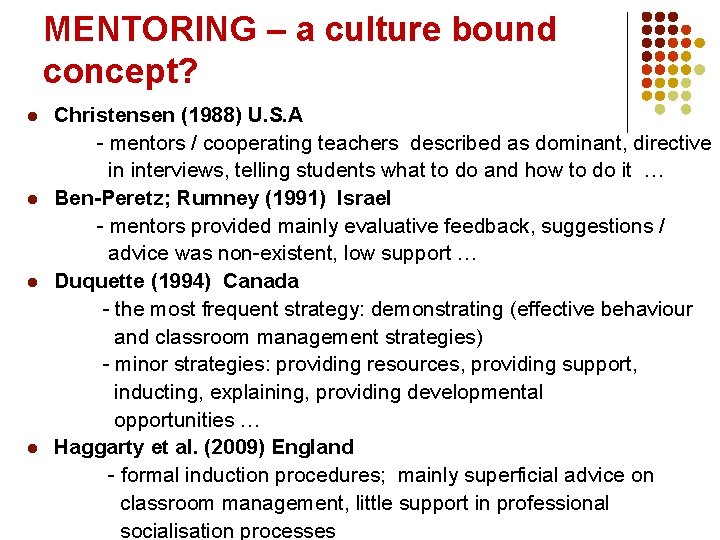
MENTORING – a culture bound concept? l l Christensen (1988) U. S. A - mentors / cooperating teachers described as dominant, directive in interviews, telling students what to do and how to do it … Ben-Peretz; Rumney (1991) Israel - mentors provided mainly evaluative feedback, suggestions / advice was non-existent, low support … Duquette (1994) Canada - the most frequent strategy: demonstrating (effective behaviour and classroom management strategies) - minor strategies: providing resources, providing support, inducting, explaining, providing developmental opportunities … Haggarty et al. (2009) England - formal induction procedures; mainly superficial advice on classroom management, little support in professional socialisation processes
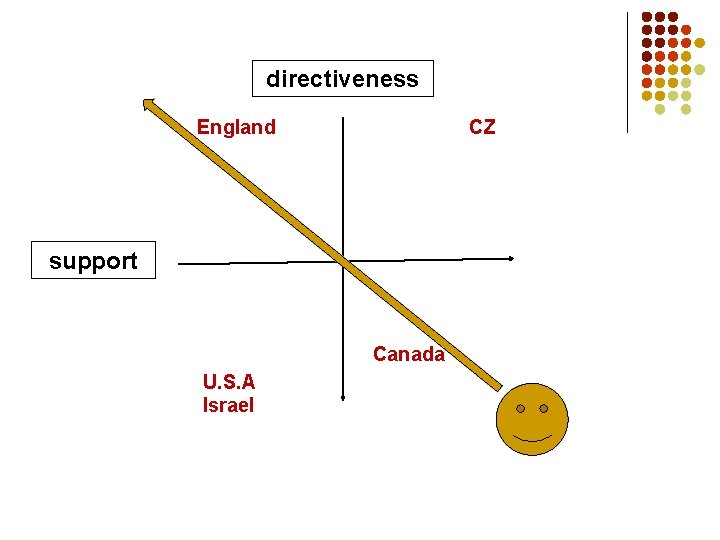
directiveness England CZ support Canada U. S. A Israel

Thank you for your attention michaela. pisova@email. cz
- Slides: 18