
Mentor Texts to Support Primary Reading Workshop Leads


- Slides: 23
Mentor Texts to Support Primary Reading Workshop Leads to Collaborative Conversations, Higher Level Comprehension, and Critical Thinking ILA July 9, 2016 Dr. Debra Gurvitz Debra. Gurvitz@nl. edu Deborah Shefren Deborah. Shefren@nl. edu
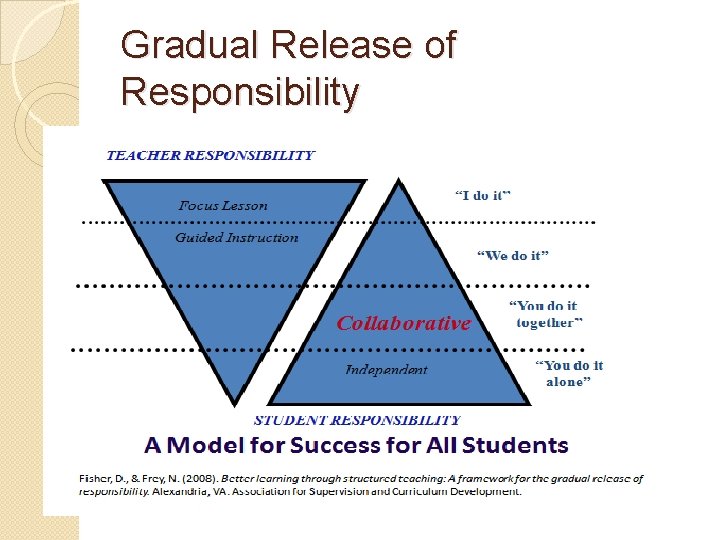
Gradual Release of Responsibility
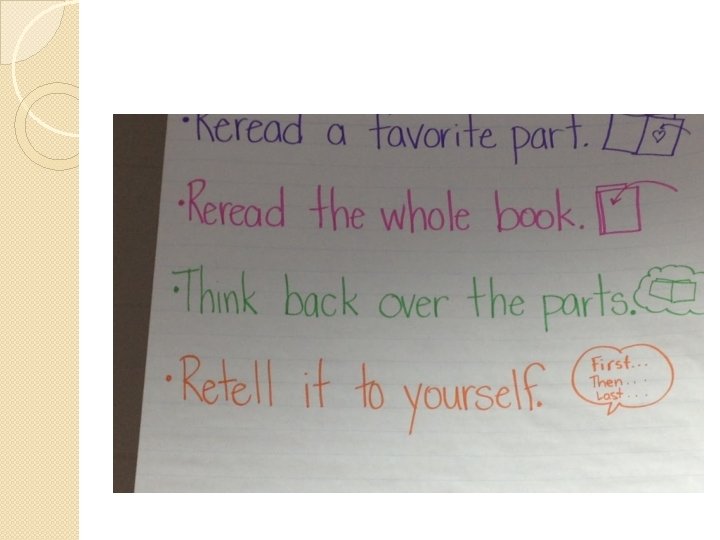
Student Led Using the Gradual Release of Responsibility young students can, using text that they can read independently, do close reading. �Reread for specific reasons-find their favorite part, find character traits, find reasons for their opinions �Find evidence in the text
�Figure out the meanings of difficult words �Discuss this orally with their reading buddies �Deepen their comprehension �Determine the author’s purpose
Our Thoughts �Students need to use oral language to deeply comprehend text. �Students need to be taught explicitly how to speak and listen and to dialogue. �Using sentence stems helps all students develop oral language skills. �Students need to be explicitly taught how to find evidence in the text by rereading closely.
Regie Routman IRA Conference 4/20/13 The person doing the most talking is doing the most learning.
Sentence Frames Scaffold Student’s Thinking—Chris Lehman& Kate Roberts Sentence frames literally give students’ thoughts a “running start so that they can just focus on the content and not on the syntax of their ideas. ”
The Moves That Matter in Academic Writing (2007) Gerald Graff & Cathy Birkenstein �Sentence frames give students, “ some of the language and patterns that (academic conversations) require, ” and that by doing so their students’ ability to speak academically can improve significantly.
Lucy Calkins Pathways to the Common Core 2012 Research is really clear that even just five minutes of conversation about books ramps up comprehension.
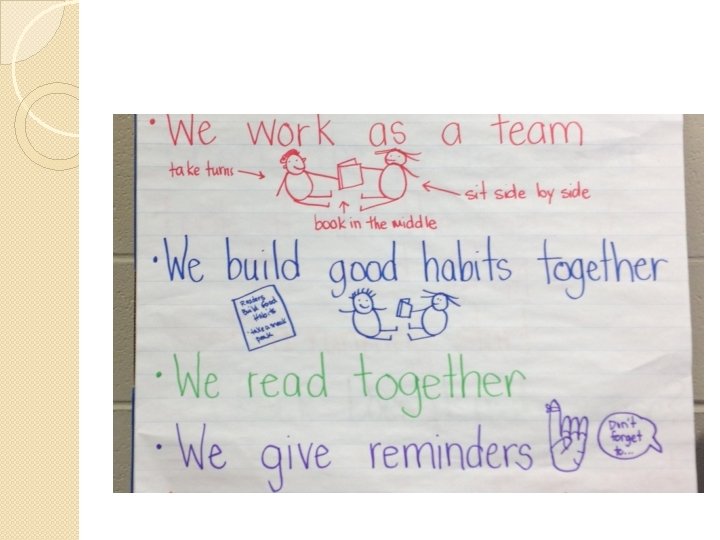
Partner Book Discussion “Buddy Reading” �Gradual Release of Responsibility �Model it in Whole Group �Guided Group �Then we let them do it in pairs
Whole Group �Read a story �Do an Interactive Read Aloud �Model how to find favorite part �Model how to tell why it’s your favorite part �Use sentence stems
Sentence Stems �My �I favorite part is… like this because… �What do you think?
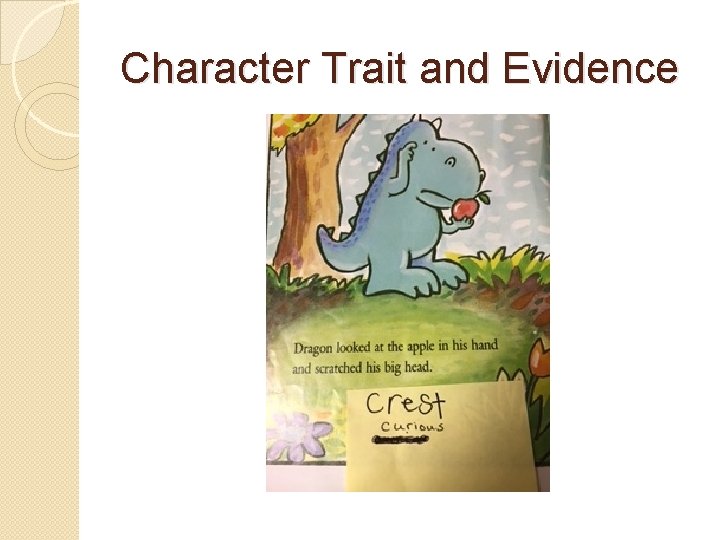
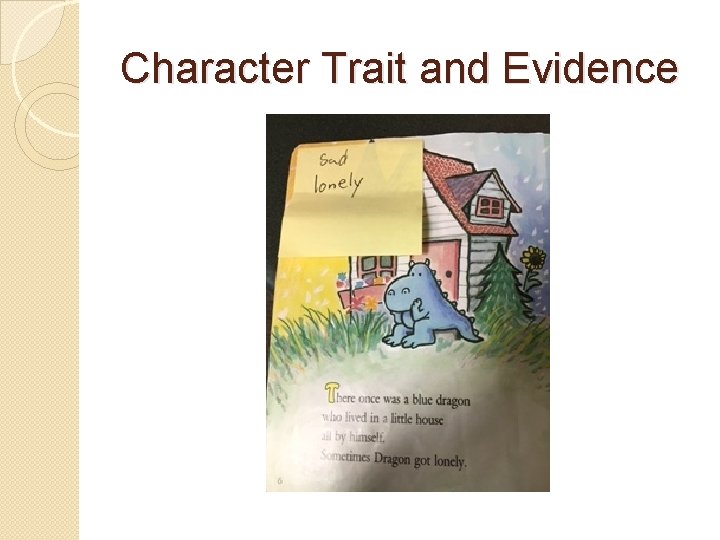
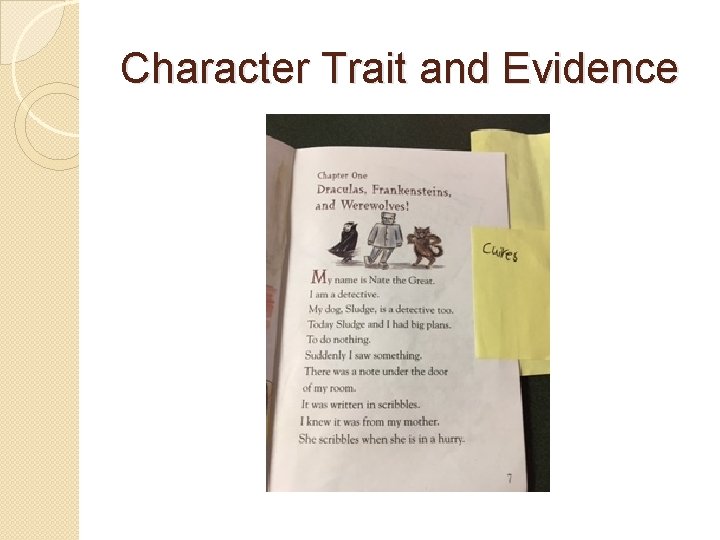
Whole Group Character Traits �Interactive Read aloud—several fiction stories with strong characters such as Arthur and D. W. by Marc Brown �Keep a list of character traits: angry, happy, sad, scared, mean, bossy, etc. �Find out why we think the character has that trait �Does the character change traits during the story? �Model using the sentence stems �Use a post it to mark the character trait in the book and to show the evidence of that trait.
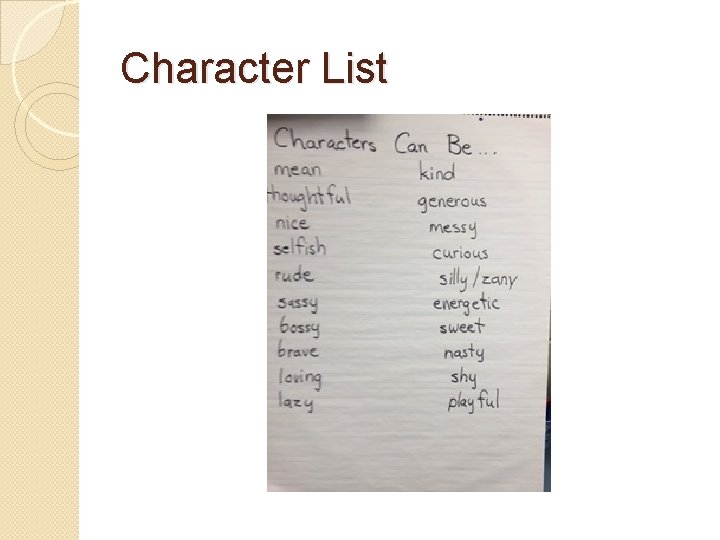
Character List
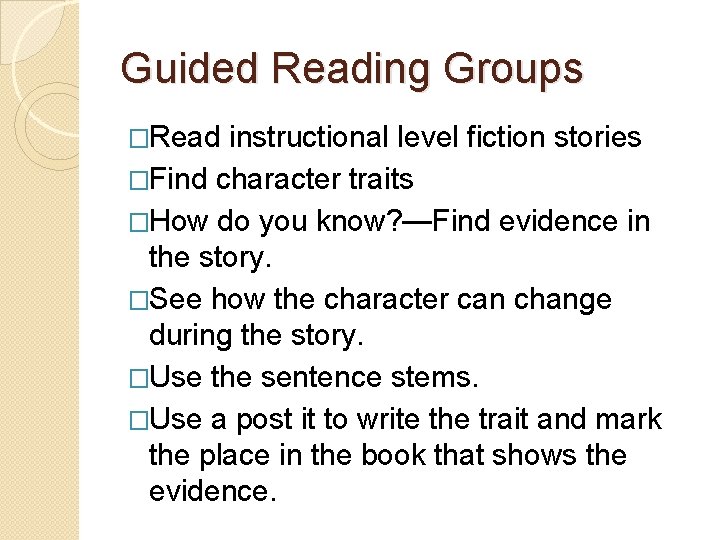
Guided Reading Groups �Read instructional level fiction stories �Find character traits �How do you know? —Find evidence in the story. �See how the character can change during the story. �Use the sentence stems. �Use a post it to write the trait and mark the place in the book that shows the evidence.
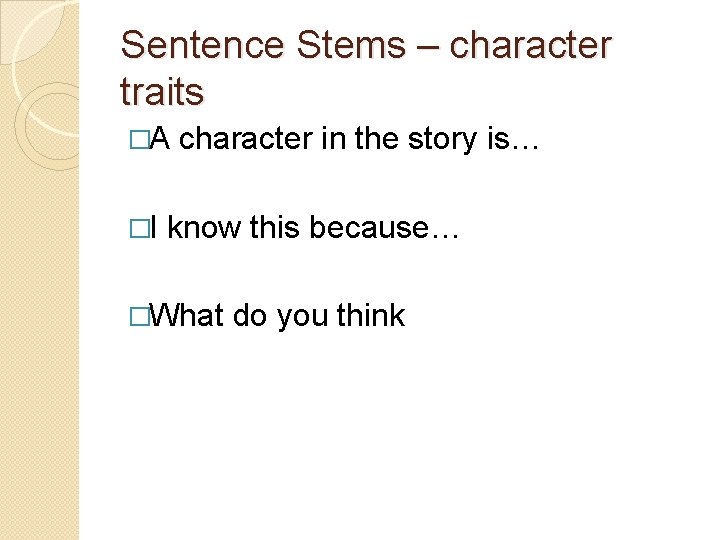
Sentence Stems – character traits �A �I character in the story is… know this because… �What do you think
Character Trait and Evidence
Character Trait and Evidence
Character Trait and Evidence
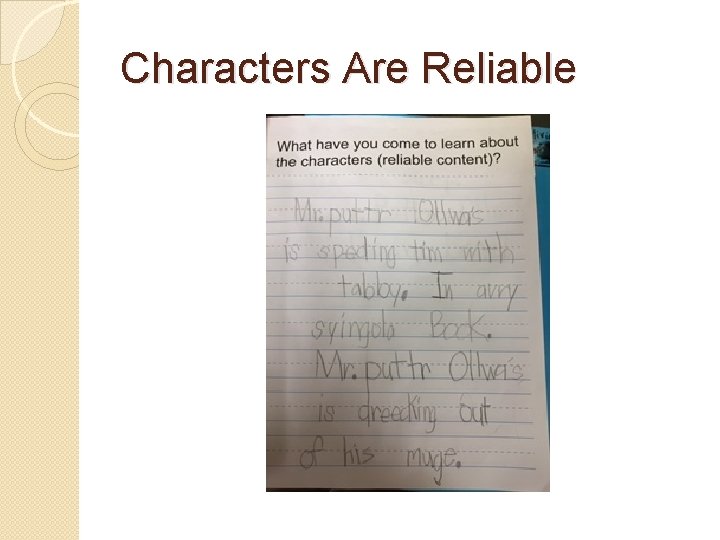
Characters Are Reliable
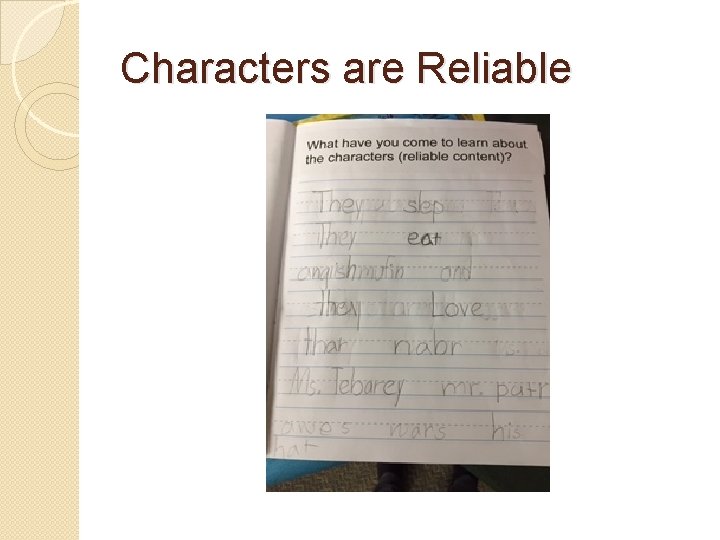
Characters are Reliable