
MENTAL STATE EXAMINATION FAHAD ALOSAIMI MBBS SSCPSYCH CONSULTATION
MENTAL STATE EXAMINATION FAHAD ALOSAIMI MBBS, SSC-PSYCH CONSULTATION LIAISON PSYCHIATRIST KING SAUD UNIVERSITY

The mental status examination( MSE) MSE is a cross-sectional, systemic documentation of the quality of mental functioning at the time of interview. It serves as a baseline for future comparison and to follow the progress of the patient.

Outlines of MSE Appearance , Behaviour & Attitude (Cooperativeness) Speech Mood & Affect Thoughts Perceptions Cognitive functions Consciousness level orientation(time, place, person) attention concentration Memory Language and reading. Visuospatial ability Abstract thinking Judgment & Insight

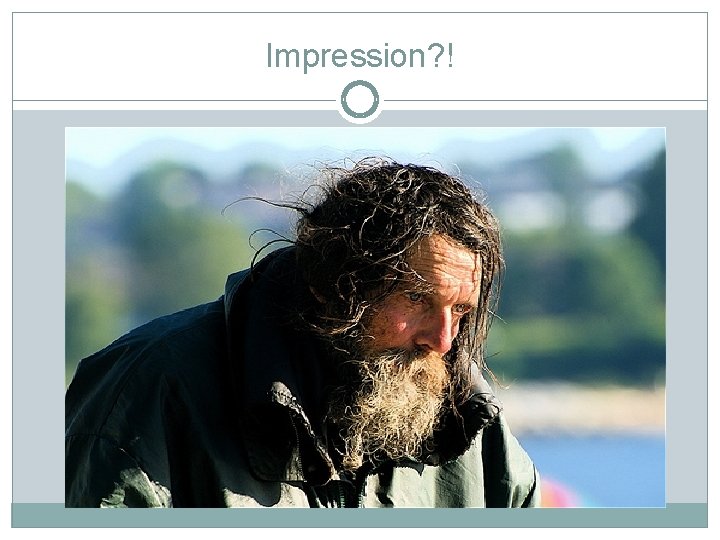
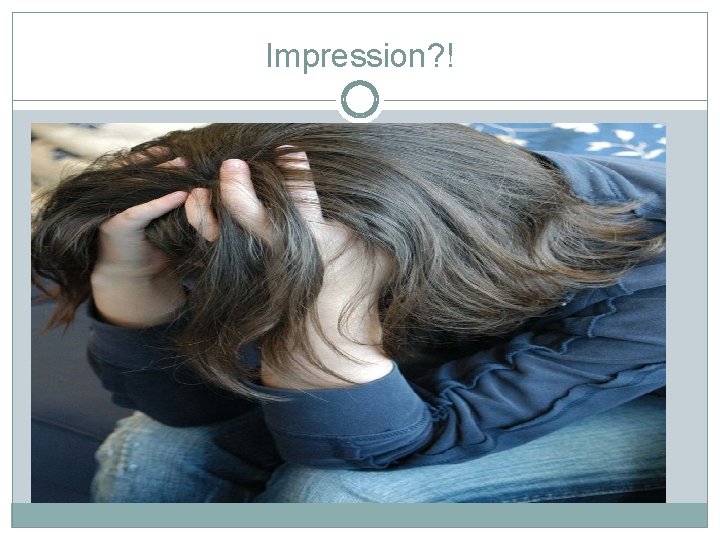
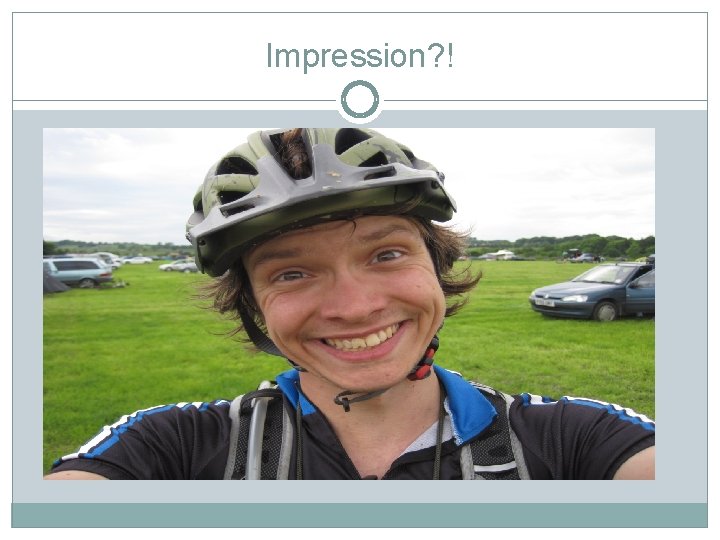
MSE q Appearance: include body build, self-care, clothes , grooming, hair, nails, facial expressions, and any unusual features (e. g. weight loss). q Behaviour: *both the quantitative and qualitative aspects. *Note level of activity, posture, eye to eye contact and unusual movements (tics, grimacing, tremor, disinhibited behaviour, hallucinatory gestures, …etc) q Attitude: *Note the patient’s attitude( verbal& non verbal) during the interview (interested, bored, cooperative, uncooperative, sarcastic, guarded or aggressive).
Impression? !
Impression? !
Impression? !
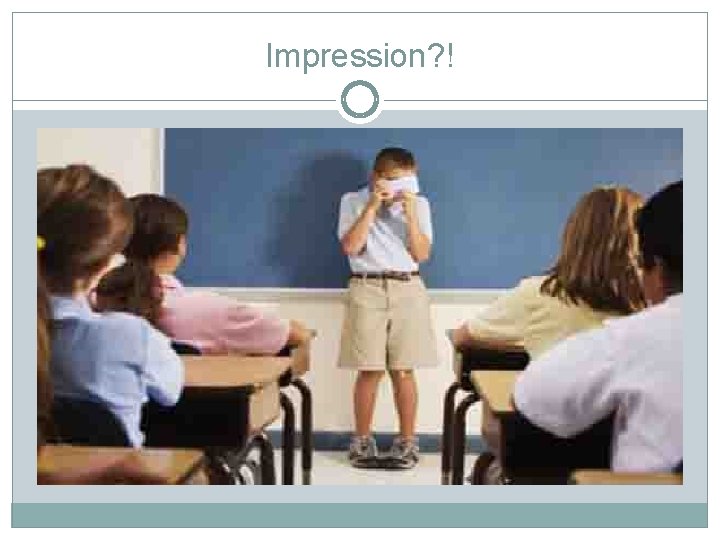
Impression? !
MSE q Speech: * Speech can be described in terms of its quantity, rate of production, and quality. *Listen to and describe how the patient speaks, noting: Ø Ø Ø Coherence spontaneity Volume, flow & tone continuity speech impairments (stuttering, dysarthria…)
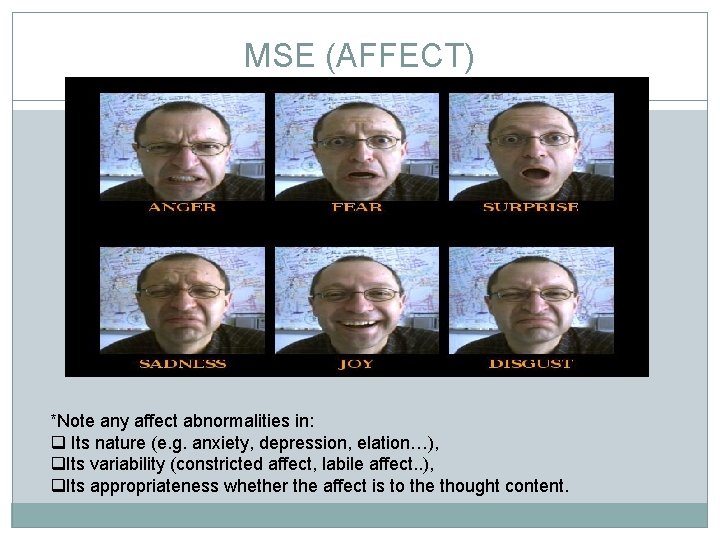
MSE (AFFECT) *Note any affect abnormalities in: q Its nature (e. g. anxiety, depression, elation…), q. Its variability (constricted affect, labile affect. . ), q. Its appropriateness whether the affect is to the thought content.

Mood • The long term feeling state through which all experience are filtered. • the emotional background • Last days to weeks. Affect • the visible and audible manifestations of the patents emotional response to external and internal events. • The emotional foreground • Momentary , seconds to hours. • Changes spontaneously, not related to internal or external • Changes according to stimuli. interanl & extrnalstimuli, • Symptom (ask patient) • observed by others (sign)(Current emotional state)
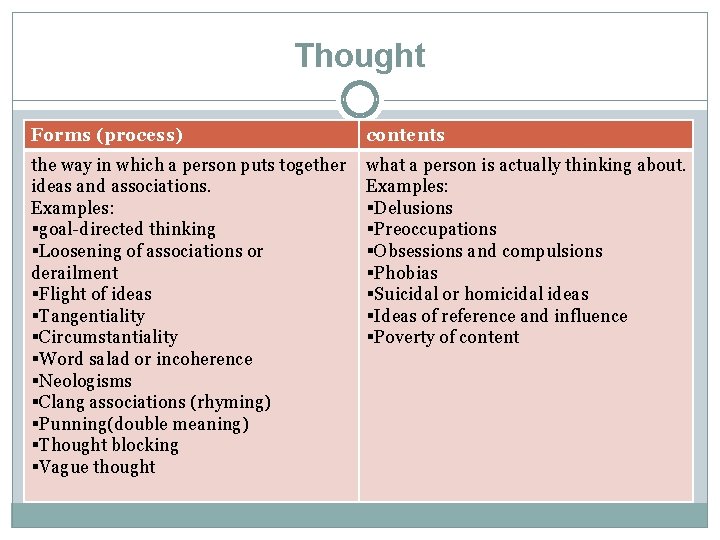
Thought Forms (process) contents the way in which a person puts together ideas and associations. Examples: §goal-directed thinking §Loosening of associations or derailment §Flight of ideas §Tangentiality §Circumstantiality §Word salad or incoherence §Neologisms §Clang associations (rhyming) §Punning(double meaning) §Thought blocking §Vague thought what a person is actually thinking about. Examples: §Delusions §Preoccupations §Obsessions and compulsions §Phobias §Suicidal or homicidal ideas §Ideas of reference and influence §Poverty of content
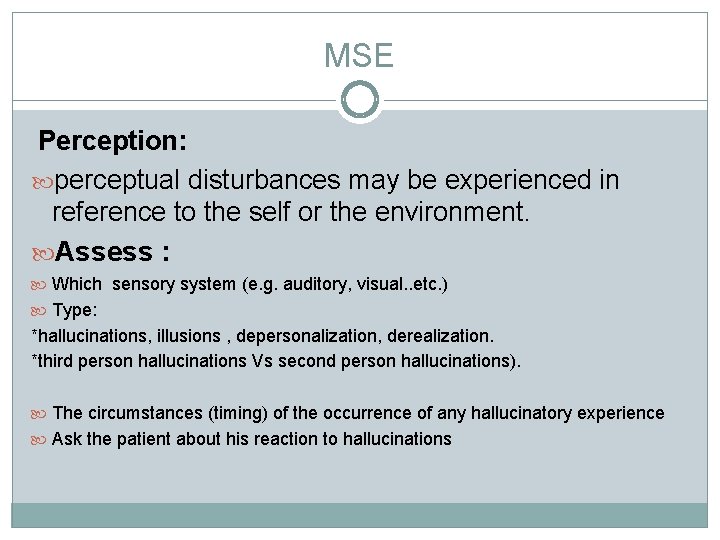
MSE Perception: perceptual disturbances may be experienced in reference to the self or the environment. Assess : Which sensory system (e. g. auditory, visual. . etc. ) Type: *hallucinations, illusions , depersonalization, derealization. *third person hallucinations Vs second person hallucinations). The circumstances (timing) of the occurrence of any hallucinatory experience Ask the patient about his reaction to hallucinations
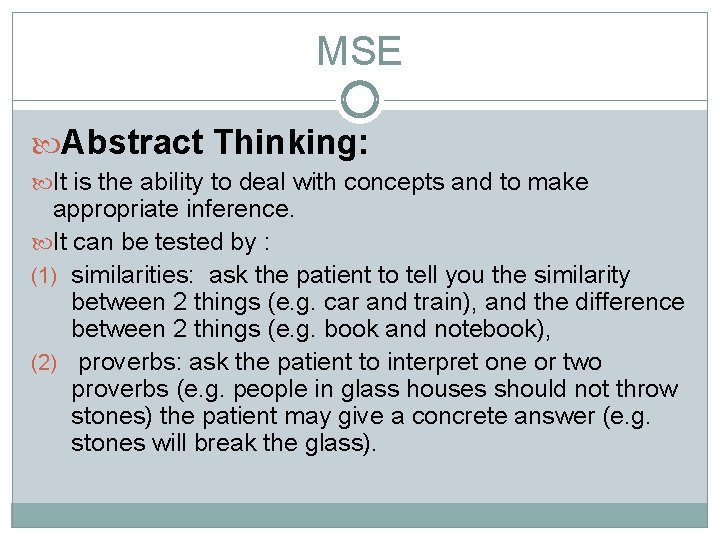
MSE Abstract Thinking: It is the ability to deal with concepts and to make appropriate inference. It can be tested by : (1) similarities: ask the patient to tell you the similarity between 2 things (e. g. car and train), and the difference between 2 things (e. g. book and notebook), (2) proverbs: ask the patient to interpret one or two proverbs (e. g. people in glass houses should not throw stones) the patient may give a concrete answer (e. g. stones will break the glass).
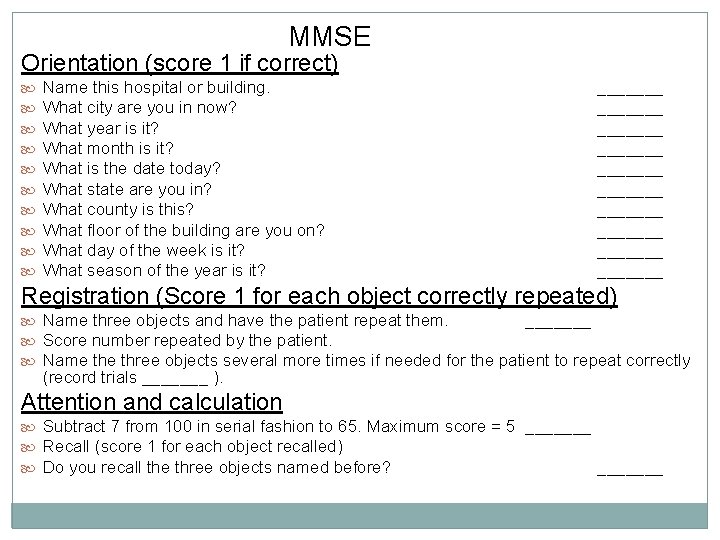
MMSE Orientation (score 1 if correct) Name this hospital or building. What city are you in now? What year is it? What month is it? What is the date today? What state are you in? What county is this? What floor of the building are you on? What day of the week is it? What season of the year is it? _______ _______ _______ Registration (Score 1 for each object correctly repeated) Name three objects and have the patient repeat them. _______ Score number repeated by the patient. Name three objects several more times if needed for the patient to repeat correctly (record trials _______ ). Attention and calculation Subtract 7 from 100 in serial fashion to 65. Maximum score = 5 _______ Recall (score 1 for each object recalled) Do you recall the three objects named before? _______
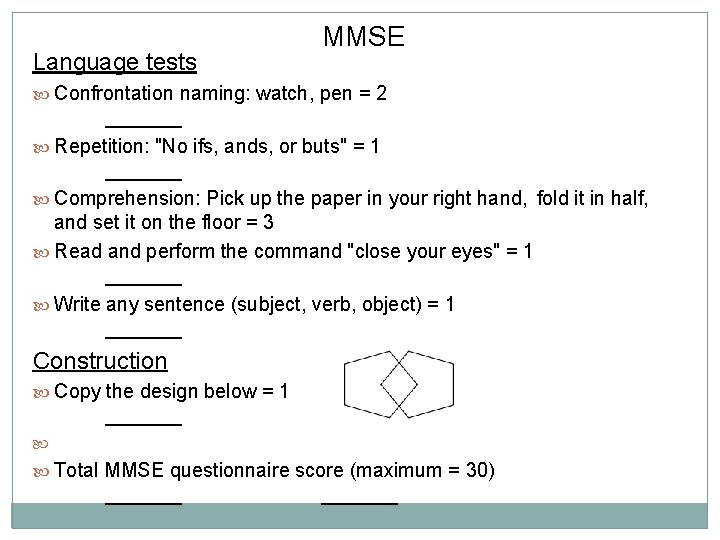
Language tests MMSE Confrontation naming: watch, pen = 2 _______ Repetition: "No ifs, ands, or buts" = 1 _______ Comprehension: Pick up the paper in your right hand, fold it in half, and set it on the floor = 3 Read and perform the command "close your eyes" = 1 _______ Write any sentence (subject, verb, object) = 1 _______ Construction Copy the design below = 1 _______ Total MMSE questionnaire score (maximum = 30) _______
MSE Visuospatial Ability: (When brain pathology is suspected) Ask the patient to copy a figure such as interlocking pentagons. Language and Reading: (When brain pathology is suspected) nominal aphasia: name two objects (e. g. a pen and a watch ). expressive aphasia: repeat after you certain words. receptive aphasia: carry out a verbal command. reading comprehension: read a sentence with written command (e. g. close your eyes).

MSE Judgment: the patient’s predicted response and behaviour in imaginary situation. From recent history. Insight: the degree of awareness and understanding the patient has that he or she is mentally ill.
levels of insight Complete denial of illness. Slight awareness of being sick and needing help but denying it at the same time. Awareness of being sick but blaming it on others, on external factors, or on organic factors. Awareness that illness is due to something unknown in the patient. Intellectual insight: admission that the patient is ill and that symptoms or failures in social adjustment are due to the patient's own particular irrational feelings or disturbances without applying this knowledge to future experiences. True emotional insight: emotional awareness of the motives and feelings within the patient and the important people in his or her life, which can lead to basic changes in behavior.
Website : http: //aitlvideo. uc. edu/aitl/MSEkm. swf

Thank you
- Slides: 21