
MENTAL PLANS are mental plans u What are

- Slides: 41
MENTAL PLANS
are mental plans? u. What are the benefits of mental plans? u. What are the different types of mental plans? QUESTIONS OF INTEREST u. What
WHAT ARE “MENTAL PLANS”?
MENTAL PLANS Systematic mental strategies to help athletes perform their best by attaining, maintaining, and regaining a Flow Mindset.
WHAT ARE THE BENEFITS OF MENTAL PLANS?
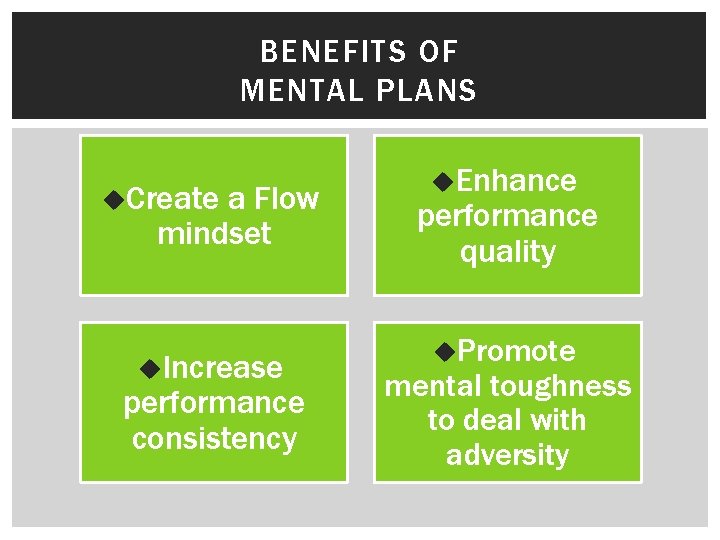
BENEFITS OF MENTAL PLANS u. Create a Flow mindset u. Increase performance consistency u. Enhance performance quality u. Promote mental toughness to deal with adversity
What is a Flow Mindset?
THE FLOW MINDSET u. Unshakably confident u. Motivated to push limits u. Totally focused on key performance cues u. Poised with positive mental attitude u. Optimally aroused or “psyched up” u. Performing automatically
ULTIMATE IMPACT OF FLOW MINDSET Put mind on automatic pilot DON’T THINK!. . . JUST REACT! Play In-The-Moment.
Why do we want a Flow Mindset?
Does a Flow Mindset always result in a Flow experience?
WHAT ARE THE DIFFERENT TYPES OF MENTAL PLANS?
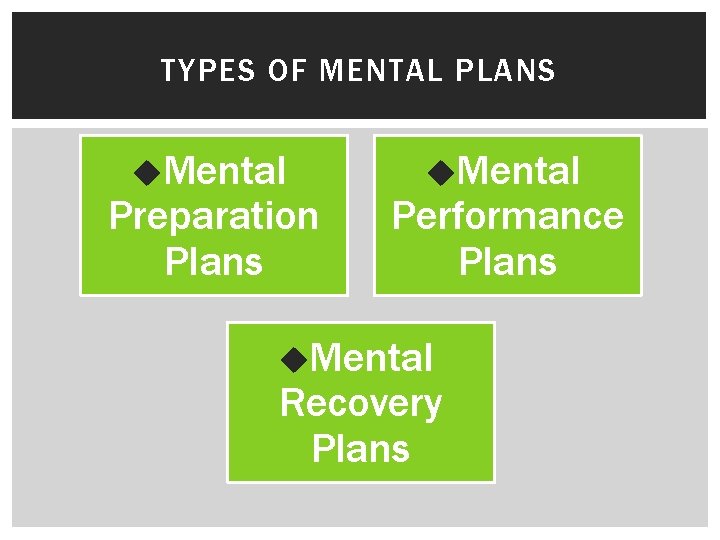
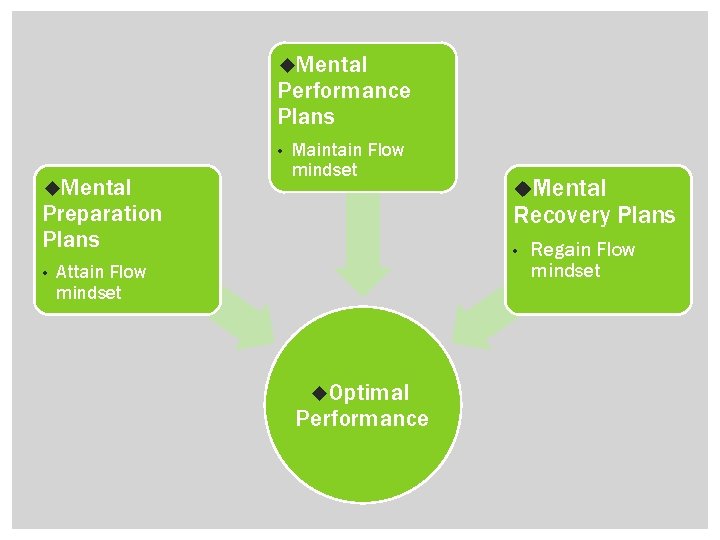
TYPES OF MENTAL PLANS u. Mental Preparation Plans u. Mental Performance Plans u. Mental Recovery Plans
u. Mental Performance Plans • u. Mental Maintain Flow mindset Preparation Plans • u. Mental Recovery Plans • Attain Flow mindset u. Optimal Performance Regain Flow mindset
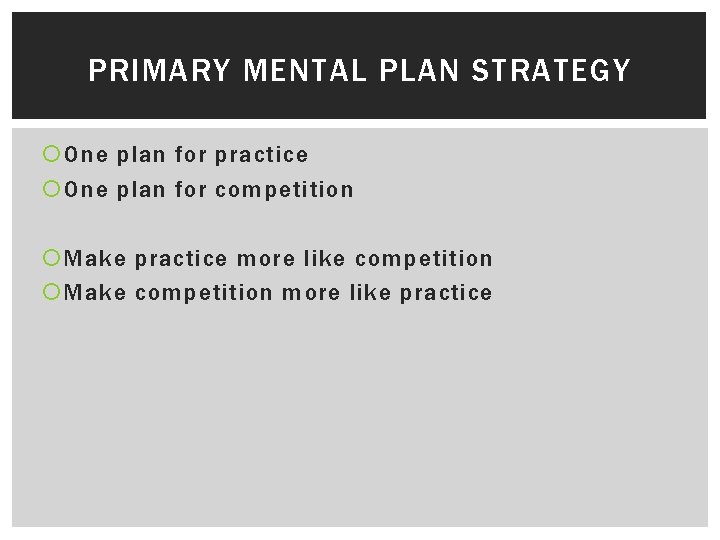
PRIMARY MENTAL PLAN STRATEGY One plan for practice One plan for competition Make practice more like competition Make competition more like practice
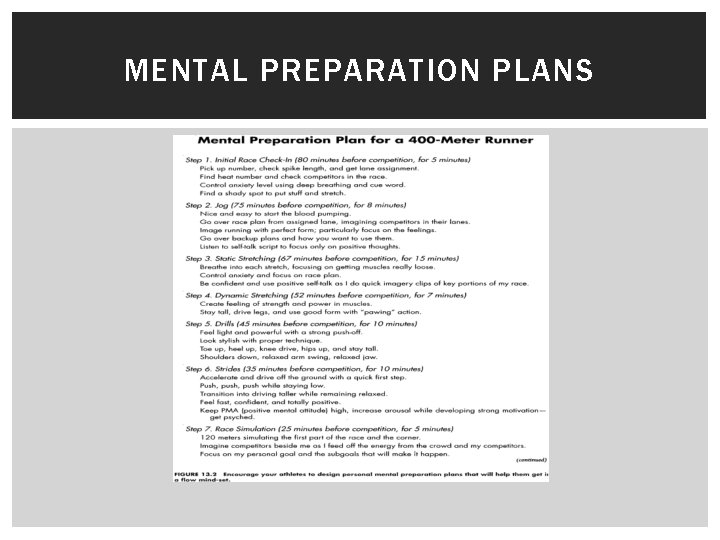
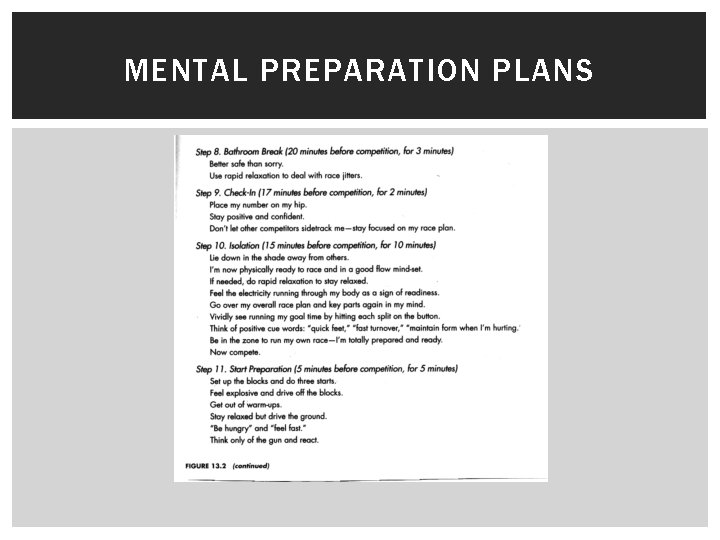
MENTAL PREPARATION PLANS
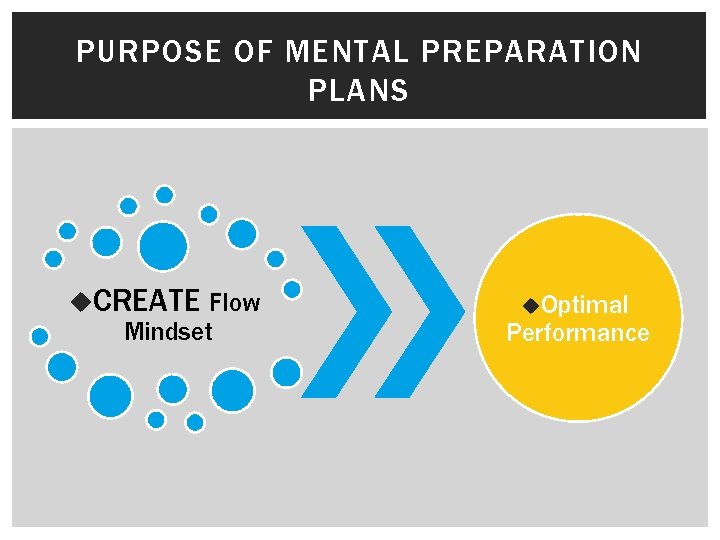
PURPOSE OF MENTAL PREPARATION PLANS u. CREATE Flow Mindset u. Optimal Performance
MENTAL PREPARATION PLANS
MENTAL PREPARATION PLANS
MENTAL PERFORMANCE PLANS
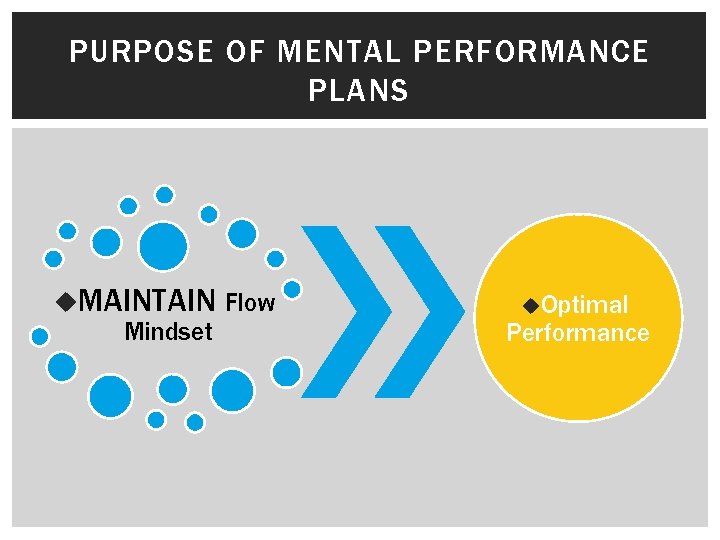
PURPOSE OF MENTAL PERFORMANCE PLANS u. MAINTAIN Flow Mindset u. Optimal Performance
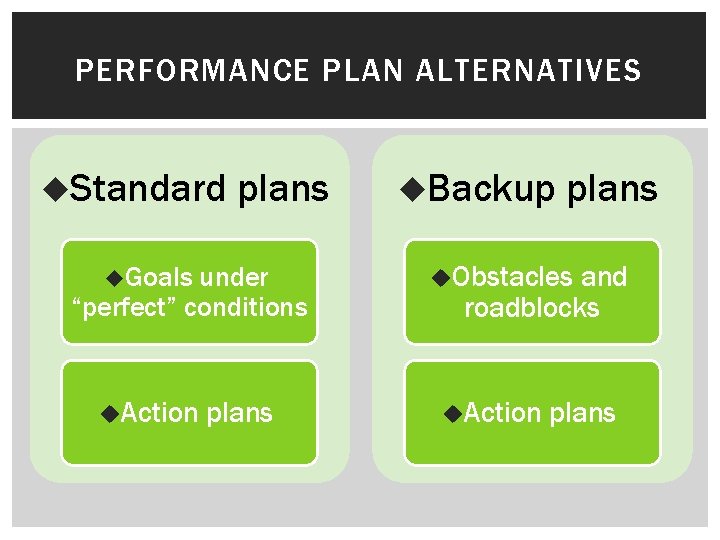
PERFORMANCE PLAN ALTERNATIVES u. Standard plans u. Goals under “perfect” conditions u. Action plans u. Backup plans u. Obstacles and roadblocks u. Action plans
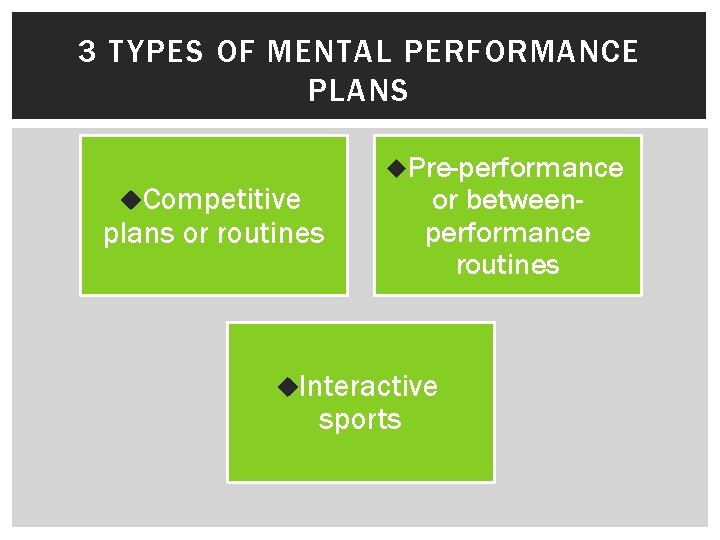
3 TYPES OF MENTAL PERFORMANCE PLANS u. Competitive u. Pre-performance plans or routines or betweenperformance routines u. Interactive sports
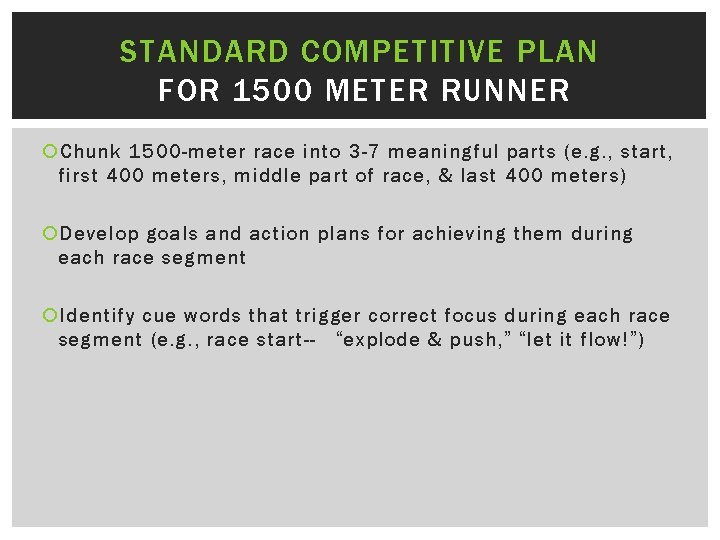
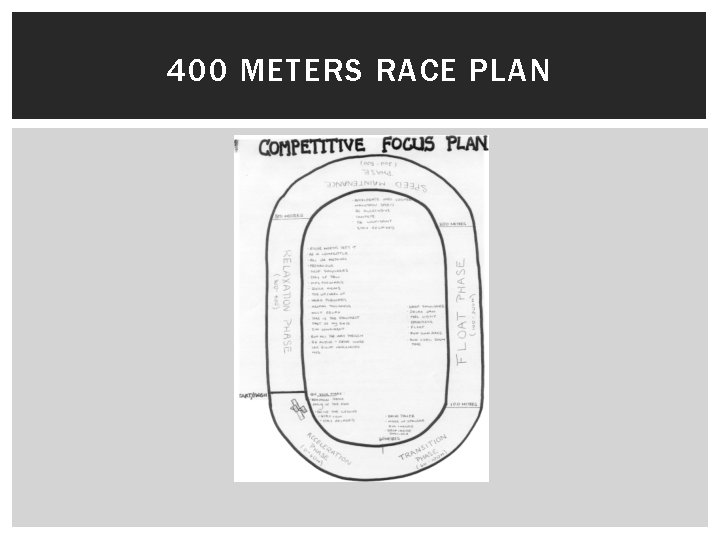
STANDARD COMPETITIVE PLAN FOR 1500 METER RUNNER Chunk 1500 -meter race into 3 -7 meaningful parts (e. g. , start, first 400 meters, middle part of race, & last 400 meters) Develop goals and action plans for achieving them during each race segment Identify cue words that trigger correct focus during each race segment (e. g. , race start-- “explode & push, ” “let it flow!”)
400 METERS RACE PLAN
PURPOSE OF PRE-PERFORMANCE ROUTINES Create consistent, high-level performance Used for repetitive, self-paced tasks. Promote FM § Focus, confidence, and trust (automaticity!) so performance becomes better and more consistent.
COMPONENTS OF PRE-PERFORMANCE ROUTINE Energy management § Remove unwanted tension § Adjust your arousal to its optimal level Confidence Cue Thought Cue § Positive, stress-free, productive mental attitude Feelings Cue § Imagery to experience successful performance § Execute skills automatically
STANDARD PRE-PERFORMANCE ROUTINE TOM AMBERRY FREE THROW ROUTINE 1. Relax your arms and legs by taking several deep knee bends while clinching fists and shaking them out and set feet square to the free throw line. 2. Bounce the ball 3 times using the inflation hole as a focus cue while bouncing the ball deliberately. 3. Put your thumb in the channel with your index finger pointing at the inflation hole while boosting confidence by imagining the perfect shot. 4. Elbow in the shot pocket while imagining perfect touch and feel throughout the shot. 5. Use an initiation cue such as cocking your wrist to automatically initiate the shot by bending your knees while keeping your eyes on the target. 6. Repeat cue word “nothing but net. ” 7. Execute automatically, following thru completely with “your hand in the cookie jar. ”
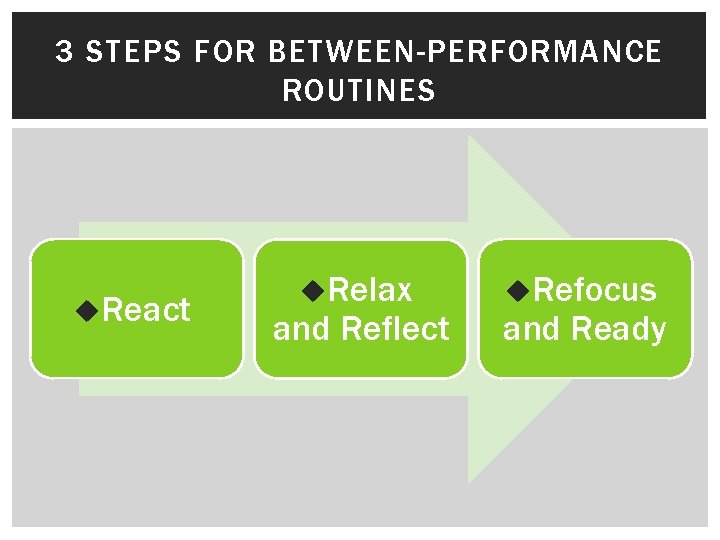
BETWEEN-PERFORMANCE ROUTINES Sports with regular breaks in the action. Employ a 3 -step process use down time to productively deal with previous performance and effectively prepare for upcoming performance.
3 STEPS FOR BETWEEN-PERFORMANCE ROUTINES u. React u. Relax and Reflect u. Refocus and Ready
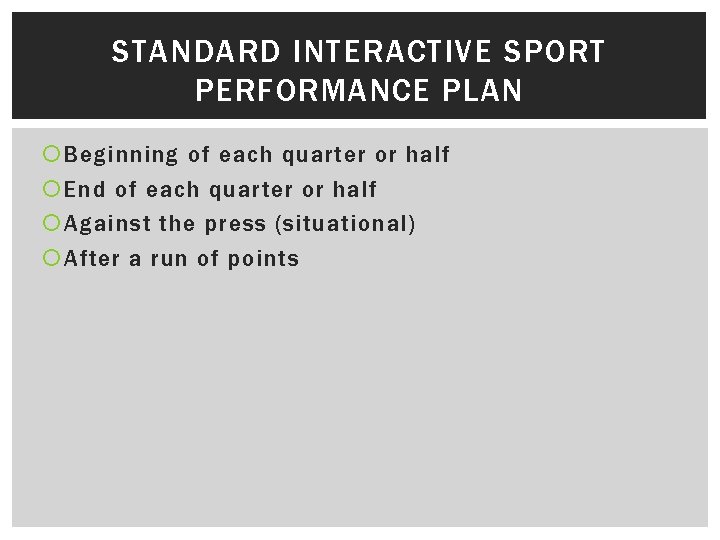
STANDARD INTERACTIVE SPORT PERFORMANCE PLAN Beginning of each quarter or half End of each quarter or half Against the press (situational) After a run of points
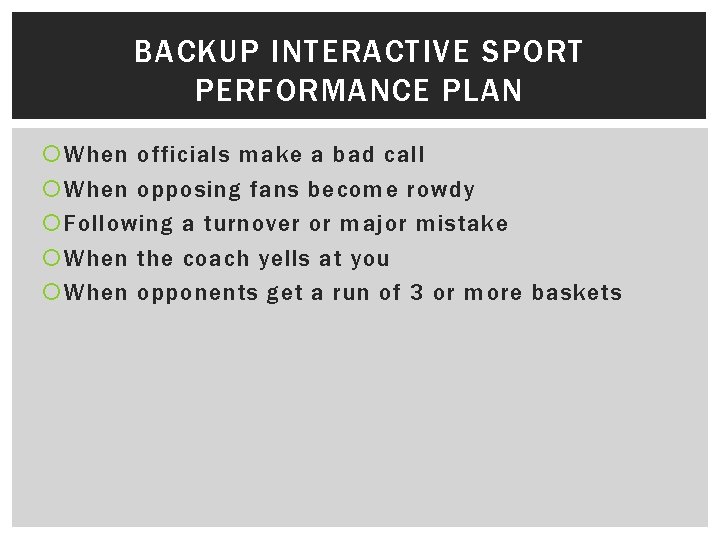
BACKUP INTERACTIVE SPORT PERFORMANCE PLAN When officials make a bad call When opposing fans become rowdy Following a turnover or major mistake When the coach yells at you When opponents get a run of 3 or more baskets
MENTAL RECOVERY PLANS
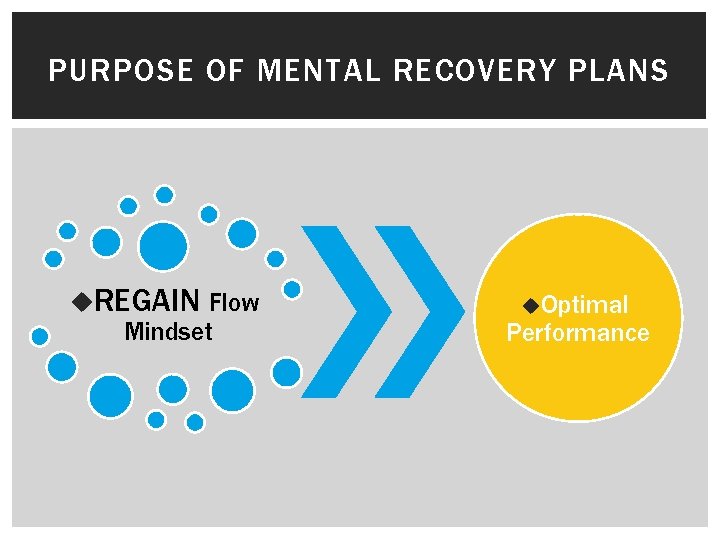
PURPOSE OF MENTAL RECOVERY PLANS u. REGAIN Flow Mindset u. Optimal Performance
When might you need a mental recovery plan?
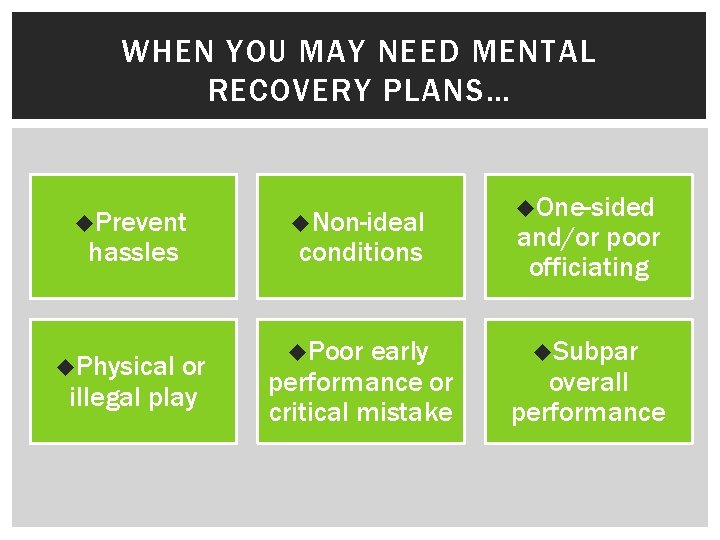
WHEN YOU MAY NEED MENTAL RECOVERY PLANS… u. Prevent hassles u. Physical or illegal play u. Non-ideal conditions u. Poor early performance or critical mistake u. One-sided and/or poor officiating u. Subpar overall performance
What are possible mental recovery strategies?
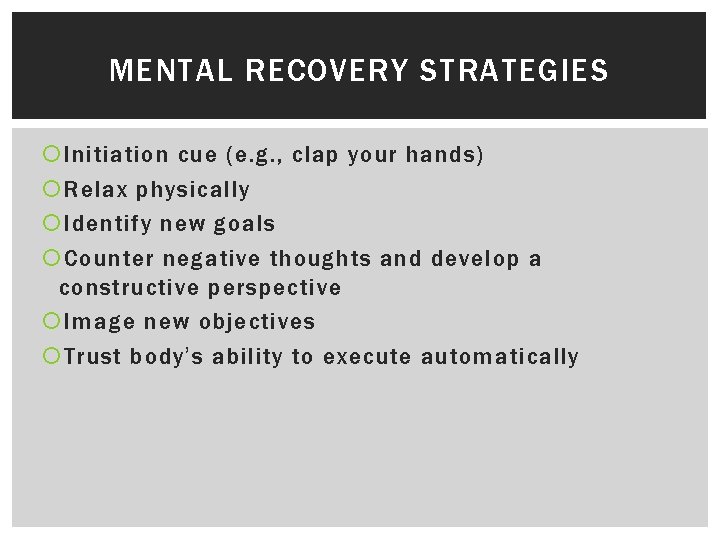
MENTAL RECOVERY STRATEGIES Initiation cue (e. g. , clap your hands) Relax physically Identify new goals Counter negative thoughts and develop a constructive perspective Image new objectives Trust body’s ability to execute automatically
IMPLEMENTING AND EVALUATING MENTAL PLANS
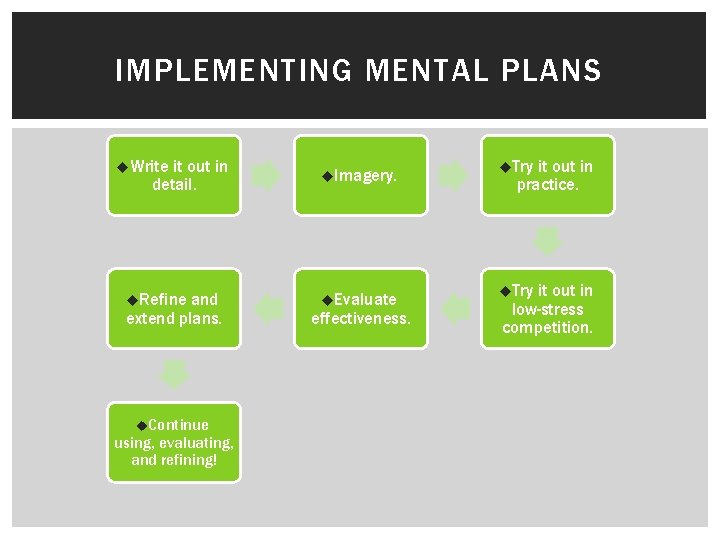
IMPLEMENTING MENTAL PLANS u. Write it out in detail. u. Refine and extend plans. u. Continue using, evaluating, and refining! u. Imagery. u. Evaluate effectiveness. u. Try it out in practice. u. Try it out in low-stress competition.
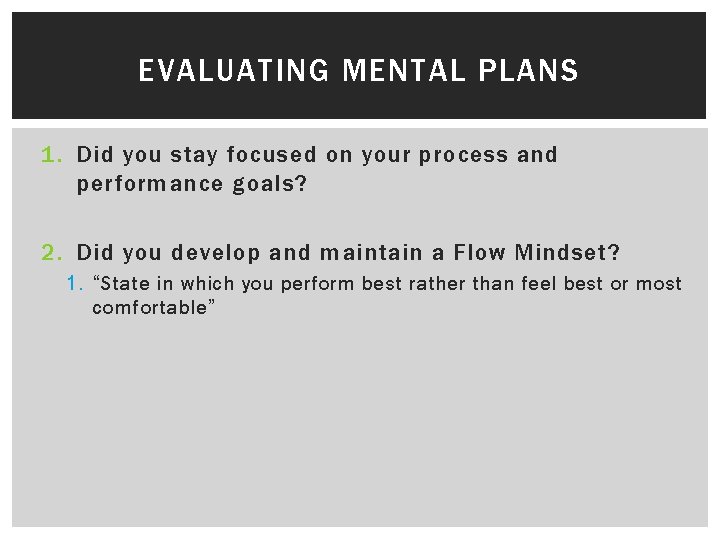
EVALUATING MENTAL PLANS 1. Did you stay focused on your process and performance goals? 2. Did you develop and maintain a Flow Mindset? 1. “State in which you perform best rather than feel best or most comfortable”