
Mental Illness Facts Mental illness is very common
- Slides: 9
Mental Illness Facts • Mental illness is very common. • Psychiatric emergencies are rare but when they occur, it is very likely that law enforcement will be called upon to intervene. • Treatment for mental illness is effective. • Most persons suffering from mental illness are not receiving treatment. • Ignorance about mental illness leads to discrimination and social stigma. 1
What Causes Mental Illness? • Genetics o Vulnerability o Biochemical change • Environmental factors: o traumatic events o stressors 2
Mental Illness is Common • Mental illness is more common than cancer, diabetes or heart disease. (NIMH, 1999) • 1 in every 5 adults in America will experience a mental illness • 1 in 25 adults in America live with a serious mental illness o 50% of chronic mental illness begins by the age of 14 o 75% of chronic mental illness begins by the age of 24 3
Psychosis • Psychosis: o 1 out of 100 people will experience an episode o Refers to difficulty in differentiating reality from fantasy. o Symptom, not an illness • May accompany Schizophrenia, Bipolar Disorder, Psychosis NOS, Paranoia, post-partum depression, other psychiatric and medical illnesses o May be substance/medication-induced • Symptoms are the physiological response to the substance and may cease after removal of the agent. o Psychotic disorders can be the direct consequence of a medical condition o Most people report psychosis as frightening and confusing 4
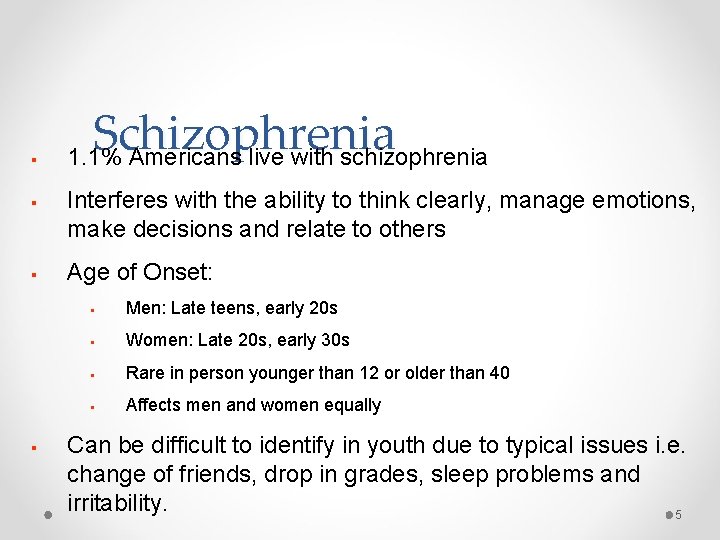
§ § Schizophrenia 1. 1% Americans live with schizophrenia Interferes with the ability to think clearly, manage emotions, make decisions and relate to others Age of Onset: § Men: Late teens, early 20 s § Women: Late 20 s, early 30 s § Rare in person younger than 12 or older than 40 § Affects men and women equally Can be difficult to identify in youth due to typical issues i. e. change of friends, drop in grades, sleep problems and irritability. 5
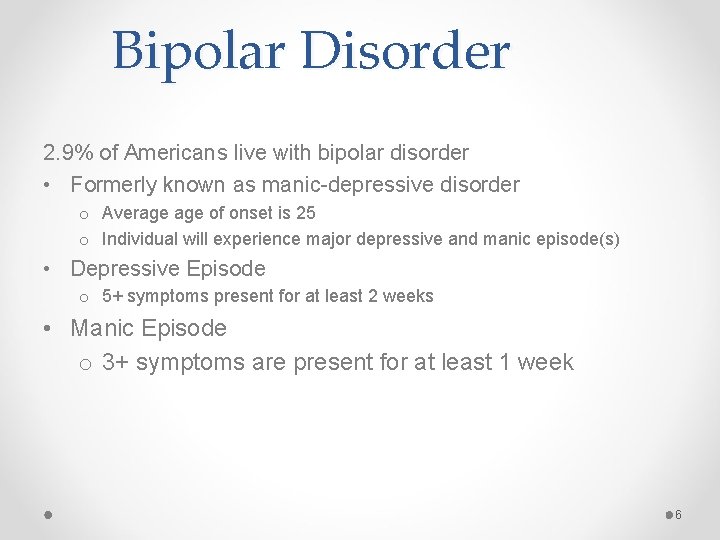
Bipolar Disorder 2. 9% of Americans live with bipolar disorder • Formerly known as manic-depressive disorder o Average of onset is 25 o Individual will experience major depressive and manic episode(s) • Depressive Episode o 5+ symptoms present for at least 2 weeks • Manic Episode o 3+ symptoms are present for at least 1 week 6
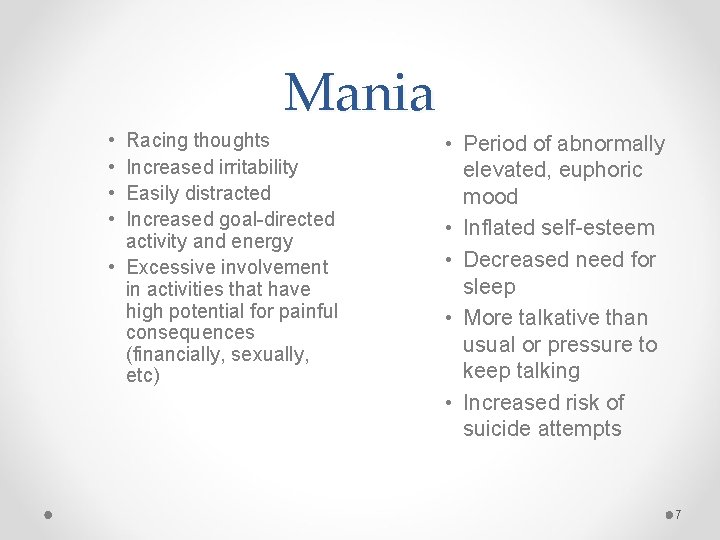
Mania • • Racing thoughts Increased irritability Easily distracted Increased goal-directed activity and energy • Excessive involvement in activities that have high potential for painful consequences (financially, sexually, etc) • Period of abnormally elevated, euphoric mood • Inflated self-esteem • Decreased need for sleep • More talkative than usual or pressure to keep talking • Increased risk of suicide attempts 7
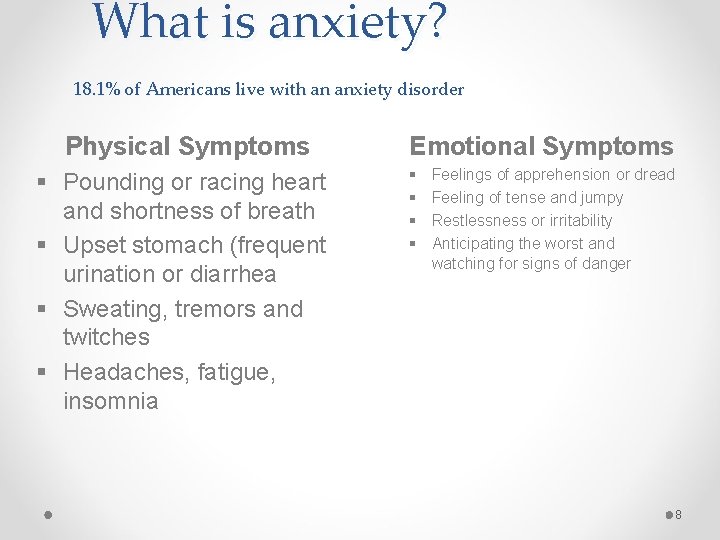
What is anxiety? 18. 1% of Americans live with an anxiety disorder Physical Symptoms § Pounding or racing heart and shortness of breath § Upset stomach (frequent urination or diarrhea § Sweating, tremors and twitches § Headaches, fatigue, insomnia Emotional Symptoms § § Feelings of apprehension or dread Feeling of tense and jumpy Restlessness or irritability Anticipating the worst and watching for signs of danger 8
For More Information • NAMI – National Alliance on Mental Illness • • Mission: To provide hope and improve the quality of life for those whose lives are affected by mental illness, by providing information and referrals, education, support, advocacy, and active community outreach. Contact: NAMI CHICAGO 1536 W. Chicago Avenue 312 -563 -0445 www. namichicago. org info@namigc. org 9