
Mental Health Triage Clinic Intersection of Patient Care

- Slides: 21
Mental Health Triage Clinic Intersection of Patient Care & Resident Education Emilee J. Delbridge, Ph. D, LMFT Daniel S. Felix, Ph. D, LMFT IU-Methodist FMR, Indianapolis, IN
NONE TO REPORT
Learning Objectives • Recognize the value of including medical learners in the focused assessment of patients with behavioral & mental health needs. • Identify chances to address mental health needs of patients, while providing focused education to medical learners. • Identify inter-professional providers/educators who can provide comprehensive care to address patients’ mental & behavioral health concerns.
Evidence-based Approach • Depressive & anxiety disorders best treated with 2 -prong approach (1) • Direct observation & provide feedback (2, 3)
Mental Health Provider Dilemma • Decrease the “black hole” of therapy referrals • Training multiple learners (4) • Inappropriate referrals – Type of patient needs – Patient readiness
The Challenge Facing Residents • Many pts have mental health symptoms and challenging lives. • It’s difficult to train residents to address all medical & mental health components at once. • Most of Behavioral Science knowledge is learned in didactic, small groups.
Goals of Mental Health Triage Clinic Goals for Medical Learners • Understand mental health resources • Skills to assess patient needs • Interviewing skills feedback • Providing recommendations (modeling) • Warm handoff • Practice independently Goals for Patients • Focused session for mental, behavioral health needs • Symptom assessment • Medication management • Specific referral to meet current needs
Case Examples Martha, 58 y/o AAF • PHQ-9: 9 • GAD-7: 5 • Complex medical differential • Difficulty sleeping Janelle, 38 y/o CF • PHQ-9: 24 • GAD-7: 16 • Possible PTSD, Bipolar sxs
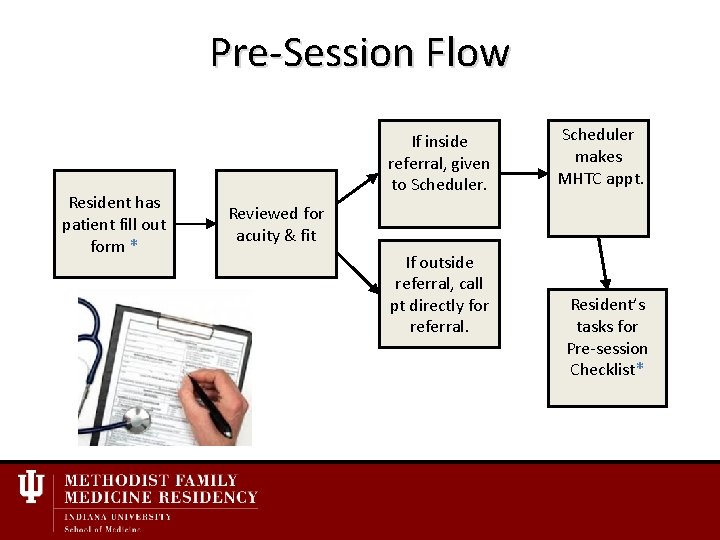
Pre-Session Flow Resident has patient fill out form * If inside referral, given to Scheduler makes MHTC appt. Reviewed for acuity & fit If outside referral, call pt directly for referral. Resident’s tasks for Pre-session Checklist*
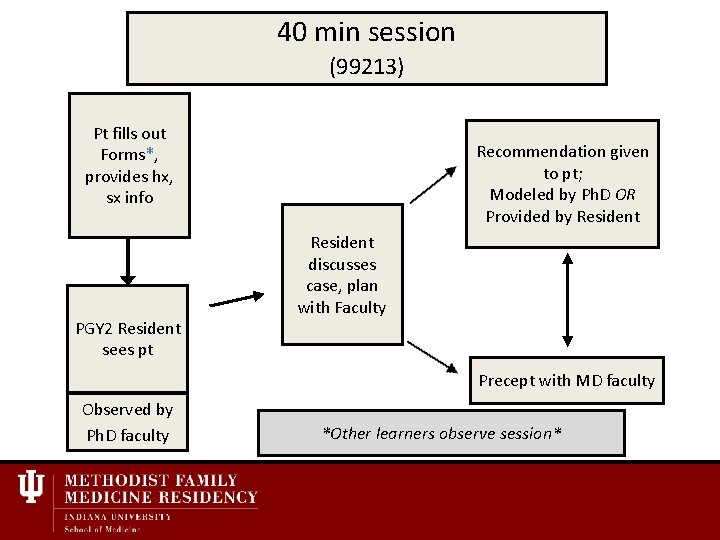
40 min session (99213) Pt fills out Forms*, provides hx, sx info PGY 2 Resident sees pt Recommendation given to pt; Modeled by Ph. D OR Provided by Resident discusses case, plan with Faculty Precept with MD faculty Observed by Ph. D faculty *Other learners observe session*
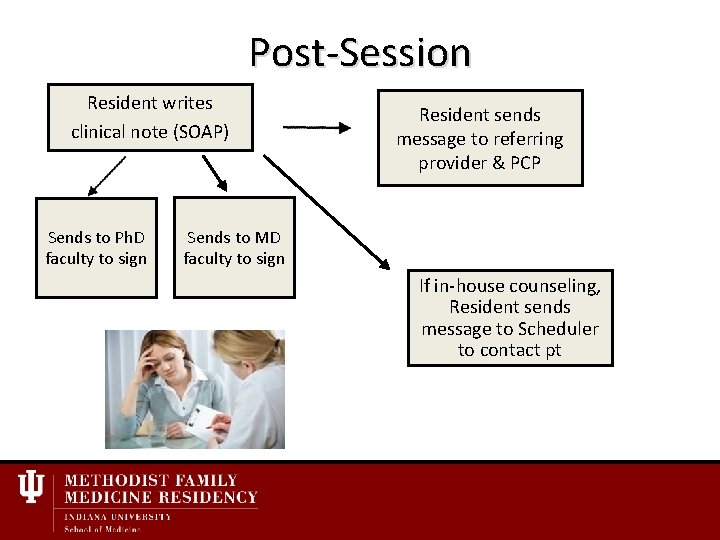
Post-Session Resident writes clinical note (SOAP) Sends to Ph. D faculty to sign Resident sends message to referring provider & PCP Sends to MD faculty to sign If in-house counseling, Resident sends message to Scheduler to contact pt
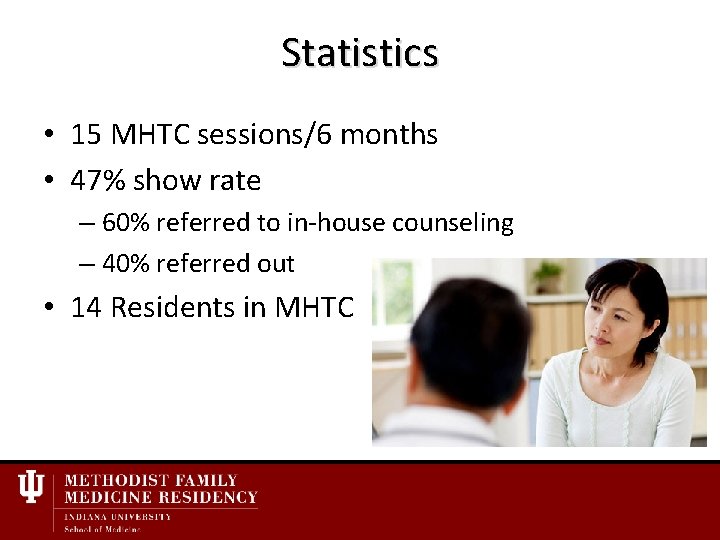
Statistics • 15 MHTC sessions/6 months • 47% show rate – 60% referred to in-house counseling – 40% referred out • 14 Residents in MHTC
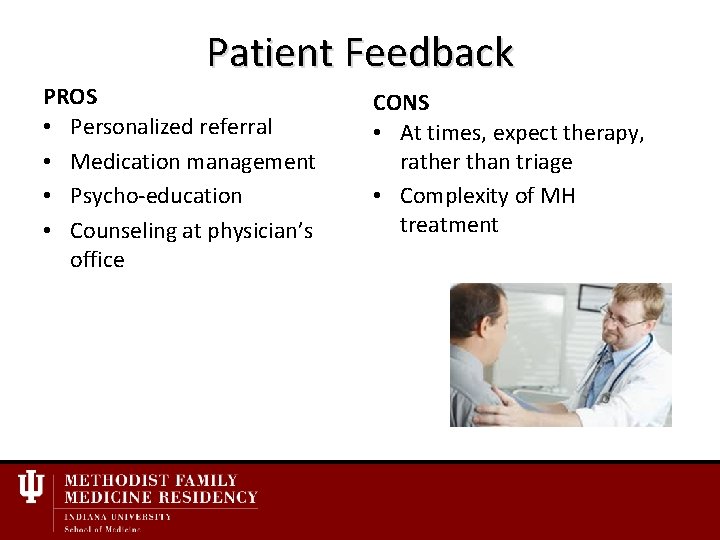
Patient Feedback PROS • Personalized referral • Medication management • Psycho-education • Counseling at physician’s office CONS • At times, expect therapy, rather than triage • Complexity of MH treatment
Interdisciplinary Training Feedback Outcomes • Strong knowledge of clinic resources • Moderate knowledge of area resources • • • Appropriate pts for therapy MH screening tools Area MH agencies Focused interviewing skills Appropriate psychiatric referral process • Observe sessions (PAs, etc. )
References 1. Wiles N, Thomas L, Abel A, Barnes M Carroll F, Ridgway N, et al. Clinical effectiveness and cost-effectiveness of cognitive behavioral therapy as an adjust to pharmacotherapy for treatment-resistant depression in primary are: the Co. Bal. T randomized controlled trial. Health Technol Assess. 2014: 18(31). doi: 10. 3310/hta 18310 2. Barnett K, Mercer SW, Norbury M, Watt G, Wyke S, Guthrie B. Epidemiology of multimorbidity and implications for health care, research, and medical education: a cross-sectional study. The Lancet. 2012; 380(9836): 37 -43. doi: 10. 1016/S 0140 -6736(12)60240 -2 3. Reed S, Shell R, Kassis K, et al. Applying adult learning practices in medical education. Curr Probl Pediatr Adolesc Health Care. 2014: 44: 170 -181. doi: 10. 1016/j. cppeds. 2014. 01. 008 4. Priest H, Roberts P, Dent H, Blincoe C, Lawton D, Armstrong C. Interprofessional education and working in mental health: in search of the evidence base. Journal of Nursing Management. 2008: 16(4): 474 -485. doi: 10. 1111/j. 1365 -2834. 2008. 00867. x
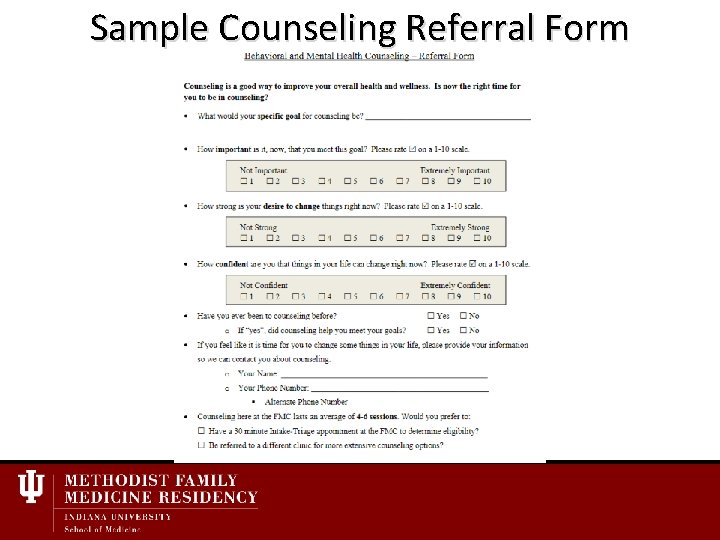
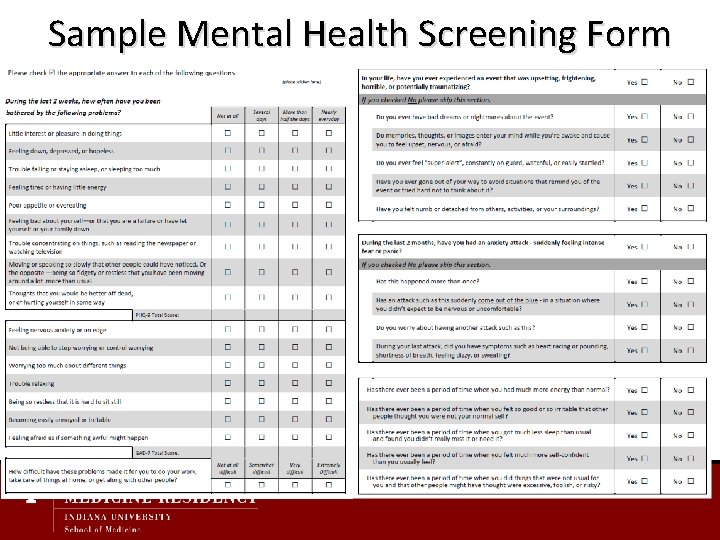
Forms* • Counseling Referral Form (Pt completed) • MHTC Checklist (for Resident) • Mental Health Symptom Screening Form (Pt) • Area Mental Health Agencies Referral List
Sample Counseling Referral Form
Sample Mental Health Screening Form
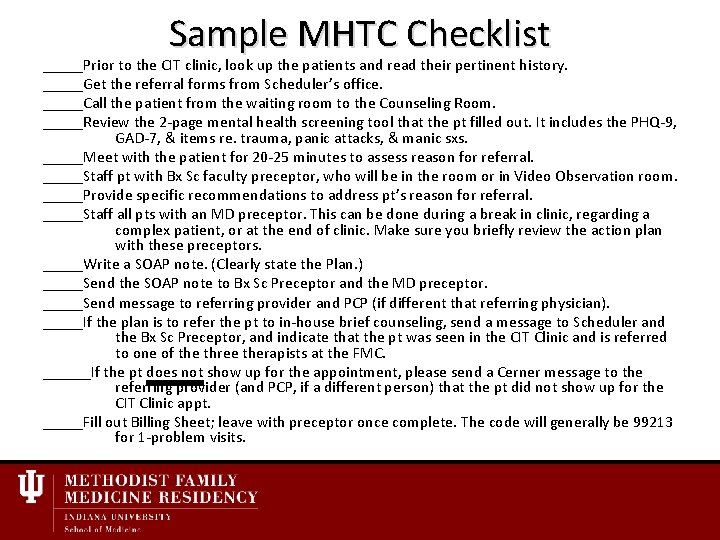
Sample MHTC Checklist _____Prior to the CIT clinic, look up the patients and read their pertinent history. _____Get the referral forms from Scheduler’s office. _____Call the patient from the waiting room to the Counseling Room. _____Review the 2 -page mental health screening tool that the pt filled out. It includes the PHQ-9, GAD-7, & items re. trauma, panic attacks, & manic sxs. _____Meet with the patient for 20 -25 minutes to assess reason for referral. _____Staff pt with Bx Sc faculty preceptor, who will be in the room or in Video Observation room. _____Provide specific recommendations to address pt’s reason for referral. _____Staff all pts with an MD preceptor. This can be done during a break in clinic, regarding a complex patient, or at the end of clinic. Make sure you briefly review the action plan with these preceptors. _____Write a SOAP note. (Clearly state the Plan. ) _____Send the SOAP note to Bx Sc Preceptor and the MD preceptor. _____Send message to referring provider and PCP (if different that referring physician). _____If the plan is to refer the pt to in-house brief counseling, send a message to Scheduler and the Bx Sc Preceptor, and indicate that the pt was seen in the CIT Clinic and is referred to one of the three therapists at the FMC. ______If the pt does not show up for the appointment, please send a Cerner message to the referring provider (and PCP, if a different person) that the pt did not show up for the CIT Clinic appt. _____Fill out Billing Sheet; leave with preceptor once complete. The code will generally be 99213 for 1 -problem visits.
Contact Info IU-Methodist Family Medicine Residency Indianapolis, IN Emilee J. Delbridge, Ph. D, LMFT edelbrid@iupui. edu Daniel S. Felix, Ph. D, LMFT dfelix 1@IUHealth. org