
Mental Health Recovery and Resiliency Deborah Amesbury LCSW
Mental Health Recovery and Resiliency Deborah Amesbury, LCSW February 2010/HSN
Having a mental illness does not mean that you can’t be mentally healthy.

Wellness Recovery Action Plan (WRAP) by Mary Ellen Copeland, Ph. D www. mentalhealthrecovery. com

Key Recovery Concepts HOPE PERSONAL RESPONSIBILITY EDUCATION SELF-ADVOCACY SUPPORT
Wellness Toolbox Diet* Sleep* Exercise* Light* Relationships* Lifestyle Leisure Time Activities
Wellness Toolbox Journaling Yoga Dance Music Reading Spirituality Volunteering
Wellness Toolbox Meditation Relaxation Contact w animals Quality time w healthy people Art Work Parenting
Wellness Toolbox Therapy Medication(s) Sobriety
WRAP® Illnesses, disorders or lifestyle difficulties WRAP can help address or guide your recovery from also include Addictions Chronic physical illness Work stress Loss and grief

U. S. Department of Health & Human Services Substance Abuse & Mental Health Services Administration (SAMHSA) Center for Mental Health Services
WRAP® Daily Maintenance Plan What I’m like when I’m doing well Things I need to do every day to relieve stress and maintain my wellness/recovery Additional things I might need to do that would be good to do
WRAP® Triggers Things that, if they happen, might interfere with my wellness/recovery Action Plan – Things that I can do if my triggers come up to keep them from interfering with my wellness/ recovery
WRAP® Early Warning Signs Some early warning signs that others have reported and / or I have observed that may indicate that I have to take better care of myself Things I must do if I experience early warning signs Things that I can do if they feel right to me
WRAP® When Things are Breaking Down Signs/symptoms that indicate that I am feeling much worse Action Plan – Things that can help me feel better when I am feeling much worse
WRAP® Crisis Plan Part 1 – What I’m like when I’m feeling well Part 2 – I need help when I (symptoms that indicate that others need to take over full responsibility for my care and make decisions on my behalf)
WRAP® Crisis Plan Part 3 – SUPPORTERS, the people who I want to take over for me when the symptoms I listed in Part 2 come up Part 4 – Medical Information / Medications / Supplements / Health Care Preparations
WRAP® Crisis Plan Part 5 – Treatments and Complementary Therapies Part 6 – Home/Community Care/Respite Plan
WRAP® Crisis Plan Part 7 – Hospital or Other Treatment Facilities Part 8 – Help From Others
WRAP® Crisis Plan Part 9 – When My Supporters No Longer Need to Use This Plan (inactivating the Crisis Plan) Post Crisis Plan
Free booklets developed by Mary Ellen Copeland, Ph. D can be downloaded from SAMHSA http: //mentalhealth. samhsa. gov/publicatio ns/publications_browse. asp? ID=62&Sort =Format Consumer Information Series (CIS)
Recovering Your Mental Health: A Self-Help Guide CIS Volume 4, SMA-3504, Reprinted 2005 Building Self-Esteem: A Self-Help Guide CIS Volume 5, SMA-3715, Printed 2002 Making And Keeping Friends: A Self-Help Guide CIS Volume 6, SMA-3716, Reprinted 2005 Dealing With the Effects of Trauma: A Self. Help Guide CIS Volume 7, SMA-3717, Printed 2002
Developing A Recovery and Wellness Lifestyle: A Self-Help Guide CIS Volume 8, SMA-3718, Printed 2002 Speaking Out For Yourself: A Self-Help Guide CIS Volume 9, SMA-3719, Reprinted 2005 Action Planning for Prevention and Recovery: A Self-Help Guide CIS Volume 10, SMA-3720, Printed 2002
crazy diamond www. crazydiamond. org. uk Mike Smith, Ph. D Marion Aslan
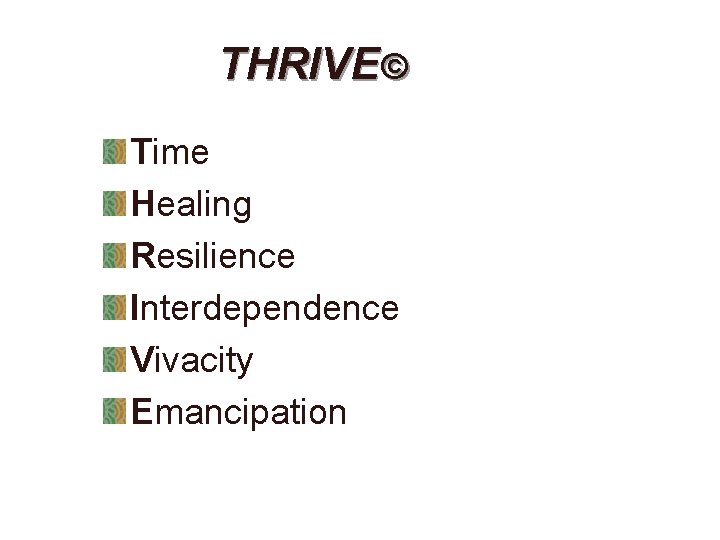
THRIVE© Time Healing Resilience Interdependence Vivacity Emancipation
- Slides: 24