
Mental Health and Wellness Recovery Framework May 2019

- Slides: 17
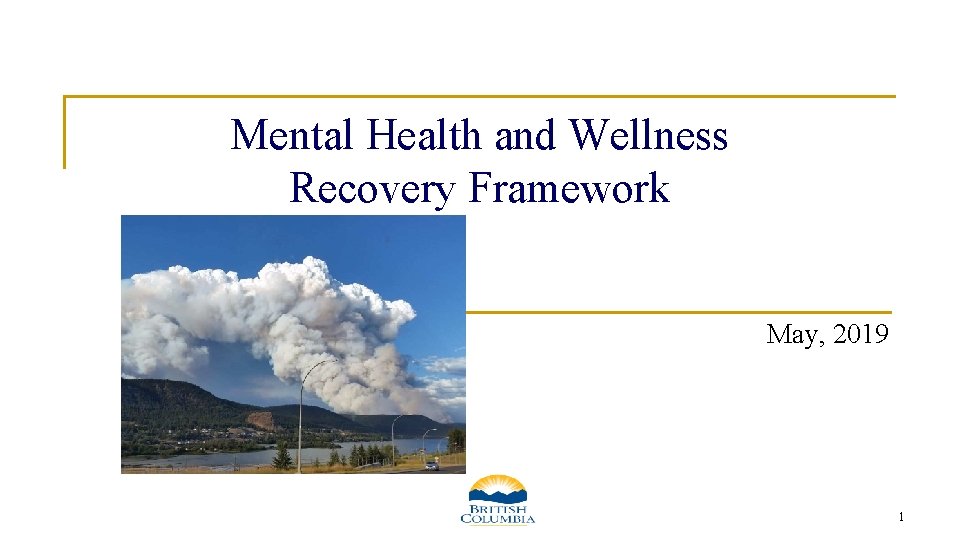
Mental Health and Wellness Recovery Framework May, 2019 1
Background n n n During the summer of 2017, 65, 000 residents in Interior Health Authority were evacuated as a result of wildfires. The Province was under a state of emergency for 77 days. In May 2018, following major flood damage experienced in Grand Forks over 400 homes and 100 businesses were severely damaged. Between 100 -120 of these homes have since been re-zoned as uninhabitable. In 2018, the Northern Health Authority was under a state of emergency for 23 days as a result of wildfires. 5, 400 residents were evacuated and 1. 3 million hectares burned. This was the largest wildfire ever recorded in BC. 2
Background –First Nations n n n 28 First Nations communities were evacuated or on evacuation alert during 2017 wildfire season 31 First Nations were impacted during 2018 wildfire season About 23 First Nations communities were impacted by flooding in 2017 and/or 2018 (several of these communities also experienced wildfire alerts/evacuations) 3
2017 BC Fires and Mental Health Impacts We are already seeing measurable impacts from the 2017 wildfires in BC: n 31. 9% increase in students in the area reporting poor mental and physical health. n Significant increases in new clients and referrals across Victim Support Services in impacted areas. n An increase in family support and counselling needs for clients of the Ministry of Children and Families. n Interior Health Authority reported increases in mental health services: n n n An increase, from 20% to 27%, in the number of visits to the MHSU ED related to substance use and intoxication A 35% increase in Community Crisis Response clients A 10% increase in Intensive Case Management A 7% increase in Adult Short-Term Assessment and Treatment Services A 28% increase in Seniors MHSU clients 4
The Need for a Framework n n n Expectation that BC will continue to experience increasing numbers of emergency events. Evidence suggests that additional mental health support is needed for 3 -5 years following an emergency. Event often impact rural areas with limited existing mental health services and supports. Special attention must be paid to the interactions between disaster trauma and inter-generational trauma in First Nations communities. Difficult to be successful without an agreed-upon framework to launch recovery services, reduce the risk of duplicated efforts, reduce the lack of coordination, and confusion on how to access emergency funding. 5
International Information n Australian study of those impacted by the 1983 Ash Wednesday fires found that mental health issues doubled across the board in all directly affected populations. A study of 9 th graders after the 2003 California wildfires found that personal loss, schedule disruption, and ethnic minority status were the most relevant factors for determining level of impact. Most studies found that recovery outcomes level out after 2 years, implying that those who did not recover on their own by that point would not without assistance. 6
Alberta Wildfires 2016 n n Research indicates that six months after the Alberta Wildfire almost 15% of residents continued to suffer from some type of major depressive disorder. After the wildfire the disorder rate was 17% for women and 10 % for men. The average Alberta rate is 3. 3 %. In the year following the wildfire Alberta’s addiction and mental health client contacts rose from approx. 1, 000 to 29, 000 post wildfire. Among those who were forced to evacuate, it is estimated increased rates as high of 29% suffered PTSD, 26% for major depressive disorder, and 36% for insomnia. 7
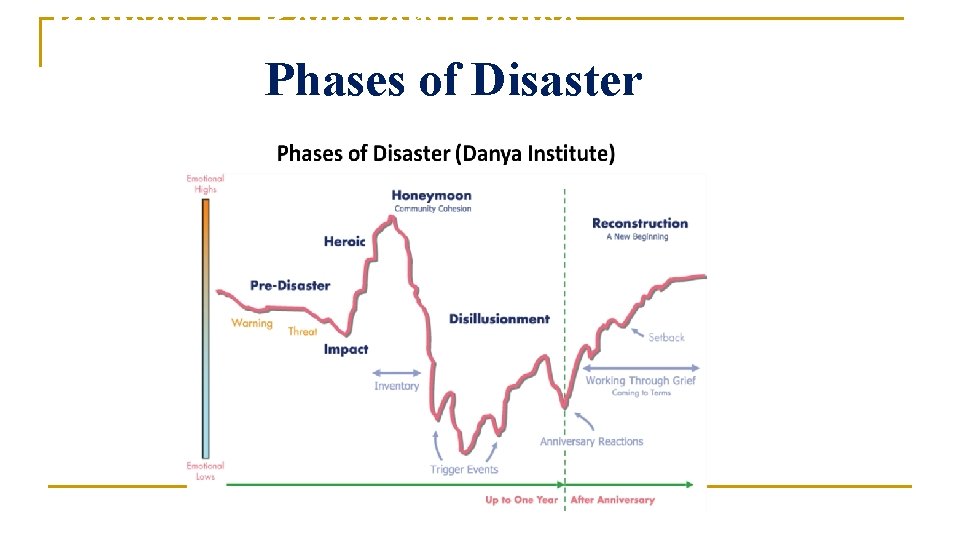
Phases of Recovery. Ogase ==== Phases of Disaster
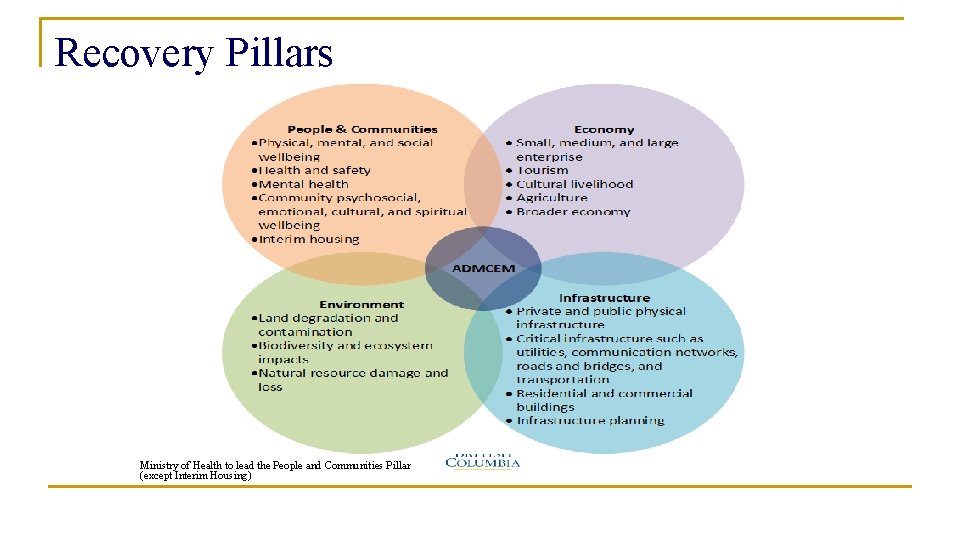
Recovery Pillars Ministry of Health to lead the People and Communities Pillar (except Interim Housing)
People & Communities The social sector considers the impacts an event has on the physical, mental and social wellbeing of the population. This sector primarily concerns health and safety, mental health, community, psychosocial, well-being, and interim housing. • Health Emergency Management BC • Provincial Health Services Authority • Education • Children & Family Development • Municipal Affairs and Housing • Victim Services, PSSG • Health Authorities 10
Development of a Mental Health Disaster Recovery Guide and Toolkit n n Consultation with Partners (FNHA, ISC, MCFD, MMHSU, Education, PSSG, EMBC, PSA, MIRR, RHA’s) Review of cross government recommendations (Chapman/Abbott, Interim Provincial Disaster Recovery Framework, With Us, Not For us, The Fire Awakened Us. Cross jurisdictional review of evidence and best practices Review of lessons learned from 2017 Wildfire, 2018 Grand Forks flooding, and 2018 Wildfire 11
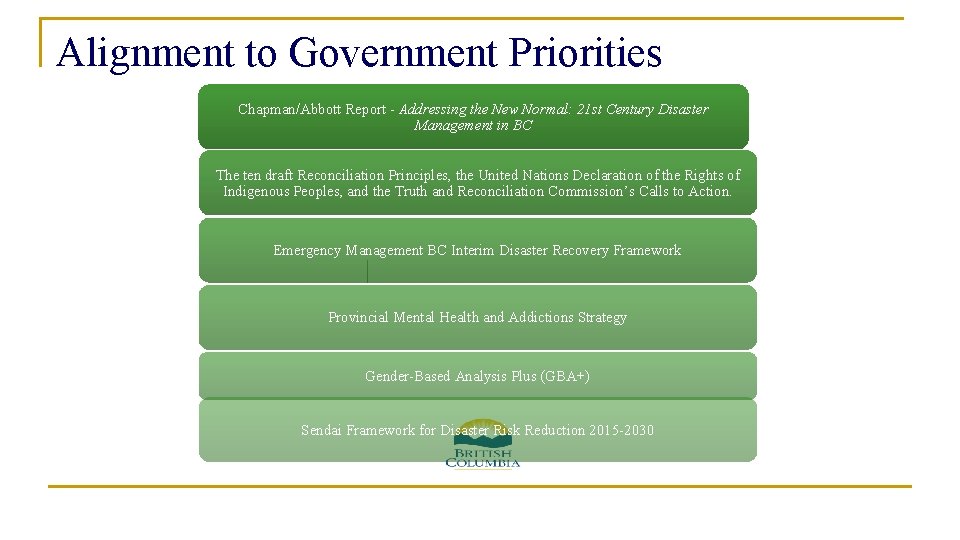
Alignment to Government Priorities Chapman/Abbott Report - Addressing the New Normal: 21 st Century Disaster Management in BC The ten draft Reconciliation Principles, the United Nations Declaration of the Rights of Indigenous Peoples, and the Truth and Reconciliation Commission’s Calls to Action. Emergency Management BC Interim Disaster Recovery Framework Provincial Mental Health and Addictions Strategy Gender-Based Analysis Plus (GBA+) Sendai Framework for Disaster Risk Reduction 2015 -2030
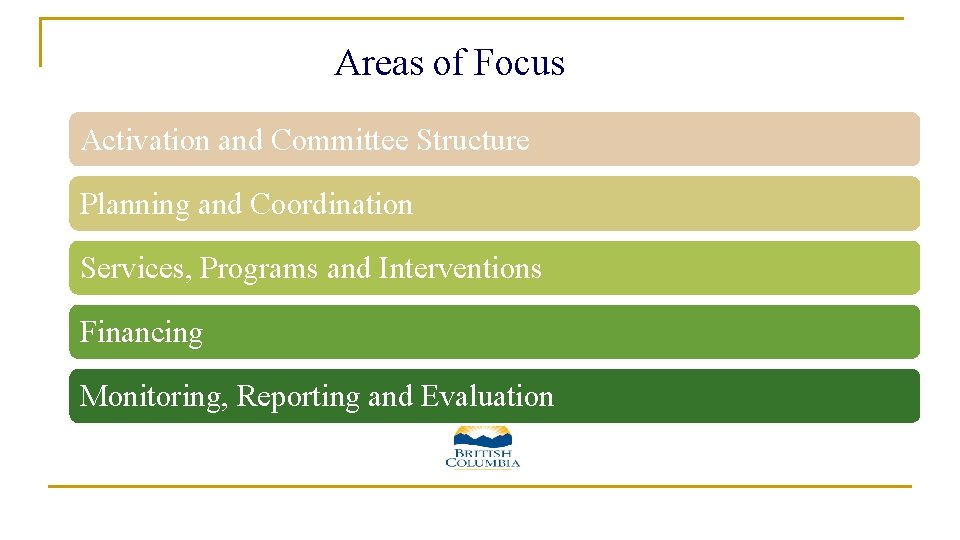
Areas of Focus: Areas of Focus Activation and Committee Structure Planning and Coordination Services, Programs and Interventions Financing Monitoring, Reporting and Evaluation
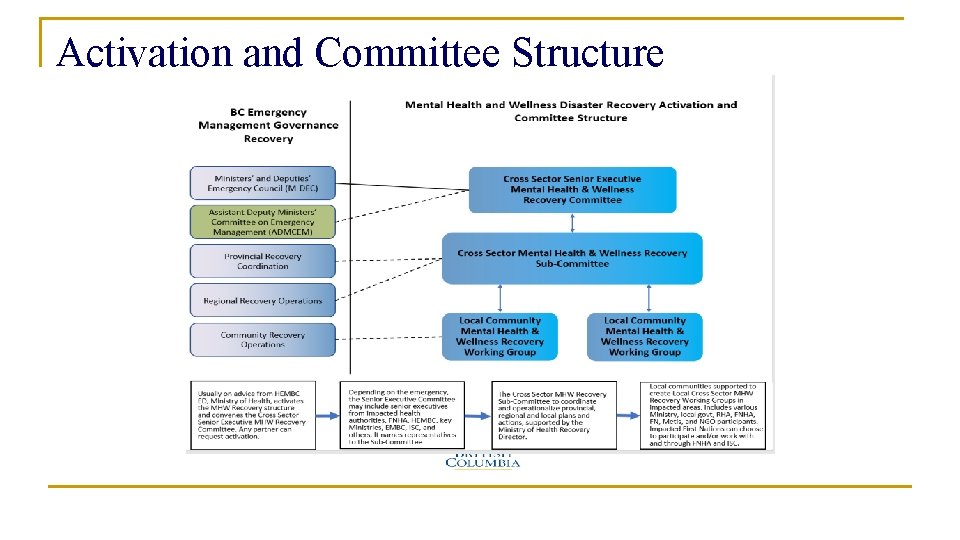
Activation and Committee Structure
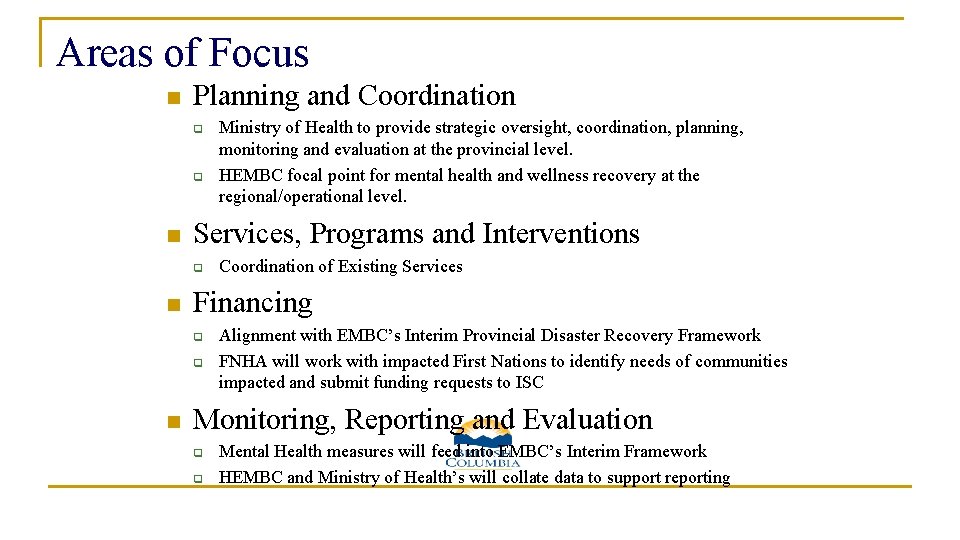
Areas of Focus n Planning and Coordination q q n Services, Programs and Interventions q n Coordination of Existing Services Financing q q n Ministry of Health to provide strategic oversight, coordination, planning, monitoring and evaluation at the provincial level. HEMBC focal point for mental health and wellness recovery at the regional/operational level. Alignment with EMBC’s Interim Provincial Disaster Recovery Framework FNHA will work with impacted First Nations to identify needs of communities impacted and submit funding requests to ISC Monitoring, Reporting and Evaluation q q Mental Health measures will feed into EMBC’s Interim Framework HEMBC and Ministry of Health’s will collate data to support reporting
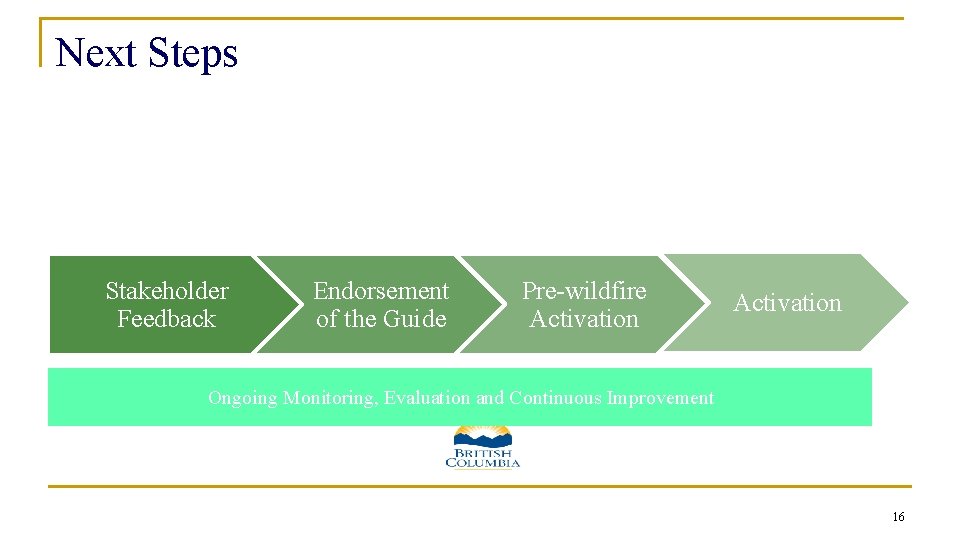
Next Steps Stakeholder Feedback Endorsement of the Guide Pre-wildfire Activation Ongoing Monitoring, Evaluation and Continuous Improvement 16
Questions 17