
MENTAL HEALTH A GROWING ISSUE WITH LIMITED GROWTH





![PHOTO REFERENCES • Attwan, S. [Digital image]. (2016). Retrieved from https: //www. slideshare. net/Shaza.](https://slidetodoc.com/presentation_image_h2/a55111e5da3ada2310b959b179e28958/image-19.jpg "PHOTO REFERENCES • Attwan, S. [Digital image]. (2016). Retrieved from https: //www. slideshare. net/Shaza.")
- Slides: 19
MENTAL HEALTH: A GROWING ISSUE WITH LIMITED GROWTH IN FUNDING Kennedy Cole, Chelsie, Graham, Rachel Molitor, Lisa Radzanowski, & Rita Wleh
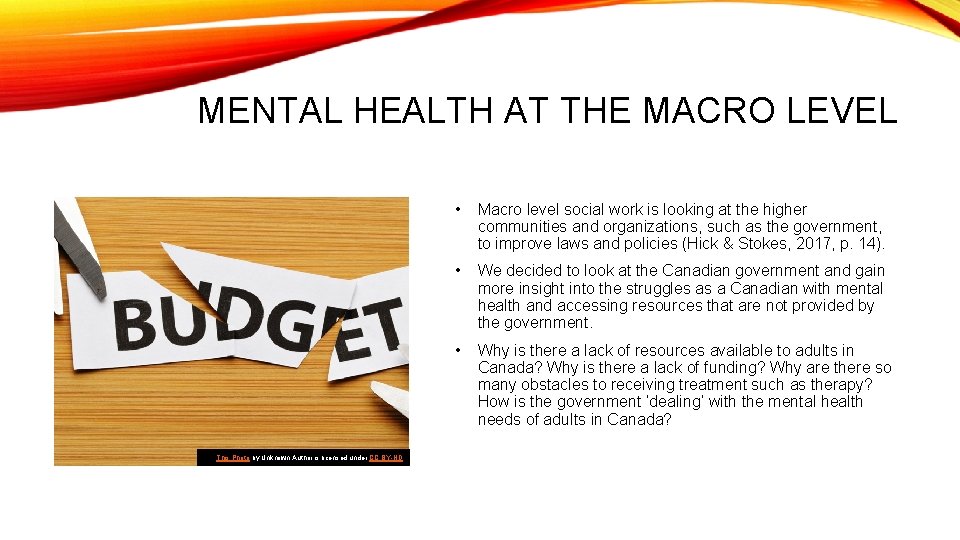
MENTAL HEALTH AT THE MACRO LEVEL This Photo by Unknown Author is licensed under CC BY-ND • Macro level social work is looking at the higher communities and organizations, such as the government, to improve laws and policies (Hick & Stokes, 2017, p. 14). • We decided to look at the Canadian government and gain more insight into the struggles as a Canadian with mental health and accessing resources that are not provided by the government. • Why is there a lack of resources available to adults in Canada? Why is there a lack of funding? Why are there so many obstacles to receiving treatment such as therapy? How is the government ‘dealing’ with the mental health needs of adults in Canada?
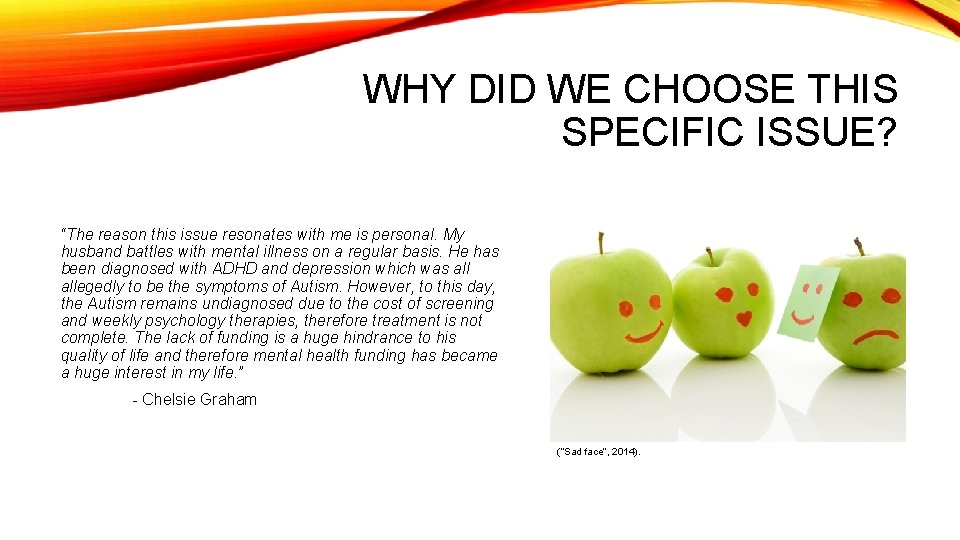
WHY DID WE CHOOSE THIS SPECIFIC ISSUE? “The reason this issue resonates with me is personal. My husband battles with mental illness on a regular basis. He has been diagnosed with ADHD and depression which was allegedly to be the symptoms of Autism. However, to this day, the Autism remains undiagnosed due to the cost of screening and weekly psychology therapies, therefore treatment is not complete. The lack of funding is a huge hindrance to his quality of life and therefore mental health funding has became a huge interest in my life. ” - Chelsie Graham (“Sad face”, 2014).
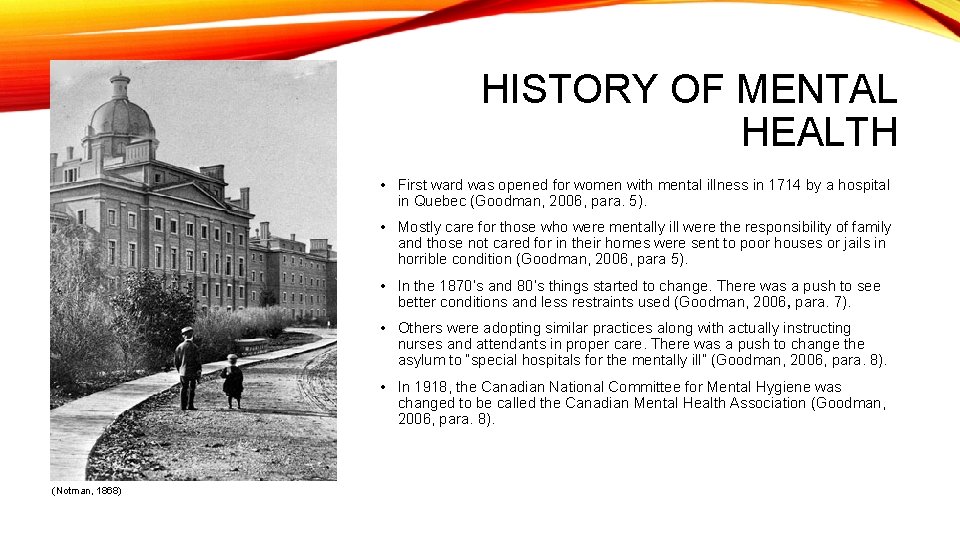
HISTORY OF MENTAL HEALTH • First ward was opened for women with mental illness in 1714 by a hospital in Quebec (Goodman, 2006, para. 5). • Mostly care for those who were mentally ill were the responsibility of family and those not cared for in their homes were sent to poor houses or jails in horrible condition (Goodman, 2006, para 5). • In the 1870’s and 80’s things started to change. There was a push to see better conditions and less restraints used (Goodman, 2006, para. 7). • Others were adopting similar practices along with actually instructing nurses and attendants in proper care. There was a push to change the asylum to “special hospitals for the mentally ill” (Goodman, 2006, para. 8). • In 1918, the Canadian National Committee for Mental Hygiene was changed to be called the Canadian Mental Health Association (Goodman, 2006, para. 8). (Notman, 1868)
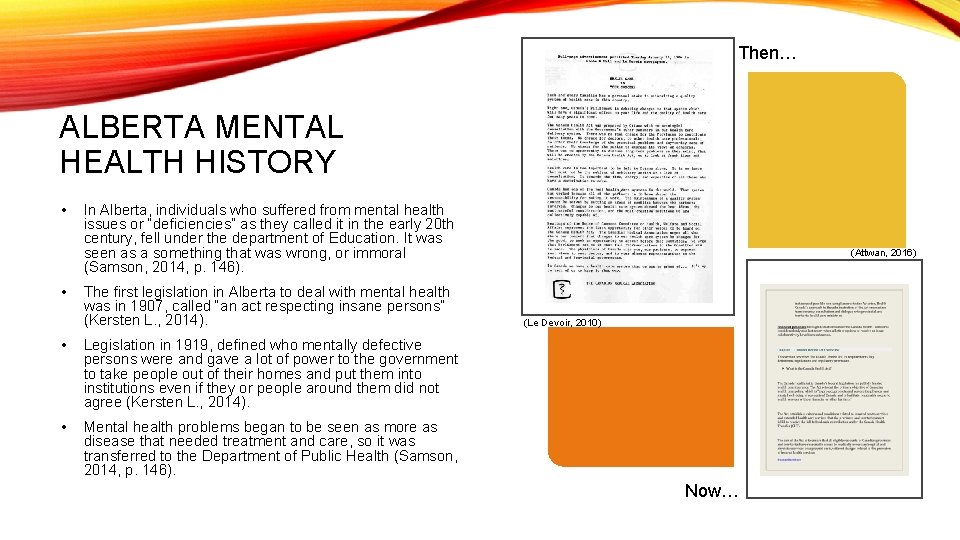
Then… ALBERTA MENTAL HEALTH HISTORY • • In Alberta, individuals who suffered from mental health issues or “deficiencies” as they called it in the early 20 th century, fell under the department of Education. It was seen as a something that was wrong, or immoral (Samson, 2014, p. 146). The first legislation in Alberta to deal with mental health was in 1907, called “an act respecting insane persons” (Kersten L. , 2014). • Legislation in 1919, defined who mentally defective persons were and gave a lot of power to the government to take people out of their homes and put them into institutions even if they or people around them did not agree (Kersten L. , 2014). • Mental health problems began to be seen as more as disease that needed treatment and care, so it was transferred to the Department of Public Health (Samson, 2014, p. 146). (Attwan, 2016) (Le Devoir, 2010) Now…
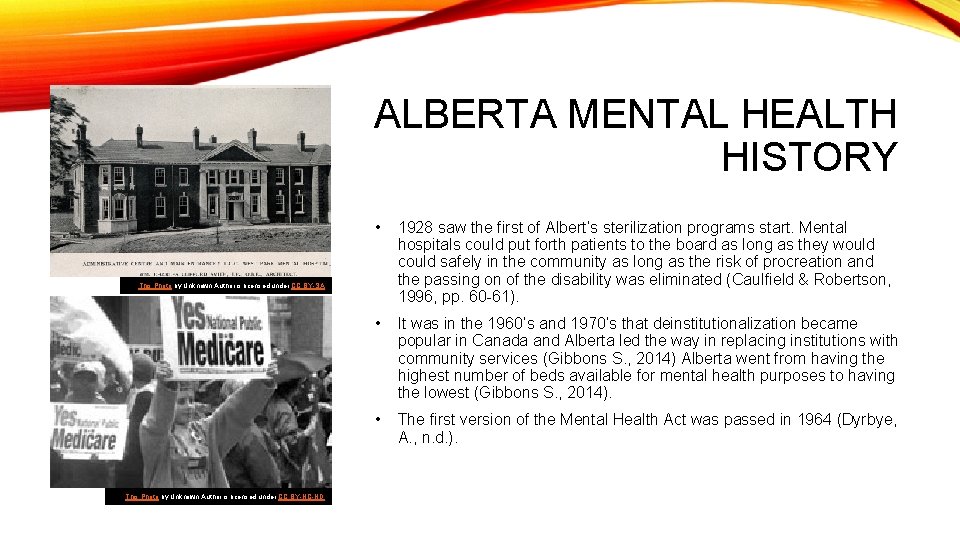
ALBERTA MENTAL HEALTH HISTORY • 1928 saw the first of Albert’s sterilization programs start. Mental hospitals could put forth patients to the board as long as they would could safely in the community as long as the risk of procreation and the passing on of the disability was eliminated (Caulfield & Robertson, 1996, pp. 60 -61). • It was in the 1960’s and 1970’s that deinstitutionalization became popular in Canada and Alberta led the way in replacing institutions with community services (Gibbons S. , 2014) Alberta went from having the highest number of beds available for mental health purposes to having the lowest (Gibbons S. , 2014). • The first version of the Mental Health Act was passed in 1964 (Dyrbye, A. , n. d. ). This Photo by Unknown Author is licensed under CC BY-SA This Photo by Unknown Author is licensed under CC BY-NC-ND
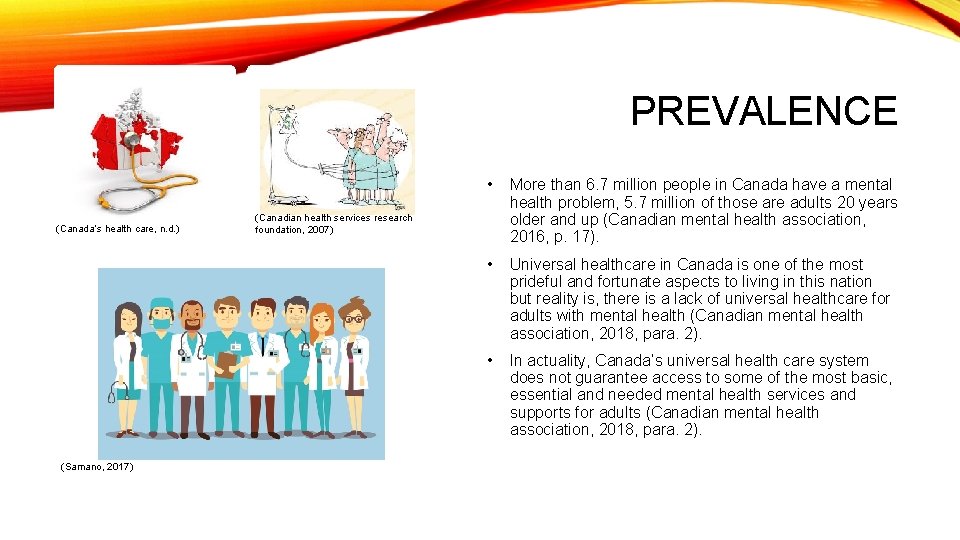
PREVALENCE (Canada’s health care, n. d. ) (Samano, 2017) • More than 6. 7 million people in Canada have a mental health problem, 5. 7 million of those are adults 20 years older and up (Canadian mental health association, 2016, p. 17). • Universal healthcare in Canada is one of the most prideful and fortunate aspects to living in this nation but reality is, there is a lack of universal healthcare for adults with mental health (Canadian mental health association, 2018, para. 2). • In actuality, Canada’s universal health care system does not guarantee access to some of the most basic, essential and needed mental health services and supports for adults (Canadian mental health association, 2018, para. 2). (Canadian health services research foundation, 2007)
PREVALENCE STATISTICS • 85% of Canadians argue that mental health services is at the top with being the most underfunded services in the health care system (Canadian mental health association, 2018, para. 3). • 86% of Canadians declared that the Government of Canada should consider, treat and fund mental health on the same level as physical health (Canadian mental health association, 2018, para. 3). • 1. 6 million Canadians stated that they felt their needs regarding mental health were unmet each year (Canadian mental health association, 2018, para. 4). • Out of Canada's health care budget, only 7. 2 percent of that is devoted to mental health (Canadian mental health association, 2018, para. 4). This Photo by Unknown Author is licensed under CC BY-ND
MENTAL HEALTH ON THE RISE • With mental health on the rise in Canada, the Canadian government needs to reevaluate their mental health funding and make their health care system all inclusive, providing equivalent budgets to physical and mental health. (Chu, 2017) • Up to 80% of Canadians seek out their family doctor regarding their mental health concerns (Canadian mental health association, 2018, para. 7). • With Canada having health care services that are not guaranteed through the public system, Canadians are forced to pay out of pocket for counselling services. Canadians pay nearly $950 million dollars on counselling services yearly - 30% of this is out of pocket (Canadian mental health association, 2018, para. 7). (YWRC, n. d. )
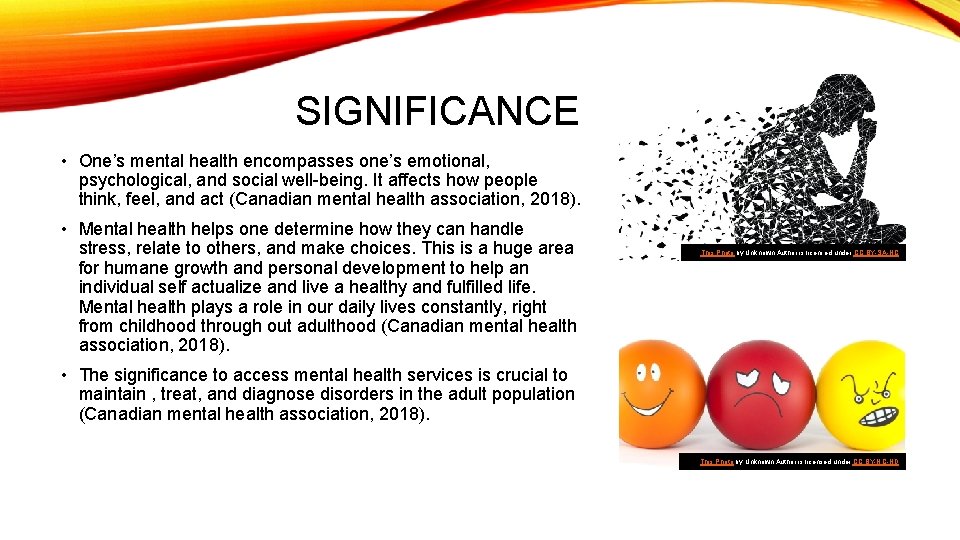
SIGNIFICANCE • One’s mental health encompasses one’s emotional, psychological, and social well-being. It affects how people think, feel, and act (Canadian mental health association, 2018). • Mental health helps one determine how they can handle stress, relate to others, and make choices. This is a huge area for humane growth and personal development to help an individual self actualize and live a healthy and fulfilled life. Mental health plays a role in our daily lives constantly, right from childhood through out adulthood (Canadian mental health association, 2018). This Photo by Unknown Author is licensed under CC BY-SA-NC • The significance to access mental health services is crucial to maintain , treat, and diagnose disorders in the adult population (Canadian mental health association, 2018). This Photo by Unknown Author is licensed under CC BY-NC-ND
SIGNIFICANCE AND AWARENESS • Awareness bringing it back into society is a crucial step to help alleviate the issues that can arise, to the general public. • Decrease in awareness can be a driver in the lack of funding for some services, as well decrease motivation to change as a societal stigma is present around metal health (Canadian mental health association, 2018). (Teacher toolkit, 2018) (Lets Talk, n. d. ) • What we can do? First, start to breakdown the stigmas associated with mental health, such as raising campaigns that bring people together and to help inform and educate those who don't understand what and how mental health impacts an individual (Canadian mental health association, 2018). • More awareness means more ability to change and get more access to resources to help. (Weeks, 2018)
PLEASE CHECK OUT THIS INFORMATIVE VIDEO ON YOUR OWN TIME! Why we need to talk about depression - Kevin Breel (Ted, 2013).
EXPANDED COSTS BREAKDOWN DATA • A total of at least $14. 3 billion in public payments went towards paying and supporting mental health services in Canada (Canadian mental health association, 2018). • The largest component of costs was pharmaceuticals followed by hospitalization (Canadian mental health association, 2018). This Photo by Unknown Author is licensed under CC BY-ND • In Canada, 7. 2% of total government health expenditures went to mental health (Canadian mental health association, 2018). This Photo by Unknown Author is licensed under CC BY-SA
EXPANDED COSTS BREAKDOWN DATA • Non-profit organizations reported receiving $41 million from Federal sources, $847. 9 million from provincial sources, $18. 3 million from municipal sources (Canadian mental health association, 2018). • Annually, the private sector spends between $180 and $300 million on short-term disability benefits that is correlated to mental illnesses (Canadian mental health association, 2018). • $135 million given by the government for benefits related to mental illnesses and long term disabilities (Canadian mental health association, 2018). This Photo by Unknown Author is licensed under CC BY-SA-NC
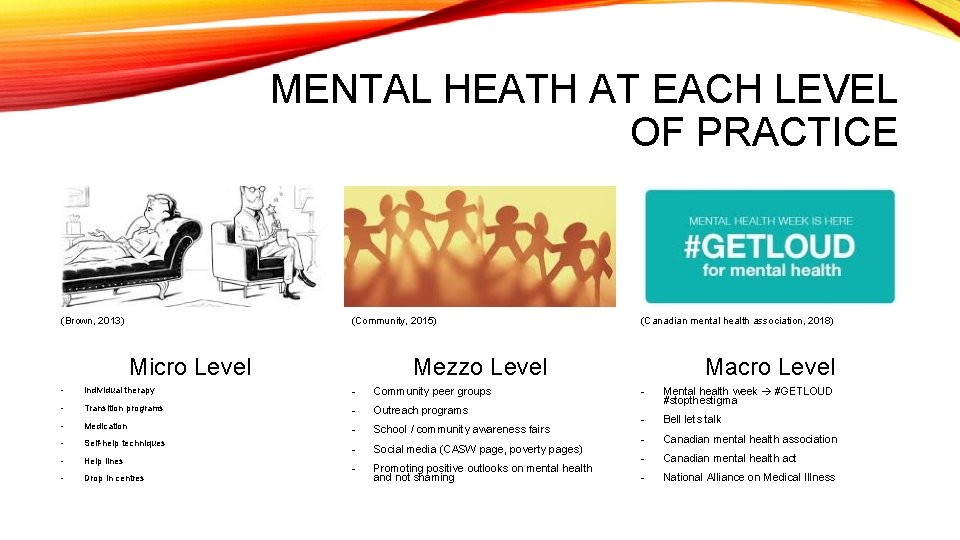
MENTAL HEATH AT EACH LEVEL OF PRACTICE (Brown, 2013) (Community, 2015) Micro Level (Canadian mental health association, 2018) Mezzo Level - Individual therapy - Community peer groups - Transition programs - Outreach programs - Medication - School / community awareness fairs - Self-help techniques - Social media (CASW page, poverty pages) - Help lines - Drop in centres - Promoting positive outlooks on mental health and not shaming Macro Level - Mental health week #GETLOUD #stopthestigma - Bell lets talk - Canadian mental health association - Canadian mental health act - National Alliance on Medical Illness
DISCUSSION QUESTIONS How is Mental Health affecting our community today, and how do you think we, as helpers, can assist in alleviating some of the struggles? Would we be better off focusing on the Micro, the Mezzo or the Macro level? Do you feel Mental Health care is accessible? The costs of Mental health are a barrier to access, how do you feel about -all- Mental Health treatments being fully covered under Provincial Healthcare? 1 out of 3 Canadians experience Mental Illness, does knowing this change any of your perspectives? If you or someone you love is experiencing a Mental Illness, do you feel you are well informed in care options and affordable treatment availability? How do you feel the Government can better support, educate and inform people in finding help?
SOME MORE QUESTIONS… Did you participate in Mental Health week? What do you think the impact would be should Mental Health Care be covered fully under our current Health care? Do you feel initiatives like this help increase awareness? Or further stigma? If we were to begin teaching children the importance of selfcare and self-awareness in school, do you think the impact of mental health as well as the overall cost would be lessened? Things like Mental Disability Screening and Psychologist sessions are not always covered by our Healthcare, especially for adults, do you feel this would be beneficial to change?
REFERENC ES • Abplanalp, S. , & Fulford, D. (2018). Risk for serious mental illness, chronic pain, and pain in response to a physical effort task. The Journal of Pain, 19(3), S 50. • Canadian mental health association. (2016, June). Making the case for investing in mental health in Canada. Retreived from https: //www. mentalhealthcommission. ca/sites/default/files/201606/Investing_in_Mental_Health_FINAL_Version_ENG. pdf • Canadian mental health association. (2018, September 17). The Canadian Mental Health Association calls for new legislation to bring mental health into balance with physical health. Retrived from sk. cmha. ca/news/canadian-mental-health-association-calls-new-legislation-bring-mental-health-balance-physical-health/ • Caulfield, T. , & Robertson, G. (1996). Eugenic policies in Alberta: From the systematic to the systemic. Alberta Law Review, 59 -79. Retrieved from https: //www. albertalawreview. com/index. php/ALR/article/download/1063/1053 • Dyrbye, A. (n. d. ). Alberta passes first version of "The Mentally Disordered Act". Retrieved October 19, 2018, from http: //eugenicsarchive. ca/discover/timeline/5150 a 454 a 4209 be 523000012 • Gibbons, S. (2014, March 17). Alberta becomes a Canadian leader in replacing institutional care with community-based services for people with disabilities. Retrieved October 19, 2018, from http: //eugenicsarchive. ca/discover/timeline/53275707132156674 b 000288 • Goodman, J. T. (2006, February 7). Mental health. Retrieved from The Canadian encyclopedia: https: //www. thecanadianencyclopedia. ca/en/article/mental-health • Guruge, S. , Fung, K. P. L. , Sidani, S. , Este, D. , Morrow, M. , Mc. Kenzie, K. , & Wong, J. P. H. (2018). Study protocol: Mobilizing Asian men in Canada to reduce stigma of mental illness. Contemporary clinical trials. • Kersten, L. (2014, March 14). Alberta passes "an act respecting mentally defective persons". Retrieved from http: //eugenicsarchive. ca/discover/timeline/5323382 a 132156674 b 000239 • Kersten, L. (2014, March 14). Alberta passes, “An act respecting insane persons”. Retrieved from http: //eugenicsarchive. ca/discover/timeline/532342 e 1132156674 b 000249 • Saunders, N. R. , Gill, P. J. , Holder, L. , Vigod, S. , Kurdyak, P. , Gandhi, S. , & Guttmann, A. (2018). Use of the emergency department as a first point of contact for mental health care by immigrant youth in Canada: a population-based study. CMAJ, 190(40), E 1183 -E 1191. • Samson, A. (2014). Eugenics in the community: Gendered profession and eugenic sterilization in alberta, 1928 -1972. CBMH/BCHM, 31(3), pp. 143 - 163. Retrieved from https: //bowvalleycollegeprimo. hosted. exlibrisgroup. com/primo-explore/fulldisplay? docid=TN_proquest 1518985470&context=PC&vid=BOWVALLEY&search_scope=BOWVALLEY_ALMA_&_PCI&tab=bowvalley_alma&lang=en_US • Ted. (Producer). (2013, September 27). Why we need to talk about depression [Video file]. Retrieved from https: //www. youtube. com/watch? v=-Qe 8 c. R 4 Jl 10
PHOTO REFERENCES • Attwan, S. [Digital image]. (2016). Retrieved from https: //www. slideshare. net/Shaza. Ali 1/understand-canada-health-act • Brown, H. [Digital image]. (2013). Retrieved from https: //well. blogs. nytimes. com/2013/03/25/looking-for-evidence-that-therapy-works/ • Canada’s health care. [Digital image]. (n. d. ) Retrieved from http: //hospitalnews. com/canadas-health-care-system-far-more-than-mediocre/ • Canadian mental health association. [Digital image]. (2018). Retrieved from https: //ontario. cmha. ca/news/mental-health-week-now-get-loud/ • Canadian health services research foundation. (2007). Retrieved from https: //www. cfhi-fcass. ca/sf-docs/defaultsource/mythbusters_Financial. Sustain_en_FINAL. pdf? sfvrsn=0 • Chu. S. [Digital image]. (2017). Retrieved from https: //www. inliv. com/moving-towards-better-mental-health-may/ • Community. [Digital image]. (2015). Retrieved from http: //www. internationalinfusion. com/new-page-3/ • Le Devoir. (Photographer). (2010). Drafting and Passing the Canada Health Act. [Photograph]. Retrieved from • Lets talk. [Digital image]. (n. d). Retrieved from https: //wa. netball. com. au/mentalhealthinitiative/ • Notman, W. (Photographer). (1868). Provincial Lunatic Asylum, Queen Street, opposite Ossington Avenue [Photograph]. Retrieved from https: //www. thecanadianencyclopedia. ca/en/article/mental-health • Sad face. [Digital image]. (2014). Retrieved from https: //financialtribune. com/articles/people/1651/mental-health-needs-extra-care • Samano, K. [Digital Image]. 2017. Retrieved from https: //thedo. osteopathic. org/2017/03/national-physicians-week-extending-doctors-day/ • Teacher toolkit. [Digital image]. (2018). Retrieved from https: //www. teachertoolkit. co. uk/2017/10/10/mental-health-awareness/ • Weeks, B. [Digital image]. (2018). Retrieved from https: //www. ulc. org/ulc-blog/ten-quotes-for-mental-health-awareness-month • YWRC. [Digital image]. (n. d. ). Retrieved from https: //www. ywrc. org. nz/its-time-to-take-mental-health-in-the-workplace-seriously/