
Menopause and HRT Sharan Pobbathi Alena Billingsley Will
Menopause and HRT Sharan Pobbathi Alena Billingsley
Will cover: What is the menopause? Diagnosing the menopause Management Non-hormonal HRT Premature menopause
Programme Patient experience Presentation Case Studies (CSA style) Quiz
Menopause – what and when The menopause may be Natural or induced Natural menopause is the permanent cessation of the menstrual cycle due to loss of ovarian follicular activity Only known retrospectively one year after the last period Average is 51 years
Induced menopause Specific treatment e. g. chemotherapy or radiotherapy Oophorectomy Treatment with gonadotrophin-releasing hormone (Gn. RH) analogues
Diagnosis - symptoms Short Term Vasomotor Flushes Night sweats Insomnia Sexual dysfunction Vaginal dryness Dyspareunia Decreased libido Musculoskeletal Joint aches Fat redistribution Psychological Depressed mood Anxiety Irritability Mood swings Lethargy Difficulty concentrating
Consequences of the menopause Long term Osteoporosis 1 in 3 increase in risk of fracture Cardiovascular disease MI and stroke most common cause of death >60 y Oophoretomised women have 2 -3 fold risk of CHD Urogenital Lower urinary tract and pelvic floor atrophy leading to frequency, urgency, nocturia, incontinence, recurrent infections Vaginal atrophy
Investigations FSH is only used if diagnosis is in doubt FSH >30 iu/L Don’t do LH, oestradiol and progesterone as not helpful TFTs if confusion about symptoms BMD if significant risk of osteoporosis
Management – Non-hormonal • Lifestyle advice – Avoid hot drinks especially caffeinated ones, and alcohol – Stop smoking – Fans and layering – Use of vaginal moisturisers e. g. Replens MD® and Sylk ® • No evidence that diet (phytoestrogens) affects symptoms
Management – Non-hormonal OTC remedies Black cohosh Oestrogen like effect May help with emotional symptoms Interacts with antihypertensives and risk of liver failure St John’s Wort Recognised anti-depressant effects Lots of interactions
Management – Non-hormonal Licensed Clonidine for hot flushes SEs insomnia, dry mouth, dizziness, constipation, drowsiness Unlicensed SSRIs/SNRI (venlafaxine) for mood swings, vasomotor symptoms Gabapentin for musculoskeletal; SEs dizziness, fatigue, tremor, weight gain

HRT Counselling about risks and benefits Contraindications to HRT Different routes/types of HRT Deciding on appropriate HRT (systemic or local) Following up patients on HRT Stopping HRT
Benefits of HRT Proven Relief of menopausal symptoms Prevention/treatment of osteoporosis Reduced risk of colorectal cancer
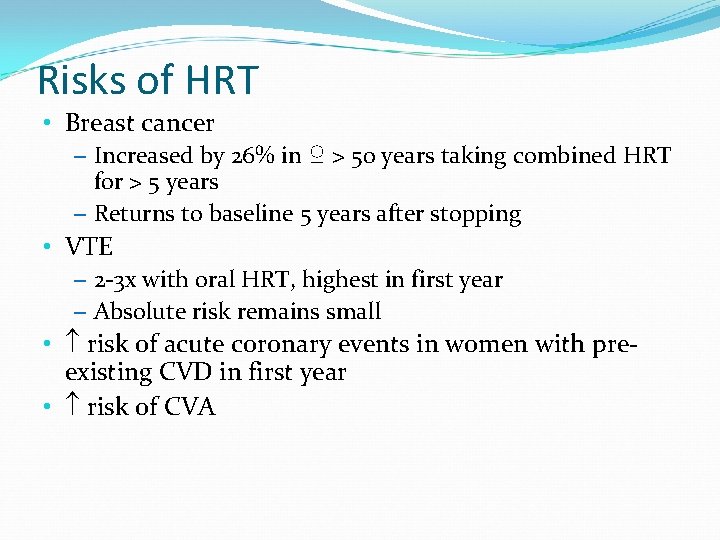
Risks of HRT • Breast cancer – Increased by 26% in ♀ > 50 years taking combined HRT for > 5 years – Returns to baseline 5 years after stopping • VTE – 2 -3 x with oral HRT, highest in first year – Absolute risk remains small • risk of acute coronary events in women with preexisting CVD in first year • risk of CVA
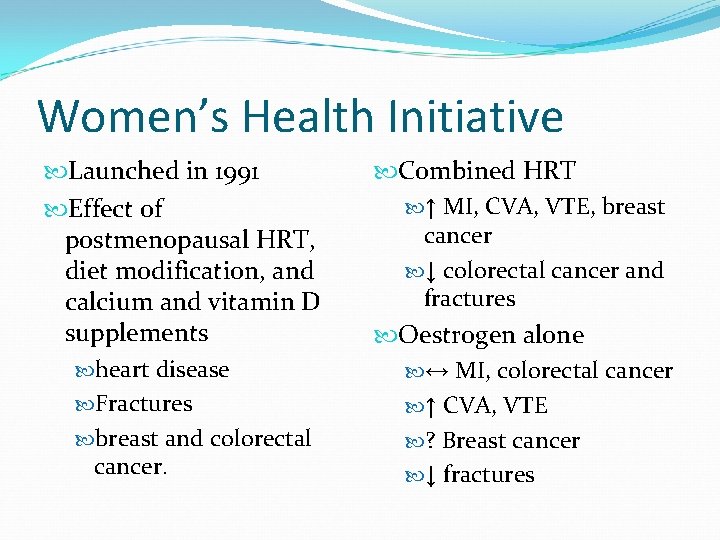
Women’s Health Initiative Launched in 1991 Effect of postmenopausal HRT, diet modification, and calcium and vitamin D supplements heart disease Fractures breast and colorectal cancer. Combined HRT ↑ MI, CVA, VTE, breast cancer ↓ colorectal cancer and fractures Oestrogen alone ↔ MI, colorectal cancer ↑ CVA, VTE ? Breast cancer ↓ fractures
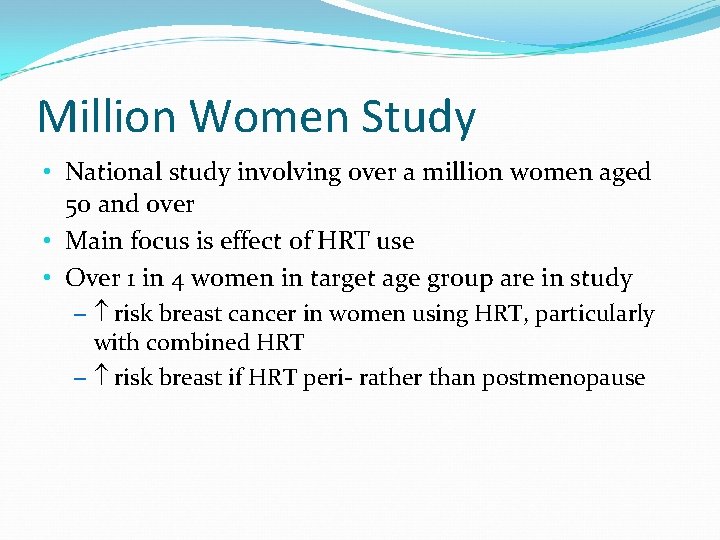
Million Women Study • National study involving over a million women aged 50 and over • Main focus is effect of HRT use • Over 1 in 4 women in target age group are in study – risk breast cancer in women using HRT, particularly with combined HRT – risk breast if HRT peri- rather than postmenopause
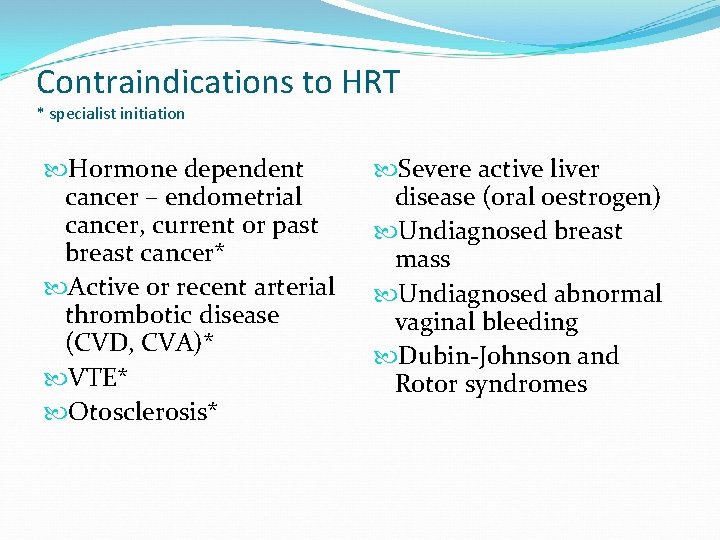
Contraindications to HRT * specialist initiation Hormone dependent cancer – endometrial cancer, current or past breast cancer* Active or recent arterial thrombotic disease (CVD, CVA)* VTE* Otosclerosis* Severe active liver disease (oral oestrogen) Undiagnosed breast mass Undiagnosed abnormal vaginal bleeding Dubin-Johnson and Rotor syndromes
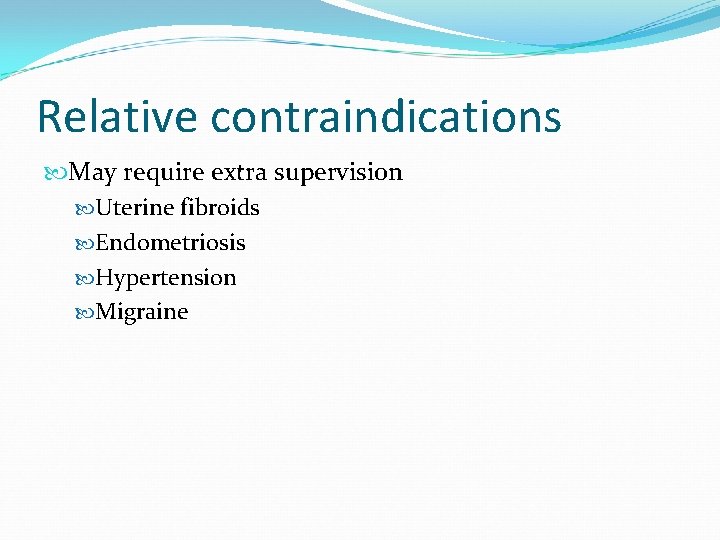
Relative contraindications May require extra supervision Uterine fibroids Endometriosis Hypertension Migraine
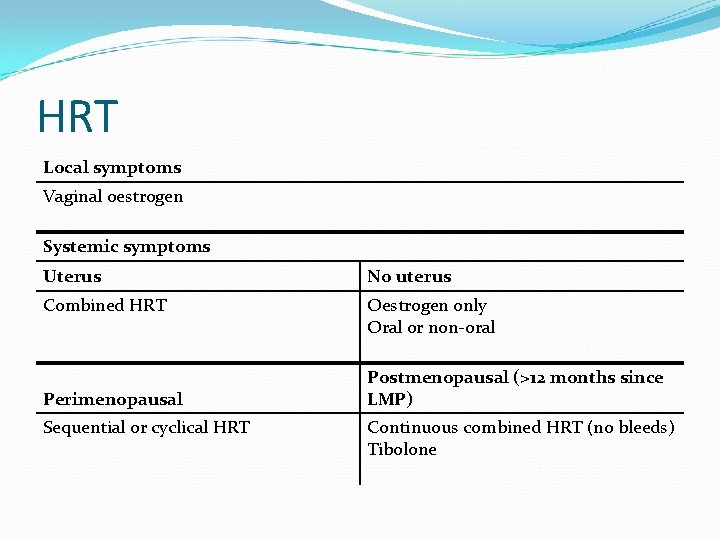
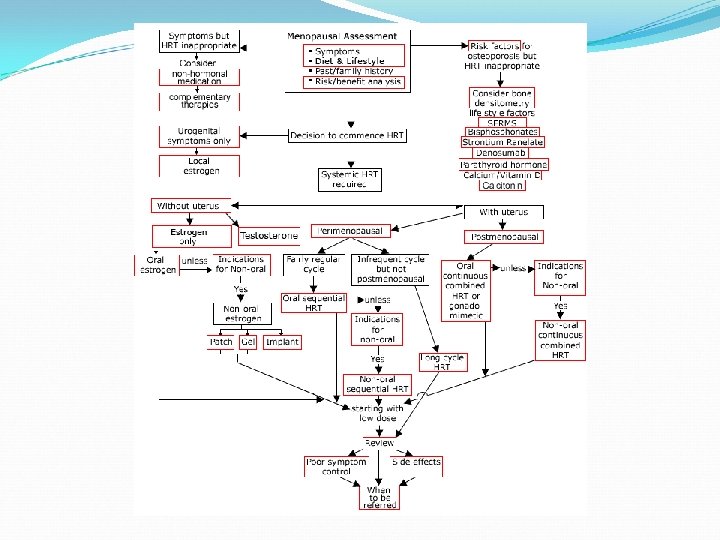
HRT Local symptoms Vaginal oestrogen Systemic symptoms Uterus No uterus Combined HRT Oestrogen only Oral or non-oral Perimenopausal Sequential or cyclical HRT Postmenopausal (>12 months since LMP) Continuous combined HRT (no bleeds) Tibolone

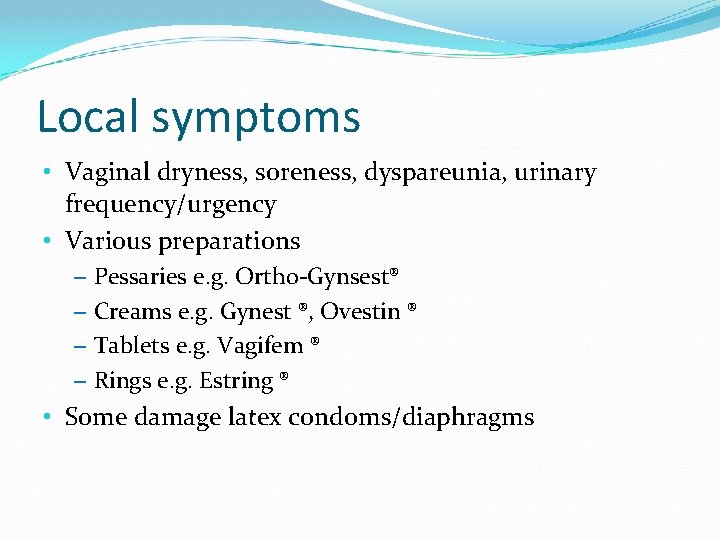
Local symptoms • Vaginal dryness, soreness, dyspareunia, urinary frequency/urgency • Various preparations – Pessaries e. g. Ortho-Gynsest® – Creams e. g. Gynest ®, Ovestin ® – Tablets e. g. Vagifem ® – Rings e. g. Estring ® • Some damage latex condoms/diaphragms
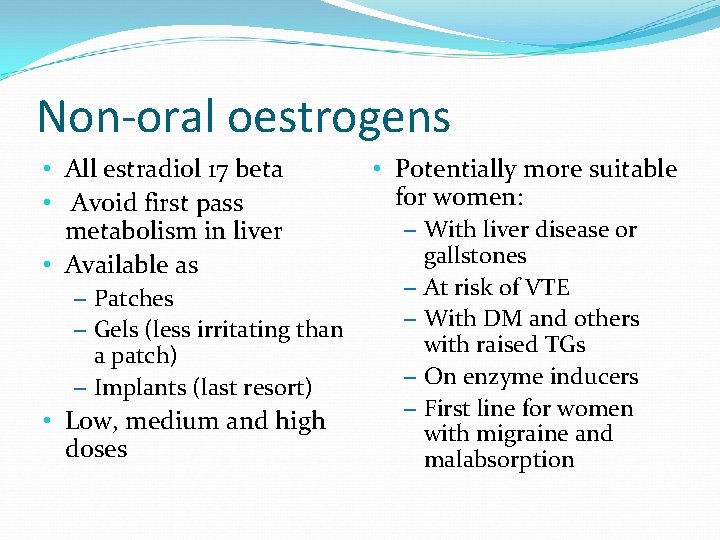
Non-oral oestrogens • All estradiol 17 beta • Avoid first pass metabolism in liver • Available as – Patches – Gels (less irritating than a patch) – Implants (last resort) • Low, medium and high doses • Potentially more suitable for women: – With liver disease or gallstones – At risk of VTE – With DM and others with raised TGs – On enzyme inducers – First line for women with migraine and malabsorption
Oral oestrogens Three types Conjugate equine oestrogens (CEEs) Estradiol 17 beta Estradiol valerate Low, medium, high doses Start at low dose
Progestogens – three types • Testosterone analogues (C 19 - androgenic SEs) – Norethisterone, levonorgestrel (Mirena®), Norgestrel • Progesterone analogues (C 21) – Dydrogesterone, medroxyprogesterone acetate (MPA) • Newer (derivates of norgestrel) – Desogestrel, norgestimate, gestodene
Why bother about type? Oral (combined or alone), transdermal (combined) and intrauterine If patient gets PMS-type symptoms Can alter progestogen to less androgenic type Can alter route of progestogen (e. g. to IUS)

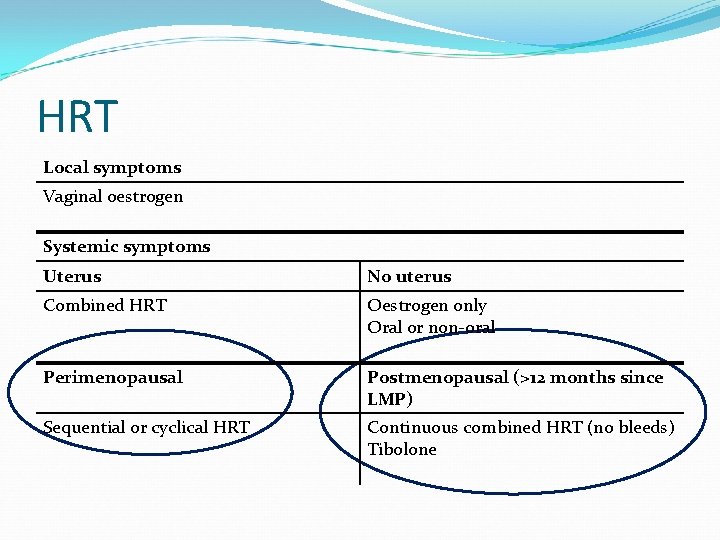
HRT Local symptoms Vaginal oestrogen Systemic symptoms Uterus No uterus Combined HRT Oestrogen only Oral or non-oral Perimenopausal Postmenopausal (>12 months since LMP) Sequential or cyclical HRT Continuous combined HRT (no bleeds) Tibolone
• Perimenopausal – Sequential if regular period or cyclical if infrequent (Tridestra®) – Progestogen 12 -14 days/month – 5% - 15% have no monthly bleed – Tridestra® gives 3 monthly bleed Postmenopausal Continuous (no bleed HRT) Require investigation if persistent bleeding > 6 months Heavier bleeding Bleeding after a period of amenorrhoea Tibolone
Tibolone Synthetic steroid that properties of oestrogen, progestogen & testosterone For prevention of osteoporosis in postmenopausal women For short term use in pre-menopausal ♀ being treated with Gn. RH Increases risk of stroke in ♀ > 60 years, similar to conventional HRT in younger ♀
Side Effects of HRT Nausea, vomiting, abdominal cramps, bloating Weight changes Breast tenderness PMS-like syndrome Sodium and fluid retention Glucose intolerance Altered blood lipids Mood changes Headache, migraine, dizziness Leg cramps And more…
Testosterone? • Women who have had TAH+BSO may experience testosterone deficiency (abrupt rather than gradual fall in levels) • Can offer replacement – Implants (need to monitor levels before each change) – Patches – SEs: hirsutism, deep voice, clitomegaly • Must be on oestrogen, but not CEE
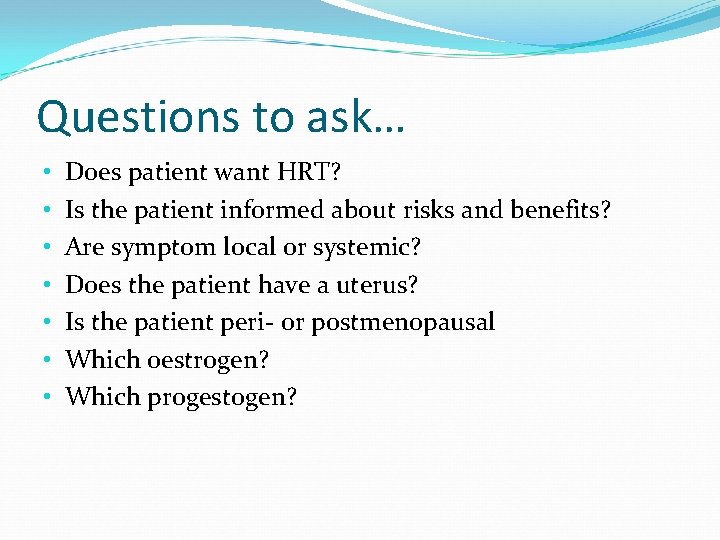
Questions to ask… • • Does patient want HRT? Is the patient informed about risks and benefits? Are symptom local or systemic? Does the patient have a uterus? Is the patient peri- or postmenopausal Which oestrogen? Which progestogen?
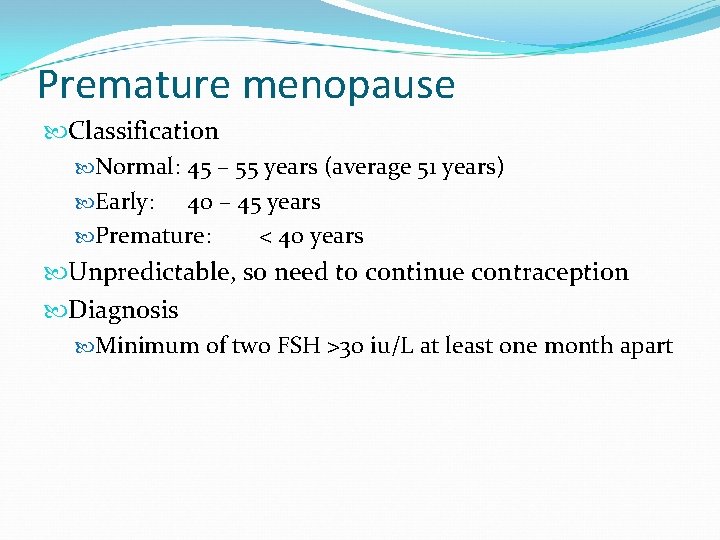
Premature menopause Classification Normal: 45 – 55 years (average 51 years) Early: 40 – 45 years Premature: < 40 years Unpredictable, so need to continue contraception Diagnosis Minimum of two FSH >30 iu/L at least one month apart
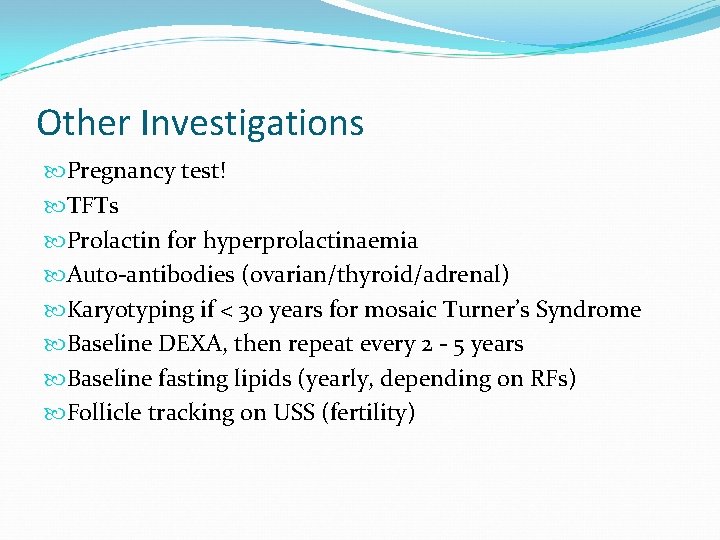
Other Investigations Pregnancy test! TFTs Prolactin for hyperprolactinaemia Auto-antibodies (ovarian/thyroid/adrenal) Karyotyping if < 30 years for mosaic Turner’s Syndrome Baseline DEXA, then repeat every 2 - 5 years Baseline fasting lipids (yearly, depending on RFs) Follicle tracking on USS (fertility)
Risks of premature menopause Life expectancy is reduced (2 years) Untreated, 50% higher risk of osteoporotic fracture between 50 -70 years risk of CVD compared to woman of same age 260% risk of dementia following removal of a single ovary by age 38 risk Parkinson’s
Treating premature menopause Oestrogen replacement with progesterone Given most conveniently as COCP Continue until aged 50 years
Follow up on HRT Three monthly until stabilised, then yearly At follow up, check: Symptom control bleeding control Side effects BP, BMI Reassess risk vs. benefits Breast awareness
Duration of use • Minimum dose for shortest period – Symptoms last between 2 -5 years, so try stopping at 3 -5 years – Woman continue longer as counselled re risks…
Stopping Ensure progestogen dose offers endometrial protection if ↓ing slowly (high dose oestrogens only) No evidence of how best to stop i. e. gradual versus sudden When stopping HRT, warn patient of 2 -3 months rebound vasomotor symptoms
HRT Sudden severe chest pain Sudden dyspnoea Unexplained swelling/severe calf pain Severe stomach pain Neurological effects Hepatitis, jaundice, hepatomegaly Systolic BP > 160, diastolic >95 mm. Hg Prolonged immobility Detection of RF that is contraindication Stop 4 -6 weeks before any major surgery
Summary HRT is good for menopausal symptoms and osteoporosis prevention Non-hormonal treatments can help with symptoms HRT is not necessarily systemic Treatment must be regularly reviewed
Stopping contraception around the menopause - 1 Contraception may be stopped at 55 years Women using hormonal contraception, and have regular bleeding at 55 years should continue with contraception Ideally women over 50 years should switch to POP, implant, LNG-IUS or barrier method until aged 55, or until menopause confirmed
Stopping contraception around the menopause - 2 FSH is not a reliable indicator of menopause in women using combined hormonal contraception Women with premature menopause may need specialist contraceptive opinion (ovarian activity may return spontaneously)
Stopping contraception around the menopause - 3 If using non-hormonal methods of contraception, Women over 50 years can stop after 1 year of amenorrhoea Women under 50 years can stop after 2 years Women over 40 yeas with a copper IUD (≥ 300 mm 2 copper) inserted at or over age 40 can retain the device until the menopause FSH is best used in women aged over 50 on progestogen only methods Need 2 x FSH ≥ 30 iu/L, 6 weeks apart, and then contraception can be stopped after a year
HRT and Contraception Women should not rely on HRT for contraception POP can be used to provide contraception with combined HRT Women using oestrogen replacement may use LVGIUS (Mirena®) to provide endometrial protection. When IUS is used as progestogen component, it must be changed no later than 5 years (license says 4 years)
Resources • e. LFH learning modules • Menopause and HRT Innov. Ai. T, Vol. 2, No. 1, pp 10 – 16, 2009. • Common problems of the menopause Innov. Ai. T first published online May 16, 2012 doi: 10. 1093/innovait/ins 075 • http: //www. menopausematters. co. uk/ – http: //www. menopausematters. co. uk/tree. php • http: //www. millionwomenstudy. org • http: //www. nhlbi. nih. gov/whi/ • FSRH Guidance: Contraception for women ages over 4 o years (July 2010)

QUIZ
Question 1 Which one of the following conditions is least likely to be the cause of post menopausal bleeding? a. Atrophic vaginitis b. Cervical intraepithelial neoplasia (CIN) c. Hormone replacement therapy d. Tamoxifen therapy e. Urethral caruncle
Question 2 The age at which a woman reaches the menopause is related to: a. Age at menarche b. Ethnic group c. Family tendency d. Parity e. Regularity of cycle
Question 3 A 52 -year-old postmenopausal woman comes to see you regarding her menopausal symptoms. She is suffering with intrusive hot flushes and these vasomotor symptoms are getting her down. She does not want to take HRT but would consider another medicine, if it would help. Which one of the following have an evidence base for its use in this situation? a. Amitriptyline b. Flupentixol c. Mirtazapine d. Phenelezine e. Venlafaxine
Question 4 A post-menopausal woman comes to see you complaining of frequent intrusive hot flushes. She does not wish to take HRT and is keen to try 'natural alternatives'. Which one of the following alternatives has the most evidence base for its use in this situation? a. Dong quai b. Evening primrose oil c. Ginkgo biloba d. Kava kava e. Red Clover
Question 5 A 54 -year-old lady comes to see you to discuss treatment for the menopause. Her last period was 18 months ago. She has no significant past medical or surgical history and is keen to try HRT as she is getting troublesome hot flushes and vaginal dryness. Following full discussion and counselling she has no contraindications to hormonal treatment and is keen to try a suitable regimen. Which one of the following is the most appropriate to prescribe? a. Continuous combined HRT b. Low dose COCP c. Oestrogen only HRT d. Sequential HRT e. Topical vaginal oestrogen
Question 6 A 52 -year-old lady comes to see you. Her periods had become light and infrequent for several years and then stopped about five months ago. She has no other significant past medical or surgical history. Her family history reveals no significant cardiovascular or thromboembolic disease. She is a lifelong non-smoker. She has had two pregnancies both of which resulted in healthy children. She currently feels well. On further questioning she has had some mild flushes but these are not troublesome. Examination reveals a BP of 118/76 and a BMI of 22.
Question 6 Which of the following pieces of advice should you give? a. Blood tests for FSH, LH and oestradiol should be sent to confirm she is post-menopausal and guide her management b. Her periods have become irregular and ceased because of waning oestrogen production, and that HRT is indicated as it will counteract this and help with the flushes c. If she is worried about pregnancy risk then a low dose COCP would be her best option, as it would treat her flushes as well as provide contraception d. She is postmenopausal and therefore does not require any contraception e. She is probably postmenopausal but she should continue to use contraception until 12 months have elapsed since her last period
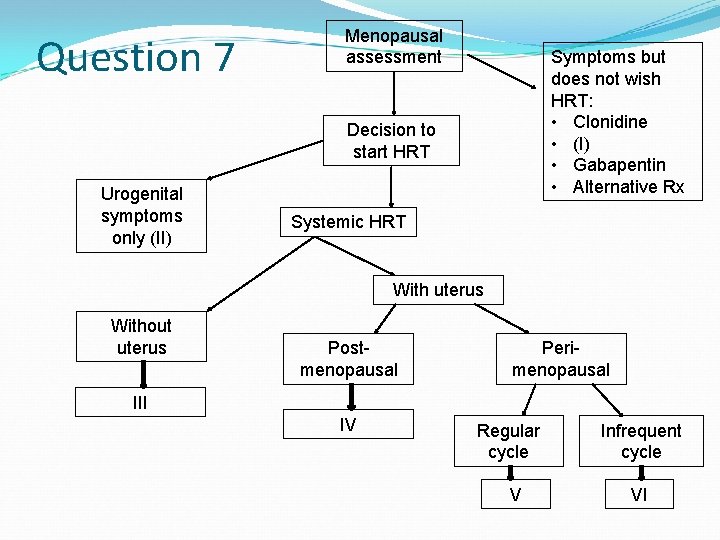
Question 7 Menopausal assessment Symptoms but does not wish HRT: • Clonidine • (I) • Gabapentin • Alternative Rx Decision to start HRT Urogenital symptoms only (II) Systemic HRT With uterus Without uterus Postmenopausal Perimenopausal III IV Regular cycle V Infrequent cycle VI
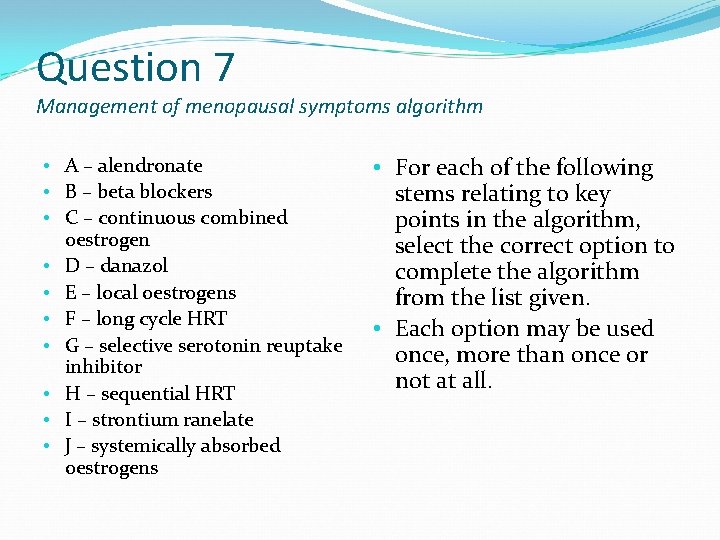
Question 7 Management of menopausal symptoms algorithm • A – alendronate • B – beta blockers • C – continuous combined oestrogen • D – danazol • E – local oestrogens • F – long cycle HRT • G – selective serotonin reuptake inhibitor • H – sequential HRT • I – strontium ranelate • J – systemically absorbed oestrogens • For each of the following stems relating to key points in the algorithm, select the correct option to complete the algorithm from the list given. • Each option may be used once, more than once or not at all.
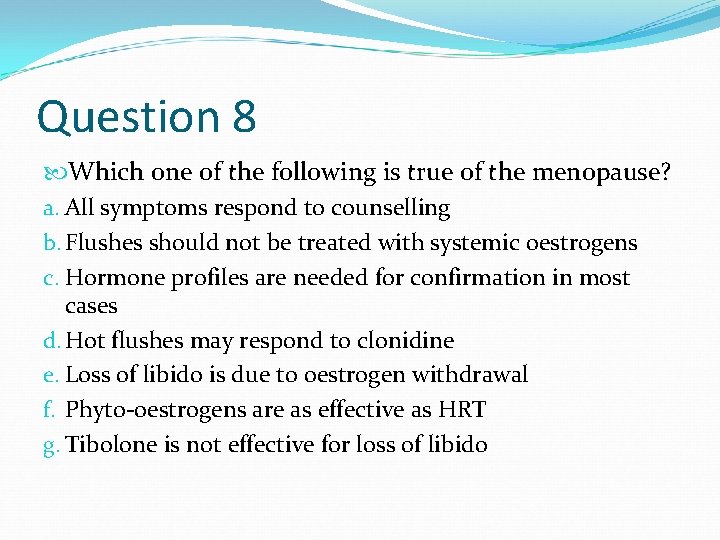
Question 8 Which one of the following is true of the menopause? a. All symptoms respond to counselling b. Flushes should not be treated with systemic oestrogens c. Hormone profiles are needed for confirmation in most cases d. Hot flushes may respond to clonidine e. Loss of libido is due to oestrogen withdrawal f. Phyto-oestrogens are as effective as HRT g. Tibolone is not effective for loss of libido
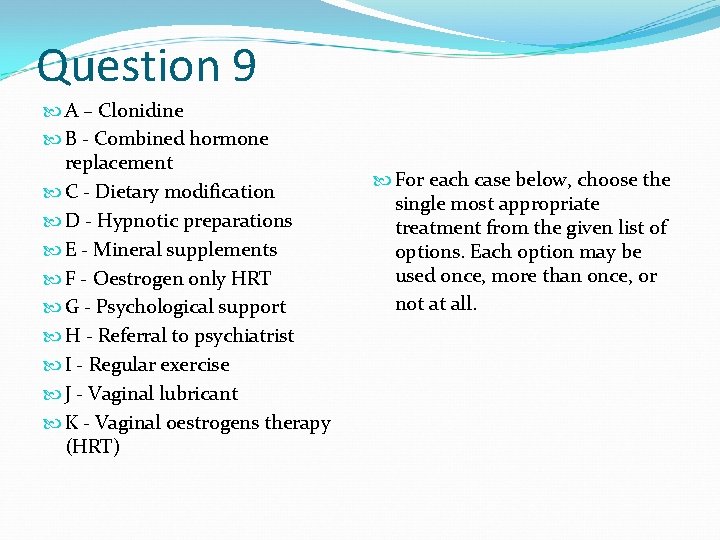
Question 9 A – Clonidine B - Combined hormone replacement C - Dietary modification D - Hypnotic preparations E - Mineral supplements F - Oestrogen only HRT G - Psychological support H - Referral to psychiatrist I - Regular exercise J - Vaginal lubricant K - Vaginal oestrogens therapy (HRT) For each case below, choose the single most appropriate treatment from the given list of options. Each option may be used once, more than once, or not at all.
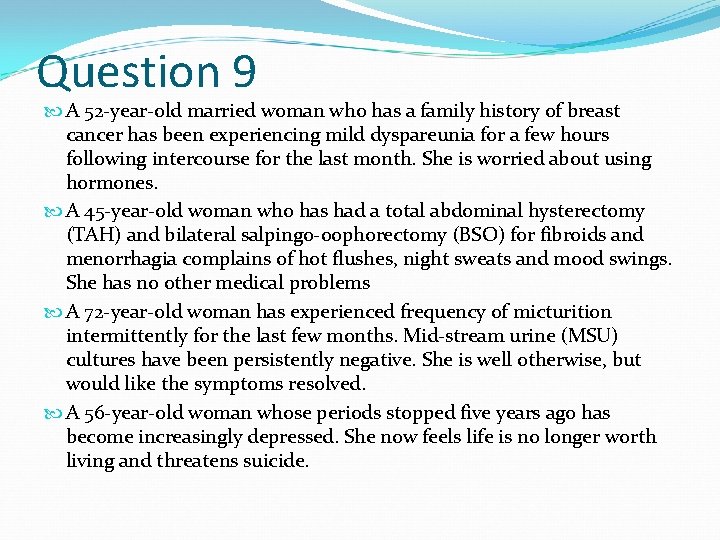
Question 9 A 52 -year-old married woman who has a family history of breast cancer has been experiencing mild dyspareunia for a few hours following intercourse for the last month. She is worried about using hormones. A 45 -year-old woman who has had a total abdominal hysterectomy (TAH) and bilateral salpingo-oophorectomy (BSO) for fibroids and menorrhagia complains of hot flushes, night sweats and mood swings. She has no other medical problems A 72 -year-old woman has experienced frequency of micturition intermittently for the last few months. Mid-stream urine (MSU) cultures have been persistently negative. She is well otherwise, but would like the symptoms resolved. A 56 -year-old woman whose periods stopped five years ago has become increasingly depressed. She now feels life is no longer worth living and threatens suicide.

END
- Slides: 61