
Meningitis Elizabeth Farrington Pharm D FCCP FCCM FPPAG
Meningitis Elizabeth Farrington, Pharm. D. , FCCP, FCCM, FPPAG, BCPS
Goals and Objectives n n n Define Meningitis vs encephalitis Discuss the prevalence of meningitis and changes in the U. S. since 1990. Discuss the pathophysiology of meningitis and how it differs by age and risk factors. Understand the causes of meningitis based on the age or risk factors in a patient Develop a pharmacotherapeutic plan for treatment
Meningitis vs encephalitis n Meningitis - An n inflammation of the meningeal covering of the CNS Viral infections are the most common Bacteria, fungus and TB also occur n n n Encephalitis inflammation of the brain. Viral infections are the most common
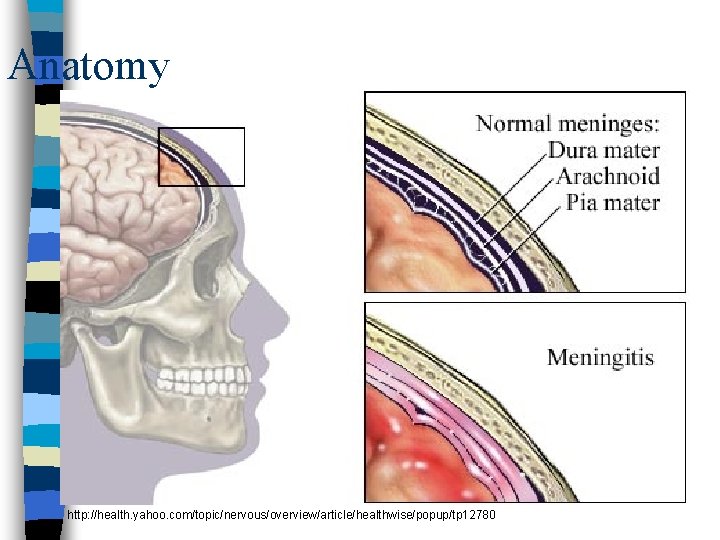
Anatomy http: //health. yahoo. com/topic/nervous/overview/article/healthwise/popup/tp 12780
The incidence of meningitis in the U. S has declined by what percent since 1990? A No change B 15% C 30% D 55%
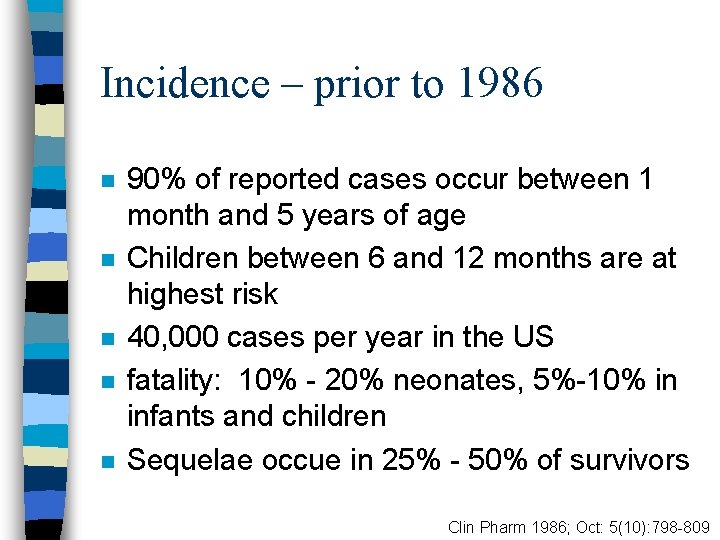
Incidence – prior to 1986 n n n 90% of reported cases occur between 1 month and 5 years of age Children between 6 and 12 months are at highest risk 40, 000 cases per year in the US fatality: 10% - 20% neonates, 5%-10% in infants and children Sequelae occue in 25% - 50% of survivors Clin Pharm 1986; Oct: 5(10): 798 -809
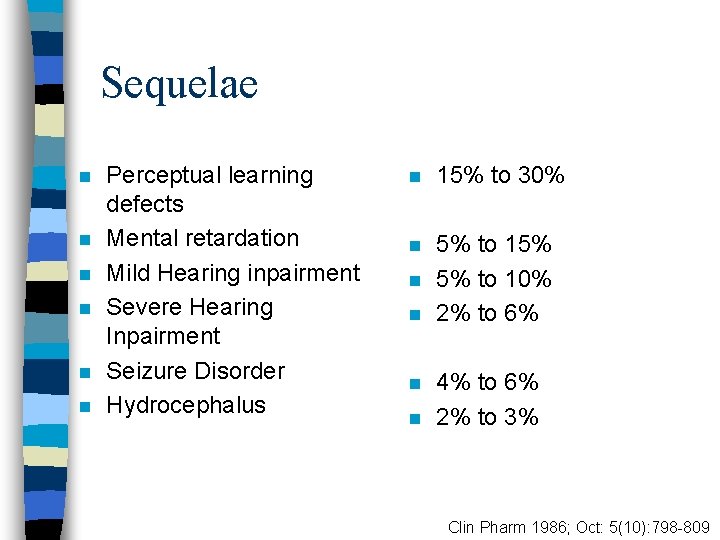
Sequelae n n n Perceptual learning defects Mental retardation Mild Hearing inpairment Severe Hearing Inpairment Seizure Disorder Hydrocephalus n 15% to 30% n 5% to 15% 5% to 10% 2% to 6% n n 4% to 6% 2% to 3% Clin Pharm 1986; Oct: 5(10): 798 -809
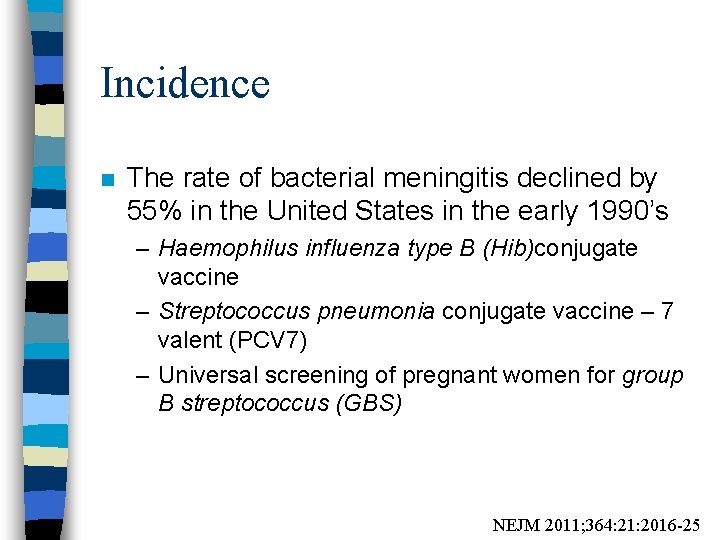
Incidence n The rate of bacterial meningitis declined by 55% in the United States in the early 1990’s – Haemophilus influenza type B (Hib)conjugate vaccine – Streptococcus pneumonia conjugate vaccine – 7 valent (PCV 7) – Universal screening of pregnant women for group B streptococcus (GBS) NEJM 2011; 364: 21: 2016 -25
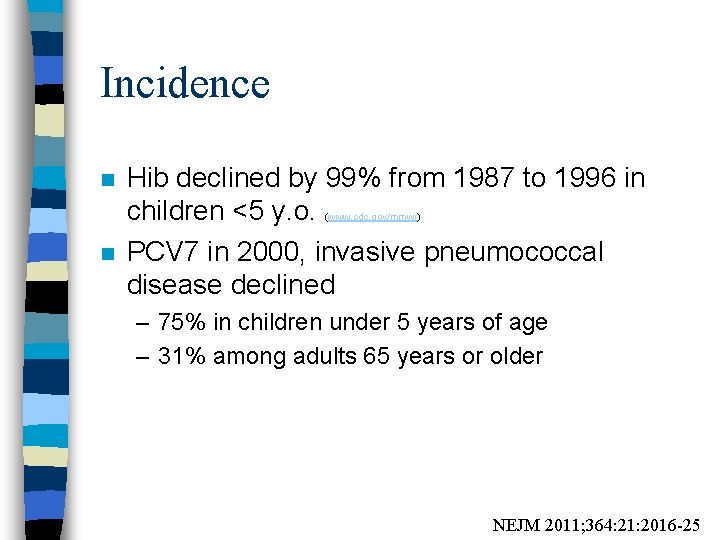
Incidence n Hib declined by 99% from 1987 to 1996 in children <5 y. o. PCV 7 in 2000, invasive pneumococcal disease declined (www. cdc. gov/mmwr) n – 75% in children under 5 years of age – 31% among adults 65 years or older NEJM 2011; 364: 21: 2016 -25
Herd immunity
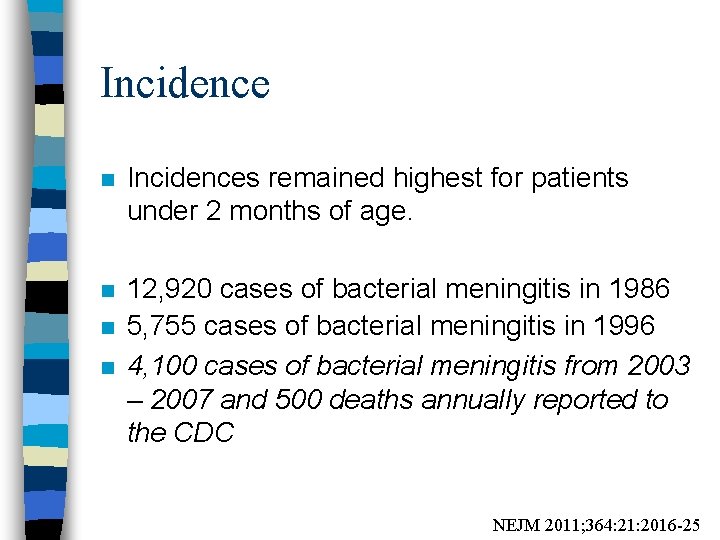
Incidence n Incidences remained highest for patients under 2 months of age. n 12, 920 cases of bacterial meningitis in 1986 5, 755 cases of bacterial meningitis in 1996 4, 100 cases of bacterial meningitis from 2003 – 2007 and 500 deaths annually reported to the CDC n n NEJM 2011; 364: 21: 2016 -25
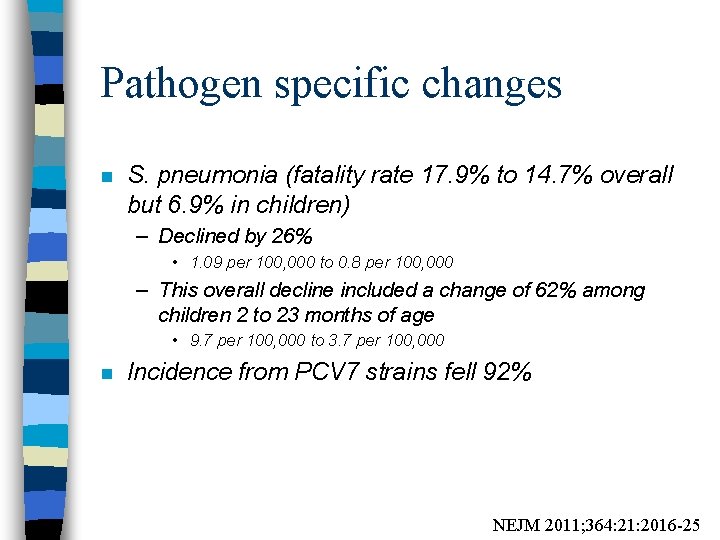
Pathogen specific changes n S. pneumonia (fatality rate 17. 9% to 14. 7% overall but 6. 9% in children) – Declined by 26% • 1. 09 per 100, 000 to 0. 8 per 100, 000 – This overall decline included a change of 62% among children 2 to 23 months of age • 9. 7 per 100, 000 to 3. 7 per 100, 000 n Incidence from PCV 7 strains fell 92% NEJM 2011; 364: 21: 2016 -25
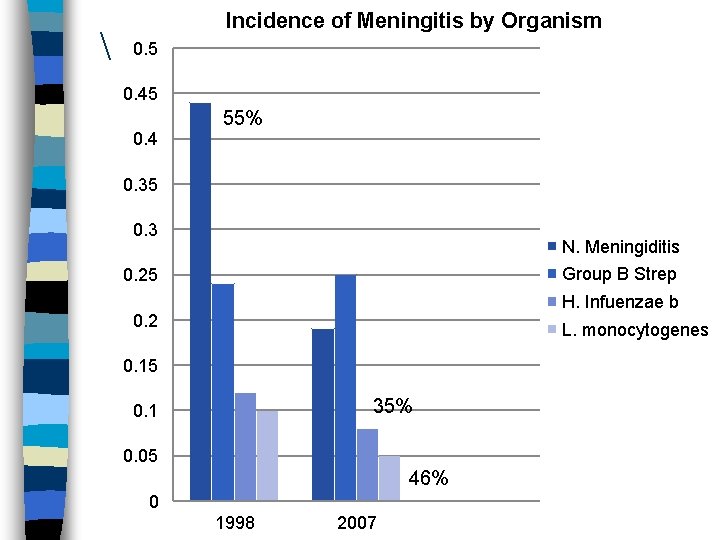
Incidence of Meningitis by Organism 0. 5 0. 4 55% 0. 35 0. 3 N. Meningiditis Group B Strep 0. 25 H. Infuenzae b 0. 2 L. monocytogenes 0. 15 35% 0. 1 0. 05 46% 0 1998 2007
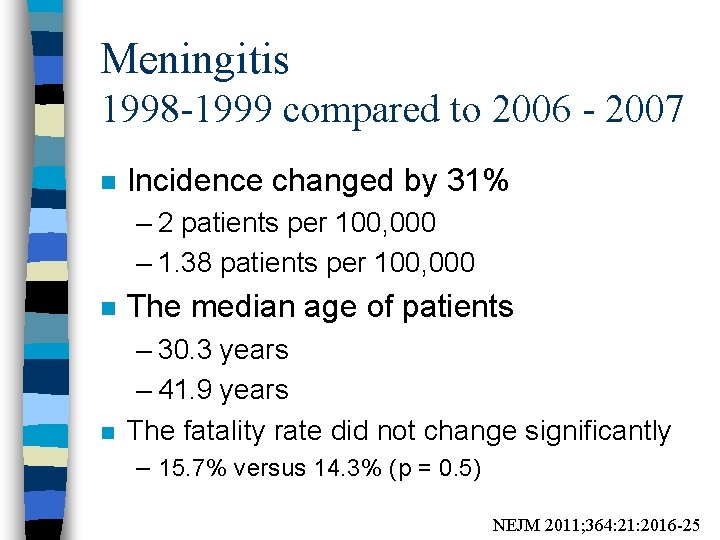
Meningitis 1998 -1999 compared to 2006 - 2007 n Incidence changed by 31% – 2 patients per 100, 000 – 1. 38 patients per 100, 000 n The median age of patients n – 30. 3 years – 41. 9 years The fatality rate did not change significantly – 15. 7% versus 14. 3% (p = 0. 5) NEJM 2011; 364: 21: 2016 -25
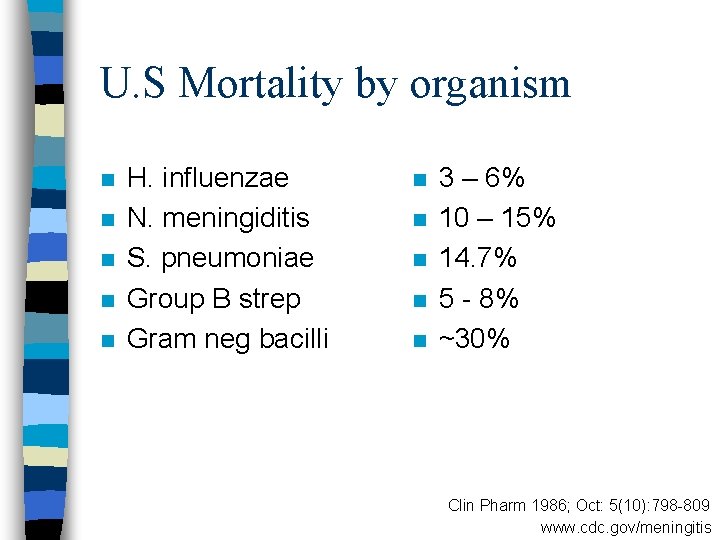
U. S Mortality by organism n n n H. influenzae N. meningiditis S. pneumoniae Group B strep Gram neg bacilli n n n 3 – 6% 10 – 15% 14. 7% 5 - 8% ~30% Clin Pharm 1986; Oct: 5(10): 798 -809 www. cdc. gov/meningitis
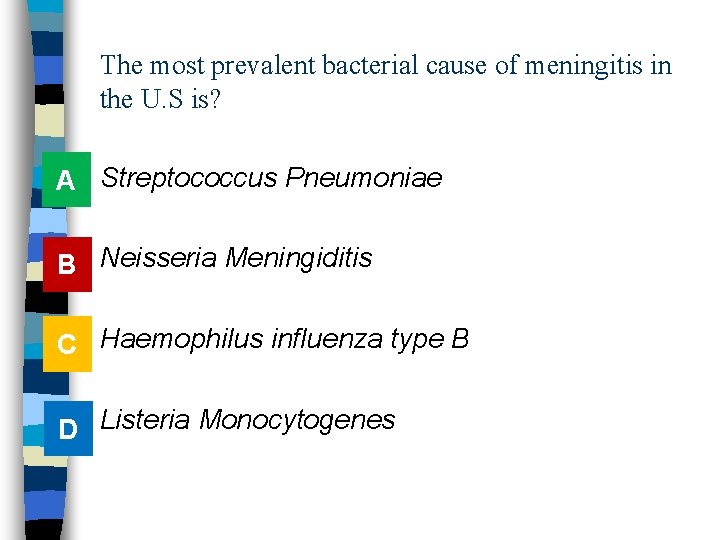
The most prevalent bacterial cause of meningitis in the U. S is? A Streptococcus Pneumoniae B Neisseria Meningiditis C Haemophilus influenza type B D Listeria Monocytogenes
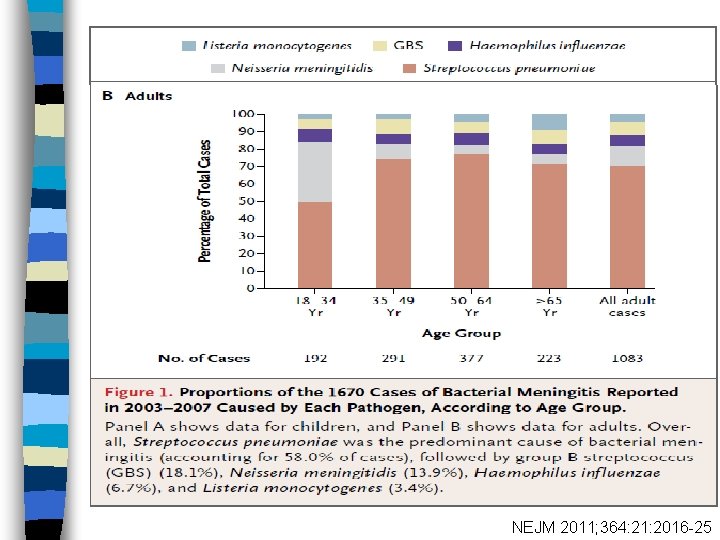
NEJM 2011; 364: 21: 2016 -25
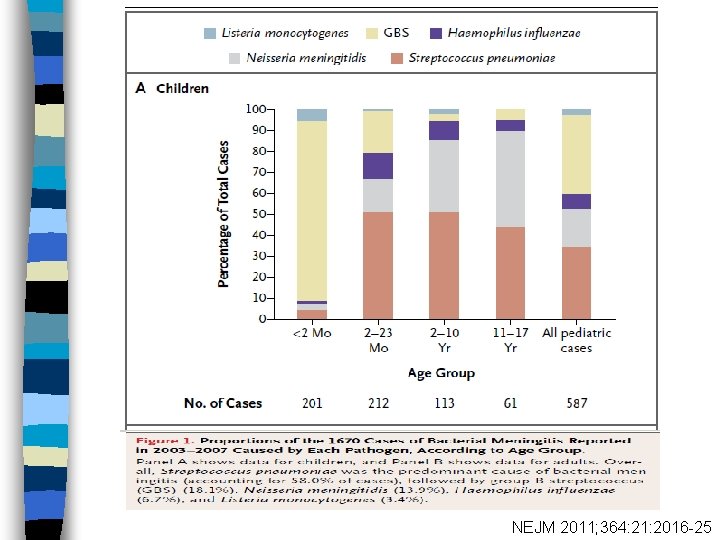
NEJM 2011; 364: 21: 2016 -25
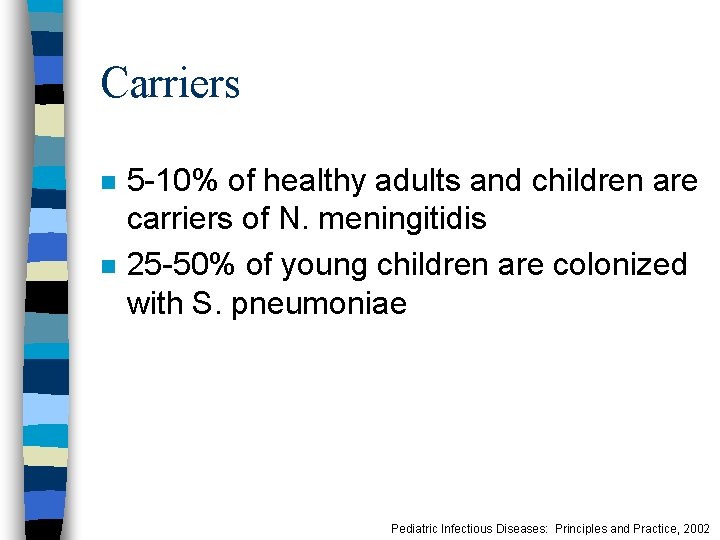
Carriers n n 5 -10% of healthy adults and children are carriers of N. meningitidis 25 -50% of young children are colonized with S. pneumoniae Pediatric Infectious Diseases: Principles and Practice, 2002
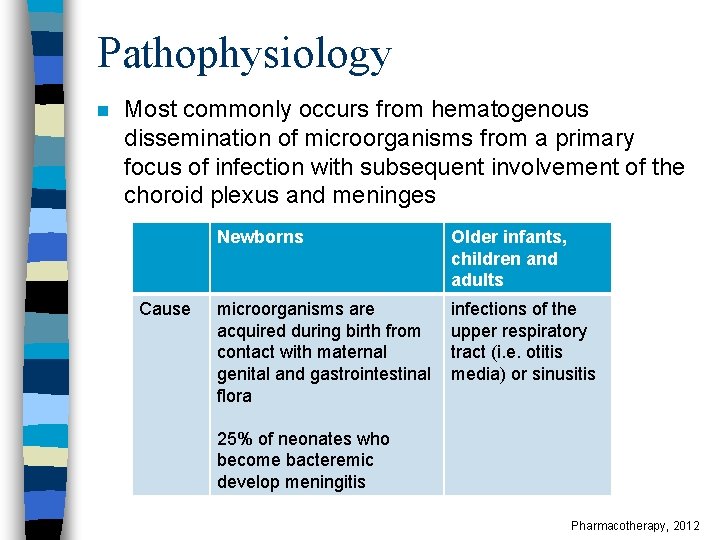
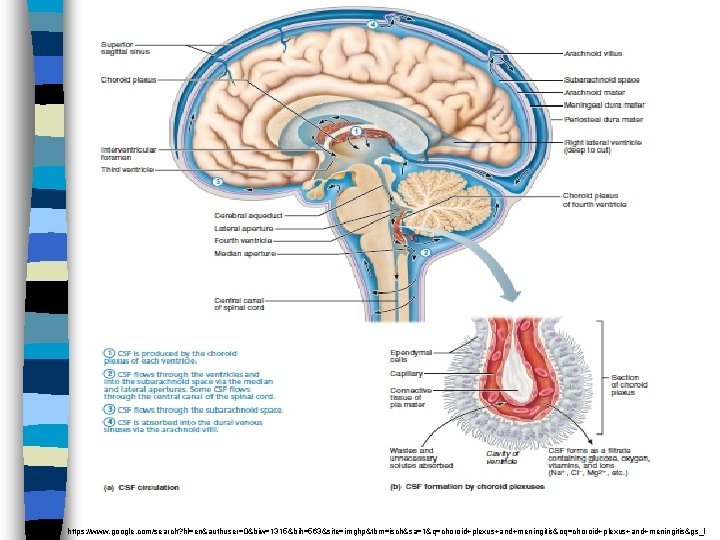
Pathophysiology n Most commonly occurs from hematogenous dissemination of microorganisms from a primary focus of infection with subsequent involvement of the choroid plexus and meninges Cause Newborns Older infants, children and adults microorganisms are acquired during birth from contact with maternal genital and gastrointestinal flora infections of the upper respiratory tract (i. e. otitis media) or sinusitis 25% of neonates who become bacteremic develop meningitis Pharmacotherapy, 2012
Pathogenesis n Colonization – bacteria attach to nasopharyngeal epithelial cells – phagocytized and enter host’s bloodstream n Production of Capsule – resistant to neutrophil phagocytosis and complement opsonization – activates alternate complement pathway to promote phagocytosis and clearance of pathogens Pharmacotherapy, 2012
Pathogenesis n Invades subarachnoid space – continuously expose CNS to lots of bacteria n Choroid plexus – most likely site of CNS bacterial invasion – receptors that allow bacteria to adhere n Inadequate host defense mechanisms – bacteria freely replicate in CSF Pharmacotherapy, 2012
https: //www. google. com/search? hl=en&authuser=0&biw=1315&bih=563&site=imghp&tbm=isch&sa=1&q=choroid+plexus+and+meningitis&oq=choroid+plexus+and+meningitis&gs_l
Pathophysiology n n Once the microorganisms reach the CNS, the body’s host defenses are inadequate to control the infection Bacteria replicate rapidly with liberation of bacterial products: – Gram negative - endotoxin – Gram positive - lipoteichoic acid Pharmacotherapy, 2012
Pathogenesis n Cause capillary endothelial cells and CNS macrophages to release cytokines (IL-1, TNF) – causes release of COX-AA (arachdonic acid) pathway products (prostaglandins, thromboxanes) and Platelet Activating Factor (PAF) n PAF activates coagulation cascade and AA metabolites stimulate vasodilation Pharmacotherapy, 2012
Pathophysiology n The result is: – cerebral edema – increased intracranial pressure – decreased cerebral blood flow – tissue hypoxia – CSF pleocytosis – SIADH Normal cerebrovascular autoregulatory mechanisms to control ICP are lost Pharmacotherapy, 2012
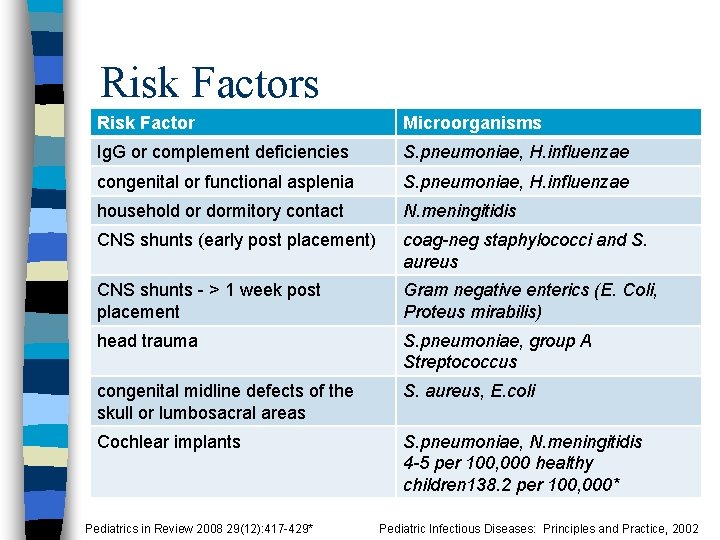
Risk Factors Risk Factor Microorganisms Ig. G or complement deficiencies S. pneumoniae, H. influenzae congenital or functional asplenia S. pneumoniae, H. influenzae household or dormitory contact N. meningitidis CNS shunts (early post placement) coag-neg staphylococci and S. aureus CNS shunts - > 1 week post placement Gram negative enterics (E. Coli, Proteus mirabilis) head trauma S. pneumoniae, group A Streptococcus congenital midline defects of the skull or lumbosacral areas S. aureus, E. coli Cochlear implants S. pneumoniae, N. meningitidis 4 -5 per 100, 000 healthy children 138. 2 per 100, 000* Pediatrics in Review 2008 29(12): 417 -429* Pediatric Infectious Diseases: Principles and Practice, 2002
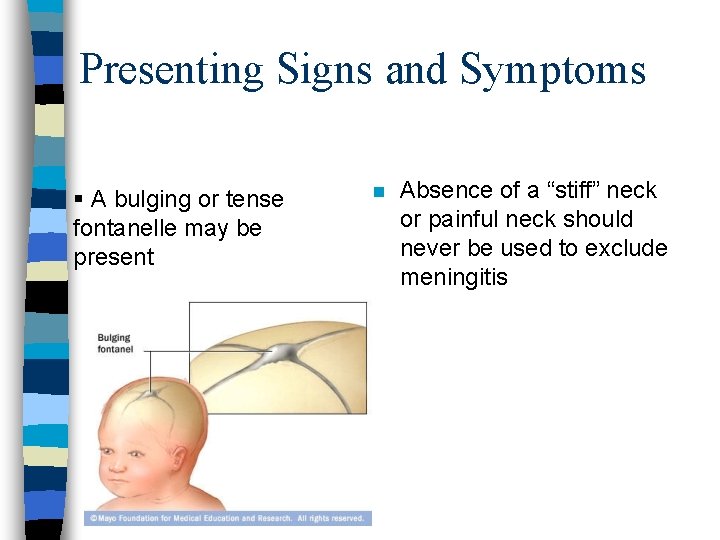
Presenting Signs and Symptoms § A bulging or tense fontanelle may be present n Absence of a “stiff” neck or painful neck should never be used to exclude meningitis
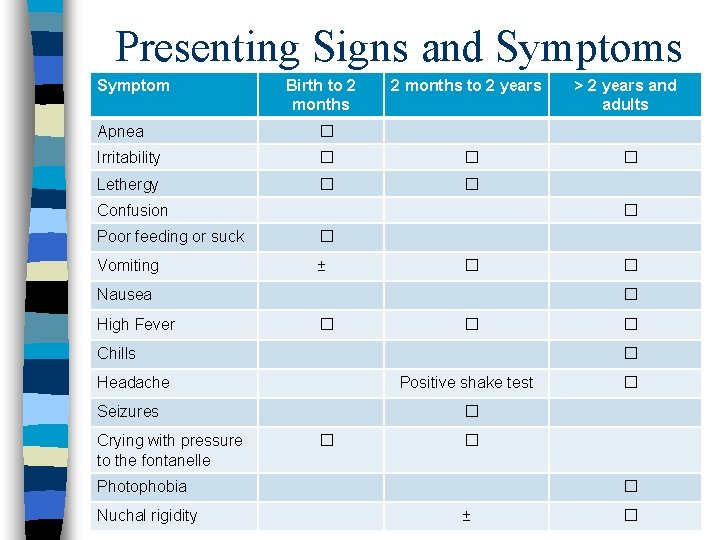
Presenting Signs and Symptoms Symptom Birth to 2 months to 2 years Apnea � Irritability � � Lethergy � � Confusion � Vomiting ± � Nausea � � Headache Positive shake test Seizures � � Photophobia Nuchal rigidity � � Chills Crying with pressure to the fontanelle � � Poor feeding or suck High Fever > 2 years and adults � ± �
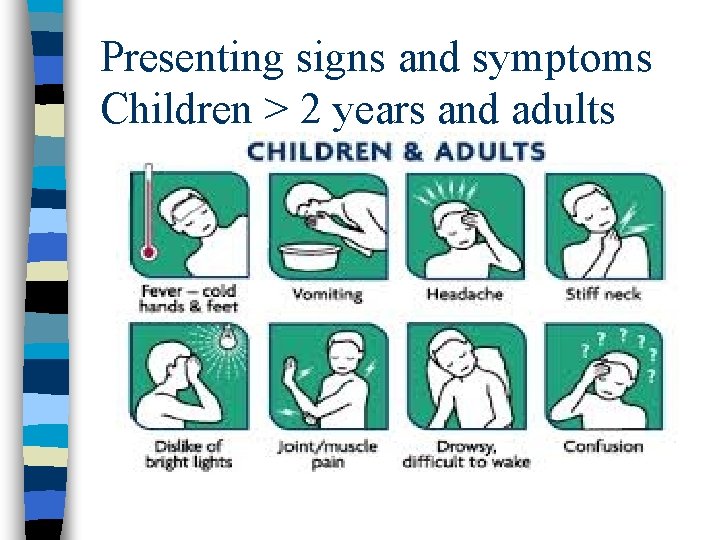
Presenting signs and symptoms Children > 2 years and adults
Presenting Signs and Symptoms n n n The following 2 signs are found late in the course Brudzinski Kernig
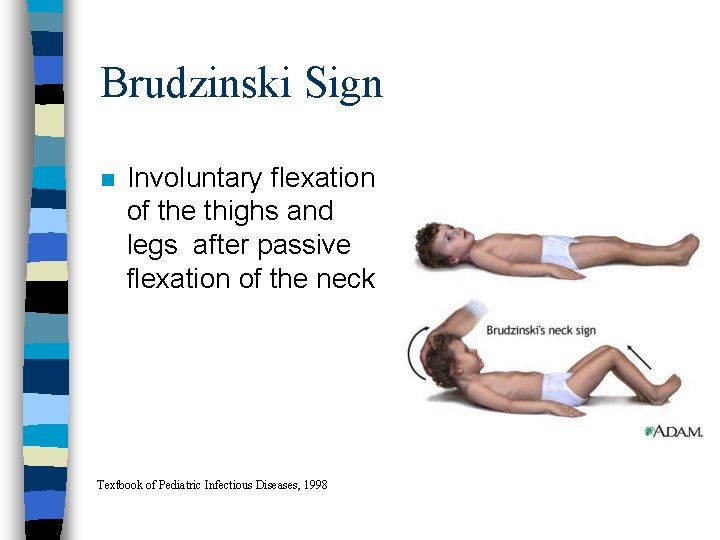
Brudzinski Sign n Involuntary flexation of the thighs and legs after passive flexation of the neck Textbook of Pediatric Infectious Diseases, 1998
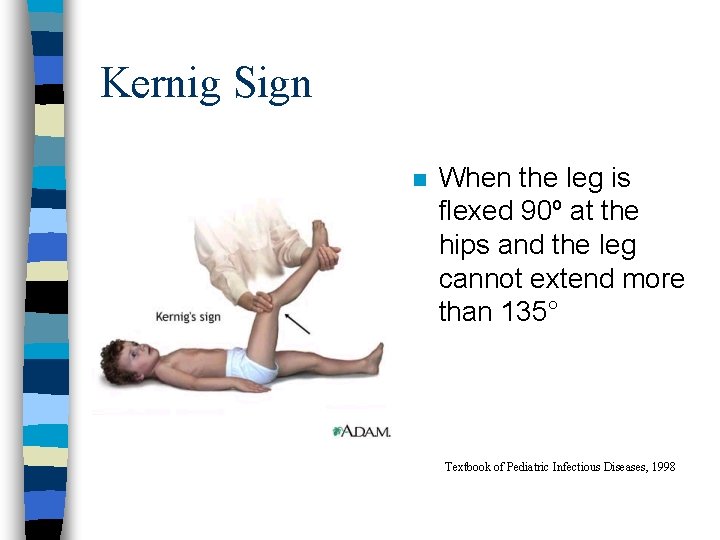
Kernig Sign n When the leg is flexed 90º at the hips and the leg cannot extend more than 135° Textbook of Pediatric Infectious Diseases, 1998
Seizures n 20 to 30% of patients present with seizures – hypoglycemia – febrile – increased ICP n n n Twice as common in newborns as in older children As long as generalized - do not portend poor prognosis Focal seizures are more likely to have neurologic sequelae Principles and Practice of Pediatric Infectious Diseases, 2003
Seizures n Seizures late in the course are NOT good – indicate worsening picture n Generalized seizures are better than focal seizures Principles and Practice of Pediatric Infectious Diseases, 2003
SIADH n n n Syndrome of Inappropriate Antidiuretic Hormone (SIADH) Occurs in ~ 60% of patients with meningitis Treatment of choice - fluid restriction If patient had evidence of shock - leave the IV fluids at maintenance and closely watch the serum sodium. If it drops fluid restrict at that time J Pediatr 1978; 92: 758 -61; Drugs 2005; 65(8): 1097 -12
Diagnosis n Blood tests (before lumbar puncture) – Glucose – CBC with differential – culture and sensitivity n Urine – Culture and sensitivity n Lumbar puncture – WBC and RBC count – Gram stain and cell count – Glucose and protein concentration – Culture and sensitivity – Opening pressure Principles and Practice of Pediatric Infectious Diseases, 2003
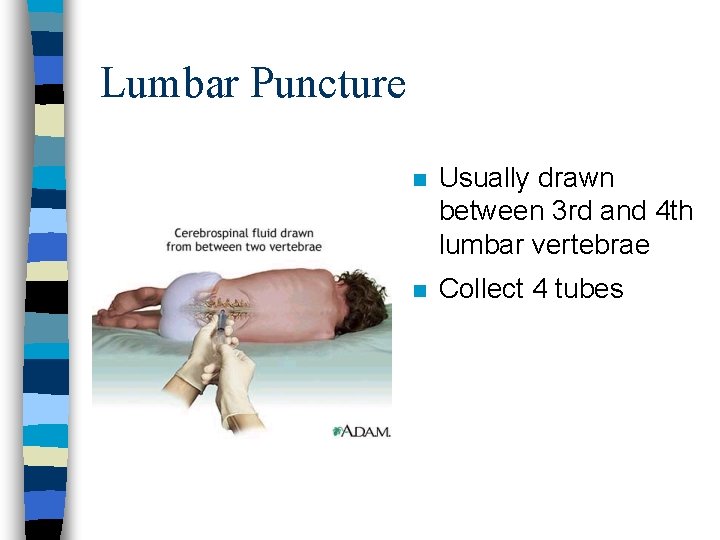
Lumbar Puncture n Usually drawn between 3 rd and 4 th lumbar vertebrae n Collect 4 tubes
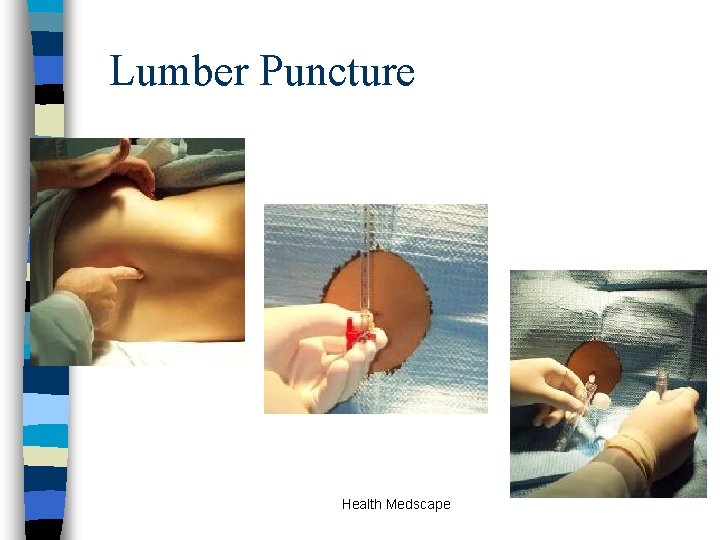
Lumber Puncture Health Medscape
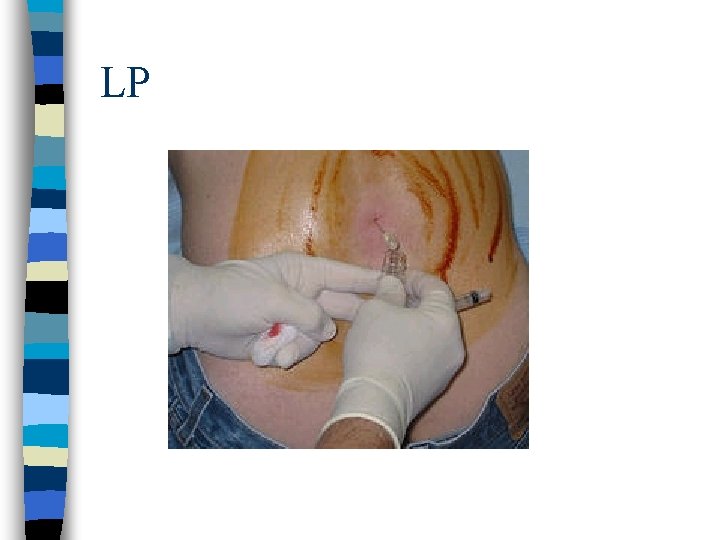
LP
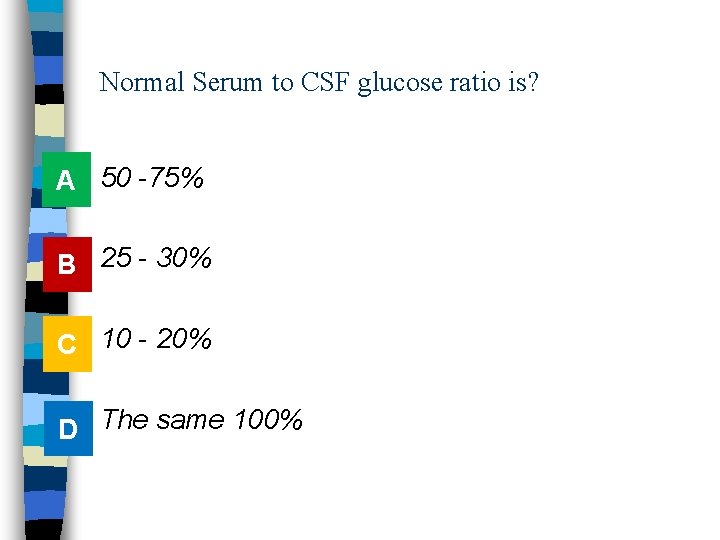
Normal Serum to CSF glucose ratio is? A 50 -75% B 25 - 30% C 10 - 20% D The same 100%
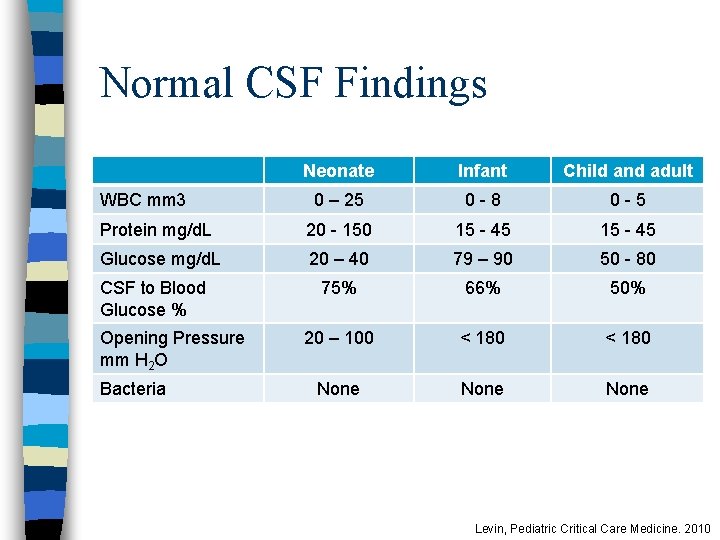
Normal CSF Findings Neonate Infant Child and adult 0 – 25 0 -8 0 -5 Protein mg/d. L 20 - 150 15 - 45 Glucose mg/d. L 20 – 40 79 – 90 50 - 80 75% 66% 50% 20 – 100 < 180 None WBC mm 3 CSF to Blood Glucose % Opening Pressure mm H 2 O Bacteria Levin, Pediatric Critical Care Medicine. 2010
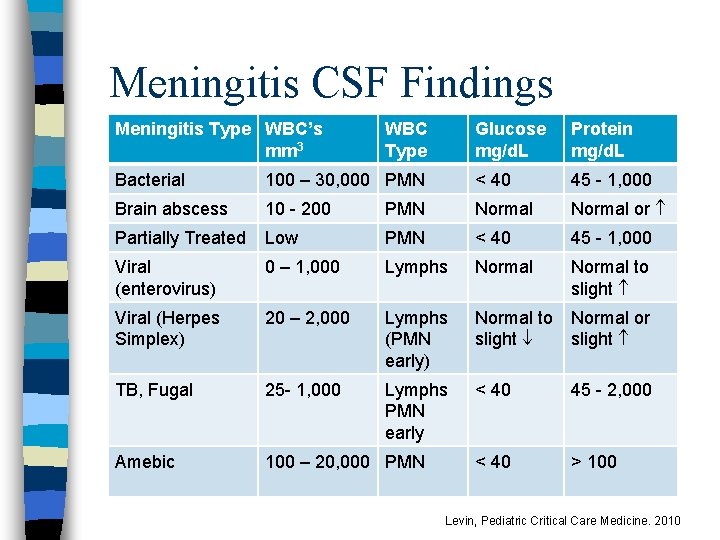
Meningitis CSF Findings Meningitis Type WBC’s mm 3 WBC Type Glucose mg/d. L Protein mg/d. L Bacterial 100 – 30, 000 PMN < 40 45 - 1, 000 Brain abscess 10 - 200 PMN Normal or Partially Treated Low PMN < 40 45 - 1, 000 Viral (enterovirus) 0 – 1, 000 Lymphs Normal to slight Viral (Herpes Simplex) 20 – 2, 000 Lymphs (PMN early) Normal to slight Normal or slight TB, Fugal 25 - 1, 000 Lymphs PMN early < 40 45 - 2, 000 Amebic 100 – 20, 000 PMN < 40 > 100 Levin, Pediatric Critical Care Medicine. 2010
Prior Abx Therapy n n n Less frequently present with fever or mental status changes May have longer duration of symptoms CSF culture may be negative – Still have ↑ protein and ↓ glucose Pharmacotherapy, 2012
Traumatic or Bloody Lumbar Puncture n General Rules: – 1 WBC for every 500 - 1000 RBC’s – 1 - 1. 5 mg/dl protein for every 1000 RBC’s n For example: (neonate): – 50, 000 RBC’s; WBC 70; Protein: 100 – Corrected: • WBC: 70 – 50 (For RBC) = 20 • Protein: 100 – 62. 5 (For RBC) = < 45 mg/d. L Principles and Practice of Pediatric Infectious Diseases, 2003
When to retap n n If one taps too early - The CSF may not indicate meningitis If one worsens after 24 to 48 hours of antibiotics Principles and Practice of Pediatric Infectious Diseases, 2003
Diagnosis n Lumbar puncture contraindicated in: – Patient’s with papilledema, hypotension, respiratory distress or cardiac disorder – profound thrombocytopenia or a clotting disorder – severely increased intracranial pressure, focal neurologic deficit undergo imaging study before LP • can give an IV bolus of mannitol and perform LP Principles and Practice of Pediatric Infectious Diseases, 2003
Antigen detection n n Latex agglutination One must test for the specific microorganism one is suspecting Advantage - diagnosis in 1 -2 hours Disadvantage - not 100% accurate – may have negative test and still have bacterial meningitis Principles and Practice of Pediatric Infectious Diseases, 2003
Latex Particle Agglutination n Rapidly (1 -2 hr) detects specific antigen in CSF Specifically detects for either H. influenzae, S. pneumoniae, N. meningitidis, or Group B Streptococcus Useful in pts with a clinical presentation of Bacterial meningitis with prior Antibiotics or a traumatic LP Pediatric Infectious Diseases: Principles and Practice, 2002
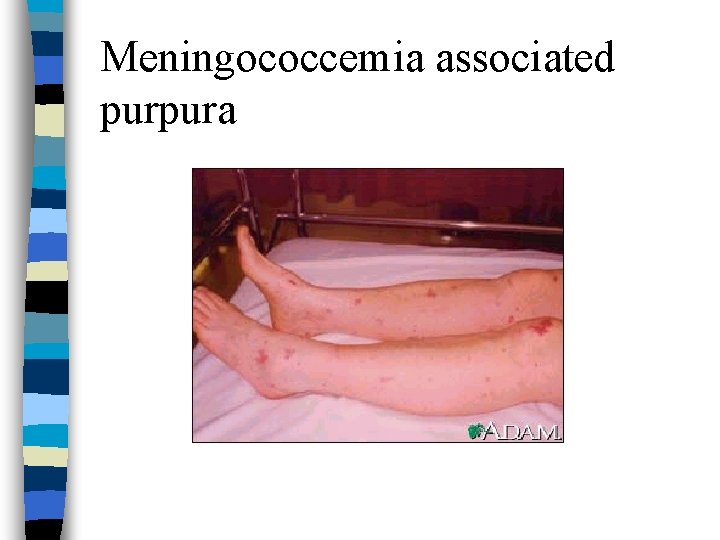
Meningococcemia associated purpura
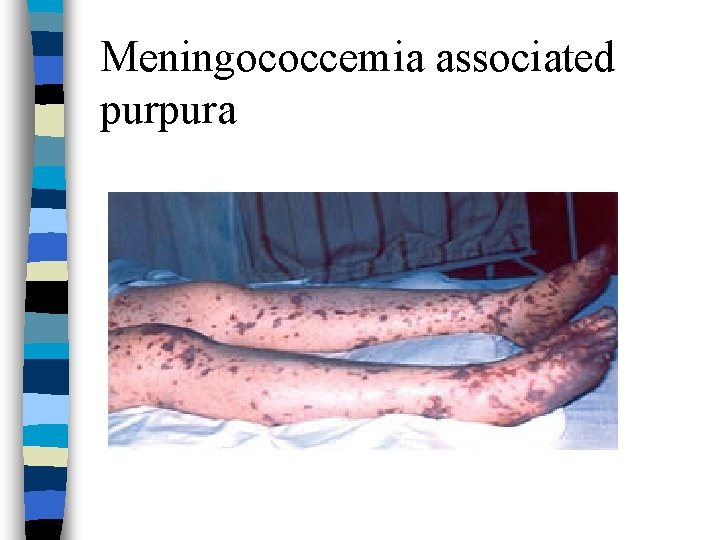
Meningococcemia associated purpura
Antibiotic coverage for listeria Monocytogenes should occur in what age group? A < 3 months and > 50 years B < 1 month and > 50 years C < 3 months and > 60 years D < 1 months and > 60 years
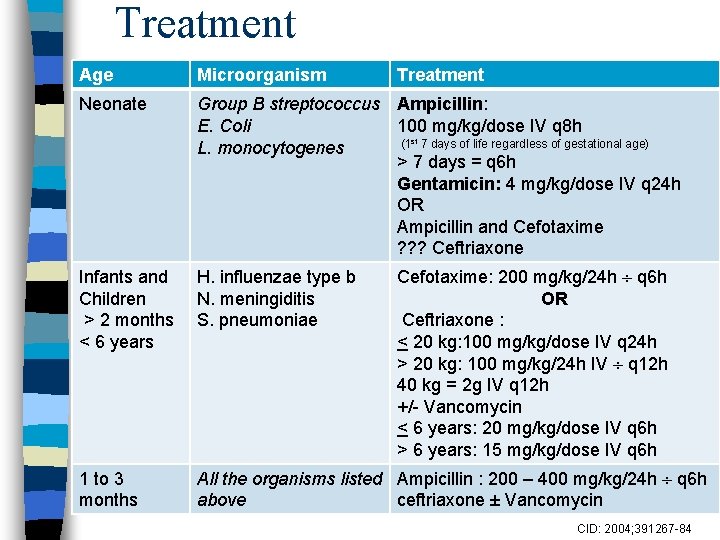
Treatment Age Microorganism Treatment Neonate Group B streptococcus Ampicillin: E. Coli 100 mg/kg/dose IV q 8 h (1 st 7 days of life regardless of gestational age) L. monocytogenes > 7 days = q 6 h Gentamicin: 4 mg/kg/dose IV q 24 h OR Ampicillin and Cefotaxime ? ? ? Ceftriaxone Infants and Children > 2 months < 6 years H. influenzae type b N. meningiditis S. pneumoniae 1 to 3 months All the organisms listed Ampicillin : 200 – 400 mg/kg/24 h q 6 h above ceftriaxone ± Vancomycin Cefotaxime: 200 mg/kg/24 h q 6 h OR Ceftriaxone : < 20 kg: 100 mg/kg/dose IV q 24 h > 20 kg: 100 mg/kg/24 h IV q 12 h 40 kg = 2 g IV q 12 h +/- Vancomycin < 6 years: 20 mg/kg/dose IV q 6 h > 6 years: 15 mg/kg/dose IV q 6 h CID: 2004; 391267 -84
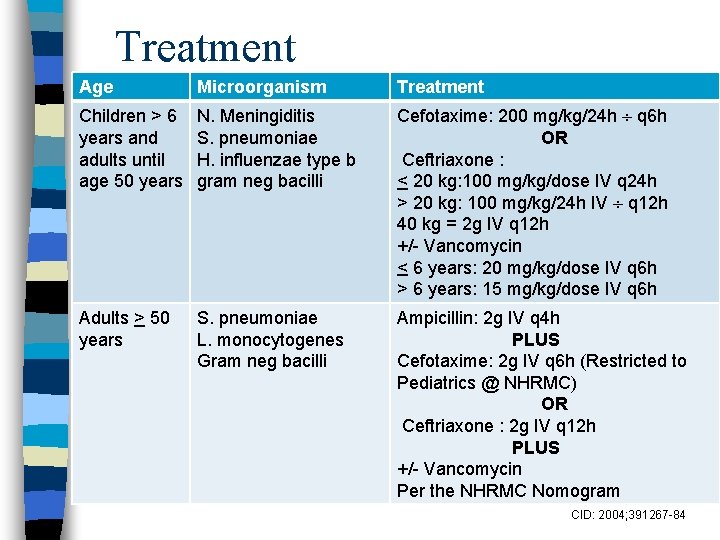
Treatment Age Microorganism Treatment Children > 6 years and adults until age 50 years N. Meningiditis S. pneumoniae H. influenzae type b gram neg bacilli Cefotaxime: 200 mg/kg/24 h q 6 h OR Ceftriaxone : < 20 kg: 100 mg/kg/dose IV q 24 h > 20 kg: 100 mg/kg/24 h IV q 12 h 40 kg = 2 g IV q 12 h +/- Vancomycin < 6 years: 20 mg/kg/dose IV q 6 h > 6 years: 15 mg/kg/dose IV q 6 h Adults > 50 years S. pneumoniae L. monocytogenes Gram neg bacilli Ampicillin: 2 g IV q 4 h PLUS Cefotaxime: 2 g IV q 6 h (Restricted to Pediatrics @ NHRMC) OR Ceftriaxone : 2 g IV q 12 h PLUS +/- Vancomycin Per the NHRMC Nomogram CID: 2004; 391267 -84
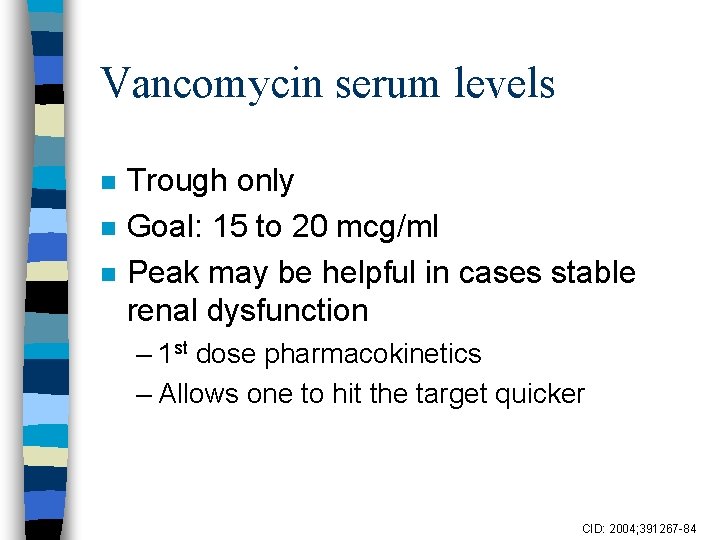
Vancomycin serum levels n n n Trough only Goal: 15 to 20 mcg/ml Peak may be helpful in cases stable renal dysfunction – 1 st dose pharmacokinetics – Allows one to hit the target quicker CID: 2004; 391267 -84
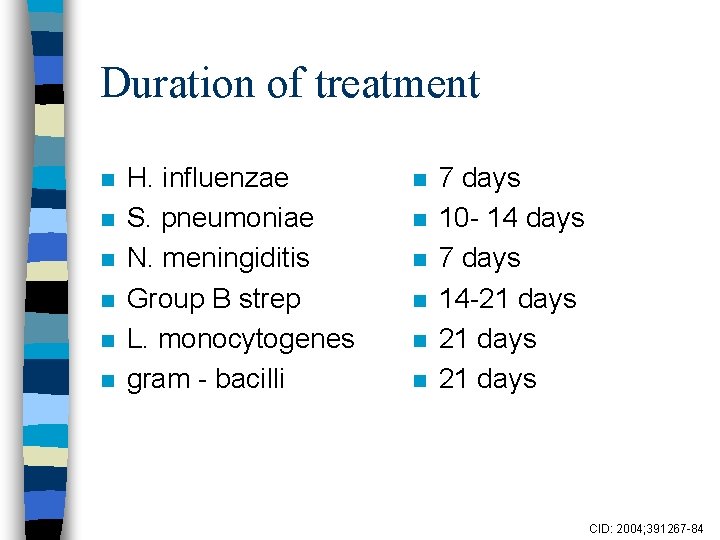
Duration of treatment n n n H. influenzae S. pneumoniae N. meningiditis Group B strep L. monocytogenes gram - bacilli n n n 7 days 10 - 14 days 7 days 14 -21 days CID: 2004; 391267 -84
You are treating a 10 year old currently undergoing treatment for ALL. Empiric antibiotics to treat possible meningitis should include? A Cefepime plus Vancomycin B Ceftriaxone plus Vancomycin C Cefepime, gentamicin plus Vancomycin D Ceftriaxone, gentamicin plus Vancomycin
Treatment n Immunocompromized patients – Vancomycin + Aminoglycoside + Ceftazidime or Cefepime n Common community acquired organisms, MRSA, coagulase negative Staphylococcus, gram negative enteric bacilli and Pseudomonas species CID: 2004; 391267 -84
You are treating a 35 year old, 70 kg patient with a VP shunt placed in childhood for hydrocephalus who is admitted to the hospital for possible meningitis. Empiric antibiotics should include? A Ceftriaxone: 2 g IV q 24 h plus Vancomycin 1 g IV q 8 h B Ceftriaxone: 2 g IV q 12 h plus Vancomycin 1 g IV q 8 h C Cefepime 2 g IV q 12 h plus Vancomycin 1 g IV q 8 h D Cefepime 2 g IV q 8 h plus Vancomycin 1 g IV q 8 h
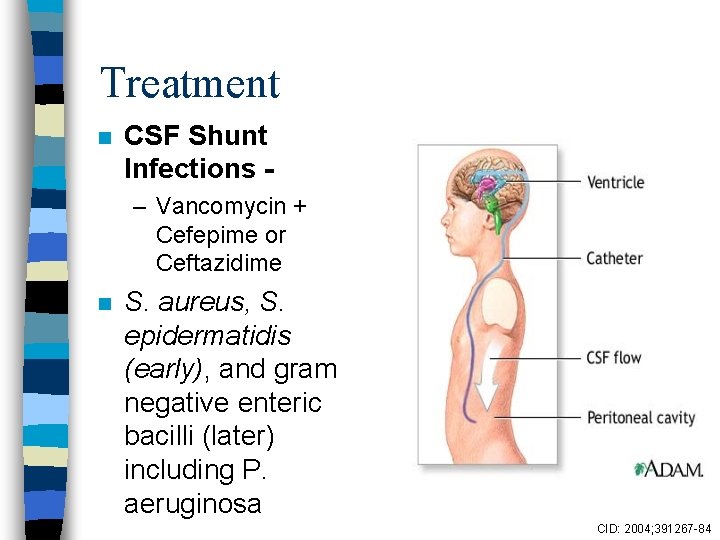
Treatment n CSF Shunt Infections – Vancomycin + Cefepime or Ceftazidime n S. aureus, S. epidermatidis (early), and gram negative enteric bacilli (later) including P. aeruginosa CID: 2004; 391267 -84
Dexamethasone n n Rationale: subarachnoid space inflammatory response during bacterial meningitis is the major contributing factor contributing to morbidity and mortality. Attenuation of this inflammatory response may be effective in decreasing many of the pathophysiologic consequences CID: 2004; 391267 -84
Dexamethasone n Controversy: – Clinical trials have not shown consistent results however • Not all were placebo controlled • Various antimicrobial agents were used (some that would not have been adequate to treat the meningitis • Dexamethasone was administered at different times in relation to the 1 st antimicrobial dose • Patients had varying levels of severity of illness CID: 2004; 391267 -84
Disadvantages of dexamethasone n Recurrence of fever after at least 24 hours without fever happens more commonly in patients treated with dexamethasone than in those not (52% vs 24% p = 0. 0009) Pediatrics. 1998; 102: 1087 -97 n Concomitant administration of dexamethasone and Vancomycin can reduce penetration of Vancomycin into the CSF resulting in treatment failure Lancet 1990; 335: 732 -33
Dexamethasone Recommendations n Neonates: one small trial which demonstrated no statistically significant differences in treatment vs placebo, Recommendation: there are insufficient data to recommend dexamethasone treatment in this age group Eur J Pediatr 1999; 158: 230 -3. CID: 2004; 391267 -84
Dexamethasone Recommendations n Pediatrics: Meta analysis of 15 published clinical trials: – 0. 15 mg/kg/dose IV q 6 h x 4 days administered prior to the 1 st dose of antibiotics • confirmed benefit for Haemophilus influenza type b meningitis (62%) [OR: 0. 31} • Suggested benefit for pneumococcal meningitis (14. 3%) • Neisseria meningiditis (14. 7%) – There was no benefit if administered after the administration of antibiotics Brouwer MC, Mc. Intyre P, Prasad K and Van de Beek D. Corticosteroids for acute bacterial meningitis. Cochrane Database of Systematic Reviews 2013, Issue 6. 1002/14651858. CD 004405. pub 4 JAMA. 1997; 278: 925 -31
Dexamethasone n For infants and children 6 weeks of age and older, adjunctive therapy with dexamethasone may be considered after weighing the potential benefits and possible risks. Some experts recommend use of corticosteroids in pneumococcal meningitis, but this issue is controversial and data are not sufficient to make a routine recommendation for children. If used, dexamethasone should be given before or concurrently with the first dose of antimicrobial agents. The Red Book, 2012
Dexamethasone - adults n Dose used in the published studies: – Dexamethasone 10 mg IV q 6 h x 4 days
Corticosteroids for acute bacterial meningitis n Meta-analysis to examine the efficacy and safety of adjuvant corticosteroid therapy in acute bacterial meningitis n Study criteria: – Randomized controlled trials of corticosteroids as adjuvant therapy – Participants of any age treated with an antibacterial and randomized to corticosteroid or placebo – Case fatality rate or hearing loss had to be recorded Brouwer MC, Mc. Intyre P, Prasad K and Van de Beek D. Corticosteroids for acute bacterial meningitis. Cochrane Database of Systematic Reviews 2013, Issue 6. 1002/14651858. CD 004405. pub 4
Corticosteroids for acute bacterial meningitis n Subgroup analysis - children: – Corticosteroids significantly prevented hearing loss – No significant difference in mortality n Subgroup analysis – pathogen specific: – Hearing loss was significantly reduced for children with meningitis caused by H. influenzae – No beneficial effect was seen for children with meningitis caused by other bacteria n Subgroup analysis – adults: – Corticosteroids did not significantly reduce mortality Brouwer MC, Mc. Intyre P, Prasad K and Van de Beek D. Corticosteroids for acute bacterial meningitis. Cochrane Database of Systematic Reviews 2013, Issue 6. 1002/14651858. CD 004405. pub 4
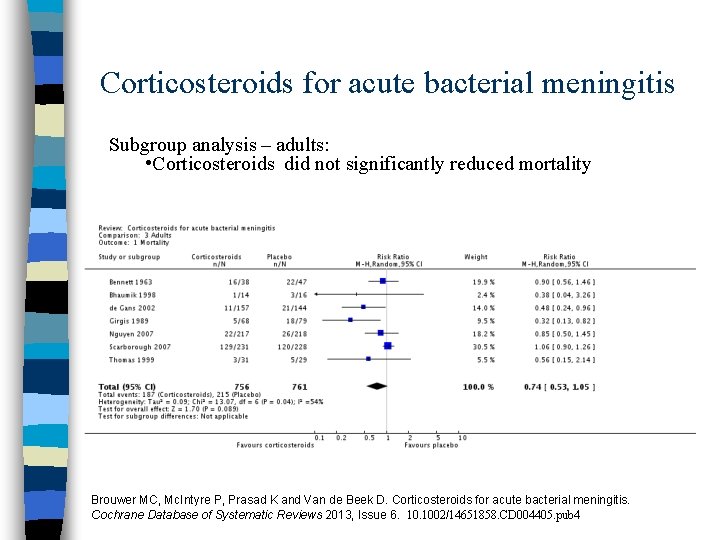
Corticosteroids for acute bacterial meningitis Subgroup analysis – adults: • Corticosteroids did not significantly reduced mortality Brouwer MC, Mc. Intyre P, Prasad K and Van de Beek D. Corticosteroids for acute bacterial meningitis. Cochrane Database of Systematic Reviews 2013, Issue 6. 1002/14651858. CD 004405. pub 4
Steroids for Tuberculosis Meningitis n Steroids are indicated for infants, children and adults with tuberculosis meningitis to decrease mortality and long-term neurologic impairment n Prednisone and dexamethasone have been evaluated AAP Red book recommends: n – 2 mg/kg per day of prednisone (maximum, 60 mg/day) or its equivalent for 4 to 6 weeks followed by tapering to be adequate The Redbook, 2012 online accessed March 21, 2015
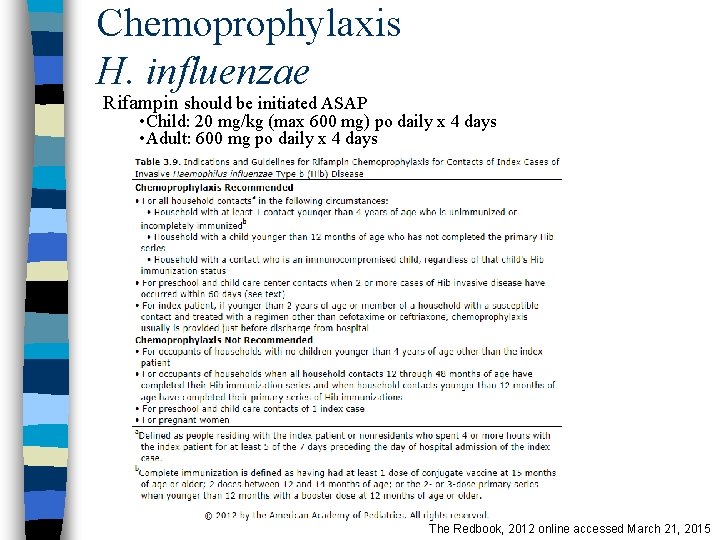
Chemoprophylaxis H. influenzae Rifampin should be initiated ASAP • Child: 20 mg/kg (max 600 mg) po daily x 4 days • Adult: 600 mg po daily x 4 days The Redbook, 2012 online accessed March 21, 2015
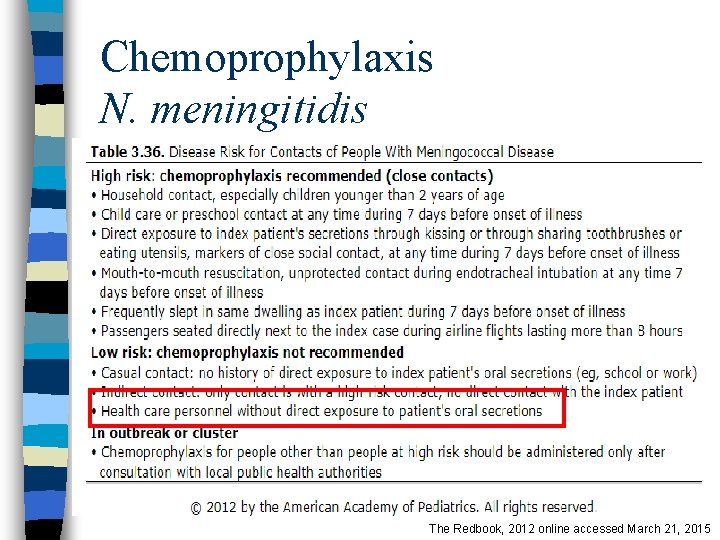
Chemoprophylaxis N. meningitidis The Redbook, 2012 online accessed March 21, 2015
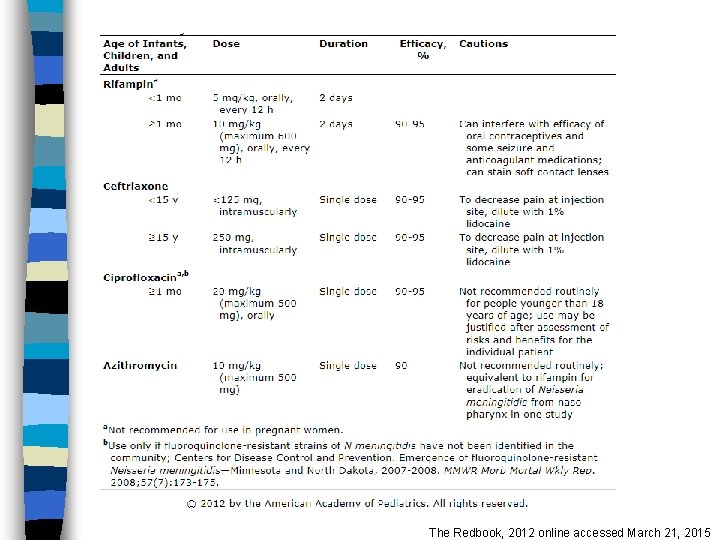
The Redbook, 2012 online accessed March 21, 2015
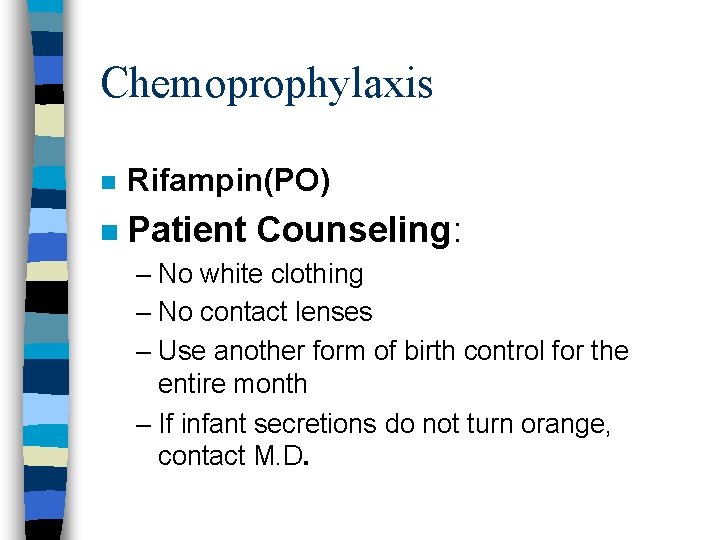
Chemoprophylaxis n Rifampin(PO) n Patient Counseling: – No white clothing – No contact lenses – Use another form of birth control for the entire month – If infant secretions do not turn orange, contact M. D.
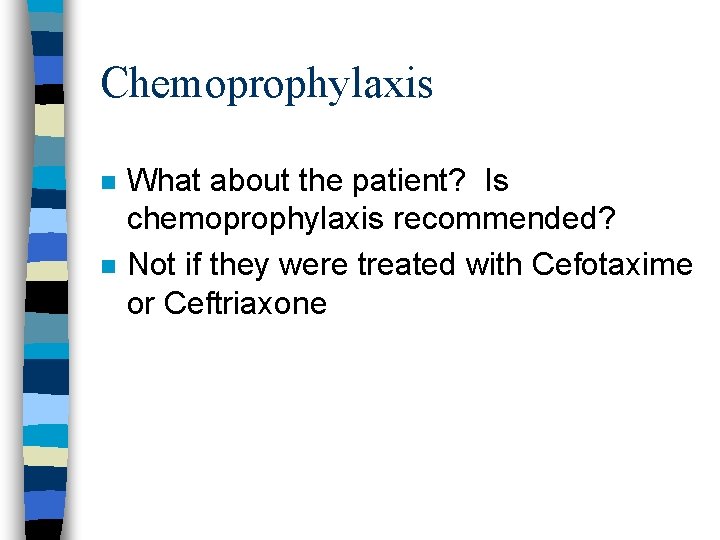
Chemoprophylaxis n n What about the patient? Is chemoprophylaxis recommended? Not if they were treated with Cefotaxime or Ceftriaxone
Infectious n n How long must a patient be treated before they are no longer considered contagious? After 24 hours with cefotaxime or Ceftriaxone. This is adequate to clear the NP carriage.
You are treating a 35 year old, 70 kg patient with a who presented in status epilepticis for possible encephalitis. It is in the summer months and the patient has a history of a recent trip to Asheville for hiking. Empiric treatment should include? A Ceftriaxone: 2 g IV q 12 h, Vancomycin 1 g IV q 8 h, acyclovir 350 mg IV q 8 h and doxycycline 100 mg IV q 12 h B Ceftriaxone: 2 g IV q 12 h, Vancomycin 1 g IV q 8 h and doxycycline 100 mg IV q 12 h C Ceftriaxone: 2 g IV q 12 h, Vancomycin 1 g IV q 8 h, acyclovir 700 mg IV q 8 h and doxycycline 100 mg IV q 12 h D acyclovir 700 mg IV q 8 h and doxycycline 100 mg IV q 12 h
Encephalitis – difference from meningitis n Prospective series of 50 children with encephalitis (6 weeks to 18 years): – Fever (80 %) – Seizure (78%; 79% focal) – Focal Neurologic signs other than a seizure (56%) – Decreased consciousness (47%) Up to Date 2015, accessed March 31, 2015
Encephalitis n Epidemiology has changed – Decrease in vaccine preventable conditions: • Measles, mumps, rubella and varicella – Most commonly identified etiologies in the US: • Herpes simplex virus • West nile virus • enteroviruses CID: 2008: 47: 303 -27
Encephalitis n California Encephalitis project – Underlying cause not found in 208/334 (62%) between 1998 -2000 – Follow-up report of 1570 cases over 7 years • A confirmed or probably etiologic agent was identified in only 16% of cases of encephalitis and 13% had a possible etiology CID: 2008: 47: 303 -27
Encephalitis n History is key to the diagnosis – – – – Season of the year Geographic locale Prevalence of disease in the local community Travel history Recreational activities Occupational exposure insect or animal contacts Vaccination history Immune status of the patient CID: 2008: 47: 303 -27
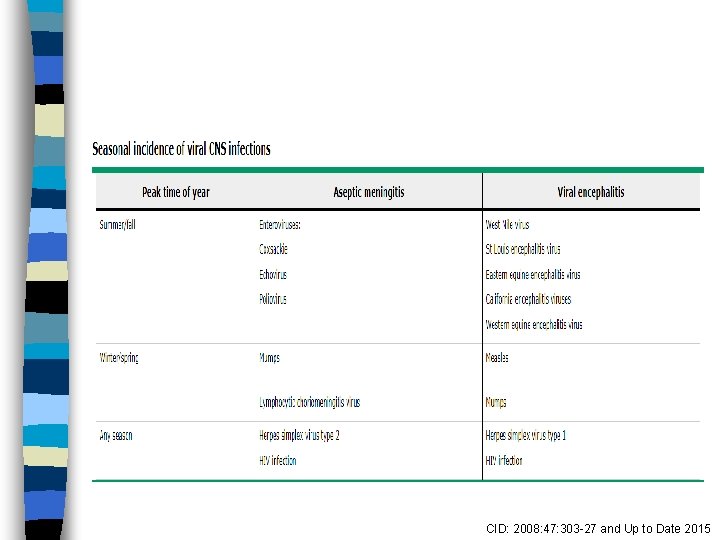
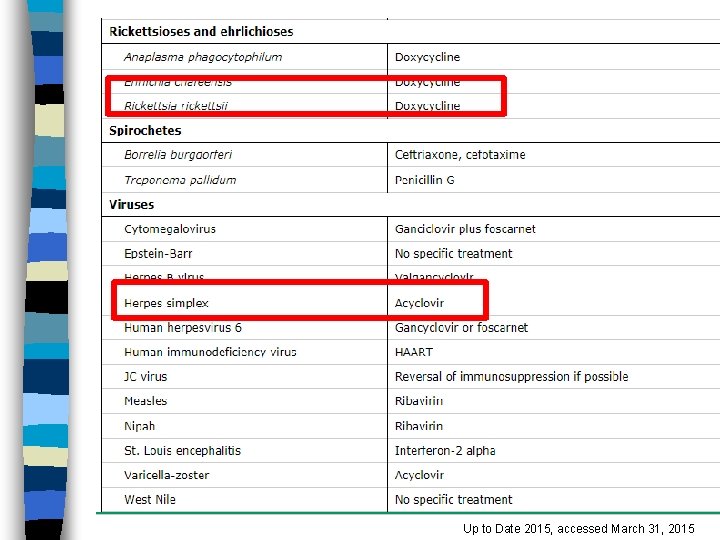
CID: 2008: 47: 303 -27 and Up to Date 2015
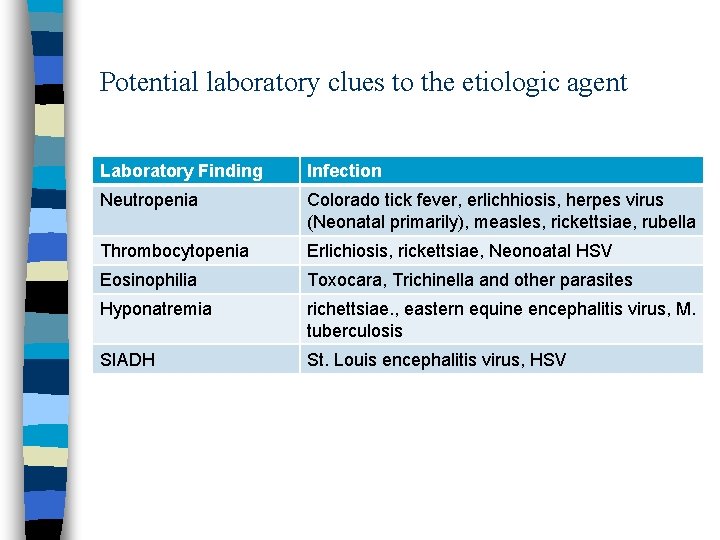
Potential laboratory clues to the etiologic agent Laboratory Finding Infection Neutropenia Colorado tick fever, erlichhiosis, herpes virus (Neonatal primarily), measles, rickettsiae, rubella Thrombocytopenia Erlichiosis, rickettsiae, Neonoatal HSV Eosinophilia Toxocara, Trichinella and other parasites Hyponatremia richettsiae. , eastern equine encephalitis virus, M. tuberculosis SIADH St. Louis encephalitis virus, HSV
Up to Date 2015, accessed March 31, 2015
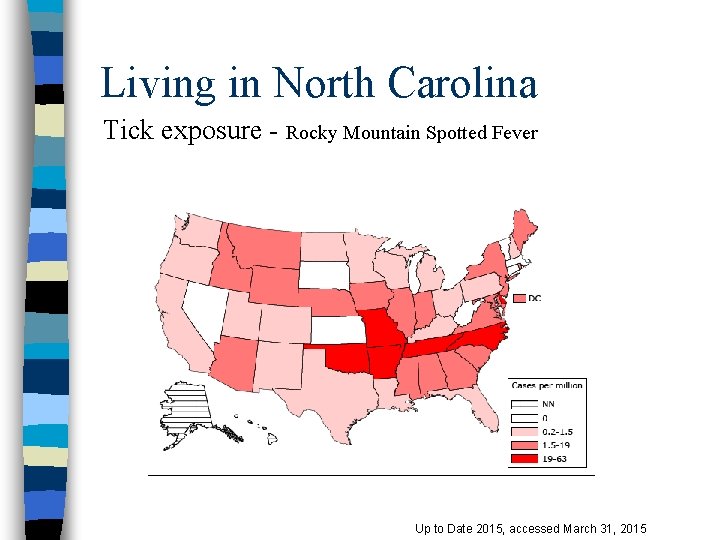
Living in North Carolina Tick exposure - Rocky Mountain Spotted Fever Up to Date 2015, accessed March 31, 2015
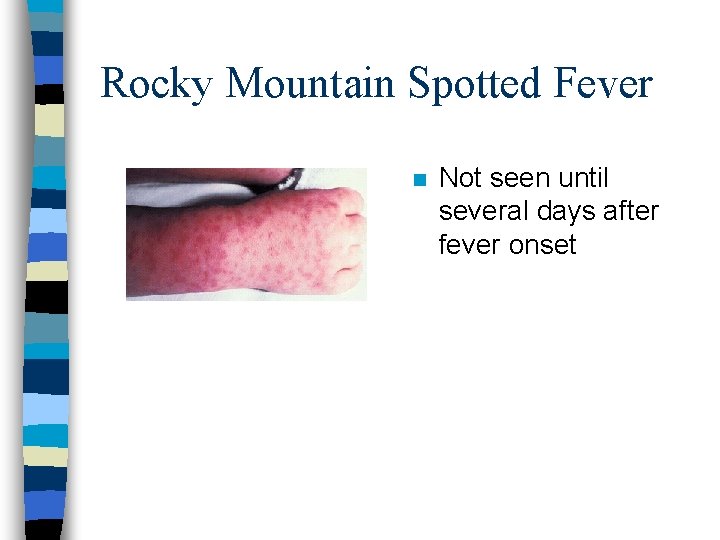
Rocky Mountain Spotted Fever n Not seen until several days after fever onset
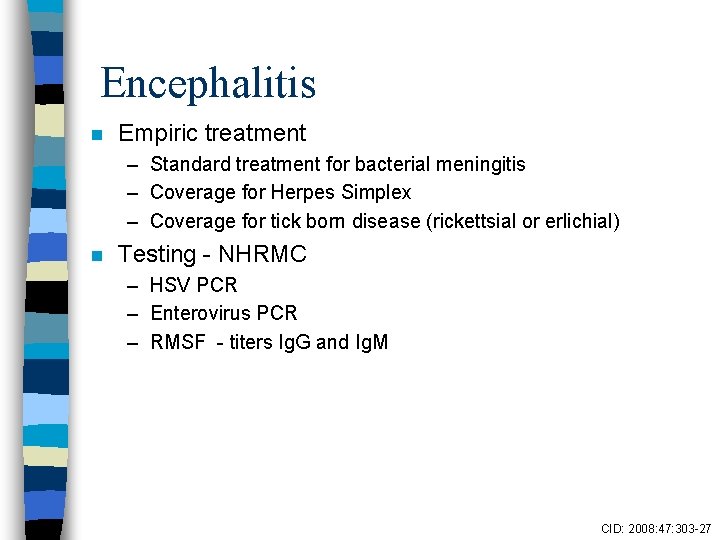
Encephalitis n Empiric treatment – Standard treatment for bacterial meningitis – Coverage for Herpes Simplex – Coverage for tick born disease (rickettsial or erlichial) n Testing - NHRMC – HSV PCR – Enterovirus PCR – RMSF - titers Ig. G and Ig. M CID: 2008: 47: 303 -27
Encephalitis n n Standard treatment for bacterial meningitis - already discussed Coverage for Herpes Simplex – Acyclovir doses based on (IBW) and the dose must be adjusted in renal failure • Neonates: 20 mg/kg/dose IV q 8 h • Children to age 12 years: 15 mg/kg/dose IV q 8 h • Teenagers and Adolescents: 10 mg/kg/dose IV q 8 h n Coverage for tick born disease (rickettsial or erlichial) – Doxycycline – no adjustment for renal dysfunction • Infants and children: 2/2. 2 mg/kg/dose IV q 12 h (MAX: 100 mg/dose) • Teenagers and Adults: 100 mg IV q 12 h CID: 2008: 47: 303 -27
Conclusions n n The standard immunization schedule (CDC/ACIP) has decreased the incidence of meningitis in the U. S. and altered the causes of encephalitis. Initial treatment of both meningitis and encephalitis is empiric and directed at the most common cause
Conclusions n Seizures have been reported with both meningitis and encephalitis but are more common in encephalitis – Meningitis – generalized – Encephalitis – focal n Treatment can be streamlined with the identification of the cause in bacterial meningitis
Conclusion n n Treatment in encephalitis is streamlined after ruling out treatable causes. Close monitoring of the patient by the pharmacist is essential
- Slides: 92