
MENG 372 Mechanical Systems Spring 2011 Dr Mustafa







- Slides: 47
MENG 372 Mechanical Systems Spring 2011 Dr. Mustafa Arafa American University in Cairo Mechanical Engineering Department mharafa@aucegypt. edu 1
Course Information Course goals: • Analyze & design planar mechanisms • Analyze forces, velocities & accelerations in machines • Use computers for the above Textbook: Design of Machinery, R. Norton, Mc. Graw-Hill, 3 rd ed. , 2004. Computer usage: Working Model, MATLAB Grading: attendance 5%; homework 10%; quizzes 5%; mid-term exams 30%; projects 25%; final exam 25% Lecture notes: will be posted my website. I will communicate with you on Black. Board. Additional material will also be covered on the board. Please print out the notes beforehand & bring them to class. 2
MENG 372 Chapter 2 Kinematics Fundamentals All figures taken from Design of Machinery, 3 rd ed. Robert Norton 2003 3
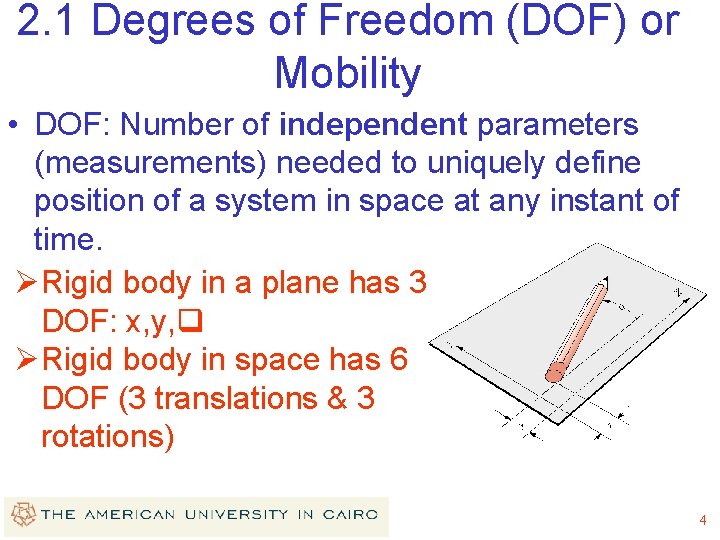
2. 1 Degrees of Freedom (DOF) or Mobility • DOF: Number of independent parameters (measurements) needed to uniquely define position of a system in space at any instant of time. ØRigid body in a plane has 3 DOF: x, y, q ØRigid body in space has 6 DOF (3 translations & 3 rotations) 4
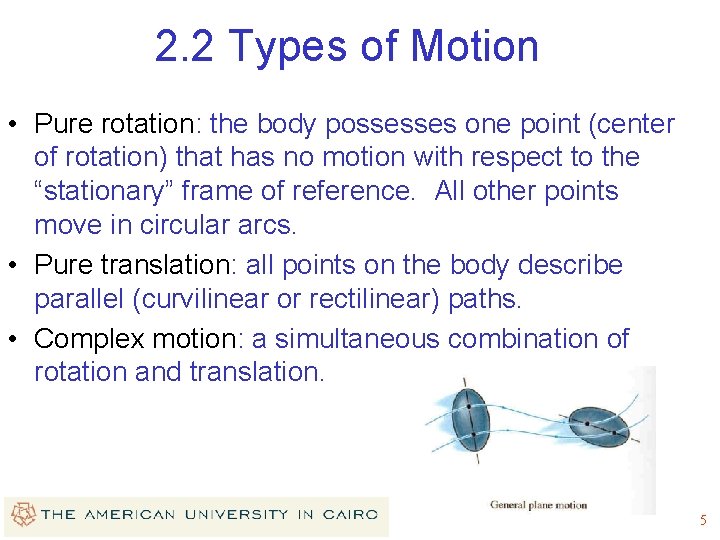
2. 2 Types of Motion • Pure rotation: the body possesses one point (center of rotation) that has no motion with respect to the “stationary” frame of reference. All other points move in circular arcs. • Pure translation: all points on the body describe parallel (curvilinear or rectilinear) paths. • Complex motion: a simultaneous combination of rotation and translation. 5
Backhoe Excavator 6
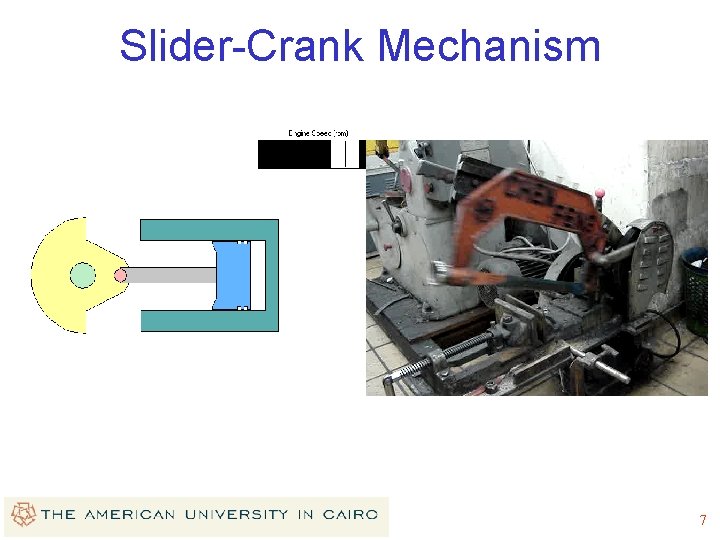
Slider-Crank Mechanism 7
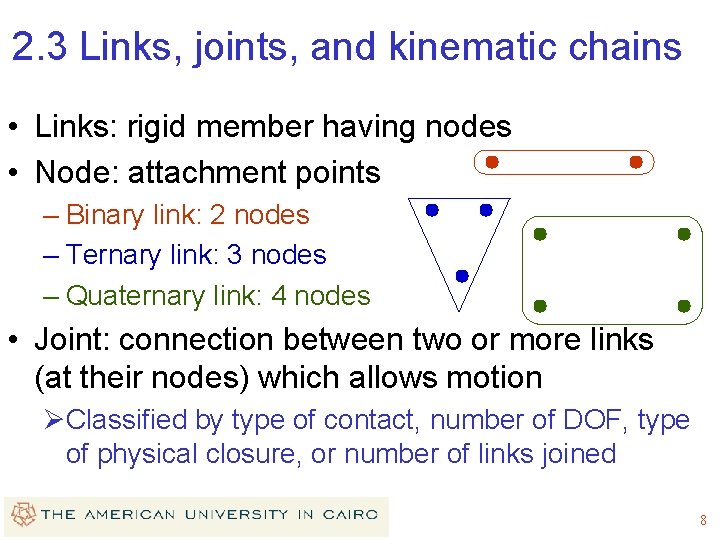
2. 3 Links, joints, and kinematic chains • Links: rigid member having nodes • Node: attachment points – Binary link: 2 nodes – Ternary link: 3 nodes – Quaternary link: 4 nodes • Joint: connection between two or more links (at their nodes) which allows motion ØClassified by type of contact, number of DOF, type of physical closure, or number of links joined 8
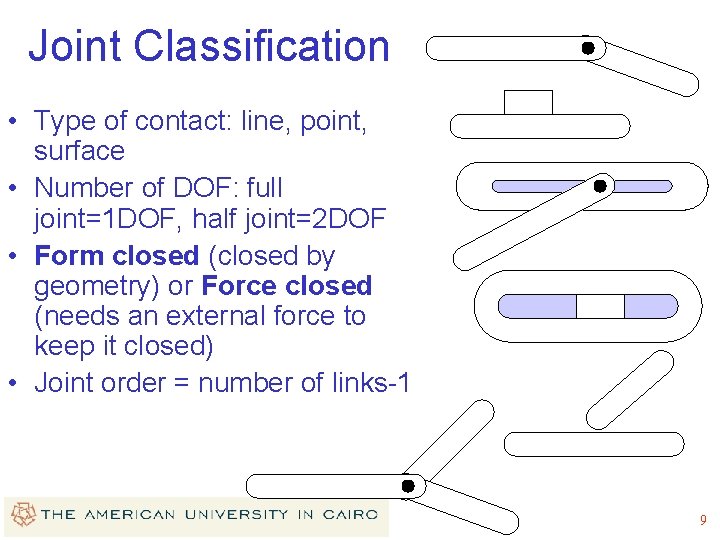
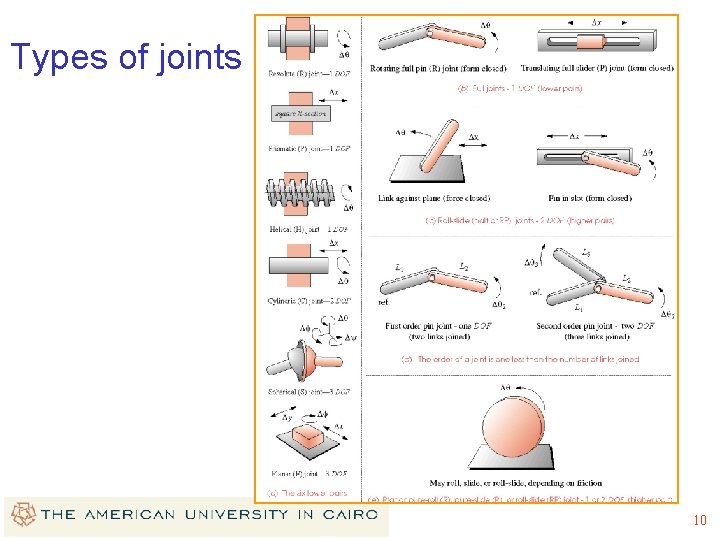
Joint Classification • Type of contact: line, point, surface • Number of DOF: full joint=1 DOF, half joint=2 DOF • Form closed (closed by geometry) or Force closed (needs an external force to keep it closed) • Joint order = number of links-1 9
Types of joints 10
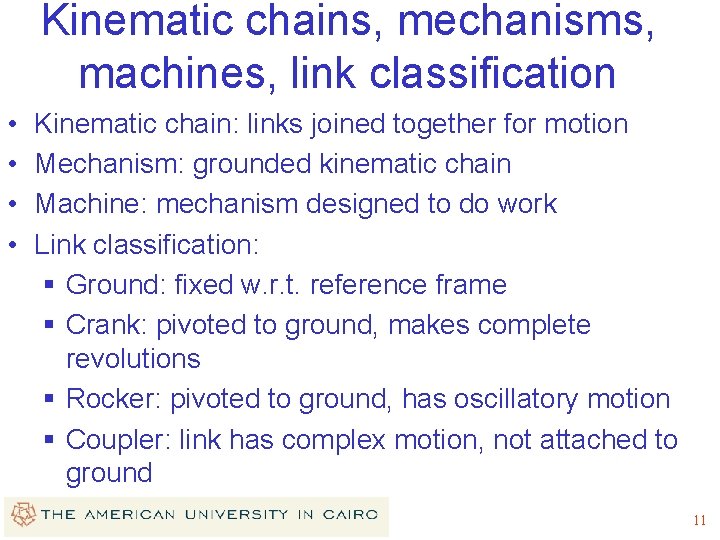
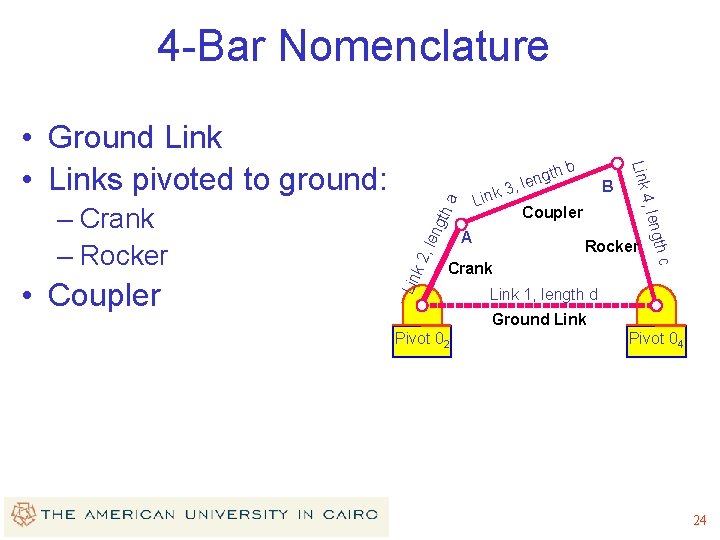
Kinematic chains, mechanisms, machines, link classification • • Kinematic chain: links joined together for motion Mechanism: grounded kinematic chain Machine: mechanism designed to do work Link classification: § Ground: fixed w. r. t. reference frame § Crank: pivoted to ground, makes complete revolutions § Rocker: pivoted to ground, has oscillatory motion § Coupler: link has complex motion, not attached to ground 11
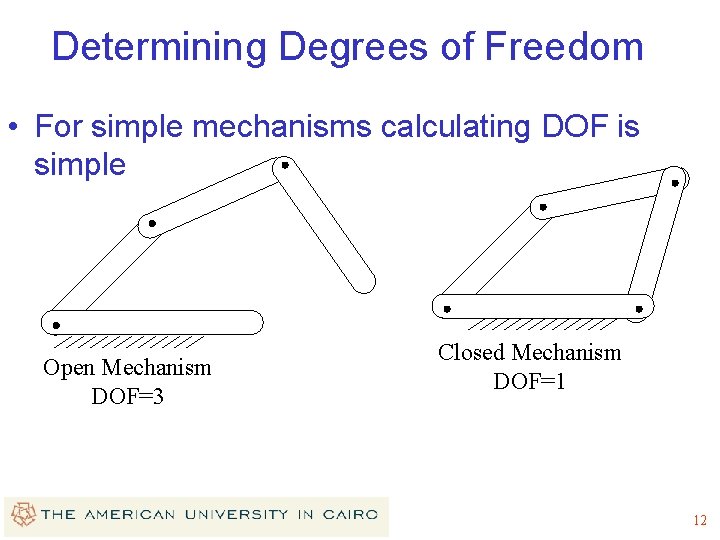
Determining Degrees of Freedom • For simple mechanisms calculating DOF is simple Open Mechanism DOF=3 Closed Mechanism DOF=1 12
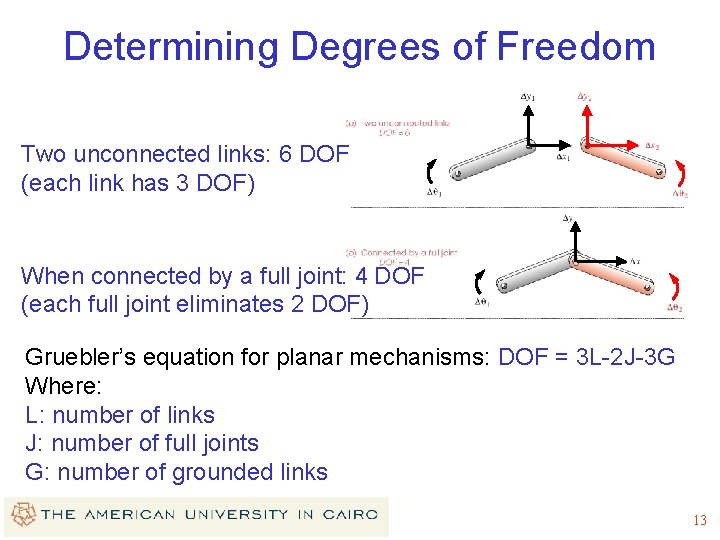
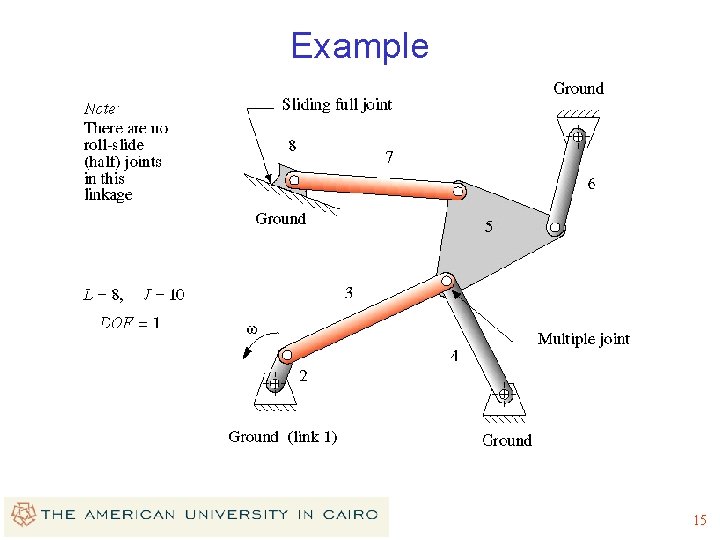
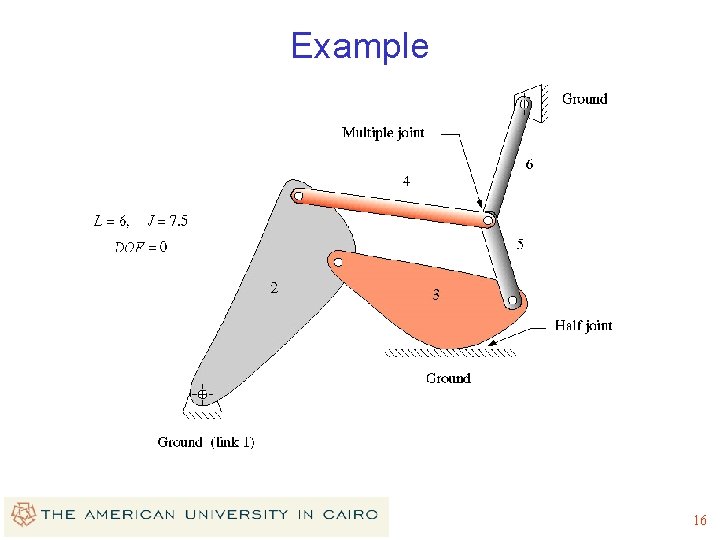
Determining Degrees of Freedom Two unconnected links: 6 DOF (each link has 3 DOF) When connected by a full joint: 4 DOF (each full joint eliminates 2 DOF) Gruebler’s equation for planar mechanisms: DOF = 3 L-2 J-3 G Where: L: number of links J: number of full joints G: number of grounded links 13
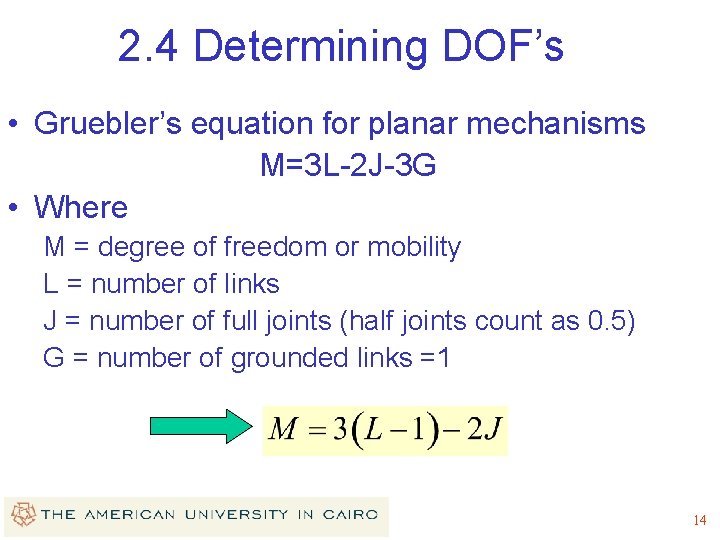
2. 4 Determining DOF’s • Gruebler’s equation for planar mechanisms M=3 L-2 J-3 G • Where M = degree of freedom or mobility L = number of links J = number of full joints (half joints count as 0. 5) G = number of grounded links =1 14
Example 15
Example 16
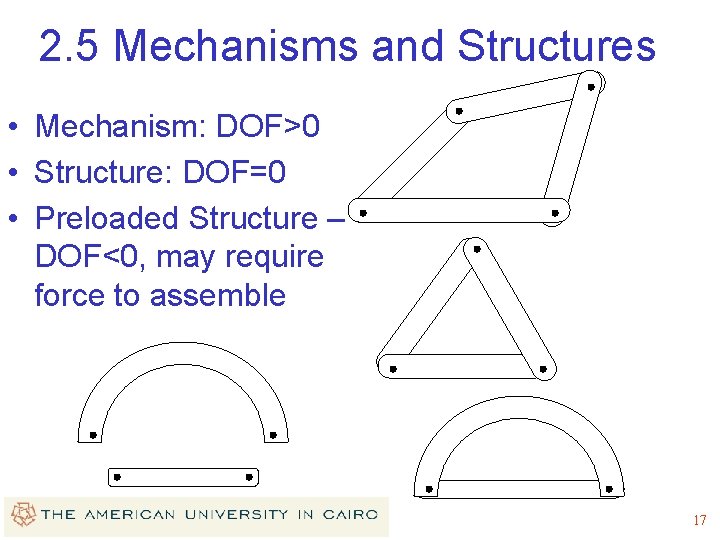
2. 5 Mechanisms and Structures • Mechanism: DOF>0 • Structure: DOF=0 • Preloaded Structure – DOF<0, may require force to assemble 17
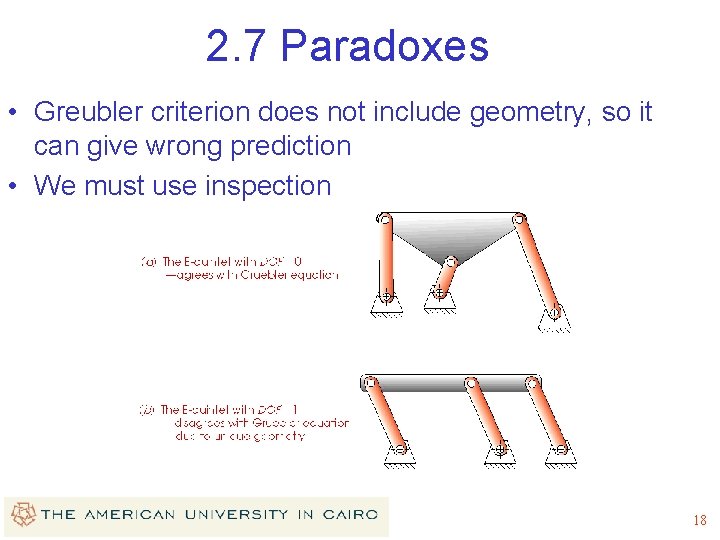
2. 7 Paradoxes • Greubler criterion does not include geometry, so it can give wrong prediction • We must use inspection E-quintet 18
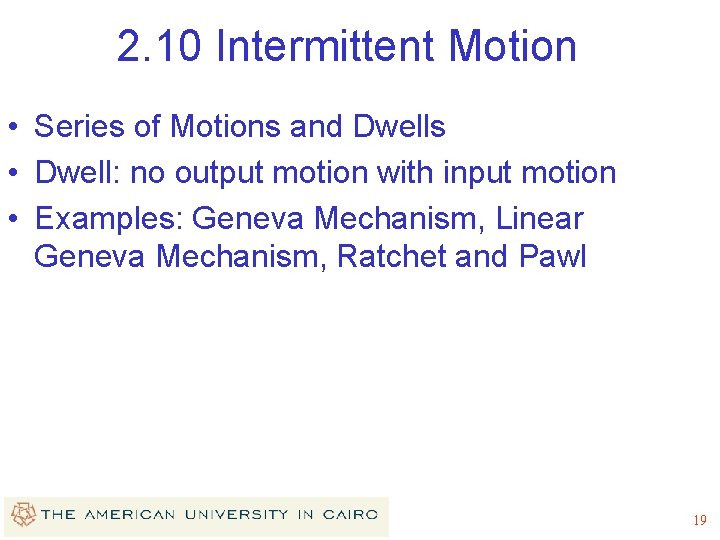
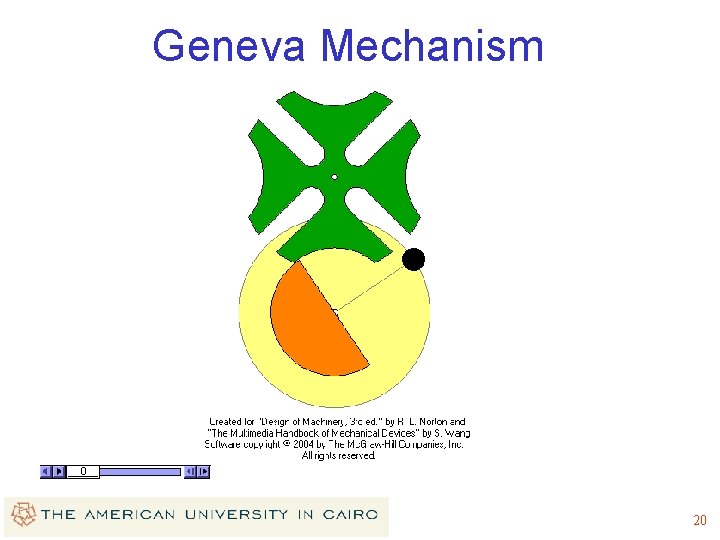
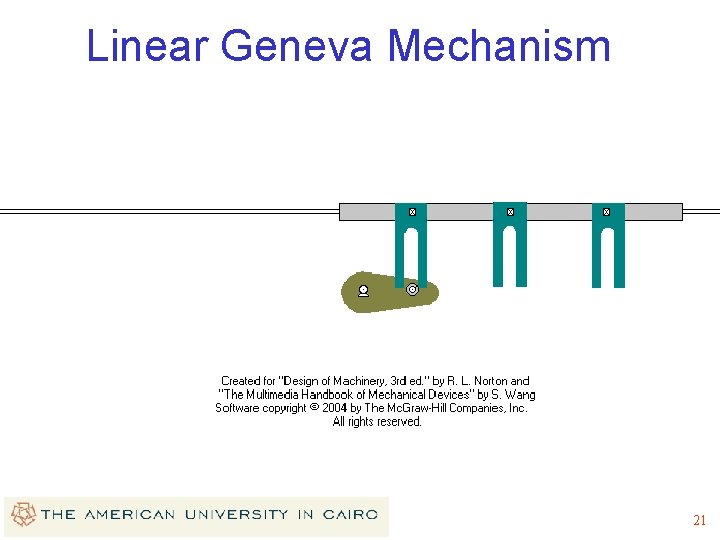
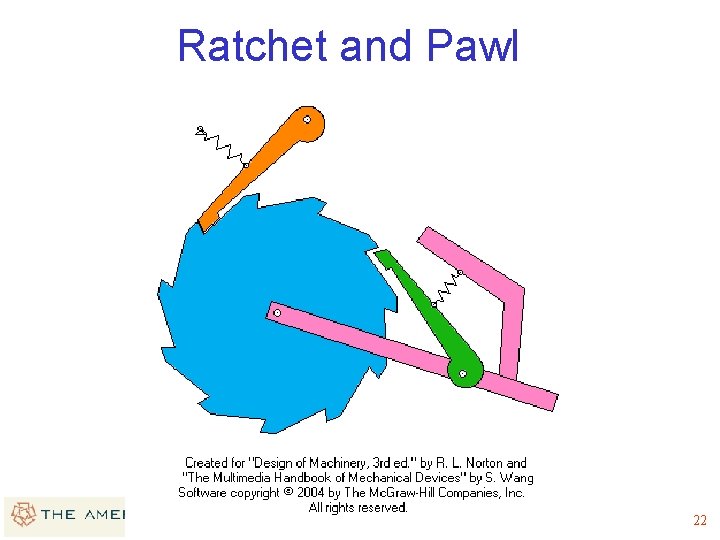
2. 10 Intermittent Motion • Series of Motions and Dwells • Dwell: no output motion with input motion • Examples: Geneva Mechanism, Linear Geneva Mechanism, Ratchet and Pawl 19
Geneva Mechanism 20
Linear Geneva Mechanism 21
Ratchet and Pawl 22
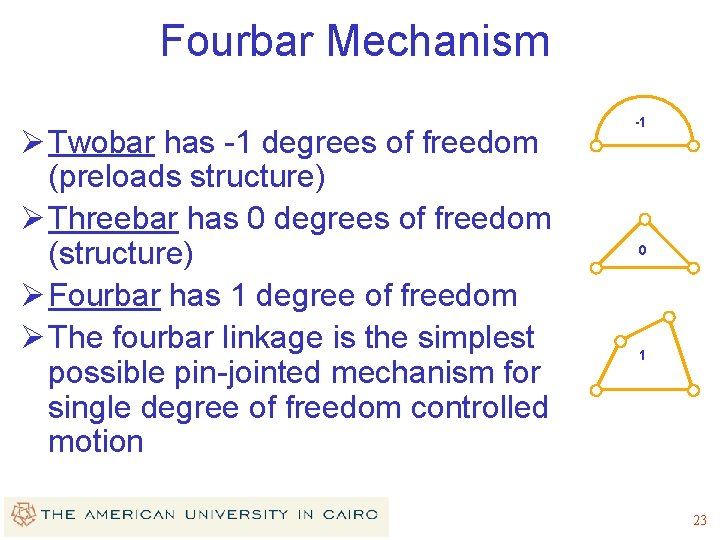
Fourbar Mechanism Ø Twobar has -1 degrees of freedom (preloads structure) Ø Threebar has 0 degrees of freedom (structure) Ø Fourbar has 1 degree of freedom Ø The fourbar linkage is the simplest possible pin-jointed mechanism for single degree of freedom controlled motion -1 0 1 23
4 -Bar Nomenclature ha ngt , le k 2 Lin B Coupler Rocker Crank gth c • Coupler A b 4, len – Crank – Rocker Link gth n e l 3, Link • Ground Link • Links pivoted to ground: Link 1, length d Ground Link Pivot 02 Pivot 04 24
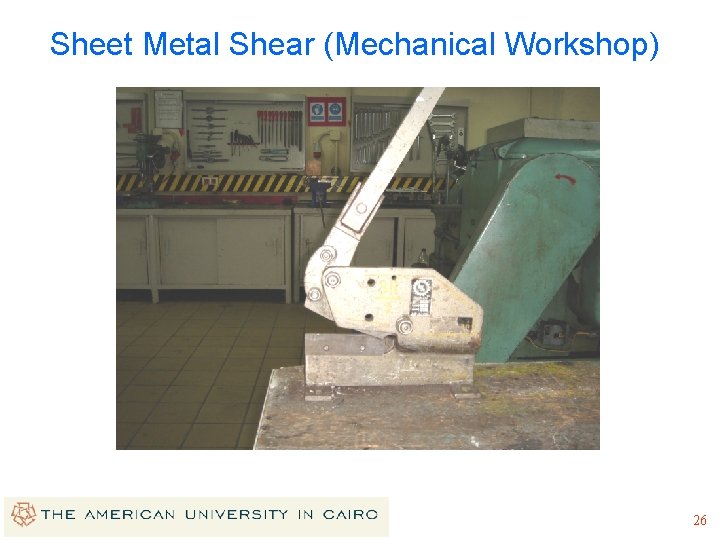
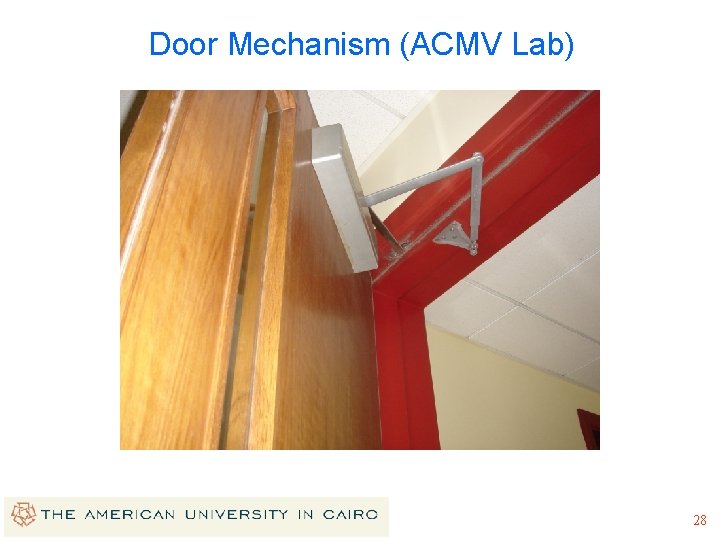
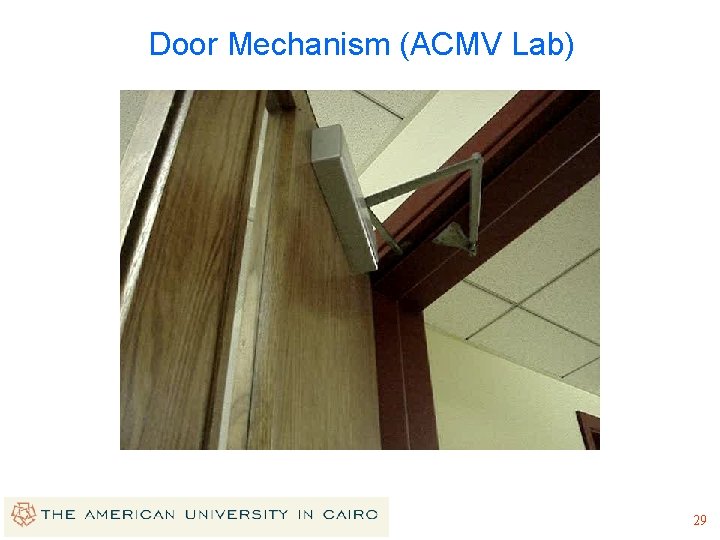
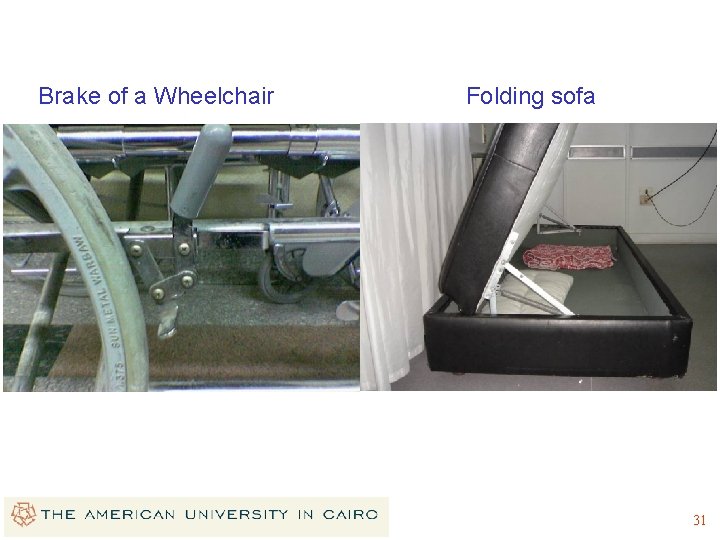
Where would you see 4 -bar mechanisms? 25
Sheet Metal Shear (Mechanical Workshop) 26
Sheet Metal Shear (Mechanical Workshop) 27
Door Mechanism (ACMV Lab) 28
Door Mechanism (ACMV Lab) 29
Backhoe Excavator 30
Brake of a Wheelchair Folding sofa 31
Honda Accord trunk Chevy Cobalt Garage door Desk Lamp 32
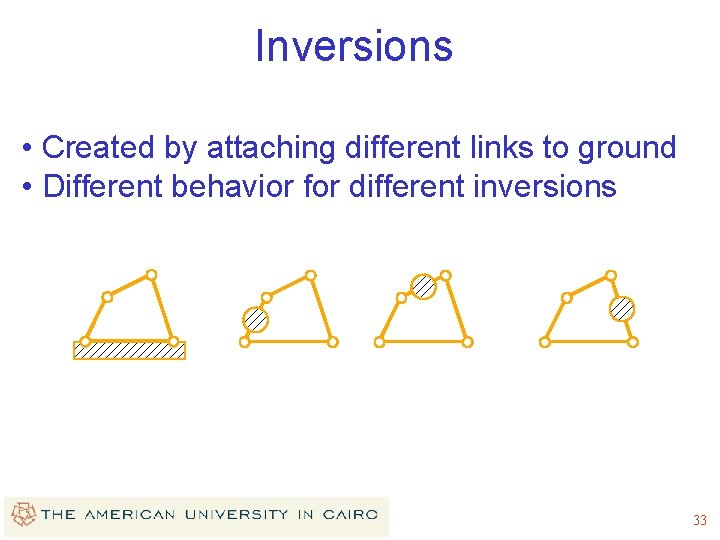
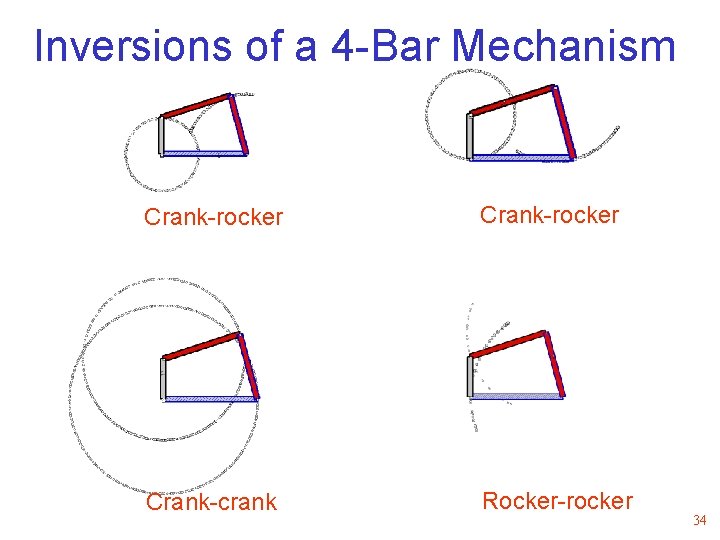
Inversions • Created by attaching different links to ground • Different behavior for different inversions 33
Inversions of a 4 -Bar Mechanism Crank-rocker Crank-crank Rocker-rocker 34
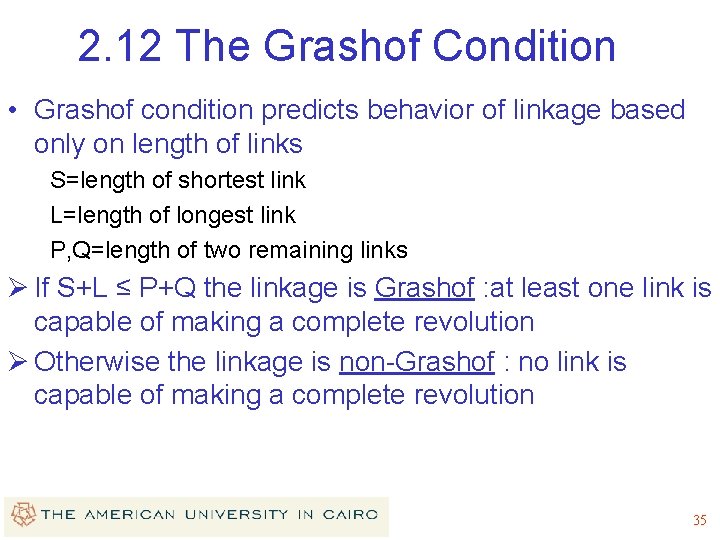
2. 12 The Grashof Condition • Grashof condition predicts behavior of linkage based only on length of links S=length of shortest link L=length of longest link P, Q=length of two remaining links Ø If S+L ≤ P+Q the linkage is Grashof : at least one link is capable of making a complete revolution Ø Otherwise the linkage is non-Grashof : no link is capable of making a complete revolution 35
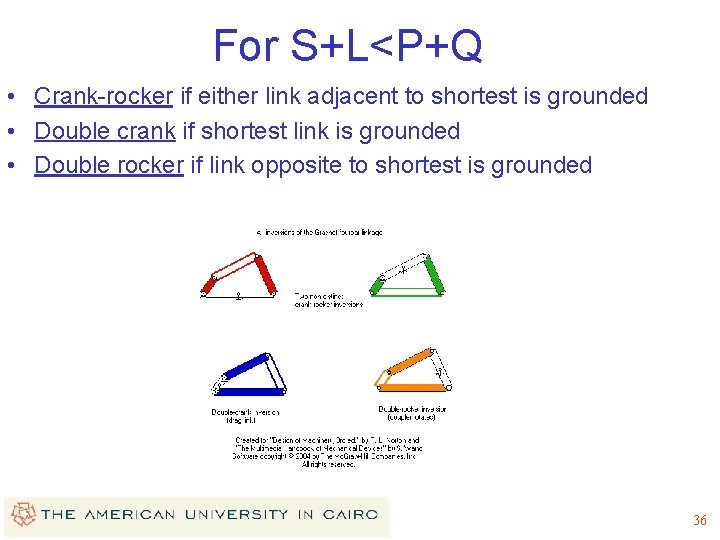
For S+L<P+Q • Crank-rocker if either link adjacent to shortest is grounded • Double crank if shortest link is grounded • Double rocker if link opposite to shortest is grounded 36
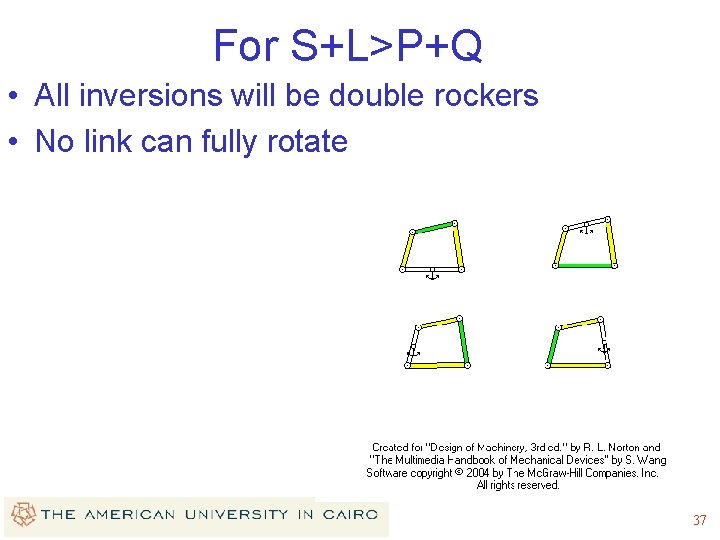
For S+L>P+Q • All inversions will be double rockers • No link can fully rotate 37
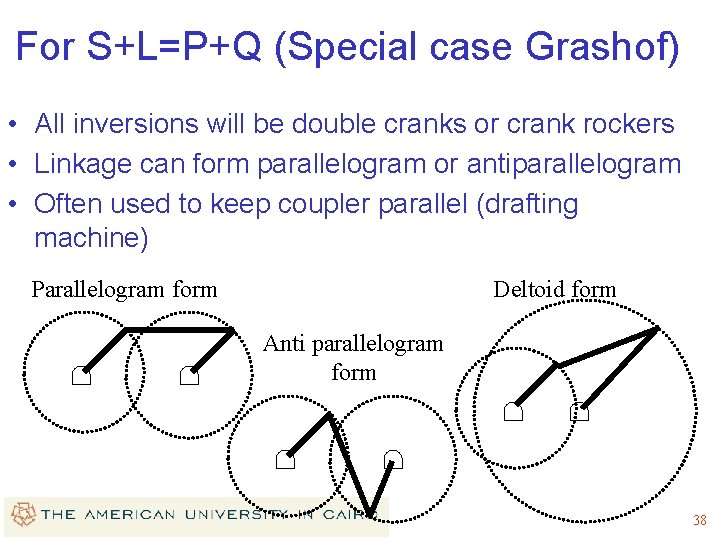
For S+L=P+Q (Special case Grashof) • All inversions will be double cranks or crank rockers • Linkage can form parallelogram or antiparallelogram • Often used to keep coupler parallel (drafting machine) Parallelogram form Deltoid form Anti parallelogram form 38
Problems with Special Grashof • All inversions have change points twice per revolution of input crank when all links become collinear • Behavior at change points is indeterminate • If used in continuous machine, must have some mechanism to “carry through” 39
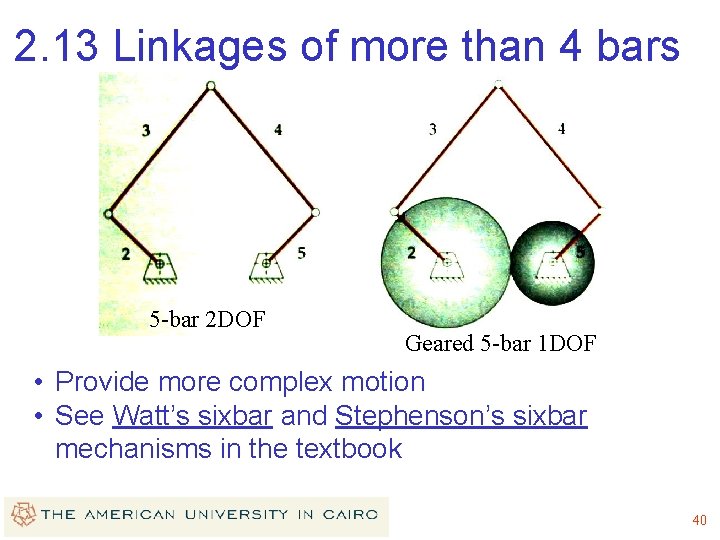
2. 13 Linkages of more than 4 bars 5 -bar 2 DOF Geared 5 -bar 1 DOF • Provide more complex motion • See Watt’s sixbar and Stephenson’s sixbar mechanisms in the textbook 40
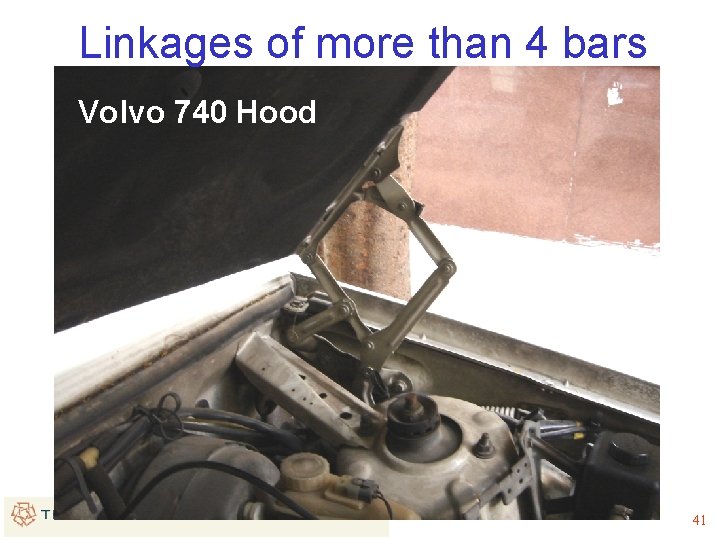
Linkages of more than 4 bars Volvo 740 Hood 41
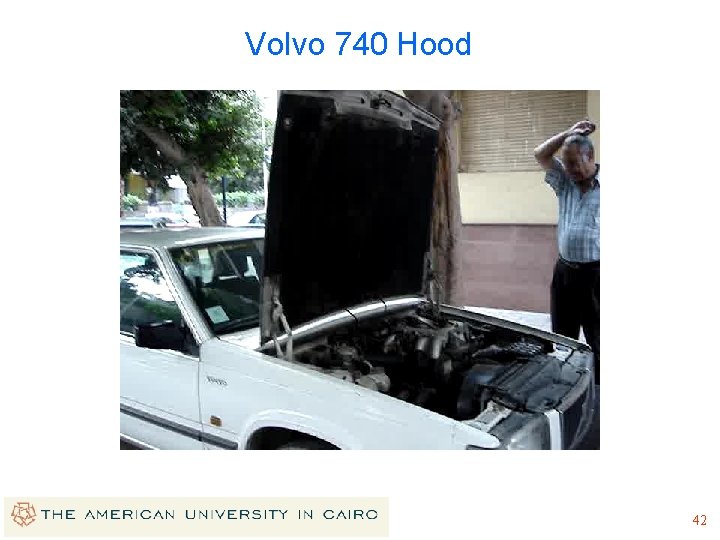
Volvo 740 Hood 42
Animation using Working Model ® 43
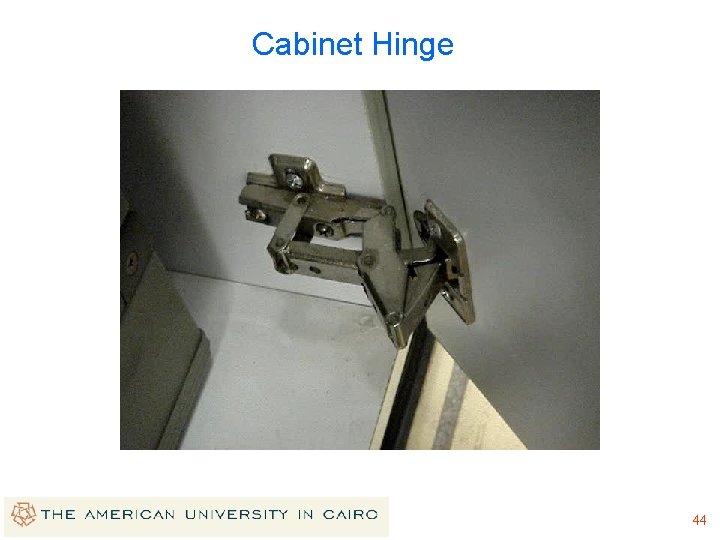
Cabinet Hinge 44
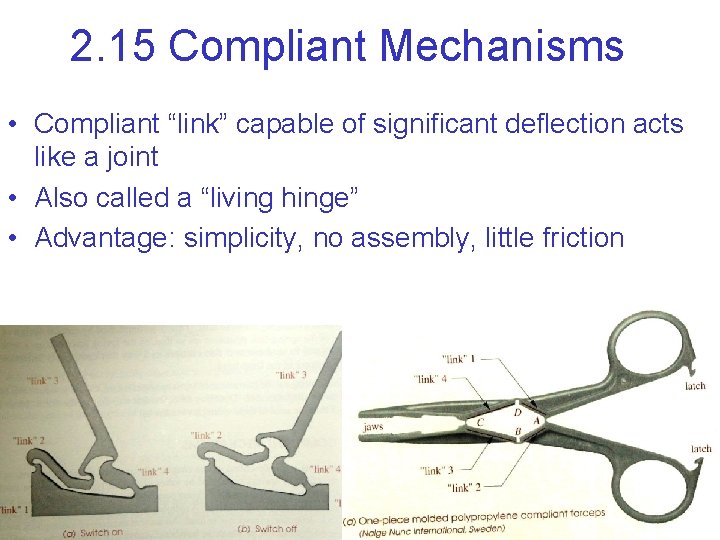
2. 15 Compliant Mechanisms • Compliant “link” capable of significant deflection acts like a joint • Also called a “living hinge” • Advantage: simplicity, no assembly, little friction 45
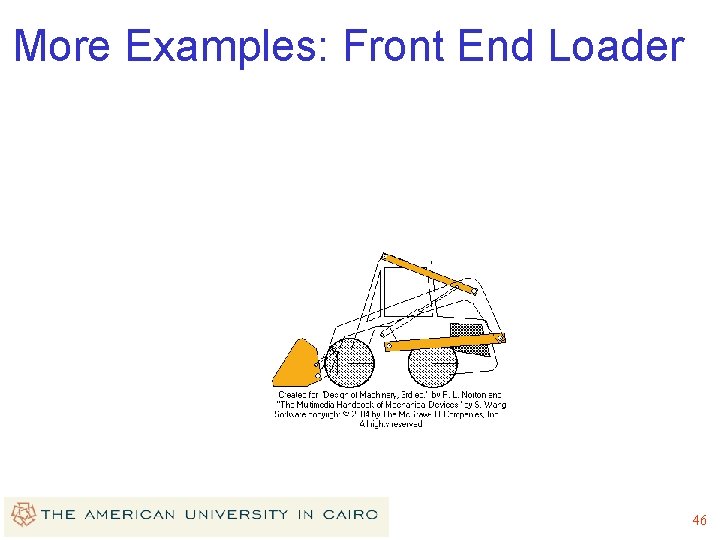
More Examples: Front End Loader 46
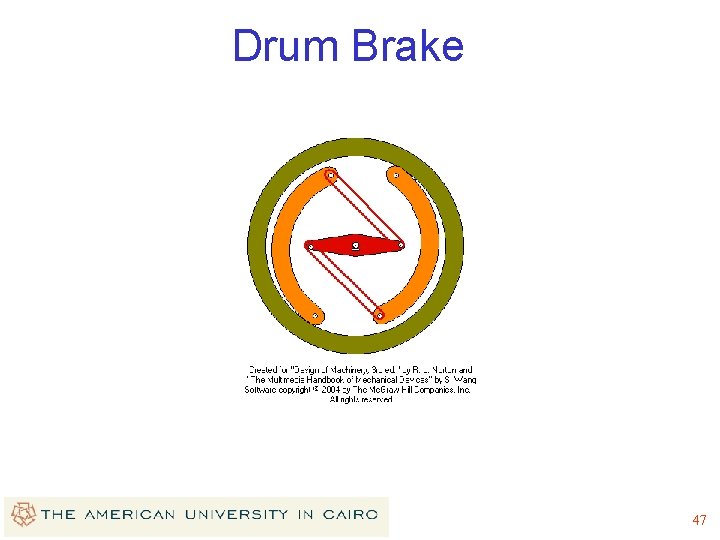
Drum Brake 47