
Mending a Broken Heart Medications When Your Patient
Mending a Broken Heart: Medications When Your Patient is on Standard Therapy and Still Short of Breath Dawn M. Waddell, Pharm. D, BCPS Cardiothoracic Transplant & MCS Pharmacist, BMH - Memphis Associate Faculty, UTHSC College of Pharmacy No relevant financial relationships to disclose
Objectives • Review medication interventions in patients at risk for developing heart failure (HF) • Discuss medications that may cause or worsen HF • Review current guidelines to optimize medication therapy • Review medication options in Stage D patients • Evaluate new therapies under investigation for specific populations of HF patients
Prevention • Treat hypertension – Long-term treatment of systolic and diastolic HTN decreases HF risk by ~50% • CAD/Atherosclerosis – Add statin • Identify and treat pre-diabetes – Metformin can be added to diet and exercise if Hb A 1 C 5. 7 -6. 4% • Control diabetes – Every 1% increase in Hb. A 1 c = 8% increase in HF risk (median follow up 2. 2 years) – RR of developing HF in DM patients = 1. 85 (median follow up 19 years)
Diabetes and HF • FDA: metformin can be used in HF without severe LV dysfunction if stable hemodynamics and adequate renal function • Metformin decreases all-cause mortality in HF patients • Metformin safe in patients with advanced HF • Lower 1 -year mortality and re-hospitalization rates in HF patients compared to insulin/sulfonylureas
Diabetes and HF • Pioglitazone (Actos®) – Increase in peripheral edema, incidence of new HF, HF progression and hospitalizations – Increased mortality not shown at this time – Recommended with caution in NYHA I-II but avoid in symptomatic HF patients • DPP-4 inhibitors – Saxagliptin (Onglyza®) associated with 0. 75% and 0. 3% increased risk of HF hospitalizations in patients with and without previous HF – Sitagliptin (Januvia®) trial scheduled to report results June 2015 • Sodium-glucose cotransporter-2 inhibitors – Dapagliflozin (Farxiga®): long-term studies on CV outcomes underway
Medications to (Ideally) Avoid in HF • Non-dihydropyridine calcium channel blockers – Verapamil/Diltiazem decrease cardiac output – Amlodipine: neutral; preferred > Felodipine/Nifedipine • Antiarrhythmics – Avoid class I, class III antiarrhythmics – Amiodarone/Dofetilide recommended in HF • NSAIDs – Including COX-2 inhibitors • Steroids – Minimize doses • Chemotherapy – Anthracyclines, high-dose cyclophosphamide, trastuzumab, bevacizumab • TNF-alpha inhibitors – Infliximab (Remicade®), Adalimumab (Humira®)
Optimize Standard Therapy • • Titrate to goal HF doses Beta blockers ACE-Is ARBs Aldosterone antagonists Hydralazine/Isosorbide Digoxin

Beta Blockers HF approved BB Initial dose Goal dose Carvedilol (Coreg®) 3. 125 mg BID (<85 kg) Yes 50 mg BID (>85 kg) Metoprolol succinate (Toprol XL®) 12. 5 mg DAILY 200 mg DAILY Yes No Bisoprolol (Zebeta®) 2. 5 mg DAILY Yes, with HCTZ 10 mg DAILY • Avoid abrupt withdrawal Tenn. Care Exempt List $4 Generic Lists Yes
Beta Blockers Carvedilol Metoprolol succinate • Improved BP control • Usually improved tolerability compared to metoprolol in regards to fatigue/depressive adverse effects • Usually tolerated in COPD (>asthma) unless severe • May be used in patients who tend to be hypotensive • May have advantage in patients with ventricular arrhythmias • May be used in patients with COPD/asthma
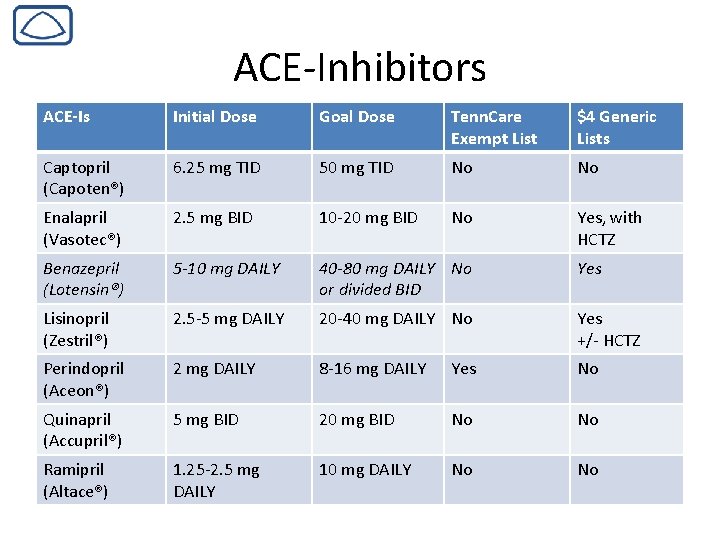
ACE-Inhibitors ACE-Is Initial Dose Goal Dose Tenn. Care Exempt List $4 Generic Lists Captopril (Capoten®) 6. 25 mg TID 50 mg TID No No Enalapril (Vasotec®) 2. 5 mg BID 10 -20 mg BID No Yes, with HCTZ Benazepril (Lotensin®) 5 -10 mg DAILY 40 -80 mg DAILY No or divided BID Yes Lisinopril (Zestril®) 2. 5 -5 mg DAILY 20 -40 mg DAILY No Yes +/- HCTZ Perindopril (Aceon®) 2 mg DAILY 8 -16 mg DAILY Yes No Quinapril (Accupril®) 5 mg BID 20 mg BID No No Ramipril (Altace®) 1. 25 -2. 5 mg DAILY 10 mg DAILY No No
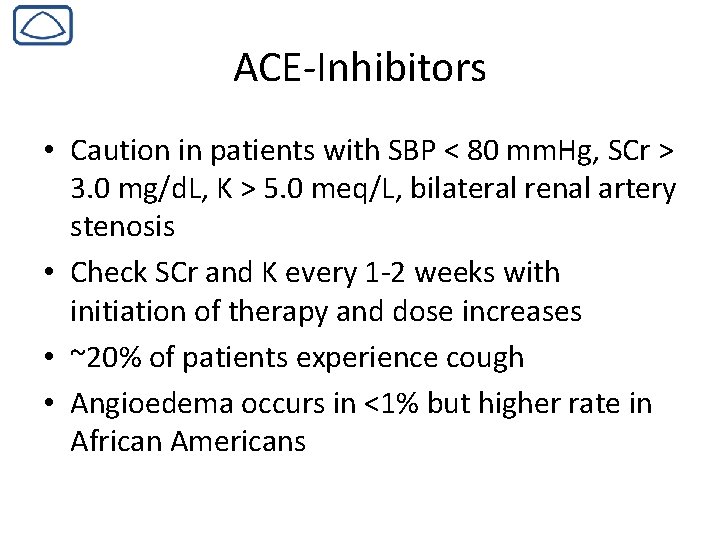
ACE-Inhibitors • Caution in patients with SBP < 80 mm. Hg, SCr > 3. 0 mg/d. L, K > 5. 0 meq/L, bilateral renal artery stenosis • Check SCr and K every 1 -2 weeks with initiation of therapy and dose increases • ~20% of patients experience cough • Angioedema occurs in <1% but higher rate in African Americans
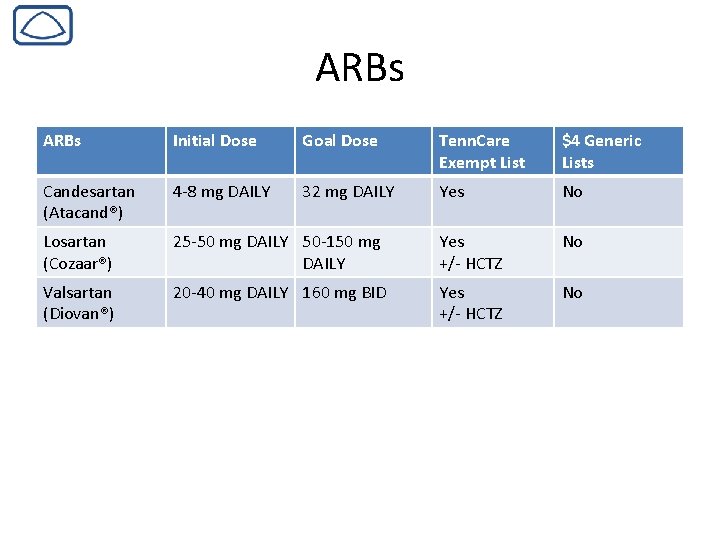
ARBs Initial Dose Goal Dose Tenn. Care Exempt List $4 Generic Lists Candesartan (Atacand®) 4 -8 mg DAILY 32 mg DAILY Yes No Losartan (Cozaar®) 25 -50 mg DAILY 50 -150 mg DAILY Yes +/- HCTZ No Valsartan (Diovan®) 20 -40 mg DAILY 160 mg BID Yes +/- HCTZ No
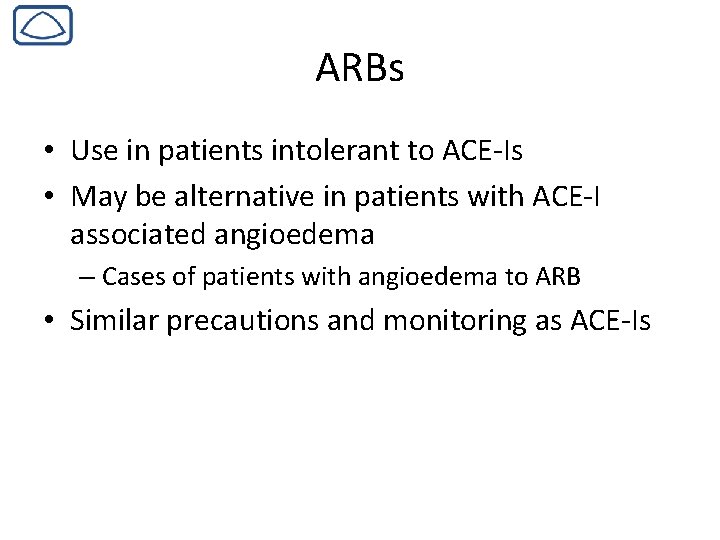
ARBs • Use in patients intolerant to ACE-Is • May be alternative in patients with ACE-I associated angioedema – Cases of patients with angioedema to ARB • Similar precautions and monitoring as ACE-Is
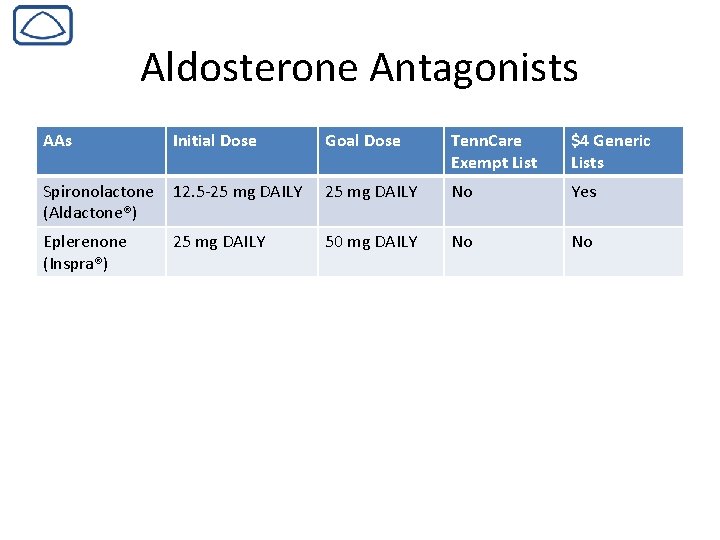
Aldosterone Antagonists AAs Initial Dose Goal Dose Tenn. Care Exempt List $4 Generic Lists Spironolactone (Aldactone®) 12. 5 -25 mg DAILY No Yes Eplerenone (Inspra®) 25 mg DAILY 50 mg DAILY No No
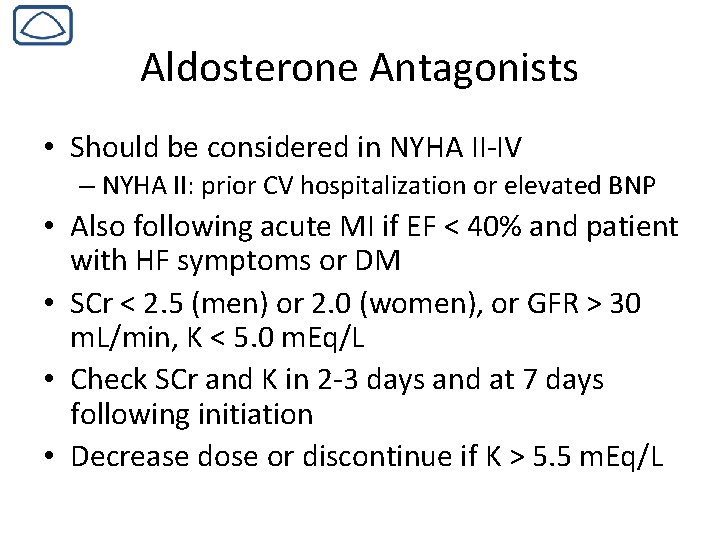
Aldosterone Antagonists • Should be considered in NYHA II-IV – NYHA II: prior CV hospitalization or elevated BNP • Also following acute MI if EF < 40% and patient with HF symptoms or DM • SCr < 2. 5 (men) or 2. 0 (women), or GFR > 30 m. L/min, K < 5. 0 m. Eq/L • Check SCr and K in 2 -3 days and at 7 days following initiation • Decrease dose or discontinue if K > 5. 5 m. Eq/L
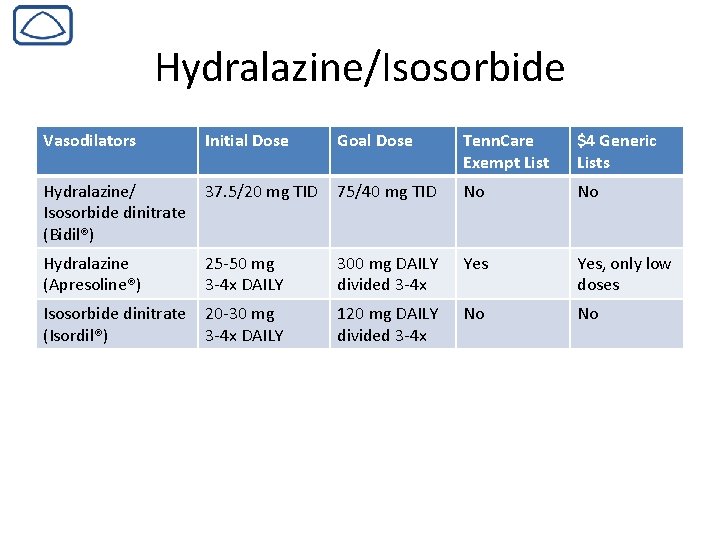
Hydralazine/Isosorbide Vasodilators Initial Dose Goal Dose Tenn. Care Exempt List $4 Generic Lists Hydralazine/ Isosorbide dinitrate (Bidil®) 37. 5/20 mg TID 75/40 mg TID No No Hydralazine (Apresoline®) 25 -50 mg 3 -4 x DAILY 300 mg DAILY divided 3 -4 x Yes, only low doses Isosorbide dinitrate (Isordil®) 20 -30 mg 3 -4 x DAILY 120 mg DAILY divided 3 -4 x No No
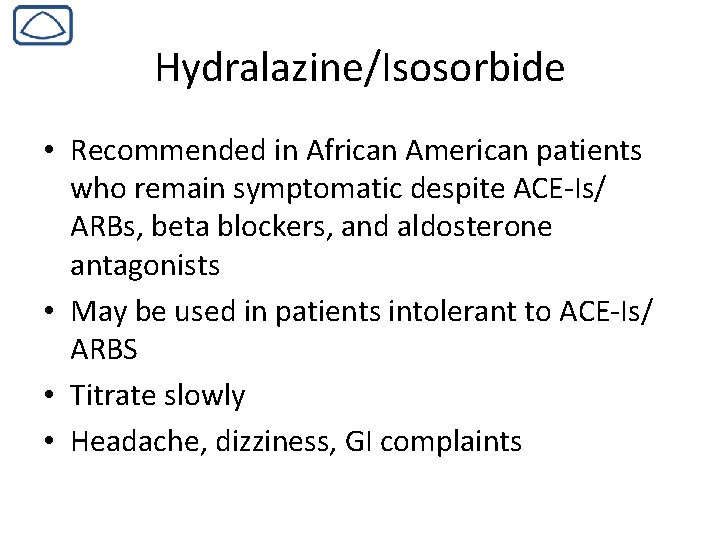
Hydralazine/Isosorbide • Recommended in African American patients who remain symptomatic despite ACE-Is/ ARBs, beta blockers, and aldosterone antagonists • May be used in patients intolerant to ACE-Is/ ARBS • Titrate slowly • Headache, dizziness, GI complaints
Digoxin • May improve symptoms and decrease hospitalizations • Avoid in sinus/AV block unless pacemaker • Goal level 0. 5 -0. 9 ng/m. L; 0. 5 -0. 8 ng/m. L preferred • Adverse effects include arrhythmias, anorexia, N/V, confusion, visual disturbances • Increased toxicity with hypokalemia, hypomagnesemia, hypothyroidism, impaired renal function, lean body mass • Potential for drug interactions
Digoxin • Retrospective subgroup analysis of women in DIG trial – Increase in mortality compared to men including death from CV causes or worsening HF – Unclear if due to slightly higher digoxin concentrations (0. 9 ng/m. L vs 0. 8 ng/m. L) • Another retrospective analysis showed serum digoxin level to be continuous variable associated with mortality • Recommended as add-on therapy to BBs in patients with atrial fibrillation (A. fib) • May be used in A. fib with RVR in decompensated HF
Diuretics • Loop diuretics 1 st line for fluid retention • Patients may become intolerant of furosemide and may have improved response to bumetanide or torsemide • May require addition of metolazone to maintain euvolemia • Must monitor carefully as add or increase doses of BBs, ACE-Is/ARBs, aldosterone antagonists
Pearls • Consider HF medications in patients at risk in need of additional HTN treatment • Titrate slowly but get to goal doses • May give once-daily blood pressure medications at bedtime to decrease adverse effects • Caution patients to hold doses of ACE-Is, ARBs, aldosterone antagonists if significant N/V/D or dehydration • Monitor K carefully if diuretic dose decreased and patient on ACE-I, ARB, or aldosterone antagonist • ACE-I + ARB + aldosterone antagonist not recommended
Management of Acute Exacerbation • IV loop diuretics • May increase diuretic dose, consider continuous infusion, and/or add metolazone to achieve diuretic response • CO 2 will increase d/t contraction alkalosis prior to SCr/BUN trending up – Signal to decrease dose to prevent AKI • Maximize vasodilator therapy as BP tolerates • Only decrease/hold other HF medications if hypotension/decreased cardiac output
Refractory HF (Stage D) • Short-term intravenous inotropes indicated in cardiogenic shock to maintain perfusion • Continuous inotropes may be used as “bridge” to cardiac transplant or ventricular assist device (VAD) therapy • Long-term use reserved for palliative care
Inotropes Inotrope Dose (mcg/kg/min) Halflife CO HR SVR PVR Adverse effects Dobutamine Stimulates beta 1 receptors leading to increased HR and contractility, little effect on beta 2 or alpha receptors (Dobutrex®) Initial: 2. 5 -5 Maintenance: 5 -20 2 -3 min ↑ ↑ ↓↔ ↔ Tachyarrhythmias Milrinone Inhibits PDE-3 in cardiac and vascular tissue leading to increased cardiac contractility and decreased vascular tone (Primacor®) Initial: 0. 125 -0. 375 Maintenance: 0. 375 -0. 75 2. 5 h ↑ ↑ ↓ ↓ Tachyarrhythmias
PDE-5 Inhibitors • Sildenafil approved for use in pulmonary arterial hypertension (Group 1) • Inhibits PDE-5 leading to pulmonary vascular relaxation • Studied in HF patients with secondary pulmonary hypertension (Group 2) – 12 week study: increased peak VO 2, improvement in RVEF, improved QOL – 6 month study: decreased PAP, increased peak VO 2, improved breathlessness score
Iron Deficiency and Anemia in HF • Anemia and iron deficiency are comorbidities in HF associated with adverse outcomes • Iron deficiency in HF defined for study purposes – Ferritin < 100 ng/m. L OR – Ferritin 100 -300 ng/m. L and Tsat < 20% • Prospective study found 37% of HF patients (mean EF 26%) met criteria • Intravenous iron regimens under study
FERRIC-HF and FAIR-HF FERRIC-HF • NYHA class II-III and iron deficiency as defined treated with IV iron sucrose versus placebo • Noted improvements in QOL and functional class • Statistically significant increase in peak VO 2 in patients with anemia and IDA FAIR-HF • Similar to FERRIC-HF but patients received IV ferric carboxymaltose • Improvements in QOL, functional class and 6 -minute walk • No difference in hospitalizations or mortality at 24 weeks No long-term data
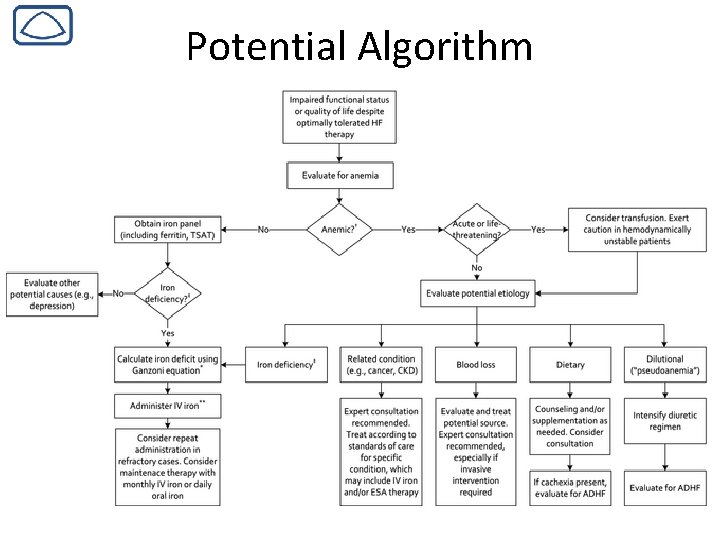
Potential Algorithm
Omega 3 Fatty Acids • Omega-3 polyunsaturated fatty acids (PUFA) may be used as adjunctive therapy • Decreased mortality observed in post-MI patients receiving omega-3 PUFA 1 g • Subgroup analysis showed greatest reduction in patients with reduced EF • GISSI-HF study compared omega-3 PUFA 1 g to placebo – Decreased mortality 27% versus 29% in placebo – CV death or hospitalization also decreased • Safe and well-tolerated
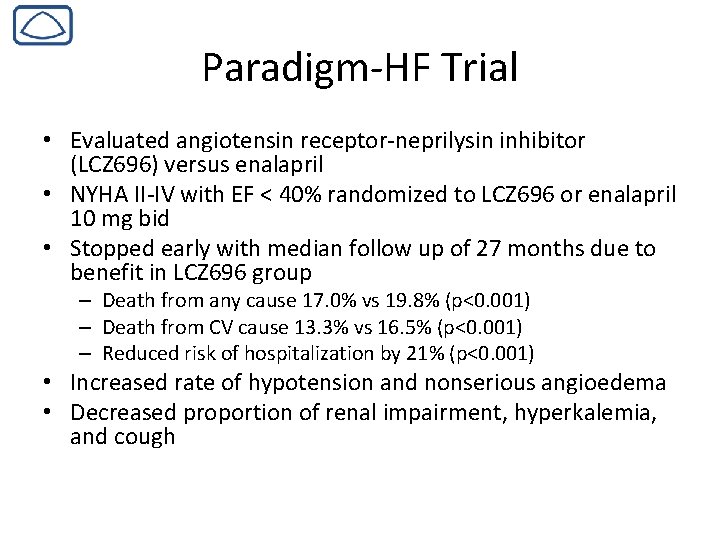
Paradigm-HF Trial • Evaluated angiotensin receptor-neprilysin inhibitor (LCZ 696) versus enalapril • NYHA II-IV with EF < 40% randomized to LCZ 696 or enalapril 10 mg bid • Stopped early with median follow up of 27 months due to benefit in LCZ 696 group – Death from any cause 17. 0% vs 19. 8% (p<0. 001) – Death from CV cause 13. 3% vs 16. 5% (p<0. 001) – Reduced risk of hospitalization by 21% (p<0. 001) • Increased rate of hypotension and nonserious angioedema • Decreased proportion of renal impairment, hyperkalemia, and cough

Questions?
- Slides: 31